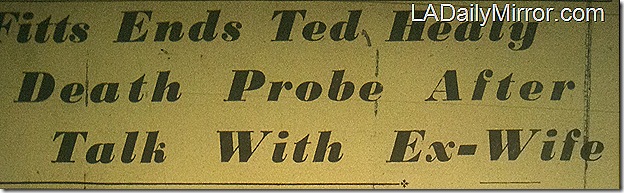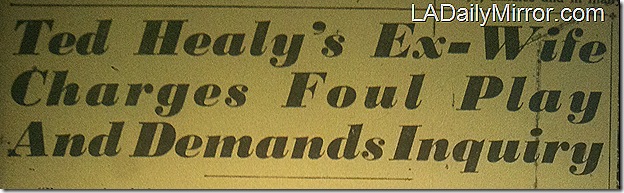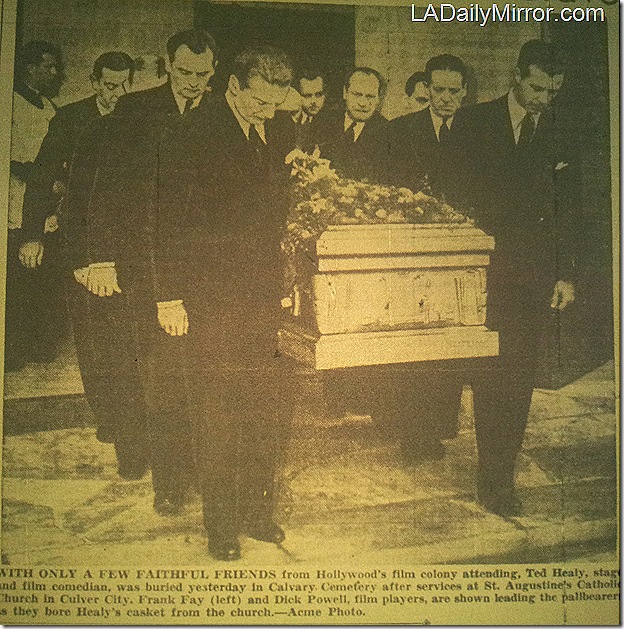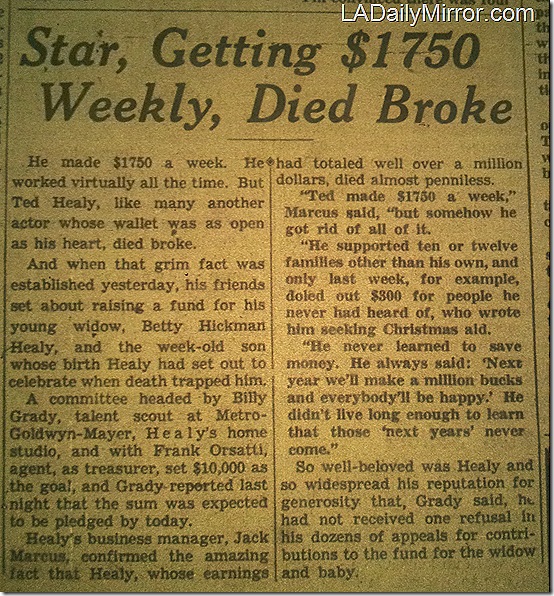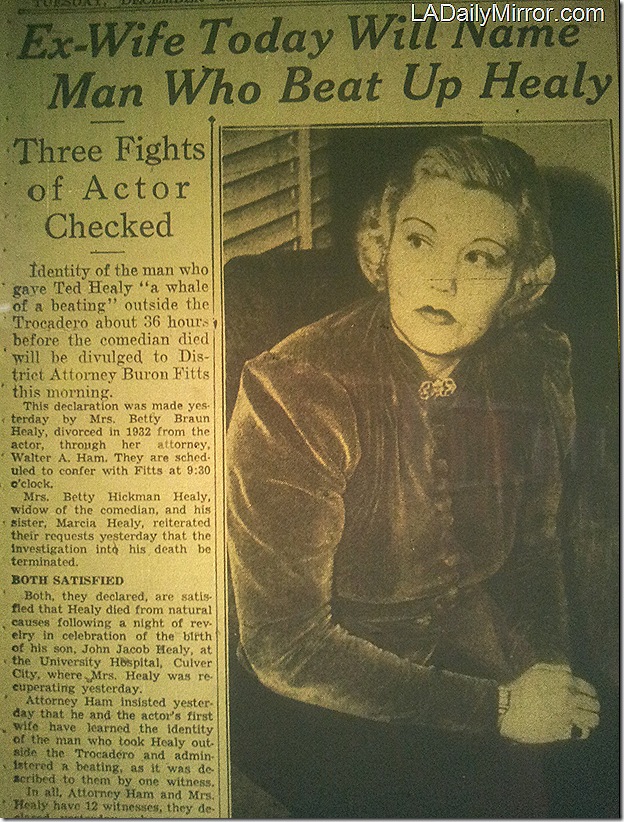
Dec. 28, 1937: Betty Braun Healy meets with Dist. Atty. Buron Fitts over her allegations about the death of Ted Healy. At the conclusion of the conference, she agreed that Healy had died of natural causes. (Los Angeles Examiner, Dec. 28, 1937)
One of the minor, though essential, characters in the “Wallace Beery beat Ted Healy to death” story is his baby son, whose birth sent Healy on his final binge.
When the son, who adopted the name Theodore John Healy, died in 2011, the Atlanta Journal-Constitution’s obituary by Rick Badie included this statement:
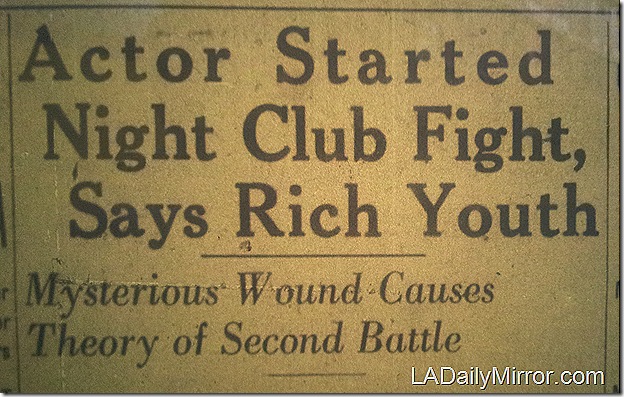
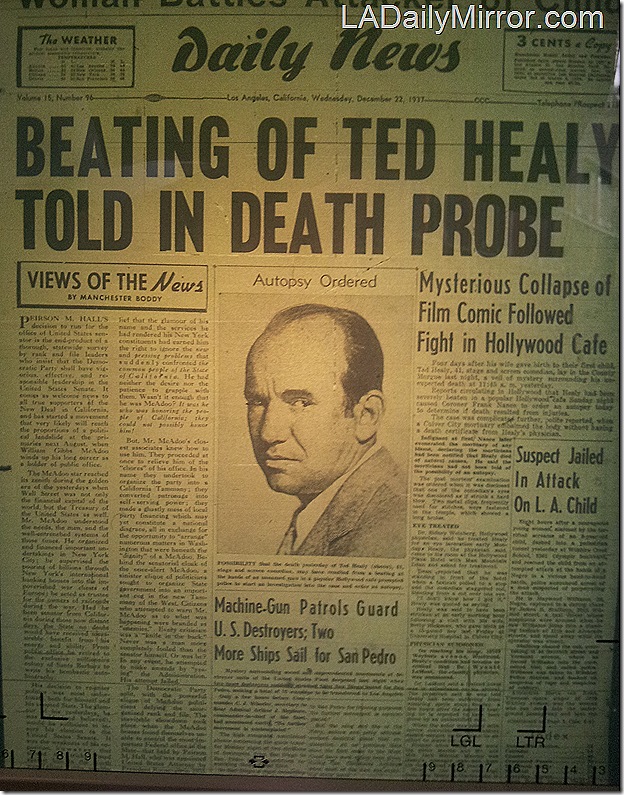
Mr. Healy was told by his mother, the late Betty Hickman, that his father died of a heart attack, a story that was passed on to family. According to stoogeworld.com, though, the 42-year-old vaudeville performer, comedian and actor got into a fight with three men outside a club on the Sunset Strip. A medical examiner ruled he died from a brain concussion, the site states.
And after spending weeks delving into the case, we can spot the mistakes immediately: Healy was 41, not 42; he didn’t get into a fight with three men, he got into three separate fights; and the coroner ruled that he died, not from a concussion but of “acute toxic nephritis caused by acute and chronic alcoholism, which weakened the heart, kidneys and liver.”
Wikipedia: Murder and Myth: Part 1 | Part 2 | Part 3 | Part 4 | Part 5 | Part 6 | Part 7 | Part 8 | Part 9 | Part 10 | Part 11 | Part 12 | Part 13 | Part 14 | Part 15 | Part 16 | Part 17| Part 18
It’s so much easier — with just a few keystrokes — to Google to a website of unknown and dubious reliability and cut and paste an unverified statement rather than go through the pick and shovel work of determining exactly what happened. And after all, the statement is attributed to a source, so Badie can at least pretend that he is being thorough. And so from stoogeworld to the Atlanta Journal-Constitution to LexisNexis, folklore is inscribed into the pages of history.
‘History is written by the winners” has become such a popular quotation that no one seems to know exactly who said it. Was it Napoleon? Winston Churchill? Perhaps it was George Orwell, who used it in a 1944 essay.
The Death of Ted Healy: Part 1 | Part 2 | Part 3 | Part 4 | Part 5 | Part 6 | Part 7 | Part 8 | Part 9 | Part 10 | Part 11 | Part 12 | Part 13 | Part 14
Continue reading →