1944 in Print — Hollywood News and Gossip by Louella Parsons, Aug. 26, 1944

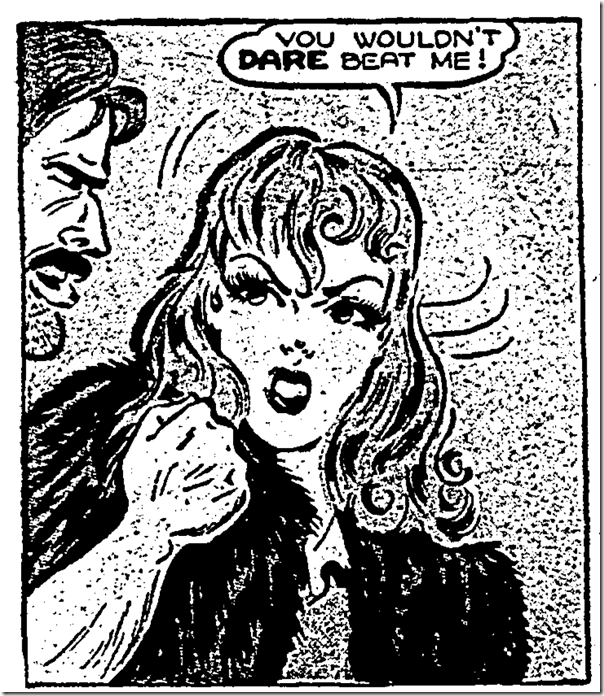
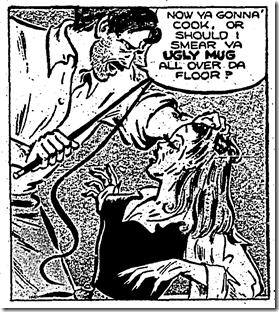
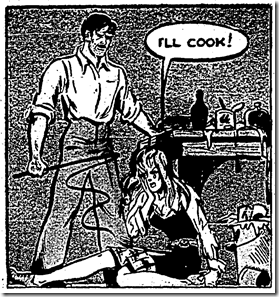
Aug. 26, 1944, Comics

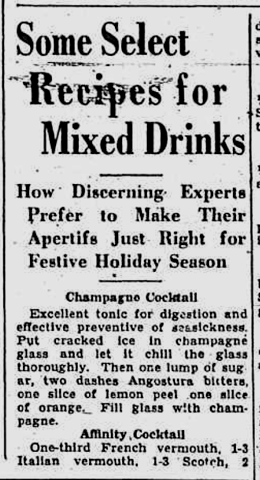
Aug. 26, 1944

When William Bendix was broke and didn’t have a nickel to his name, his father-in-law, Henry Stafanotty, loaned him money to support his wife and child. Bill isn’t the kind who forgets and now he has opened a hardware shop for his wife’s father in Newark and is calling it “The Wake.” That’s in honor of “Wake Island,” which put Bill in the movie limelight.

VIRGO: Put today in your happy medium column. Approach agreeably and without fuss the good and the bad tasks. No volcanic promotion ideas, just down-to-earth dependability.

From the Philadelphia Inquirer via Fultonhistory.com.

Continue reading

Posted in 1944, Columnists, Comics, Film, Hollywood, Horoscope | Tagged , , , , , | Comments Off on 1944 in Print — Hollywood News and Gossip by Louella Parsons, Aug. 26, 1944

Movieland Mystery Photo ( Updated + + + +)

'Untamed Youth'
This is the 1957 Warner Bros. film, directed by Howard W. Koch and starring Mamie Van Doren. It’s a rare exception to imdb’s practice of giving six or seven stars to every movie ever made.

Continue reading

Posted in 2014, Film, Hollywood, Mystery Photo | Tagged , , | 55 Comments

Mary Mallory / Hollywood Heights: The Masquers Laugh to Win, Part II: Giving Support To Others

“The Bride’
“The Bride’s Bereavement or the Snake in the Grass” and “Stolen by Gypsies,” two Masquers presentations.


O
rganized in 1925, the Masquers Club was a social/fraternal organization founded by actors but open to others in the entertainment industry. As the original bylaws state: “The object of this club shall be the promotion of social intercourse among persons engaged professionally in drama, cinema, music, authorship, and the fine arts… .” They met for social times in their original clubhouse on Yucca Street before moving to their longtime headquarters at 1765 Sycamore Ave. in Hollywood, just below the Rollin B. Lane mansion. The group entertained itself with small productions of skits, plays and small holiday productions on their own stage and major shows at other theatrical venues around town.

While they did gather for social gatherings in their club, where they conversed, played cards, drank and put on shows, they also supported each other and society during times of hardship. The group embraced members in need, often providing a temporary home, offering a small financial pick-me-up, or providing help in times of distress and ill health. They made sure no member was forgotten and rallied around families at the time of members’ deaths.

Mary Mallory’s “Hollywoodland: Tales Lost and Found” is available for the Kindle.

Continue reading

Posted in Film, Hollywood, Hollywood Heights, Mary Mallory | Tagged , , , , | 1 Comment

1944 in Music — Oscar Levant and Leonard Bernstein at the Hollywood Bowl, Aug. 22, 1944

Aug. 22, 1944, Comics

Aug. 22, 1944, Paper Drive

Aug. 22, 1944

The Times encourages readers to save copies of the paper for reuse in the war effort. Let’s hear it for recycling!

Keith Hallock gets a kiss from Warner Bros.’ Joyce Reynolds for being the first to volunteer for a job  making tires at one of the plants in Los Angeles.

Discussions are underway to avoid a streetcar strike over higher wages.

And no. It would be unconstitutional to keep Japanese Americans from returning to the West Coast after the war is over, says Atty. Gen. Francis Biddle.

Continue reading

Posted in 1944, Comics, Film, Hollywood, Streetcars, World War II | Tagged , , , , , , | Comments Off on 1944 in Music — Oscar Levant and Leonard Bernstein at the Hollywood Bowl, Aug. 22, 1944

1944 in Print — Hollywood News and Gossip by Louella Parsons, Aug. 22, 1944

Aug. 22, 1944, Comics

Aug. 22, 1944

Danton Walker writes: High on a hilltop in Beverly Hills at the end of the Tower Road, a tortuous lane overlooking Benedict Canyon, is a hobgoblin castle straight out of a Walt Disney film; an edifice of scrambled architecture, so rambling and complex that it would take a full day to explore it, if one had the heart to do so. It is the home of the late John Barrymore, on which the Great Profile spent close onto a million dollars; unoccupied since his death and unoccupiable except by someone who does not object to living with a frozen nightmare.

Louella Parsons says: “Citizen Tom Paine” was bought by Frank Tuttle a long time ago, but he left his option lapse and it goes to Walter Wanger. Walter has bought it from the author, Howard Fast, and plans to make a story of the Revolution with all the famous characters.

But he will not go into Paine’s religious beliefs nor his tendency toward atheism. Rather, will he make a real saga of the Revolutionary period with four principal characters, Washington, Jefferson, Franklin and Paine. Well-known actors will be chosen to play these four men. We haven’t had a good story of the American Revolution in a long time and Walter plans to spend a considerable amount in making an authentic story.

LEO: The sort of day on which your talents should shine. Clean up odd little tasks, pay bills, make plans for future events. Study standard problems. Aim at completion.

From the Philadelphia Inquirer via Fultonhistory.org.

Continue reading

Posted in 1944, Columnists, Comics, Film, Hollywood, Horoscope | Tagged , , , , , | 2 Comments

Black Dahlia: Dalia Negra Comix

Dalia Negra

I thought I had seen just about all the Black Dahlia-related items that existed, including the Living Dead Dolls, the Black Dahlia snow globe, etc. But this is a new one on me. Dalia Negra was a series of comic books – for adults – published in Mexico in the 1950s and several issues have been posted on EBay. The artwork is the Mexican take on E.C. Comics. Bidding on this issue starts at $24.99.

Dalia Negra

Posted in 1955, Black Dahlia, Comics, Found on EBay | Tagged , , , | Comments Off on Black Dahlia: Dalia Negra Comix

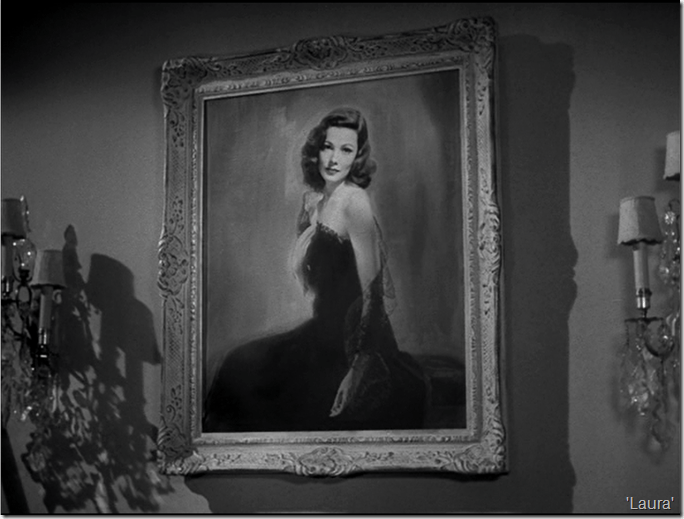
‘Laura’ — The Making of a Film Noir Classic, Part 22

antique_shop_new_york

“Antique Shop,” Third Avenue near 57th Street, New York, Oct. 8, 1936, by Berenice Abbott, part of the Federal Art Project, via the New York Public Library.

”From where I stood, the shop looked like a dark cavern. The antique furniture, the old clocks, vases, dishes, drinking glasses, China dogs and tarnished candlesticks were like a scavenger’s storehouse.”  — ”Laura,” Page 139


In case you just tuned in, I’m using Louella Parsons’ May 15, 1944, item on Rouben Mamoulian being replaced as the director of “Laura” to take a meandering look at the making of the film, which was released in Los Angeles in November 1944. Previous posts have examined the writing career of “Laura” novelist Vera Caspary and the state of the detective story in 1941, when she was writing the novel. We also visited some of the locations Caspary used in the book.

In going through the novel, it’s interesting to see what the screenwriters (there was a series of them) kept, what they invented and what they threw out. In the next few posts I’m going to look at the characters as portrayed in the novel, starting with the smaller roles and working up to the most important character, Waldo Lydecker (played by Clifton Webb in the film). Although the book and film are titled “Laura,” Waldo is the most remarkable character in the story and the one who required the most work, as Caspary noted in her autobiography, “The Secrets of Grown-Ups.”

Spoilers ahead

The Making of “Laura” Part 1 | Part 2 | Part 3 | Part 4 | Part 5 | Part 6 | Part 7 | Part 8 | Part 9 | Part 10 | Part 11 | | Part 12 | Part 13 | Part 14 | Part 15 | Part 16 | Part 17 | Part 18 | Part 19 | Part 20 | Part 21


Continue reading

Posted in 1944, Books and Authors, Film, Hollywood, New York | Tagged , , , , | Comments Off on ‘Laura’ — The Making of a Film Noir Classic, Part 22

1944 in Print — Life Magazine, Aug. 21, 1944

image

The churning craft on the cover are amphibious tractors, sometimes called “alligators.” The alligator, armed with machine guns, is designed to carry small loads of troops through the water to an enemy beach and, if possible, to carry them through the beach defenses. Together with approximately 1,100 warships, 37,000 naval aircraft and 48,000 landing boats, the alligator has made possible the U.S. formula of amphibious attack.


Aug. 21, 1944

This week’s photo essay is by Alfred Eisenstaedt of European refugees arriving in America.

The featured movie is “Janie,” featuring Joyce Reynolds, who you may remember was supposedly up for a part in “Mildred Pierce.”

Other articles include a profile of vice presidential candidate Harry Truman; John Foster Dulles, likely to be secretary of State under the Republican administration of Thomas E. Dewey (oops); the ruins of St. Lo, destroyed in heavy fighting; preparations for the liberation of Paris; and George Ray Tweed, a U.S. Navy radioman who eluded the Japanese on Guam for 31 months.

From Google Books.

Continue reading

Posted in 1944, Film, Hollywood, Photography, Politics, World War II | Tagged , , , , , | 1 Comment

1944 in Print — Hollywood News and Gossip by Louella Parsons, Aug. 21, 1944

image

Aug. 21, 1944

Today, we stumbled across a columnist named Danton Walker (d. 1960). We don’t know his name, but his prose is so familiar that we can recite by heart the stale, snide New Yorker’s boilerplate on Los Angeles. It’s the sort of thing still being circulated, scarcely unchanged, by some of today’s smartest East Coast writers whose sum of experience consists of a stay in West Hollywood or Beverly Hills and a jaunt to Farmers Market.

Walker writes:

Hollywood, like Broadway, is largely a state of mind. Originally an exclusive residential section of that vast, sprawling, unwieldy community called Los Angeles (“six suburbs in search of a city”), it has become the capital of filmdom and a symbol for all that goes with it. But Hollywood has now moved from Hollywood, and though four major producers — Sam Goldwyn, RKO, Paramount and Columbia — still maintain their centers in Hollywood proper, the rest of the industry has spread and is still spreading, mushroom fashion, over the hills and canyons of Beverly Hills, Holmby Hills, West Wood, Belair, San Fernando Valley and Ensino   Valley, and the homes of movie stars cling precariously, like the nests of birds, to the slopes of the Sierra foothills, miles and miles away from the famed corner of Hollywood and Vine. Miami Beach is positively cozy by comparison; Hollywood lives on wheels, and deprived of motor transportation, it would vanish from this earth as surely as Tyre and Sidon, the biblical cities of the plain.

Etc.

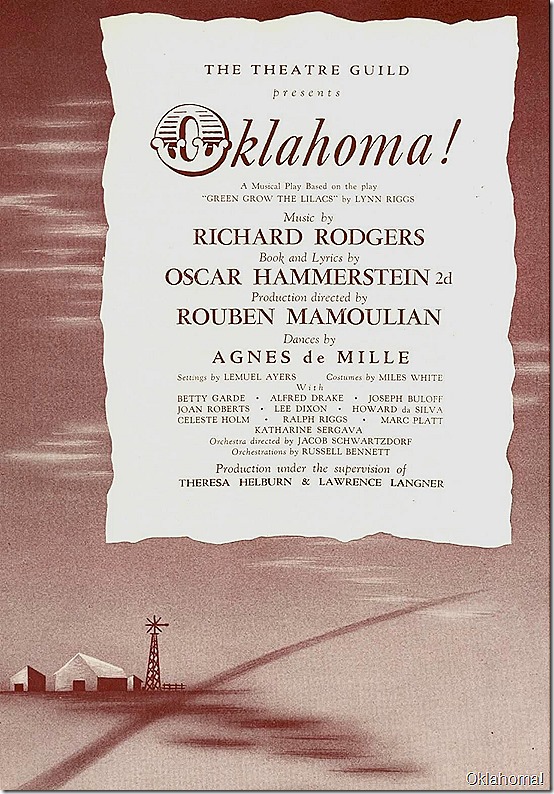
Louella Parsons says: A deal is hot on the griddle for 20th Century-Fox to borrow Kathryn Grayson from MGM to star in “State Fair,” one of their important musicals. If “State Fair” slips your mind, let me remind you it was made years ago with Janet Gaynor and Will Rogers in the top roles. Now it’s being converted into a musical by Dick Rodgers and Oscar Hammerstein II. There’s a great chance here for 20th to capitalize on the same hay-foot, straw-foot appeal that has made “Oklahoma!” such a smash.

LEO: Make an effort to “Hi Neighbor” associates. It’ll put your mind in cheery attitude, your daily good deed donation and you’ll function better. Cheery news.

From the Philadelphia Inquirer via Fultonhistory.com.

Continue reading

Posted in 1944, Columnists, Comics, Film, Hollywood, Horoscope | Tagged , , , , | Comments Off on 1944 in Print — Hollywood News and Gossip by Louella Parsons, Aug. 21, 1944

‘Laura’ — The Making of a Film Noir Classic, Part 21

828 Fifth Avenue, New York, via Google Street View.

Susan Treadwell (renamed Ann Treadwell and played by Judith Anderson in the film) lives in a mansion on upper Fifth Avenue (Page 22).


In case you just tuned in, I’m using Louella Parsons’ May 15, 1944, item on Rouben Mamoulian being replaced as the director of “Laura” to take a meandering look at the making of the film, which was released in Los Angeles in November 1944. Previous posts have examined the writing career of “Laura” novelist Vera Caspary and the state of the detective story in 1941, when she was writing the novel.

In this series of posts, we’re looking at some of the sites used in the novel. Recall that in “Murder for Pleasure, Howard Haycraft’s 1941 book on the history and art the detective story, Haycraft urged mystery writers to use actual locations.

Note: In researching this post, I discovered an entertaining blog Daytonian in Manhattan, which focuses on “buildings, statues and other points of interest that make Manhattan fascinating.”

The Making of “Laura” Part 1 | Part 2 | Part 3 | Part 4 | Part 5 | Part 6 | Part 7 | Part 8 | Part 9 | Part 10 | Part 11 | | Part 12 | Part 13 | Part 14 | Part 15 | Part 16 | Part 17 | Part 18 | Part 19 | Part 20 | Part 21

Continue reading

Posted in 1944, Books and Authors, Film, Hollywood, New York | Tagged , , , , | 2 Comments

1944 in Print — Hollywood News and Gossip by Louella Parsons, Aug. 20, 1944

Aug. 20, 1944, Linda Darnell

Aug. 20, 1944

To tell a woman she is beautiful is the most acceptable compliment any daughter of Eve can receive. It’s the most exciting praise every girl, whether she resides in Hollywood or lives on an isolated farm, enjoys hearing, and it’s the one thing she waits to hear from the lips of her lover or her husband.

Yet Hedy Lamarr, conceded to be Hollywood’s greatest beauty and mentioned as the most glamorous motion picture star, hates the very word “beautiful.”

Bestsellers this week: “History of Rome Hanks” and “I Never Left Home.”

From the Philadelphia Inquirer via Fultonhistory.com

Continue reading

Posted in 1944, Books and Authors, Columnists, Film, Hollywood | Tagged , , , , | 4 Comments

‘Laura’ — The Making of a Film Noir Classic, Part 20

East 62nd Street, New York, Via Google Street View

“I stood beside him in the bay window of Laura’s living room. East 62nd Street had yielded to the spirit of carnival…”

The 200 block of East 62nd Street, New York, via Google Street View.


In case you just tuned in, I’m using Louella Parsons’ May 15, 1944, item on Rouben Mamoulian being replaced as the director of “Laura” to take a meandering look at the making of the film, which was released in Los Angeles in November 1944. Previous posts have examined the writing career of “Laura” novelist Vera Caspary and the state of the detective story in 1941, when she was writing the novel.

In this series of posts, we’re looking at some of the sites used in the novel. Recall that in “Murder for Pleasure, Howard Haycraft’s 1941 book on the history and art the detective story, Haycraft urged mystery writers to use actual locations:

The Making of “Laura” Part 1 | Part 2 | Part 3 | Part 4 | Part 5 | Part 6 | Part 7 | Part 8 | Part 9 | Part 10 | Part 11 | | Part 12 | Part 13 | Part 14 | Part 15 | Part 16 | Part 17 | Part 18 | Part 19 | Part 20 | Part 21

Spoilers ahead

Continue reading

Posted in 1944, Architecture, Art & Artists, Baseball, Books and Authors, Film, Hollywood, New York | Tagged , , , , , , , , | 4 Comments

1944 in Print — Hollywood News and Gossip by Louella Parsons, Aug. 19, 1944


Aug. 19, 1944, Comics

Aug. 19, 1944

Really interesting news that Freddie March is ready to sign a contract to play Major Joppolo in “A Bell for Adano.” I don’t mean the movie, either. He is being signed by Leland Hayward for the stage play, which will reach New York before the movie is finished.

Little Joyce Reynolds has certainly won a place for herself on the Warner lot since “Janie.” Interesting that she will play the shrewish daughter in “Mildred Pearce,” a real departure from the wholesome schoolgirl in “Janie.”* Joan Crawford, who plays Mildred Pearce, is, I am told, negotiating with Edward Small for the lead in “Bella Donna.” That would give her one of the really dramatic parts of her career.

LEO: Stars offer fine scope for your talents and ability. Responsibility needed to fathom pitfalls and be able to combat same properly.

From the Philadelphia Inquirer via Fultonhistory.com.

Continue reading

Posted in 1944, Columnists, Film, Hollywood, Horoscope | Tagged , , , , | Comments Off on 1944 in Print — Hollywood News and Gossip by Louella Parsons, Aug. 19, 1944

Movieland Mystery Photo (Updated + + + +)

'Hot Water'
This is the 1924 film “Hot Water,” starring Harold Lloyd.

Continue reading

Posted in Film, Hollywood, Mystery Photo | Tagged , , | 36 Comments

Times War Correspondent Tom Treanor Dies Covering the Liberation of France

Aug. 22, 1944, Tom Treanor

Aug. 18, 1944

Times war correspondent Tom Treanor is injured in a Jeep accident while covering the liberation of France and dies of his injuries the next day. As I noted in a 2007 post, a journalism scholarship was established in his name at UCLA, but it apparently hasn’t been awarded since 1961.
His final story is here.

Continue reading

Posted in Tom Treanor, World War II | Tagged , , | 1 Comment

Mary Mallory / Hollywood Heights: The Masquers Club Laughs to Win

newmoviemagazine04weir_0206
The Masquers reliving Keystone Kops days after shooting “Stout Hearts and Willing Hands,” from left, Roscoe Arbuckle, Bobby Vernon, Ford Sterling, Chester Conklin, Clyde Cooke, Mack Swain, Jimmy Finlayson and Hank Mann.


S
ince the beginning of time, people have joined clubs in order to socialize with like-minded individuals and enjoy shared activities. Many original clubs revolved around religion, politics, colleges and fraternal organizations like the Masons, Optimists, Elks and the like. Professions organized their own clubs; actors in New York formed the Lambs’ Club as a way to honor their own and practice the art of acting.

In the teens and early 1920s, many people formed social groups in Los Angeles around similar lines. Besides fraternal organizations, social groups like the Uplifters, Breakfast Club, Jonathan Club and California Club were formed to honor spiritual as well as financial aims. The entertainment industry organized its own social groups like the 233 Club, 400 Club, Embassy Club and others in which to socialize outside of work. Many of these gradually dissolved due to financial, personal and organizational problems.

Mary Mallory’s “Hollywoodland: Tales Lost and Found” is available for the Kindle.

Continue reading

Posted in Film, Hollywood, Hollywood Heights, Mary Mallory | Tagged , , , | 8 Comments

Books, Reading and Lending Libraries

in_the_wrong_rain_cover

in_the_wrong_rain_cover

Note to millennials: This is an example of a book from a lending library. These were generally small  businesses that rented books for pennies a day and specialized in current literature and somewhat racy material that wasn’t available at the public library. (Hence the line in “Chinatown”: Sir, this is not a lending library, it’s the Hall of Records.” )

This 1959 example, by Times book editor Robert Kirsch, rented for a nickel a day with a minimum of 15 cents, about $1.23 in 2014 dollars, and was apparently offered by the Guild Library on Hollywood Boulevard. Lending libraries were part of the literary landscape in America until the 1970s, but I don’t recall ever seeing one after that.

This copy of “In the Wrong Rain” (which is not much of a book) is listed on EBay as Buy It Now for $10.40.

Posted in 1959, Books and Authors, Found on EBay, Libraries | Tagged , , , | 2 Comments

1944 in Print — Hollywood News and Gossip by Louella Parsons, Aug. 15, 1944

Aug. 15, 1944, comics

Aug. 15, 1944

Clark Gable is not returning to work in September. He says he may never make another picture, which would be a terrible blow, not only to his studio, but to all his many fans.

Said Clark: “I saw so much death and suffering overseas that the movies will never appeal to me again, unless I can do something off the beaten path; something that is not conventional, but is important and significant. Otherwise, I don’t want to return to the screen. I don’t need the money. I’m not rich but I can live on my very little ranch and be happy.”

MGM already has announced “Lucky Baldwin” and several other pictures for Clark. (As we know, “Lucky Baldwin” was never made.)

LEO: With vibrations favorable, the Sun your ruling planet and your keyword POWER — there should be plenty of useful “fireworks,” if you are living up to the true Leo-born.

From the Philadelphia Inquirer via Fultonhistory.com

Continue reading

Posted in 1944, Columnists, Comics, Film, Hollywood | Tagged , , , , | Comments Off on 1944 in Print — Hollywood News and Gossip by Louella Parsons, Aug. 15, 1944

‘Laura’ — The Making of a Film Noir Classic, Part 19

Laura Page 151

Page 151 of “Laura.” Novelist Vera Caspary uses the date Friday, Aug. 27, 1941.


In case you just tuned in, I’m using Louella Parsons’ May 15, 1944, item on Rouben Mamoulian being replaced as the director of “Laura” to take a meandering look at the making of the film, which was released in Los Angeles in November 1944. Previous posts have examined the writing career of “Laura” novelist Vera Caspary and the state of the detective story in 1941, when she was writing the novel.

”Laura” novelist Vera Caspary chose the precise date of Friday, Aug. 27, 1941, for the interrogation of Shelby Carpenter (played by Vincent Price in the film) by Detective Mark McPherson (played by Dana Andrews). This fixes the date of the murder as the previous Friday, Aug. 20, 1941.

The Making of “Laura” Part 1 | Part 2 | Part 3 | Part 4 | Part 5 | Part 6 | Part 7 | Part 8 | Part 9 | Part 10 | Part 11 | | Part 12 | Part 13 | Part 14 | Part 15 | Part 16 | Part 17 | Part 18 | Part 19 | Part 20 | Part 21

Continue reading

Posted in 1941, 1944, Books and Authors, Film, Hollywood | Tagged , , , , | Comments Off on ‘Laura’ — The Making of a Film Noir Classic, Part 19

1944 in Print — Life Magazine, Aug. 14, 1944

Life Magazine, Aug. 14, 2014

Aug. 14, 1944

The tough, haggard man on the cover is one of the thousands who are winning the battle for France. He is Lt. Kelso C. Horne of the U.S. airborne infantry. Men like Lt. Horne saw their hardest fighting on June 6, when many of them were landed behind German lines in Normandy with parachute troops. In the great breakthrough in France, airborne troops are probably being used as infantry shock troops.

What the postwar bathroom will look like in another racy ad (by 1940s standards) from Cannon Towels.

The Saturday Review of Literature celebrates its 20th anniversary by asking readers to pick the best novel and best author to appear in the last 20 years. Readers named “Arrowsmith” as the best novel and Ernest Hemingway as the best novelist. Other best novels from the previous 20 years were, in order, “A Farewell to Arms,” “U.S.A.,” “The Grapes of Wrath” and “For Whom the Bell Tolls.”

Unfortunately, Life published a photo of the books rather than listing them and some of the titles are illegible. How many have you read?

Life also features Chester Gould and his comic creation Dick Tracy. Did you know there was a villain named Redrum?

From Google Books.

Continue reading

Posted in 1944, Books and Authors, Photography, World War II | Tagged , , , | 5 Comments