No deal

July 30, 1957
Los Angeles

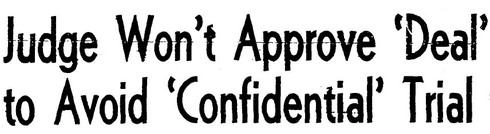
The state prosecutor and the defense had reached an agreement on most points in the conspiracy trial involving Confidential and Whisper magazines.

According to the proposed accord, Confidential and Whisper would:

1.Abandon their present format, would stop printing smear stories and publicize the change in newspaper ads.

2. Los Angeles County Superior Court Judge Herbert V. Walker would decide the case based on grand jury transcripts.

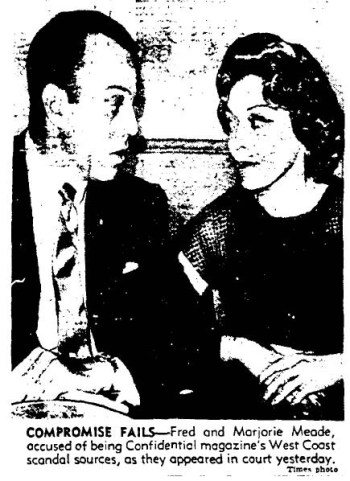
3. Charges against Fred and Marjorie Meade (the alleged sources of
the magazines’ stories) would be dropped because “they are out of
business the minute the format of the magazine is changed,” according
to Chief Assistant Atty. Gen. Clarence Linn.

Defense attorney Arthur J. Crowley agreed to everything except Linn’s
insistence that guilty verdicts against the corporations–Whisper Inc.,
Confidential Inc., Hollywood Research Inc. and Publishers Distributing
Corp–could not be appealed.

Linn told the judge that the agreement would suppress the magazines and
Crowley noted that the deal would avoid a long trial that would
threaten the reputations of Hollywood celebrities.

To which Walker said: No. “I don’t think a good reason has been given
here for the dismissal of the indictments against the individuals.”

The Mirror said there was little scandal in the 143-page grand jury
transcript, noting that it mostly dealt with testimony by 20 witnesses
that publisher Robert Harrison’s objective was to print “as much
shocking material as he could obtain by wiretaps, by using prostitutes
as witnesses or by any other means.”

Ronnie Quillan testified:

“Harrison stressed the point that he primarily was just interested in the sexual activities of the stars and celebrities and whether they were homosexuals or weren’t,
in other words, the most lurid phases of their lives that he could
expose.”

To be continued.

Email me

Posted in #courts, #gays and lesbians, Hollywood | Tagged , , , | Comments Off on No deal

Bill Walsh in The Times

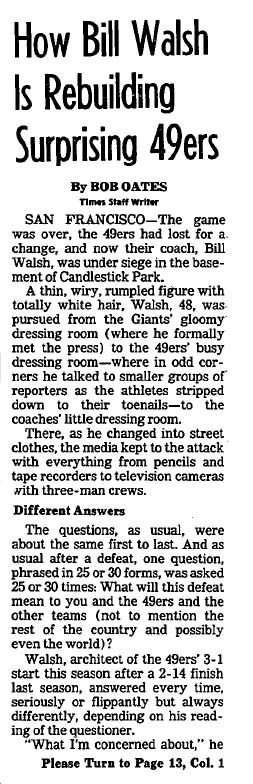
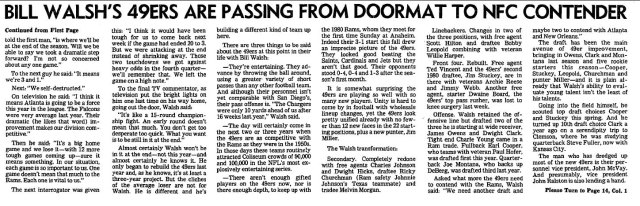
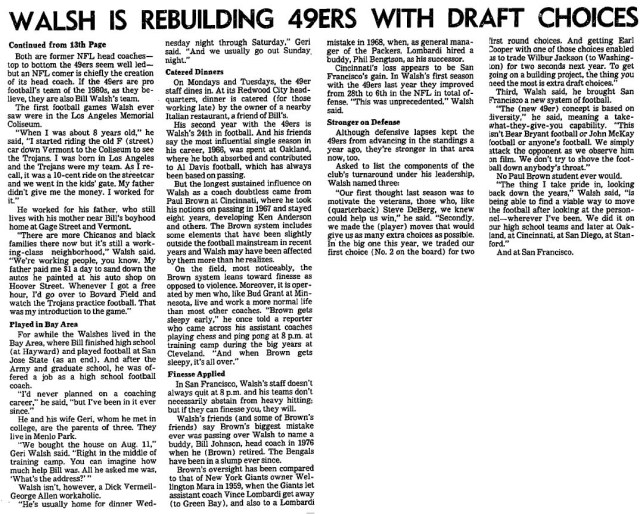
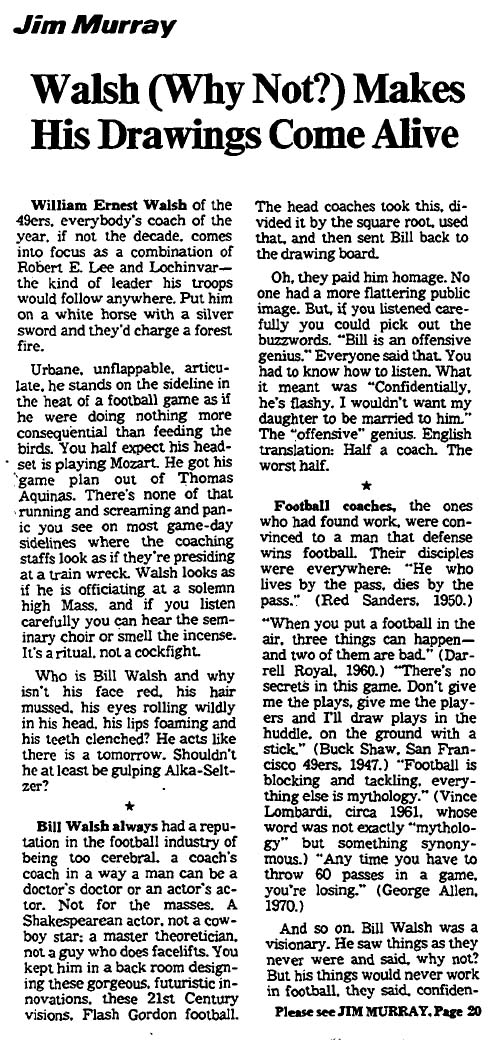
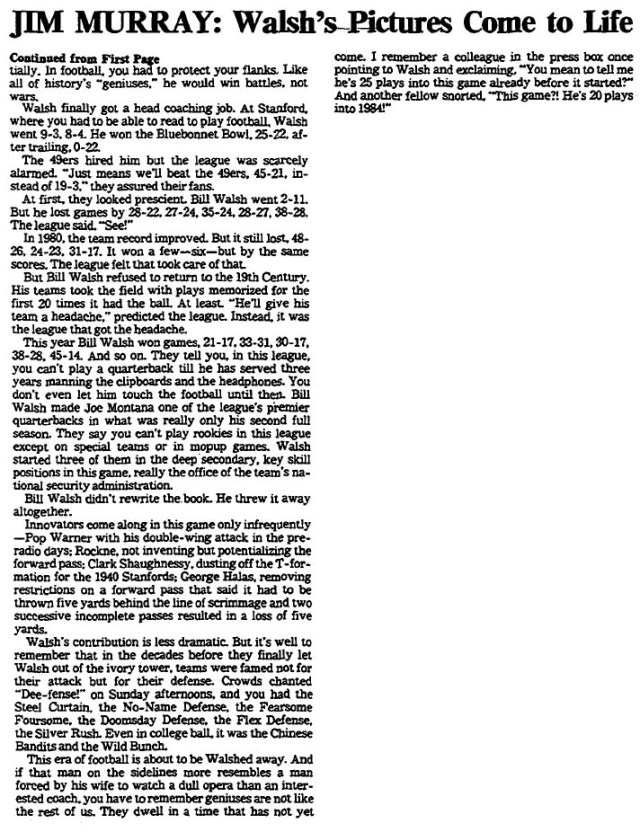
Bob Oates on Bill Walsh rebuilding the 49ers, Oct. 1, 1980; and Jim Murray on Bill Walsh, Jan. 10, 1982:

Bob Oates, Part 1

Bob Oates, Part 2

Bob Oates, Part 3

Jim Murray, Part 1

Jim Murray, Part 2

Posted in @news, Sports | Tagged , , , , , | Comments Off on Bill Walsh in The Times

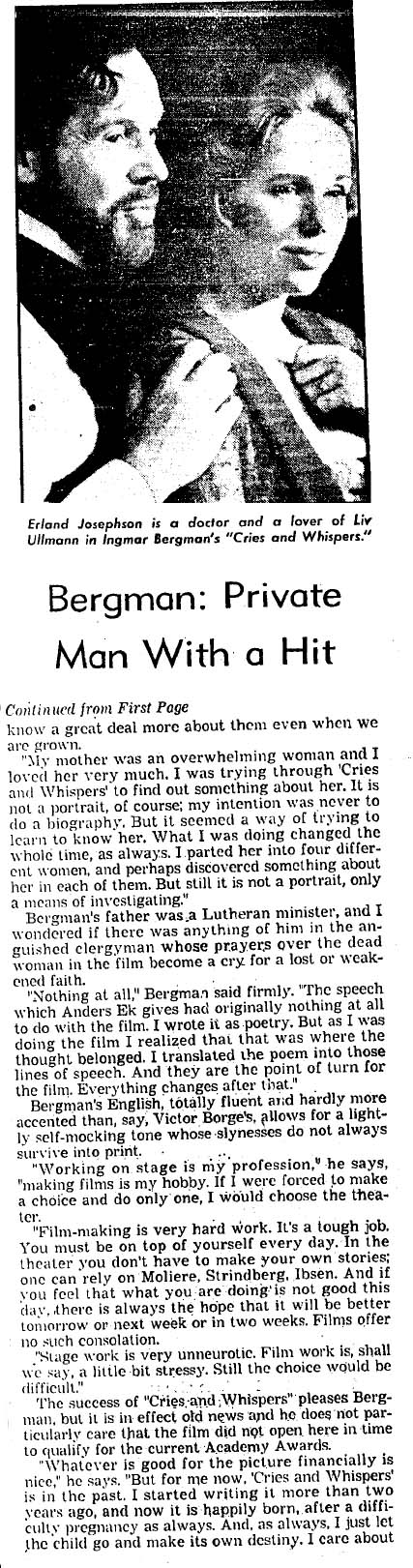
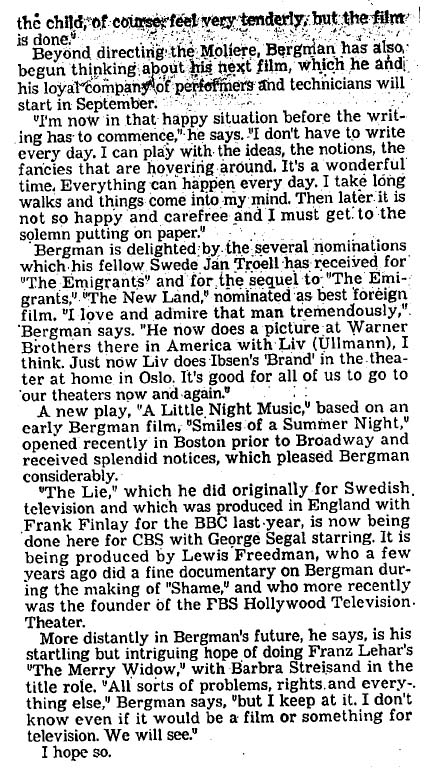
Ingmar Bergman on ‘Cries and Whispers’

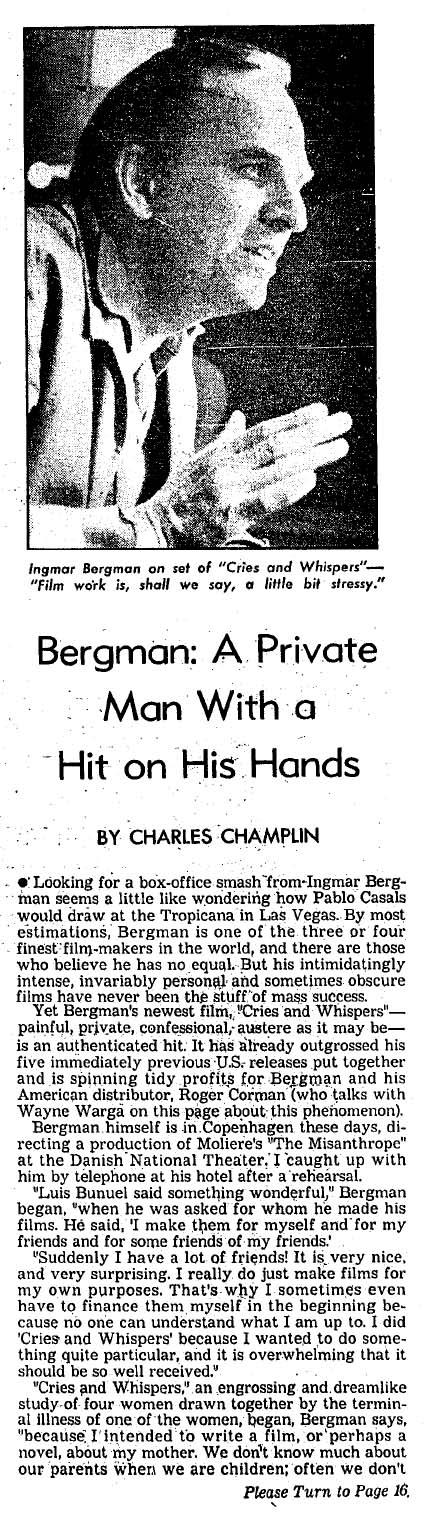
Charles Champlin’s interview with the late Ingmar Bergman on “Cries and Whispers,” Feb. 25, 1973:

Part 1

Part 2

Part 3

Posted in @news, Film | Tagged , , , , , | Comments Off on Ingmar Bergman on ‘Cries and Whispers’

Random queries


The hits for the Daily Mirror blog show that someone is researching the Feb. 13, 1969, robbery of the Bank of America at 3320 S. Hill. Here’s your answer:

The Times wrote very little about the case, although police killed two robbers. According to the account, the unidentified men were believed to be part of a five-member gang that robbed the bank Jan. 10, 1969,
getting $17,600 ($98,532.55 USD 2006).

A stolen car was found nearby with its engine running, The Times said. The slain holdup men were wearing stocking masks, gloves and “two changes of clothes, one of which apparently was to be discarded after
the robbery to hamper identification.”

Aha! A little research shows that on July 2, 1969, James “Tayari” Doss and his wife, Carmelita, were convicted in the January 1969 holdup. Doss was the vice chairman of a black nationalist group called US headed by Ron Karenga, the man who founded Kwanzaa. The other three robbers weren’t identified, The Times said.

The Times apparently didn’t cover the Dosses’ sentencing. The only other citation I can find is Pacific Stars and Stripes, July 3, 1969.

There is no further information on the Dosses.

Email me

Posted in Downtown, LAPD, Robberies | Tagged , , , , , , , | Comments Off on Random queries

Cold case solved

July 25-31, 1957
Los Angeles

Nine minutes after the cyanide pellets were dropped in the gas chamber
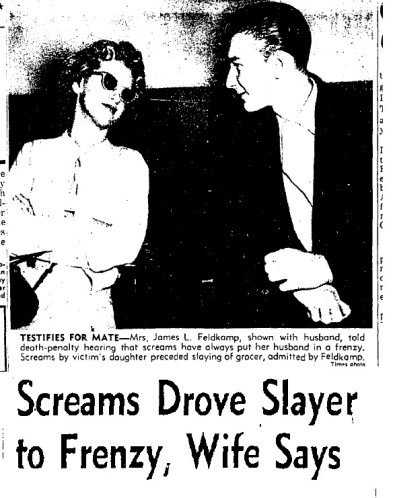
at San Quentin, James Lewis Feldkamp,  25, who had once tried to become an
LAPD officer, was dead.

If he hadn’t been turned down by the Police Department,  he said, he would have gone straight.

If the FBI hadn’t found his juvenile police record,* he might have been hired.

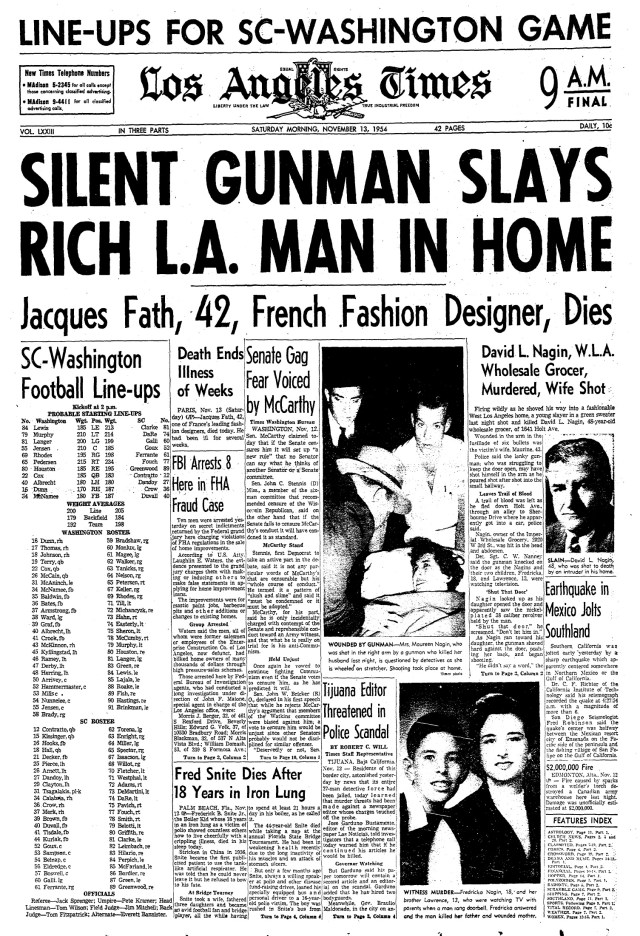
But because of a burglary committed at the age of 15, James Lewis Feldkamp went to the home of David L. Nagin,  1641 Holt Ave., with a loaded gun. Somehow, this seemed like logical reasoning to him.

It was supposed to be an easy job with a three-way split for Feldkamp,
Ambrose (Bocho) Lucero and Joel Leyva Villas, a truck driver who worked
at the wholesale grocery run by Nagin.

Villas and Lucero met in jail, where Villas was serving a sentence for
forgery and Lucero was serving a term for armed robbery. When Villas
finished his sentence, he contacted Lucero and they began planning the
Nagin holdup. It is unclear when or how Feldkamp became involved.

According to Villas, they failed in two attempts to rob Nagin at his office so they tried his home, knowing that he would have a large amount of cash he planned to deposit the next morning.

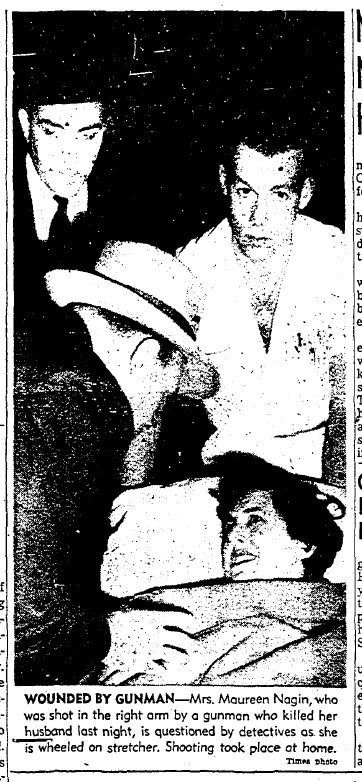
On the night of Nov. 12, 1954, Lucero apparently went to the home and asked the Nagins’ housekeeper, Marie Jacobs, about the address. Nagin went out to speak with him, returned and told Jacobs to be sure to lock the back door. “We don’t know who this kid is or whether he really wanted anybody,” Nagin said.

Later that evening, as Nagin, his wife, Maurine, and daughter, Fredericka, watched TV, Feldkamp knocked at the door. Fredericka answered it, thinking it was her boyfriend.

“I didn’t want to kill him or anybody else,” Feldkamp said. “When I rang the doorbell a young girl answered the door and screamed when she saw my gun.

“Shut that door!” Nagin screamed. “Don’t let him in!”

“She shoved the door in my face,” Feldkamp said. “I panicked. I shot myself, the man and somebody I didn’t see.”

Leaving a trail of blood after shooting himself twice in the wrist, Feldkamp went to a nearby car. He and Lucero hid on the floor of the back seat while Feldkamp’s 17-year-old-wife, Lucy, drove them to Mexicali and persuaded a doctor to treat the bullet wounds. (Another woman, possibly
Lucero’s wife, Carmen, may have been with them, police said).


Nagin was killed instantly and Maurine had been wounded in the right arm.

Maurine testified at the inquest: “I remember seeing the man shooting.
The flash blinded me…. I saw my husband was hit–I don’t know where.

“I tried to hold him up but the weight was too much for me. We fell
together and the man was still shooting. I felt I was hit and I cried,
‘Oh my God, we’re both dead.’

“My husband closed his eyes as we were falling. I called, ‘Dave, Dave’ and he never opened his eyes again.”

The investigation turned up some early leads but then went cold. It
wasn’t until July 24, 1957, when Feldkamp was arrested in the robbery of a market at 7132 Sepulveda Blvd., Van Nuys, that the case broke. In an anonymous phone call, a man told detectives to talk to Feldkamp about the Nagin killing. Feldkamp denied any knowledge of the case, but Lucy Feldkamp broke down during questioning and admitted that he had killed Nagin.

Feldkamp and Villas were charged in the killing, but Lucero was tried in Mexico because he had dual citizenship. It is unclear what became of Lucero and Villas, but Feldkamp waived his right to a jury trial and pleaded guilty to first-degree murder.

James Lewis Feldkamp, who almost became an LAPD officer, was executed Feb. 27, 1959.

David L. Nagin’s funeral was conducted by Rabbi Jacob Pressman at Hollywood Cemetery.

* Why wasn’t his juvenile record destroyed? A good question and I don’t have the answer.

Email me

Posted in Homicide, LAPD | Tagged , , , , | 4 Comments

Matt Weinstock

July 29, 1957

I tore a taco the other day with my favorite villain, Paul Fierro.

Chances are that you’ve seen him in movies or TV without knowing who he
was. He’s the tall, dark, grim guy who gives the hero trouble.

Mostly he portrays treacherous Indians, with or without clothes or
warpaint. He is indifferent on this point. “I can go naked,” he says.
“I got muscles.”

The important thing to Paul and others who play minor character roles
is getting enough work so they can live in the quiet [illegible] style
to which they are accustomed.  Paul has a cottage in Laurel Canyon and
his passions are cooking and laughing at life.

Born in L.A.’s “Dogtown,” he attended Castelar Street School, Vernon Avenue School, Venice High and Madera High, upstate.

He sold papers at Santa Barbara Avenue and Figueroa Street and fought
at a smoker in a Spring Street gym when he was 8. Won, too.


He played football, halfback, at Madera and won a scholarship to North
Carolina State, where he played in 1935, 1936, 1937 under coach Hunk
Anderson of Notre Dame. “I ran into the Civil War,” he recalls.

He can’t help being amused at all the fuss over aid to athletes, as if
it were something new. He says he got room, board, tuition, books,
laundry and $25 a week.

Funny things are always happening to Paul. Not long ago, while driving
his old Ford to Madera, he stopped to pick up a soldier near Fresno. As
the soldier got in, fear clouded his face and he exclaimed, “Jeepers!
Lou Garcia!” Turned out he’d seen a movie at his base the night before
in which Paul played a fierce Mexican devil who robbed a stagecoach and
kidnapped an old lady. Paul quieted the youth’s fear.

“I’ve never had a kissing role, said Paul, 41, and a stalwart 200
pounds, “but I don’t mind.” He’s reconciled to playing bad guys. Only
one thing. He has to watch his weight. “You can’t get too round,” he
explained. “Fat guys can’t scare people.”

Paul was preparing to leave for Bend, Ore., on location for the Lindsley Parsons production “Rio Bravo.”
[Note: Not the John Wayne movie. It was released as “Oregon Passage”].
In it he will play, for a change, a friendly Indian scout named, of all
things, Nato!

A LADY NAMED Louise
reports she spent a sleepless night pondering upon this classified ad
in a neighborhood paper in Hollywood: “Diamond ring. Will trade for gun
or ?”

She remains fascinated by the “or ? ” She reasons, here is a person
with a diamond ring which he–presumably it is a he–wishes to unload.
He’ll take a gun or what have you.

His mention of the gun indicates he’s in a surly mood, in which case
the question mark would likely mean a gallon of poison, a tree with a
noosed rope attached or a do-it-yourself bomb kit.

Tell you what. I’m going to do, Louise. I’m going to ignore the whole thing and try to get some sleep.

Posted in Columnists, Film, Matt Weinstock | Tagged , , | Comments Off on Matt Weinstock

Here’s to the Thunder Riders

Photos courtesy of the Autry National Center.
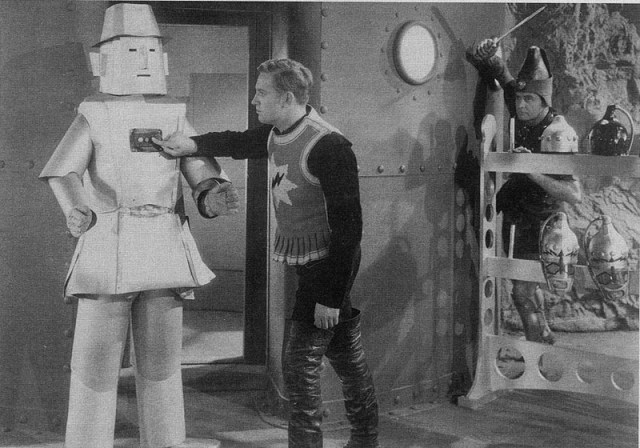
Gene Autry reboots a Muranian robot deep beneath Radio Ranch.


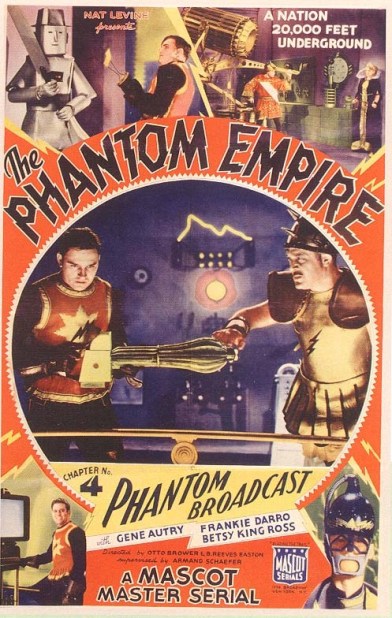
The Autry National Center is marking the centennial of Gene Autry’s birth with a showing of “The Phantom Empire,” my favorite movie combining science fiction and cowboys (the other contenders being “Valley of Gwangi” and “Night of the Lepus”).

“Phantom Empire” will be shown from 10 a.m. to 2 p.m. (remember it’s a 12-part serial) Sept. 29 at the Wells Fargo Theater at the Autry museum in Griffith Park.

I love the costumes in this movie. It looks like they just raided the wardrobe department for whatever they could find from all sorts of different period pictures.

In the 1969 “Valley of Gwangi,” bad things happen when cowboys capture a Tyrannosaurus rex for a wild west show.

In the 1972 “Night of the Lepus,” bad things happen when a studio green lights a movie about giant bunnies terrorizing the Southwest.

Email me

Posted in broadcasting, Film, Hollywood | Tagged , , , | 1 Comment

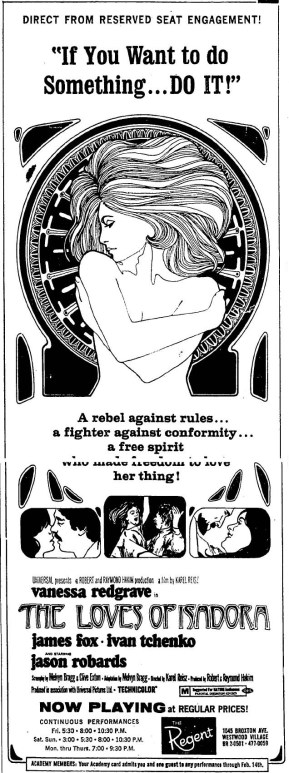
Literary diversions

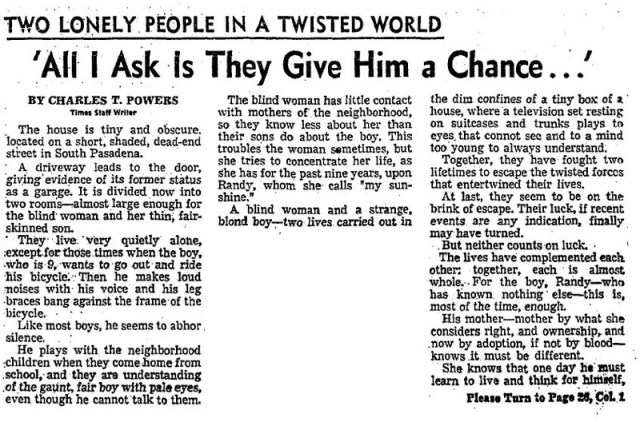
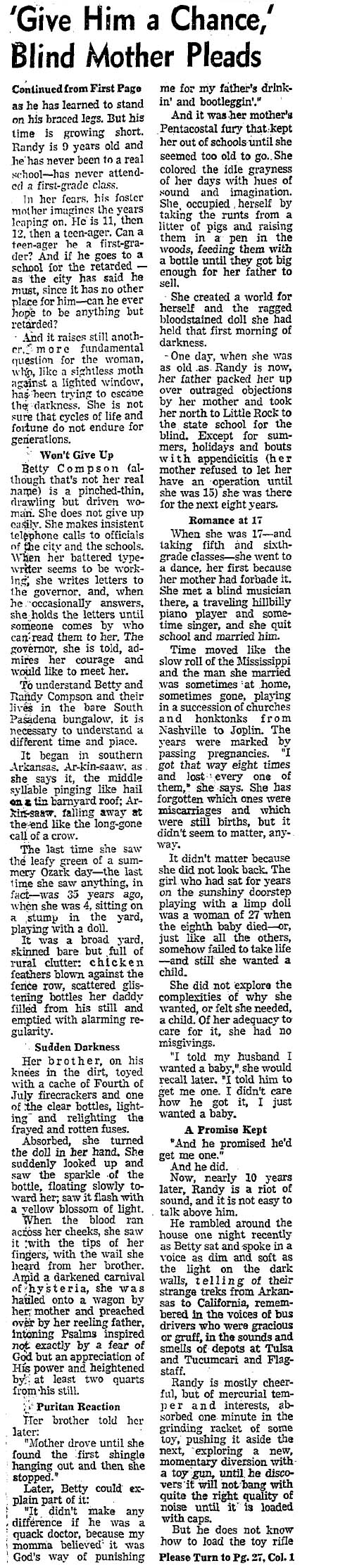
Although we overlapped slightly at The Times, I never met Chuck Powers, who left the paper to write novels only to die of a rare blood disease shortly before his first book, the critically acclaimed “In the Memory of the Forest,” was published in January 1997.

So even though we were nominally colleagues, Powers was something of a discovery for me and I grilled current and former co-workers about him. Everyone, without exception, praises “Forest,” which is set in Poland.

I’m pleased to present a Powers story published May 11, 1969. It’s quite a compelling piece of work. It is interesting to speculate on what he might have produced had he not died at the age of 53.

Part 1

Part 2

Part 3

Posted in @news, books | Tagged , , | Comments Off on Literary diversions

Rewriting history

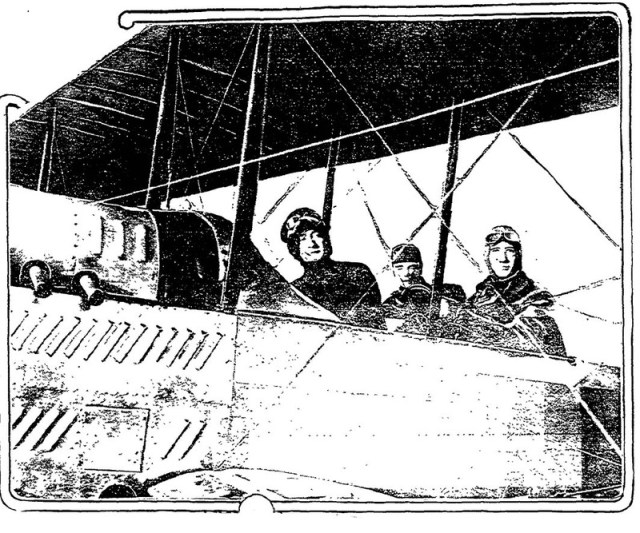
From left, Times reporter Bonnie Glessner, Tiny Broadwick and Glenn Martin, Jan. 9, 1914


This was supposed to be an upbeat story about the early days of aviation–a nice change of pace from crime and death.

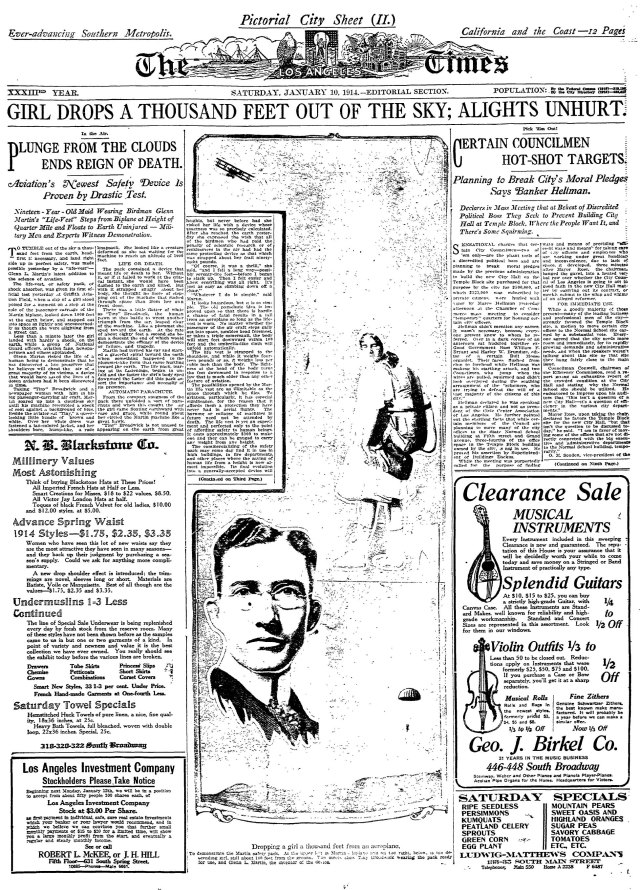
And it is–but not the kind I imagined. Instead of a story about a person, this turned into a story about a mistake.

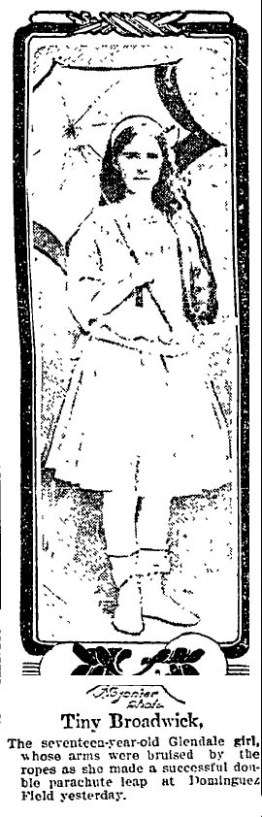
On July 28, 1957, The Times published  Harry Nelson’s feature about Georgia “Tiny Broadwick” Brown, a petite great-grandmother who was famous in her youth as
a parachutist, appearing at balloon ascensions and air shows from about 1908 to 1922.

In the course of the story, Nelson said that Broadwick made history June 20, 1913, in an exhibition over Griffith Park, with one of the first parachute jumps from an airplane.

A bit of background: Broadwick was born in North Carolina in 1893 to a family named Thompson and when she was about 14, she met George Broadwick, an inventor and
traveling aeronaut.  Tiny Broadwick joined the show and performed parachute jumps. Her specialty was  jumping with a parachute, discarding it and opening another one in what she called a “cutaway.” If she had enough altitude, she might make up to four cutaways, she said.

Her first jump to be recorded in The Times occurred in 1912, during the second air show at Dominguez Hills (the first, in 1910, is a story unto itself and far too complicated to get into here). She was later said to have appeared at the 1910 show, but I can’t find any record of it so far.

Two years later, The Times sent reporter Bonnie Glessner aloft with Broadwick and pilot Glenn Martin, who was at the controls of his newest biplane. As they were flying about 80 mph at an altitude of about 1,000 feet, Broadwick climbed out of the plane and positioned herself to jump using Martin’s aerial “life vest.”

“When she was ready to drop, Martin touched my shoulder,” Glessner wrote, “I faced about and turned my eyes on the face of the child. She was clambering over the side of the machine as though it were
stationary. Once over, she clung tenaciously, her eyes fixed on Martin, who was just then looking down over the side of the aeroplane. The signal came while he watched below. Just the slight movement of his
hand but the girl understood  and her lips formed a ‘goodbye’ which I sensed rather than heard. Smiling at me, she stepped off into space, not even a tremor of the machine showing she was gone.”

Note that I said “two years later.” The story is dated Jan. 10, 1914, and deals with an incident that occurred the day before: Jan. 9, 1914.

Not June and not 1913.

Oops.

So how did a Jan. 9, 1914, parachute jump become June 20, 1913, and later June 21, 1913?

Unlike Nelson, we have Proquest, so we can trace the mistake, which has quite a pedigree.

An unsigned  Jan. 31, 1949, story changes the year, saying that the jump occurred over Griffith
Park on Jan. 10, 1913, “and got a three-column write-up in The Times.”

It is apparently Nelson we have to thank for changing the date from Jan. 10, 1913, to June 20, 1913. And by the time of a 1966 story by Dorothy Townsend, June 20 has become June 21. This date appears in Broadwick’s 1978 obituary and, of course, is all over the Internet.

I’ll go fix the Wikipedia entry and see how long it lasts before somebody tweaks it.

Email me

Posted in @news, Transportation | Tagged , , , , , | Comments Off on Rewriting history

Attack in Griffith Park

July 27, 1957
Los Angeles

I’m going to describe a neighborhood and you guess where it is:

Gay women living together, speaking Armenian and working for nonprofits. (OK, I’m exaggerating slightly). Also lots of foreign-born urbanites and “makin’ it singles.”

That’s right, Los Feliz, at least according to Zillow.

And “They tend to have a modest income relative to housing cost.”

Los Feliz?

I’m looking up 2000 N. Berendo because strange things are afoot at the Dunn household. Very strange.

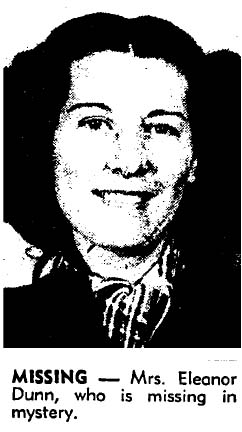
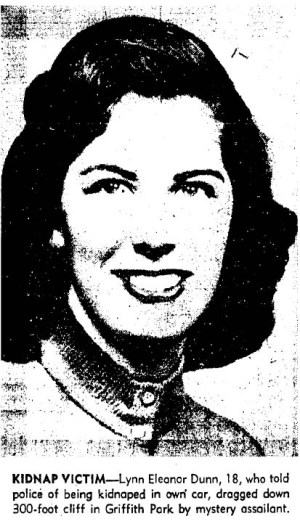
Nine years after her mother, Eleanor, vanished, Lynn Eleanor Dunn, 18, says a man forced her to drive to Griffith Park and attacked her following a series of threatening letters and lewd phone calls.

Just to make things interesting, her father is Linwood G. Dunn, special effects cinematographer who worked on “King Kong,” “Citizen Kane” and many other films.

Let’s go back to May 28, 1948. Eleanor Winifred Dunn, 35, the mother of four children, got in a cab at Fairfax  Avenue and Sunset Boulevard, never to be seen again. She was wearing a gray suit and green coat, and wasn’t carrying any money, The Times said. There are no further stories about her, so we don’t know if she was ever found.

In 1957, Lynn Dunn, who was about 9 when her mother vanished, told police the following story: She had been receiving threatening letters, one a week for the last five weeks. The first letters threatened her life while the later ones made “indecent proposals,” according to The Times. She also began receiving anonymous phone calls from a man who asked her to meet him in Griffith Park.

On July 26, 1957, she was returning home from her job as a telephone service representative when a gunman allegedly jumped into her car while she was stopped at New Hampshire and Finley avenues. Dunn said the man forced her to drive to Griffith Park, dragged her down a 300-foot embankment, beat her, kicked her, ripped her clothes, gave her some yellow pills and tried to attack her but apparently changed his mind.

She fainted when the man fled and was found four hours later by her brother-in-law, James George, 4706 Ambrose St. Her fiance, Don Hendricks, 23, 5333 South St., Glendale, discovered her car parked on Mount Hollywood Drive half a mile west of Griffith Observatory.

Authorities were looking for leads in the Marjorie Hipperson and Ruth Goldsmith killings, so in an attempt to catch the attacker, she agreed to meet a man who called her. She drove to Griffith Park with an FBI agent hidden in the trunk (recall that this is Los Angeles in July), but the man never appeared.

There are no more stories about Lynn Dunn. On Nov. 3, 1957, The Times list of marriage licenses included a Hendricks and Dunn, so they presumably went ahead with their wedding plans.

Beyond that, we simply don’t know. It’s easy to guess that Dunn’s missing mother would resurface if she saw the news stories about the attack, but there’s nothing to show that she did.

Linwood Gale Dunn died in 1998 at the age of 93.

Email me

Posted in 1957, Film, LAPD | Tagged , , , , | Comments Off on Attack in Griffith Park

Voices–Lew Irwin

Longtime broadcaster Lew Irwin operates Studio Briefing, an Internet-based daily digest of entertainment industry news. This is his story about reporting on the NAACP brutality lawsuits against the Police Department.

I
was working for KPOL… I was the news director there… and what I was doing was hanging out
with those people. The guy was the attorney from the NAACP [presumably George L. Vaughn Jr.–lrh]. I’d had a
bunch of meetings with this guy. He had been feeding me stories for a
long time. But I can’t remember what they were about. But I do remember
one guy I interviewed. The poor guy was a disabled American veteran who had been pulled out of a car, thrown to the ground, beaten up by the police.

Beyond that I can’t remember much.

The sales
manager knew [Police Chief William H.] Parker and Parker called the
sales manager. Being a good reporter, I called to
get a comment from the LAPD, so Parker called the sales manager. I
can’t recall what he said but he certainly didn’t want to see the
thing going on the air. I’d finished it. I was about to put it on the
air
without a comment from the LAPD. And he called the sales manager. The
sales manager talked
to the rest of the people.

It was not unusual in those days.
Especially back then… I remember doing a story about the John Birch
Society. I couldn’t say that Robert Welch, who was the head of the
organization, I couldn’t say he called Eisenhower an agent of the
Communist conspiracy because
Eisenhower might sue. Stuff like that. All kinds of stuff. I was hauled
into the manager’s office.

That was kind of the nature of the business.

During
the Watts riots I was out there every single day about 24 hours a day.
I was traveling around with some kids and we had a deal that
if we got stopped by any gangster types that I would tell them I was
married to one of their sisters… I did a lot of that kind of
reporting. I was hanging out. Almost everybody I knew was a source. I
was really young, so that’s all I was doing.

Fun times.

Posted in broadcasting, Countdown to Watts, LAPD | Tagged , , , , , | Comments Off on Voices–Lew Irwin

Random shot

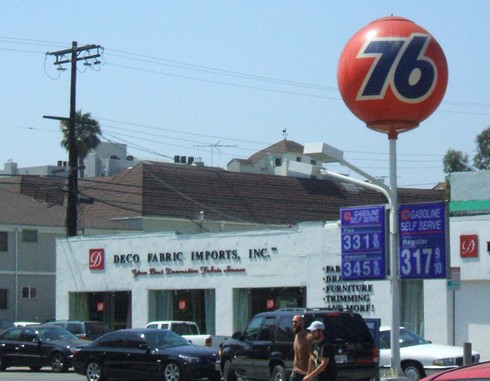
A fully functional Union 76 ball at La Brea Avenue and 6th Street.


Photograph by Larry Harnisch Los Angeles Times

Posted in art and artists | Tagged , , | Comments Off on Random shot

The day in sports

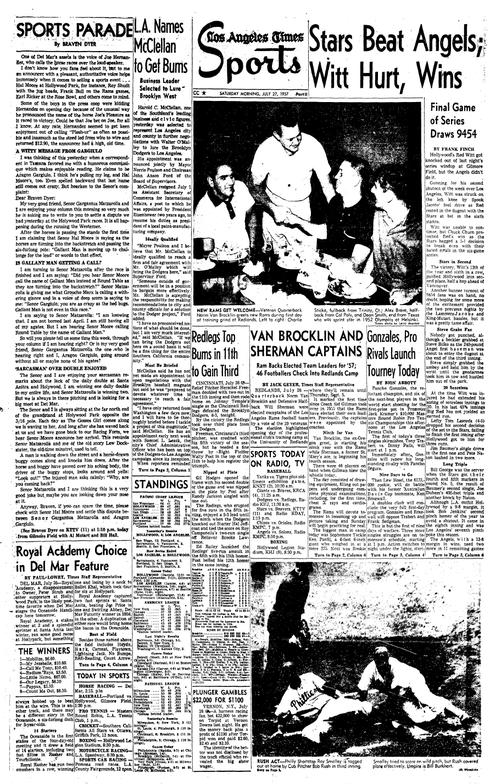
July 27, 1957
Los Angeles

Page 1

Continue reading →

Posted in Sports | Tagged , , , , | Comments Off on The day in sports

Matt Weinstock

July 26, 1957

This is to report that the Swiss family Caserini has held its annual
picnic at Steckel Park near Santa Paula and it is now OK for things to
get back to normal.

Caserini is a generic term for a bunch of people of that name, also
Giacomazzi, Falcinela, Montemaro, Cavaletti, Guidotti, Confaglia,
Murphy, Fitzgerald, Christianson, Brown, Lucas, Rupp, Clement and
Weinstock–all more or less remote descendants of Juan Batista Caserini
and his wife, Marian, who came to Southern California from Switzerland
in the last century.

Present, accounted for and looking fine were the three surviving
daughters of old Juan Batista–Caroline Giacomazzi, 86, Apolonia
Falcinela and Ava Caserini. Caroline and Ava live in Gardena. Apolonia
in Culver City.

You don’t do much at these things except gorge on fried chicken, potato
salad and cake and make the rounds, chatting with members of the family
you haven’t seen since last year’s picnic and trying to identify the
children.

Celestino Giacomazzi of Gardena, son of Caroline, observing some fifth-generation sprouts racing around, remarked:

“Pretty soon these things will be only for the youngsters.”

Henry Confaglia of Los Alamos was asked about the grasshoppers which
recently swarmed into his territory. His farm was spared but he knows
others which were badly hit. He watched the locusts devastate a
beanfield and he said it was awful. You can always expect grasshoppers,
he said, when there is no rain in March.

Pete Cavaletti of San Marcos Pass generously distributed some of the
most delicious oranges ever tasted by those present, all experts But
his crop wasn’t worth picking this year, he said.

The stream that runs through Steckel Park is quite full this year and I
made my customary safari in quest of frogs and tadpoles, demonstrating
to small children how fearless I was of red and blue dragonflies.

We didn’t see any frogs or polliwogs but in several pools about 2 feet
deep we stirred up some trout, several about 7 inches. They resent the
intrusion but were apparently resigned to it.

As for my horseshoe pitching, my game was off badly. Furthermore, I
suspect some of the farm boys have been practicing all year. I was shut
out in the preliminaries.

Picnics in our many-splendored Southern California parks, with or
without five generations, are herewith highly recommended. They bring
out the best in people.

Posted in Columnists, Matt Weinstock | Tagged , , , | Comments Off on Matt Weinstock

Matt Weinstock

July 23, 1957

There have been so many homicides lately it’s almost impossible to remember one from another.

But David Swaim, the news photog, won’t soon forget an incident in
connection with a slaying he covered in Baldwin Park a few days ago
.

He got his snapshots as a painter accused of strangling another woman
embraced his wife. Then he went to a house across the street and asked
if he could use the phone. Permission was granted.

He called his office–collect–and was about to depart when the neighbor said severely, “Put some money on the table.”

Dave explained he had called collect but the neighbor said, even more ominously, “Put a dollar on the table.”

Dave asked what for.

“For the defense of that poor man across the street,” was the reply.

Dave donated and he hopes his paper will be equally cooperative when
the item, “Accused slayer’s defense fund $1,” appears on his expense
account.

SCIENCE is being wonderful again, this time in Westwood, reports Al Hicks, science writer.

He reports that Dr. Edwin Leete, UCLA chemist, is raising radioactive
tobacco. Deliberately. The purpose is to trace the formation of
nicotine in the plant through radioactive compounds.

Of course, the wags are busy. One suggests Dr. Leete’s “hot” tobacco
plant might result in a new smoke called Cures–the cigarette with the
built-in radiation treatment for the lung cancer it helps give people.

SINCE THE cancellation
of the Navaho guided missile contract
and laying off of thousands of
workers, there’s a gag going around North American Aviation about the
definition of an optimist: A man who brings his lunch to work.

AT RANDOM–Sudden
realization: With the widespread acceptance of the ballpoint pen, the
old-fashioned blotter has become virtually extinct. Do I hear an ode to
the decline of the otterblay?

The Appel (pronounced apple) family on Curson St. has three little appels–Candy, Taffy and Penny.

Posted in @news, Columnists, Matt Weinstock | Tagged , , , | Comments Off on Matt Weinstock

Paul V. Coates–Confidential File

July 26, 1957

Mrs. Mary McAlpin, of this city, died less than 48 hours ago.

There are powerful and conflicting versions as to why.

The lone agreement comes in that the story of her death began six weeks ago.

On June 15, she fell down at the home of her daughter, Mrs. Edna Logan, 20249 Walnut Drive, Walnut, Calif. She broke her left hip.

A few hours later she arrived at General Hospital in Los Angeles

Andafter four days more, when she had been built up physically for surgery, a pin was placed in her femur. The operation was reported asuccess.

In Ward 380 of General Hospital, Mrs. McAlpin began her recuperation period.

But what happened then is difficult to say.

There are those who believe she died, at 77, from the effects of old age.

And there are those who believe that she died as a result of indifference on the part of members of the hospital staff.

According to Robert Thomas, director of General Hospital, Mrs. McAlpin began to get bedsores on the day following her operation.

The record of her 38-day stay, he reports, shows that she received special care 54 times. Thirty of the written entries of this care make direct reference to the fact that she was “turned and moved” to prevent
further damage to her body.

There are other reports, however.

One is from John Oftedal, M.D., of Pomona who examined Mrs. McAlpin immediately after her family removed her from General Hospital.

He states:

“Just to look at her turned my stomach.

“There were decubitus ulcers (bedsores) all over her body–her sides, her back, her knees, her hips.

“Some were the size of hen’s eggs. Gangrene had sent in.

“Never had I seen anything like it.”

He concluded:

“Bad bedsores are nearly always the result of poor nursing. They need a lot of attention–antibiotic therapy, cleaning, changing dressings, light treatment.”
The doctor’s words were “nearly always the result of poor nursing.”  It left room for the exception to the rule.

So I talked to a fellow patient of Mrs. McAlpin. Her name is Sammilee Ross. This is what she told me:

“I was with her for five days. There were no bandages on her sores. I listened to the nurses argue about who should feed her. So finally I started feeding her myself.

“Only once did I see a nurse actually feed her.

“The last two days I was there they didn’t even change her bed–and it was dirty. I can assure you.

“I could hear them in the hallway, though, saying: ‘All right, who’s going to turn the big, fat slob over.’ ”

Sammilee Ross told me that the nurses often neglected to empty the bedpans, so she took the chore herself.

“I’d do it at night, too. Only I’d scald them to sterilize them.  The nurses wouldn’t.”

Anyone who knows the conditions at County General Hospital knows there’s a
shortage of nurses. Were there enough in Ward 380 to do the required work?

Mrs. Ross says yes. “A good example is when the nurse brought a book of mine back which had been missing from my bedstand.

” ‘I took it to read,’  she told me, ‘because I didn’t have anything else to do.’ ”

Every night, Mrs. McAlpin was visited either by her son, Clarence McAlpin, or her daughter, Mrs. Edna Logan, or both.

Mrs. Logan told me:

“We’d beg them to give her something for the pain. To bathe her sores. We volunteered to clean them ourselves.

“One doctor told us we couldn’t touch her. Another finally said it was OK. When other patients told us that the nurses weren’t feeding her, we took food with us–liquids and custards.”

Clarence McAlpin told me:

“Frequently the covers were off of her. Once, when she was sweating very much and I
complained, the nurse told me, ‘If you want her to have extra service, get her a private room.’ ”

Last Monday, Mrs. McAlpin was removed from General Hospital by her children. She was taken by ambulance to the Pomona Rest Home of Mrs. Cora Cozad.

“The poor woman was full of holes and sores. And so hungry,” Mrs. Cozad told me. “I took one look at her and called Dr. Oftedal.”

The doctor arrived within 10 minutes. He told me afterward that he checked the patient’s heart and blood pressure and they were fine. But, he added, he had never seen anything as dreadful as the bedsores.

General Hospital Director Thomas explained to me that flesh varies with individuals and that Mrs. McAlpin’s skin continued to break down despite good treatment.

“We were on the horns of a dilemma,” he said. “Fracture cases shouldn’t be moved. Bedsore cases should.

“I believe our staff did everything possible. The nurses don’t record every service to a patient, so she undoubtedly received more attention than the record shows.”

Dr. Harold Kade of the county coroner’s office, who investigated the death yesterday, concurred with Thomas.

“It’s not an unusual case,” he said. “I listed the death causes as general arterial sclerosis and fracture of the left femur.”

I checked also with a private physician, highly respected in medical circles here.

“If, as the report said, Mrs. McAlpin was moved 30–or even 60–times in 38 days, it wasn’t enough,” he stated.

“Bedsores are always a danger with elderly patients. And patients should be turned every four hours.”

And, as the police officer who answered the “dead body” call reportedly remarked at the scene:

“Somebody goofed.”

Posted in Columnists, Paul Coates | Tagged , , | Comments Off on Paul V. Coates–Confidential File

Never seen again

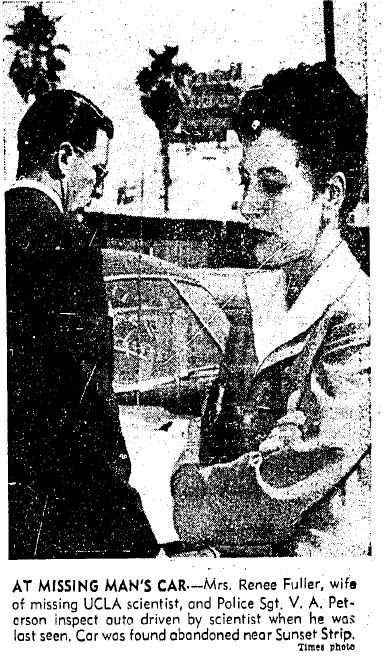
When Dr. George Ripley Fuller vanished,
he left few clues and countless questions. What we don’t know about him
would fill a book while the facts cover a page or two at most.

We know he was 27 when he disappeared, the youngest of three successful
brothers born to Mr. and Mrs. Walter Fuller of New York. We know he
graduated in 1953 from Cornell University’s medical school in New York.
And we know he was a research physiologist attending UCLA under a
one-year grant from the U.S. Department of Health.

We know he was married to a psychology student named Renee, whom he met in medical school.

Most important, we know he was a driven, tightly wound man whose life
centered on his work and that he had begun seeing a psychiatrist about six
months before he disappeared.

A week before he vanished, he and Renee made a trip to visit his
parents in New York. There was a violent argument, The Times said, in
which Renee sided with his parents. Renee later described this as a
“family spat,” but there were never any details on what the argument
was about.

The Fullers returned to Los Angeles on May 27, 1956, four days before he disappeared.

On May 31, 1956, Fuller received his paycheck. He also cashed a $20
check ($143.31 USD 2006) at UCLA Medical Center’s cashier’s office.
News accounts of the disappearance say that Fuller’s bank accounts were
untouched since he vanished.

At 7 on the evening of May 31, Fuller went to the medical center
for a seminar, but found that it was canceled. While he was there, he
invited several people to an informal seminar the next night at the
Fullers’ apartment.

He was never seen again.

On July 20, 1956, Fuller’s abandoned, dust-streaked 1949 Chevrolet
two-door sedan, California license JSR 808, was found  across from 1220
Sunset Plaza Drive. The driver’s window was rolled down and the keys
were missing. The car had apparently gone 75 miles since it was
serviced May 22, 1956, nine days before Fuller vanished.

According to Renee Fuller, nothing was missing nor was there anything
new. “I know of no reason why he would be in that area,” she said.

Dr. Charles H. Sawyer, head of the anatomy department at UCLA, said: “I
have worked closely with him and seen him under tremendous pressure
during important experiments–pressure I am not sure I could
withstand–and Dr. Fuller has never shown any signs of cracking or
instability.”

Perhaps the most remarkable aspect of Fuller’s disappearance is that
his family took absolutely no interest in it. Neither of his brothers,
one living in Maine and the other in Florida, nor his parents set foot
in Los Angeles as far as I can tell and apparently they had little
interest in solving what became of him.

Aside from the fact that Renee Fuller received a hoax phone call
demanding ransom money, we know very little more about her. The Times
and public records are silent on what became of her. They apparently
had no children.

Charles H. Sawyer died in 2006 of Alzheimer’s disease. He was 91.

Email me

Posted in LAPD, Science | Tagged , , | Comments Off on Never seen again

Champagne flight II

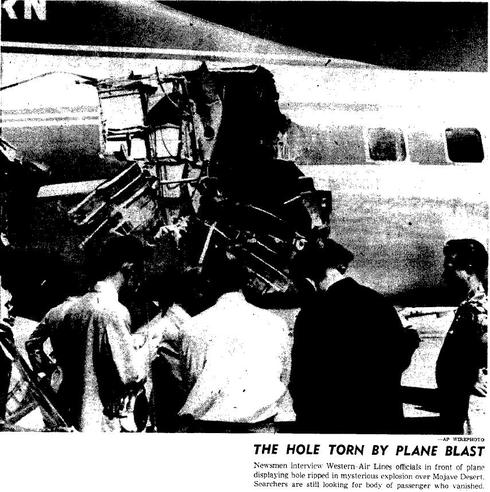
Another picture of the damaged Western Air Lines plane, showing a detail of the hole made by
the explosion.

Posted in Suicide, Transportation | Tagged , , , | Comments Off on Champagne flight II

Pepe Arciga

July 25, 1957

Superlatives, to be frank, don’t come easy to anyone about to comment on the true merits of most bullfight filming efforts.

In months past, Hollywood movie makers have pulled pretty hefty
boo-boos when confronted with the challenge of putting on film the
essence of bullfighting. Their attempts, however worthy, have always
fallen short because of one inescapable fact:

Bullfighting is tragedy, it is art, it is brutality, it is savagery, it
is a rite of sublime expressions all rolled into a neat little package
of splendor. This, so it seems, Hollywood cannot capture, at least
commercially.

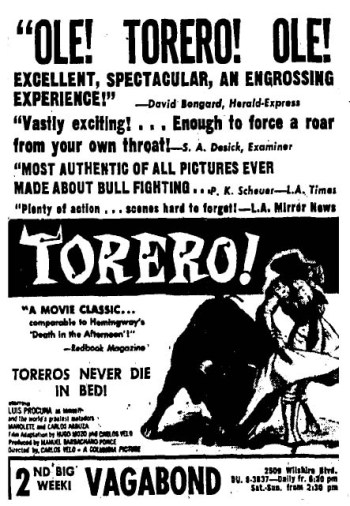
Last Friday, at the Vagabond Theater, Columbia Pictures released a documentary-biography based on the life of Luis Procuna called “Torero.” All done in black and white.

Most of it was shot in Mexico by an international crew of more than half a dozen photographers of various nationalities.

Produced by the Barbachano organization and directed by Carlos Velo,
we have in our hands, beyond possible doubt, the most powerful attempt
yet made to put on celluloid the shockingly conflicting things about
bullfighting.

In a roundabout way, it also is the the most clear-cut filmed version on what is, really, the Mexican “school” of tauromachy.

Luis Procuna and Silverio Perez are, or rather have been, the best two exponents of such a school, such techniques.


In “Torero,” you see why topflight Mexican matadors–in this case Procuna–always either were capable of sending crowds into pitches of ecstasy or putting the look of lynchers in their eyes.

You are to see, as well, the unrehearsed scene of a matador’s face
twisted by an incredible panic which tells him that it is madness to
try to make another pass.

Veteran of at least three feature-length Mexican movies, Luis Procuna,
as photogenic as they come and possessor of the friendliest grin in
bullfighting, gives an effortless performance as various cameras catch
him in the role of playful father, devoted husband, maniacally inspired
bullfighter, brazenly cowardly, idol, etc.

You will see, for brief seconds, the faces of people who make and kill toreros.

You will see, as well, the basic differences which characterize Mexican
and Spanish bullfighting–the Mexicans being suicidal, gay, supremely
dramatic; the Spaniards masterful, mechanical and sophisticated even
when bouncing, like balls, over the bull’s horns.

There are many memorable scenes which will be hard to forget. Particularly one of the very last sequences in which Luis Procuna, with his admirable muleta, drives 60,000 hoarse-throated yelling fans into complete submission.

When shirt-sleeved fans pour into the circle of sand to carry off the triumphant Procuna on top of their shoulders, they don’t stop to look at the bull. In the beast’s hump is the sword embedded to the hilt.

As Procuna
is carried off bodily, suddenly, at the bottom of the screen, you see
the bull stagger to his feet momentarily and then, plump, the beautiful
animal falls dead with legs kicking.

This scene is revealing because it proves, once and for all, that true
aficionados are more concerned with artistry of the cape, the banderillas and the muleta than having a torero execute the perfect kill.

And don’t be surprised if momentarily you get carried away and shout,
from left field, all kinds of bravos. I did. To be frank, I wasn’t a
bit embarrassed by it at all when the lights were turned on.

And when the lights were turned on, what was it that I saw? That the
greater number of patrons were men and women in their early 20s.
Significant. Very significant.

Carlos Vera Cañitas, Félix Guzmán and Luis Procuna, 1941

Posted in Columnists, Film, Pepe Arciga | Tagged , , , | Comments Off on Pepe Arciga

Matt Weinstock

July 25, 1957

You know how some newspapermen are–gay and carefree.

Well, a reporter–let’s call him Mac–was driving home the other day
after suitably observing the decline of common sense with a few
literate friends.

Two blocks from his home, he was nudged to the side by a policeman who inquired, “What’s the idea of driving in second gear?”

Mac, unaware that he was in second gear and figuring he’d had it,
replied, “Oh, I do that all the time. Frequently I drive home in
reverse just so I won’t get in a rut.”

The officer told him to get out and stand up. Mac said it would be silly for him to try, he couldn’t.

The officer told him to park his car at the curb and take a cab home.
Mac told him he would be glad to but he was broke. However, if the
officer would lend him $1–.

“All right,” said the officer, “I’m going to let you drive the two
blocks to your home. I’ll be right behind you. One wrong move and I’m
taking you in.”

Mac said that was mighty nice of him and asked how come. “I figure
anyone with your gall isn’t as drunk as he thinks he is,” replied the
officer.

Mac made it home fine and no one better say nasty things to him about L.A. policemen.

AT RANDOM–The
enigmatic sign in Pershing Square Garage stating the escalators are for
pedestrians only is no longer the most observed in town. No. 1 seems to
be the one on Magic Cleaners on 3rd Street near Western Avenue–“Ladies
who drive up and drop off their clothes will be given prompt and
courteous attention….”

The Reseda Chamber of Commerce is sponsoring a David Keith Gibbs
Memorial Fund for the 11-year-old son of pilot James Keith Gibbs, 32,
who was killed July 1 when he guided his bomber out of heavily
populated San Fernando Valley and crashed into unoccupied territory.

Posted in @news, Columnists, LAPD, Matt Weinstock | Tagged , , , | Comments Off on Matt Weinstock