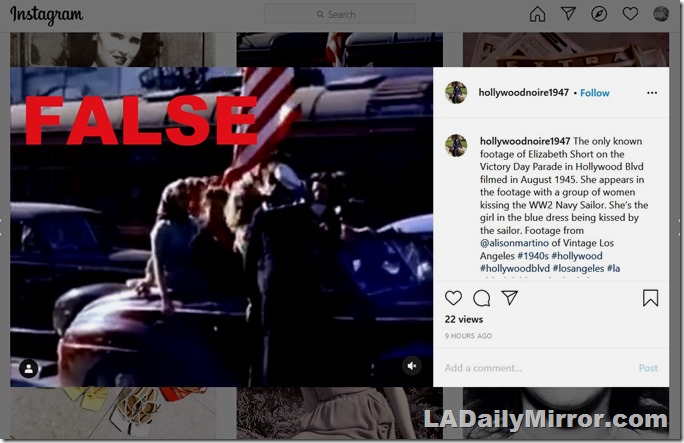
Black Dahlia: Purported Movie of Elizabeth Short on V-J Day in Hollywood – FALSE!

Jan.16, 2021, Film of Elizabeth Short on V-J Day FALSE!

Every so often, this clip shows up on social media, purporting to be Elizabeth Short on Hollywood Boulevard during V-J Day celebrations in August 1945.

False. Elizabeth Short was in Medford, Mass., on V-J Day and didn’t arrive in Los Angeles until the summer of 1946.

Posted in 1946, 1947, Another Good Story Ruined, Cold Cases, Hollywood, LAPD | Tagged , , , , , , | Comments Off on Black Dahlia: Purported Movie of Elizabeth Short on V-J Day in Hollywood – FALSE!

Black Dahlia: Trim Your Roses on Jan. 15 to Remember Elizabeth Short

Today is Jan. 15, the anniversary of Elizabeth Short’s death. As is the custom, the Daily Mirror will be dark.

Trim your roses in her memory.

Posted in 1947, Black Dahlia, Cold Cases, Crime and Courts, Homicide, LAPD | Tagged , , , , , | 1 Comment

Black Dahlia: On the Anniversary of Elizabeth Short’s Murder, a Guide for the Hasty Reporter

image

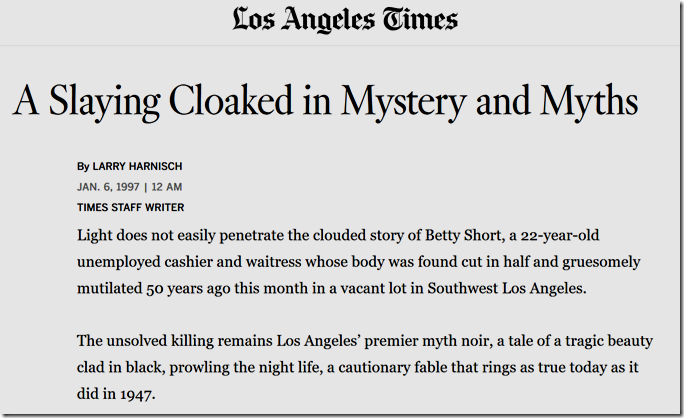
My Page 1 story on the Black Dahlia case. Now behind the Los Angeles Times pay wall. The full version of the story (expanded by two-thirds) is available on my old, old website.


The anniversary of Elizabeth Short’s murder, coming up Friday, always promotes a flurry of retrospectives on the 1947 Black Dahlia case. The stories are typically scraped off the Internet by reporters dashing off stories who rarely venture beyond Wikipedia.

A few guidelines to avoid the more common mistakes:

Posted in 1947, Another Good Story Ruined, Black Dahlia, Cold Cases, LAPD | Tagged , , , , , , | Comments Off on Black Dahlia: On the Anniversary of Elizabeth Short’s Murder, a Guide for the Hasty Reporter

Mary Mallory: Hollywood Heights — ‘Barbara Frietchie’

Frietchie_watermark

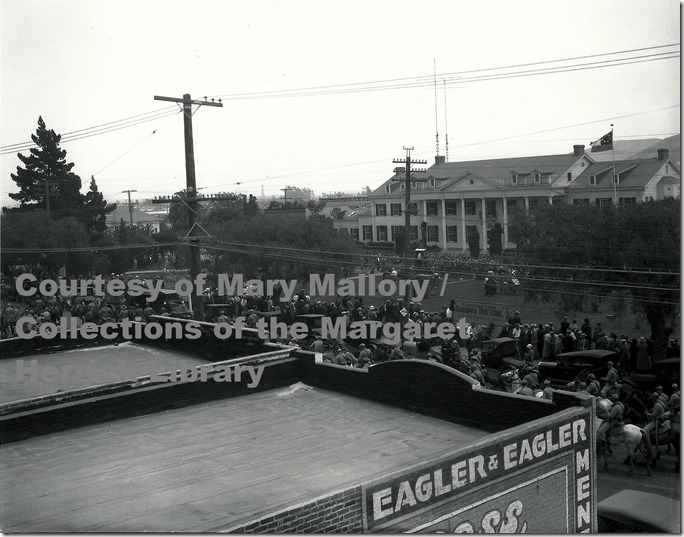
Photo: Filming “Barbara Frietchie.” Courtesy of Mary Mallory/Collections of the Margaret Herrick Library.


Note: This is an encore post from 2012.

Thomas Ince, sadly more recognized today for his tragic, early death than for the fine films he created, was one of Hollywood’s most successful early film producers. Building his first studio in 1912 at what is now the intersection of Pacific Coast Highway and Sunset Boulevard, Ince churned out mostly westerns and Civil War pictures at this location, stories that possessed fine drama along with exciting action. In 1918 he built a fancy, state of the art studio facility at 9336 W. Washington Blvd. in Culver City, which later housed Selznick International Pictures and still stands today as the Culver Studios. Here Ince turned out a wide range of films with high artistic values. In 1924, he turned once again to a story of the Civil War, BARBARA FRIETCHIE, one that would allow him to employ many studio buildings as stand ins for Maryland buildings and mansions.

“Barbara Frietchie” was a poem written by John Greenleaf Whittier in 1864, inspired by the legend that the elderly Frietchie proudly displayed the Stars and Stripes outside her home in Frederick, Maryland, as Confederate General’s “Stonewall” Jackson’s troops rode by.  While there was a real person named Barbara Fritschie in town, she had nothing to do with the incident; another woman in her city actually raised the flag.  As the Fritschie family was famous and respected there, the story became attached to them, which they did nothing to disprove or disown.  Clyde Fitch’s play of the same name makes the story more romantic by making the heroine young instead of old and adding in romance.  John Hopkins University students disproved Whittier’s thesis in a study they conducted in 1923, per a Jan. 8, 1923 story, in The New York Times.

Ince recognized the drama inherent in the Civil War story, of a town and families divided between North and South, which offered examples of character, courage, and determination.  In the film, Frietchie, played by the attractive Florence Vidor, and family support the South.  She loves William Turnbull, played by Edmund Lowe, who of course sympathizes with the North.  When war is declared, they are separated before they can be married.  Over the next several years, they come into contact as Turnbull’s troops come through the city.  He is wounded and brought to the home of the Frietchies.  Believing him dead, Frietchie honors her lover by flying the American flag from the balcony as General Jackson’s troops victoriously parade by.  As the crowd jeers her, Jackson warns that anyone who harms her will die like a dog.  Barbara is still shot and she crawls to William’s bedside.  Miraculously, both revive, and a wedding ends the film.
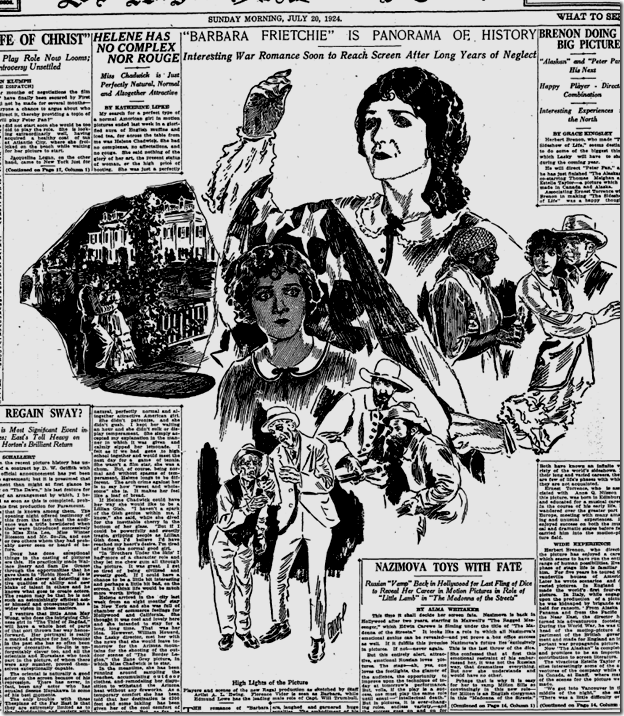
July 20, 1924: Barbara Frietchie

As the July 20, 1924, Los Angeles Times points out in a story coming from Ince publicity materials, the film would comprise more than just the facts of the play and poem.  “It will, in fact, show various crucial moments in American history, beginning with the landing of the Pilgrims to the period of the Civil War, with the battle of the Monitor and the Merrimac.  Primarily, however, “Barbara Frietchie” is a love story, one of the most appealing as related to the history of this country, and as such it is being filmed.”  Not only would the film show the pilgrims, it featured scenes of the Revolutionary War and President Abraham Lincoln as well.

To make the story more realistic and cheaper than traveling to the South, Ince erected a residential street to represent Frederick, Maryland.  Brian Taves, in his new biography of Ince, notes that the grounds of the studio also represented a Southern village and military camp.  The pillared, antebellum looking administration building of the Ince Studio and its surrounding grounds became the Frietchie mansion.  The studio played up the use of the mansion in publicity stills sent out promoting the picture, many picturing the building.  Some photos show it regally as a fine, Southern home, while others show it under attack.  In this off-camera photo, cavalry veterans of World War I play Civil War soldiers, riding up Washington Boulevard on horses as an eager crowd watches the action.  The studio plays up the film with free publicity for Culver City residents, locating a large sign noting the production’s name at the front of the property.

Taves states that the film was an important one for the studio, running over ninety minutes and costing almost $175,000.  Shooting so much on the lot made strong financial sense in order to reduce costs.

The Los Angeles Times loved the film; reviewer Edwin Schallert in the Sept. 17, 1924, paper called it “…more than entertainment, although it is that in full effect; it is also an animated and highly colorful page of history.  To be sure, there is an obvious line of hokum running through the feature, but as it is the source of much humor one can accept it.”  Schallert thought Vidor outdid any of her previous performances, adding prestige to her as an actress, giving heft to the picture.  He found Lowe fine, and thought that Mark Hamilton, the humorous scapegoat throughout the film, almost stole the feature.  Schallert noted as well that the film connected to the present day, as the grandson of the two leading characters returns from the war in Europe, helping “reawakening of patriotic feeling.”

Los Angeles Times gossip columnist Grace Kingsley reviews the film in her story about its Oct. 3 premiere at the California Theatre, pointing out how sophisticated audiences were to movie plots.  “It seemed to be the aim of the picture people to wring every drop of drama possible from every situation.  Hero and heroine suffer in every way they could be made to suffer before the happy finale, even to our being caused to think (unless we were very movie wise, which we are) that the hero was dead.  We knew very well that even if his heart wasn’t beating he would hop up just before the final curtain.  And so he did.”

Sadly, this would be one of the last films Ince produced that he would see on screen.  Thomas Ince died of stomach problems on Nov. 19, 1924, leaving behind a studio with several films still shooting or in post-production.

Posted in 1924, Film, Hollywood, Hollywood Heights, Mary Mallory | Tagged , , , , | Comments Off on Mary Mallory: Hollywood Heights — ‘Barbara Frietchie’

Movieland Mystery Photo (Updated + + + +)

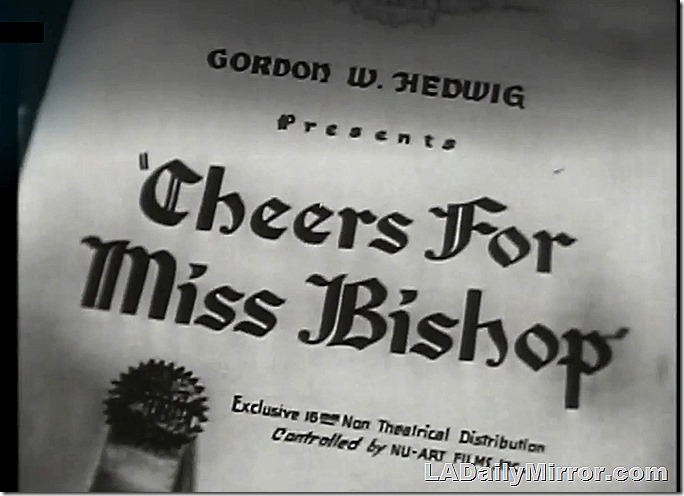
Jan. 16, 2021, Cheers for Miss Bishop Main Title

This week’s mystery movie was the 1941 film “Cheers for Miss Bishop,” with Martha Scott, William Gargan, Edwin Gwenn, Sidney Blackmer, Dorothy Peterson, Sterling Holloway, Donald Douglas, Marsha Hunt, Lois Ranson and Mary Anderson.

From the novel “Miss Bishop” by Bess Streeter Aldrich. Screen adaptation by Stephen Vincent Benet. Screenplay by Adelaide Heilbron and Sheridan Gibney.

Music by Edward Ward. Assistant to the producer Grant Whytock. Photographed by Hal Mohr, casting director David C. Werner, art direction by John DuCasse Schulze, costumes for Miss Scott by Irene Saltern. Makeup by Don Cash, sound by Earl Sitar.

Edited by William Claxton, re-recording by Richard Heermance. Set decoration by Julia Heron. Assistant director Joseph C. Boyle. Production manager Sherman A. Harris.

Released through United Artists. Produced by Richard A. Rowland. Directed by Tay Garnett.

“Cheers for Miss Bishop” is available on DVD from TCM and via streaming at Amazon.

Continue reading

Posted in 1941, Film, Hollywood, Mystery Photo | Tagged , , , , , , | 53 Comments

Black Dahlia: My Annual Donation in Memory of Elizabeth Short

image

As longtime readers know, I always begin a new year with an annual donation in memory of Elizabeth Short to Heading Home, which works with the homeless in the Boston area. Partly because of my research on Elizabeth Short, I try to make the issue of homelessness a continuing theme of the Daily Mirror.

I donate to an agency in the Boston area because of Elizabeth Short’s connections there, but Los Angeles also has a severe, chronic problem with homelessness and there are many local agencies that welcome donations. I recently visited Hollywood and saw camps of homeless people along the exit ramp from the northbound 101 onto Hollywood Boulevard and along the Walk of Fame. Men pushing shopping carts. Women cowering in doorways of buildings that are boarded up or closed with roll-down shutters that are tagged.

I believe people will find helping the homeless more meaningful in the long term than, for example, leaving a bottle of liquor and some cigarettes at her grave, especially since Elizabeth Short didn’t smoke and rarely drank.

Posted in 1947, Black Dahlia, Hollywood | Tagged , , , | 2 Comments

Mystery Movies 2020 in Review

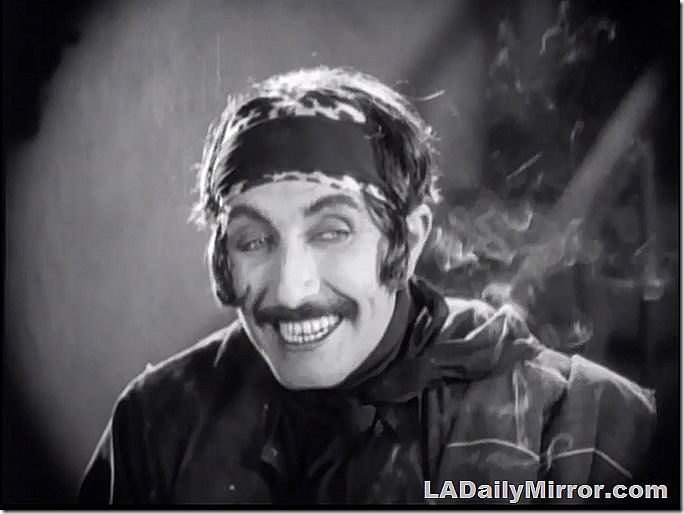
Roy D'Arcy in 'The Temptress'
Roy D’Arcy in “The Temptress,” one of 2020’s mystery movies.


I used a different method in selecting last year’s mystery movies, relying on the trade papers available on Lantern in a systematic fashion. The films might seem iffy now, but they generally got good reviews, and sometimes raves, when they were released. And in some instances, I chose movies for their historic value regardless of the reviews, notably “Native Son.”

In general, I had more movies from the 1930s (17 in 2020 vs. 13 in 2019) and more from the 1960s (nine in 2020 vs. 3 in 2019), fewer movies from the 1940s (11 in 2020 vs. 14 in 2019) and 1950s (12 in 2020 vs. 16 in 2019). And nothing from the 1970s, vs. two films in 2019.

MGM and Warner Bros. were the top mystery movie studios in 2020 at nine each, while 20th Century-Fox went from 10 mystery films (the leader in 2019) to five in 2020.  

On the jump, the mystery movie statistics for the year……

Continue reading

Posted in 2019, 2020, Film, Hollywood, Mystery Photo | Tagged , , , , | 2 Comments

Mary Mallory / Hollywood Heights: The Paris Inn Sings for Its Supper

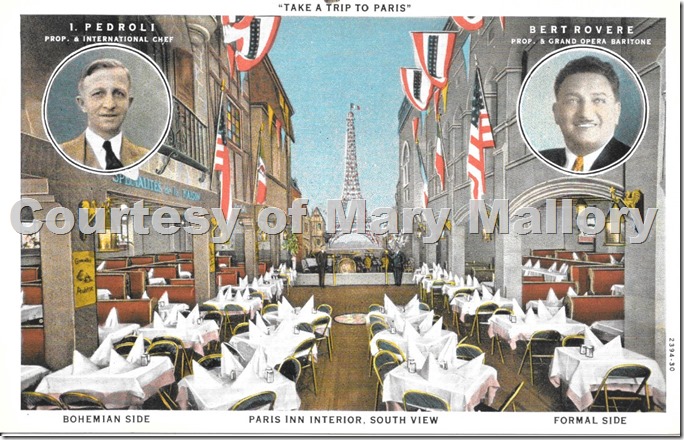
Paris Inn Postcard

From its beginnings, Los Angeles attracted dreamers and schemers looking to devise new, more successful lives. Early leaders practiced hucksterism and hyperbole to draw Midwesterners and others to the golden, promised land of sunny Southern California and its budding metropolis Los Angeles. Umberto (Bert) Rovere arrived in Los Angeles and fashioned a successful life through his own boosterim and branding promoting his restaurant, The Paris Inn Cafe.

Born in Turin, Italy, in 1890, young immigrant Rovere sailed to New York in 1906, finding work as a waiter and employing his singing to help pay the bills. Gradually, he ended up as a busboy at the Waldorf Astoria, where he claimed to make $20 a week. Rovere worked as a singing waiter on San Francisco’s Barbary Coast, performed with opera companies as a grand baritone, and sang occasionally in vaudeville acts preceding film screenings before arriving in Los Angeles in 1922. When not working, he found time to compete in running, wrestling, and swimming matches. During the summer of 1922, he even sang in a production of “Carmen” at the Hollywood Bowl.

Continue reading

Posted in Architecture, Film, Food and Drink, Hollywood, Hollywood Heights, Mary Mallory, Music | Tagged , , , , , , , | Comments Off on Mary Mallory / Hollywood Heights: The Paris Inn Sings for Its Supper

Movieland Mystery Photo (Updated + + + +)

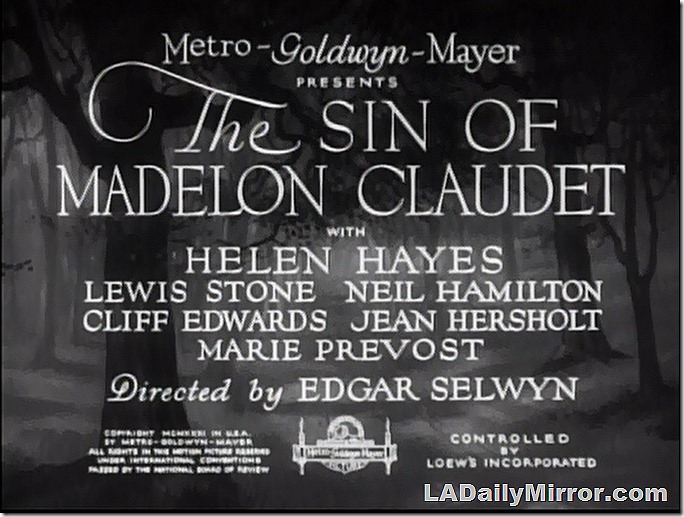
Jan. 9, 2021, The Sin of Madelon Claudet Main Title

This week’s mystery movie was the 1931 MGM picture “The Sin of Madelon Claudet,” with Helen Hayes, Lewis Stone, Neil Hamilton, Cliff Edwards, Jean Hersholt, Marie Prevost, Robert Young,  Karen Morley, Charles Wininger, Alan Hale, Halliwell Hobbes, Lennox Pawle and Russ Powell.

From the play “The Lullaby” by Edward Knoblock. Dialogue continuity by Charles MacArthur. Recorded by Douglas Shearer, art direction by Cedric Gibbons, wardrobe by Rene Hubert, photographed by Oliver T. Marsh, edited by Tom Held

Directed by Edgar Selwyn.

“The Sin of Madelon Claudet” is available on DVD from Warner Archive.

Continue reading

Posted in 1931, Film, Hollywood, Mystery Photo, Stage | Tagged , , , , , , | 58 Comments

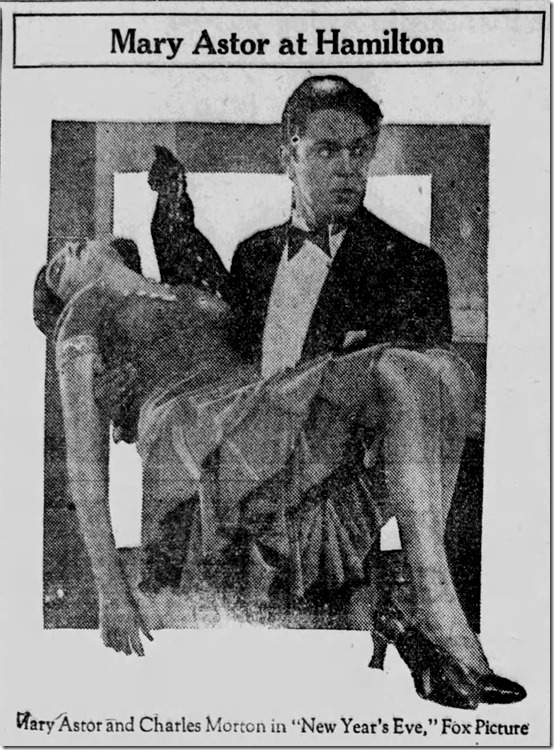
Mary Astor’s Lost Film ‘New Year’s Eve’

mary_astor_charles_morton_new_years_eve
Note: This is an encore from January 2020.

Since TCM is featuring Mary Astor, here’s a brief post on her lost movie “New Year’s Eve.” (A tip of the hat to Lou Lumenick, who tweeted about the movie on — New Year’s Eve.) I also uploaded a version of this post to IMDB, in case you see it there.

Fox originally announced the film under the title “Strong Arm,” based on the story “$100” by Richard Connell, published in the August 1928 issue of Cosmopolitan Magazine. The film was supposed to star Lois Moran and George O’Brien in the leads, under the direction of J.G. Blystone. Fox initially planned the movie as a talkie, but released it as “New Year’s Eve,” a silent directed by Henry Lehrman with sound effects and music, designated “sound on film.”

Continue reading

Posted in 1929, Film, Hollywood | Tagged , , , , , , , | 1 Comment

L.A. Daily Mirror Retro Drinking Guide — Pisco Punch

New York Sun, April 23, 1934

Note: This is an encore post from 2013.

Just in time for New Year’s, we’ll take a look at a “lost drink,” making a brief inquiry into San Francisco’s Pisco Punch, made famous by Bank Exchange saloon owner Duncan Nicol (often spelled Nichol or Nicoll), who  died in 1926 without revealing the recipe.

Continue reading

Posted in 1915, 1934, 1939, Food and Drink, San Francisco | Tagged , , | Comments Off on L.A. Daily Mirror Retro Drinking Guide — Pisco Punch

L.A. Daily Mirror Retro Drinking Guide – The Queens Cocktail

image
Note: This is an encore post from 2017.

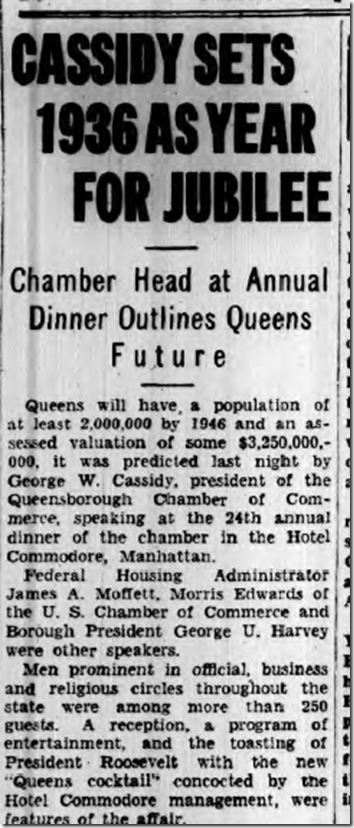
Joe Vogel asks if there was a Queens Cocktail. The answer is yes.

According to the Jamaica Long Island Daily Press, Jan. 24, 1935, the Queens Cocktail debuted at the Hotel Commodore in a toast to President Roosevelt. Via Fultonhistory.com.

(No word yet on the Staten Island Cocktail — and boy that sounds like a straight line).

Continue reading

Posted in 1935, 1937, Food and Drink | Tagged , , , | 2 Comments

L.A. Daily Mirror Retro Drinking Guide — The Bronx Cocktail

Dec. 20, 1934, Holiday Cocktails

Dec. 20 1934, Holiday Drinks

Note: This is an encore post from 2013.

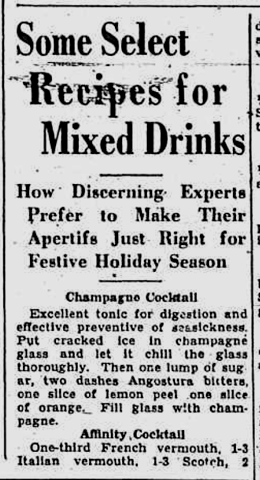
Dec. 20, 1934: In case you doubted me (but you wouldn’t, would you?), here’s a recipe for the Bronx Cocktail, from the Amsterdam Evening Recorder, courtesy of FultonHistory.com.

In case you plan to mix one up, a Bronx Cocktail is one part Italian vermouth, three parts brandy and a dash of orange bitters. Shake well!

Notice that there are also three variations of the Manhattan.

Continue reading

Posted in 1934, Food and Drink, Suicide | Tagged , | 3 Comments

L.A. Daily Mirror Retro Drinking Guide — The Brooklyn Cocktail

March 5, 1937, Brooklyn Cocktail

March 7, 1937, Brooklyn Cocktail

Note: This is an encore post from 2013.

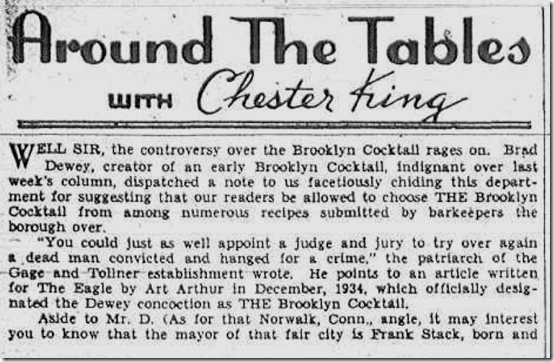
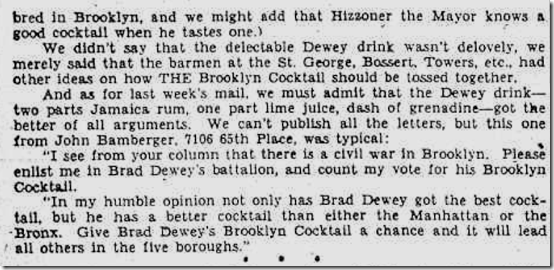
Yes, the Manhattan cocktail once had competition from drinks named for the other boroughs. Here’s a recipe for the Brooklyn Cocktail, from the Brooklyn Daily Eagle, March 7, 1937. The Brooklyn Cocktail as made by Brad Dewey consisted of

Two parts Jamaica rum
One part lime juice
Dash of grenadine

We won’t be toasting the new year with the Brooklyn Cocktail (we’re working) but if someone is brave enough to try one, let us know how it is.

And in case you are wondering, research shows that there was also a Bronx Cocktail. Evidently it, too, has fallen out of favor.

Posted in 1937, Food and Drink | Tagged , | Comments Off on L.A. Daily Mirror Retro Drinking Guide — The Brooklyn Cocktail

Movieland Mystery Photo (Updated + + + +)

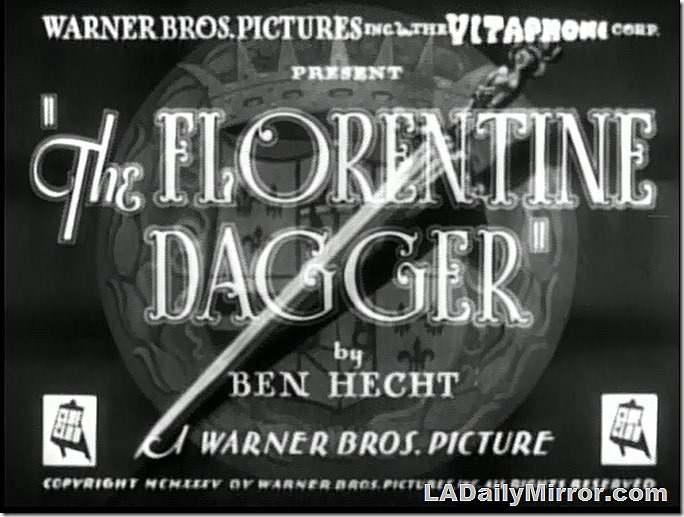
Jan. 2, 2021, Florentine Dagger Mystery Photo Title
This week’s mystery movie was the 1935 Warner Bros. film “The Florentine Dagger,” with Donald Woods, Margaret Lindsay, C. Aubrey Smith, Henry O’Neill, Robert Barrat, Florence Fair, Frank Reicher, Charles Judels, Rafaela Ottiano, Paul Porcasi, Eily Malyon, Egon Brecher, Herman Bing and Henry Kolker.

Screenplay by Tom Reed, additional dialogue by Brown Holmes, dialogue director Arthur Greville Collins. Edited by Thomas Pratt, art direction by Anton Grot and Carl Jules Weyl, photographed by Arthur L. Todd, gowns by Orry-Kelly and musical direction by Leo F. Forbstein. Directed by Robert Florey.

“The Florentine Dagger” has never been commercially released on VHS, DVD or Blu-ray. There are a few clips online, but that’s all. It was last broadcast on TCM in 2015.

Continue reading

Posted in 1935, Books and Authors, Film, Hollywood, Mystery Photo | Tagged , , , , , , , , | 37 Comments

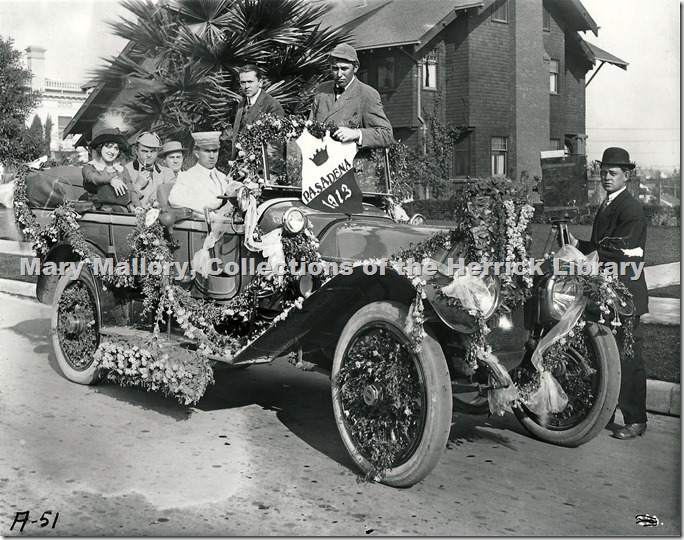
Mary Mallory: Hollywood Heights – Mack Sennett’s Rose Parade Gag

Sleuths at the Floral Parade
Photo: “The Sleuths at the Floral Parade.” Credit: Mary Mallory, the Collections of the Margaret Herrick Library.


Note: This is an encore post from 2011.

The Tournament of Roses Parade is going on its 122th year, and grows more elaborate and beautiful every year.  Bands, floats, cars, horses, and even celebrities take part in this festive annual event.  This year, Paramount Pictures is even entering a float celebrating its 100th anniversary, honoring “Titanic” and “Wings,” the first feature film awarded the Best Picture Oscar by the Academy of Motion Picture Arts and Sciences in 1927/1928.

Continue reading

Posted in 1913, Film, Hollywood, Hollywood Heights, Mary Mallory, Photography | Comments Off on Mary Mallory: Hollywood Heights – Mack Sennett’s Rose Parade Gag

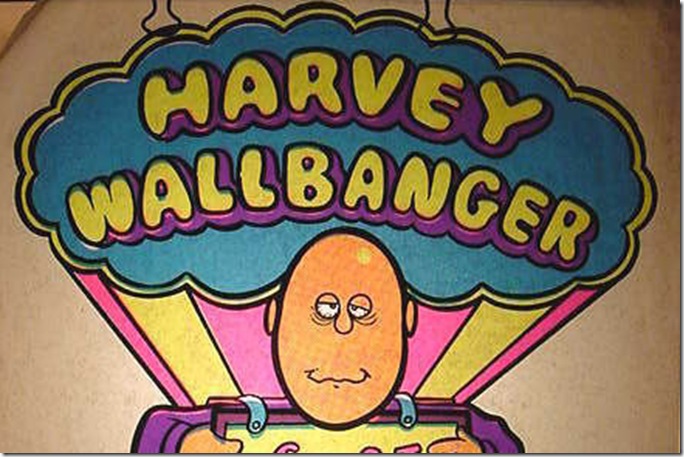
L.A. Daily Mirror Retro Drinking Guide: The Harvey Wallbanger

Harvey Wallbagner

A vintage 1972 iron-on transfer of Harvey Wallbanger himself, on EBay for $12.


Note: This is a repost from 2013.

We have been looking at some historic drinks for this holiday season. To the millennials in the audience: This is what mom and dad used to drink (along with the Tequila Sunrise) when they went out in the 1970s.

Return with us now to the thrilling days of yesteryear:

1 ounce of vodka
4 ounces of orange juice
half an ounce of Galliano.

Poured over ice in a highball glass.

Cue Grand Funk Railroad’s “Gimme Shelter” or Carole King’s “It’s Too Late.”

Posted in 1971, Food and Drink, Music | Tagged , | Comments Off on L.A. Daily Mirror Retro Drinking Guide: The Harvey Wallbanger

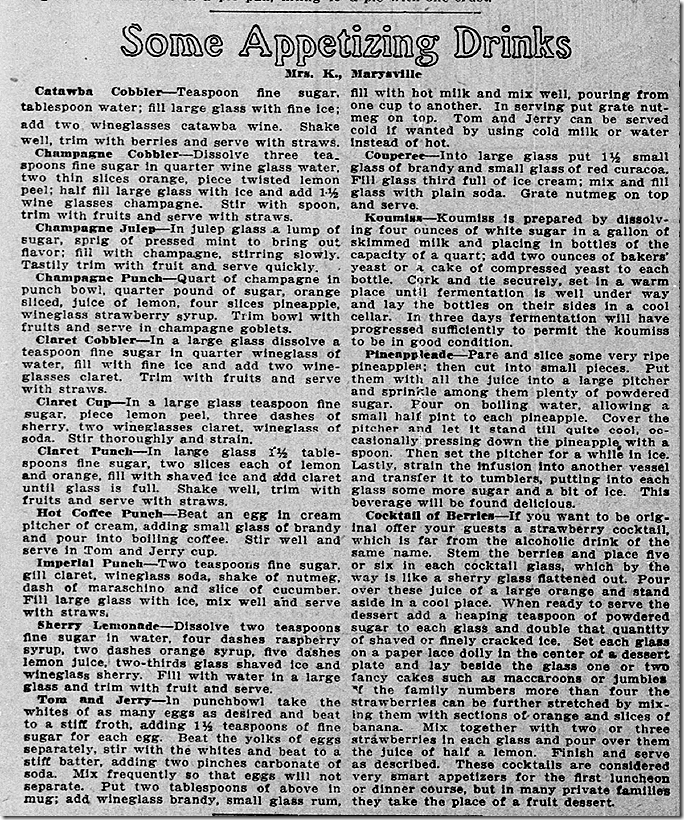
L.A. Daily Mirror Retro Drinking Guide: A Brief History of the Tom and Jerry

image

A recipe for the Tom and Jerry from the San Francisco Call, June 30, 1912.


Note: This is an encore post from 2013.

Over on Facebook, Christopher McPherson asked whether the Tom and Jerry was named for the MGM cartoon characters. I said I suspected the opposite was true, rather like Disney’s Chip ‘n’ Dale being named for Chippendale furniture.

All the old newspaper stories give credit for the drink to bartender Jerry Thomas, who according to one account was born in New Haven, Conn., in 1825 (or Watertown, N.Y., in 1830).

Continue reading

Posted in 1862, Books and Authors, Food and Drink | Tagged , , | 1 Comment

Black Dahlia: Dec. 23, 1949 — Jury Finds Dr. George Hodel Not Guilty of Molesting Tamar Hodel

Dec. 23, 1949, Mirror-News, George Hodel found not guilty of molesting daughter Tamar Hodel

The Los Angeles Mirror-News, Dec. 23, 1949.


Today is the anniversary of a jury of eight women and four men finding Dr. George Hodel not guilty on two counts of molesting his daughter Tamar. I’ll have more to say about this in the days to come, but I wanted to mark the day.

Steve Hodel is fond of quoting an incomplete transcript of defense attorney Robert A. Neeb Jr. interrogating Tamar.

On the jump, the entire exchange, which tells a different story.

Continue reading

Posted in 1949, Black Dahlia, Cold Cases, Crime and Courts, LAPD | Tagged , , , , , , | 1 Comment

Al Martinez, a Dying Boy and Some Peaches — A (Non) Christmas Story

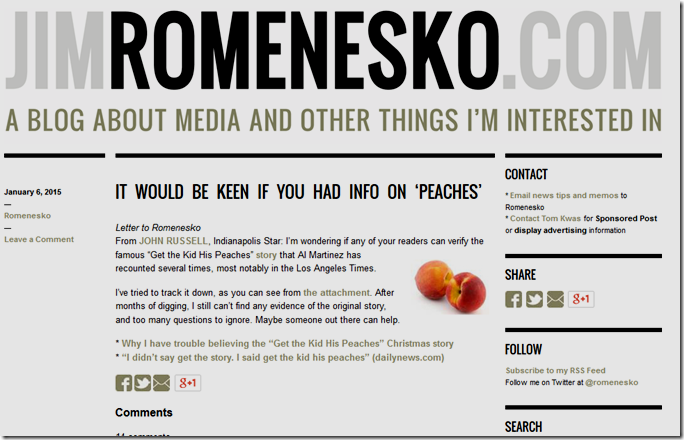
Jim Romenesko

Note: This is an encore post from 2015.

Jim Romenesko, for those who aren’t in the news business, runs an essential blog that serves as a clearing house for information, gossip, bad headlines and assorted gaffes.

A Jan. 6 post dealt with former Times columnist Al Martinez, who died Monday, and the occasional columns Al wrote over the years about a dying boy who craved peaches.

John Russell of the Indianapolis Star wrote to Romenesko in hopes that some reader would verify Al’s story, saying: “After months of digging, I still can’t find any evidence of the original story, and too many questions to ignore.”

Russell elaborated on his skepticism in “Why I Have Trouble Believing the ‘Get the Kid His Peaches’ Christmas story,” noting that he had written to Al for help in finding the original.

We have some answers — and the story — with a not-so-gentle reminder for reporters: DON’T write from memory or bad things can happen. Use the clips. It’s what they are for.  Memory can compress time and erase crucial details, as we will see with Al’s story.

Continue reading

Posted in 1949, 1958, Books and Authors, Columnists | Tagged , , , | Comments Off on Al Martinez, a Dying Boy and Some Peaches — A (Non) Christmas Story