
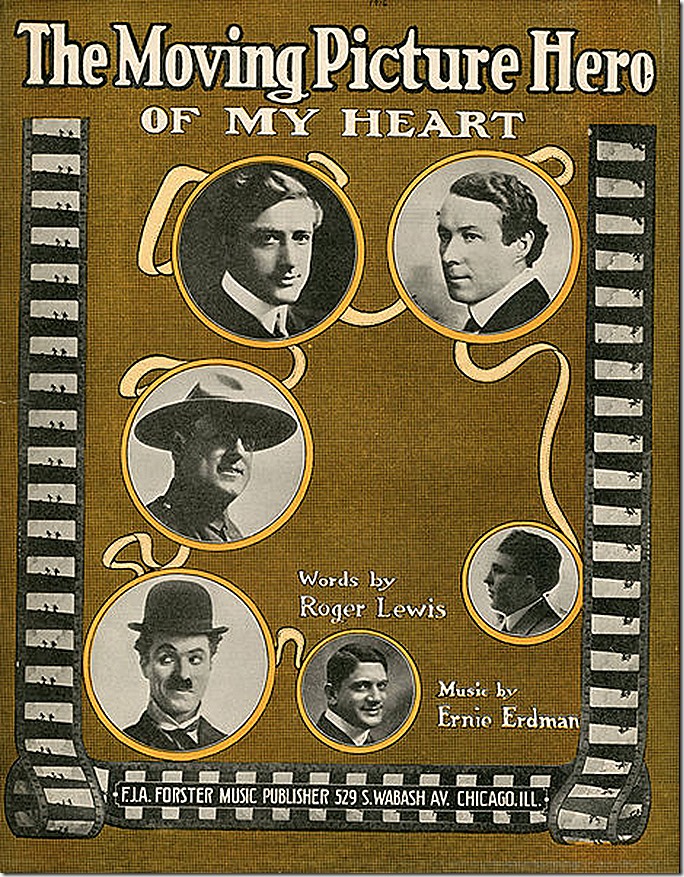
From its beginnings, the motion picture industry developed adept advertising and promotional concepts to spread the word of its film products and stars. Quick to develop cross-promotions and partnerships with magazines and newspapers, the film industry grew new fans and box office receipts with practical but novel concepts like employing sheet music to sell its films. The Essanay Film Company followed the same playbook with sheet music titled “The Moving Picture Hero of My Heart” as a special giveaway at the 1916 Motion Picture Exhibitors League of America’s national convention, which later became popular across the country.
The Selig Film Company perhaps pioneered the practice of cross-promotion when they developed a partnership with the Chicago Tribune in 1913 to collaterally sell the serial “The Adventures of Kathlyn,” with the newspaper running serialized installments of each episode after it played in theatres, thus whetting the appetites of readers to see how the next episodes would play out. The serial set attendance records for those coming to see it, and the Tribune saw subscriptions and sales increase. As their book, “The WGN” stated in 1922, “The first step was to capitalize the soaring motion picture craze for Tribune benefit.”
Mary Mallory’s latest book, “Living With Grace: Life Lessons from America’s Princess,” will be released June 1.
















 ladailymirror.com