Movieland Mystery Photo (Updated + + + +)

Feb. 24, 2018, Mystery Photo
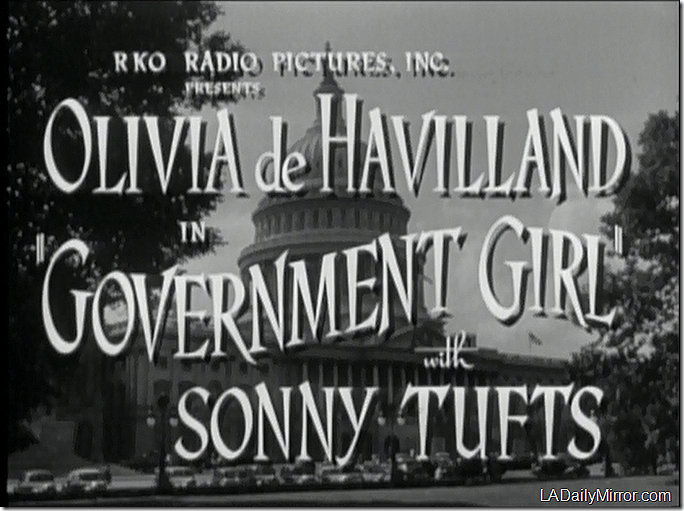
This week’s mystery movie has been the 1944 RKO film “Government Girl,” with Olivia de Havilland, Sonny Tufts, Anne Shirley, Jess Barker, James Dunn, Paul Stewart, Agnes Moorehead, Harry Davenport, Una O’Connor and Sig Ruman. The screenplay was by Dudley Nichols, adapted by Budd Schulberg from a story by Adela Rogers St. John. The photography was by Frank Redman, special effects by Vernon L. Walker, art direction by Albert S. D’Agostino, set decoration by Darrell Silvera and Al Fields, gowns by Edward Stevenson, music by Leigh Harline and musical direction by C. Bakaleinikoff. The associate producer was Edward Donahoe. The film was produced and directed by Dudley Nichols.

The DVD is available from Warner Archive.

Continue reading

Posted in Film, Hollywood, Mystery Photo | Tagged , , | 31 Comments

Black Dahlia: Blogging “Black Dahlia Files” Part 18 — Uncle Vern

Note: This is an encore post from 2006.

Page 24-25

I was breezing along (“breezing” being a relative term in reading a book at the molecular level) when I came across this little bon mot tucked into a sentence:

“Angry about the threats she was receiving if she didn’t cooperate with Bugsy Siegel and his pals, on December 11, Thelma made the mistake of going to District Attorney Buron Fitts’s office and lodging a complaint against the mobster who had muscled in on her café. She had no knowledge, of course, that the District Attorney of Los Angeles was on the mob payroll and that word would soon get back to the very people who had threatened her.”

Oh? And who might be the source for this little nugget of information? Quick, Watson, to the end notes.

Humph: “Hot Toddy,” Pages 171-172, 184. Now it doesn’t take much skill to find quibbles with Andy Edmonds’ book, even without buying it, nor to discover other accounts that Todd went to the police rather than the district attorney (recall that Wolfe has the annoying little problem of mixing up city and county government).

I’m going to take a rain check for now, but it’s terribly irresponsible to make such accusations without attribution, even if it’s to a potboiler on Hollywood scandals.

Time to trot out Uncle Vern again, the disgraced prosecutor who never was.

Aha! And it is Uncle Vern who tells young Donald his tales about Thelma Todd. Oh I see, Bugsy Siegel killed Thelma Todd, did he? Uncle Vern was working in the D.A.’s office, eh? I didn’t realize the district attorney was operating out of 405 Subway Terminal Building (MU-3790) in the 1930s. (Los Angeles Times, Oct. 27, 1934).

Hm. Hamilton represented Esther M. Jones in her divorce suit against her husband? (Los Angeles Times, Oct. 10, 1935). I guess we can conclusively write off any notion that Uncle Vern was ever a prosecutor.

But what’s this? On Aug. 5, 1942, Uncle Vern (attorney Vernon R. Hamilton) was bombed with tear gas by the Los Angeles County Sheriff’s Department because he had barricaded himself in his home and wouldn’t come out? He was put in jail? And where was this house? 407 N. Normandie? That would be nearly seven miles from South Camden Drive. Oh my! Looks like Judge Edward R. Brand found Uncle Vern in contempt for appearing in the court while he was drunk. And sent Uncle Vern to … jail?

And Uncle Vern was supposedly an attorney for the mob? Getting into the newspapers for showing up tanked in court, being gassed by the police and thrown into the graybar hotel by the judge? For the record, Jerry Giesler was Siegel’s defense attorney in the 1942 trial on charges of killing Harry “Big Greenie” Greenberg and I doubt very much if Giesler would let Uncle Vern as much as carry his briefcase.

Hm. Now Wolfe gives his address as 803 N. Roxbury, a bit of a drive for Uncle Vern if he’s in his cups.

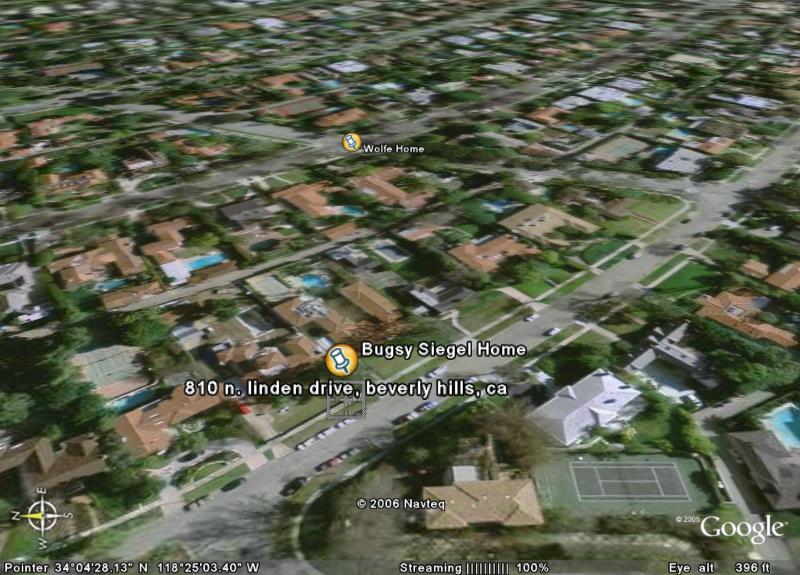
“…Bugsy Siegel and his girlfriend Virginia “Sugar” Hill, lived just behind us at 810 Linden Drive.”

The wonders of Google Earth. Notice the generous definition of “just behind.”

Now Wolfe builds to Uncle Vern the disgraced prosecutor who never was, the mob mouthpiece who never was, having a key to the home on North Linden Drive and taking care of it in 1946 while Siegel and Hill were off in Las Vegas building the Flamingo.

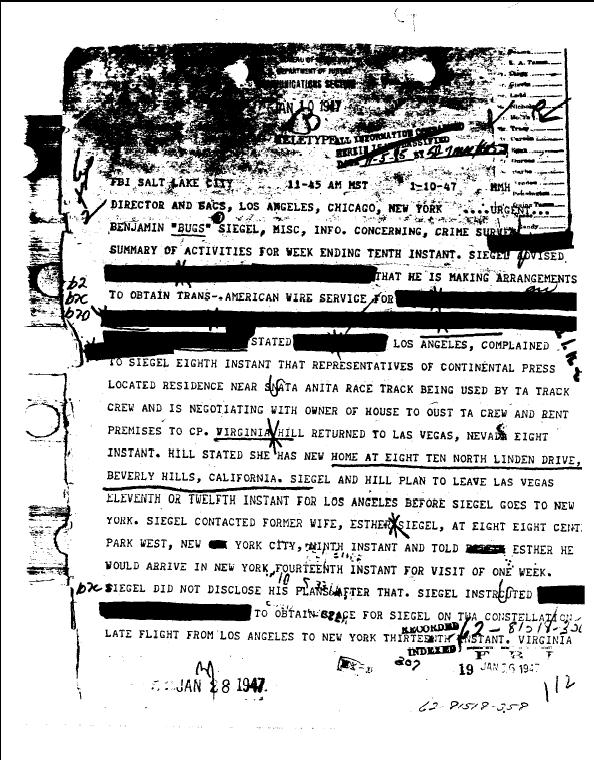
Except for one problem. Siegel didn’t move into the home on Linden until January 1947. How do we know? Because the FBI had him under surveillance.

Her new home? Jan. 10, 1947? And just whom was Uncle Vern house-sitting for in 1946?

Uh-oh.

ps. I’m quite serious about blogging this in real time. Well-intentioned people have tried to clue me in about what’s coming up next. I appreciate your concern, but please don’t spoil the fun, thanks.

Posted in Columnists, Uncategorized | Tagged | Comments Off on Black Dahlia: Blogging “Black Dahlia Files” Part 18 — Uncle Vern

Feb. 19, 1907: Orange County Accuses L.A. County of Attempted ‘Land Grab’ of Beach Towns


Note: This is an encore post from 2007.
Feb. 19, 1907
Los Angeles

A quick trip to the Thomas Bros. will show that Los Angeles County doesn’t look like this, but it’s not for lack of trying. The wealthy men of Los Angeles and Orange counties are furious with one another over an attempt by Assemblyman Phil Stanton to give Los Angeles County a strip of coastal communities as far south as Newport Beach.

Continue reading

Posted in 1907, Black Dahlia, Books and Authors, LAPD, Streetcars | Comments Off on Feb. 19, 1907: Orange County Accuses L.A. County of Attempted ‘Land Grab’ of Beach Towns

Black Dahlia: Blogging “Black Dahlia Files” Part 17 — The Lookies


Note: This is an encore post from 2006.

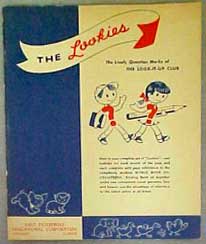
Above, one of the formative publications of my youth, which was included with the purchase of the World Book Encyclopedia. The Lookies had a wonderful motto: “We don’t guess, we look it up.”

Page 22

I really don’t want to get derailed into Thelma Todd as I can’t see what it has to do with the Black Dahlia case. I’m going to take a rain check with the simple proviso that given Donald H. Wolfe’s track record, there are going to be errors and misstatements. I’ll dig into it later if necessary, but this will have to do for now:

“Nevertheless, D.A. Buron Fitts insisted that her death was a suicide, though there were rumors among the movieland cognoscenti that Thelma Todd had been murdered by one of her intimate acquaintances—a mob boss who suddenly left town on the night of Thelma’s ‘suicide.’ ”

In fact, Fitts said: “We want it distinctly understood that we aren’t imputing this to be a murder. But there are circumstances that do not satisfy us. We intend to clear them up.” (Los Angeles Times, Dec. 19, 1935)

Moreover, the Los Angeles Police Department, under the auspices of crime lab chief Ray Pinker (the same man who had his hands in his pockets at the Black Dahlia crime scene), took Todd’s Lincoln and, using a volunteer, sealed the garage and started the engine to see how long it would take to render him unconscious. In 90 seconds, Detective Joe Whitehead was pounding on the door to be let out of the monoxide-filled garage.

It should also be noted that Todd’s death was investigated by the Los Angeles County Grand Jury. And in testifying before the grand jury, Pinker said that blood found inside Todd’s car contained carbon monoxide, excluding the possibility that the stains occurred before she started the car’s engine. According to testimony before the grand jury, Todd became unconscious from the fumes and struck her head as she collapsed, causing a wound that bled.

Eventually, the jurors found the evidence of suicide or accident so compelling that several of them refused to hear any more testimony.

I’ll leave Thelma Todd at this: It’s impossible to say Dist. Atty. Buron Fitts tried to cover up the case when it went before the grand jury.

What are the sources for this nonsense?

Samuel Marx and Joyce Vanderveen, “Deadly Illusions”; Andy Edmonds, “Hot Toddy”; and the Thelma Todd inquest report. Apparently Wolfe has some aversion to original sources such as newspapers. I’m mildly curious about the source of the Todd inquest. But not enough to go digging for it.

Page 24

Oh, more on Uncle Vern, the disgraced former prosecutor who never worked for the district attorney’s office. I don’t have time for this today.

Posted in Uncategorized | Comments Off on Black Dahlia: Blogging “Black Dahlia Files” Part 17 — The Lookies

Feb. 18, 2007: Architectural Ramblings

Note: This is an encore post from 2007.
Feb. 18, 2007
Los Angeles

The buildings featured in The Times for this week have been torn down, but in glancing through the listings, I found the sale by the Althouse brothers of a lot at 3006 S. La Salle.

3006 S. La Salle


I can’t say the house was particularly interesting, although I was happy to find it still standing. Still, it was an interesting neighborhood to visit and the house at 2921 S. La Salle cries begs out for rehabbing.


This house is in the 2900 block; I didn’t get the exact address.


2921 S. La Salle

3015 S. La Salle

3027 S. La Salle


Posted in Architecture, Black Dahlia, Books and Authors, LAPD, Streetcars | Tagged | Comments Off on Feb. 18, 2007: Architectural Ramblings

Black Dahlia: Blogging "Black Dahlia Files" Part 16 — A Moment of Silence


Note: This is an encore post from 2006.
Wednesday was the 61st anniversary of the kidnapping of 6-year-old Rochelle Gluskoter from the frontyard of a home around the corner from where her parents, Abe and Miriam, were preparing to open their market at 8464 S. Central Ave.
Rochelle’s skeletal remains were found in a remote part of Orange County on Nov. 9. 1947. The case was never solved.

Page 21

Now back to all Wolfe’s stuff about “Uncle Vern,” who is presented as a disgraced former prosecutor but really wasn’t. This is terrible research and worse writing. Just an out-and-out lie.

Continue reading

Posted in 1946, 1947, Black Dahlia, Cold Cases, LAPD | Tagged , , , | Comments Off on Black Dahlia: Blogging "Black Dahlia Files" Part 16 — A Moment of Silence

Feb. 17, 1907: Before Staples Center — City Straightens 12th Street

Above, a vanished landmark: The Schermerhorn Inn, at Potter Park, a street that has disappeared.

Note: This is an encore post from 2007.
Feb. 17, 1907
Los Angeles

West 12th Street between Main and Hoover is maddeningly crooked, but how to fix it? One set of residents has agreed to cut the boulevard through front yards because having the street as straight as an engineer’s ruler will raise property values. The other set says that homes will be ruined and that residents will be assessed too much to pay for the work.

Those in favor of the improvement include W.H. O’Melveny (hm. Isn’t that a familiar name?) while opposition is led by Mr. Kincaid, the developer of the Kincaid Tract.

“When the matter was brought up before the City Council several weeks ago, there was a merry tussle, but the side favoring the proposition won out,” The Times says.

Alas, city planners in 1907 failed to anticipate a large sports arena blocking traffic.

Posted in 1907, Black Dahlia, Books and Authors, LAPD, Streetcars | Comments Off on Feb. 17, 1907: Before Staples Center — City Straightens 12th Street

Black Dahlia: Blogging "Black Dahlia Files" Part 15 — Time for a Reality Check

Note: This is an encore post from 2006.
I was all set, or so I thought, for today’s entry. And then something fell in my lap that I simply couldn’t ignore.

Let’s suppose you are an established author with a well-known book on a particular subject. Let us further suppose that another writer comes along, uses your book as the backbone for his work, runs a picture of you and praises you in his acknowledgements.

Continue reading

Posted in Uncategorized | Comments Off on Black Dahlia: Blogging "Black Dahlia Files" Part 15 — Time for a Reality Check

Black L.A., 1947: Stylish Men in Harlem Wearing Berets

Feb. 13, 1947, Real Estate

2400 Block S. St. Andrews Place

At top, the home at 2443 S. St. Andrews Place is for sale at $16,500 cash or $18,000 “terms.” Above, the 2400 block of South St. Andrews Place via Google Street View.


Feb. 13, 1947: Columnist Bill Smallwood says “Richard Wright, back from Paris whence he proved such a distinctive favorite, is having trouble getting his Manhattan apartment back! He lives in half of it while awaiting outcome of his filing suit against the occupants to regain the other half.”

Continue reading

Posted in 1947, African Americans, Books and Authors, Fashion, Real Estate | Tagged , , , , , , | 2 Comments

Black Dahlia: Blogging "Black Dahlia Files" Part 14 — Teutonic Thoroughness


Note: This is an encore post from 2006.
Several years ago, I was interviewed by a writer for the German magazine Stern about the Black Dahlia case. In explaining what was wrong with the various Dahlia books, I said: “They lack Teutonic thoroughness.” Of course, it was to be amusing and the writer thought it was an uproarious thing to say. But as a German, he could appreciate the full meaning of that statement, while most American writers wouldn’t understand it.

Continue reading

Posted in Uncategorized | Comments Off on Black Dahlia: Blogging "Black Dahlia Files" Part 14 — Teutonic Thoroughness

Black Dahlia: Ritual Sacrifice? Now I Have Heard Everything – And My Hair Is On Fire

Feb. 13, 2018, Black Dahlia

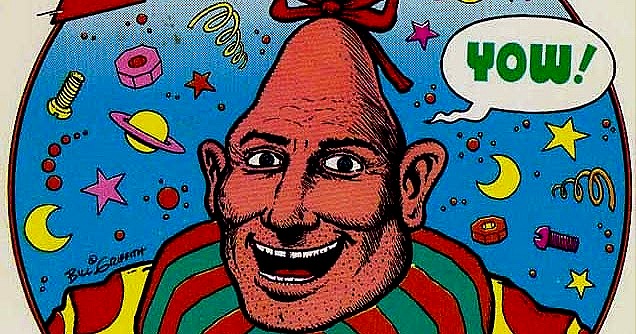
Zippy the Pinhead Yow!

I thought I had heard every possible crackpot idea about the Black Dahlia case (including comments on the blog that aren’t fit for publication). But ritual sacrifice? As Zippy the Pinhead would say: Yow!

Posted in 1947, Black Dahlia, Cold Cases, LAPD | Tagged , , , , , , , | 2 Comments

Black L.A., 1947: ‘Why Do 14-Year-Old Girls Get Drunk and Fall Into Bed With Men?’ Judge Asks

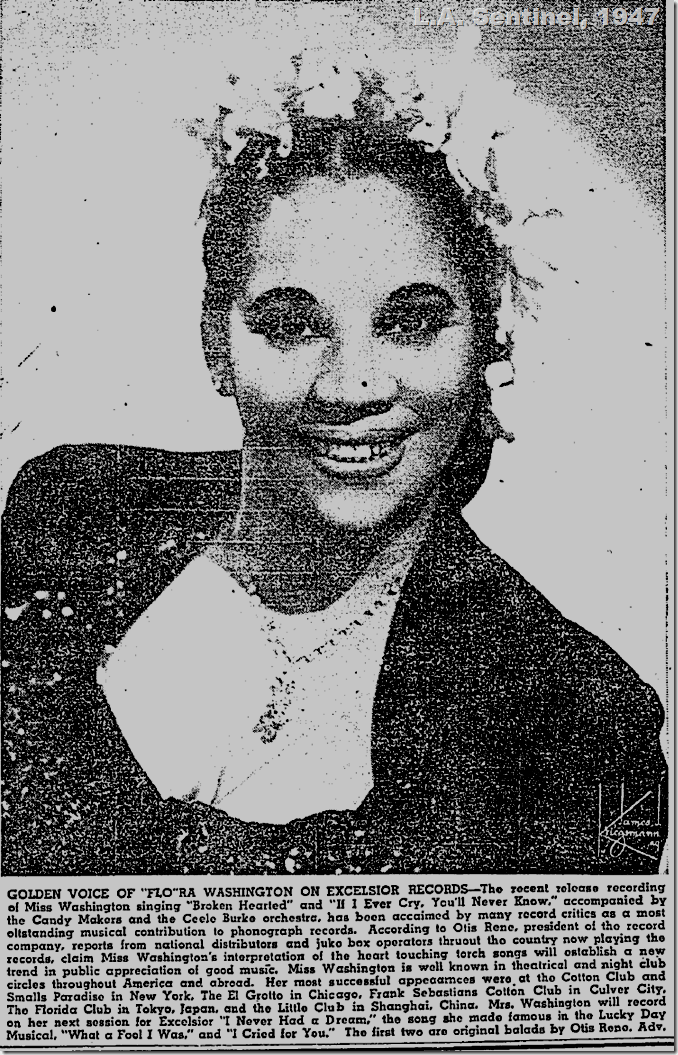
Feb. 13, 1947, Flora Washington

The Sentinel runs a publicity photo of Flora Washington, who released “Broken Hearted” and “If I Ever Cry, You’ll Never Know” on the United Artist label in 1946.

Flora Washington sings “Broken Hearted” via Archive.org.


Feb. 13, 1947: Municipal Court Judge Edwin L. Jefferson calls for an investigation of “why 13- and 14-year-old girls get drunk and fall into bed with men” in a hearing for a 20-year-old man who was accused of having sex with a 15-year-old niece.

Jefferson was the first black judge in the Western United States, according to 1989 obituaries in the Sentinel and the Los Angeles Times.

Continue reading

Posted in 1947, African Americans, Crime and Courts, Music, Obituaries | Tagged , , , , | Comments Off on Black L.A., 1947: ‘Why Do 14-Year-Old Girls Get Drunk and Fall Into Bed With Men?’ Judge Asks

Black Dahlia: Blogging "Black Dahlia Files" Part 13 — The Subject Is Roses

Note: This is an encore post from 2006.

I always cut my roses on Jan. 15 as a memorial to Elizabeth Short, because I remember that on the night before the body was found a neighbor had a strange encounter at the crime scene when he went there to dump some rose clippings.

Frankly, it’s scary to chop my roses down to sticks but sure enough by Valentine’s Day they are coming back to life, especially now that they’ve gotten some 12-18-6.

Continue reading

Posted in Uncategorized | Comments Off on Black Dahlia: Blogging "Black Dahlia Files" Part 13 — The Subject Is Roses

Feb. 14-15, 1907: Gas Explosion in Downtown L.A. Levels Building, Kills 7


Note: This is an encore post from 2007.
Feb. 14-15, 1907
Los Angeles

An 11:30 a.m. blast caused by an accumulation of gas shattered the Rawson building at 114 W. 2nd St. in an explosion blamed on a gas company employee who struck a match to check the meter. Four people were killed immediately while three more died of their injuries and 30 were hurt, some of them so badly that their crushed limbs were amputated.

The explosion killed two waitresses, La Von Meyers and Annie Crawford; retired farmer John W. Main; and tailor J.M.C. Fuentes. Charles G. Haggerdy, who worked in a tailor shop, died a few days later of his injuries, as did janitor Ferdinand Stephen.

Continue reading

Posted in 1907, Black Dahlia, Books and Authors, LAPD, Streetcars | Comments Off on Feb. 14-15, 1907: Gas Explosion in Downtown L.A. Levels Building, Kills 7

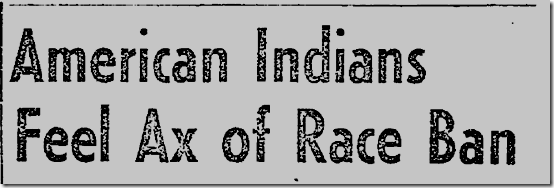
Black L.A. 1947: Judge Backs Racial Ban, Orders Native Americans Out of West Hollywood Home

Feb. 13, 1947, Los Angeles Sentinel

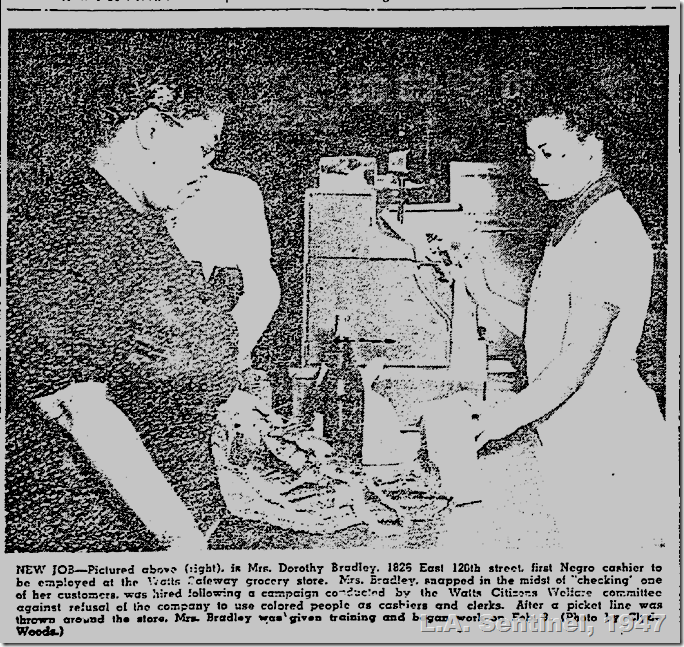
Feb. 13, 1947: Dorothy Bradley becomes the first African American cashier hired at the Safeway grocery store in Watts. She was hired as the result of a campaign by the Watts Citizens Welfare committee protesting Safeway’s refusal to hired black people as cashiers or clerks.


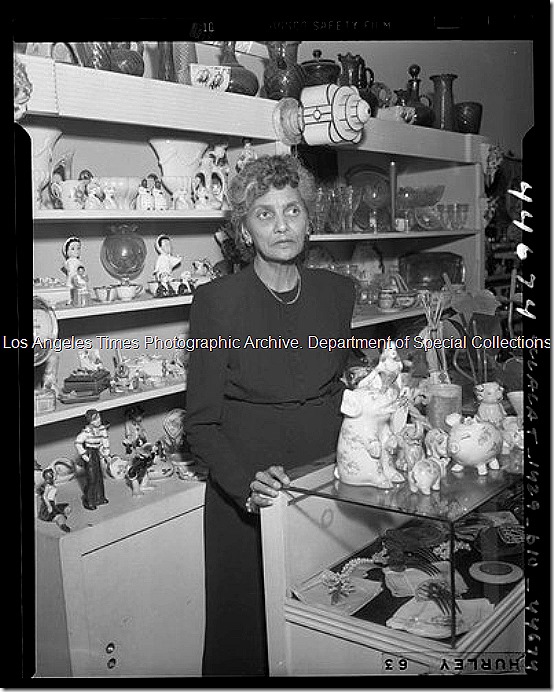
Isabel Crocker
Isabel Crocker in an archival photograph from the Los Angeles Times.

Feb. 13, 1947, L.A. Sentinel

Continue reading

Posted in 1947, African Americans, Crime and Courts, Real Estate | Tagged , , , , , | 2 Comments

Black Dahlia: Blogging "Black Dahlia Files" Part 12 — I’m My Own Grandpaw

Note: This is an encore post from 2006.
Page 16

In the Black Dahlia books, all roads lead to William Randolph Fowler and it would be interesting to see how a sociologist would make a graph of the incestuous literary kinship system.

Will talks to Mary Pacios, who collaborates with John Gilmore on “Severed.”

Will talks to Donald H. Wolfe (“Mogul,” footnotes Pages 361-362).

Continue reading

Posted in Uncategorized | Comments Off on Black Dahlia: Blogging "Black Dahlia Files" Part 12 — I’m My Own Grandpaw

Feb. 13, 1907: Hotel Alexandria Celebrates 1st Anniversary

Note: This is an encore post from 2007.
Feb.13, 1907
Los Angeles

An enormous masked ball for the city’s elite was staged on Mardi Gras at Kramer’s Studio and Dancing Academy, 1500 S. Figueroa.
Continue reading

Posted in 1907, Black Dahlia, Books and Authors, City Hall, LAPD, Music, Streetcars | Comments Off on Feb. 13, 1907: Hotel Alexandria Celebrates 1st Anniversary

Mary Mallory / Hollywood Heights: Hollywood National Bank Watches History Go By


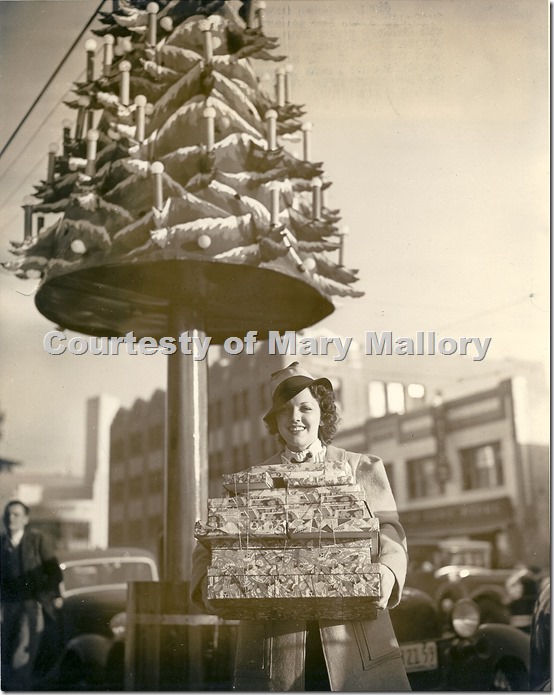
Carol Hughes Christmas
Carol Hughes as photographed by Schuyler Crail, with Hollywood and Cahuenga in the background, courtesy of Mary Mallory.


Note: This is an encore post from 2016.

One of the most important and busiest intersections in Hollywood has always been that of Hollywood and Cahuenga Boulevards. The location of Hollywood’s first hotels, the intersection also soon became the home of one of Hollywood’s first banks, the Hollywood National Bank. The location serves as witness to much of the city’s business and movie history, acting as a gateway to dreams.

In 1888, Horace D. Sackett constructed a simple two story hotel on the southwest corner of Prospect Avenue and Cahuenga Boulevard on three lots generously given him by town developer Harvey Wilcox, the heart of the speculator’s subdivision as well as a prime stage coach stop. The quaint inn, which he called the Sackett Hotel, consisted of eighteen rooms with one shared bathroom, while downstairs featured a general store, lobby, parlor, and kitchen. Just three years later in 1891, Sackett opened the city’s first post office in part of his general store, becoming a prime gathering spot for the growing community.


“Hollywood Celebrates the Holidays” by Karie Bible and Mary Mallory is available at Amazon and at local bookstores.

Continue reading

Posted in Architecture, Film, Hollywood, Hollywood Heights, Mary Mallory | Tagged , , , , , | 1 Comment

Black L.A. 1947: Jazz Musicians Outraged by Esquire Jazz Book for 1947

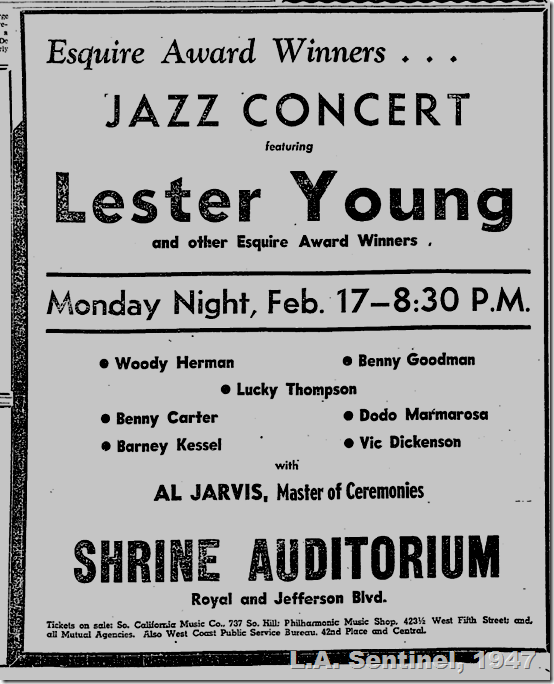
Feb. 13, 1947, Jazz Concert at the Shrine Auditorium
Feb. 13, 1947: Coming to the Shrine Auditorium – Esquire Award winners Lester Young, Woody Herman, Benny Goodman, Lucky Thompson, Benny Carter, Dodo Marmarosa, Barney Kessell and Vic Dickenson.


Feb. 13, 1947, Esquire Jazz Book

Feb. 13, 1947: Esquire magazine began an annual poll in 1943 to select the leading American jazz musicians. But in 1945, Arnold Gingrich, one of Esquire’s founders, left the magazine in a falling-out with Publisher David A. Smart.

In Gingrich’s place, the magazine hired Ernest Anderson, a publicist for Eddie Condon, to run the poll. An article on the magazine’s website by Alex Belth says Anderson “made a mockery of it by ostensibly turning it a press release for Condon, a white, middlebrow bandleader who had never previously been mentioned in Esquire’s jazz coverage. The panel of experts resigned en mass in protest and the jazz poll came to a halt.”

Note: The microfilmed copy of the Los Angeles Sentinel is missing the first section.

Continue reading

Posted in 1947, African Americans, Music | Tagged , , , , , | 3 Comments

Black Dahlia: Blogging "Black Dahlia Files" Part 11 — The Thrill Is Gone

Note: This is an encore post from 2007.
Page 14

“Hansen studied the body and the ‘sacred setting’ for some time before he stood up and said to Finis, ‘We won’t know what we’re really dealing with here until we get a post mortem.’ He requested that the body be covered until Ray Pinker of the crime lab arrived.”

I could quit here and be a happy man. Wolfe has been given access to the district attorney’s files. He even reprints the first two pages of the LAPD summary on Pages 325-326 of “Mogul.” But clearly Wolfe hasn’t read his own book. If he had, he would know that Pinker beat Hansen and Brown to the crime scene.

Continue reading

Posted in Uncategorized | Comments Off on Black Dahlia: Blogging "Black Dahlia Files" Part 11 — The Thrill Is Gone