Drug bust

1957_1019_dope_hed


Oct. 19, 1957

Los Angeles

1957_1019_brady
Perhaps you remember publicist Desmond Slattery from Paul Coates’ Aug. 22, 1957, column.
In brief, he was selling crickets as pets.

This time, however, his problem is roaches–or rather, a roach.

Slattery and his roommate, actor Scott Brady (real name Gerald Kenneth Tierney), were arrested at 8929 Hollywood Hills Road
in a major LAPD raid in which four officers, acting on a tip that drug
parties were being held at the home, recovered: the butt of a marijuana
cigarette and, yes, a single joint.

Aside from the humorous situation of Sgt. Marty Brennan from "He Walked by Night"
being busted for drugs, there’s a serious point here and not just the
relatively minuscule amount of drugs, compared to today’s arrests.

The district attorney’s office dropped the case because it would reveal
the identify of one of the narcotics details’ "most reliable
informants," The Times said. You might be asking why the police didn’t
think of this before they staged the raid. Me too.

"All I can say is a woman is the cause of it all," Slattery mourned,
according to The Times. "You can’t shake down every woman who comes
into your place."

OK, here’s how it went down. Promise not to laugh:

Brady "invited two girls up to blast some tea and get high," Sgt. John
E. O’Grady said. (Right daddy-O. Let’s throw on some hip platters and
groove to Kerouac. He is a real gone cat).

Slattery said neither he nor Brady knew the women, but that one of them
called and arranged for Brady to meet them in Hollywood.

Brady came home with a blonde and a Eurasian. When Slattery went into
the kitchen, he found the blonde jiggling the shutters as if she were
signaling police.

"They came in like the Russian army," Slattery said despite Brady’s warning against "talking too much," The Times said.

Police rejected the men’s allegations implicating the women. "The girls
had nothing to do with the narcotics charge," O’Grady said. "They were
brought there by Scott Brady from someplace in Hollywood. We released
them after we were perfectly satisfied that they had nothing to do with
the narcotics charge."

In December, however, an officer told prosecutors that to "disclose the
identity of the two women would be to unmask one of his most reliable
informants." The officer said he could not do that "in good
conscience," The Times reported.

In other words, police got complaints that Brady and Slattery were
throwing drug parties at the house. They had an informant contact the
men, go to the home, get the men to smoke some dope and signal the
police. The cops release the women and bust the men. Any lawyers in the
audience want to weigh in?

Brady, who died in 1985, had a long career in TV. The Social Security
Death Index lists a Desmond Slattery, born Sept. 19, 1914, who died in
Houston, Jan. 4, 1977.

Sgt. John O’Grady apparently became a private investigator and wrote the 1974 book "O’Grady,"
in which he recounted being a bodyguard for Linda Lovelace. Later on,
according to The Times clips, he was hired by relatives to find out
what became of missing "Cotton Club" promoter Roy Radin. California
death records list two men named John E. O’Grady, one of whom died in
in Los Angeles County in 1990 at the age of 68.

As for the two women, we don’t know. But you hipsters watch out for a blonde and a Eurasian. They’re with the fuzz.

Email me

Bonus fact: John O’Grady also took part in the drug raid involving Saundra Maazel.

Posted in #courts, Hollywood, Hollywood Division | Tagged , , | 3 Comments

Rock Hudson divorce

Oct. 19, 1957

There are some days when the old newspapers take my breath away. This is one of those times. An ideal couple. Wow.


1957_1019_hudson


Posted in #courts, #gays and lesbians | Tagged , | Comments Off on Rock Hudson divorce

Unsolved murder

These have been posted all over my neighborhood.

2006_1011_poster

His name was Armando Reynaga, 28, of Eagle Rock.

Also see the article in the South Pasadena High School Tiger.

Email me

Posted in Homicide | Tagged , , | 5 Comments

Ad misfires

Oct. 19, 1957

1957_1019_cover

Posted in Uncategorized | Tagged , , , | Comments Off on Ad misfires

October 18, 1957: Matt Weinstock

October 18, 1957

Matt WeinstockIf pressed, most persons who preside at information and complaint desks will admit there are times when they don’t think the human race is going to make it. Sanity and/or serenity, they mean.

Not long ago, a woman phoned the complaint desk at the City Health Department and said, “I want to report a health menace–my doorbell is out of order.”

Another non sequitur came from a lady who said she lived next door to a pet shop which sold horse meat. This she considered very unsanitary. “I’m expecting a baby,” she added, “and I think something should be done about it.” Continue reading →

Posted in Columnists, Downtown, Matt Weinstock | Tagged , | 1 Comment

In the teeth of the evidence


Ewing_scott_1956_0316_queen_mary
Evelyn and L. Ewing Scott during a cruise on the Queen Mary.

Oct. 16-18, 1957

Los Angeles

Arthur_g_hertel_1957_1016_j_miller_
In its opening days, the Leonard Ewing Scott murder trial has focused
Evelyn Scott’s eyeglasses and dentures, which were found behind the
couple’s Bel-Air home by police investigating her May 16, 1955,
disappearance.

The presentation by Deputy Dist. Atty. J. Miller Leavy (at right with Capt. Arthur G. Hertel, Times photo by Jack Gaunt) was part of a
mountain of evidence he planned to present exhausting all possibilities
that the 63-year-old woman was still alive. This would include
establishing a detailed pattern of her behavior that came to an abrupt
halt when she vanished.

Not that Ewing Scott was terribly upset that his wife was gone. He
never filed a missing persons report and, in fact, rebuffed questions
from friends and relatives about where she might be, saying that she
had run off or he had put her in a sanitarium to cure her alleged alcoholism.
The matter only became public in March 1956, when her brother E.
Raymond Throsby filed a petition asking to be appointed guardian of her
estate.

On March 10, 1956, The Times photographed detectives using 6-foot steel rods to probe the grounds around the home at 217 S. Bentley
in search of a body. Although they didn’t find anything, Capt. Arthur
G. Hertel was more successful in exploring an area on
an adjoining lot behind the incinerator, which was built into a
retaining wall along the property line.

"For a while I walked along the top of the wall," Hertel testified.
"Then I got down on the ground and removed some leaves and
scratched–with my hands."

The first item he found was a set of dentures under 4 or 5 inches
of leaves, partially buried and encrusted with dirt and mud. Hertel
cleared the leaves from an area about 2 feet by 18 inches, discovering
partially dissolved gelatin capsules and white pills, an empty
Eff-Remin can, a hairbrush, a tube of oily material (presumably hair dressing), a short piece of
dog chain, a cigarette holder, a large number of cigarette filters and
"wampum jewelry."

About 10 feet down the hill west of the incinerator, Hertel found a
pair of glasses. "They were on the surface of a thin layer of leaves
above the ground, exposed to view at a casual glance directly under a
heavily leaved bush," he said. Another 10 feet away, Hertel found
another pair of glasses.

"They were partially embedded in a heap of ashes," he said. "The lower
portion of the lens was covered by ashes but the bow was exposed," The
Times said. "They were encrusted with dirt, mud and ashes."

Hertel testified that the items had apparently been on the adjoining
property for some time because the leaves that covered them were loose
on top but matted and partially disintegrated underneath. His
impression was that the glasses had been washed downhill by rain rather
than thrown.

" ‘Tossed’ is not a good word," he said. " ‘Thrown’ is not a good word. ‘Placed’ is not a good word. They were just there."

Defense attorney P. Basil Lambros objected vigorously, but was overruled when Leavy moved to introduce the items into evidence.

"They have not been tied in any manner to the problem that faces us
with corpus delicti. They are immaterial, incompetent and irrelevant.
There is no proof of how they got there, if they were there… It would
be just as easy to introduce Mrs. Scott’s hat and say it was found in
the yard. The prosecution is saying that because they were found there
Scott killed his wife."

On cross-examination by Lambros, Hertel testified that the items had
not been checked for fingerprints, blood or hair because their
weathered condition convinced him that nothing would be found. He also
said that none of the items had been photographed before they were
recovered.

Hertel testified that Ewing Scott watched from a balcony as he explored
the area where the items were found. He testified that he heard Scott
ask: "What are they doing down there?"

What followed was exhaustive testimony from Evelyn Scott’s dentist, Dr.
R.L. Coldwell,  who identified the dentures, Dr. Harold R. Mulligan,
who wrote the prescription for her glasses, and Dr. Albert Chatton who
made them.


Ewing_scott_1956_0310_search_grover
Photograph by Bruce H. Cox / Los Angeles Times
Detectives Grover Armstrong, left, and Frank Gravente use steel rods to probe the ground around the Scott home as police spokesman Edward Walker uses a radio-telephone, March 10, 1956.

Coldwell said Evelyn Scott had worn the dentures since he made them for
her in 1943 to replace an earlier set. He noted that police had failed
to find a device she wore when sleeping to hold her teeth in place. The
Times said that the clear implication was that whatever happened to her
had occurred while she was asleep. Under defense questioning, Coldwell
said that she would have been able to use her previous set of dentures
if she still had them.

Chatton and Mulligan testified that Evelyn Scott would have been unable
to read without her glasses. Chatton noted that the frames of one pair
of glasses had faded to yellow, caused by aging and weather, rebutting
the defense implication that they had been placed there more recently,
The Times said.

To be continued…

Email me

Posted in #courts, Homicide, LAPD | Tagged , , | Comments Off on In the teeth of the evidence

Ike, Elizabeth meet

Oct. 18, 1957

1957_1018_cover

Posted in Uncategorized | Tagged , , , , | Comments Off on Ike, Elizabeth meet

October 17, 1957: Matt Weinstock

Oct. 17, 1957

It was recently stated here that the origin of Murphy’s Law, a derisive bit of whimsy among airplane people, was unknown. The “law” states, “If an aircraft part can be installed incorrectly, someone will figure out how to do it.”
Now the man who formulated this precept of human fallibility, George B. Murphy of Venice, an aircraft factory inspector, has come forward to acknowledge responsibility. He has also recounted a recent experience bearing on the same subject.

A young machinist brought him a part to inspect and he found it was out of tolerance by .001 of an inch and rejected it.

The youth insisted it was in tolerance because he handled .005. Continue reading →

Posted in Columnists, Matt Weinstock | Tagged , , | Comments Off on October 17, 1957: Matt Weinstock

October 17, 1957: Paul V. Coates–Confidential File

Oct. 17, 1957

Paul Coates, in coat and tieHe sat nervously in the chair opposite me. The staccato beat in his speech reflected his anxiety.
“Nothing would ever have happened to me,” he said, “except that on her dead body was found my name.

“I had a job and everything was nice. I was living in Jersey, in Newark.

“It was headline in all the papers–that she was murdered.

“She lived in Phoenixville, in Pennsylvania, but it wasn’t far from Newark. Sixty, 70 miles.”

“When?” I interrupted. “When was all this?”

The young man paused. “That was…let’s see–March of ’54.” Continue reading →

Posted in Homicide, LAPD | Tagged , , , | Comments Off on October 17, 1957: Paul V. Coates–Confidential File

Karil Rogers Graham and ‘The Badge’

“She was such a grand, lovely person. She loved flowers, was crazy about them.”
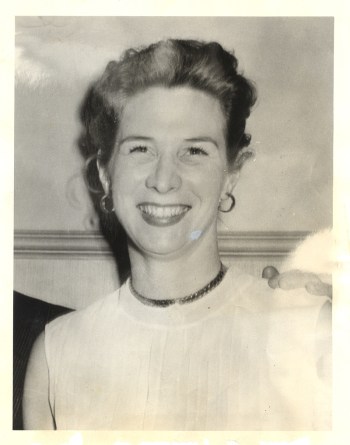
That’s what the landlady, Eleanor Lipson, had to say about murder victim Karil Rogers Graham. Her sister, Mrs. H.L. Manley, called her “a well-settled girl.”

According to police, others described her as “intelligent, sympathetic, capable and personable” and noted that she had many friends, The Times said.

Police also questioned her former fiance, Leon McFadden, in the killing. Although The Times failed to interview McFadden, it reported that he insisted on taking a polygraph test and was cleared.

The most that can be determined about her is that she had been treated by seven psychiatrists in the last years of her life, according to police. Her
brother-in-law H.L. Manley, 9020 Balcom St., Northridge, said that Graham was a “woman who since early teens had been driven by a compulsion to paint–but she lacked the native talent to paint well,”
The Times said.

“Mrs. Graham had studied art for several years, he said, and apparently eventually became convinced that she lacked the necessary spark of talent. She became, instead, the registrar at Art Center School, where as counselor to the students she could be nearer the art objects and artists she so admired.”

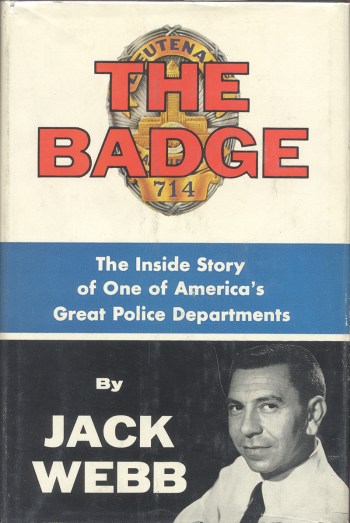
That, presumably, is as close to the facts as we can come for now. Let’s see what Jack Webb does with her in the opening sentences of “The Badge.”


“The way it is with so many women who live alone, life had held back on Karil Graham. She was likable and attractive, still a year on the sunny
side of 40, sandy-haired, blue-eyed, trim-figured. But there was no husband–a marriage hadn’t worked out–no children, no other man in her
lonely life.

“Karil bravely hid the hurt and filled the emptiness as best she could. Every day she went to work, on time, to her job as receptionist at a downtown
Los Angeles art school. Nights, in her quiet apartment, she listened to music and dabbled in painting. She was just a dilettante, she knew
resignedly, but records and easel were gracious cover-ups for emptiness.

“Sometimes Karil counseled students who attended the art school. Often they were
male students, and she took them to her heart in a mothering, protective way. She saw for them something more meaningful and zestful in life, the something that had somehow passed her by.”

Is this powerful writing, heavy on the noir?
You bet. Accurate? Not when she gets demoted from registrar to receptionist. And there’s certainly nothing about her ex-fiance in Webb’s portrait of Graham’s empty life of heartache as a woman without
a man.

Far more critical, for it colors all of “The Badge,” is the world-weary, uncompassionate,  superior tone Webb affects from the first sentence. Knowing what I do of Webb’s life, I can’t say the work-obsessed, alcoholic Jack Webb, who survived a nightmarish childhood, had any business acting superior to
anyone. Why he did it is a question that only he could answer. But let this be a warning to readers who assume “The Badge” is an accurate account of historic crimes. The book is a shooting gallery for anyone
intimately familiar with the facts.

ps: Among Graham’s possessions retrieved from the crime scene was an original Raoul Dufy watercolor, The Times said. It would be interesting to know what became of it.

Graham’s remains were claimed by her mother, Gladys Rogers, for a funeral that was held in San Diego.

Email me

Posted in art and artists, books, Homicide, LAPD | Tagged , , , , | Comments Off on Karil Rogers Graham and ‘The Badge’

Linda Leabow update

Prodded by a reader who directed me to an ancestry website, I can fill in a few blanks about Linda Leabow, who figured in the Marie Wilson story.
According to California death records, Linda L. Cairns, listed with the
maiden name Leabou, was born March 5, 1936, and died Jan. 27, 1990, in
Kern County at the age of 53.

Email me

Posted in #courts, Adoptions | Tagged , , | Comments Off on Linda Leabow update

Marie Wilson update

I went into the archives last night and pulled the photos of Marie Wilson and her family.

Marie_wilson__1957_0404_greg_don_co

Photograph by Don Cormer / Los Angeles Times
Marie Wilson and her son, Greg.

Marie_wilson_1957_1016_greg_chris_l

Los Angeles Times photo
Marie Wilson with Greg and Christine, Oct. 16, 1957

Marie_wilson_1957_1017_bob_fallon_c

Photograph by Ken Dare / Los Angeles Times
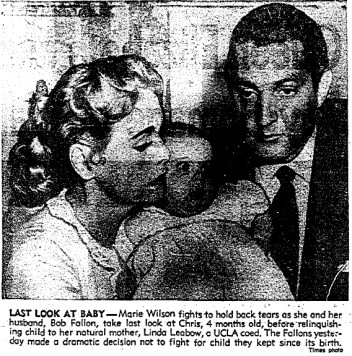
Marie Wilson and her husband, Robert Fallon, shortly before they returned Christine to Linda Leabow. She certainly was a cute baby.

Posted in #courts, Adoptions, broadcasting, Film, Hollywood | Tagged , , , | Comments Off on Marie Wilson update

Mideast crisis

Oct. 17, 1957

1957_1017_cover

Posted in Uncategorized | Tagged , , , | Comments Off on Mideast crisis

October 16, 1957: Matt Weinstock

October 16, 1957

Matt WeinstockOn a recent clear evening about an hour after sunset, Chet Kennedy of Sun Valley looked up and apparently saw not only Saturn but some of its rings.

The planet was a bead “blazing with bright glory in the southwest sky,” he said. Nearby was a smaller bead, possibly one of Saturn’s 11 moons. The rings on the left side, he said, seemed to be in shadow. There also was a dark streak across the center of the planet.

Unwilling to accept the verdict of his own eyes, he pointed out the unusual sight to neighbors and they said they saw the same thing.

“Here’s this wonderful object spinning away at its business,” said Chet, “and here we are worrying ourselves sick about Sputnik.” Continue reading →

Posted in Columnists, Dodgers, Matt Weinstock | Tagged , , , , , | Comments Off on October 16, 1957: Matt Weinstock

October 16, 1957: Paul V. Coates–Confidential File

October 16, 1957

Paul Coates, in coat and tieAt 3:24 a.m., the ambulance arrived.

The victim was rushed to Hollywood Receiving Hospital for emergency treatment. His condition was critical. He was then taken to General Hospital.

Nine hours later, he was pronounced dead.

That was still quite a few hours before his letter reached me. When it came, I read it a couple of times.

Then I called his wife.

“I’ve been expecting your call,” she told me. “He mentioned it–that you’d contact me–in the note he left me.” Continue reading →

Posted in Columnists, Paul Coates, Suicide | Tagged , , , , | Comments Off on October 16, 1957: Paul V. Coates–Confidential File

Mystery photo

I hope this one is interesting. Who is this woman and why am I running her picture? The other photos have been recognized so quickly, I’m sure someone will figure her out right away.

Karil Rogers Graham
1915-1955

Mystery_photo_071011

Email me

  • Adele Astaire. No.
  • Adela Rogers St. Johns. No.
  • Dorothy "Buff" Chandler. No.
  • Mrs. Walter O’Malley. No.
  • Virginia Hill. No.
  • Roz Wyman. No.
  • Queen Elizabeth. No.
  • Geneva Ellroy (twice). No!
  • Aggie Underwood. No.
  • Anna Eleanor Roosevelt. No.
  • Evelyn Scott. Interesting guess! But no.
  • Rose Bird. No.
  • Babe Didrikson Zaharias. Interesting guess! But no.
  • Princess Margaret. No.
  • Bernice Layne Brown. Very interesting guess. But no.
  • Donita Woodruff. No.
  • Edie Wasserman. No
  • Marion Davies. No.
  • Bea Korshak. No.
  • Ariel Durant. That’s a guess I never expected. But no.
  • Molly Swett. No.

Gosh. I may be forced to give a clue at this rate.

Update: OK, here goes. The mystery woman figures prominently in a well-known nonfiction book about Los Angeles. The work was in bookstores within the last few years and is ranked among the top 100,000 in sales on Amazon.com.   It was written by an iconic Los Angeles TV and film actor who grew up on Bunker Hill.

The mystery guest lived within easy walking distance of the Original Tommy’s Hamburger at Rampart and Beverly.


Mystery_photo_071011_building
Photograph by Larry Harnisch / Los Angeles Times
The apartment where the mystery guest lived was at the site now occupied by this building.

Karil Rogers Graham, 271 S. Carondelet, was beaten to death with a lead pipe. Her blood was spattered four feet up the wall and a piece of her skull was found eight feet from her body.

Donald Keith Bashor was convicted of her murder and executed in the gas chamber at San Quentin on Oct. 11, 1957.  His final words were: "I’m glad my crimes are coming to an end. I am sorry I cannot undo the horrible things I did."

Donald_k_bashor_1956_1025_edward_ga
Photograph by Edward Gamer / Los Angeles Times
Senior Deputy George Coenen, left, and Sgt. Howard Earle, right, escort convicted killer Donald Keith Bashor on his trip to San Quentin, Oct. 25, 1956.

Bashor’s story was the basis of a "Playhouse 90" episode by Jules Maitland. Bashor’s slaying of Graham also plays a prominent role in Jack Webb’s "The Badge," a not terribly accurate book reissued in 2005.

Email me


Posted in Uncategorized | Tagged | 12 Comments

Change of Heart

1957_1016_wilson

Oct. 16-22, 1957
Los Angeles

1957_1018Somewhere, perhaps in Los Angeles, is a woman who celebrated her 50th
birthday on June 25, 1957, and may have no idea of the legal battle that was fought over her when she was 3 months old.

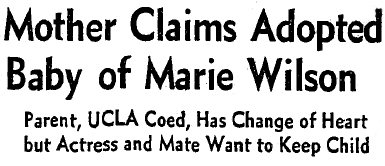
Her mother was a strikingly pretty, unmarried 21-year-old music student at UCLA who had become pregnant and decided to give up the baby girl for adoption by a Hollywood couple: Marie Wilson, star of the “My Friend
Irma” pictures, and her husband, producer Robert Fallon.

In 1955, the couple had adopted a young boy after seeing him during a benefit performance in Tennessee, naming him Gregson, The Times said. They had since decided to adopt a girl and on June 28, 1957, the Fallons had taken custody of the 3-day-old baby, whom they named Christine. Continue reading →

Posted in #courts, Adoptions, Film, Hollywood | Tagged , , , | Comments Off on Change of Heart

Mideast crisis

Oct. 16, 1957

1957_1016_cover

Posted in @news | 1 Comment

Son shoots father


1957_1016_dewitt

Oct. 15-16, 1957

Los Angeles

1957_1016_dewitt_pix
We can add the story of Elvin Harry DeWitt Jr. to the list of
youngsters who intervened in their parents’ quarrels, answering
violence with violence.

Bethel Lee DeWitt, 52, and Elvin Harry DeWitt Sr., 60, were fighting in their home at 12730 Matteson Ave.,
Mar Vista.  The elder DeWitt, a house moving contractor, came home "in
a quarrelsome mood," The Times said. He and his wife began a fight that
culminated in him throwing an ashtray through the TV screen.

At that point, Elvin Jr., 15, got his .22-caliber  pistol and shot his father twice in the hip. 

The Times reported that police were questioning the youth and that his
mother filed a battery complaint against his father, who was recovering
from surgery to remove the bullets.

According to California death records, Bethel Lee DeWitt died April 5,
1981, at the age of 75. Elvin H. DeWitt died Nov. 5, 1961, at the age
of 71. (Another man named Elvin Harry DeWitt, born Dec. 27, 1913, died
April 20, 1985).

Previously:

Linda Louise Narez, 8, kills her uncle with a deer rifle to stop a fight. His last words: "Go ahead, shoot me."

Lester Johnson, 15, fatally beats his father with a club.

Email me

Posted in Uncategorized | Tagged , , , | Comments Off on Son shoots father

Judith Mae Andersen update

Here’s another picture of the steel drum used to dispose of the body of Judith Mae Andersen, which appeared in the September 1957 issue of Police Digest. A sincere thanks to Gabriel A. Fuentes.


1957_12_drum_police_digest

Posted in Homicide, Judith Mae Andersen | Comments Off on Judith Mae Andersen update