
Oct. 15, 1957

October 14, 1957
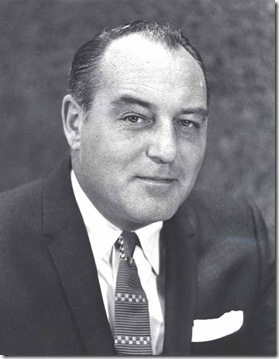 SUBJECT’S NAME–Rosalee Cartwright
SUBJECT’S DESCRIPTION—Age, 14. Height, 5 feet, 4 inches. Weight, 118 pounds. Blond hair.
Subject was last seen five weeks ago.
Any person with information concerning whereabouts of subject is requested to contact subject’s parents, Mr. and Mrs. Hugh Cartwright, 846 S. Greenberry Drive, West Covina. Phone EDgewood 8-5798.
Rosalee Cartwright ran away.
She did so after being struck by a malady not uncommon among 13 and 14-year-old girls. Continue reading
October 14, 1957
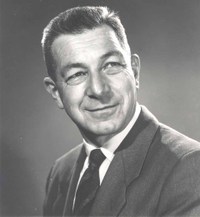 A few weeks ago, Jules Goldstone, producer of the TV show “The Court of Last Resort,” was driving along Sunset Boulevard near Hilgard when a car doing about 60 mph came around a curve from the opposite direction, went out of control and smashed into his car, rolling it over twice.
“We both should have been killed, but miraculously we weren’t,” said Goldstone.
His car was demolished, but he received only a bad cut on the arm and bruises.
Since the accident, grateful to be alive, he has become more sharply aware of the possibility of unexpected death on the streets. Continue reading

Oct. 14, 1957
Los Angeles

Theodore Roosevelt Beckham, a 23-year-old suspected sex offender,
killed LAPD juvenile Officer Robert R. Christensen, 38, with his own
gun during an attempted arrest, the third slaying in a bloody, tragic
week for Southern California law enforcement. Five hours later, Beckham
lay dead in South Los Angeles with four bullets in him.
Police said that on the morning of Oct. 14, 1957, Christensen went directly from his home, 5192 Berryman Ave.,
Culver City, to arrest Beckham in a neighborhood of apartments and
rooming houses east of MacArthur Park. As a juvenile officer,
Christensen usually worked with Policewoman Betty Stone, who said that
when she reported for duty that morning, she found a note from
Christensen saying that he was picking up a man suspected of indecent
exposure.
Beckham had been arrested in the area on July 15, The Times said, and
Christensen suspected he was the man who had recently been reported as
a peeping Tom.
Wearing civilian clothes and driving his personal vehicle, a battered 1947 Chevrolet, Christensen parked at 1524 Ingraham St.,
before 8 a.m. He saw Beckham, wearing green overalls, half a block away
and got out of the car to take him into custody, The Times said.
Christensen led Beckham to the car and apparently put him in the
vehicle without handcuffing him.
As Christensen got into the car, Beckham grabbed his .38 Colt Detective
Special from its holster. Beckham shot him once, ran away, then came
back and shot him three more times through a car window, witnesses
said. Christensen was found halfway out of his car with the handcuffs
next to him on the seat.
Beckham ran to his 1950 Ford and as he was push-starting the car, a
neighbor noted the license number, GCD 026. Police traced the car to Beckham’s
brother Othello, 5428 Duarte St.
Five hours later, Beckham was dead. More than 100 LAPD officers assigned to the search soon found the car at 99th and Grape streets. Police began searching the area and when Beckham ran from the house at 2049 E. 99th St., officers ordered him to halt, The Times said. "We hollered at him to stop, Officer J.O. Worden said, "but he kept running."
Worden and his partner, Officer K.E. Gourley, killed Beckham, who was found holding Christensen’s .38, The Times said.
Christensen, a Manual Arts High graduate and World War II veteran, was
given a funeral at Callanan Mortuary Chapel, 1301 N. Western Ave., with
interment at Holy Cross Cemetery. He was survived by his wife,
Katherine, daughters Candy and Patricia, his parents, two brothers and
a sister. He had joined the LAPD on March 18, 1946.
 Theodore Roosevelt "Lazy Boy" Beckham spent 39 days in jail for
lewd vagrancy in 1954 and served time in 1956 for armed robbery, The
Times said.
H.K. Chetwood, Beckham’s boss at a rubber manufacturing shop, 1617 W.
7th St., said: "I have hired him off and on for five years except when
he was in jail. He was a drifter but a good worker."
By the way, not that you would know it from The Times: Beckham was African American.
Previously:
Highway Patrolman Robert E. Reed.
Sheriff’s Deputy Harold Blevins.


Oct. 13-23, 1957
Los Angeles

Woody and Eddy’s should have been an easy job for two old pros just out
of the joint: Sit around and have a drink or two until the place closes
and nearly everybody has cleared out, pull the guns, make them open the
safe and take the money. Rough up anybody who gets brave.
Thomas Lee Barrington, 29, was living at 155 Bimini Place after being paroled from San Quentin seven weeks earlier. Harry B. Hancock, 50, 1414 E. 60th St.,
had been out of Folsom since March after spending 15 of the last 22
years in prison. Maybe they didn’t know and maybe they didn’t care, but
Barrington and Hancock weren’t dealing with the San Marino Police
Department. Instead, the combination restaurant, bar and liquor store
at Huntington and San Gabriel was across the street in Los Angeles
County, under the jurisdiction of the Temple City substation.
Late in the evening, one of them slipped into the business’ office and cut the
phone wires. They followed bartender Andrew Gillian and his wife,
Genevieve, into the parking lot, drew their guns and forced the couple
back into the bar to open the safe At that time, nearly everyone was
gone. The restaurant had closed hours earlier and the cooks were back
in the sleeping quarters. Bartender Lawrence McDonald was still inside,
as were waitress Georgia Gould and her mother, Mary, who worked in the
the hatcheck room.
"They were mean and they were tough," Genevieve Gillian said. "They really shoved us around."
In the confusion, one of the women slipped away and called the
Sheriff’s Department from a pay phone outside the restaurant. While
Hancock took Andrew Gillian into the office to open the safe,
Barrington followed McDonald, who had tried to escape.
Andrew Gillian said he didn’t know the combination and Hancock warned him: "If you don’t open the safe, I’ll kill you."
At the entrance to the bar, Barrington put his .45 to McDonald’s back
and shot him just as the first police car arrived with Deputies Harold
S. Blevins and Charles E. Covington.
Barrington shot Blevins in the head, killing him instantly, and
Covington returned the gunfire, shooting five rounds, The Times said.
Barrington was dead when he hit the ground, but in the gunfight, he
shot Covington in the chest, with the bullet going through him and
coming out his back.

Hancock rushed to a window when he heard the gunfire, and his prisoners
fled. More deputies and the watch commander arrived, sealing off the
streets to capture Hancock. About 75 heavily armed officers surrounded
the restaurant, and on the assumption that Hancock was still inside
holding several hostages, shot teargas into the building.
The gas rousted the cooking staff from their sleeping quarters, but
failed to flush Hancock from the restaurant. He was finally found
hiding in a car parked in front of the liquor store. Deputies had to
restrain Andrew Gillian to keep him from attacking Hancock, the Mirror
said. "Let me at him!" Gillian yelled. "He hasn’t got a gun now."
Hancock was sentenced to three life terms after being convicted of
murder, attempted murder, kidnapping for robbery, attempted robbery and
attempted burglary. I can find no further trace of him.
Blevins, who was survived by his wife, Barbara Anne, daughters Brenda
and Heidi, and his parents, was buried at Resurrection Cemetery after
services at All Saints Catholic Church attended by hundreds of police
officers.
"Minutes after her husband’s casket was carried into the church, Mrs.
Barbara Anne Blevins, the deputy’s widow, collapsed on the sidewalk as
she was being led from a car," The Times said. "A deputy lifted the
sobbing woman into his arms and carried her inside."
McDonald apparently recovered from his wounds. Covington and Blevins
were honored in a 1959 ceremony for LAPD officers and sheriff’s
deputies who had been killed or wounded in the line of duty.
Woody and Eddy’s, 3007 Huntington Blvd., is now the location of a strip mall that includes a Starbucks and Howe’s market.

October 12, 1957
Burl Ives, who took off more than 40 pounds to play the part of the viciously righteous father in “Desire Under the Elms,’ was putting some of it back on the other day at Frascati’s and between bites took up the slack on the three years since we last saw each other.
The word from Paramount is that Burl does a masterful job in the Eugene O’Neill play. “I’m a heck of a villain,” he confided with a booming laugh.
Furthermore, it appears he’ll be doing considerably more acting. He has been offered three important roles.
Continue reading
Oct. 12, 1957
Yes, this really happened.


Oct. 11-23, 1957
Los Angeles

Hey there, men, feeling blue because you can’t get a date? You might try the Clifford Earl Burton method: You don’t have to be tall (he was 5-5), highly educated (he could barely read or sign his name) or particularly handsome (see photo). You don’t even have to be a sharp dresser (what is that thing on his head?)
Then what was his secret weapon that drove women wild? How did Clifford Earl Burton manage to get at least nine wives (that’s according to police; he lost count) and 10 children (three of them born within a month in 1953)?
He knew how to WELD! (Great pickup line: “Want to come over to my place and see my acetylene?”)
OK, enough fun with Mr. Burton. He broke a lot of women’s hearts and made many children grow up without a father. There isn’t much humor in that.
How did he do it? Mostly he picked on girls in their teens (the oldest
was 20 and the youngest was 15) whom he met by hanging around high
school football games, police said. One of his wives was the
babysitter. He moved around the country: Van Nuys; Lancaster; Tulsa,
Okla.; Carson City, Nev.; and Muncie, Ind.
Burton married for the first time in 1941, when he was 16. He married
again in 1944, three times in 1946, once in 1950 and 1952 and twice
more in 1953, police said. Some of the marriages may have been annulled
and he might have gotten divorced, but Burton was vague about the
matter. He said he had been married “several times but I can’t recall
dates or details.”
Police got involved in the case in 1954 when a Lancaster woman, the
mother of Wife No. 4, saw a TV show describing his three previous
wives.
Burton was given five years’ probation after being arrested in Jackson, Miss., and extradited to Los Angeles on bigamy charges.
His only explanation: “I was all confused.”

October 11, 1957
I was out with a group of deep thinkers the other night and they got to discussing the pressures of present-day living.
They deplored particularly the fact that hardly anyone has time any more to do the things he wants or to see his friends as often as he’d like.
They brought out the stress of holding a job and the strain of driving great distances in traffic and the nerve-racking assaults on what little privacy they have. Continue reading
October 11, 1957
It’s long been said that the funniest clowns are the saddest, and the saddest are the funniest.
So I guess there’s a pretty good chance that it’s true.
Yesterday, a very funny clown came to my office. It wasn’t the first time he’d come. But it was the first time in quite a while.
His real name is Bert Whitson.
But all his friends in Pershing Square refer to him as “Popeye.”
He was smiling.
“Been riding my bike all over town looking for you,” he told me. Continue reading
OK, the other mystery photos have been "who" questions. This is a "where" question. And just to make it fun, be precise as to the location.
And of course, everyone in L.A. will recognize the source of the quote, right?

Oct. 10, 1957

He quickly thrust it into his pocket, then, as if his curiosity
were too great, took it out, admired its sparkle and displayed it to
Mary.
It looked like a valuable ring, and Mary was about to
suggest that he advertise it in the Lost and Found, but he rambled on
about never having found anything in his life and being alone in the
world, his wife having died, he said, a year ago.
Suddenly, he insisted she try it on, and when it was on her finger he broke the spell by saying:
"You can have it for two bucks, lady."
Mary handed it back, glared at him, got up and walked away.
Just
then another woman sat down and the next time Mary looked, the old guy
was admiring the worthless piece of glass on her finger.
But, admits Mary, it certainly had a beautiful setting.
FALL-OUT–No, Virginia, we’re not changing the words to "How High Their Moon" or "It’s Only a Man-Made Moon."
Quick-on-the-draw
note: A letter mysteriously delivered to my desk had inscribed on the
envelope, "By Satellite"–with a professional-type sketch of the
Russian moon hurtling through space emitting its beep-beep-beep…
 A
A
man watching the World Series over TV in a Vine Street bar marveled at
the unusual shot from behind the pitcher’s mound showing the batter,
catcher and umpire–taken with a Zoomar lens from center.
"Gosh," he said, "I wonder where they take that from?"
"Didn’t you know?" said bartender George Fedor. "From the new satellite!"
G.B. inquires plaintively, "May we also soon expect spherical drive-in stands with pseudo-antenna selling satellite burgers?"
MOZART’S "Haffner Serenade" will be performed at USC’s Bovard Auditorium tomorrow night, opening the Music Guild season, and William Steinberg, who will conduct the chamber orchestra, believes he has the explanation for some of its puzzling un-Mozartlike passages.
Critics have long wondered why there are no flutes in the first movement, no oboes in the second and hardly any tympani at all.
Steinberg’s
research disclosed that Mozart wrote the piece for the wedding of the
daughter of Sigmund Haffner, Salzburg burgomaster, in 1776. Well, the
musicians at the clambake also served as waiters and they had to take
off when the cook called out "Hot food!" As for the tympanist, he was
the headwaiter.
OK, SO the Dodgers are coming. Now let’s have a moment of agonizing reappraisal.
In
luring them here, some of our best people made a sickening spectacle of
themselves, indulging in reckless, hysterical, fishwife conduct and
thereby holding up Los Angeles to nationwide ridicule.
More than
the Brooklyn Dodgers, the third-largest city needs a little dignity or
at least less hypocrisy and demagoguery. Perhaps it is too much to
expect.
LOOSE ENDS–The
new $1 bills are in circulation. They’re the same as the old ones
except they have the name of Robert R. Anderson as secretary of the
Treasury instead of G.M. Humphrey and "In God We Trust" above the big
"One" on the other side…
Jan Herd can’t help wondering if the exhaust fumes from the additional
trucks needed to pick up combustible rubbish will contribute as much to
smog as was eliminated by the ban on incinerators…
A brochure for Friendly House, 538 S. Harvard Blvd., which rehabilitates women alcoholics, is titled, "One for the road–back"…
A Rand McNally ad in Time states, "any day now the earth will launch
its first man-made satellite…" Oops, trapped by an advance deadline.
Oh for the life of a court beat reporter in 1957: Confidential magazine, an appeal by convicted killer Caryl Chessman and the murder trial of L. Ewing Scott,
not to mention the daily grind of the court calendar. There are so many
wonderful cases, but alas, only one Larry Harnisch, and I worry that I
won’t be able to do justice to all the details. (The Confidential
magazine case, if you were wondering, resulted in a hung jury and
promises of a retrial).
The Scott case is particularly
significant because of its unusual challenge: The prosecution had to
persuade a jury that the defendant was guilty even though police were
never able to find the (alleged) victim’s body. I was fortunate to be
given access to the district attorney’s files on the Scott case and
they are massive, but far too extensive for the purposes of a blog.
So for today, let me introduce a few of the main characters as jury selection begins.

Ray Graham / Los Angeles Times
For the prosecution, Deputy Dist. Atty. J. Miller Leavy, shown in 1953 during the trial of Barbara Graham.

Howard W. Maxwell / Los Angeles Times
And the defendant, Leonard Ewing Scott, caught off-guard by Times photographer Howard W.
Maxwell with a miniature camera, joking with reporters in his jail cell,
April 26, 1956.

And Scott in his 1956 mug shot.
A typical example of retouching from The Times photo archives:

Steve Fontanini / Los Angeles Times, Dec. 28, 1973
From left, J. Miller Leavy of the Los Angeles County district attorney’s office, with Dist. Atty. Joseph Busch and Joseph Carr, on Leavy’s last day after 41 years as a prosecutor. Leavy was the prosecutor in the Caryl Chessman, Barbara Graham and L. Ewing Scott cases, among many others.
Oct. 10, 1957
A typical example of infographics in the Stone Age:

Now here’s a hed bust for you. Lou Burdette? Ouch! At least the story has it right. (Typo box score for The Times, 1881-1986: Lou Burdette 164; Lew Burdette 626).


