Eve Golden / Queen of the Dead: Valaida Snow

Valaida Snow

Valaida Snow

1904 – 1956

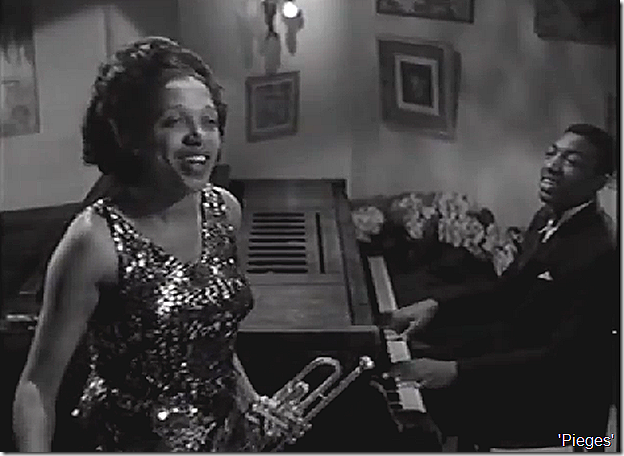
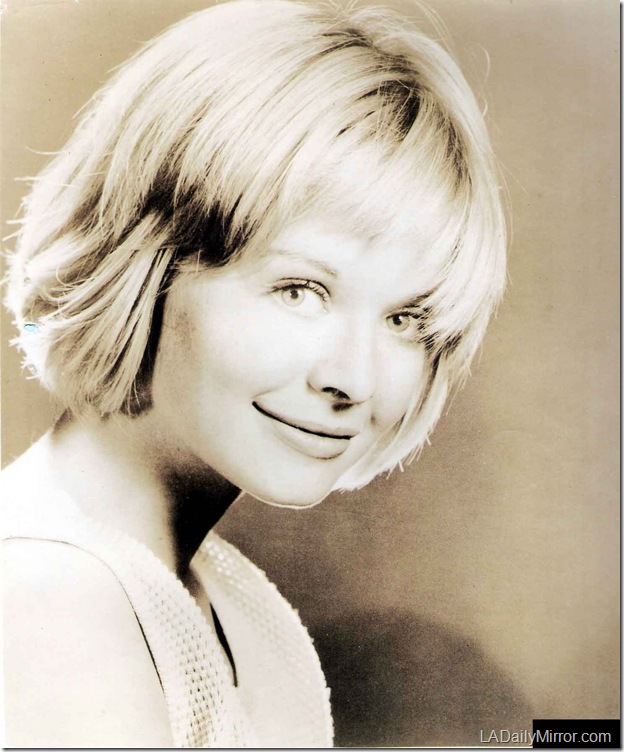
I am a huge Bix Beiderbecke fan; I prefer him to Louis Armstrong, and as far as I’m concerned, jazz died with Bix in 1931. But a close second to Bix in my heart is the great, unjustly forgotten Valaida Snow, the triple-threat singer, dancer and trumpet player known somewhat condescendingly as “Little Louis.” Unlike her fellow black songstresses Lena Horne, Ethel Waters and Josephine Baker, Valaida died pretty much forgotten, and it’s only thanks to her rerelease on CD (as well as YouTube) and a 2007 biography by Mark Miller that she’s at all known. Valaida never hit it big on Broadway or in revues, and her only movies were tiny cameos in Take It From Me (a 1937 B-film) and Pièges (a 1939 French film)—as well as a few Soundies in 1946, when she was past her prime.

Continue reading

Posted in African Americans, Eve Golden, Film, Found on EBay, Hollywood, Music, Queen of the Dead | Tagged , , , , | 9 Comments

Mary Mallory / Hollywood Heights: Philippe de Lacy and ‘Cinerama Holiday’

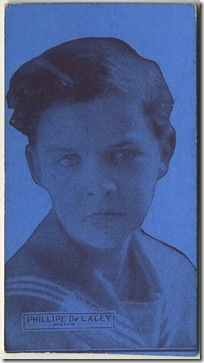
Philippe De Lacy Child stars often face harsh realities as they age. The public doesn’t find them as cute, roles stop coming, and life can become cruel. For every talented child actor that goes on to a successful career as an adult like Shirley Temple, Jodie Foster, and Elizabeth Taylor, there are depressing stories of those who come to tragic ends, like Carl “Alfalfa” Switzer and Bobby Driscoll. Philippe de Lacy rode the rollercoaster of fame from popular juvenile performer to struggling young actor and finally to success behind the scenes as a director and producer in the heyday of Cinerama.

De Lacy landed his first role at the tender age of 3, when he appeared onstage in “The Riddle Woman” with Geraldine Farrar, after a French woman and friend of Farrar noticed him at a party and brought him to the actress’ attention. The lad soon landed roles in topnotch films, appearing with Alla Nazimova in “The Doll’s House” in 1922, playing Mary Pickford’s younger brother in the 1923 film “Rosita,” and acting as Michael Darling in Paramount’s wonderful 1924 movie “Peter Pan.” His tender looks and expressive acting won him a large following. An ad in the April 1, 1925 Los Angeles Times called him “a star of tomorrow.”

Photo: A card of Philippe de Lacy listed on EBay as Buy It Now for $4.29.

Continue reading

Posted in Film, Found on EBay, Hollywood, Hollywood Heights, Mary Mallory, Theaters | Tagged , , | Comments Off on Mary Mallory / Hollywood Heights: Philippe de Lacy and ‘Cinerama Holiday’

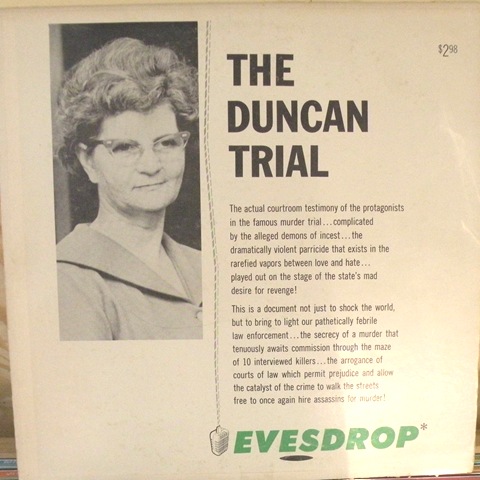
Found on EBay: The Ma Duncan Trial

ma_duncan_trial

Rare (or r@re) is terribly overused on EBay, but this time it’s accurate. A LP from clandestine recordings made at the murder trial of Elizabeth “Ma” Duncan, has been listed. Bidding starts at $5. The Duncan case (she was convicted of killing her daughter-in-law for really bizarre reasons) is one of the strangest killings of the era.

Posted in 1958, Found on EBay, Homicide | Tagged , , | 8 Comments

Movieland Mystery Photo

Sept. 28, 2012, Mystery Photo

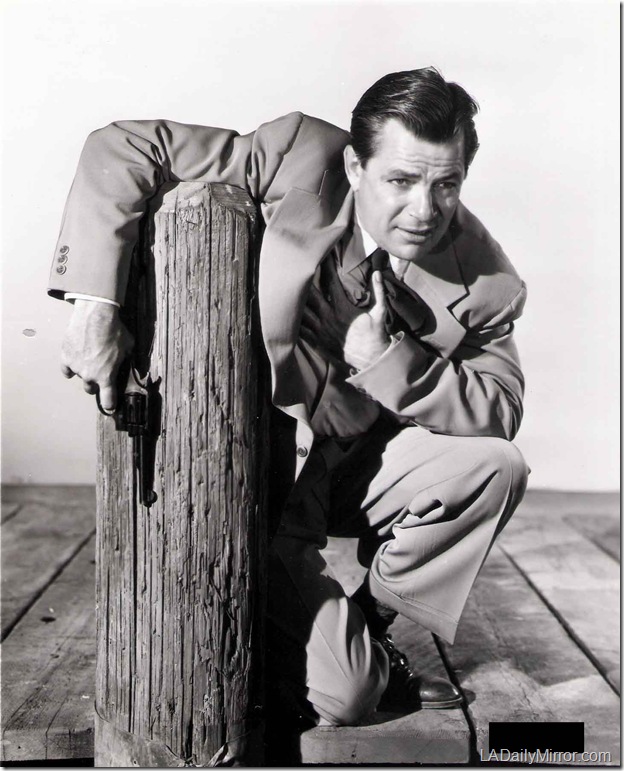
Here’s another photo from the collection of Steven Bibb. Here’s our mystery guy and I love the name of the mystery film.

Posted in Film, Hollywood, Mystery Photo, Photography | Tagged , , , | 8 Comments

Another Good Story Ruined: The Black Dahlia

Wrong!
Photo: <<Le Dahlia Noir>> 


Once again, Elizabeth Short’s bogus middle name appears in a story about the Black Dahlia – proof that mistakes take on a life of their own.

In reality, she had no middle name. She was erroneously given the middle name “Ann” in the introduction to the 1971 Los Angeles Times story “Farewell, My Black Dahlia.”

This mistake has even permeated her FBI file and was repeated by James Ellroy until I corrected him (something few people get away with). You can be sure that whenever someone refers to the Black Dahlia as Elizabeth Ann Short they don’t know what they are talking about.

Posted in 1947, Another Good Story Ruined, Black Dahlia, Cold Cases, Homicide, LAPD | Tagged , , , , | 2 Comments

Movieland Mystery Photo

Sept. 27, 2012, Mystery Photo

Here’s another photo from the amazing collection of Steven Bibb!

Posted in Film, Hollywood, Mystery Photo, Photography | Tagged , , , | 9 Comments

Movieland Mystery Photo

Sept. 26, 2012, Mystery Photo

Here’s another photo from the amazing collection of Steven Bibb!

Posted in Film, Hollywood, Mystery Photo, Photography | Tagged , , , | 13 Comments

Reading Los Angeles: Glen Creason

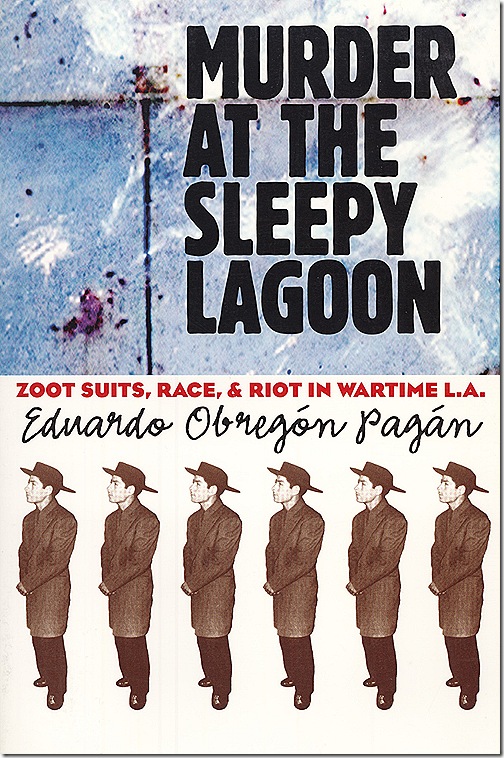
Pagan, Murder at the Sleepy Lagoon
Photo: “Murder at the Sleepy Lagoon” by Eduardo Obregón Pagán.

In interviewing Los Angeles Public Library map librarian Glen Creason, I asked about his favorite books on Los Angeles. There wasn’t space to include the list with the story, but here it is:

Continue reading

Posted in Books and Authors, History, Libraries, Zoot Suit | Tagged , , , , | 1 Comment

Movieland Mystery Photo

Sept. 25, 2012, Mystery Photo

Posted in Film, Hollywood, Mystery Photo, Photography | Tagged , , , | 13 Comments

America Losing War, Navy Official Says

Sept. 25, 1942, Comics

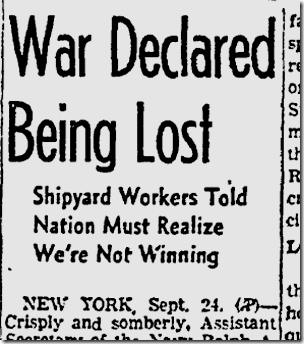
Sept. 25, 1942, U.S. Losing War!

Sept. 25, 1942: Assistant Secretary of the Navy Ralph Bard says that America is losing the war because it has been blinded by “an insufferable and materialistic pride,” a feeling that prevents Americans from realizing the “desperate fury” of Nazi Germany’s fight.

And in a particularly insightful point, the story notes:

“Bard said Americans hope to enlist the support of ‘the masses of Latin America and our own Negroes’ without having to do very much about the economic problems of either and also hope that ‘the Russians will whip the Nazi but not be too unreasonable about spreading their uncomfortable doctrines outside Russia.’ ”

In a chilling foreshadowing of the blacklist, Edwin Schallert notes several Russian-themed movies are in the works, notably “Mission to Moscow.”

Continue reading

Posted in 1942, Comics, Film, Hollywood, World War II | Tagged , , , | 1 Comment

Mary Mallory / Hollywood Heights: Gypsy Rose Lee and ‘The G-String Murders’

Lady of Burlesque
Photo: Barbara Stanwyck in “Lady of Burlesque.”


This post has been corrected. See note below for details.

While being tops in your field can be exciting, an ambitious or intellectually curious person always looks for new ways to grow. This was particularly true for stripper Gypsy Rose Lee. A national star for years for her creative striptease act, Lee hoped to spread her wings into more respectable and challenging fields.

Born January 9, 1911, in Seattle to parents John Olaf and Rose Hovick, Ellen June Hovick saw her name changed to Rose Louise when her younger sister Ellen June was born. After her parents divorced, mama Rose and the girls took to the vaudeville stage. June was the star of the family, supported by her older sister, until Louise ran away and got married at the age of 15. Louise gained her first success when a shoulder strap broke on a dress as she performed on stage, and the crowd went wild. She quickly became a headliner, engaging in witty, classy, and creative strip teases, with the act as much about teasing, imagination, and the possibility of more. Louise changed her name to Gypsy Rose Lee, and began starring in shows at Minsky’s and other burlesque houses.

Continue reading

Posted in Books and Authors, Film, Hollywood, Hollywood Heights, Mary Mallory | Tagged , , , , , , , , , | 6 Comments

Movieland Mystery Photo

Sept. 24, 2012, Mystery Photo

Here’s another photo from the collection of Steven Bibb!

Posted in Film, Hollywood, Mystery Photo, Photography | Tagged , , , , | 7 Comments

Eve Golden / Queen of the Dead: Robert Harron & Clarine Seymour

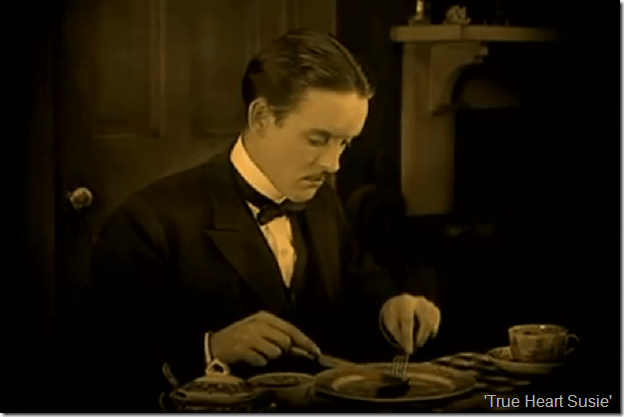
True Heart Susie

Robert Harron & Clarine Seymour


This week I am going to start you off with a clip, rather than ending with one.: The unhappily married young couple in this D.W. Griffith film, The Girl Who Stayed at Home, would both be dead a little more than  a year after its March 1919 release. (By the way, I love Lillian Gish—she was a friend of mine—but isn’t she so smug in this clip you want to smack the daylights out of her?)

The husband is played by 26-year-old Robert Harron, who had already turned in some of the best performances of his generation, most notably as the budding tough-guy in Intolerance (1916). Harron was from a large New York family; his brother John became a successful character actor; brother Charles and sister Tessie had just started on acting careers when they died young (Charles in a car accident and Tessie of the Spanish flu). Robert—Bobbie, he was usually called—got a job as go’fer at Biograph Studios and by age 14 (in 1907) was already acting—in fact, he starred in Bobby’s Kodak in 1908. Harron was always youthful-looking; not so much handsome leading-man material as kid-next-door. He appeared in the Gish sisters’ film debut, An Unseen Enemy (1913), and in some of Mary Pickford’s first movies.

Griffith took Harron under his wing and in the Biograph stock company, the young actor was given every possible kind of role, from caveman to gangster to romantic lead to mentally-challenged object of sympathy. He had a small supporting role in The Birth of a Nation, then broke through with his breath-taking performance in Intolerance (nods must be given to Mae Marsh and Constance Talmadge as stand-outs in that film too, of course). He made another handful of films with Griffith—the best probably being Hearts of the World, looking manly and handsome in moustache and soldier’s garb. After The Girl Who Stayed at Home, Harron made another two films with Griffith, then left the fold to star with the up-and-coming Metro Pictures Corporation, in Coincidence(released posthumously, in 1921).

Harron died while in New York for the premiere of Griffith’s Way Down East—in which the “Harron part” was played by Griffith’s new pet, Richard Barthelmess. Harron shot himself in a New York hotel room and died in the hospital on September 5, 1920, aged 27. No one knows what happened: Lillian Gish later wrote that a gun fell out of his pocket as he was unpacking, which is possible but highly unlikely. He was said to have insisted to a priest his death was an accident—but what an odd accident it was.

His delightful costar in The Girl Who Stayed at Home does not have an Intolerance to her credit, so she is largely forgotten—but what a delight she was! Steals this scene from under everyone’s nose, doesn’t she? Clarine Seymour was born into a well-to-do Brooklyn family at the end of 1898, making her only 20 when she appeared in this film and 21 when she died in a New York hospital on April 25, 1920. Seymour was a proto-flapper: she is closer in spirit to Clara Bow and Colleen Moore than to Gish and Pickford, with her big jazzy eyes and feisty air. Beginning in 1917, she had acted for the Thanhouser, Pathe and Rolin studios, bouncing from New York to New Jersey to California. She left Rolin under a cloud, claiming that they wanted her to do her own (very dangerous) stunts for the Toto the Clown film Toto’s Troubles.

Griffith snapped her up, “to my amazement,” she admitted, for The Girl Who Stayed at Home, precisely because she was the anti-Gish. She played the nasty, modern foil to the angelic Miss Lillian, and ran off with the film. She was not the typical Griffith actress, and he was indeed grooming the more Edwardian Carole Dempster at the same time. But he was no fool, and followed-up with roles for Clarine Seymour in True Heart Susie (again, as the vamp to Gish’s good girl), Scarlet Days (a gold rush adventure with Dempster and Barthelmess) and, finally, The Idol Dancer, as a kind of South Seas precursor to Hedy Lamarr’s Tondelayo inWhite Cargo.

Seymour was in Vermont shooting a supporting role in Griffith’s Way Down East when she took ill and died within days: an “intestinal ailment,” “strangulated intestines” and surgery were mentioned in press reports. It is tempting but useless to even guess what actually killed her (remember how easy it was to die young in those pre-antibiotic days). The Idol Dancer—like Harron’sCoincidence—opened posthumously, and fan magazines already gone to press had hopeful stories about the young star on the newsstand even after her burial. In one, she played with her kid brother and said hopefully, “I want to go on working and learning for a long time yet. Then if I am worth it, I hope for stardom—like all the rest.”

Watch the above clip again and you can see that she was indeed ready for stardom, as Bobbie Harron was coasting into a promising career himself. Lillian Gish, bless her little cotton socks, would go on acting for another 68 years after this film was made (and the fact that she was not even nominated for an Oscar for her swan song, The Whales of August, still irritates me).

Eve Golden

Posted in Eve Golden, Film, Hollywood, Queen of the Dead, Uncategorized | 18 Comments

Mary Mallory / Hollywood Heights: Keystone Anniversary

"The Water Nymph"
Photo: “The Water Nymph” via archive.org

Today is the day that the Keystone Film Company started business, and it released its first film, a pair of “split-reelers” called “Cohen Collects a Debt” and “The Water Nymph” starring Mabel Normand.

Posted in 1912, Film, Hollywood, Hollywood Heights, Mary Mallory | Tagged , , , | 2 Comments

Glen Creason: All Over the Maps

My latest column for The Times is a chat with LAPL map librarian Glen Creason. Check it out.

Posted in History, Libraries | 1 Comment

Movieland Mystery Photo

Sept. 19, 2012, Mystery Photo

Here’s another mystery photo from the collection of Steven Bibb!

Posted in Film, Hollywood, Mystery Photo, Photography | Tagged , , , | 18 Comments

James Curtis / L.A. Voices: Jules White – Part 7

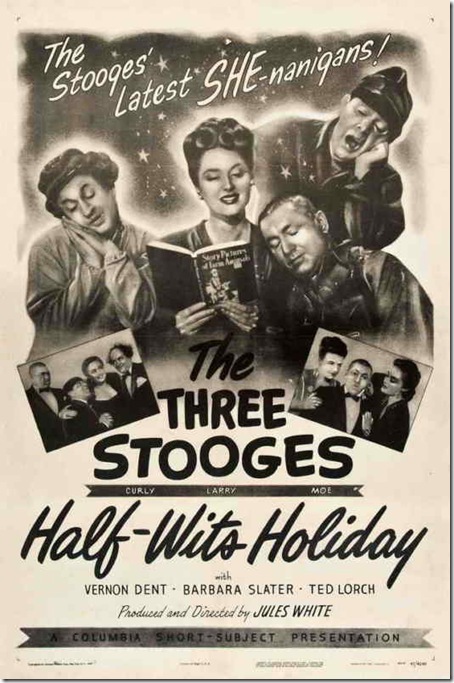
Three Stooges "Half-Wites Holiday"
A reproduction of a poster for the Three Stooges “Half-Wits Holiday” has been listed on EBay as Buy It Now for $6.99.

James writes: Here’s another of those interviews I did during a random burst of energy in 1975. This one took place a couple of weeks before my previously-posted talk with Dick Lane, and my memory is that this one is probably a bit better because of the range of topics it covers.

JAMES CURTIS: Following the Three Stooges into the forties and the later forties,
it appears that before Jerry “Curly” Howard left the group that he was a little less active, or perhaps even ill…

JULES WHITE:He was, and we never knew what was the matter with him. He couldn’t remember a line, he lost a great deal of his comedic value, and I gave him less and less to do.

JC:What was the problem?

JW:Well, he was getting sick at hat time. He had a stroke, a cerebral hemorrhage…

JC: …while they were shooting a picture–“Half-Wits Holiday.”

James Curtis’ interview with Jules White, Part 1 | Part 2 | Part 3 | Part 4 | Part 5 | Part 6

James Curtis’ interview with Dick Lane Part 1 | Part 2 | Part 3 | Part 4 | Part 5 | Part 6 | Part 7

Continue reading

Posted in Film, Hollywood, James Curtis, L.A. Voices | Tagged , , , , | 1 Comment

Tomorrow on the L.A. Daily Mirror

James Curtis concludes his interview with Jules White and discusses Harry Cohn, the death of Curly Howard and why he retired.

Posted in James Curtis, L.A. Voices | Comments Off on Tomorrow on the L.A. Daily Mirror

Movieland Mystery Photo

2012_0918_mystery_photo

Here’s another mystery photo from the amazing collection of Steven Bibb!

Posted in Film, Hollywood, Mystery Photo, Photography | Tagged , , , | 10 Comments

Eve Golden / Queen of the Dead: Renate Müller

renate_muller

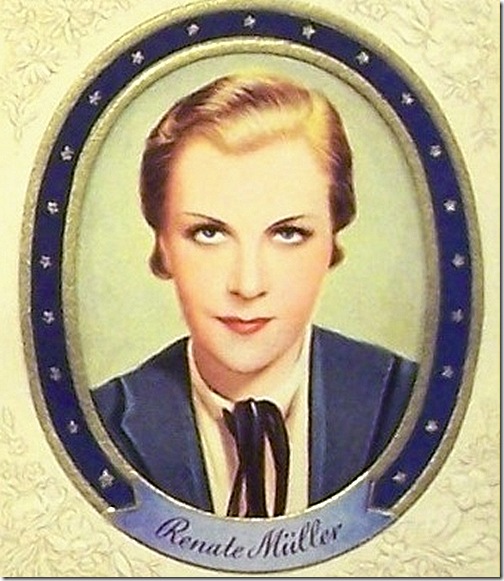
An cigarette card of Renate  Müller has been listed on EBay as Buy It Now for $2.99.

Renate Müller

1906 – 1937

I’ve always gotten a frisson of enjoyment from Weimar-era Berlin culture, probably because like, in a good horror movie, we all know what’s coming. So my iPod is full of German jazz bands, and I also have (thanks to my German friend Bettina) a CD of Renate Müller’s recordings. Renate was the German equivalent of . . . hmmm . . . pre-Astaire Ginger Rogers would be the best example. Sassy but wholesome, a tough city gal with apple-cheeked good looks, and a terrific singing voice. But unlike Ginger, Renate vanished—quite mysteriously [she says, ominously]—by the end of the 1930s.

Continue reading

Posted in Eve Golden, Film, Hollywood, Queen of the Dead | 8 Comments