
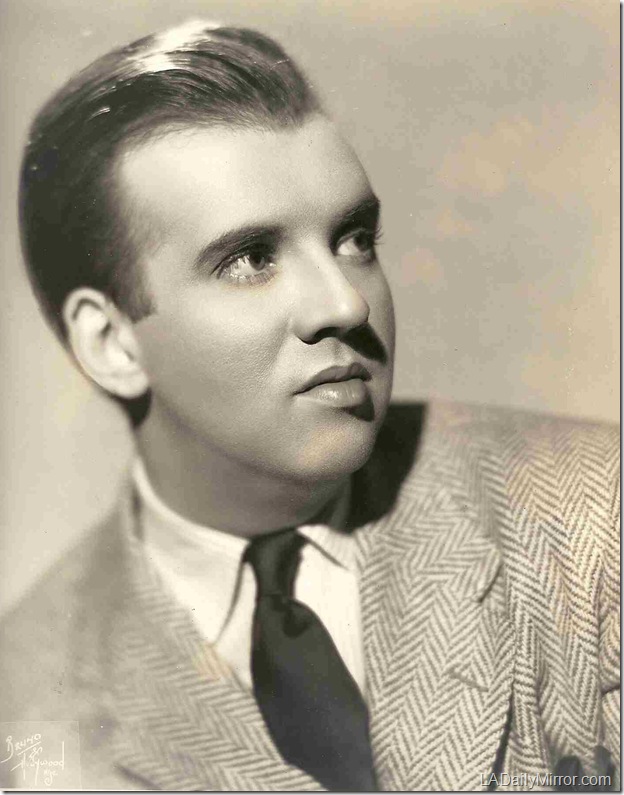
Here’s another mystery photo, courtesy of Mary Mallory. Thanks, Mary!
Nobody guessed our fellow — let me see if I can find more photos of him before revealing the answer.
Here’s another mystery photo, courtesy of Mary Mallory. Thanks, Mary!
Nobody guessed our fellow — let me see if I can find more photos of him before revealing the answer.
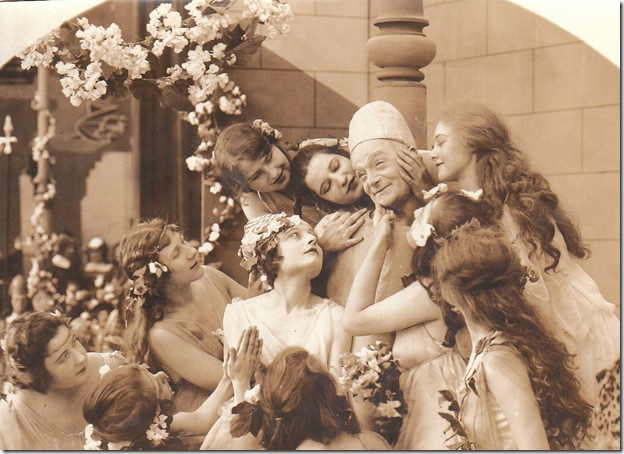
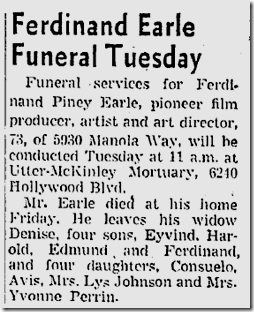 A lot of material belonging to Ferdinand Earle (d. 1951) has been listed on EBay. Earle was an art director, writer and director in the silent era. The photo above is from “Womanhood,” on which he was art director. He also directed “A Lover’s Oath,” which is considered lost. The items are listed as Buy It Now for $1,200. As with anything on EBay, material and the vendor should be evaluated thoroughly before submitting a bid.
Yes it’s Jan. 15. I remember it very quietly by trimming my roses.

Read the entire Los Angeles Star of Jan. 17, 1863, courtesy of USC and the Huntington Library.
Jan. 17, 1863: The Star notes that after a year of being banned from the U.S. mails for publishing treasonous articles in support of the Confederacy, it will once more be available through the mail.
Mr. Humphries, who lives near San Gabriel, celebrates having the entire family, “down to the youngest grandchild” together “under the paternal roof.” “Dancing was kept up with great spirit until daylight.”
Joseph Winston is married to Dona Maria J. Bauchet.
Gov. Stanford, in his message to the Legislature, wants to raise the tax by 23 cents on $100. The Star does not approve.
A sample of the Star’s editorial:

Here’s a mystery chap courtesy of Mary Mallory. Thanks, Mary!!
This is Felix Knight. Please congratulate Mike Hawks and Bob Hansen for identifying him!
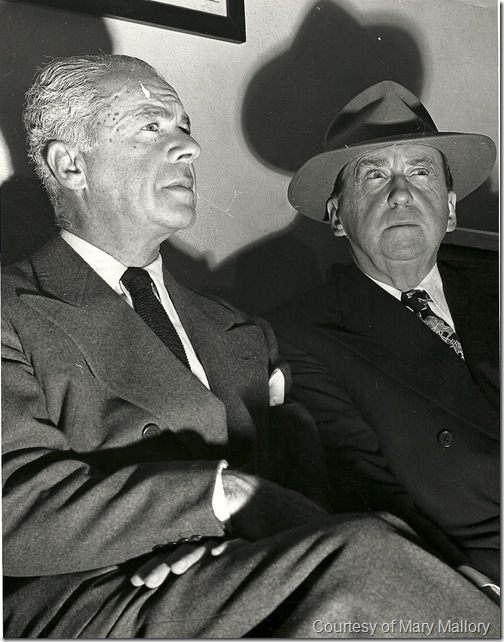
Photo: Walter Wanger, left, and Jerry Giesler. Courtesy of Mary Mallory.
Long before Johnnie L. Cochran Jr., Richard “Racehorse” Haynes, or F. Lee Bailey hit the scene, soft-spoken, circumspect Jerry Giesler iced his competition as Los Angeles’ top criminal defense lawyer. Representing everyone from gangsters Mickey Cohen and Ben “Bugsy” Siegel to such celebrities as Charles Chaplin, Errol Flynn, Marilyn Monroe, Busby Berkeley, Robert Mitchum, and Lili St. Cyr, Giesler mowed down his competition with smarts, over-preparation, and working the system.
Giesler spent big sums hiring detectives to hunt down evidence, screen witnesses, and perform surveillance work. Film studios lavished huge fortunes for him to defend their world-famous stars from scandal and scathing publicity. High-profile personalities utilized his services in messy personal matters to overpower and muscle their opponents. Giesler excelled at putting the prosecution and its own witnesses on trial.
Uh-oh.
Nobody should be surprised — least of all Warner Bros. — that “Gangster Squad” is a terrible movie. Anyone who saw the trailers or heard the industry gossip knew that it was going to be dreadful. It was a guaranteed disaster before the ink dried on the contracts.
But there’s a greater issue with “Gangster Squad” than its failure. The movie is a betrayal of history. It’s clear that when Susan King of The Times starts a story with the absurd statement “… mobster Mickey Cohen ruled Los Angeles in the late 1940s,” that the past — and the truth — have been obliterated in the public consciousness. More important, “Gangster Squad” is the betrayal of a rare opportunity to do it right.
It may seem like overkill to perform a detailed autopsy on a forgettable costume picture that isn’t even a good popcorn movie. But as dismal as the movie is, there is a larger lesson to be learned about the evolving genre of Los Angeles on film: “Gangster Squad” is significant if only because it breaks the spell that “Chinatown” has cast over period L.A. movies since it came out in 1974. Noah Cross, with his quiet but all-consuming malevolence, has been pushed aside by the profane pipsqueak Mickey Cohen.
[Spoilers ahead.]
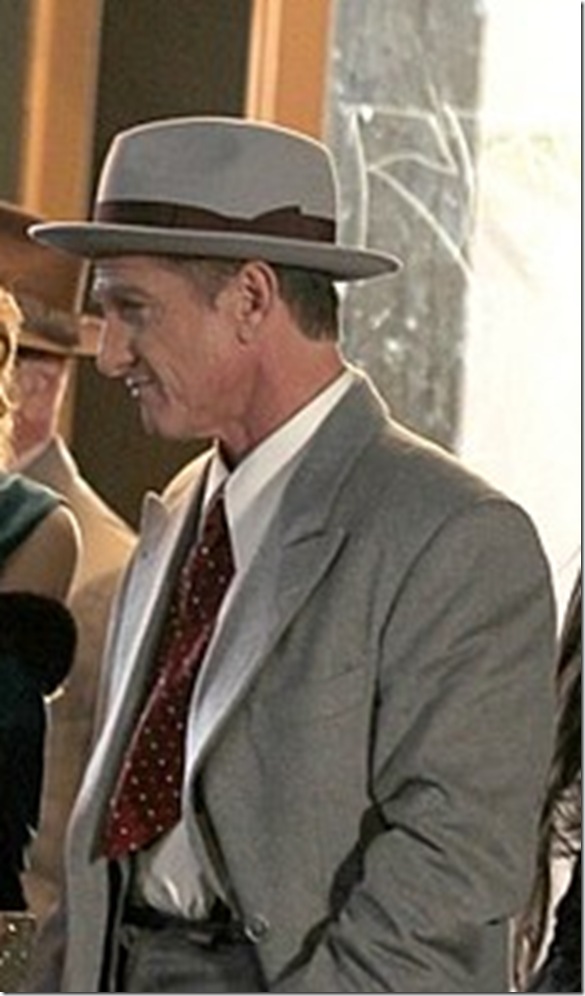
How to look like a hayseed just off the farm in really expensive clothes, as demonstrated by Sean Penn in “Gangster Squad,” costume design by Mary Zophres. Why does Hollywood have such a difficult time with men’s hats?
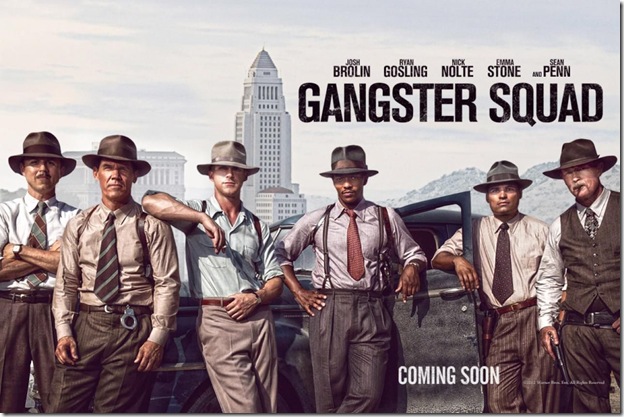
“Gangster Squad” is bad. It’s very bad. It’s even very, very bad. I laughed several times in fact, despite my best efforts not to. I’ll write more later but here’s a start:
I should say something about a spoiler alert — but really, you cannot spoil a movie like this.
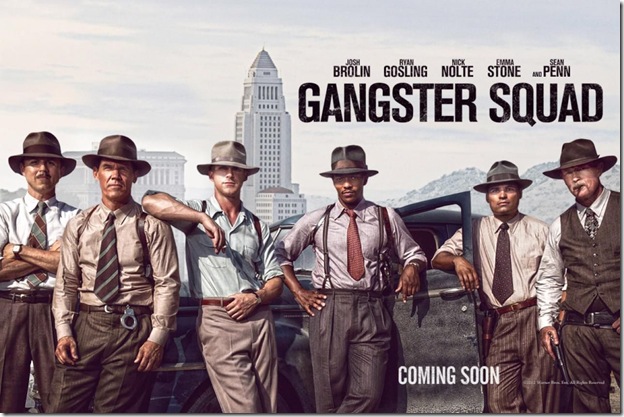
I am heading off to see “Gangster Squad” this morning, not because I expect it to be good, but because I expect it to be very, very bad, as already reflected by the first reviews and the trailers. I have prepared myself by watching “Mulholland Falls” and “The Black Dahlia” to see if “Gangster Squad” can manage to be even worse, which you have to admit, will be an achievement.
I can already tell the contempt this movie shows for reality by having an African American detective. The LAPD was integrated in the 1940s? This script was written by an ex-LAPD cop?
Oh wait! We have the current L.A. skyline in a 1940s movie. There’s City Hall and the Hall of Justice, but where’s the Hall of Records?
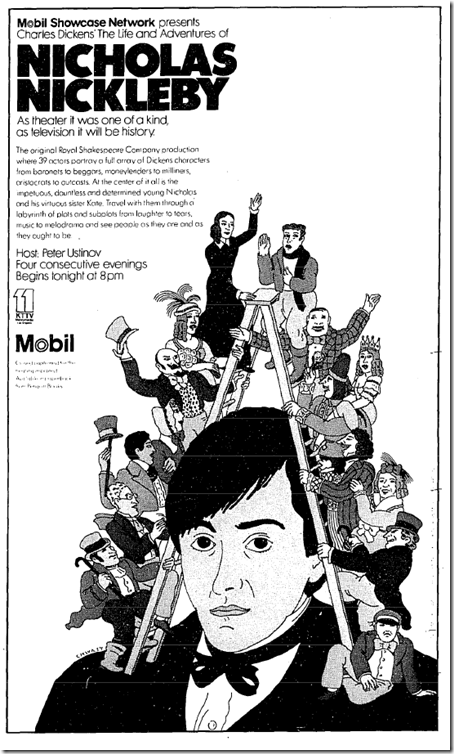
How about this retro artwork on the ad for “Nicholas Nickleby?” Sort of Peter Max via “Yellow Submarine.”

Jan. 10, 1983: A riot breaks out among an estimated 2,000 punk rockers during a concert at Studio Instrument Rentals at 6048 Sunset Blvd., The Times’ Michael Liedtke writes.
At first, everything was mellow:
“They were just punching each other and cutting each other a little with razor blades,” a studio employee said. “But that’s their forte. That’s what they do. They were fairly orderly.”

Jan. 1, 1943: This is the beginning of the Stanley H. Beebe case, in which LAPD officers were accused of beating a suspect who died of his injuries. Beebe, an accountant, was arrested on a streetcar at 1st and Hill or 3rd and Hill and charged with public intoxication. He died of peritonitis and said he had been kicked in the stomach by a police officer.
The investigation into Beebe’s death was expanded when the district attorney’s office received more complaints about LAPD officers beating drunks. The Los Angeles County Grand Jury opened an inquiry into Beebe’s death, as did a state Assembly committee. After the investigation, Assemblyman Chester Gannon of Sacramento called the LAPD “The storm troopers of Los Angeles and a law unto themselves.”
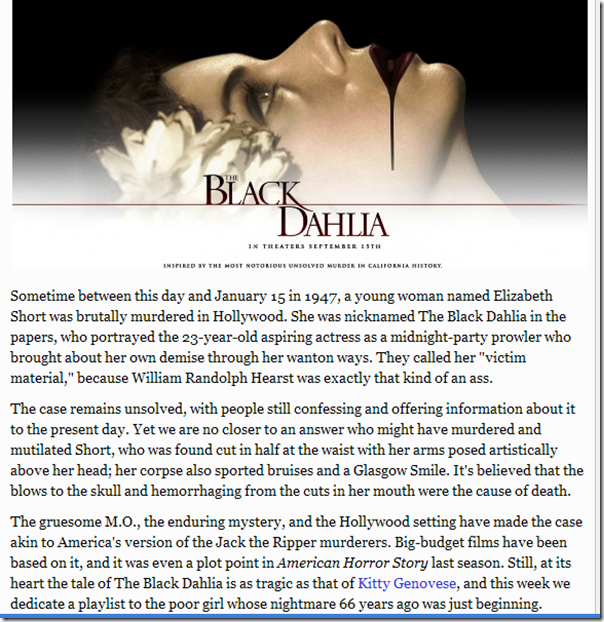
Black Dahlia: 5 Songs for a Famous Murder Victim by “Jef With One F.”
The anniversary of Elizabeth Short’s 1947 disappearance from the Biltmore has provoked the usual outpouring of mistakes and nonsense, much of it swiped from Wikipedia (see: “Me vs. Wikipedia”). Let’s see if I can untangle this.
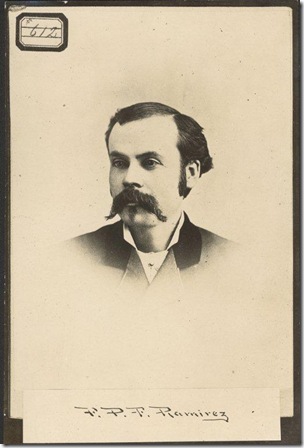 My latest column is about Paul Bryan Gray and his new book “A Clamor for Equality,” the biography of Francisco P. Ramirez, the youthful editor of El Clamor Público, the first entirely Spanish-language newspaper published in Los Angeles. The entire run of El Clamor has been digitized and is online at USC’s website but the interface is cumbersome. Still, it’s worth a look. Here’s Vol. 1, No. 1, Junio 19, 1855.
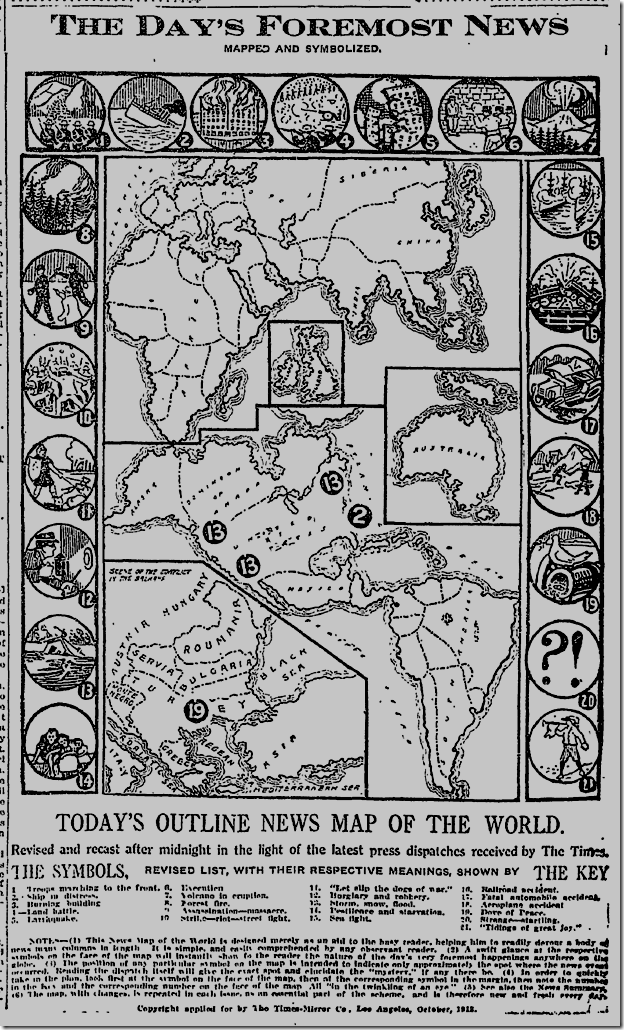


Jan. 9, 1913: We like to think that the past was a kinder, simpler time — when life moved at a slower pace. But no.
The Times publishes a Page 1 news map “as an aid to the busy reader helping him to devour a body of news many columns in length.”

Read the complete Jan. 10, 1863, edition of the Los Angeles Star.
Jan. 10, 1863: Reflecting its strong sympathies for the Confederacy, the Star publishes a poem by Stonewall Jackson and an account of the capture of the Vanderbilt steamship Ariel by the Confederate ship Alabama, reprinted from the Alta.
Subscriptions have been collected to build a fence around the Fort Hill cemetery. The city has donated nine lots at Temple and Buena Vista (now Broadway) which are to be sold to help pay for the fence. Four of the lots are on the cemetery road and five are in the rear of Banning’s lumber yard
Many bodies were removed from the Fort Hill cemetery in 1914 to make room for the athletic field at Los Angeles High School. The Times reported on March 16, 1914, that 600 bodies had been disinterred and at least 600 more remained. I’ll have more about the cemetery in another post.
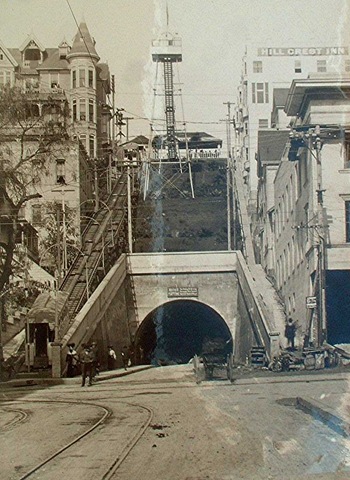
A photo of Angels Flight listed on EBay with bids starting at $2.50.
This image Angels Flight is one of several C.C. Pierce photos up for auction on EBay. To me, one of the most interesting things about the Pierce photos is his annotations on the back, and I particularly like what he said on this one, despite the mistakes.
Some of the Pierce photos on EBay: Central Park (Pershing Square) | Ralphs Grocers 6th and Spring
This image of Angels Flight is also online at part of USC’s digital collection of Pierce photos.

Photo: Janet Blair sits on the little platform off the banks of the Lakeside Golf Club. Courtesy of Mary Mallory
Surrounded by homes and the Lakeside Golf Club, Toluca Lake is all but obscured from view by the public. Like the movie stars that soon flocked to it, the attractive little lake helped sell the community that grew up around it.
This area of the San Fernando Valley originally fell under the auspices of the San Fernando Mission before being broken into segments and sold off in chunks to Southern California businessmen like Isaac Van Nuys and J. B.Lankershim, among others. Gen. Charles Forman bought up ranchland just north of the Cahuenga Pass, growing Bartlett pears, walnuts, citrus and other fruit. He suggested the name Toluca for the post office erected in 1893 across from the Chandler railroad depot in North Hollywood, also known as Lankershim.
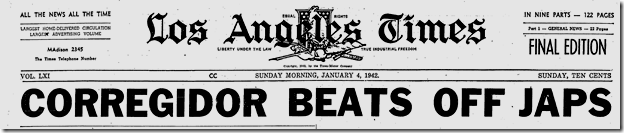
Jan. 4, 1942: A rather drunk William Kollomick, who gave his address as “Pearl Harbor,” is in jail after getting into a brawl with four unidentified Mexican youths outside a cafe at 1st and Broadway.
The youths walked out of the cafe when Kollomick began abusing them, but he followed them and continued berating them, The Times said. “The argument resulted in a free-for-all” in which Kollomick sustained a split lip and bruises.
Rychei Tanaka, 55, Sakiko Takemoto, 22, and Chika Takemoto, 48, are in jail on charges of violating the presidential ban against Japanese owning weapons and radios.
Philip K. Scheuer looks at movies that that have been superseded by historic events: MGM has retitled “I’ll Take Manila!” as “Ship Ahoy!” and Fox’s “Song of the Islands” is being held for release.
In the theaters: “How Green Was My Valley,” “They Died With Their Boots On,” “Ball of Fire,” “40,000 Horsemen” and “Louisiana Purchase.”

 ladailymirror.com