
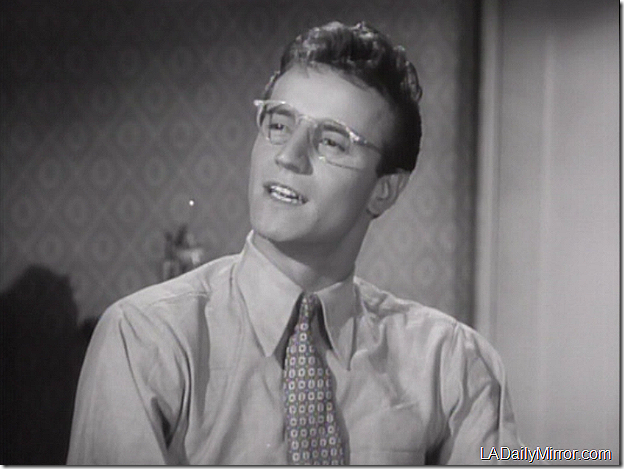
And for Monday, we have a mystery gent.
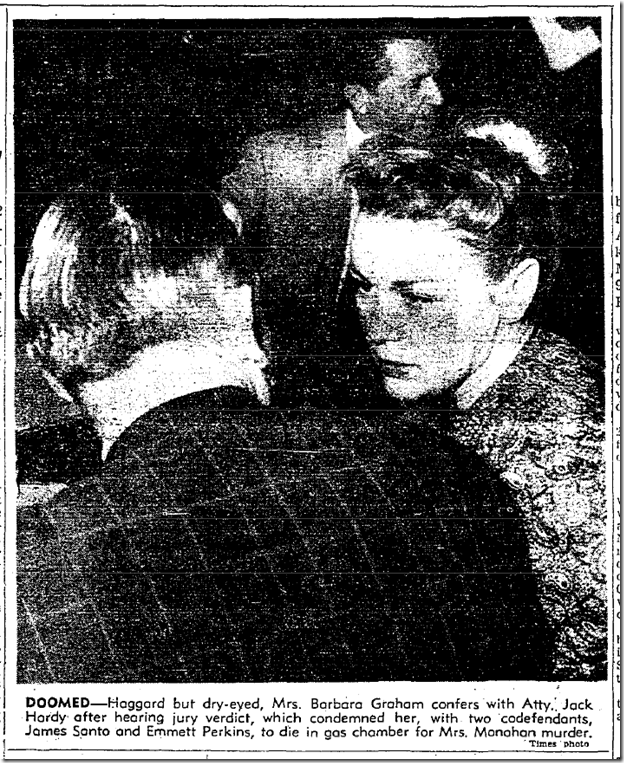
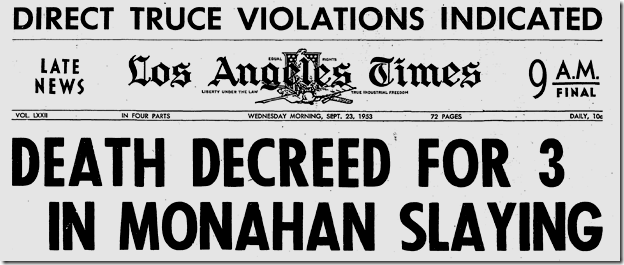
Sept. 23, 1953: Barbara Graham, John A. Santo and Emmett Perkins are convicted of first-degree murder in the death of Mabel Monahan. The jury returned the verdict without a recommendation of life in prison.
“Mrs. Graham didn’t bat an eye,” The Times said. She leaned over to say something to her attorney, Jack Hardy. Then she straightened up to listen as the clerk read identical verdicts for Perkins and Santo.”
Graham told Hardy: “As long as they found me guilty of something I didn’t do, I’d rather take the gas chamber than life imprisonment.”
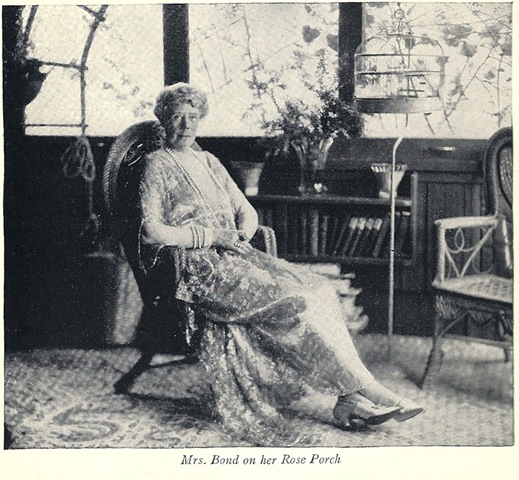
Long before Harold Arlen wrote “Lose That Long Face” for “A Star Is Born” starring Judy Garland, songwriter Carrie Jacobs-Bond practiced those words. Mostly forgotten today, Jacobs-Bond was one of the most successful composers of the 20th century. She endured tragedies and struggled for many years before finally finding huge success and happiness in her Hollywood home. Jacobs-Bond tried to live faithfully and gratefully long before there was Dale Carnegie or televangelists preaching the power of positive thinking.
From an early age, Jacobs-Bond exhibited a love and talent for music. At the age of 4, she could play the piano and could play by ear at the age of 7. Jacobs-Bond began piano lessons at 10.
Mary Mallory’s “Hollywoodland” is available for the Kindle at Amazon.com
 |
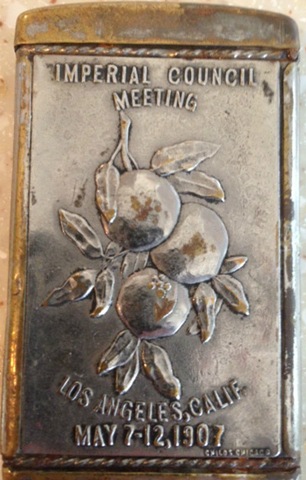 |
 The 1907 Shriners convention in Los Angeles created a boom market in all sorts of memorabilia: plates, cups and other glassware, plus pins, postcards and lots of trinkets, which were sold and traded, all of which show up regularly on EBay.
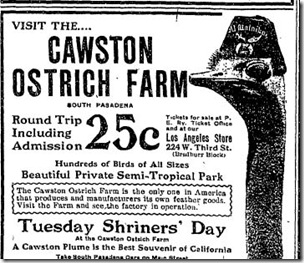
(At right, one of my favorite images from the Shriners convention: A resident of the Cawston Ostrich Farm in South Pasadena in Al Malaikah regalia.)
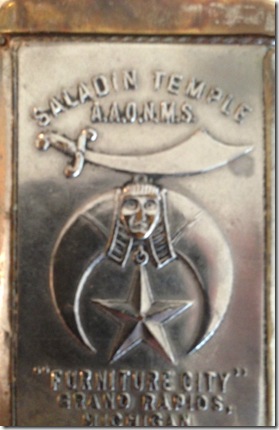
I have never seen one of these, however. It’s a match safe distributed by the Saladin Temple of Grand Rapids, Mich. It’s listed at Buy It Now for $75. As with anything on EBay, an item and vendor should be evaluated thoroughly before submitting a bid.
The Shriners convention ended in tragedy with a train derailment that killed at least 30 people.
 |
 |
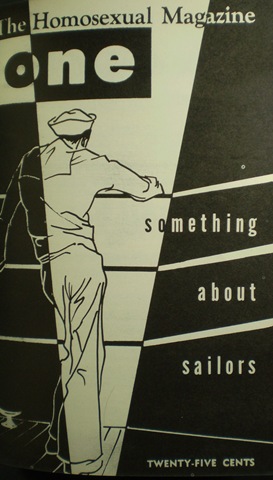
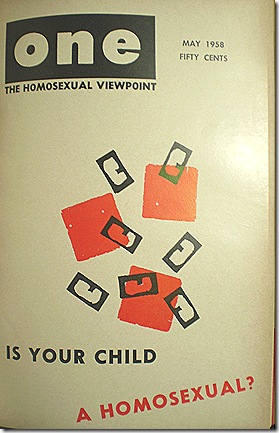 What the vendor says are complete runs of the 1957 and 1958 issues of One magazine have been listed on EBay at $69.99 each. Individual issues often sell for $10-$20 or more, so this is actually a deal – if you don’t mind the library bindings.
One magazine was launched in Los Angeles in 1953 and declared obscene by the U.S. Postal Service. resulting in a landmark 1st Amendment ruling.
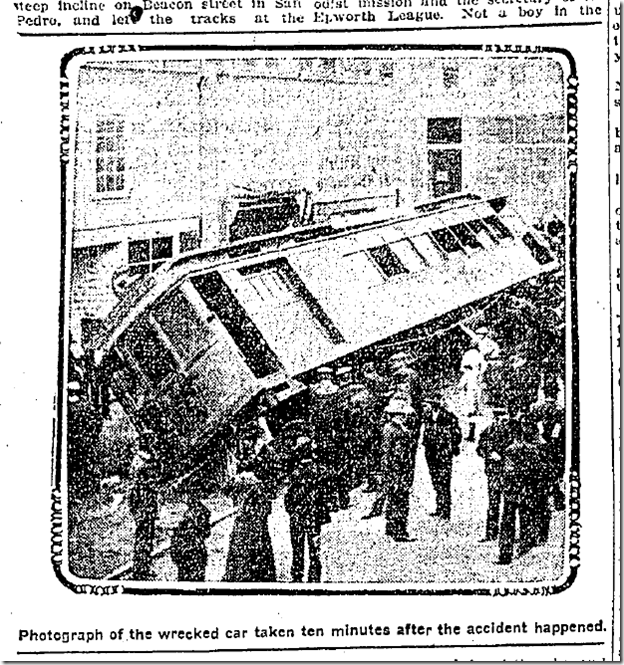
March 4, 1907: Los Angeles’ sainted streetcar system has a bad day.
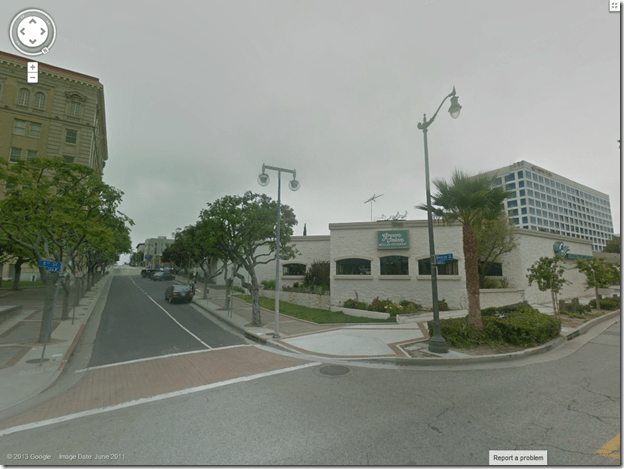
Beacon and 6th streets, minus the streetcars, via Google Street View.
One of the most deeply held and ardently expressed beliefs about Los Angeles’ past is the shadowy conspiracy that did away with its magnificent streetcar system.
The truth is that the streetcar system was problematic — like this 1907 accident in which Inter-Urban car No. 603 sped out of control down a hill on Beacon Street in San Pedro, jumped the tracks at the 6th Street curve and crashed into a line of utility poles that prevented it from overturning.
Ten passengers were hurt — none seriously, The Times says — but motorman R.C. Gill had to have his right foot amputated after he jumped from the speeding car and fell, with the car running over his foot.
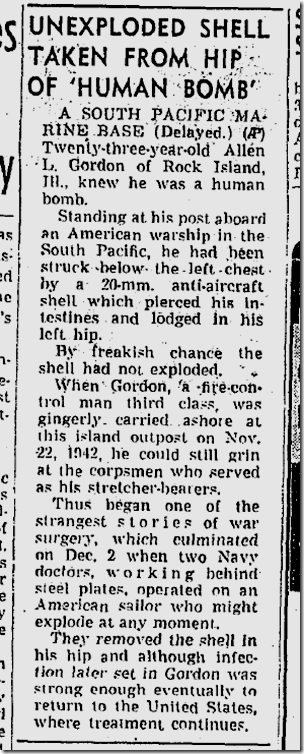
Sept. 19, 1943: In a story delayed for wartime, the Associated Press reports that Allen L. Gordon, 23, of Rock Island, Ill., fire control operator third class, was struck Dec. 2 with a 20-millimeter antiaircraft shell that lodged in his hip. Gordon’s wound was closed aboard ship and he was taken to a Marine base in New Caledonia for treatment.
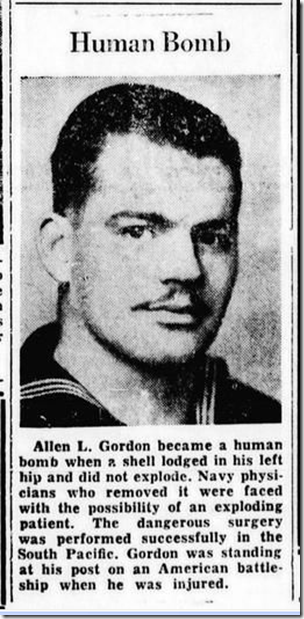
Three doctors from West Penn Hospital, Lt. Cmdr H.W. Jacox, Lt. Cmdr. Jesse B. Griffith and Lt. William Wycoff, operated on Gordon after spending several days locating the shell by X-rays. They originally tried working behind a steel plate, but later discarded the plate and completed the operation, according to Griffith’s July 12, 1954, obituary in the Pittsburgh Post-Gazette. The operation was performed in less than two minutes, according to an account in the Pittsburgh Press.
Gordon survived the operation and was brought to the U.S. for recovery. He was given the defused shell as a souvenir, the Pittsburg Press reported.
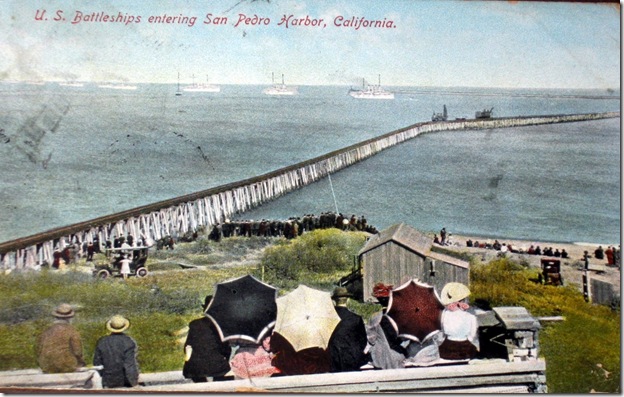
This postcard of the Great White Fleet entering San Pedro Harbor during its around the world cruise in 1908 has been listed on EBay. I wrote quite a bit about the Great White Fleet’s visit to Los Angeles when the blog was at The Times.
Sept. 18, 1933: Jack Keating, 30, and John Melvin Early, 35, had a plan to rob the Girlesque Theater at 510 S. Main St., but when the shooting was over, Keating was dead and Early and two men who helped plan the robbery were in jail.
The robbery began shortly after the midnight show, when Keating and Early drew guns and forced Girlesque employees Robert Winslow and his wife, Mildred, to escort them to the theater office, where manager John R. Ward and C.C. Hurst were present.
Another employee, Edward Sweeney, seeing the Winslows with two strangers, sensed that something was wrong, slipped out of the theater through a side door and found Officers H.W. Tash and S.D. Moore at 5th Street and Main.
In the meantime, Ward told the gunmen: “If this is a holdup, here is all the money I have,” throwing two $5 bills and 11 $1 bills ($377.35 USD 2013) on the floor, The Times said.
The officers arrived at the theater as Early and Keating were tying up the victims with wire, and the robbers began shooting. The police killed Keating, but were badly wounded by Early, who surrendered when he ran out of bullets.
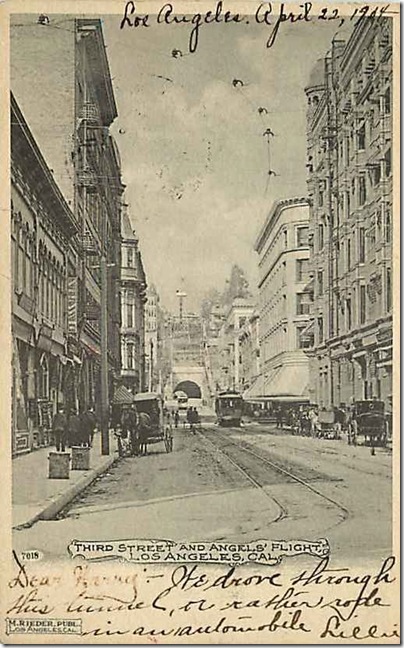
This postcard complements the Rediscovering Los Angeles post on Angels Flight. It’s postmarked 1904 and photo was taken from Spring Street looking toward the 3rd Street tunnel. Bidding starts at $5.
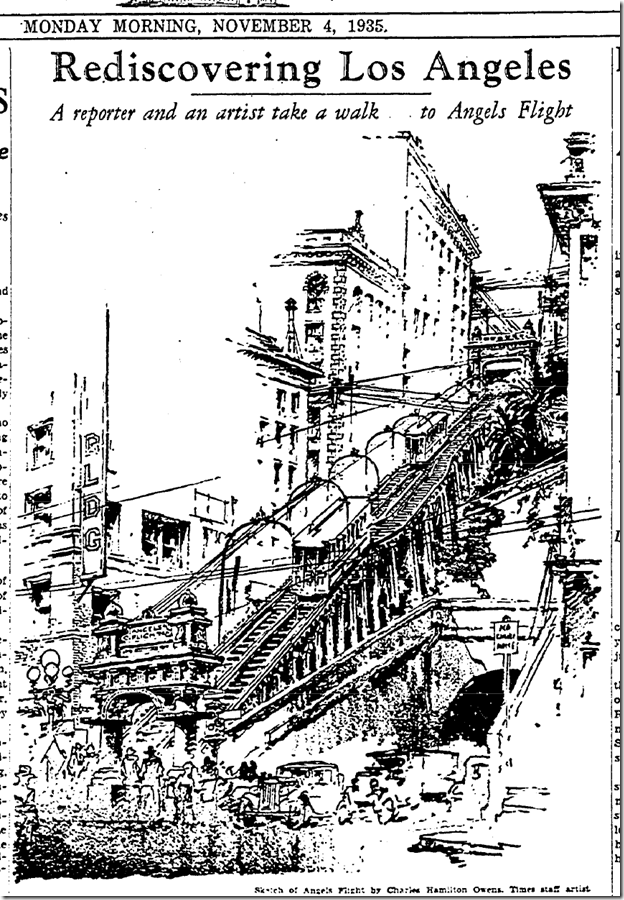
I have had a copy of this drawing over my desk for years as a reminder that I really ought to write a series of posts on the subject. This is the first in a series of columns featuring Charles Owens’ drawings of Los Angeles landmarks with commentary by Timothy G. Turner. This series appeared for 49 installments between 1935 and 1936, and was followed by Nuestro Pueblo, by Owens and Joe Seewerker, which was compiled into a book published in 1940.
As far as I know, Rediscovering Los Angeles was never published in book form, although The Times urged readers to clip them out and compile them into a scrapbook.
What I find most interesting is that Los Angeles in 1935 already needed to be “rediscovered,” because these days, people seem to be most interested in the 1940s, which were still several years away.
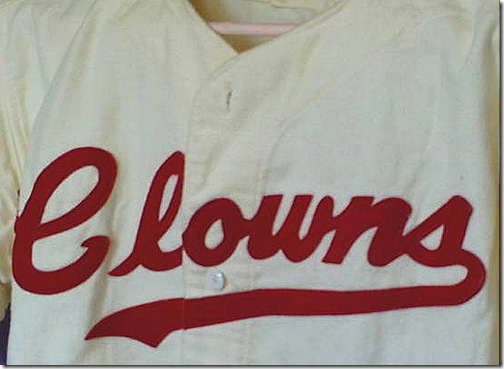
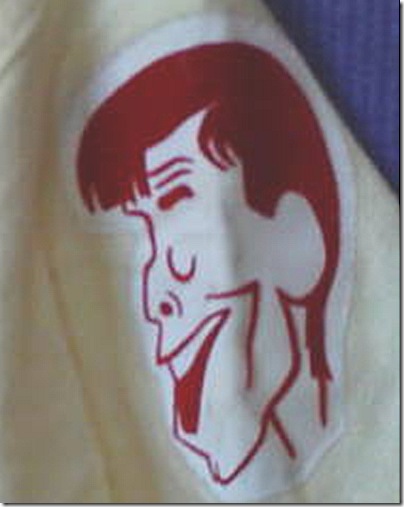
I was fairly certain that I had written about this uniform – or at least a uniform – for Jerry Lewis’ baseball team, the Clowns, but I can’t seem to locate the post anywhere.
In any event, a uniform for Lewis’ baseball team, which played in something called the Hollywood Entertainers League, has been listed on EBay. According to the vendor, it belonged to Max Anthony. Bids start at $16,499.95.
As with anything on EBay, an item and vendor should be evaluated thoroughly before submitting a bid.
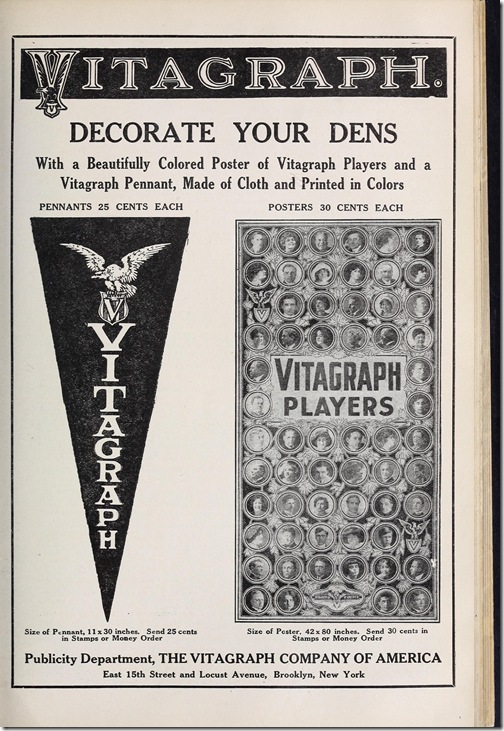
Hollywood has always been creative in promoting its films and personalities to the public. Employing posters, lobby cards, window cards and photographs, silent film production companies hyped upcoming films. With the success of these forms of advertisements and publicity, companies began selling or giving away photographs, buttons, pillow tops, plates and pennants featuring likenesses of popular moving picture stars as souvenirs and collectibles to eager fans.
The film industry was usually not the first to conceive of ideas; instead, it built on successful practices and gimmicks of other fields. One such popular practice the silent film industry quickly copied was the manufacture and distribution of small felt pennants promoting either producing companies or the film stars of such organizations.
Now on Amazon: “Hollywoodland: Tales Lost and Found” by Mary Mallory
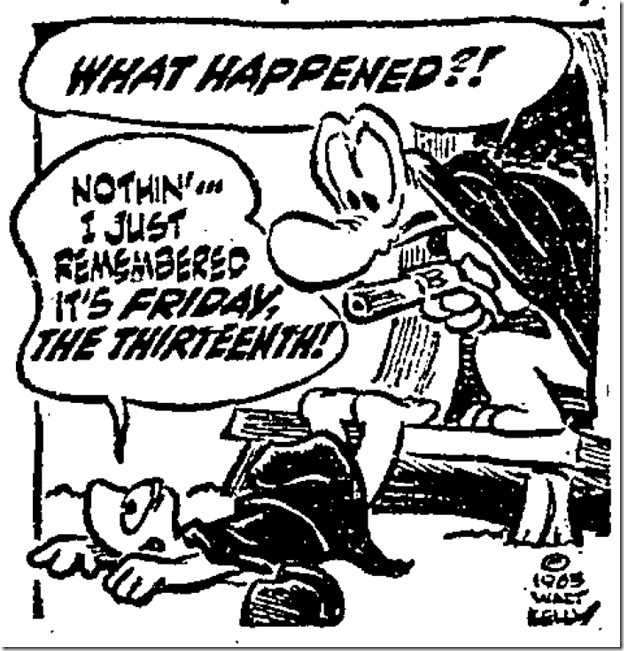

Joseph and Anna Lewis, 2630 Johnston St., Highland Park, had been married for 42 when she disappeared.
Not that Joseph, 72, a carpenter, was particularly concerned about her absence. Police were not informed of the disappearance until her daughter Shirley returned from a vacation in Montana and learned that her mother was missing.
According to Anna’s brother Charles Biba, she had visited in Chicago and boarded a direct flight to Los Angeles on Aug. 13.
Joseph told police “she has probably run off with some man,” but allowed investigators to search the home and agreed to a polygraph test — which he “passed with flying colors,” The Times said. Further investigation revealed that he had filed for divorce while his wife was gone.
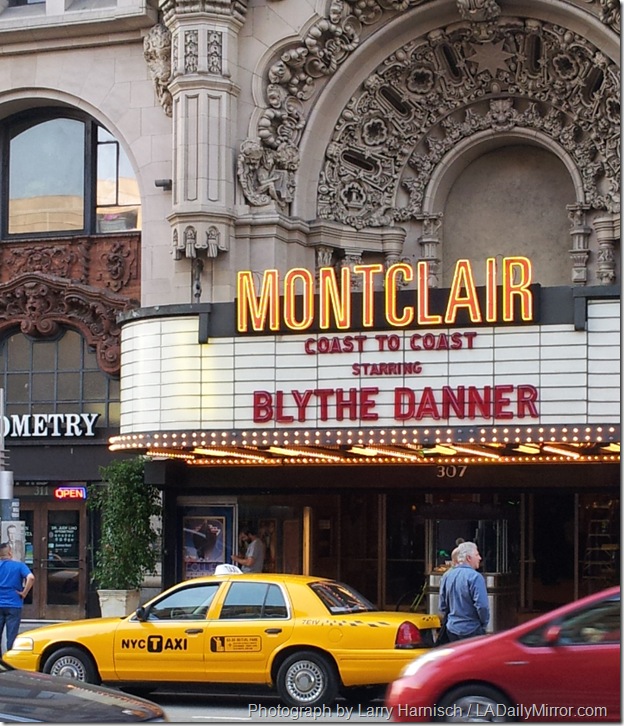
I snapped this photo yesterday of the Million Dollar Theatre on Broadway dressed as the Montclair. Notice the New York taxicab. You’re a long way from home, pal. Hey, it’s Blythe Danner!
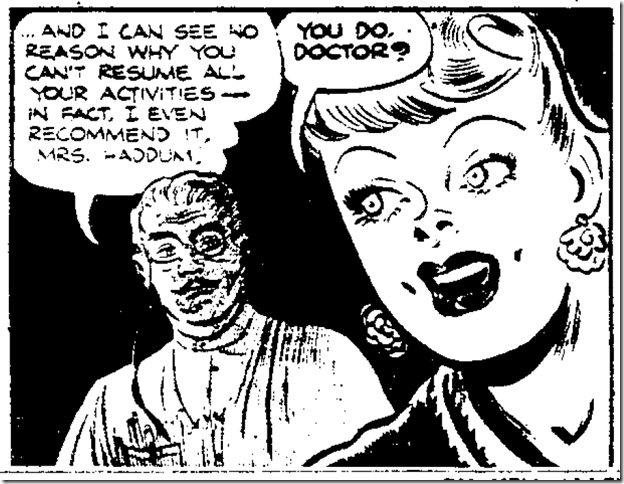
Sept. 12, 1953: Angry San Fernando Valley residents picket Lockheed’s plant in Van Nuys after a jet trainer crashed, killing Phyllis O’Kray, 16504 Chase St., Sepulveda.
Lockheed executive Courtland S. Gross expressed regret over O’Kray’s death and noted that the company was developing facilities at an Air Force base in Palmdale. “It is planned to gradually absorb much of the jet flying for the Los Angeles aircraft industry,” he said.

If you’ll recall from yesterday’s post on the Cafe Bristol, the main entrances were two marble staircases off 4th Street. The door on 4th Street was locked, alas, but I was able to get these shots of the two staircases.
The one on the left led to the “general or ladies cafe.”
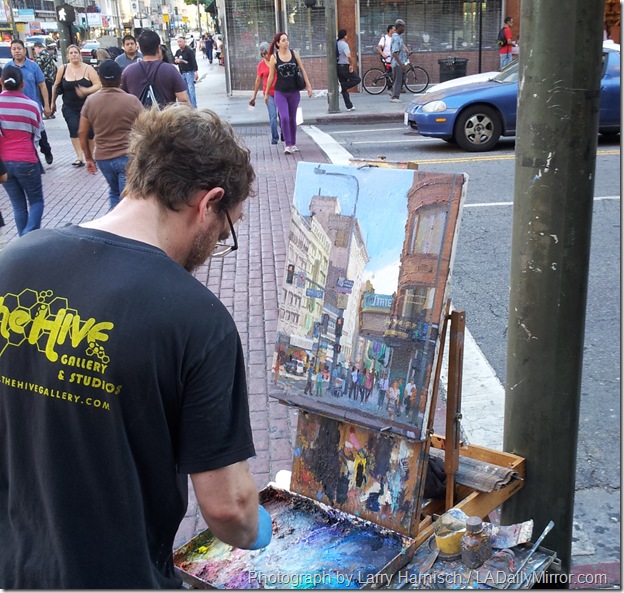
Alex Schaefer, above, and Jose De Juan have an opening of their show “L.A.ndscapes” on Thursday at the District Gallery, 740E. 3rd. There’s a reception Thursday from 7 p.m. to 10 p.m. The show continues through Oct. 20. More information is available here.
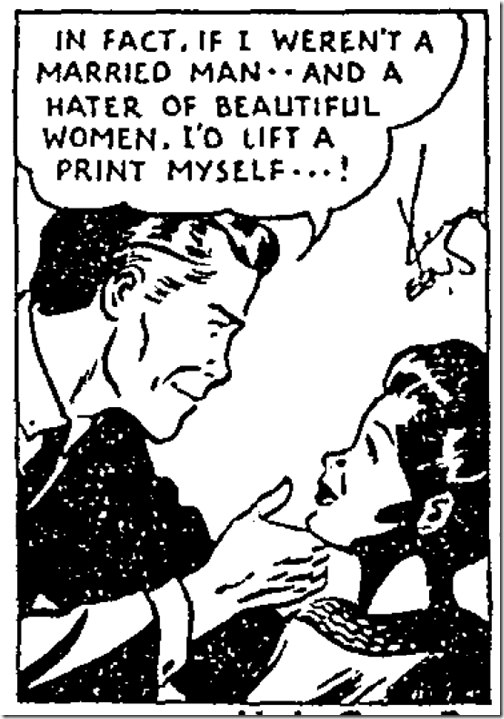
Sept. 11, 1943: The Times features the Los Angeles Times-Army Ordnance in Action Show being held at Exposition Park.
The Times promised that
“visitors will see the massive 32-ton Gen. Sherman tanks whose tough armor and deadly firepower blasted the vaunted divisions of Marshal Rommel from the sands of Africa.
They will see tanks in action, their cannon and machine guns firing, in a grimly realistic simulation of an actual battle.They will see the dreaded Long Tom, 155-millimeter mobile rifle, whose long, probing muzzles sought out enemy targets with devastating accuracy.”
What visitors will not do is take pictures — cameras will be will be confiscated, The Times warns.
Expatriate novelist Lion Feuchtwanger is fighting eviction by his landlords from a home at 13827 Sunset Blvd.
 ladailymirror.com