LAPD: Parker Center Cop Shop Files – Starting Next Week

DR-65-594-262

The “Remorseful Rapist” from 1965, one of the items from the Cop Shop Files.


Several weeks ago, I was given a box of material that was cleaned out of the old press room at the LAPD’s Parker Center headquarters, sometimes called “the cop shop.” The box was a jumble of press releases, photographs, artists’ sketches and other items dating from the late 1960s to the early 1980s. I am organizing and cataloging the material and I’ll be posting selected items on a weekly basis.

It will be an interesting ride through old L.A. crimes. I promise.

Coming next week on the L.A. Daily Mirror.

Posted in 1965, Crime and Courts, LAPD, Parker Center Cop Shop Files | Tagged , , | 9 Comments

We Are Revolutionists!


Note: This is a post I wrote in 2006 for the 1947project.

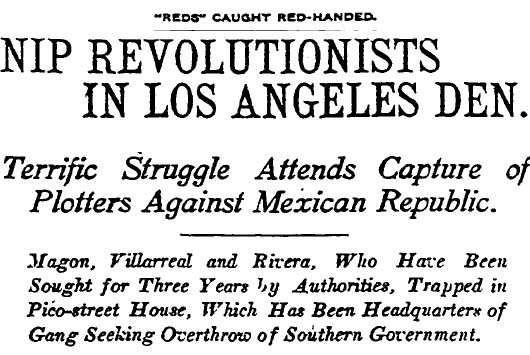
Nov. 9, 1907: Local sympathizers, anarchists and socialists are organizing a mass meeting to protest the imprisonment of Ricardo Flores Magon, Librado Rivera, Antonio Villareal and L. Gutierrez De Lara, who are being held on charges of trying to overthrow the Mexican government.

After years of avoiding capture, Magon, Rivera and Villareal were arrested Aug. 23 at 111 E. Pico St. after a brawl with Thomas Furlong of the Furlong Secret Service Bureau of St. Louis, along with Los Angeles Police Detectives Felipe Talamantes, [Thomas F.?] Rico and two deputies. De Lara was arrested by U.S. marshals at 420 W. 4th St. on Sept. 27.

The Times said of the August incident: “The street was filling with people. Men and women crowded before the house just in time to see a light survey and a coupe dash up before the door. Then the door opened and out into the light
staggered the officers and their prisoners. They fought on the steps and in the street.”

“ ‘We are revolutionists! We are patriots! We are being kidnapped! Help! Help!’ they shrieked.”

In a 1921 letter to his attorney, Magon wrote: “We avoided being kidnapped into Mexico by voicing in the street the intentions of our captors. A big crowd gathered, and it was necessary for our abductors to take us to the police station, and to rapidly manufacture a charge against us.”
The men were defended by Job Harriman, described by The Times as a Socialist agitator.

De Lara said upon his arrest: “I am a student, a writer and, if need be, a martyr. I have written many books. I am now on a cycle of novels in which socialistic questions are discussed. Like Balzac or Zola, I have a mission. I am arrested and thrown into a dungeon. I care not for that, if they furnish me paper, ink and a light.”

To be continued.

Ricardo Flores Magon site


Posted in 1907, History | Tagged , , | 1 Comment

Movieland Mystery Photos — Suggestions, Please

Nov. 9, 2013, Mystery Photo

Another once-famous  face, now forgotten.


Gary Martin recently wrote:

I am amused by the reader’s comment that this week’s mystery is “too easy” and I guess it is as all the usual suspects have written in with the correct cast and title.

Apparently I was out of town the week this film played: I do not know what it is nor have I ever seen any of these actors before …excepting a very young Jack Hawkins. (Friday, right.) I do suspect, however, that it is a British film.

And that makes it all the more amusing to me because growing up in Kansas during the mid fifties, when TV was a young medium, before there were Late Shows, we were fed a steady diet of British programers. Nope. I must have fallen asleep the night this played. …as I often did with programers. Ah well, Monday is another week.

I would like to remind everyone that from the beginning, my first criterion in selecting a mystery person or movie is that I didn’t know who or what it was. To pick a favorite example, I had never heard of Jack Mulhall until I randomly pulled his envelope out of the photo library  several years ago. The same is true with today’s mystery lady (and yes, some of you may recognize her from before).

So to Gary, I would like to say: I couldn’t have identified this week’s movie, “Fallen Idol.” That’s why I picked it. The vast majority of movies (with a few exceptions like “Hillbilly Blitzkrieg” — ahem) I have never seen, which is why we will never have “Casablanca” or “Gone With the Wind” or “Citizen Kane” (well, maybe the back of Everett Sloan’s head).

I would fail every week — if that makes you feel any better.

Which means that I’m impressed every week with the knowledge of the Daily Mirror Brain Trust. You are amazing in your knowledge of film and I am proud to have you as readers.

Despite how it may seem, there is a philosophy behind the mystery photos — I have never seen them as a mere trivia contest. The photos have always been a reflection on the notion that fame is fleeting and once-famous faces are forgotten.

But I have been thinking: Don Danard wants more Westerns. Mary Mallory would like more silent films. And a recent technical malfunction with “Coney Island,” which yes, I had not seen, made me think about opening the mystery photos to guests who could submit pictures or frame grabs.

How about it, mystery photo fans? What would you like to see — or not see?

Posted in Film, Hollywood, Mystery Photo | Tagged , , | 16 Comments

‘Love Child’ Abandoned in Movie Theater as Parents Die in Suicide Pact

Nov. 8, 1933, Comics

Nov. 8, 1933, Missing Love Child

Nov. 8, 1933: Los Angeles history is so rich that all you need to strike gold is to poke a stick in the ground, and today is a perfect example.

We have the story of Jack Bodin Sr., 41, who was estranged from his wife, and Bodin’s girlfriend, Barbara Muller, either 21 or 22 depending on news reports. Bodin, who was variously identified as a salesman, advertising executive and “cafe man” and Muller had a daughter, Audrey Louise Muller Bodin,  on Aug. 1, 1932, but abandoned her in a downtown movie theater at 5th and Broadway on Oct. 3.

The couple apparently decided to commit suicide by booking passage on the steamer ship Yale, sailing from Los Angeles to San Diego and then jumping from the ship on its return to Los Angeles.

In The Theaters: “Footlight Parade” premieres at Warner Bros. Hollywood.

Continue reading

Posted in 1933, 1936, Art & Artists, Broadway, Comics, Crime and Courts, Downtown, Film, Hollywood, Suicide, Theaters | 4 Comments

Hartsook Photographs Jack Pickford

hartsook_Jack_pickford

This Fred Hartsook portrait of Jack Pickford, the brother of actress Mary Pickford, has been listed on EBay. Hartsook (d. 1930) was one of the leading photographers in the silent era. There is more about him in Mary Mallory’s “Hollywoodland: Tales Lost and Found.”  Bidding on this item starts at $29.95.

Posted in Film, Hollywood, Photography | Comments Off on Hartsook Photographs Jack Pickford

The ‘Masked Marvel Murder’ – Part 12

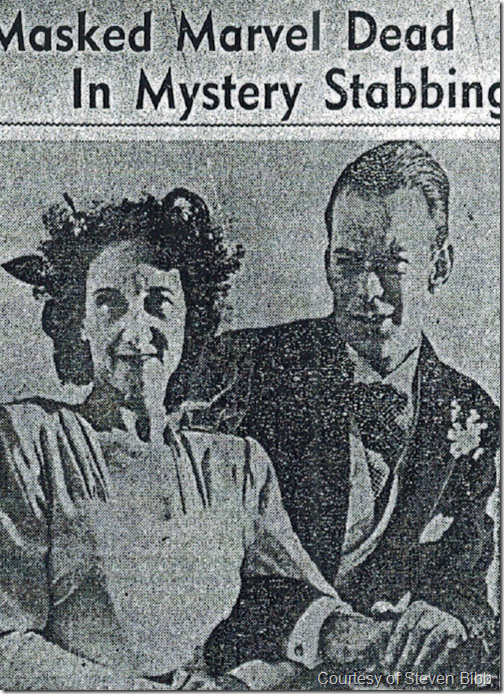
Greta Keller and David G.G. Bacon

The 1942 marriage of Greta Keller and David G.G. Bacon, Albany Times-Union, Sept. 14, 1943, courtesy of Steven Bibb. 


I have spent far more time than I intended on the “Masked Marvel Murder” and not just because it’s an intriguing, unsolved homicide. There are several lessons for the serious researcher and historian, particularly the insight it offers into the 1947 Black Dahlia case.

For example, we meet many of the same individuals who will appear in the Elizabeth Short killing, but the Bacon case is relatively pristine compared to the layers upon layers of fictionalized nonsense about the Black Dahlia. There is only one shoddy, heavily fictionalized book dealing with the case at any length instead of the five-foot shelf of nonsense about the Black Dahlia. And no one has come forward – yet – to claim that their father killed David G.G Bacon.

Continue reading

Posted in 1943, Black Dahlia, Cold Cases, Film, Hollywood, LAPD, Lesbian, Gay, Bisexual, Transgender, World War II | Tagged , , , , , | 13 Comments

L.A. Becomes N.Y.

L.A. Becomes N.Y.

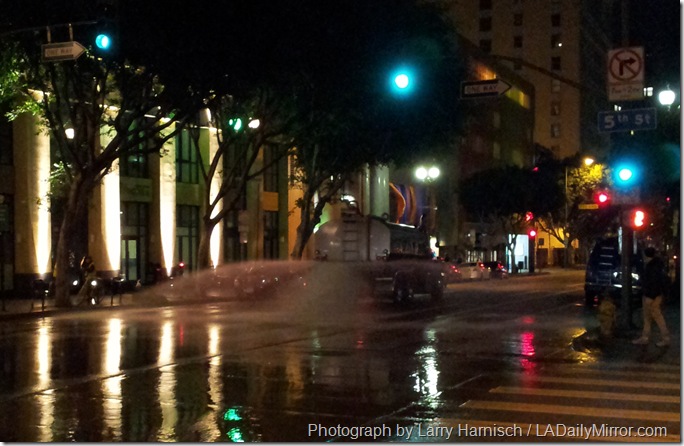
Dear New Yorkers: You love to make fun of us, but here we are at Spring and 5th last night, watering down the street for yet another production set in your fair city but filmed in downtown Los Angeles. And yes, just up the street is the usual fleet of New York taxicabs.

Posted in Downtown, Film, Hollywood, Location Sleuth, New York, Spring Street | Tagged , , , , , , | 4 Comments

The ‘Masked Marvel Murder’ — Part 11

"The Masked Marvel"

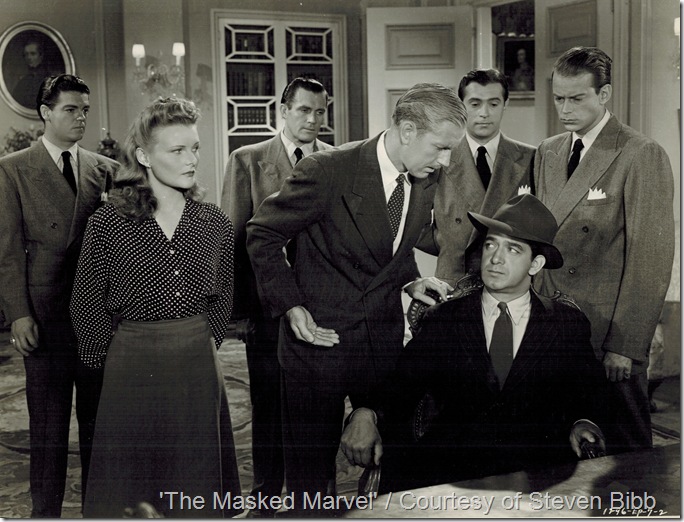
David G.G. Bacon, far right, in “The Masked Marvel,” courtesy of Steven Bibb.


So far, the David G.G. Bacon killing is relatively pristine, at least compared to the Black Dahlia case; the killing doesn’t appear in “Hollywood Babylon” or any other similar junk, and no one has come forward — yet — to accuse their father of the killing. Even so,  it has not entirely escaped the genre of crappy biographies. Really, books like “Hollywood Babylon” and Scotty Bowers’ “Full Service” are nothing but soft-core porn using the names of conveniently dead people.

I hadn’t planned to shoot holes in another “tell-all” book after the Ted Healy/Wallace Beery project, but I couldn’t pass up touching at least briefly on Darwin Porter’s purported biography from 2005, “Howard Hughes: Hell’s Angel,” which was followed by “The Encyclopedia of Unsolved Crimes” by Michael Newton, the co-author, with Janice Knowlton, of “Daddy Was the (you guessed it) Black Dahlia Killer.”

The “Masked Marvel Murder” Part 1 | Part 2 | Part 3 | Part 4 | Part 5 | Part 6 | Part 7 | Part 8 | Part 9 | Part 10

Continue reading

Posted in 1940, 1941, 1942, 1943, Books and Authors, Film, Hollywood | Tagged , , , | 7 Comments

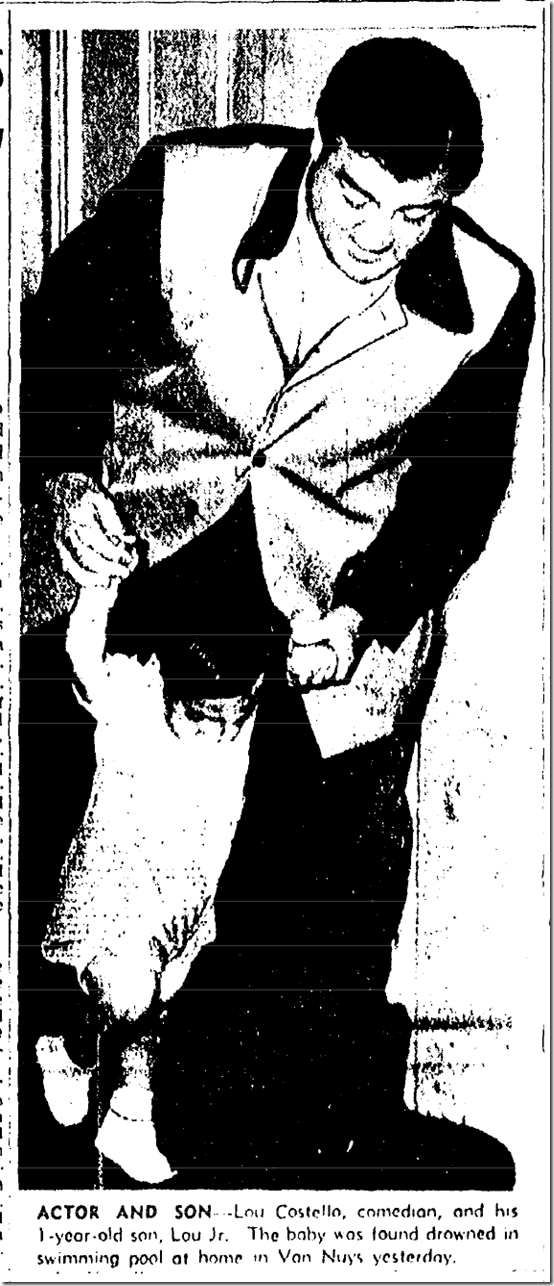
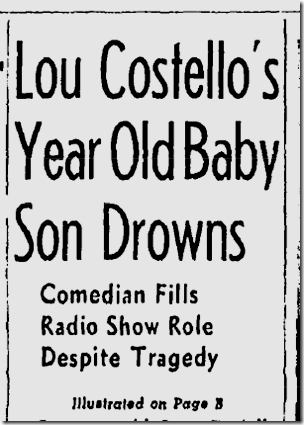
Lou Costello’s Son Drowns in Swimming Pool

image
Nov. 3, 1943, Lou Costell's Son Drowns

Nov. 5, 1943: Lou Costello Jr. drowns in the swimming pool of the family home at 4124 Longridge Ave., Van Nuys. Here’s a post I wrote about the tragedy in 2007.

Posted in 1943, Film, Hollywood, San Fernando Valley | Tagged , , , , | 16 Comments

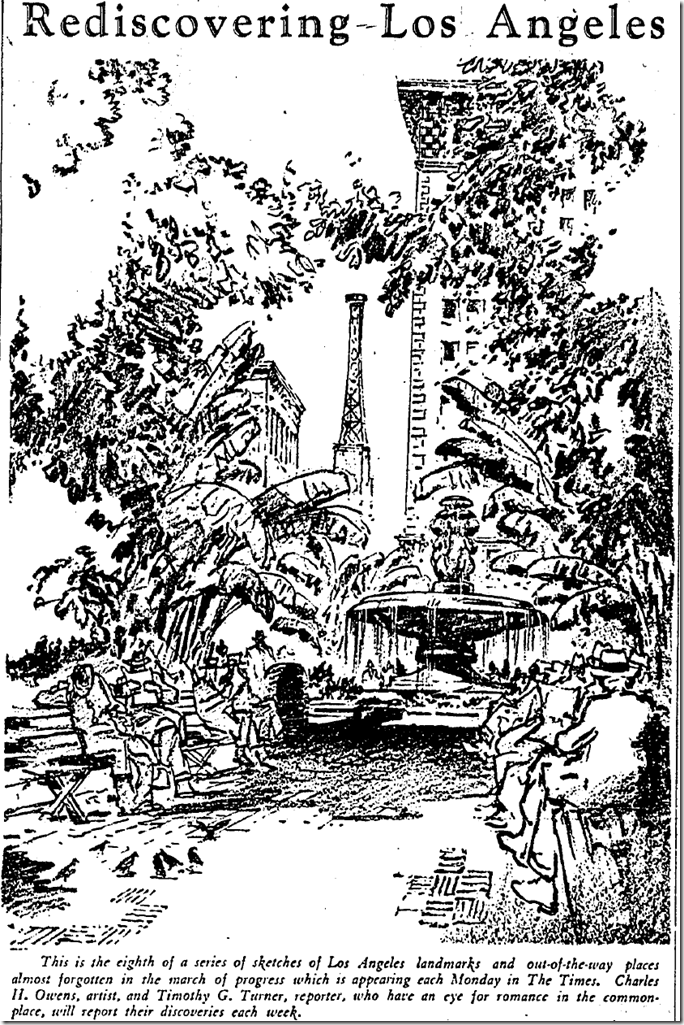
Rediscovering Los Angeles — Pershing Square

image

Dec. 23, 1935: For this installment of Rediscovering Los Angeles, Times artist Charles Owens and columnist Timothy Turner visit Pershing Square. Not the concrete moonscape we know today, designed to repel the homeless, but a lushly landscaped park with a fountain and greenery in downtown Los Angeles.

Unlike the later series, Nuestro Pueblo, done by Owens and Joseph Seewerker, Rediscovering Los Angeles was never published in book form. The Times encouraged readers to clip the entries and save them in a scrapbook.

Turner says:

Pershing Square in the modern life of the city represents two things, a beauty appreciated by few and human blab. It is the place for shooting off one’s mouth, and a hundred or so men and some women sit there if the weather is fine and talk and talk and talk.

The police have just given up trying to stop the groups that block the walks and from these huddles and from rows seated on the bench comes a continuous hum of dialogue or rather conflicting monologues. Many in Pershing Square are not of the class fortunate or happy in this vale of tears, but most of them are very wise.

The talk is almost always dogmatic, often angry. Searchers for knowledge can go to Pershing Square and always find a man, and sometimes a woman, who absolutely knows everything about everything.

Continue reading

Posted in 1935, Art & Artists, Columnists, Downtown, Hill Street, Nuestro Pueblo, Olive, Parks | Tagged , , , , , | 1 Comment

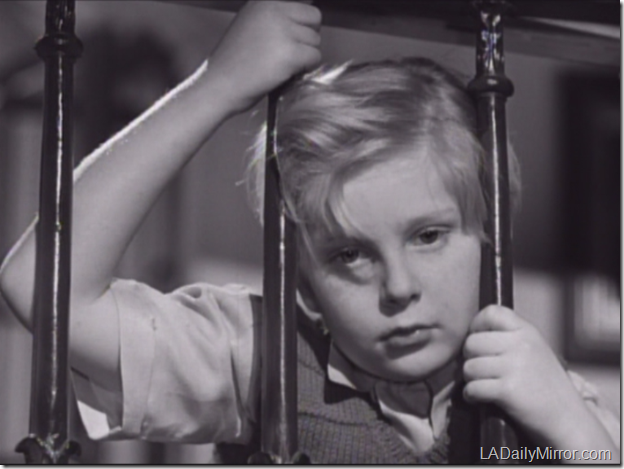
Movieland Mystery Photo (Updated + + +)

Nov. 4, 2013, Mystery Photo
And for Monday, a mystery lad.

Continue reading

Posted in Film, Hollywood, Mystery Photo | Tagged , , | 58 Comments

Mary Mallory / Hollywood Heights — A. L. “Whitey” Schafer Simplifies Portraits

Whitey Schafer "Thou Shalt Not"
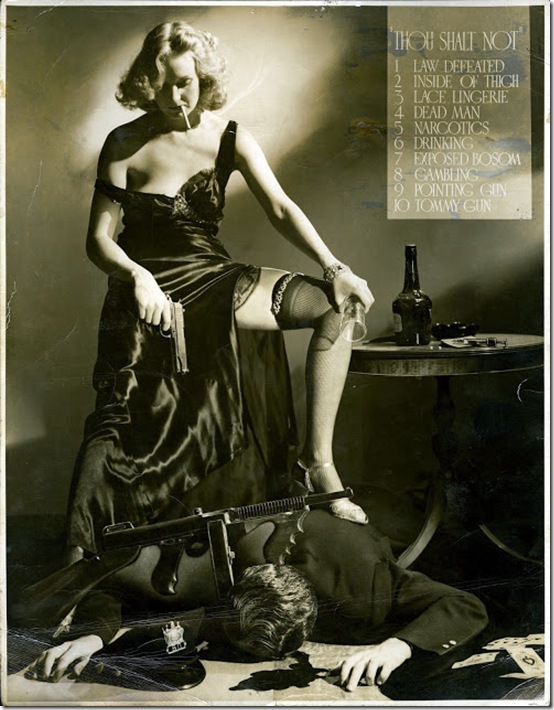
“Thou Shalt Not,” “Whitey” Schafer’s most famous image.


In the very early days of the motion picture industry, stills photographers meant nothing to the moving picture companies. They asked their feature cameramen to work double duty, shooting scene stills after completing filming that very same scene. These companies also hired local photographic studios to shoot portraits of their stars, or allowed the stars themselves to hire photographers to shoot images that could be employed in advertising.

When stars’ names and faces became important tools to sell product, stillsmen became integral in shaping a motion picture company’s or star’s brand that could be sold to consumers. Studios hired their own photographers to shoot scene, production, off-camera and reference stills that could be employed in advertising, while major stars Mary Pickford and William S. Hart signed their own personal cameramen like K. O. Rahmn and Junius Estep to capture their on- and off-camera pursuits. By the middle of the 1920s, each studio established stills departments to shoot, process and manufacture the thousands of stills required for product-hungry newspapers, magazines and consumer tie-ins.

Mary Mallory’s “Hollywoodland: Tales Lost and Found” is available for the Kindle.

Continue reading

Posted in Books and Authors, Film, Found on EBay, Hollywood, Hollywood Heights, Mary Mallory, Photography | Tagged , , , , | 6 Comments

Time to Turn the Clocks Back

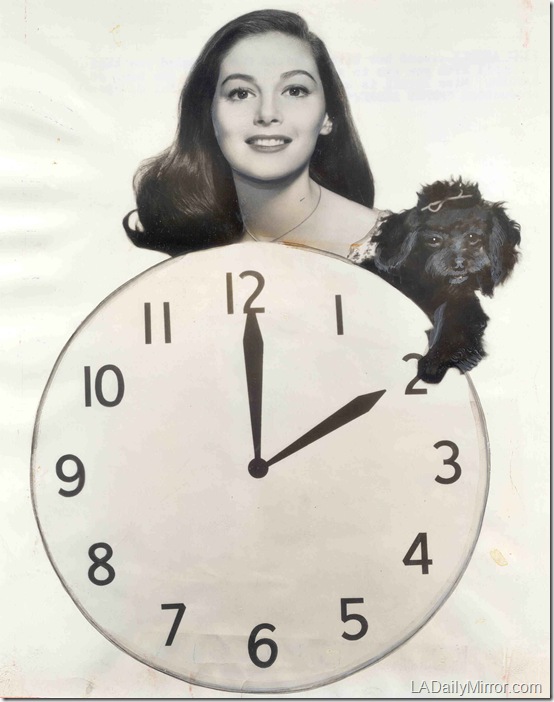
Pier Angelia

On behalf of the L.A. Daily Mirror, Pier Angeli and friend remind you that Daylight Saving Time is o-ver. Or as William Safire used to say: “Fall is the time of year that conservatives like best because they get to turn the clock back.”

Posted in Film, Hollywood, Photography | Tagged , , , | 5 Comments

Roll On, Ugly River

Nov. 2, 1907, L.A. River Note: This is a post I originally wrote in 2006 for the 1907 project.

Nov. 2, 1907: As part of a new city beautification campaign, Boyle Heights residents have suggested turning the Los Angeles River into a garden spot.
The plan calls for “a long, winding strand of posies and greenery—a narrow, picturesque parking, which will be viewed by practically every passenger who arrives or leaves Los Angeles on any of the transcontinental railroads,” The Times said.

The railroad tracks run next to river from Elysian Park to the southeastern section of the city, The Time says. Landscaping of “nasturtiums, morning glories and other hardy running and climbing vines along the riprapping of the banks, and the planting of such low-growing shrubs at the bases of these riprapped walls as would be of little interference with the rush of the waters” would create a first impression of Los Angeles that would be “the talk of people all over America.”

Posted in 1907, Parks | Tagged , , , | 2 Comments

The ‘Decline’ of Wikipedia

No Wikipedia

A world without Wikipedia? Sounds good to me.


Tom Simonite in the MIT Technology Review looks at the “decline” of Wikipedia (that would, of course, assume that it was ever worth anything).

Yet Wikipedia and its stated ambition to “compile the sum of all human knowledge” are in trouble. The volunteer workforce that built the project’s flagship, the English-language Wikipedia—and must defend it against vandalism, hoaxes, and manipulation—has shrunk by more than a third since 2007 and is still shrinking.

Those participants left seem incapable of fixing the flaws that keep Wikipedia from becoming a high-quality encyclopedia by any standard, including the project’s own. Among the significant problems that aren’t getting resolved is the site’s skewed coverage: its entries on Pokemon and female porn stars are comprehensive, but its pages on female novelists or places in sub-Saharan Africa are sketchy. Authoritative entries remain elusive. Of the 1,000 articles that the project’s own volunteers have tagged as forming the core of a good encyclopedia, most don’t earn even Wikipedia’s own middle-­ranking quality scores.

The main source of those problems is not mysterious. The loose collective running the site today, estimated to be 90 percent male, operates a crushing bureaucracy with an often abrasive atmosphere that deters newcomers who might increase participation in Wikipedia and broaden its coverage.

See “Me vs. Wikipedia.”

Posted in History, Wikipedia | Tagged , , | 3 Comments

The ‘Masked Marvel Murder’ — Part 10

David Bacon in the "Masked Marvel"

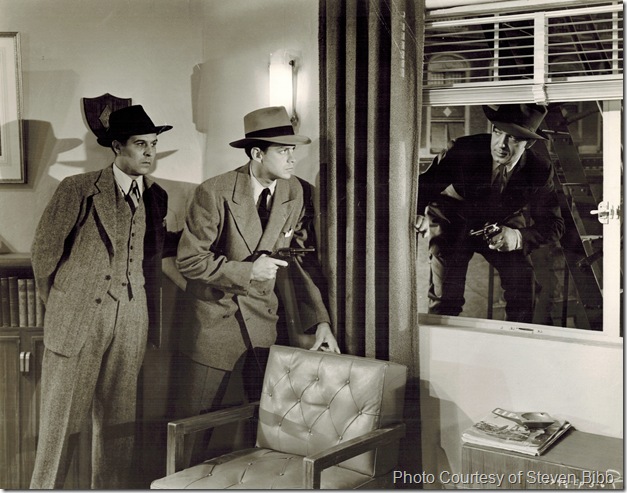
David Bacon, center, in a still from “The Masked Marvel,” photo courtesy of Steven Bibb.


Sept. 20, 1943, Bacon Killing In case you just tuned in, we are looking at the “Masked Marvel Murder” of actor David G.G. Bacon, who was stabbed to death Sept. 12, 1943. Bacon was apparently driving back to Los Angeles from Venice, crashed his car into a bean field on Washington Boulevard and collapsed, dying of a deep stab wound. His killing was never solved.
In previous posts, we have looked at his coded diary, his secret hideaway a mile from his home with singer Greta Keller, his arrest for contributing to the delinquency of a minor – a 15-year-old newsboy – and his participation in the Hasty Pudding productions at Harvard, in which he was apparently quite gifted at portraying women.

Now it’s time to look at the “sideshow.”

The “Masked Marvel Murder” Part 1 | Part 2 | Part 3 | Part 4 | Part 5 | Part 6 | Part 7 | Part 8 | Part 9

Continue reading

Posted in 1943, Cold Cases, Crime and Courts, Film, Hollywood, Homicide, LAPD | Tagged , , , , , | 2 Comments

The ‘Masked Marvel Murder’ – Part 9

David Bacon Case

Note: This post has been corrected. See details below.

In case you just tuned in, we have been going through the case of actor David G.G. Bacon, who was stabbed to death Sept. 12, 1943, in a case that remains unsolved. I hadn’t planned on such an extensive series of posts, but Steven Bibb has graciously shared some of his material and it’s quite interesting.

The “Masked Marvel Murder” Part 1 | Part 2 | Part 3 | Part 4 | Part 5 | Part 6 | Part 7 | Part 8

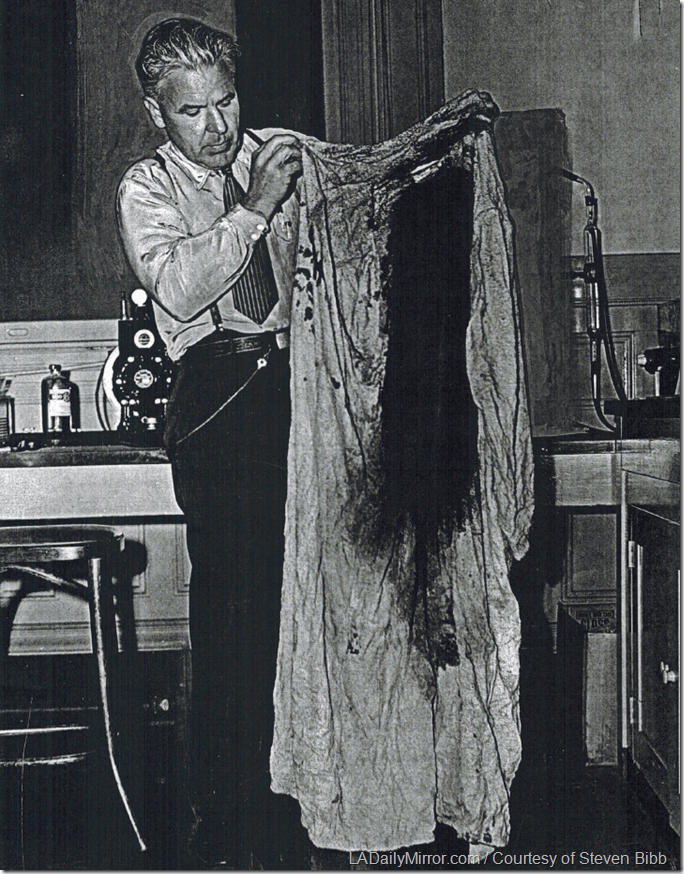
This is a photo of Lee Jones of the LAPD crime lab, holding what has been described as “the bathrobe” found in Bacon’s car after he jumped the curb on Washington Boulevard and staggered from the vehicle.

Continue reading

Posted in 1943, Cold Cases, Fashion, Film, Hollywood, Homicide, LAPD | Tagged , , , , , , | 6 Comments

‘The Clansman’ Comes to Los Angeles – Part 2

1908, The Clansman
A photo from an ad for “The Clansman” in the Los Angeles Herald, 1908.


Several weeks ago, I stumbled across a program from the Mason Opera House, announcing the upcoming production of “The Clansman,” the play by Thomas Dixon Jr. based on his novels “The Leopard’s Spots” and “The Clansman,” which in turn was made into “The Birth of a Nation.”

In response to questions about that post, I thought it would be worthwhile to examine the 1908 stage production of “The Clansman” in more depth, and I must say I’m glad I did. After years of looking through old newspapers, I like to think I’m pretty hardened to most of the attitudes expressed in print. But even so, the Los Angeles Herald’s review of “The Clansman”  is shocking. (In essence — please note that this is a paraphrase — the unidentified critic says: “We Northerners hate blacks as much as you Southerners, so why are you giving us Yankees such a bad time?”)

The Los Angeles Herald clips on “The Clansman,” are online and not behind a paywall.

Continue reading

Posted in 1908, African Americans, Animals, Broadway, Downtown, Film, History, Hollywood, Los Angeles Star, Stage | Tagged , , , , , | 2 Comments

A Letter From John Steinbeck

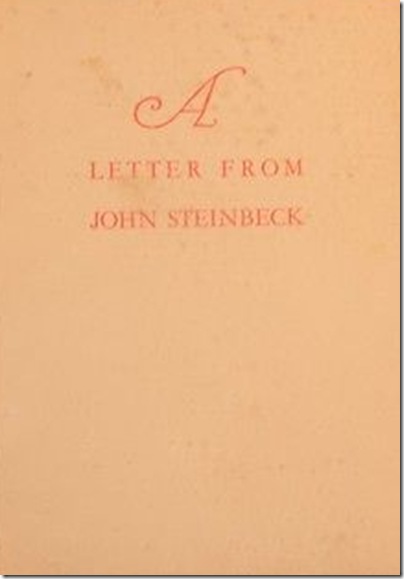
Zamorano Club, Letter From John Steinbeck

I’m always intrigued by the Zamorano Club’s publications. The Zamorano Club was established in 1928 by Los Angeles bibliophiles, named for Augustin Zamorano, California’s first printer, and treated its members to small press runs (often from the Ward Ritchie Press) of curious or remarkable items. This small item, by the Grace Hoper Press, is a reprint of a lighthearted, one-page letter written c. 1922 by John Steinbeck about his lack of poetic works and was addressed to William Carruth (d. 1924), professor of comparative literature at Stanford.

What’s remarkable about this particular item is the price: 270 pounds, about $435. The vendor has thoughtfully included a scan of the letter so that bidders can decide whether the pamphlet is worth the price. As with anything on EBay, an item and vendor should be evaluated thoroughly before submitting a bid.

Posted in 1964, Books and Authors, Found on EBay | Tagged , , | Comments Off on A Letter From John Steinbeck

Rediscovering Los Angeles – the St. Angelo

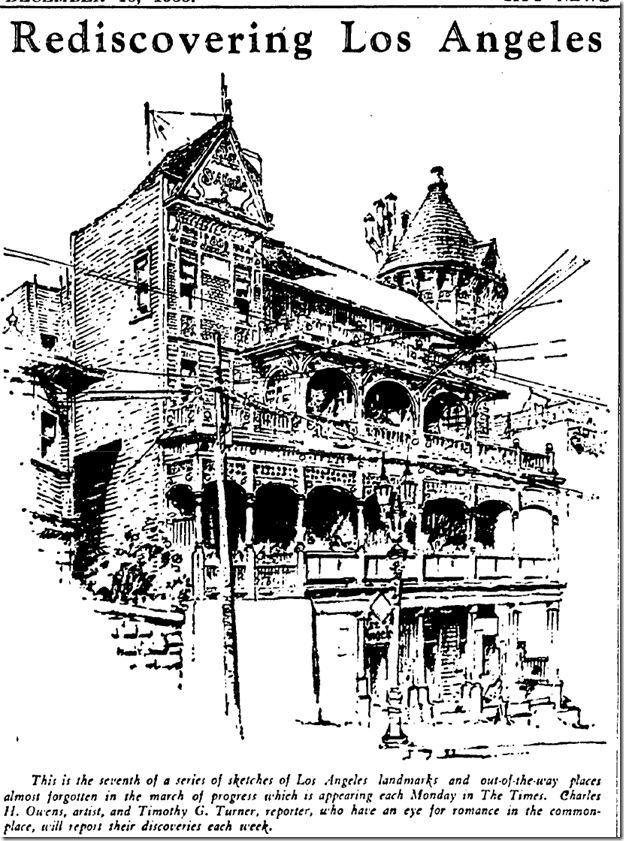
Dec. 16, 1935, Rediscovering Los Angeles

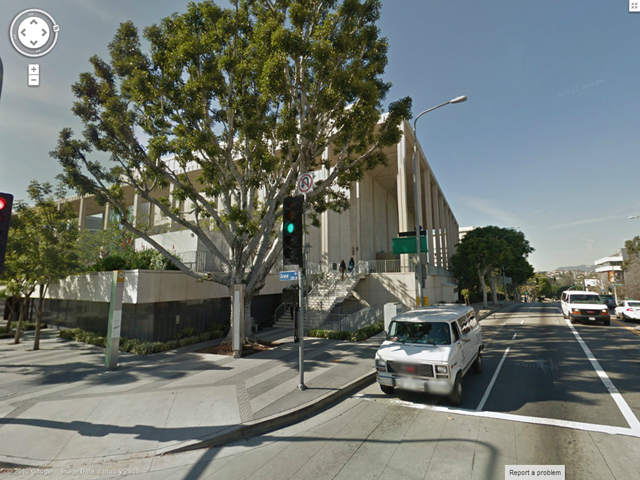
Grand and Temple via Google Street View

Grand and Temple via Google Street View.


In the Dec. 16, 1935, installment of Rediscovering Los Angeles, Times artist Charles Owens and columnist Timothy Turner visit the St. Angelo, on “Grand Avenue just off Temple Street on the northern slope of that unappreciated group of hills which form the nucleus of Los Angeles.”

Once a fancy hotel where James Whitcomb Riley stayed for several months, by the 1930s, the St. Angelo was a hotel for working men, Turner writes.

Unlike Nuestro Pueblo, Owens’ later work with Joe Seewerker, Rediscovering Los Angeles was never published in book form. The Times encouraged readers to clip the entries and save them in a scrapbook.

Continue reading

Posted in 1935, Architecture, Art & Artists, Downtown, Nuestro Pueblo | Tagged , , , , | 2 Comments