Today is Jan. 15, the anniversary of Elizabeth Short’s death. As is the custom, the Daily Mirror will be dark.
Trim your roses in her memory.
Today is Jan. 15, the anniversary of Elizabeth Short’s death. As is the custom, the Daily Mirror will be dark.
Trim your roses in her memory.

Aug. 8, 1998: A post on the old usenet alt.news-media by Janice Knowton was the first to publicly link Dr. George Hodel and the Black Dahlia case.
At this point, George Hodel was alive but would die in a bit less than a year. He was never publicly identified as a suspect – and certainly not a “prime suspect” before then, despite claims by the “Black Dahlia Avenger” franchise.
Knowlton killed herself in 2004, a year after “Black Dahlia Avenger” was published.

Jan 14, 1959: Matt Weinstock has an eccentric visitor with a theory about the electron. Funny things that kids say, a poem and some bullet items. Weinstock ends the day with a light touch.
The column originally appeared in the L.A. Mirror in 1959 and was republished on latimes.com in 2009. It’s available via Archive.org

Jeanne French was found beaten and stomped to death Feb. 10 1947, almost a month after Elizabeth Short was killed. French died from a broken rib that punctured her heart. Heel prints were found on her chest and near her body, according to Los Angeles County district attorney’s files. The prints were identified as a man’s shoe, size 6 or 7, someone with unusually small feet. Dr. George Hodel had, according his family, much larger feet.
Many armchair sleuths and authors of crummy books on the Black Dahlia case (notably “Severed” and “Black Dahlia Avenger”) claim that the Black Dahlia and Jeanne French killings were related. The concise answer is no. The full analysis is much longer and reaches the same conclusion.
The takeaway is that George Hodel could not have killed Jeanne French because his feet were the wrong size. And he had no connection to Elizabeth Short and was not the Black Dahlia killer.
Period.

Jan. 14, 1959: Paul Coates has the amazing story of three boys, ages 7, 9 and 10, who shot their father to death as he slept. Coates says that the mother (and the boys planned to kill her as well – they thought they had been unjustly punished) had regained custody of the children and was struggling to get her slain husband’s Social Security payments. The boys were denied their Social Security benefits.
Coates says: Because the children were never charged with a crime, they can’t be cleared. That apparently, is the logic of the Social Security office.
The column originally appeared in the L.A. Mirror in 1959 and was republished on latimes.com in 2009. It is available via Archive.org.

I occasionally scan the Web to see what’s out on the distant fringes of the Black Dahlia case. And wow. This is fringe.
Here we have a portrait of Elizabeth Short – post-mutilation – painted in the artist’s blood. Listed on EBay for $250. People never cease to amaze me in the ways they will try to cash in the Black Dahlia.

This week’s mystery movie was the 1933 film “A Study in Scarlet,” with Reginald Owen, Anna May Wong, June Clyde, Allan Dinehart, John Warburton, Alan Mowbray, Warburton Gamble, J.M. Kerrigan, Doris Lloyd, Billy Bevan, Leila Bennett, Wyndham Standing and Halliwell Hobbes.
Screenplay by Robert Florey, continuity and dialogue by Reginald Owen, photography by Arthur Edeson, editing by Rose Loewinger, settings by Ralph DeLacy, sound by Hans Weeren, directed by Edwin L. Marin. A KBS production produced at the California Tiffany Studios, distributed by Fox.
“A Study in Scarlet” is available on DVD from TCM.

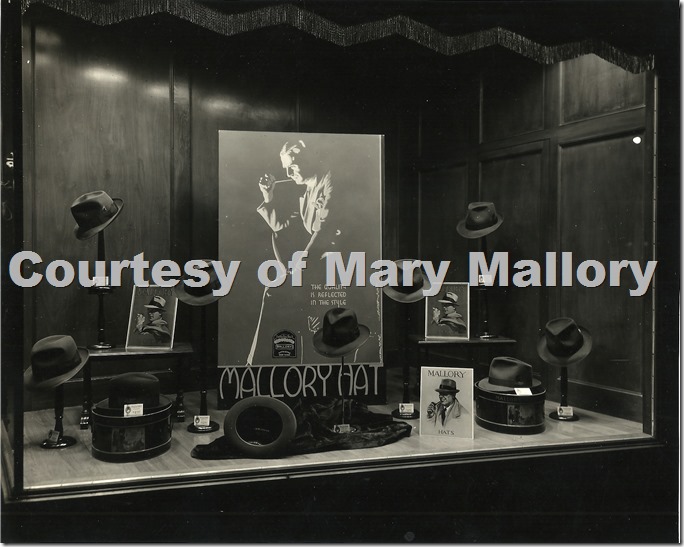
A photo of the original museum at Campo de Cahuenga, courtesy of Mary Mallory.
Note: This is an encore from 2012.
Driving south down Lankershim Boulevard from Toluca Lake into Universal City, it’s hard to miss the skyscrapers, soundstages, and flashing billboard of Universal Studios on the south side of the street. On the north side of the street in Studio City, surrounded by the MTA Universal City subway station parking lot and hard to see, sits a small Spanish building called the Campo de Cahuenga. At this location on Jan. 13, 1847, Col. John C. Fremont signed a treaty with Andreas Pico, ceding California to the United States. Here, California’s Spanish past merged with America’s western expansion to help eventually create our bustling state.

Keith Thursby writes: The state Supreme Court ruled unanimously in favor of the Dodgers and City Hall, moving plans for a baseball stadium in Chavez Ravine one huge step closer to reality. The Times’ coverage was breathless, no surprise since the paper was an open champion of the deal with the Dodgers..
“Progress must not be stopped in Los Angeles,” Mayor Norris Poulson said in Gene Blake’s lead story.
This post originally appeared on latimes.com in 2009 and is available via Archive.org.

The Short family rarely speaks on the record, but in 2003, they were so incensed by Steve Hodel’s “Black Dahlia Avenger” and his bogus claims of photos purportedly showing Elizabeth Short that they issued a public statement through me.
“The first thing I noticed was that [it] was definitely not Betty. She never wore flowers all over her head only one on her ear. She always loved Hawaii and I think it made her think of that and Dorothy Lamour.”

Jan. 13, 1959: Horseracing, Al Capone, a poem, a couple of funny stories, and we have another Matt Weinstock column. Weinstock perfected the art of the light touch. Rarely anything controversial and he never swung for the fence, like Coates did. A perfect way to end another day in Los Angeles, 1959..
And a double feature of “Screaming Skull” and “The Brain Eaters.”
The column originally appeared in the L.A. Mirror in 1959 and was republished in 2009 on latimes.com. It is available at Archive.org.

Jan. 13, 1959: Paul Coates worked himself into an early grave. In addition to writing six columns a week for the L.A. Mirror, he also had a show on KTTV-TV Channel 11. It was definitely another era. In this piece, he talks about his TV interview with Soviet Deputy Premier Anastas Mikoyan, whose arrival in L.A. brought out crowds of protesters.
Coates’ column originally appeared in the L.A. Mirror in 1959 and was published on latimes.com in 2009. It’s available via Archive.org.
Keith Thursby writes: Ned Cronin was a columnist at The Times until his death in 1958 and his work has been featured often in the Daily Mirror. His son, Jerry, recently discovered the blog and we started an e-mail conversation. I asked him if he’d be willing to share some memories of growing up in Southern California and his dad. Here is a recent e-mail:
I have been thinking about writing a book about growing up in L.A. at that period of time in the days of the values of Ozzie and Harriet. Coincidentally, my mother’s name was Harriet and she was also a housewife like the role Harriet Nelson portrayed on their television show.
In those days, the male was the breadwinner and the female was the domestic engineer in charge of running the household. This created a major problem when my dad died when he was 48 years old. My mother had never had to work and I was their only child going to Loyola.
This is the sort of piece I really enjoy running. It originally appeared on latimes.com in 2009 and is available via Archive.org.
Jan. 13, 1969: The first Super Bowl – and it doesn’t make Page 1 of the Los Angeles Times. Kicked back to sports. I would love to have been sitting in the news meeting that day…
Jim Murray says: “On Sunday afternoon, the canary ate the cat. The mailman bit the police dog. The minnow chased the shark out of its waters. The missionaries swallowed the cannibals. The rowboat rammed the battleship. The mouse roared, and the lion jumped on the chair and began to scream for help.”
Newspaper layout trivia note: Notice the two-column stories on either side of the Page 1 index. Those are the famous “corner stories,” giving rise to Keith Thursby’s famous saying: “Everything is a corner story.”
The post originally appeared in 2009 on latimes.com and is available via Archive.org.

Lucie Arnaz in “Who Is the Black Dahlia?”
“Inspired by a true story?” A painful lesson about Hollywood and the Black Dahlia.
In 1975, the murder of Elizabeth Short was the basis for the TV movie “Who Is the Black Dahlia?”
Under American law, dead people have no reputation and can’t be libeled, so the production could do whatever it wanted with Elizabeth Short.

Jan. 12, 1959: Matt Weinstock offers a light way to end the day. A little story about a taxpayer’s travails with the IRS, a poem, an honest panhandler asking for a dime for a bottle of wine. And yes, he coined “Only in L.A.”..
And a British reporter and an Australian correspondent get into a fistfight at a press party for Laurence Olivier. “He insulted my wife,” one of them said. The other replied “I merely commented on one of the magazines for which she works.”
The column originally appeared in the L.A. Mirror in 1959 and was republished on latimes.com in 2009. It is available via Archive.org.

Jan. 12, 1959: Paul Coates has the story of Guy Louis Gabaldon, a war hero raised in East L.A. who claimed to have plotted to assassinate Cuban leader Fulgencio Batista.
Gabaldon was raised by the parents of a Japanese American friend and when he enlisted in the Marines, used his language skills in Japanese to win a Silver Star on Saipan. His story was made into the movie “Hell to Eternity.”
Paul Coates’ column originally appeared in the L.A. Mirror in 1959 and was published on latimes.com in 2009. It is available on Archive.org.

John Gilmore’s “Severed” was once the most popular book on the Black Dahlia case, although it was eclipsed by Steve Hodel’s seemingly endless series of “Black Dahlia Avenger” books.
You may Google “Black Dahlia” while you’re watching “I Am the Night.” Here’s more of what you should avoid.
The late John Gilmore (d. 2016) was a conman, grifter, b.s. artist and pathological liar. Nobody seems to remember him with anything but disgust and disdain aside from Anthony Mostrom, the author of a glowing eulogy in the L.A. Review of Books. (Note: I had my own turn at Gilmore in LARB that made the exactly opposite point).
“Severed” is 25% mistakes and 50% fiction, as I have said countless times – always incurring Gilmore’s wrath. I was told that Gilmore hated me and I take that as a great compliment. The hatred of a pathological liar is the highest praise for a conscientious researcher.
Since BethShort.com was a repository for Gilmore’s Black Dahlia photos and writings, it’s most efficient to take them as a whole.
ALSO
Are There Any Good Black Dahlia Sites on the Internet? Oh Dear!

Jan. 12-13, 1959: Protests force the plane carrying Deputy Soviet Premier Anastas Mikoyan to divert to Burbank!
Mikoyan did a grip and grin with L.A. Mayor Norris Poulson, but Norrie would not be so friendly during Nikita Khrushchev’s time in Los Angeles. Later in the year, Poulson created an incident with Khrushchev that was apparently intended to put Poulson on the national stage, like Richard Nixon in the “kitchen debate.” Instead, it ended any further political ambitions he might have had.
The post originally appeared on latimes.com in 2009 and is available via Archive.org.