In the comics

As a child of the 1950s, it’s a treat for me to see the old comics, with the large panels and fine draftsmanship. Some don’t hold up terribly well but others remain classics, like “Li’l Abner,” which has been featuring a bald female spy named “Jewel Brynner.” Continue reading →

Posted in Uncategorized | Tagged , , , | Comments Off on In the comics

Hollywood confidential

1957_1001_confidential

Oct. 1, 1957
Los Angeles

No, I haven’t forgotten about Confidential magazine. The jury is still out.

Posted in #courts, broadcasting, Film, Hollywood | Tagged , | Comments Off on Hollywood confidential

Random story

Jan. 14, 1941

I stumbled across this brief while researching the Boy Bandit Gang:


1941_0114

Posted in Uncategorized | Tagged , | Comments Off on Random story

Mystery photo solved

The correct answer is Caryl Whittier Chessman. A very impressive showing by Duane Laible. I didn’t expect anyone to guess so quickly.   

Meet the boy bandit gang, which terrorized Los Angeles with a string of robberies and shootings in early 1941. The gang formed while the young men were assigned to county road camps for stealing cars.

Caryl_chessman_1941_0207_staff_phot

Los Angeles Times photo

From left, William Taylor, Caryl Chessman, Robert Tollack, Andrew Rutledge and Donald Abbott, Feb. 7, 1941.

"[William] Taylor and I were in Road Camp No. 7 in Las Flores Canyon," Chessman said. "Auto stealing. You pick up ideas there. We did. And here we are."

Gordon Klee, who was later eliminated as a suspect, said: "The rest of us were in Camp No. 1 in Soldedad Canyon. Same rap. I’ve known Chessman all my life. We went to school together. So when we got out last autumn, we just naturally drifted together."

Before they were arrested, the gang stole cars and robbed service stations and liquor stores across Los Angeles. Several gang members, sitting in a stolen car in Flintridge, got the drop on a pair of sheriff’s deputies who stopped to question them, and stole their patrol car.

A Times reporter asked why they committed the robberies.

"Lucrative," Chessman said.

Here’s a 1948 picture of Chessman:


Caryl_chessman_1948_0124_bob_jakobs

Photograph by Bob Jakobsen Los Angeles Times

David H. Knowles, left, and Caryl W. Chessman.

Bonus fact: Chessman lived at 3280 Larga St.

Email me

Posted in #courts, Caryl Chessman, LAPD, Robberies | Tagged , , , , | Comments Off on Mystery photo solved

Mystery photo

The answer to the last mystery photo was guessed in an hour. I hope this one will be more of a challenge.

Our famous mystery guest is one of the young men in this photo. He wrote a number of books that were translated into many languages. The other four men, as far as I can determine, are forgotten.


070929_mystery_photo01


Email me

Guesses so far:

  • Is the man on the far left Norman Mailer? (No).

We have a winner!

Caryl Chessman in the middle. Duane Laible

Posted in Uncategorized | Tagged | 1 Comment

Dodgers!

Countdown to Chavez Ravine:


1957_0930_cover

Read the rest of the story below:

Continue reading →
Posted in Dodgers | 1 Comment

Oh for a time machine

Sept. 30, 1957
Los Angeles
1957_0930_keaton_2

Posted in Hollywood | Tagged | Comments Off on Oh for a time machine

Paul V. Coates–Confidential File

Sept. 30, 1957

Paul_coates
SUBJECT’S NAME–
Judy Smith or Judy Burris

SUBJECT’S DESCRIPTION–Age 30. Height, 5 feet, 5 inches. Weight, 125 pounds. Dark brown eyes. Light brown hair. Slight scar on left side of jaw.

Any person with information as to subject’s whereabouts is requested to contact her mother, Mrs. Dessie Fentiman, 15138 Banderia Ave.,* Paramount, Phone: MEtcalf 3-6611.

It was midafternoon and sticky warm and I stopped in a dull and empty cafe to make a phone call.

The booth was across from the soda counter–about 10 feet from the
jukebox, which was silent. As I stepped into the cubicle the waitress
looked at me and gave a shrug of her shoulder, significant of I don’t
know what.

I closed the door and dialed.

A woman answered.

"Hello," she said, slowly.

"Mrs. Fentiman?" I asked.

She said yes, it was. Speaking. I explained that I had received her letter. "About your missing daughter."

"Oh yes," she said. The words came slowly, in monotone.

Then our question-and-answer session began. She told me that it had been more than seven years.

1957_0930_judy_smith
"August of 19 and 50," she said. She explained that her daughter had lived with her in Hot Springs, Ark., until the age of 18.

"Then she married and came to California," she said. "Lived in Oakland
and Grass Valley. That’s where she separated from her husband–Grass
Valley. Then she came to Long Beach."

(A couple of times, I glanced at the lone waitress. She was staring at me, disinterestedly. Like there was nothing to stare at).

Mrs. Fentiman continued to answer my questions.

"She wasn’t much of a hand to write," she told me, "so I was about the only one who heard from her.

"She’d done waitress work and done beauty operator. Liked to dance a lot."

(The waitress, maybe 25, walked toward the jukebox).

"A son of mine," Mrs. Fentiman continued, "saw her in San Pedro not
long before she stopped writing. She told him she was going to marry
this boy Johnnie and go to Alaska."

I asked her if she knew Johnnie.

"No," she answered. "Judy wrote me about him, though. She worked
keeping house for his parents in Long Beach. A very nice boy, she
always said." Her voice came sadder, now.

(The waitress was walking away from the jukebox. Voices and music
jumped out after her. In rock ‘n’ roll beat they cried: "Gonna find
her… Gonna find her..
.")

"I never did know," Mrs. Fentiman continued,  "what Johnnie’s last name was.

"If I just only knew their names."

1957_1220_coasters
(The music was loud–too loud. "I’ve been searchin’… I’ve been searchin’ ev’ry which way…")

"Mrs. Fentiman," I asked, talking over the music, "what did your daughter’s last letter say?"

"That she was coming to see me. In two weeks. Finally a couple years later, I came out here.

"Police been looking, but we can’t find a trace."

(The beat of the song was building. "And if she’s hiding up on
blueberry hill… Am I gonna find her, child… You know I will…")

"I can’t believe she’s living or she’d write me," Mrs. Fentiman sighed.

"I hate to feel that way but I can’t help it."

(The record was finishing up. "No matter where she’s hiding… She’s
gonna hear me coming… I’m gonna walk right down that street… Like
Bulldog Drummond…")

I told Mrs. Fentiman that I’d see what I could do and I hung up. I stepped up from the phone booth and nodded to the waitress.

She nodded back. "The Coasters," she said.

I smiled, wondering what she was talking about.

"The Coasters," she replied, motioning toward the jukebox. "Really rock, don’t they?"

ps. Dessie L. Fentiman died July 25, 1976, in Shasta County, according to California death records. She was 71. 

*Banderia has since been renamed Hayter Avenue.

Continue reading →

Posted in Columnists, Paul Coates | Tagged , , | 2 Comments

Comic pages

Sept. 29, 1957
Los Angeles

Fifty years ago, The Times included Bible stories in the Sunday comics with a strip titled "Tales From the Great Book," drawn by John Lehti. This is a sample of his work, telling the story of Ruth and Boaz.


1957_0929_bible_comix

Posted in Religion | Tagged , , , | 1 Comment

Smog

Greg Armento, history librarian at Cal State Long Beach, dropped me a
note about early uses of "smog" in The Times. He noted that on March 29, 1914, The
Times said:

"[Kokomo Times:] The esteemed Weather Bureau has sprung a
new
one. It is the word ‘smog,’ and it means smoke and fog. The bureau

explains
that very frequently there are times when this mixture is

apparent in the
atmosphere, and it considers the new  word a great

little idea.

"Very
well, ‘smog’ let it be. But why end there? Let’s call a mixture of

snow and
mud ‘smud.’ A mixture of  snow and soot ‘snoot,’ and a mixture

of snow and
hail ‘snail.’ Thus we might have a weather forecast:

"Snail today,
turning to snoot tonight; tomorrow smoggy with smud."

1905_0730_smog
Of course Proquest is a wonderful tool for such research on language.
And with just a bit of digging, we can find even earlier references to
smog. A July 30, 1905, article in the Chicago Daily Tribune credits the
word to Dr. Des Voeux of London’s Coal Smoke Abatement Society.

According to the wire service article from the New York Herald, Des
Voeux proposed the word at a public health congress held in London to
discuss the city’s polluted air. According the article, Des Voeux said
the name of London should be changed to "Smog" because the air was so
dirty.

"If the obsolete kitchen fire were abolished there would be less smog,"
the article says. "In fact, Des Voeux professed to be able to detect
three distinct diurnal smogs–breakfast, lunch and dinner smogs." His
novel solution was to use the London underground as a gigantic exhaust
system to pump out pollution and bring in fresh air.

Des Voeux is sometimes given credit for coining the term, but alas, as
soon as we crown him with this accomplishment, we must snatch it away,
for there are even earlier usages.

A Jan. 19, 1893, article in the Los Angeles Times credits an unidentified "witty English writer":

"The fact that the death rate of
London has recently almost doubled, going to over thirty in the
thousand, is sufficient attestation of the evil effects of the dense,
black fog which hung over that city for six consecutive days not long
ago.

These visitations, which a witty English writer once designated by the
name "smog," represent a condition of the atmosphere when it is
saturated with moisture and charged with soot and the fumes of sulfur
and carbonic acid gas from the chimneys and smokestacks of the great
city. It has long been known that they are harbingers of disease.

Not long ago, a story writer of the grewsome school published a
sketch in which he had all the people of London suffocated in one of
these fogs, with the exception of one man who made his escape by using
a Yankee device for manufacturing ozone."

As interesting as all this may be, the waxing and waning popularity of
the "N-word" in The Times over the years is a far more fascinating and
relevant pursuit. I hope to write more about the "N-word" in a later
post, for it went in and out of fashion regularly, nearly disappearing from
the paper during World War I and vanishing for several years during World War II.

Email me

Posted in Environment | Tagged , , , , , , | Comments Off on Smog

In which I bring in the expert

Several people have noticed that the postcard of The Times Building in the earlier entry doesn’t show the eagle. So I queried Carolyn Strickler, a friend and former head of The Times History Center.

She says the post-bombing structure was an entirely new building, not a reconstruction. According to the clips, this structure (the third Times Building) opened in 1912 on the second anniversary of the bombing and the eagle was placed on the parapets overlooking the northeast corner of 1st Street and Broadway. The eagle was taken down and re-gilded before being installed on the current Times Building on June 27, 1935.

Here’s the eagle being hoisted into position on July 18, 1912:


1912_0719_3


The eagle is visible in this photo of the building taken in August 1912:


1912_0825_building_2

Conclusion: The postcard publisher removed the eagle.

And here’s the eagle in 1935:


1935_0628_eagle


I also found this poem written shortly after the bombing:

1910_1009_eagle

Posted in Uncategorized | Tagged , , , | Comments Off on In which I bring in the expert

History on EBay

Although I don’t often post items from EBay, these are exceptional: Two historic postcards of The Times.

The first shows the presses. Perhaps regular readers at the Olympic Plant can shed some light on the equipment. (Personal note: The Times Building has never smelled the same since they took out the press line. Nothing in the world smells like ink mist).


Latimes_press02

Postcard No. 2 shows The Times Building on the northeast corner of 1st Street and Broadway. The tower was added when the building was reconstructed after the 1910 bombing by labor radicals. This is why it’s titled "The New Times Building."


Latimes_building02

Bonus fact: At one time, the newspaper marked the Oct. 1, 1910, anniversary of the bombing with a moment of silence and rites at Hollywood Memorial Park Cemetery, now Hollywood Forever Cemetery.

Email me

Posted in Downtown | Tagged , , , | Comments Off on History on EBay

Redwood revisited

Attention art sleuths: A close examination of the Redwood ad reveals this startling detail!


1960_redwood_poker_dogs

Yes, that’s right! According to this 1960 ad, the "famed ‘Poker Dog’ original oil paintings" were on display at the Redwood. And the paintings were insured for $25,000 ($167,025.46 USD 2006), in case they were stolen, perhaps by some inebriated newsman in search of a souvenir for his desk.

Let’s ignore, just for the sake of argument, that for $167,025.46 you could buy a shipping container of "Poker Dog" reprints, and look into this.   

If, by some fantastically unlikely quirk of fate, you’ve never seen one of these pictures, which hang in every bar, pool hall and rec room in America, they look like this:


Poker_dog

In fact, the paintings (above, "A Friend in Need") were done by Cassius Marcellus Coolidge, and have been reproduced on calendars, wall clocks, decks of cards, drink coasters, bobblehead writing pens, needlepoint kits and figurines:


Poker_dog_figures

I have no idea what the Redwood hung on its walls in 1960, and whether the restaurant had any Coolidge originals is a question I can’t answer. The location of Coolidge’s 16 originals, done about 1903  as calendar art for Brown & Bigelow, is unclear. A pair of originals sold on EBay for $590,400 in 2005 and several other, as yet unidentified, originals have sold at auction over the years.

Obviously, a (nonalcoholic) field trip to the Redwood is in order. In the meantime, surely there are some veteran patrons who can fill me in. You know who you are. And perhaps some art historian at the Getty would like to offer an opinion on the enduring popularity of the "Poker Dogs" series.   

Where are the original "Poker Dog" paintings? Are any of them still at the Redwood? This could be like finding the Amber Room at Philippe. Stay tuned!

Here’s a satiric look (at least I think satiric, though one never knows) about secret meanings in the "Poker Dogs" paintings.

Email me

ps. Now that I have found an L.A. connection to the "Poker Dogs," I feel almost guilty making fun of the clown paintings in Brian De Palma’s "The Black Dahlia."

Almost.


Posted in Downtown, Food and Drink | Tagged , , , , | 1 Comment

Hollywood confidential

Sept. 28, 1957
Los Angeles

This isn’t looking good.

1957_0928_confidential

Posted in #courts, Downtown, Film, Hollywood | Tagged , , | Comments Off on Hollywood confidential

September 27, 1957: Paul V. Coates–Confidential File

September 27, 1957

Paul Coates, in coat and tieAugust 12, 1957–A 19-year-old youth was stabbed and seriously wounded last night as he fought to save an 11-year-old girl from criminal attack in Hollenbeck Park. The youth,
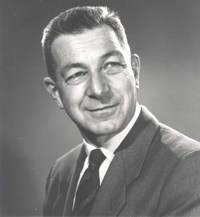
Edward Gandara, and Jesus Rodriguez, 16, routed the molester, who escaped after driving a penknife into Gandara’s abdomen. The knife was removed at Lincoln heights Receiving Hospital.

Gandara told police: “He stuck me in the middle but I kept on fighting until he ran away.”

It was a few days ago. Eddie was just out of the hospital. He and some of the guys were sitting around and making talk. Continue reading →

Posted in Columnists, LAPD, Paul Coates | Tagged , , , , | Comments Off on September 27, 1957: Paul V. Coates–Confidential File

September 27, 1957: Matt Weinstock

September 27, 1957

Matt WeinstockI never thought the time would come when I would write an ode to a single-chamber incinerator but here I am, doing it. Well, not exactly an ode but maybe a panegyric or at least a paean.

After Monday, householders can no longer burn, not even on unsmoggy mornings or calm evenings.

By official edict, the backyard incinerator has become a villain, convicted of contributing to the delinquency of smog and sentenced to death.

I don’t know about other people but I shall miss carrying the kitchen wastebasket daily to the ugly but inoffensive furnace and putting a match to the contents. Continue reading →

Posted in Columnists, Dodgers, Downtown, Environment, Matt Weinstock | Tagged , , , , | Comments Off on September 27, 1957: Matt Weinstock

One more incinerator picture

Sept. 27, 1957
Los Angeles

This one’s special. It was taken by Delmar Watson of the famous Watson brothers and features Pop Watson.

1957_0927_incinerator

Posted in @news, Environment | Tagged , , | Comments Off on One more incinerator picture

It was loaded


1957_0927_anglin

1957_0927_anglin_hed

Sept. 27, 1957

Los Angeles

Thomas Lee Anglin’s first mistake was buying a gun so his wife could
protect herself. His next mistake was arguing with her while she was
holding the loaded .22-caliber pistol. His third mistake, which was
almost his last, was trying to call her parents during the argument.

Anglin, 2584 N. Brighton St.,* Burbank, a 21-year-old electrician at
Lockheed, was in fair condition at St. Joseph Hospital after being shot
in the abdomen when his 20-year-old wife, Bertha, tried to hit the
telephone out of his hand with the gun.

The Anglins, the parents of an 18-month-old girl, had been arguing for
two days but refused to discuss the matter with police in detail.
Neither of them would say why they were arguing and Thomas refused to
implicate his wife in the shooting. Bertha was charged with assault with intent to commit murder.

All she would say was: "I was only trying to keep him from calling my folks" and "I didn’t know it would go off."

The Times never followed up on the case.

Email me

*This address doesn’t exist. Here’s the Zillow listing for 2542 N. Brighton.

Posted in San Fernando Valley | Tagged , , , , , | 1 Comment

It was a kinder, simpler time

Sept. 27, 1957
Los Angeles

1957_0927_cover

Posted in @news, Countdown to Watts | Tagged , , , | Comments Off on It was a kinder, simpler time

Paul V. Coates–Confidential File

Paul_coatesSept. 26, 1957

I talked yesterday with two men.

One was fresh out of San Quentin, pardoned after nine months for a crime he didn’t commit.

The second was a witness to the crime. His positive identification of the suspect helped in obtaining a conviction.

The charge–robbery and assault with intent to commit murder. For it,
the suspect was given the maximum sentence–five years to life.

The cleared man’s name is Edward Avila.

He told me yesterday that he never lost faith that someday he would be found innocent.

"Of course, I had that feeling before I was convicted," he said. "After
all, if you haven’t committed a crime, you just don’t expect to take
the rap for it.

"The whole thing was kind of like a"–he hesitated before adding the final word–"joke."

At his trial, Avila had witnesses to prove that he couldn’t have been
in the area where the crime was committed at the time it happened.

Unfortunately, they were members of his family.

1957_0926_joker02
Their testimony was thrown out as "prejudice."

It dropped a bomb into Avila’s defense, but it’s the way our courts have to work sometimes.

If the word of suspects’ mothers and sisters and kin are believed in
every criminal case, an awful lot of guilty men would be walking our
streets today.

The second man I talked to yesterday was only one of [illegible]
prosecution witnesses. But his identification of Avila as the sought
gunman played a major role in conviction.

His name isn’t important, but some of his statements are.

I asked him how positive he had been when he first identified Avila.

"I told them, ‘It’s either that man or he’s got a twin brother.’ "

"Did you say that in court?" I asked.

"No," he answered. "In court you have to be positive."

"Were you?"

After a pause, he answered.

"Yes, I was."

The witness, possibly, had good reason to feel he was positive. Delbert
Wilson, who later confessed the crime, is within an inch and a few
pounds of Avila. Both have dark, curly hair, green eyes and slightly
pocked complexions. Their facial features are not dissimilar. Each has
a tiny, dark dot on his right cheek.

I asked the witness if he planned to talk to Avila.

"If I see him, I’ll talk to him," he said.

"You don’t plan to go see him, though?"

He paused. Then he answered, "No."

And after another moment, "I don’t think I should. After all, it was an honest mistake."

"Is it true that you correctly identified the real gunman last week?"

The witness sighed.

"Yes," he said. "I picked him out of a police lineup. Avila was in it too."

"But this time you’re really positive?"

"Yes. The eyes. Something about the eyes."

"Did you find it tough to admit that you’d made a mistake?"

He hesitated. Then he shrugged.

"Both times," he said, "I tried to do what I thought was right."

Avila’s conviction was a freak mishap of justice.

His pardon, however, wasn’t.

His freedom resulted from some clever detective work by Sheriff’s
Officers F.D. Villines and A.W. Bright. They’re men, obviously, who
know that their jobs of law enforcement don’t end necessarily with
court convictions.

Still, it took them a couple of lucky breaks and several months to free the imprisoned man.

Maybe I shouldn’t ask this, but–

What if the victim of the shooting had died?

And what if Avila had been sentenced to death and executed before
Villines and Bright had a chance to probe deep enough to uncover any
substantial new leads?

Neither are questions I’d like to ask Edward Avila’s wife or his two children.

Posted in #courts, Columnists, Paul Coates | Tagged , , , , | Comments Off on Paul V. Coates–Confidential File