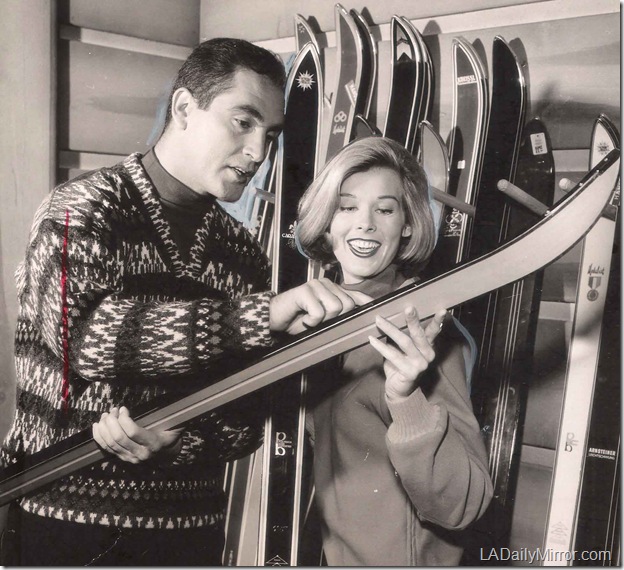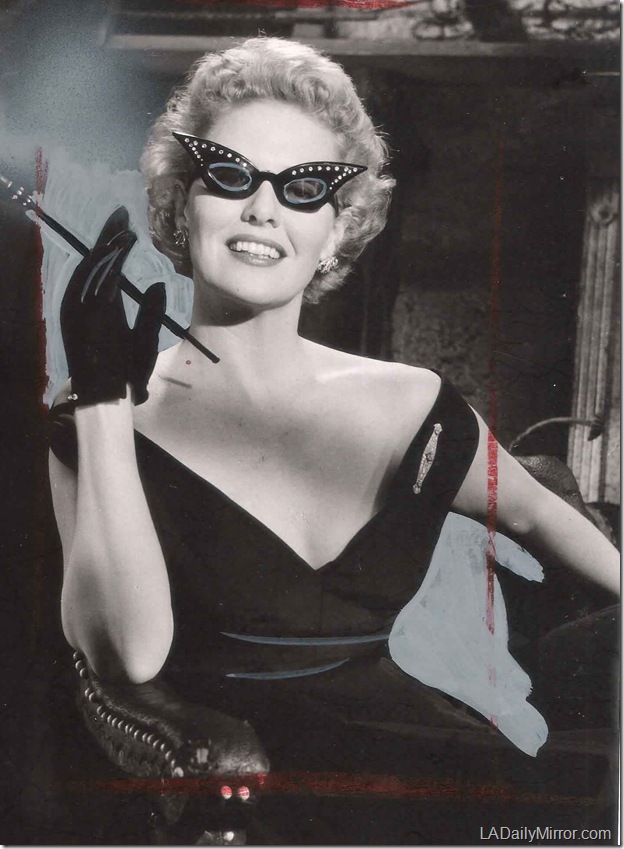
Here’s another photo from the amazing collection of Steven Bibb! Love those glasses!
Here’s another photo from the amazing collection of Steven Bibb! Love those glasses!
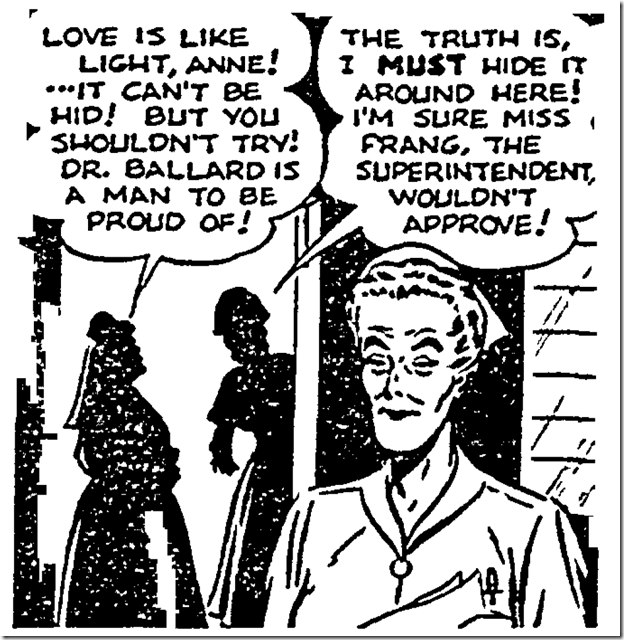
Oct. 12, 1942: Walter Miller, a 31-year-old lumberyard foreman, and his friend Eddie “Red” Phillips, a 32-year-old mechanic, were shooting dice in the living room of Phillips’ home, 1442 E. 59th St., when they began arguing. Miller was stabbed during the argument and died at Maywood Hospital.
Police said Miller hit Phillips on the chin, yelled “Drop that!” and collapsed.

Oct. 11, 1984: Astronaut Kathryn Sullivan, aboard the shuttle Challenger, becomes the first American woman to take a space walk. Sullivan was involved in an experiment to show that it was possible to refuel satellites in space, even if the satellites weren’t intended for in-flight refueling.
Investigators using search dogs go through the burned-out remains of the Ole’s home improvement store in South Pasadena looking for victims of what was eventually determined to be arson. Glendale Fire Capt. John Leonard Orr was convicted in the fatal fire and was sentenced to life in prison. The store was rebuilt and is now an OSH.
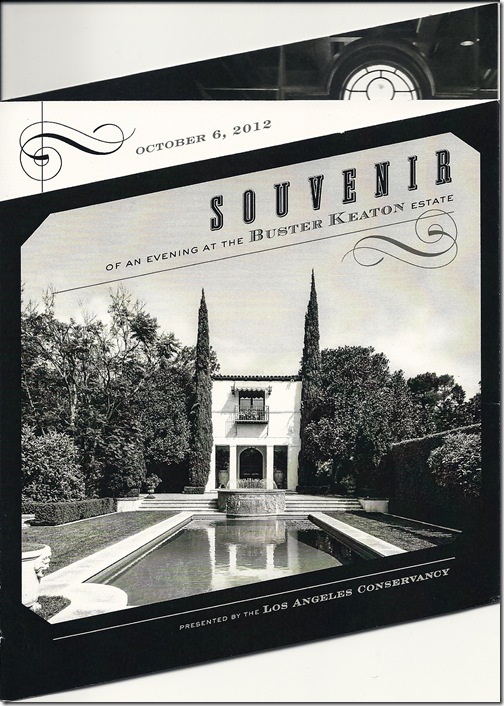
Buster Keaton seemed to have it all in the mid-1920s. His career was riding high, as the public loved his film comedies, making him one of America’s top film personalities. He had a beautiful wife, Natalie Talmadge, and two lovely boys, though the public didn’t know that behind the scenes, the marriage was shaky. All he needed was a grand house to complete the image of the successful gentleman.
The Keatons first built a nice though average size home that Natalie considered too small for the family and staff once completed. After selling it off, Buster began planning an elaborate estate for his wife, one to rival that of her more successful sisters Norma and Constance, as well as top stars Harold Lloyd and Douglas Fairbanks and Mary Pickford.
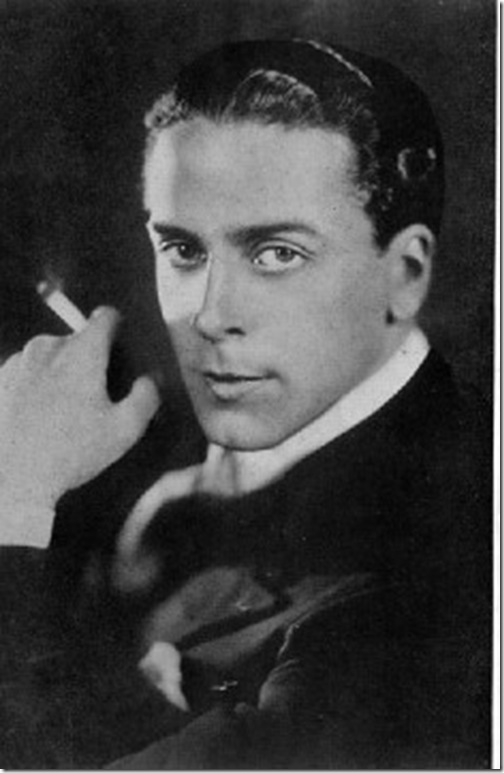
Jack Buchanan
1891 – 1956
Jack Buchanan was Fred Astaire before Fred Astaire was Fred Astaire. Jack was tall, handsome, a great “make it look easy” song and dance man, and, as his friend and frequent costar Bea Lillie noted, no one wore white tie and tails like Jack. Today, he’s mainly remembered as the hammy, aging costar of Fred Astaire in The Band Wagon (and a damn good performance, too). But looking at the 62-year-old hoofing “I Guess I’ll Have to Change My Plan” doesn’t really show you the gorgeous matinee idol of the 1910s and ’20s.
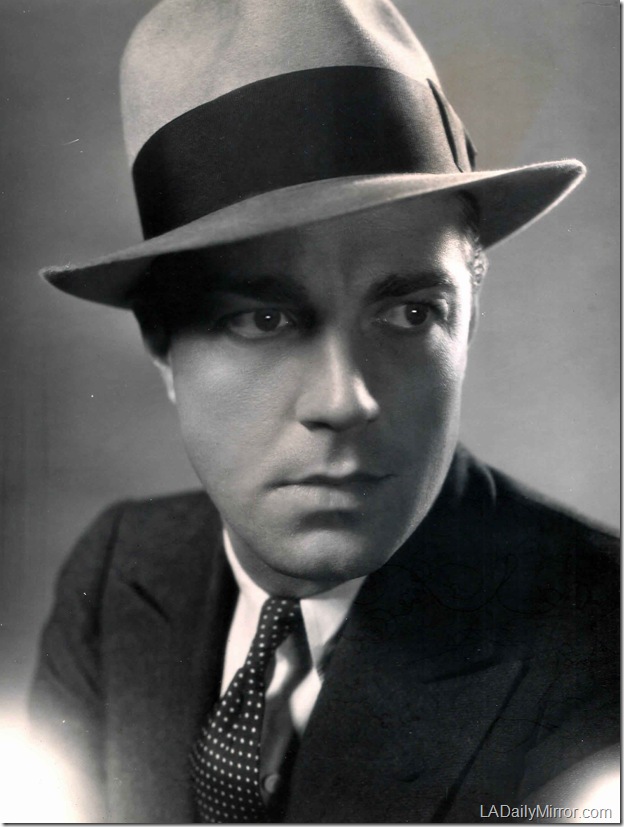
Here’s another photo from the amazing collection of Steven Bibb!

A copy of Erich von Stroheim’s “Paprika” inscribed to Hugo Ballin has been listed on EBay as Buy It Now for $1,250.
Famed director/actor Erich von Stroheim faced financial disaster in the mid-1930s. After directing such visual powerhouses as “Foolish Wives,” “Greed,” “The Merry Widow,” “The Wedding March,” and “Queen Kelly” in the 1920s, as well as others, and sometimes stealing films in which he co-starred, the Austrian auteur couldn’t land a job. Fox had savagely re-cut and remade his 1932 film “Walking Down Broadway” and changed the title to “Hello, Sister!” Directing opportunities vanished. Von Stroheim found acting roles in low-budget/poverty row films, but found himself frozen out of big budget studio films.
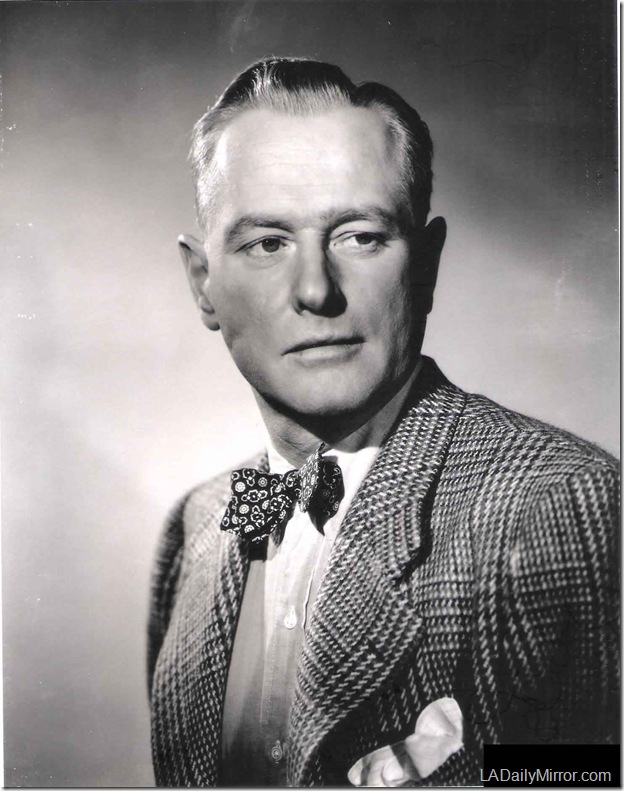
Here’s another mystery fellow – with a bow tie! Courtesy of Steven Bibb

Here’s a salute to one of my favorite childhood TV shows. Remember: “Leave your blood at the blood bank, not on the road. For ‘Highway Patrol,’ this is Broderick Crawford.”
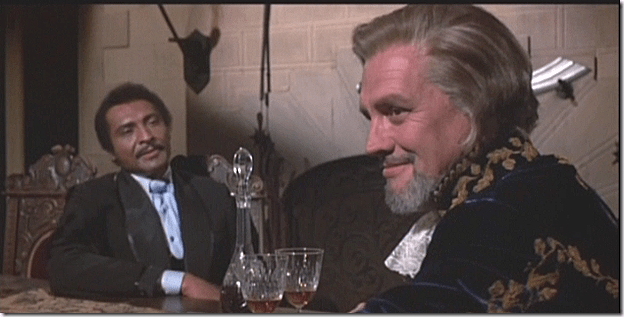
I thought it would be fun to have a little change of pace from Steve’s collection. Enjoy!

Here’s another mystery photo from the collection of Steven Bibb!
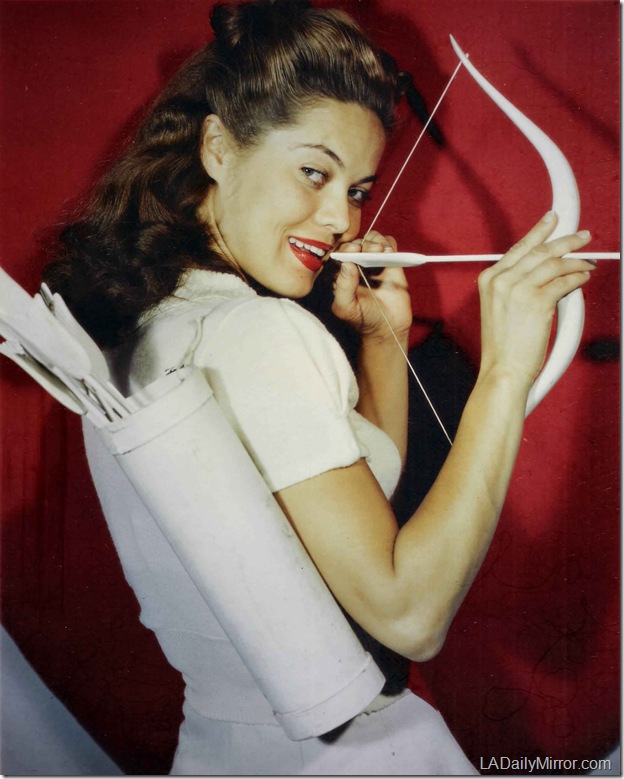
Here’s another mystery photo from the collection of Steven Bibb!
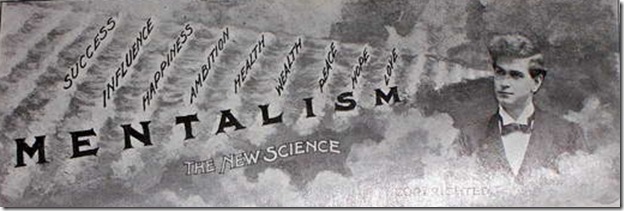
Prof. A. Victor Segno and a success wave (artist’s concept).
My latest column for The Times deals with my favorite L.A. con man, Prof. A Victor Segno.
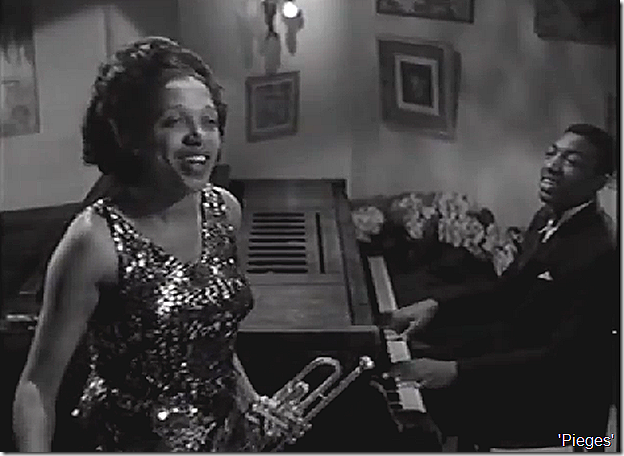
Valaida Snow
1904 – 1956
I am a huge Bix Beiderbecke fan; I prefer him to Louis Armstrong, and as far as I’m concerned, jazz died with Bix in 1931. But a close second to Bix in my heart is the great, unjustly forgotten Valaida Snow, the triple-threat singer, dancer and trumpet player known somewhat condescendingly as “Little Louis.” Unlike her fellow black songstresses Lena Horne, Ethel Waters and Josephine Baker, Valaida died pretty much forgotten, and it’s only thanks to her rerelease on CD (as well as YouTube) and a 2007 biography by Mark Miller that she’s at all known. Valaida never hit it big on Broadway or in revues, and her only movies were tiny cameos in Take It From Me (a 1937 B-film) and Pièges (a 1939 French film)—as well as a few Soundies in 1946, when she was past her prime.
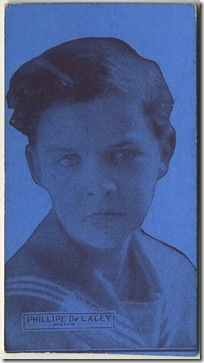 Child stars often face harsh realities as they age. The public doesn’t find them as cute, roles stop coming, and life can become cruel. For every talented child actor that goes on to a successful career as an adult like Shirley Temple, Jodie Foster, and Elizabeth Taylor, there are depressing stories of those who come to tragic ends, like Carl “Alfalfa” Switzer and Bobby Driscoll. Philippe de Lacy rode the rollercoaster of fame from popular juvenile performer to struggling young actor and finally to success behind the scenes as a director and producer in the heyday of Cinerama.
De Lacy landed his first role at the tender age of 3, when he appeared onstage in “The Riddle Woman” with Geraldine Farrar, after a French woman and friend of Farrar noticed him at a party and brought him to the actress’ attention. The lad soon landed roles in topnotch films, appearing with Alla Nazimova in “The Doll’s House” in 1922, playing Mary Pickford’s younger brother in the 1923 film “Rosita,” and acting as Michael Darling in Paramount’s wonderful 1924 movie “Peter Pan.” His tender looks and expressive acting won him a large following. An ad in the April 1, 1925 Los Angeles Times called him “a star of tomorrow.”
Photo: A card of Philippe de Lacy listed on EBay as Buy It Now for $4.29.
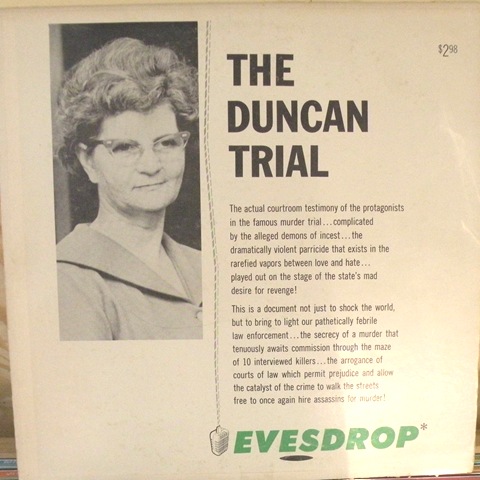
Rare (or r@re) is terribly overused on EBay, but this time it’s accurate. A LP from clandestine recordings made at the murder trial of Elizabeth “Ma” Duncan, has been listed. Bidding starts at $5. The Duncan case (she was convicted of killing her daughter-in-law for really bizarre reasons) is one of the strangest killings of the era.

Here’s another photo from the collection of Steven Bibb. Here’s our mystery guy and I love the name of the mystery film.
Photo: <<Le Dahlia Noir>>
Once again, Elizabeth Short’s bogus middle name appears in a story about the Black Dahlia – proof that mistakes take on a life of their own.
In reality, she had no middle name. She was erroneously given the middle name “Ann” in the introduction to the 1971 Los Angeles Times story “Farewell, My Black Dahlia.”
This mistake has even permeated her FBI file and was repeated by James Ellroy until I corrected him (something few people get away with). You can be sure that whenever someone refers to the Black Dahlia as Elizabeth Ann Short they don’t know what they are talking about.
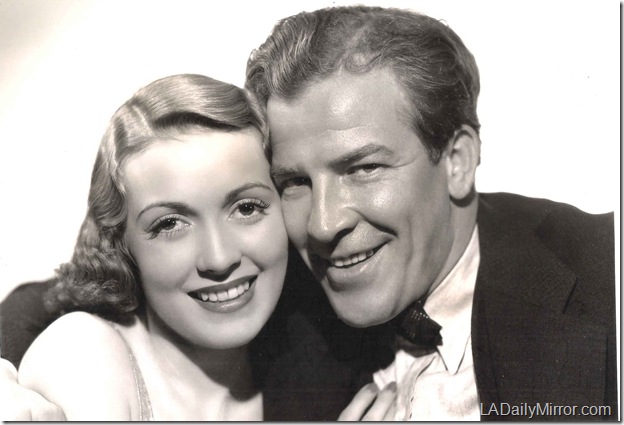
Here’s another photo from the amazing collection of Steven Bibb!