

And for Monday, a mystery woman…..

“The Adventures of Kathlyn,” courtesy of Mary Mallory.
Between 1910 and 1920, filmmaking exploded in Los Angeles and Hollywood, with production companies flocking to the sunlit mecca of Southern California. Populations surged as men and women traveled here pursuing fame and fortune in the film business. With every passing year, film production, promotion and distribution grew more sophisticated and nuanced.
One of the pioneers in advancing motion picture production and publicity was a short, energetic man by the name of Col. William Selig, an honorary rank he bestowed upon himself. Selig jumped into the early moving picture business in 1895 Chicago after stints as a traveling vaudevillian and magician. He established the first permanent Los Angeles film studio in 1909. Selig Polyscope Co. filmed all types of stories, particularly westerns and exotic animal pictures.
ALSO BY MARY MALLORY:
Erte and the Movies
Ned Sparks — Hollywood Grouch
The Hollywood American Legion — The House That Boxing Built
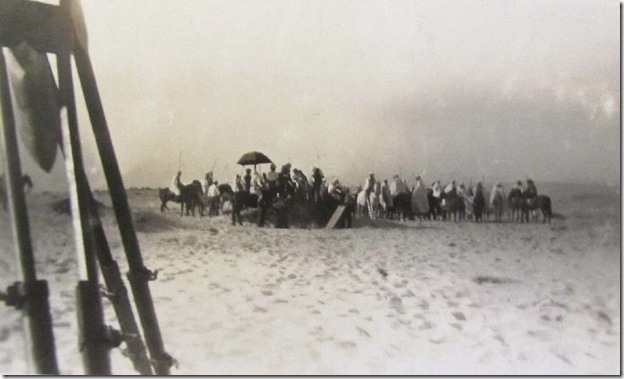
A location photo that the vendor says shows filming of “The Sheik” on “Hueneme Beach near Oxnard” has been listed on EBay. Bidding starts at $49.99.
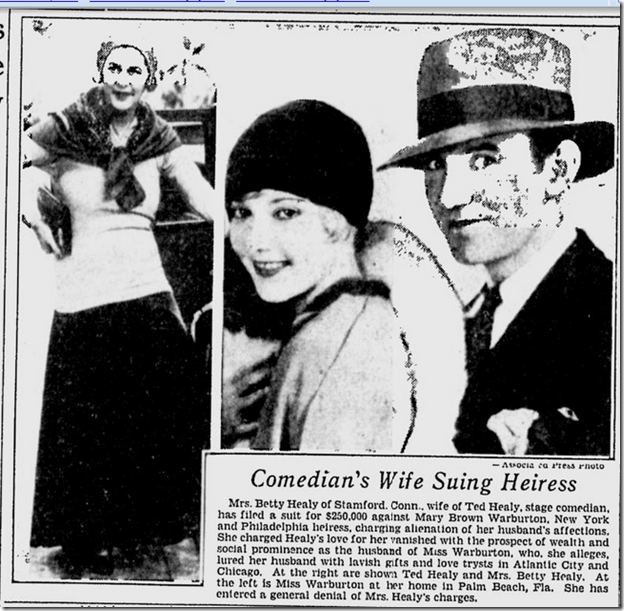
Jan 28, 1932: Betty Braun Healy sues Mary Brown Warburton for alienation of affection, via the Milwaukee Journal.
The most interesting person in the whole Ted Healy drama is his first wife, Betty Braun, his former vaudeville partner. Everyone else in the story — his manager, Jack Marcus; his sister, Marcia; the police; the coroner; even Dist. Atty. Buron Fitts — accepts the coroner’s findings that Healy died of natural causes. It is only his first wife who makes the public allegations of a cover-up, that people are being protected and that she is threatened with being blacklisted for not keeping quiet.
Healy’s widow and sister dismissed her as a publicity-seeker, trying to capitalize on his death.
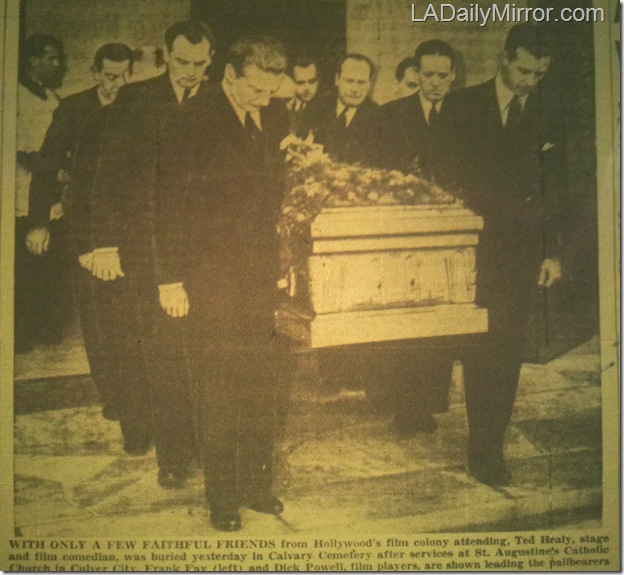
Dec. 23, 1937: The funeral of Ted Healy as reported by the Daily News.
Today’s installment was supposed to be a look at Jack Marcus, Ted Healy’s manager. Marcus picked up Healy and took him home after he was treated for the injuries he received and was present when he died. Marcus was the main spokesman to the press in the coverage of Healy’s death and the subsequent investigation.
But Marcus disappears from news reports after the Healy incident. There are a few later stories in The Times referring to men named Jack Marcus, but it’s unclear if any of them is the right one. There’s nothing further about him in Daily Variety, and neither Daily Variety, the New York Times or the Los Angeles Times published an obituary.
We do know that Marcus was one of Healy’s pallbearers, so he is in this photograph, which was published in the Daily News. Unfortunately, only two men, Frank Fay, front left, and Dick Powell, front right, are identified.
To be continued.

Dec. 22, 1937: Ted Healy’s death is reported in the Los Angeles Examiner.
Before we get into Healy’s last days, let’s take a look at some of the people who were involved in the story.
There’s Jack Marcus, his manager, and his sister, Marcia, both of whom were present when he died.
The most intriguing player in the drama, however, is his ex-wife, Betty Braun Healy, because she is the prime mover in raising suspicions about his death. Everyone else — Healy’s widow, his sister, his manager, police investigators, the coroner’s office and eventually Dist. Atty. Buron Fitts — insisted that Healy died of natural causes.
Only his ex-wife was adamant that there had been a cover-up, that people were being protected and that she was being blacklisted for not keeping quiet, provoking angry charges from Healy’s sister and widow that she was a glory seeker trying to capitalize on his death.
Let’s look first at Marcia Healy, who was born in 1904 as Marcia Elizabeth Nash and died in 1972 as Marcia Read.
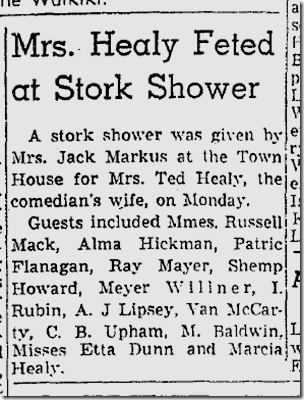
Oct. 17, 1937: Marcia Healy attends Betty Hickman Healy’s baby shower. Also present are the wives of manager Jack Marcus and Shemp Howard.
Unfortunately, there’s very little in The Times about Marcia Healy aside from her comments on Healy’s death and speculation that a movie about Healy’s life might be in the works:
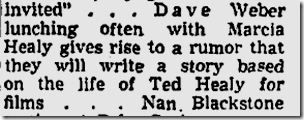
Jan. 24, 1938: Speculation on a movie about Ted Healy’s life.
She clearly had her hands full dealing with her brother:
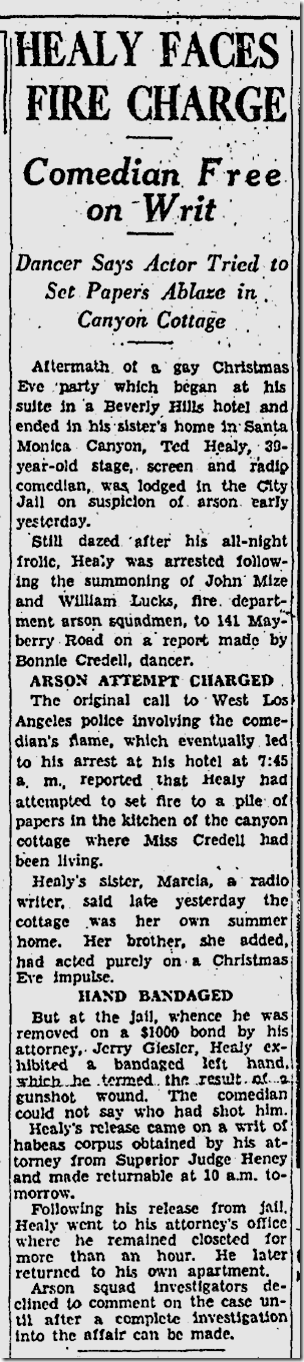
Dec. 26, 1935: Ted Healy has night on the town. He is accused of starting a fire and by the way has a gunshot wound to his left hand. At least we learn that Marcia Healy is a radio writer and has a summer cottage at 141 Mabery Road [misspelled as Mayberry] in Santa Monica.
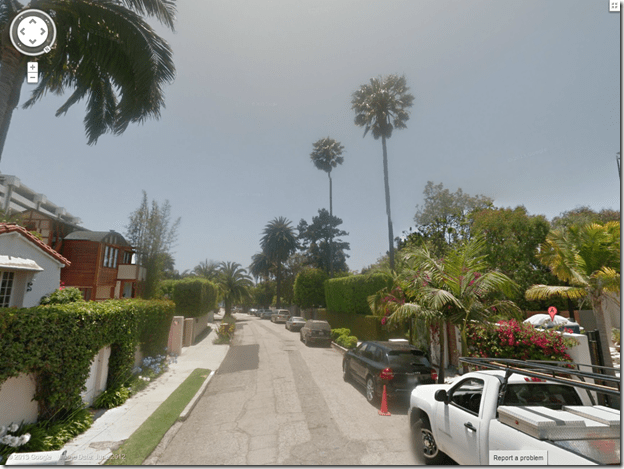
Mabery Road, Santa Monica, via Google’s Street view.
To be continued.
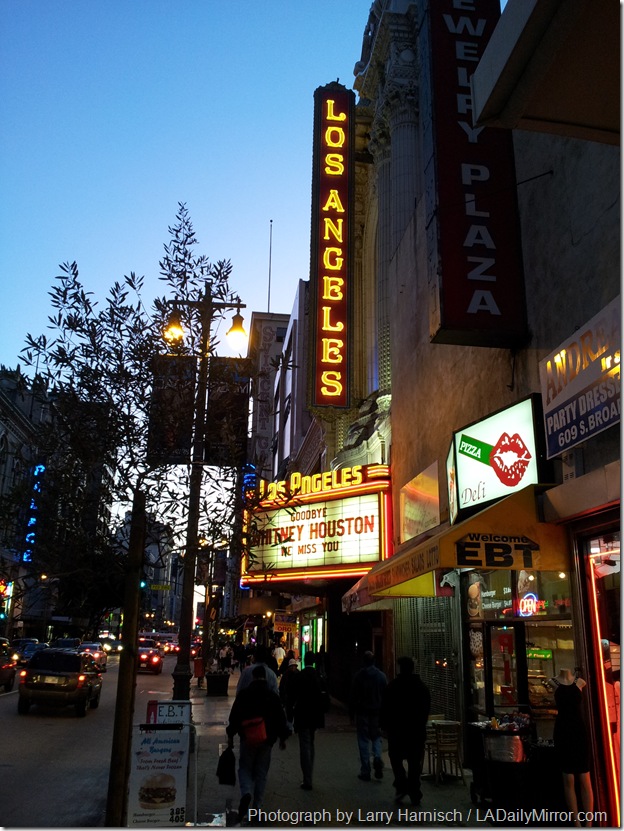
In passing the Los Angeles Theatre last night, I saw a notice of June 6 hearing on several business being proposed for the structure.
The big question is what exactly would be done to the interior and how much the building would be compromised by these alterations.
The proposal calls for “the sale and dispensing of a full line of alcoholic beverages for on-site consumption and public dancing.”
The proposed venues are:
1) The 37,924-square-foot theater, which would have 15 portable bars and public dancing.
2) A 2,441-square-foot ground-floor bar and lounge with video and electronic games, with 85 seats, including 24 seats within the public right of way.
3) A 2,049-square-foot ground-floor bar and lounge with live entertainment with a total of 114 seats.
4) A 7,904-square-foot restaurant, bar and lounge on the ground level, second floor and rooftop with live entertainment with a total of 378 seats.
5) 2,490-square-foot restaurant with bar and lounge with live entertainment, with 153 seats, including 22 in an outdoor patio within the public right of way.
6) A 3,168-square-foot second-floor nightclub with ground floor entry via St. Vincent Court alley with live entertainment with 158 seats.
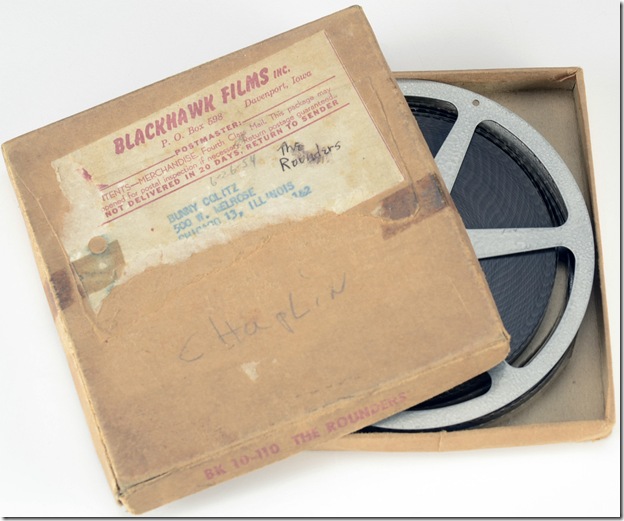
A Blackhawk film in all its low-tech glory is for sale on EBay with bids starting at $9.99. Note the lack of a ZIP Code in the address, which would peg the film as dating from the 1950s or early 1960s.
Many, many years ago, when I was a mere lad, I had a young friend who lived around the corner and was a fan of horror/monster films. Because his parents had money, they bought him a small library of Blackhawk’s prints of silent movies.
Dec. 22, 1937: Ted Healy’s death is reported in the Los Angeles Examiner.
In the days leading up to his death, comedian Ted Healy had been under continuous observation by his sister, Marcia, and manager, James Marcus, to keep him from drinking and otherwise out of trouble. Hymie Marx, a bodyguard, had been hired not to protect Healy from his fans but to protect him from himself.
A longtime alcoholic, Healy had apparently been striving to stay sober in the last months of his life. Sammy Lewis, a partner in Slapsy Maxie Rosenbloom’s cafe, said: “During the past six months, I saw Ted very frequently. He never drank anything stronger than coffee at those times and he seemed in the best of health.” (Examiner, Dec. 26, 1937)
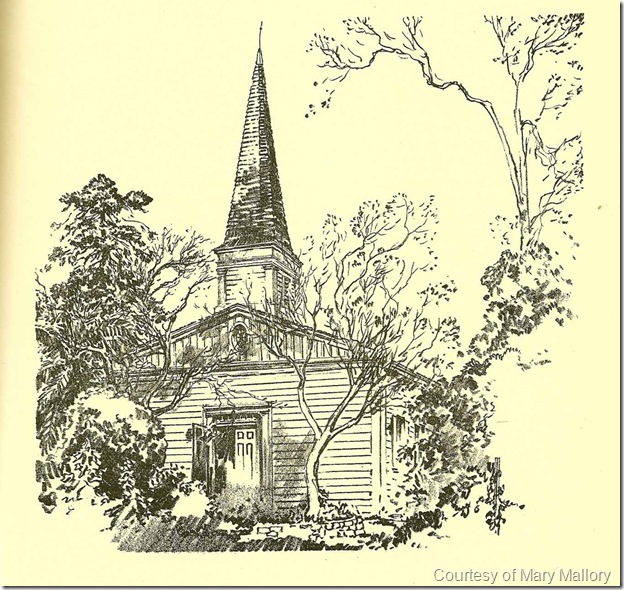
Throughout its history, the city of Hollywood has seen much come and go in the name of “progress.” Instead of remodeling and reusing a historic structure, as is done in Europe or the East Coast, most builders simply tear down the old to make way for the “hip” and “modern.” Occasionally, acts of vandalism destroy grand old buildings. At some locations, however, both unfortunate actions occur.
ALSO BY MARY MALLORY
The Magic Castle
Jerry Giesler, Miracle Man
‘I Lost My Girlish Laughter’
Charles Butterworth, Professional Silly Ass

Harold Lloyd’s “Now or Never,” directed by Hal Roach and Fred Newmeyer, includes a memorable sequence in which he appears to be caught on top of a train.
The final impression is stunning and we might pass it off as something done “by crazy movie people in the crazy ‘20s.” But these folks weren’t so crazy at all. This 2 1/2-minute sequence is a terrific example of editing and camera trickery. The director of photography was Walter Lundin, who did many of Lloyd’s films, including “Safety Last!” and the editor was T.J. Crizer, who also worked on “Safety Last!”
Let’s take this sequence apart and see how they did it without CGI. Keep asking one simple question: “Where is the camera in this shot?”
The setup: Lloyd’s character is trying to avoid being caught on a train, so he climbs out a window.

This postcard of the Southwest Turquoise Co., 113 N. Broadway, has been listed on EBay. The shop would have been roughly across the street from the old Times Building at 1st and Broadway. Bidding on the postcard starts at $8.
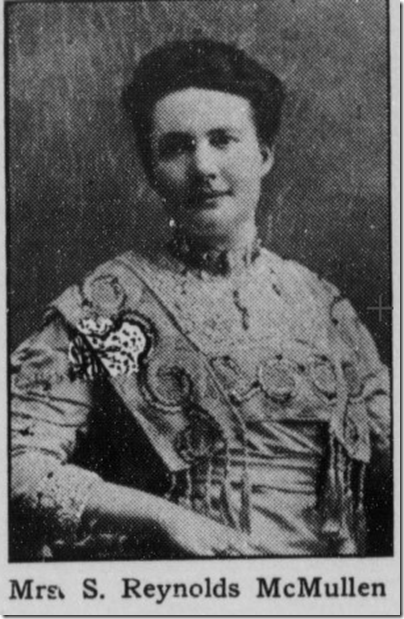
Mrs. Gertrude S. Reynolds McMullen via the Herald.
The company’s cutting and polishing instrument was invented by a woman – Mrs. Gertrude S. Reynolds McMullen, a former science teacher who became interested in precious stones.

Clearly, she was ahead of her time in more ways that one.
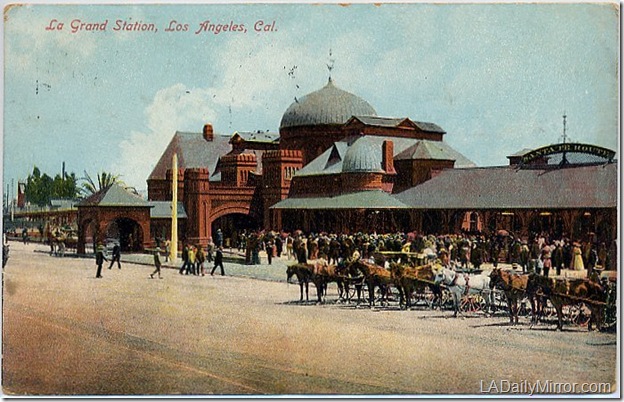
John Bengston emailed the other day to mention his research on Harold Lloyd’s filming locations in conjunction with the recent Lloyd festival on TCM. John pointed out that “Safety Last” and “Cops” used the same alley.
I DVR’d just about everything that aired and in going through “Now or Never” (1921), I noticed some shots of the old Santa Fe depot, with its distinctive roof (shown above in a postcard).

Here’s the arriving trains with the depot in the background.
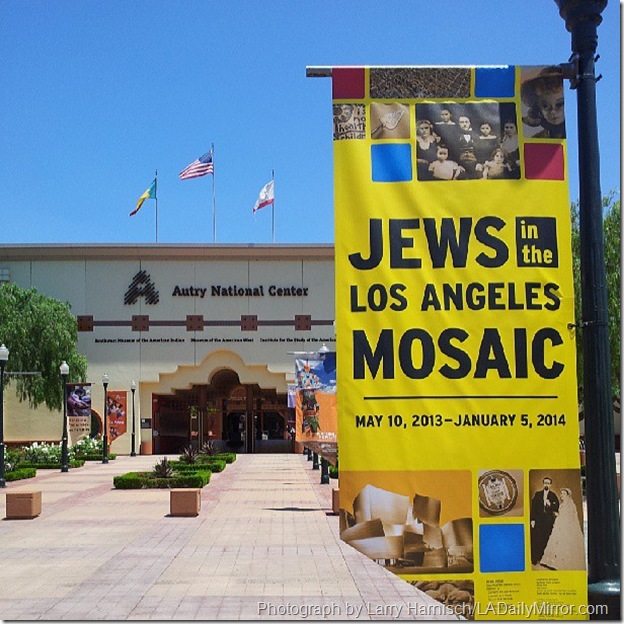
My latest column is in The Times this morning. I visited the Autry National Center’s new exhibit “Jews in the Los Angeles Mosaic” and attended a daylong symposium on some aspects of the Jewish experience in Los Angeles. Books could be (and have been) written about the subject, so it’s a pretty brief look, but I hope you like it.
One of my favorite quotes comes from Arthur Benveniste, a historian of the Sephardic community, who talked about his family, which was from the island of Rhodes and spoke Ladino.
“I grew up thinking the Jews spoke Spanish,” he said. “When I got to high school, somebody told me there’s a club for Jewish boys. So I found it and I joined. And these guys didn’t speak Spanish. They spoke something I never heard of called Yiddish.”

Note: Herald Examiner photographer Anne Knudsen’s sister shared this obituary with the Daily Mirror.
Anne Baldwin Knudsen, 57, passed away on Mothers’ Day, May 12, following a courageous battle with breast cancer. She was surrounded by her loving family and friends who will miss her deeply. This extraordinary woman distinguished herself as a photojournalist for the Los Angeles Herald Examiner during the 1980s and was a noted corporate photographer in the San Francisco Bay Area over the past 20 years. She lived her life with energy, creativity, joy, humor and devotion to those she loved, especially her daughter, Courtney.
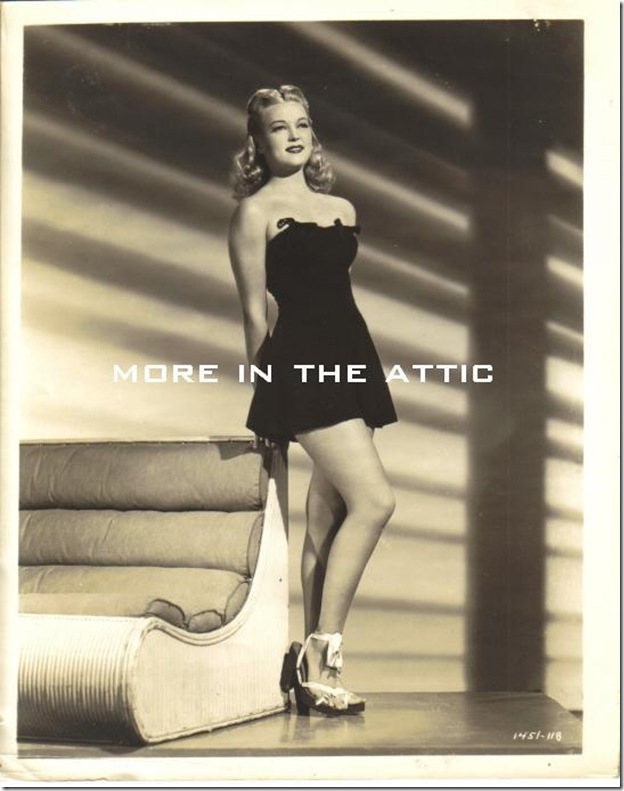
 An EBay vendor has posted this “mystery photo” and is looking for help in identifying a certain “sexy, leggy” actress. Notice the code at the lower right: 1451-118. I’m sure Daily Mirror readers can help out our vendor, who thinks the photo is from either “The Crimson Canary” or “Earl Carroll Vanities.”
 |
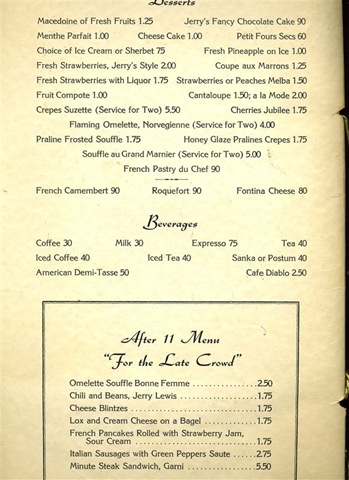 |
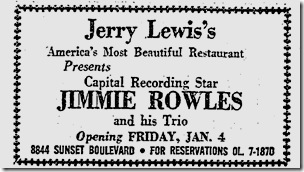 Longtime Daily Mirror readers may recall that Jerry Lewis briefly operated a restaurant on the Sunset Strip in the early 1960s. A menu from his business has been listed on EBay. Notice “Chili and Beans, Jerry Lewis” for $1.75. The menu is listed as Buy It Now for $150. As with anything on EBay, an item and vendor should be evaluated thoroughly before submitting a bid.
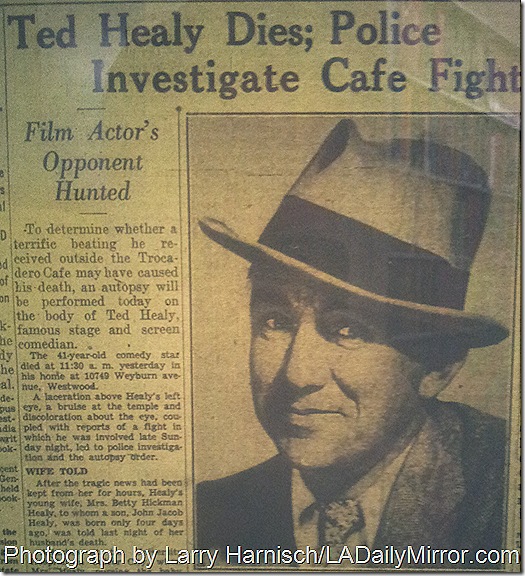
In case you just tuned in, I am using the Wikipedia entry on Wallace Beery — alleging that he was involved in the death of Ted Healy — as a way to explore Wikipedia’s fundamental problems with accuracy and delve into Hollywood myths.
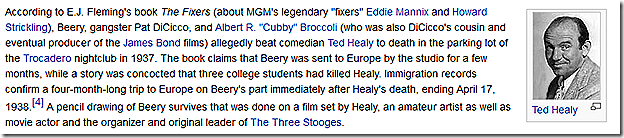
In case you just tuned in, I am using the Wikipedia entry on Wallace Beery — alleging that he was involved in the death of Ted Healy — as a way to explore Wikipedia’s fundamental problems with accuracy and delve into Hollywood myths.
Thanks for sticking with this, as I said when I began, this is always a tedious process.
I have found one earlier published account of the Ted Healy incident. However, this one does not involve Wallace Beery. Unless someone finds an earlier incarnation, the “Wallace Beery beat Ted Healy to death” yarn first saw print in Jeff and Tom Forresters’ “The Three Stooges,” then spread to E.J. Fleming’s “The Fixers” and then to Wikipedia.
Wikipedia: Murder and Myth: Part 1 | Part 2 | Part 3 | Part 4 | Part 5 | Part 6 | Part 7 | Part 8 | Part 9 | Part 10 | Part 11 | Part 12 | Part 13 | Part 14 | Part 15 | Part 16 | Part 17
 ladailymirror.com