Note: This is an encore post from 2014.
Hollywood and aviation took off at about the same points in history, helping to put each other on the map. Early American aviators inaugurated the fledgling field in the early 1900s, just as early filmmakers were introducing short motion pictures to the American public. These film directors and producers sought out the magical sport of flying, capturing it with their cameras and screening it for astonished audiences. The Wright brothers’ first flight, the Dominguez 1909 Air Rally, as well as several others, were shot as moving pictures and shown to the public. Soon, stars themselves took to the air, with actress Mabel Normand possibly the first celebrity aloft in the 1914 Keystone short, “A Dash Through the Clouds.” Aviation really took off when it helped win the Great War in 1918.
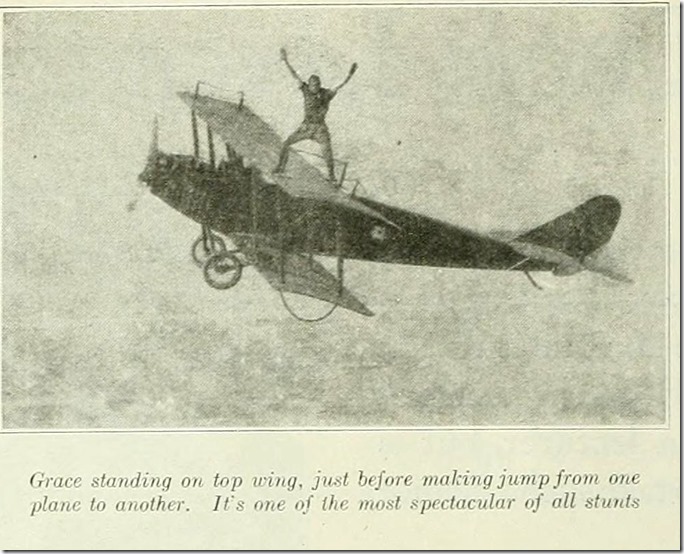
Air thrills excited audiences, particularly those tricks performed by former war pilots barnstorming the country, so the movie industry quickly turned their cameras to the skies. Early films captured flying stunts by building large stands atop high hills and shooting angles that made it appear stars were aloft in the area. By the early 1920s, studios hired veteran aerialists to devise spectacular air stunts to energize moviegoers, stunts which also goosed the adrenaline of the thrill-seeking pilots. Mostly forgotten today, except by dedicated aviation fans, Richard “Dick” Grace stands out as perhaps Hollywood’s top daredevil sky pilot, intentionally diving and crashing planes for movies, living to tell the tale. Grace’s life and flying career rival any daring adventure concocted by film studios.
Mary Mallory’s “Hollywoodland: Tales Lost and Found” is available for the Kindle.


 Elmer Balaban, left, Mary Martin and William L. Pereira,