
Clay Haskell sends along an enhanced version of “Lazy Boy” Beckham’s mug shot. Note the hairline mustache.

And here’s Officer Christensen.

Clay Haskell sends along an enhanced version of “Lazy Boy” Beckham’s mug shot. Note the hairline mustache.
And here’s Officer Christensen.

Oct. 26, 1957
Los Angeles
There are so many things we don’t about this case.
We don’t know where Elizabeth Eigel Senigram was going. We don’t know where she
had been. We don’t know if she had any relatives except an ex-husband, apparently Saul Senigram, 457 1/2 N. Ogden. (Here’s a little map, maybe it will help).
We don’t know what she looked like, except The Times said she was attractive.
We don’t know what kind of car she was driving when she went off Mulholland, except that it was apparently in good repair. We don’t even know exactly where she plunged from the road except that it was at a “gentle bend” near Coldwater Canyon. We don’t know whether it was an accident or whether
she was trying to commit suicide. If it was a suicide, she didn’t leave a note.
 All we can tell is that her ex-husband ran Saul’s Auto and Brake Service, 8253 W. 3rd St. We do know that her Social Security number (324-12-6594) was issued in Chicago, as was Saul’s (350-01-8344). We do know that she was 49. It looks like back in 1942 Saul was married to Ceil or Celia Senigram, with an auto repair business at 2801 Brooklyn Ave., and a home at 600 N. Soto.
According to the California death records, Celia died in 1952, so perhaps Saul was a widower. The Times clips tell us that in 1943, Celia Senigram was an officer in the Sheridan Street PTA, so we might assume they had a child.
We do know that the firefighters who responded to the crash used a hose to lower a team 300 feet down the hillside to recover her body. We do know that she was pronounced dead at Hollywood Receiving Hospital.
And we do know that a year later, almost to the day, Saul Senigram was dead, Nov. 2, 1958. He was 55.


 Theodore Roosevelt “Lazy Boy” Beckham has been dead for 50 years and is still causing trouble.
I was already bothered by the conflicting accounts of his death, but now that I’ve gone into the microfilm at the Los Angeles Public Library, I know more and understand even less.
Here are the three different versions of Beckham’s death. At least one of them cannot possibly be true.
Recall that Beckham killed Officer Robert R. Christensen during a struggle in which he got Christensen’s .38 Colt Detective Special and shot him to death.
According to the Mirror and The Times, police found Beckham’s car at 99th and Grape streets and began searching the neighborhood.
Version 1, from The Times, Oct. 15, 1957, Beckham was shot because he refused to halt:
The slayer sought refuge in a house at 2049 E. 99th Place. As police were surrounding the area he emerged between two houses and tried to run.
Officers J.O. Worden and K.E. Gourley opened fire on him. The man fell dead with a bullet in the heart.”
–snip–
Worden and Gourley said Beckham still clutched the slain Christensen’s snub-nosed .38-caliber revolver.“We hollered at him to stop,” Worden said, “but he kept running.” The officers fired four shots.
 Version 2, The Mirror, Oct. 15, 1957. The officers yelled at Beckham to halt. He turned around, fired at them and was shot:
The killer had been hiding out in an apartment at 2409 E. 99th Place and tried to make a break for it as the officers closed in.
Officers J.O. Worden and K.E. Gourley saw him talking to a girl in front of 2400 E. 99th Place and slammed their car over the curb and up on the lawn.
They piled out with drawn guns and Beckham started to run. When the officers yelled for him to halt, the killer dropped his coat, whirled and leveled a snub-nosed .38 at the policemen. It was the gun he had taken from Christensen.
Beckham got off one shot but it went wild. The two officers returned the fire and dropped Beckham in the street with a bullet in his heart.
The Herald-Express story of Oct. 15, 1957, merely says that Worden and Gourley each fired twice, with one bullet hitting Beckham in the heart as he tried to flee. However, the paper added the following information:
Beckham, meanwhile, was in the home of Mrs. Shirley Miller, 19, at 2049 E. 99th Place, unconcernedly playing cards with Mrs. Miller and two teenage girls.
Suddenly, Mrs. Miller said, a neighbor burst into the house and announced:
“The place is loaded with heat. Police are swarming around here.”
Beckham left the table, still giving no indication he was the man police were after.
“I’m going to leave,” he said.
One of the girls, Annette Hardy, 14, of 2062 E. 97th St., said she would accompany him.

The Examiner, The Times’ morning competitor, has this variation in which the officers questioned Beckham. He ran, turned, pointed a gun at the officers but did not fire:
Officers J.O. Worden and K.E. Gourley of the 77th Street Patrol Division, driving along 99th Street in their car, spotted Beckham walking between houses with a girl.
The officers drove over the curbing, across a lawn and up to within a few feet of Beckham, where they got out of their car and began to question him.
Beckham dropped a jacket which he had been carrying over one arm, revealing the revolver he had taken from the officer he killed.
As the jacket fell, Beckham ran toward the street, turning and aiming the revolver at Worden and Gourley, who opened fire.
As Beckham turned, one of the officers’ bullets crashed into his heart and he slumped to the pavement.
By now, you may be wondering what the city’s African American weeklies, the California Eagle and the Los Angeles Sentinel, had to say. I certainly was.
The Sentinel immediately provides one critical detail: The shooting occurred in a housing project.
As the officers began to close in, they observed Beckham and a girl walking between two houses in a housing project.
Ordered to halt, the suspect began to run and dropped a leather jacket that revealed a gun under his belt, which police said was used to slay Christensen. The girl, a 14-year-old juvenile, was taken into custody on a narcotics charge, police said. Officers K.E. Gourley and J.O. Worden said they opened fire on the suspect and Beckham fell dead with several bullet wounds in his body.
And finally we have the California Eagle:
Theodore Roosevelt “Lazy Boy” Beckham, a 25-year-old Texan with a lengthy police record of arrests for indecent exposure, went to the home of his latest girlfriend Monday noon and calmly bragged: “I just shot a policeman.”
Then he handed her and two of her teenage girlfriends a reefer and they all went upstairs and had a few puffs of marijuana. “Teddy,” as she called Beckham, wanted Shirley May Miller, 19, of 2049 E. 99th street, to play cards with him.
–snip–
He died at 3 p.m. from bullet wounds in the chest and back. In his hands as he fell to the ground was Christensen’s snub-nosed .38 revolver.
–snip–
While “Lazy Boy” and the young girls were talking about playing a game of cards, a neighbor came in and told them the project was surrounded by police who were looking for the murderer of Christensen.
Beckham told the girls they had to help him and walk with him up to the bus stop and act as if nothing had happened.
One of the girls, Annette Delores Harris, 2062 E. 99th St., went out the back door with Beckham.
According to Sgt. C.W. Beckner of the homicide detail, plainclothesmen were watching Beckham’s car, about half a block away. A patrol car, passing the scene, spotted Beckham and the girl as they came out from between the buildings and immediately recognized him as the hunted killer.
“Stop!” they ordered.
Beckham began to run. He had a brown leather jacket over his right arm.
The officers again ordered him to “Halt!”
As Beckham continued to flee, the jacket fell to the ground. In his hand, he had Christensen’s gun. Officers J.O. Worden and K.E. Gourley opened fire. Each fired two shots that found their mark.
Beckham fell to the ground still grasping the tell-tale gun.
 Version 3, The Times, Oct. 22, 1957:
When Beckham fled from a house at 2049 E. 99th St., he apparently attempted to pull the snub- nosed revolver from his waistband. The hammer caught in his shirt and he was shot.
The pursuing police were 40 to 50 feet away and no other wounds were found.
The autopsy revealed that the bullet went through his heart from a range close enough to leave powder burns on the wound.
The Mirror, Oct. 22, 1957:
When police closed in on him at 2049 E. 99th St. five hours later, Beckham pulled the dead officer’s gun from his waistband in an attempt to shoot it out with police.
But the hammer caught in his shirt. The gun went off and the bullet struck him in the heart at a range close enough to leave powder burns on the wound, the autopsy report showed.
It was the only wound in his body.
Apparently only the Herald (Oct. 22, 1957) voiced skepticism about the change in stories:
It was first thought that the killer, Theodore Roosevelt Beckham, 25, had been shot by brother officers of the slain policeman, Robert R. Christensen, as he tried to flee from a house at 2049 E. 99th St.
The autopsy indicated otherwise.
There was only one wound through the heart. The bullet was fired at a range close enough to leave powder burns. The officers who fired four shots at him were 40 to 50 feet away.
Police now theorize that Beckham shot himself accidentally when he tried to whip the gun.
Unfortunately, neither of the first two versions explains how Theodore Roosevelt “Lazy Boy” Beckham could have possibly managed to shoot himself once in the heart at close range, as found in the autopsy. Nor is there anything about the gun firing because the hammer snagged on his shirt.
And nowhere does any account address the fact that he was wearing overalls, which do not have a waistband, when he killed Christensen, as initially reported in the Mirror, which also published his description and the license plate of his car.

I was quite disappointed to find that none of the other papers published photos of the crime scene. All I have is this photo as enhanced by Clay Haskell. As it stands now, it’s impossible for me to be certain from the acute angle whether he’s wearing overalls.
I have to give the highest marks to the Eagle for getting details of what Beckham did before he was killed. In addition, only the Eagle quoted a police official by name, Homicide Sgt. C.W. Beckner. Only the Eagle noted that Christensen was found with a copy of Beckham’s mug shot in his pocket and that Beckham’s fingerprints were found on Christensen’s car.
I wonder what became of Annette Hardy (according to the Herald) or Annette Delores Harris (according to the Eagle) and what she might have to say.
What do you suppose the chances are of me getting a transcript of the inquest from the Los Angeles County coroner’s office?
Stay tuned.
Note: The original Herald-Express account says that according to Juanita James, 953 W. 7th St., who witnessed the fight, Beckham was clearly stronger than Christensen. She also said that several men saw the fight but did not intervene despite his cries for help. (The Herald says Christensen’s handcuffs were on the ground while The Times says they were on the car seat, such are the rewards of research).
LAPD headquarters under construction, 2nd and Spring streets, October 2007

Photograph by Larry Harnisch / Los Angeles Times


Oct. 24, 1957
Los Angeles
 The wages of sin was a hilltop mansion in Bel-Air for Donald De Munck, who according to The Times provided his home at 10689 Somma Way as a location to shoot stag films.*
The Times account of the pornography raid shows that by the 1950s the adult
film industry had a heavy presence in the San Fernando Valley and that the ring operated much like a regular studio.
George W. Richter, 63, 9721 Lemona Ave., a North Hills man with a long history in the porn industry, provided the film processing lab while his sons George F., 13019 Bracken St., Pacoima, and Robert C. Richter, Northridge, operated the cameras, The Times said.
Distribution was handled by Jack Rappaport, 51, through his luggage store at 1734 S. Vermont Ave., and Lee La Beau, 42, of 5651 Melrose Ave. (an address belonging to Aldik Artificial Flower Co., according to city directories and newspaper ads), The Times said.
And then there was the on-screen talent: Donald Harvey, 10660 E. Dorado Ave., Pacoima, and Barbara Jean Elliott, a.k.a. Kathryn Douglas. Continue reading

Oct. 24, 1957
Los Angeles
So many stories and only one Larry Harnisch. Here’s The Times coverage of the L. Ewing Scott case. Note the testimony of Detective Herman Zander:
Clay Haskell sends his enhanced version of the Theodore Roosevelt Beckham photo and notes that there’s a second person visible on the driver’s side of the car:

OK, this should be easy. This is not a "who" question or a "what" question (both fairly obvious). Why is this happening and why is it significant?

Photograph by Andrew H. Arnott / Los Angeles Times
Marlene Dietrich is fingerprinted by Jean Armand at the Hollywood Canteen, Oct. 1, 1942.
Exactly right. Marlene Dietrich is being fingerprinted for a photo ID issued to everyone who worked at the Hollywood Canteen. A closeup shows her signature and her card.

Here’s what the photo IDs looked like. They occasionally show up on EBay and are quite expensive.
Front

Back

The significance? Here’s the Hollywood Canteen’s photo ID of murder victim Georgette Bauerdorf, published after she was killed in 1944.

What’s important is that although some crime books claim Elizabeth Short, the Black Dahlia, worked at the Hollywood Canteen, no similar photo, fingerprints or ID card were ever found for her. Even more evidence, along with the list of her movements prepared by the district attorney’s office, that she was only in Los Angeles for a brief time with her father from December 1942 to January 1943, and after the war, when the Hollywood Canteen had closed.
ps. How about those eyebrows?
Oct. 27, 1883
Today is the 136th anniversary of the Chinese Massacre. [Note: This article uses names for ethnic minorities that were common in the 19th century–lrh].

Oct. 23, 1957
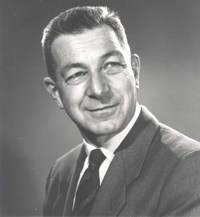 The lady, an Ay–Ayer, is sober again, and philosophic.
Not long ago, she slipped, as A-Ayers sometimes do. Finding herself well-soused, with no money left for a cab and little sense of direction, she decided the clink was the place for her.
She hailed the first LAPD black and white free taxi she saw and the officers agreed she should not be loose on the streets.
The judge read the report stating she had voluntarily surrendered and said, “Well, this is a switch!”–and dismissed her. Continue reading

Oct. 22, 1957
Los Angeles

And here’s where storytelling trumped skepticism.
Recall the death of Theodore Roosevelt Beckham, who killed Juvenile Officer Robert R. Christensen at 1524 Ingraham St. during
an attempted arrest. The first news accounts said officers killed
Beckham, who was trying to escape. Now, the papers say that according
to the inquest, Beckham shot himself.
Accidentally.
In the heart.
To recap news accounts: Christensen suspected Beckham (note that he was African American, although the papers didn’t say so) of being a
peeping Tom. Wearing civilian clothes and using his personal
vehicle, Christensen stopped in the neighborhood on his way to work. Acting alone,
Christensen detained Beckham and put him in the car without using
handcuffs, which were found on the front seat. As Christensen was
getting into his vehicle, Beckham grabbed the officer’s .38 Colt
Detective Special and shot him. Beckham ran away, then came back and
shot Christensen three more times.
About five hours later, police found Beckham’s car at 99th and Grape
streets and began searching for him. According to The Times, Beckham
ran out of the house at 2049 E. 99th St. The Times account said
Officers J.O. Worden and K.E. Gourley shot him when he failed to halt.
"We hollered at him to stop, Worden said, "but he kept
running," according to The Times.

Now the autopsy, however, finds that Beckham had been shot once with
Christensen’s Colt (photo of a Colt Detective Special, second series, at right, from gunbroker.com). According to The Times, Beckham "apparently
attempted to pull the snub-nosed revolver from his waistband. The
hammer caught in his shirt and he was shot."
Noting that police were 40 to 50 feet away, The Times said: "The
autopsy revealed that the bullet went through his heart from a range
close enough to leave powder burns on the wound."
Unfortunately, neither The Times nor the Mirror examined how this could
occur. The Times, in fact, merely stressed the ironic justice of
Beckham being slain with the murdered officer’s gun.
There’s only one problem.
According to the Mirror’s first story, Beckham was wearing green overalls.
No waistband.

I do believe that Theodore Roosevelt Beckham was shot in the heart. I
do believe the gun was fired close enough to leave powder burns. I may
even believe that he was shot with Christensen’s gun.
The rest of the story as told in the papers? I’m sorry, I don’t buy it.
For the sake of argument, let’s say he changed out of his overalls. The
Colt Detective Special is a double-action revolver and snagging the
hammer on a
shirt should have had no effect, certainly not in the uncocked
position, and shouldn’t have made the gun fire even in the cocked
position
unless Beckham had his finger on the trigger. It cannot be as simple as the papers made it sound.
Above, a Mirror photo of the late Theodore Roosevelt Beckham. I
apologize for the poor reproduction. It’s the only one I have found
so far.

October 22, 1957
The men of the copy desk gloomily agreed the other day that another hallowed city room custom is just about gone–reporters and editors bellowing “Boy!” and getting an instant and spirited response.
Time was when this strident call created panic and havoc among the copy boys and they raced like genies to the point of origin, stood at attention and meekly awaited orders, no matter what.
Furthermore, it was the dream of these copy boys that some day they would reach the status of reporter or editor and yell “Boy!” at a succeeding generation of willing slaves. Continue reading
October 22, 1957
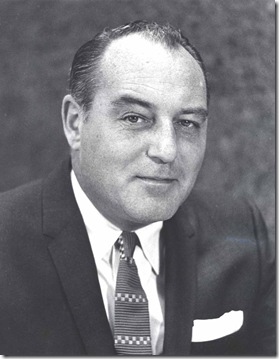 A man once made the comment about Tijuana:
“Pleasures are cheap there, but pain is cheaper.”
And, for a long time, I felt the statement didn’t leave much to be disputed. Especially, as far as United States tourists were concerned.
In fact, 15 months ago, I checked quite thoroughly into some of the pain reported by visitors from the U.S.
Most of the reports were borne out with substantial evidence.
And nearly all centered around a discrepancy in the traffic accident laws of this country and Mexico. Plus, I should add, a common Latin American practice called the “mordida” system. Continue reading
I missed this story the first time around, but somehow I don’t think it matters too much. The best ones are timeless.


Oct. 18, 1957
BY HAL MORRIS
Mirror-News Staff Writer

There may be no production of cartoon shorts for theaters within five years, warns Walter Lantz, veteran cartoonist-producer.
The creator of Woody Woodpecker blames the possible end of a theater
cartoon era on skyrocketing costs and the lack of extra funds from
exhibitors.
"But there’ll always be a market for cartoons," he hastens to point
out. "Even if no more cartoons are made, old ones will continue to be
screened on a periodic basis."
In 28 years, Lantz has produced 600 cartoons released through Universal
Pictures Co. Thirteen cartoons are slated for production next year.
Seven cartoon producers turned out 175 shorts in 1947, Lantz mentions.
Now, he adds, only 75 cartoons are scheduled this year by five
producers.
He says in 1941 seven- to eight-minute cartoons were made for $15,000
($208,367.01 USD 2006). If produced the same way today, he figures, the
same cartoon would cost $75,000 ($537,396.28 USD 2006). However,
average cost now is $35,000 ($250,784.93 USD 2006) and some of the
quality is lost.
Cartoons are one or two minutes shorter now than in 1941, Lantz
reveals. A 45-piece orchestra for background music in 1941 has been
scaled down to a dozen men. Animators were paid $70 a week in 1941
compared with a minimum of $225 ($1,612.19 USD 2006) now, Lantz
explains.
Meanwhile, exhibitors are paying only 15% more now for cartoons than in the prewar days, he stresses.
"Exhibitors still won’t pay 25 cents extra for a booking," Lantz
emphasizes. "We’re lucky to get $100 a week for a cartoon at a
first-run theater. But the fee goes as low as $4 a week at second-run
small-town houses."
Despite the glum outlook for the cartoon industry, Lantz expects his
Walter Lantz Productions (of which he is sole owner) to increase
business next year. He started his firm with $20,000 in 1937, now
values it at $6 million.
Sensing the downward trend in cartoons, Lantz has expanded to
television, where he shows older cartoons on ABC-TV (Thursdays, 5
p.m.). "If TV hadn’t come along, there would be a very sad picture in
the cartoon industry," he says.
"I’m aiming for the biggest teenage and adult audience of any cartoon
show on TV," Lantz declares. On the TV show, he includes short segments
on how cartoons are made. He also makes TV commercials, using Woody
Woodpecker.
Lantz sees no additional producing firms entering the field. "To start
out today it would cost a firm $40,000 for each six-minute short and
there are many obstacles in the way." The figure does not include rent,
camera equipment, etc.
"It takes four years of showings to break even," he explains. "And if
it weren’t for reissues (about every seven years) I’d be out of
business today."


