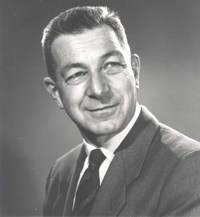
Matt Weinstock

Jan. 24, 1958

Matt_weinstockd
There are about 110,000 streetlights in the city of Los Angeles. Keeping them lighted is quite a chore.

The
Department of Water and Power has 23 two-man crews assigned to service
and maintenance. Last month they replaced 15,800 damaged or burned-out
globes.

The lamps are regularly washed inside and out, a job
requiring the steady attention of 15 men. Know where the globes get the
dirtiest the fastest? On Hollywood Freeway outbound, just beyond
Hollywood Bowl. Diesels chugging up the grade are believed the cause.
It was on this stretch, by the way, that a WP serviceman was killed
recently when an out-of-control truck knocked him from a ladder.

All
this service is provided at an average of 5 cents a day to taxpayers,
including replacements and maintenance. It is generally accepted that
good street lighting is cheap insurance against accidents and
burglaries.

When a light standard is knocked down, the
replacement is made by the Board of Public Works’ Street Lighting
Department, not WP. The board also makes the original installation and
pays the original cost, WP takes over the rest.

Some persons
expect a great deal for their 5 cents a day. One indignant lady berated
an emergency crew for not being there when the light went out. She
didn’t like waiting in the dark. That’s quite an order, with about 500
globes to replace nightly throughout the city’s spread-out 455 square
miles.

BY NOW it
must be obvious to regular readers that all this is leading to a
question raised here
by Julie Byrne. When she reported the light in
front of her home broken, a crew came and replaced the outer globe.
When darkness came, however, it didn’t go on. But around 10 p.m.
another crew came and put in a new bulb. Why, asked Julie.

1958_0124_bardotWell,
WP procedure is for the daytime crew, replacing an outer globe, to
leave the inner bulb intact if it isn’t broken. It isn’t feasible to
turn on a whole string of lights to test one lamp. At night, when the
circuit goes on and the lamp stays dark, another crew replaces the
bulb. Experience has proved this seemingly duplicated service is
cheaper than arbitrarily replacing every bulb. That’s that the WP man
said.

But let us look to the brighter side–a view of Los
Angeles at night from a plane. With its 110,000 streetlights and
colored neon, it’s an immense, incomparable, breathtaking jewel.

A BOY NAMED Roland,
9, returned to Cedars of Lebanon clinic a few days ago to have several
stitches removed from his forearms–a quick, painless process.

Nevertheless,
Roland was obviously scared and dreaded the "ordeal." As the nurse made
ready, he looked around furtively, then began removing his belt from
around his waist. Whenthe nurse asked what he was doing he replied grimly, "I got to have something to bite down on."

Been seeing too many bullet-between-the-teeth sequences on TV westerns.

BIG ITEM on
the agenda at the meeting of the L.A. County Locksmiths Assn. Tuesday
was the counting of votes for the new officers. But, irony of ironies,
the custodian of the ballot box had lost his key. Fortunately, someone
had a set of picks and got it open, disclosing that Morey Gold of East
L.A. had been reelected president, Bill Myers of Compton and Lou
Merritt of Temple City veepees.

AT RANDOM — George
Vaughan of Hawthorne can hardly wait for the first TV western with
villainous, sneering Ku Kluxers trying to take advantage of poor
Indians … A U.S. mail truck was coming out of Calvary Cemetery on
Whittier Boulevard as Paul Grimes passed. Couldn’t decide whether it
was picking up or delivering dead letters … Very provocative article,
"Let Your Kids Alone," by Robert Paul Smith in Life. Contends
youngsters today are victims of too much planning and supervision.


Posted in Columnists, Matt Weinstock | Comments Off on Matt Weinstock

Paul Coates

Jan. 24, 1958

Paul_coates
In 1924, Nathan F. Leopold Jr. was sentenced to life
imprisonment for one of the most vicious, senseless crimes ever
committed in this country.

He and a fellow University of Chicago student, Richard Loeb, were responsible for the kidnap and brutal "thrill" slaying of 14-year-old Bobby Franks, the son of a rich Chicago neighbor.

Their sole explanation for killing the boy was to see if they could commit the so-called perfect crime.

Both Loeb and Leopold were 19 at the time, sons of millionaire fathers. And both were sentenced to life imprisonment.

The
slaying is possibly the most famous in the annals of American crime.
Newspapers followed the prison life of Loeb until he was knifed and
killed in a fight with another inmate in 1936.

And they still
write occasionally about Leopold, who, at the age of 52, is presently
serving his 33rd year in the Illinois State Prison at Joliet.

In
1949, Adlai Stevenson, then governor of the state, cut his sentence to
85 years, offering the eventual possibility of parole after the convict
voluntarily served as a guinea pig for malaria drugs in World War II.

1958_0221_leopold
But on July 30, 1957, Gov. William Stratton turned down his request for parole.

Following is a letter written recently by Leopold to a friend of his in Southern California. It concerns his denial of freedom.

His sincerity, naturally, I cannot determine. I offer the letter only as one which can’t help but stimulate some thought:

"Naturally, I am disappointed at the denial of my application of executive clemency, as I know you are. But I have by no means given up.

"My motives for continuing the fight are, of course, far from unselfish.

"Little
of it as may be left to me, the prospect of life outside is still, with
all its handicaps in my case, very attractive to me personally.

"But there is a wider implication.

"If
symbol I must be, I hope I can become the symbol of the rehabilitation
theory of imprisonment, that by vindicating myself, I can vindicate it.

"It
is, partly, for the sake of generations of convicts yet unborn that I
hope and pray that at least some of the valiant souls who have come to
my aid will not give up easily.

"Maj. Dreyfus was finally vindicated. So was Tom Mooney. These were innocent men; I am guilty as sin.

"But
you need a guilty man to be the symbol of reformation, or re-formation.
I ardently hope that people–kind, thoughtful, charitable people–will
think this principle is worth fighting for. I am sure you will be one.

"My
disappointment, you see, goes beyond the personal. Just because,
lamentably for me, my particular case has assumed symbolic
significance, it strikes me that the denial goes far beyond my little
case and my puny self.

"It seems to me that the case of progressive penology has suffered something of a setback–a setback, knowledge of which has reached and affected many just because my case is known to so many.

"Why do we punish criminals? For deterrence?

"Then
why aren’t we consistent about it? Why don’t we hang our murderers atop
the highest hill instead of hiding them away in a locked jail in the
dead of night, with admission by card only?

"Or is it
punishment, retaliation? Why not some really severe form of punishment
then? Why not go back to the lash and the dungeon and the thumbscrew?

"Most
people who think nowadays hold the purpose of incarceration to be the
protection of society and the rehabilitation of the offender. At least,
that’s what they really believe they believe.

"But the effect of
long conditioning is strong; I wonder if there aren’t a good many
people who think and say that rehabilitation is the goal, but act as if
punishment for its own sake were.

"Old habits are hard to break.

"And if rehabilitation is the goal, are we ready to admit that it has failed in my case?

"If
a 19-year-old lad, of reasonable intelligence and good background, who
had never been in a police station before, is subjected to 33 years of
continuous application of what are considered the most advanced
rehabilitative methods, and then it is found that rehabilitation has
not been effected, don’t you think we ought to re-examine our methods?
On whom could they work?

"I feel that we have lost a battle; not necessarily the war.

"And if we do lose, everything is lost.

"For
if I die in prison, I can still be a symbol–the symbol of the utter
futility of deterrence theory. For there will still be murderers."

[Leopold was granted parole Feb. 20, 1958–lrh].


Posted in #courts, Columnists, Homicide, Paul Coates | Tagged , , , , , | Comments Off on Paul Coates

Former mayor dies


1958_0124_shaw_cover02

Two decades after the Harry Raymond bombing, former Mayor Frank Shaw dies. He denied allegations of corruption, explaining: "They said my administration was filled with graft. Nobody stole any money. There wasn’t any money to steal," according to his Times obituary.

Interestingly enough, Shaw was born in Canada and brought to the U.S. by his parents when he was a child of 5. According to his obituaries, Shaw was elected to the City Council in 1925, the Board of Supervisors in 1928 and became mayor of Los Angeles in 1933 although he wasn’t legally a U.S. citizen.  Shaw didn’t become a naturalized U.S. citizen until after his reelection in 1937 to quiet his political opponents, The Times says.

Isn’t it fun to think how we might react today if Shaw were mayor of Los Angeles and his family had brought him from Mexico instead of Canada and never became U.S. citizens? I suppose he would have been deported. What an amusing idea.

Email me

Continue reading →

Posted in City Hall | Tagged , , , | Comments Off on Former mayor dies

Bus strike ends


1958_0124_bus

Photograph by the Los Angeles Times

Julia Mendoza, left, and Florence Estrada dry a bus that has just come out of the wash rack in preparation for the resumption of service.

The bus strike ends after 54 days, the longest in Los Angeles history, The Times says. (A mechanics’ strike in 2003 shut down service for 35 days and a drivers’ strike in 2000 lasted 32 days). A 10-cent raise granted to bus drivers under their new contract brings their pay to $2.16 an hour. In December, another raise will bring their pay to $2.27 an hour. The drivers will now work a five-day, 40-hour week instead of a six-day, 48-hour week, The Times says. Drivers also won better pensions and vacations, better overtime pay and double time on holidays. Adjusted for inflation, the new contract brings the drivers’ pay to $15.70 an hour USD 2006. The average pay for a 48-hour week would have been $103.68; under the new 40-hour week, drivers will earn $90.80.

Email me

Posted in Transportation | Tagged , , | 1 Comment

Jan. 24, 1958

Car dealer H.J. Caruso goes to jail … A witness in the L. Ewing Scott case attacks a TV cameraman … Imperial Emperor Bill Hendrix orders the Knights of the Ku Klux Klan to disband … And The Times leads all U.S. newspapers in total advertising linage. "The Times’ 1957 volume of advertising was the largest ever published by an American newspaper in a single year."


1958_0124_cover

Posted in #courts, @news | Tagged , , , , , | 2 Comments

Raymond bombing

You’re reading this correctly: Police Chief Davis insists the LAPD had nothing to do with the Harry Raymond bombing, and Capt. Earle Kynette, who is out on bail on charges of wiretapping Raymond’s home, says he’ll have the culprits in custody quite soon … An update from the Spanish Civil War … And a racehorse owner denies being involved in a bookie operation at Santa Anita …


1938_0124_raymond_cover

Continue reading →

Posted in #courts, #East L.A., City Hall, LAPD | Tagged , , | Comments Off on Raymond bombing

Jan. 24, 1908

Here’s what happens when a streetcar jumps the tracks on Los Angeles’ sainted transportation system: There’s a huge traffic jam on the Eastside because no other cars can pass. Throw in human error and the congestion only gets worse … We run a weather story … An apartment house is destroyed by a fire that started when an electric meter exploded … And a campaign is revived to form a new county from western San Bernardino County and eastern Los Angeles County with its seat in Pomona.


1908_0124_cover

Posted in Transportation | Tagged , , , | Comments Off on Jan. 24, 1908

January 23, 1958: Matt Weinstock

January 23, 1958

Matt WeinstockConfidential magazine may have purged itself of obscenity but the expose complex it created is not so easily dispelled.
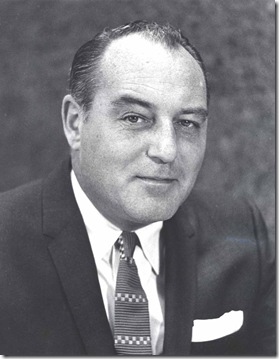
So says an experienced writer of fact articles.

The way he analyzes the present situation, the public’s appetite for gossip and scandal, whetted by Confidential, is now being satisfied by the so-called conservative magazines.

Their editors who a year ago wouldn’t have dreamed of going for the racy stuff are now rejecting assigned articles on celebrities when the subject refuses to tell all. These editors insist their writers get full confessions, regardless of whose privacy is invaded, or no sale. Continue reading →

Posted in Columnists, Matt Weinstock, Transportation, UFOs | Tagged , , , , , , | Comments Off on January 23, 1958: Matt Weinstock

January 23, 1958: Paul Coates

Jan. 23, 1958

Paul Coates, in coat and tieThere’s an old saying that I frequently call upon which goes:

“Omnia vincit amor.”

It means “Love conquers all”–and I think it’s pretty applicable to what’s going to happen to the U.S. Marines.

I think so because, shortly after dusk last night, I was invaded by some dozen wives of the corps. And I can truthfully say that I think the shores of Tripoli fared better than I did.

The women were, in mild English, disgruntled. In stronger English, angered. Or in corps English, fighting mad.

–Not, fortunately, at me. Continue reading →

Posted in Columnists, Paul Coates | Comments Off on January 23, 1958: Paul Coates

Jan. 23, 1958

A crowd at 5th Street and Main yells "Jump, Jump, Jump! Jump, you coward–jump!" as an unemployed railroad engineer stands at the edge of a hotel roof (the building isn’t identified, but I’m guessing it’s the Hotel Rosslyn) … And the bus strike is over.


1958_0123_cover

Posted in Downtown, LAPD, Suicide, Transportation | Tagged , , , | Comments Off on Jan. 23, 1958

Raymond bombing

Mayor Frank Shaw says he has the "utmost confidence" in the LAPD’s investigation of the Harry Raymond bombing. He also says there is no evidence of police involvement in the blast … Allegations of police corruption in Arcadia … The U.S. Embassy in Nanking protests actions by Japanese soldiers–to no avail … How to keep women happy … And a man attempting suicide jumps from the eighth floor of the Pacific Electric Building, 610 S. Main, but is uninjured when his fall is broken by the wire mesh in a glass skylight.

Historic note: One of Mayor Fletcher Bowron’s first acts after defeating Shaw in the 1938 recall election was to demand the resignation of more than 100 Shaw appointees.


1938_0123_raymond_cover

Continue reading →

Posted in #courts, #East L.A., City Hall, Downtown, LAPD | Tagged , , , , , | 2 Comments

Wyatt Earp


1908_0123_earp_2

Drawing by the Los Angeles Times

The famed Tombstone lawman and his wife testify for the defense in the Estelle Corwell murder trial–this discovery was an unexpected joy, I must say …  Potential problems in defending California’s coast against a foreign invader … And a riderless motorcycle speeds three blocks on Pico from Union to Sentous (now the northern extension of Cherry) before crashing into a utility pole.


1908_0123_cover

Continue reading →

Posted in #courts, Homicide, Pico-Union | Tagged , , , | Comments Off on Wyatt Earp

Matt Weinstock

Jan. 22, 1958
Matt_weinstockd

No one better mention elk hunting very soon to Bill Molinar, Pasadena real estate man.

Bill
recently went on a safari in northwest Montana, near Swan Lake. It is
very primitive country. His party packed in five miles, creating in
Bill’s consciousness a new concept of saddle sores.

In a period
of two hours they passed seven grizzly bears. They’re unpredictable,
the guide told Bill, and if one went for him the only ting to do was
climb a tree, which grizzlies can’t do although they have strong claws.

Usually, the guide said, they’ll attack only if aroused. Incidentally, Bill says, they bark like dogs.

WELL, ONE GRIZZLY became
aroused at something, Bill isn’t sure what, and headed for him. Bill
dutifully scrambled up a tree. But this bear was persistent.

The
guide, who had managed to carry his gun up his tree, finally shot the
bear. But grizzlies have a very slow heart action and don’t die easily.

Anyway,
Bill’s favorite question these days is, "Did you ever perch in a tree
for an hour and a half?" He doesn’t recommend it, especially with
saddle sores.

Oh, yes, they got an elk. They named it Anticlimax.

ONLY IN L.A. — Remember the item about the fellows who daily snatch a paper sack lunch from a ledge at 2nd and Olive streets and split the contents?

Well,
the pilferers have been pinpointed as young men named Phil and Ray in a
nearby office. They tried to sell the lunch to a colleague for 25
cents. They don’t like the butter on the meat sandwiches.

Why
does the owner continue to leave it on the ledge? Because he doesn’t
want his wife to know he doesn’t like the lunches she fixes.

Tune in some other time for the next chapter in this thrilling drama.

1958_0122_movies


IT WAS AN
exciting moment for pedestrians Monday when clerk James E. Carr, 18,
his head bleeding badly from a pistol blow, rushed out of a shoe store
at 516 S. Broadway and yelled, "Get that man!" as the bandit fled.

In
fact, when it appeared a passing streetcar would block two gray-haired
ladies’ view of the bloody young man, one said in dismay, "Oh dear, we
won’t be able to see a thing!"

TELETYPE MACHINES
occasionally go off the beam and all you get is etaoin shrdlu.
The following is a verbatim copy of what came over the AP machine from
Washington: "Adams–who often does the political slugging while
Eisenhower stands aloof–asserted the Democrats ought to know better
and added: ‘As a matter of fact, they ought to be called strictly to
account by the American people for using this subject as party glue.
I’ll simply say this: We Republicans greet the oppositionPYQXTWS simply say this: We Republicans greet the opposition KQKQQPYQX/-AYUQLYYAYQK ……’ " Why Sherm, shame on you!

AT RANDOM —
Everyone was proud of the way Judge Charles H. Woodmansee handed the Sarah Churchill case. However, Paul Rodriguez was intrigued by his triple redundance
in referring to Sir Winston as the greatest living statesman in the
world today" … Vick Knight would have us believe his Key Records
recently rejected songs titled "I Met Her at the Blood Bank but She
Wasn’t My Type" and "Drink to Me Only With Thine Eyes, We Just Ran Out
of Gin" … A Reno gambler is about to file a damage suit against a
local professional man charging naughtiness in a gambling deal–a
switch … Yes, the John Reese who wrote the lead Post article on Alec
Guinness is the former L.A. newsman who kicked the habit and now is
known as the sage of San Marino.


Posted in Columnists, Matt Weinstock | Tagged , | Comments Off on Matt Weinstock

Paul Coates

Jan. 22, 1958

Paul_coates
Please read this story to the finish.

It’s a shocker. But it’s worth the few minutes it’ll take you to read it.

Because, as they say, there, but for the grace of God–

The subject of the story is Frank E. Vejar. He’s 36 years old, married and the father of a 3-year-old girl.

According to the information which I have concerning him, he had no
police record, no trouble of any kind and had held the same job for
more than 10 years, receiving periodic promotions.

He and his wife were saving to buy a home. They made small deposits in
their savings account toward it every paycheck, and to build their
account a little faster, Frank had worked weekends as a special patrol
officer.

This, basically, was Frank Vejar’s life until the date of March 30, 1957.

On that date, according to his story, he went to visit a real estate
man concerning a property investment. He took his two pistols with
him–one, he said, to sell; the second to do some target practice on
the desert.

But his real estate man wasn’t in. And Frank sat down to wait for him
in a cafe across the street. He looked out the window several times and
he aroused the suspicions of the cafe proprietor, who called the police.

The police came and searched Vejar and his car and found the two
pistols. They took him to the station and booked him on suspicion of
robbery.

1957_0331_vejar
A few days later, the charge was changed to illegal possession of
firearms. He pleaded guilty. He was given a short sentence, but his
troubles were just beginning.

Because soon afterward, he was put in a police lineup and picked out by
a Canoga Park market owner as the man who held up his store. A
preliminary hearing was held and he was set to go on trial for armed
robbery when another man confessed to the crime.

Police brought the market owner back to identify the new suspect, I’m
told, but the market owner was steadfastly sure that Frank was the man.

Fortunately for Frank, the police felt that the witness was too ashamed
to admit he had made a mistake. And finally the district attorney’s
office filed a written request to have the case against Vejar dropped
on the basis of false identification.

But then the police found Frank’s description and the description of
his two revolvers matched that of a suspect in a rape-kidnap case which
remained unsolved after 10 months.

They brought the victims of the rape-kidnap in to look at Frank. They
didn’t put him in a lineup. They just brought the victims into a room
where Frank was sitting.

The victims said yes that was the man. And last May, Frank was charged with the crime–an offense punishable by death.

He remained in County Jail without bail. His trial came up on Sept. 20.

The victims testified that they were positive he was the man, even
though his weight at the time of the crime was 84 pounds in excess of
the weight of the man they originally described.

There was also a green hat found at the scene which the victims had
stated that the suspect wore pulled down over his eyes. It was a small
hat and it sat with comic irony on top of Frank’s large head.

But that’s all that was comic. In spite of some diligent detective work
by the public defender to show that Frank was in a different place at
the time of the kidnap, most of the jurors believed him guilty.

The jury hung–11 for conviction, one for acquittal. And Frank went back to jail to await a new trial.

It came Dec. 2. Two new lawyers entered the case in Frank’s behalf–one
appointed by the court, the second because he was convinced of Frank’s
innocence.

This time it was 7-5 for acquittal and another hung jury.

At neither trial did the prosecutor from the district attorney’s office
introduce the hat which looks so foolish perched on top of Frank’s
head. Nor, in the first trial, did he introduce the weapons which were
found on Frank.

If he had, he would have weakened his case.


1957_0331_vernon

Fortunately for Frank, the defense counsel learned of the hat and
introduced it at both trials. And equally fortunate, when the weapons
were introduced at the second trial, the defense showed that they were
not similar–as first suspected–to the weapons used in the kidnap.

I’m not an attorney.

And obviously, I cannot comment properly on the prosecutor’s techniques in trying the case.

But I’m a reporter and I can question what at least seems to be an
apparent effort to avoid introducing evidence which might damage the
state’s case for conviction.

We don’t obligate the district attorney to convict.

We obligate him only to see that justice–whichever way it turns–is done.

Frank Vejar, who’s been in County Jail since last spring, gets another
crack at justice when he goes to trial for the third time on the same
charge next Thursday.

[According to California death records, Frank E. Vejar died Jan. 15,
1999, at the age of 77. The Times reported his arrest, but did not
cover his trials. Note that although Coates said Vejar had two revolvers, one is a semiautomatic–lrh].


Posted in #courts, Columnists, LAPD, Paul Coates | Tagged , , , | Comments Off on Paul Coates

Raymond bombing


2008_0122_orme


Isn’t Google Earth amazing? According to this satellite photo, the distance from the LAPD surveillance post at 2711 E. 7th St. post to Harry Raymond’s house at 955 Orme was 440 feet.

Email me

Posted in #courts, City Hall, LAPD | Tagged , , | Comments Off on Raymond bombing

The cardinal speaks

Here’s a time capsule of Catholic thought as it stood 50 years ago from the Mirror. Cardinal McIntyre approves of censorship and picketing indecent films (when necessary), discourages teenagers from "going steady," doesn’t think Sen. John F. Kennedy’s religion will be an obstacle in the 1960 presidential election and disapproves of "progressive education."

1958_0122_mcintyre05

Posted in Religion | Tagged , , | Comments Off on The cardinal speaks

LAPD HQ


LAPD headquarters

Photographs by Larry Harnisch / Los Angeles Times

More of the facade is being installed on the building. The top photo was taken Jan. 18 and the photo below was taken Jan. 21, 2008.


2008_0121_lapdhq

Posted in Downtown, LAPD | Comments Off on LAPD HQ

Jan. 22, 1958


Jan. 22, 1958, Los Angeles Times

Posted in @news | Tagged , , , , , | Comments Off on Jan. 22, 1958

Raymond bombing


Jerry's Joynt

Dist. Atty. Buron Fitts calls for a grand jury investigation … An update in the Paul Wright murder trial (by the way, the house in Glendale where the killings occurred was still standing as of a few years ago). Anyone interested in famous defense attorney Jerry Giesler should take note …  Bookies operating openly at Santa Anita? … And I can’t resist posting an ad for Jerry’s Joynt in Chinatown …


Harry Raymond bombing, Jan. 22, 1938

Continue reading →

Posted in #courts, City Hall, LAPD | Tagged , , , , | 1 Comment

Jan. 22, 1908

A juicy murder trial draws curious throngs … Food poisoning from a bad sausage kills a Civil War hero and his wife … And note the ad for the Salt Lake Route, which was acquired by Union Pacific in 1921…


1908_0122_cover

Continue reading →

Posted in #courts, Downtown, Food and Drink, Transportation | Tagged , , , | Comments Off on Jan. 22, 1908