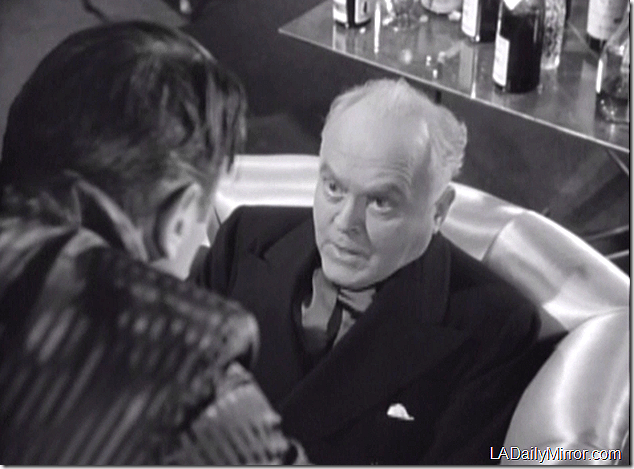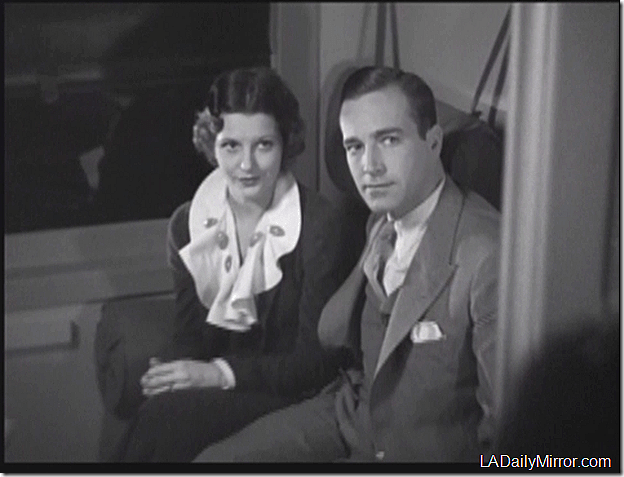
For Monday, a mystery couple.
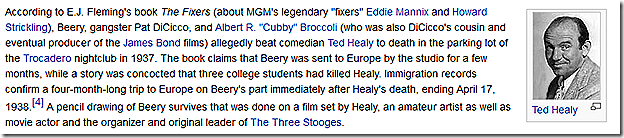
In case you just tuned in, I am using the Wikipedia entry on Wallace Beery — alleging that he was involved in the death of Ted Healy — as a way to explore Wikipedia’s fundamental problems with accuracy and delve into Hollywood myths.
Wikipedia: Murder and Myth: Part 1 | Part 2 | Part 3 | Part 4
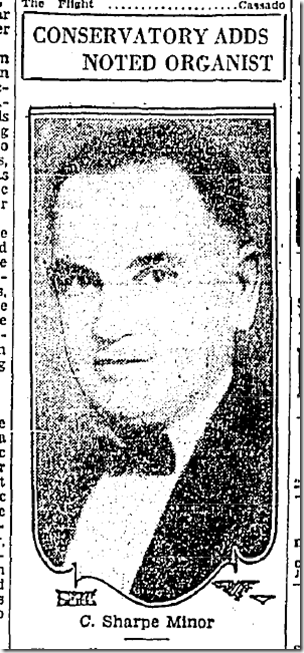
Music was an integral part of silent films, giving emotional texture or humorous voice to the films’ precious images. Different types of music and musicians accompanied them: orchestras, bands, photoplayers, pianists and organists. Leading the pack as one of Los Angeles’ premier silent film musicians was organist C. Sharpe Minor, a major talent with an attention-grabbing name.
Born June 24, 1885, in Louisiana, Charles Sulzer Sharpe Minor supposedly arrived in Los Angeles in 1907, but virtually nothing is known about him until he turns up in San Francisco with his wife Barbara Jane in 1917, accompanying films at the Rialto Theatre under the name C. Sharpe Minor. A few authors claim that he added his mother’s maiden name, Sharpe, realizing the eye-catching opportunities of employing this name on theatre marquees. Newspapers called him an extraordinary organist, and he played afternoon and evening shows adding a bit of entertainment with his trick effects and novelty arrangements.
Music: C. Sharpe Minor: “Parade of the Immortals.”
Minor worked at the Rialto for a year before being appointed a first lieutenant in the Army in September 1918. Immediately upon war completion, the organist returned to the theatre, for a short time accompanying films and giving concerts, before landing his first Los Angeles job at the Million Dollar Theatre in March 1919. Ads proclaim him a master organist, and he even earned his own slot in the stage show. By 1920, however, Minor played at San Francisco’s California Theatre.
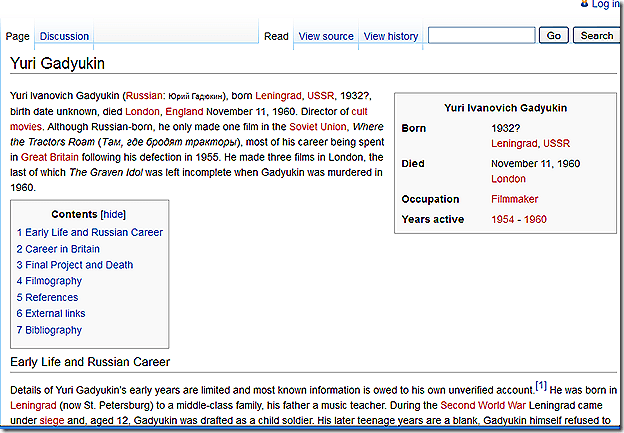
An elaborate Wikipedia hoax involves a purported Soviet film director — who never existed. Among his alleged works is “Where the Tractors Roam.”

A world without Wikipedia? Not such a bad idea.
Novelist Amanda Filipacchi, writing in the New York Times, notes that the “citizen scholars” at Wikipedia have been moving women from the category of “American Novelists” to “American Women Novelists.”
She said Wednesday: The intention appears to be to create a list of “American Novelists” on Wikipedia that is made up almost entirely of men.
And since that initial criticism, she writes Sunday, her Wikipedia page has — surprise — been subjected to vandalism.
As soon as the Op-Ed article appeared, unhappy Wikipedia editors pounced on my Wikipedia page and started making alterations to it, erasing as much as they possibly could without (I assume) technically breaking the rules.
They removed the links to outside sources, like interviews of me and reviews of my novels. Not surprisingly, they also removed the link to the Op-Ed article. At the same time, they put up a banner at the top of my page saying the page needed “additional citations for verifications.” Too bad they’d just taken out the useful sources.
In 24 hours, there were 22 changes to my page. Before that, there had been 22 changes in four years. Thursday night, a kind soul went in there and put back the deleted sources. The Wiki editors instantly took them out again.
Check out the history of her Wikipedia page here.
And if you want to burn a lot of time, read the talk on her Wikipedia page.
Here’s a sample: “Wikipedia is not at war with women writers, though it may appear that we’re a bunch of idiots (and that is hard to deny).”
The L.A. Daily Mirror is continuing its own critique of Wikipedia and its eight dueling entries on Wallace Beery’s purported role in the death of Ted Healy.
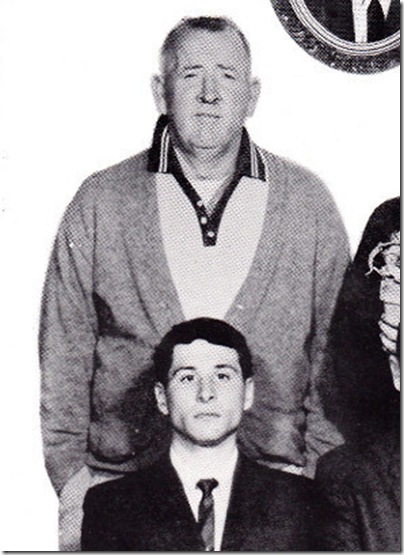
Our old friend Parkey Sharkey appears in a photo that has been listed on EBay. Bidding starts at $19.99.
And in case anyone thinks that we have forgotten: No, nothing has been announced about the purported tests performed on soil from Dr. George “Evil Genius” Hodel’s purported murder HQ. I think it’s safe to say there are no results or if there are, they do nothing to bolster the contention that Elizabeth Short was killed there.
Apparently it was all just a publicity stunt.
PREVIOUSLY
Hodel Murder HQ Test Results? Day 5
Waiting for Test Results on Dr. George ‘Evil Genius’ Hodel’s Murder HQ, Week 2
George Hodel Murder HQ Soil Tests Overdue – Week 3
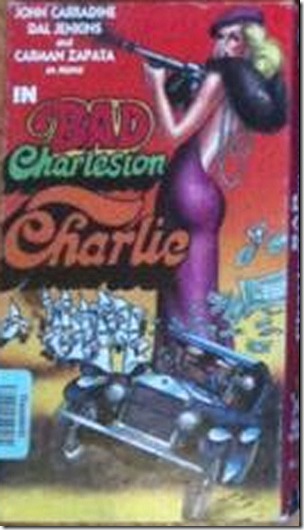
Several years ago, in a previous incarnation of the blog, I wrote about the film “Bad Charleston Charlie.” Someone emailed me in hopes of getting a VHS copy. They are rare, but one has finally surfaced on EBay. It’s included in a lot of eight movies and the bids stand at $100. That’s quite a bit for one movie, especially when the film in question is “Bad Charleston Charlie,” but there you go.
In case you just tuned in, I am using the Wikipedia entry on Wallace Beery – alleging that he was involved in the death of Ted Healy – as a way to explore Wikipedia’s fundamental problems with accuracy and delve into Hollywood myths. This is a slow, paragraph by paragraph analysis and, yes, it’s tedious. I hope the research drudges in the audience will find it interesting.
In Part 1, we found that Wikipedia had eight entries linking Beery to Healy’s death. Two of them were nearly identical and the rest contradicted one another – sometimes drastically. So much for Wikipedia being as accurate and reliable as an encyclopedia.
In Part 2, we began looking at the book that was cited in all the entries that listed a source: E.J. Fleming’s “The Fixers,” a book that failed to get a review from a single reputable news outlet. We also found that a main informant, Col. Barney Oldfield, most likely had no firsthand knowledge of the incident.
In Part 3, we dissected a paragraph of “The Fixers” and found numerous problems.
Today, we will look at a portion of another paragraph in “The Fixers.” (Part of a paragraph? Yes, I said this would be slow and tedious).
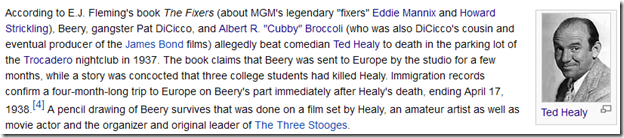
In case you just tuned in, I am using the Wikipedia entry on Wallace Beery – alleging that he was involved in the death of Ted Healy – as a way to explore Wikipedia’s fundamental problems with accuracy and delve into Hollywood myths.
In Part 1, we found that Wikipedia had eight entries linking Beery to Healy’s death. Two of them were nearly identical and the rest contradicted one another. So much for Wikipedia being as accurate and reliable as an encyclopedia.
In Part 2, we began looking at the book that was cited in all the entries that listed a source: E.J. Fleming’s “The Fixers,” a book that failed to get a review from a single reputable news outlet. We also found that a main informant, Col. Barney Oldfield, most likely had no firsthand knowledge of the incident.

In case you just tuned in, I’m using the alleged beating of Ted Healy by Wallace Beery et al to examine Wikipedia’s accuracy. So far, it hasn’t been good. Yesterday, I looked at the eight different accounts in Wikipedia and noted their inconsistencies – make that contradictions. A disaster for an encyclopedia, but to be expected for a fan-based site created by “citizen scholars.”
Today, let’s see if we can backtrack the story to its origins.
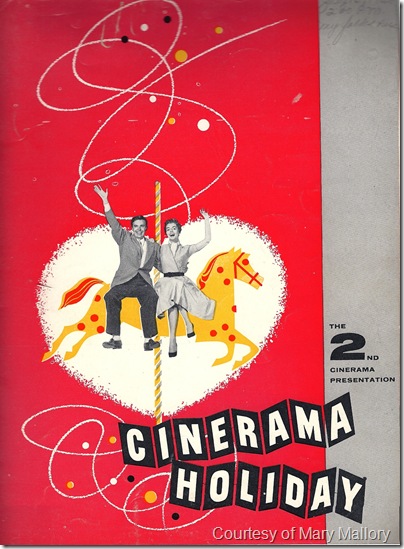
“Cinerama Holiday” is being presented this weekend during TCM’s Classic Film Festival. The film will be shown Sunday at 9 a.m. at the Cinerama Dome.
Here’s Mary Mallory’s post on Philippe de Lacy and ‘Cinerama Holiday’ from last October
As longtime readers know, the L.A. Daily Mirror is usually a Wikipedia-free zone. I consider it a sinkhole of myth, mistakes, rumors and folklore that is created and maintained by “citizen scholars,” crackpots, coding tweakers, factoid zealots and folks in tinfoil hats. (There – that should get a rebuttal from the usual suspects).
Yes, it’s good for looking up “When was the War of 1812?” or “What color was the old gray mare?” and if you’re seeking a painfully detailed plot summary of every episode of “The Simpsons” or a lengthy biography of Eric Cartman, this place is for you. Otherwise, no.
However, I stumbled across this little jewel and when I managed to get my jaw off the floor, I thought it might be a good way to explore Wikipedia’s fundamental problems and at the same time delve into Hollywood myth. This is going to be a long, tedious examination of Wikipedia and the historical record on a molecular level. Stooge fans, I think you’re going to enjoy this.
Previously
Me vs. Wikipedia
Wikipedia Hoax Exposed
A World Without Wikipedia – Not Such a Bad Idea
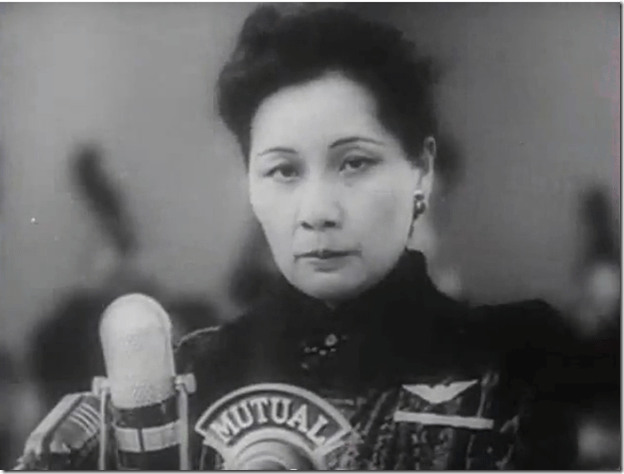
Madame Chiang in a film clip at the Hollywood Bowl, beginning at the 4:22 mark on a newsreel posted on YouTube.
Seventy years ago, film producer David O. Selznick staged an over-the-top extravaganza April 4, 1943, at the Hollywood Bowl honoring Madame Chiang Kai-Shek and China Relief, the likes of which will probably never be seen again. Featuring high showmanship and a cast of thousands, this stage show celebrated a woman as beautiful and tough as Selznick’s Scarlett O’Hara.
Selznick served as one of Hollywood’s most prominent supporters of China Relief, a cause championed by his friends Henry and Clare Luce. He agreed to organize two prominent Los Angeles events to publicize and raise funds in support, desperately needed after the vicious attacks by Japanese soldiers for more than six years. These events would occur near the end of Madame Chiang’s 1943 tour of the United States.

A world without Wikipedia – not such a bad idea.
Regular readers of the L.A. Daily Mirror know that I consider Wikipedia a sinkhole of mistakes and folklore that is created and maintained by “citizen scholars,” coding tweakers, crackpots and folks in tinfoil hats.
Beginning on Tuesday, in a multi-part series, I’m going to use one alleged incident as a way to explore Wikipedia’s fundamental problems and delve into the dubious source material on the alleged incident that was taken from a dreadful book about Hollywood.
We will find eight different Wikipedia entries on the same alleged “incident” – none of them are identical and some of them contradict one another – and we will discover that the book used as “source material” is not only filled with errors but contains malicious lies about people who are conveniently dead and unable to defend themselves. It’s the kind of source material that would be banned from any respectable encyclopedia but fits nicely with Wikipedia’s “citizen scholar” ethos.
Tune in Tuesday morning.
Among the events scheduled for this weekend’s Los Angeles Times Festival of Books, you may especially enjoy a panel moderated by Patt Morrison titled “The Real L.A. Noir,” featuring reporters Andrew Blankstein and Richard Winton — and me.
The panel is 3:30 p.m. to 4:30 p.m. on Saturday in Los Angeles Times Booth 60. Hope to see you there – and bring your questions!
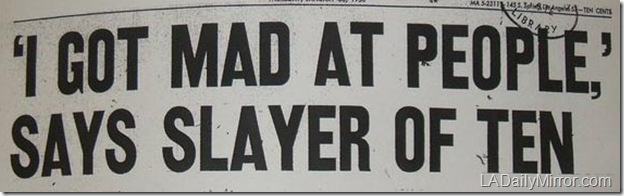
Photo: A headline from the Mirror about the Charles Starkweather case. You would NEVER see a headline like this in The Times. Ever. I used to have this over my desk and the folks shooting “The Soloist” liked it so much that they plastered it all over the newsroom.
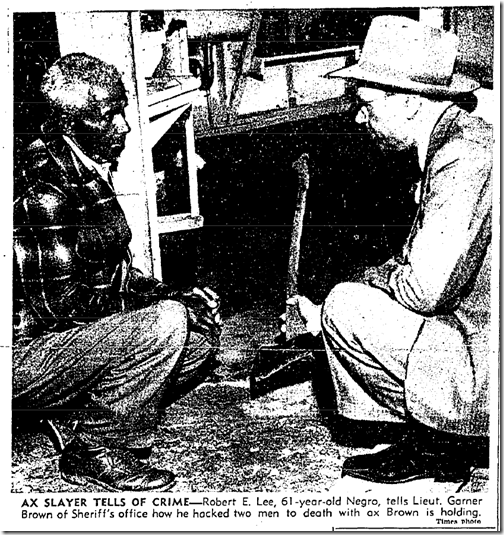
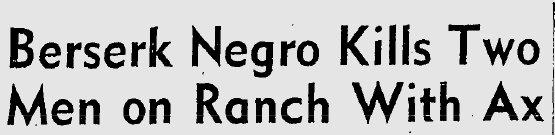
April 18, 1943: Robert Earl Lee, 61, a worker at ranch in the Malibu Hills, surrenders to authorities after killing his employer, Nelson Ross Wolfe, and another ranch hand, Albert Everett Miller, with an ax.
Lee, described by The Times as “a short, frail-looking Negro,” said: “Mr. Wolfe bawled me out for not moving the milk cow out to pasture and about the chicken yard last Friday…. This morning he took me on again and asked me if I thought cows could fly like mosquitoes and get into pastures over fences. So I just grabbed an ax and hit him.”
Lee was sentenced to life in prison in the killings.
Also: A Russian village is being built at Santa Monica Boulevard and Formosa Avenue for “The North Star.” And yes, in later years this movie will be deemed subversive, showing communist influences in Hollywood.
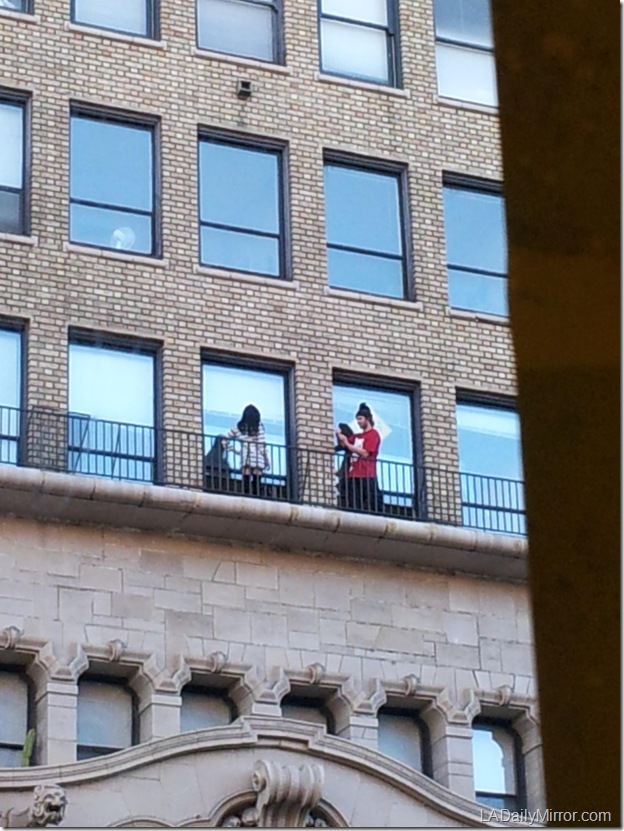
The things you see in downtown Los Angeles.
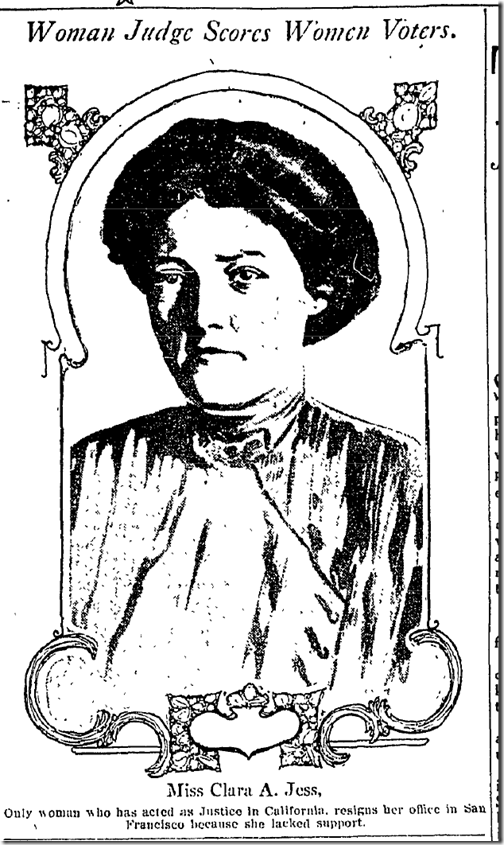
April 17, 1913: Clara Jess, described as the first woman in California to be appointed as a judge, resigns after a year. She was the recorder of Daly City and functioned like a justice of the peace, according to an A.P. story in The Times.
Jess was sued on allegations of false imprisonment after jailing the town marshal for a day because he refused to serve a warrant on a friend.
“Miss Jess does not believe that women are temperamentally unfitted for the bench but she is disappointed at the lack of support she received from women voters,” the A.P. story says.