
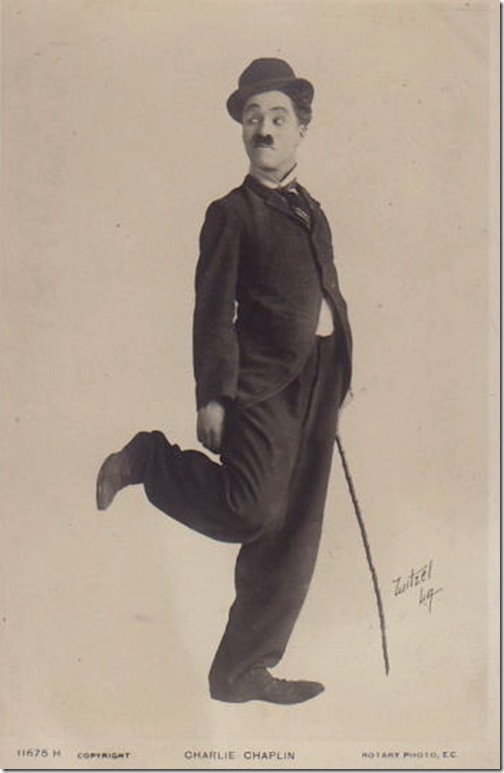
This postcard featuring a Witzel portrait of Charlie Chaplin has been listed on EBay with bids starting at GBP 4.99.
This postcard featuring a Witzel portrait of Charlie Chaplin has been listed on EBay with bids starting at GBP 4.99.

Jan. 3, 1913: The Chinese government issues an edict against traditional clothing in favor of Western fashions.
Women were called upon “to abandon their trousers for the occidental skirt and men to give up their comfortable loose clothes for the [illegible] business and conventional evening clothes of the Caucasian.”
Also note: “Chinese girls at American colleges have been noted for their correct appearance in American clothes, but occasionally were seen in their native garments.”
Read all of the Jan. 3, 1863, Los Angeles Star at USC’s digital library.
Jan. 3, 1863: Of all that you may know about the Emancipation Proclamation, I doubt you have read anything negative (unless you’re a historian), so the coverage in the Los Angeles Star will come as quite a shock. Remember that the Star was a staunchly pro-Southern publication.
“By the stroke of his pen, Mr. Lincoln frees every slave in rebeldom — robs every master of his servant, every household of its property. Was ever such an outrage perpetrated in the name of law, or such foul perjury committed, as by this man, sworn to maintain the Constitution and govern by the laws.”
Los Angeles schools had problems 150 years ago: The city was suffering an outbreak of smallpox, and students had to show proof of vaccination before being admitted when the new school year started.
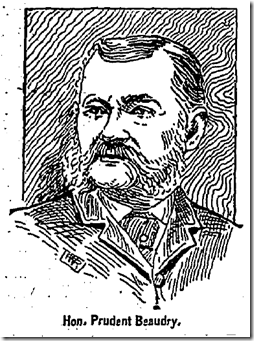
P. (Prudent) Beaudry (d. 1893) has opened a store in his house at 15 and 16 Aliso St. Born in Canada in 1819, Beaudry came to Los Angeles in 1852. He served on the City Council from 1873 to 1875 and was mayor for two terms, The Times obituary says.
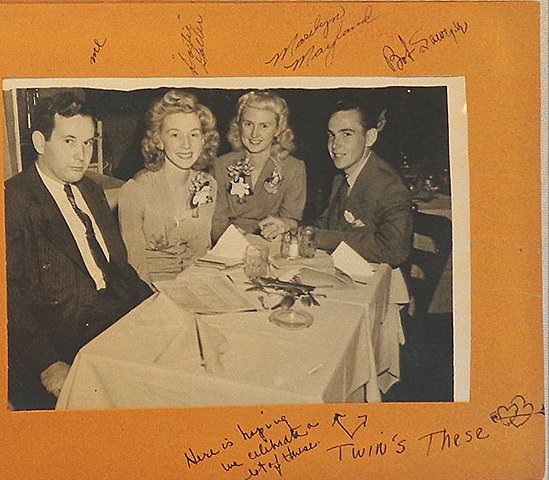
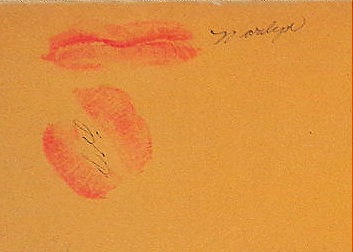
A Sept. 16, 1944, photo from the Florentine Gardens – with souvenir lipstick prints – has been listed on EBay at Buy It Now for $25. The lot includes souvenir photos from Ace Cain’s, 1369 N. Western Ave., and the Pirate’s Den, 335 N. La Brea.
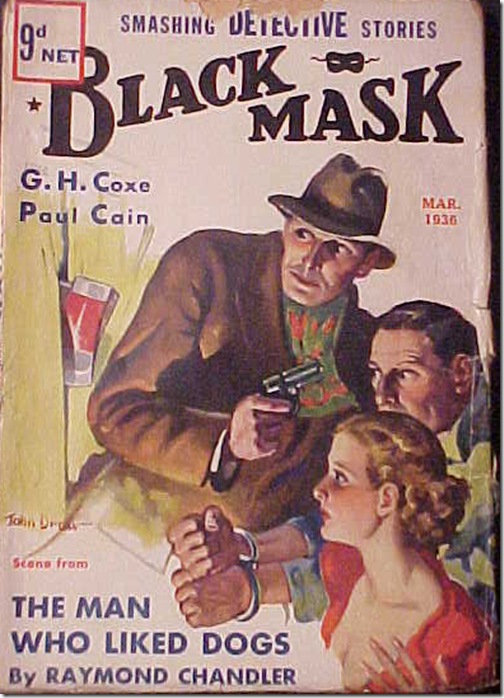
The March 1936 issue of Black Mask magazine includes Raymond Chandler’s “The Man Who Liked Dogs.”
Jan. 19: “The Tall T,” part of the Autry museum’s What Is a Western? film series. $11/$7/$5 1:30 p.m.
Jan. 23: The Simple Art of Murder. Judith Freeman discusses Raymond Chandler. Free. Huntington Library, 7:30 p.m.
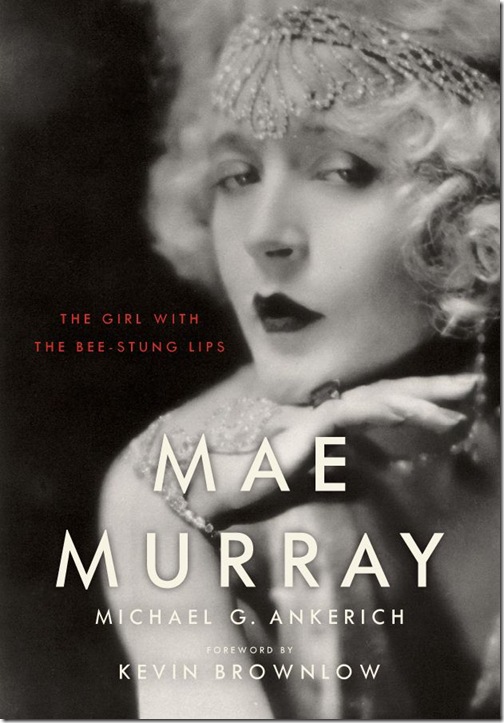
I hope you don’t mind if I use my column to plug a friend’s book, Michael Ankerich’s new Mae Murray biography, The Girl With the Bee Stung Lips (OK, so he did dedicate it to me. But you needn’t dedicate a book to me to get me to plug it, I also accept flat-out bribes).
Michael is both an excellent writer and an excellent researcher, a combination which is essential for a good biographer, but which is so often lacking on one side or the other. And the book is not biased, neither a “perfect, wonderful Mae!” fan-mag piece nor a “bad Mae!” hatchet job. He obviously admires and likes Mae Murray, but he does not cut her any breaks: her bad performances and bad behavior get fully covered. He also—I am torn between admiration and jealousy!—interviewed her nephew and son, neither of whom has ever talked to the press before.
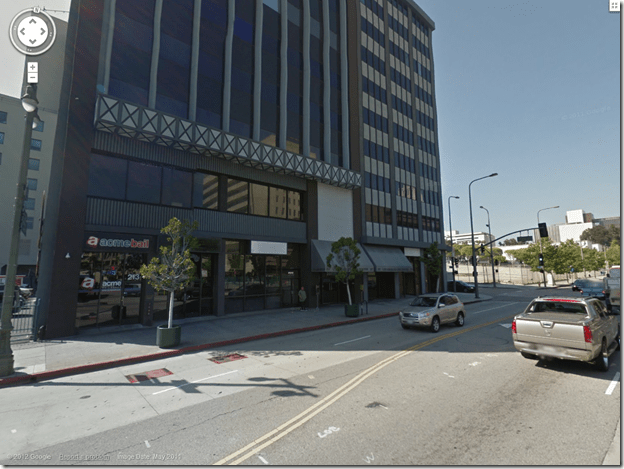
Broadway and 2nd Street via Google’s Street View.
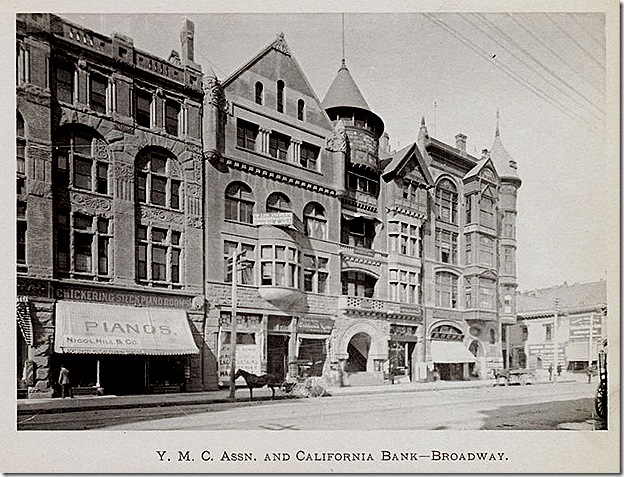
This picture showing the YMCA and the California Bank at the southwest corner of Broadway and 2nd Street has been listed on EBay as Buy It Now for $69.95.
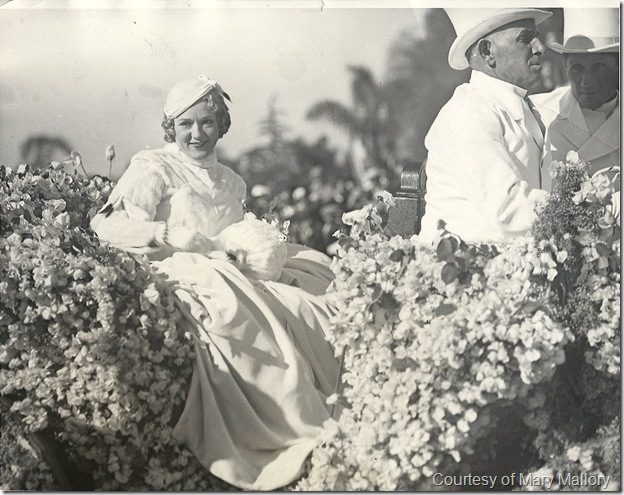
Photo: Mary Pickford in the 1933 Rose Parade. Credit: Courtesy of Mary Mallory
Tomorrow sees the 124th annual Tournament of Roses Parade in Pasadena, welcoming the new year with magnificent garlands of fresh flowers. It also acts as the 80th anniversary of Mary Pickford serving as the first female grand marshal of the parade.
Begun by the Valley Hunt Club in 1890, the Rose Parade saluted the area’s wonderful weather and flowering paradise.Soon, the Tournament of Roses Assn. took over what they now call “America’s New Year Celebration, greeting the world on the first day of the year… .”
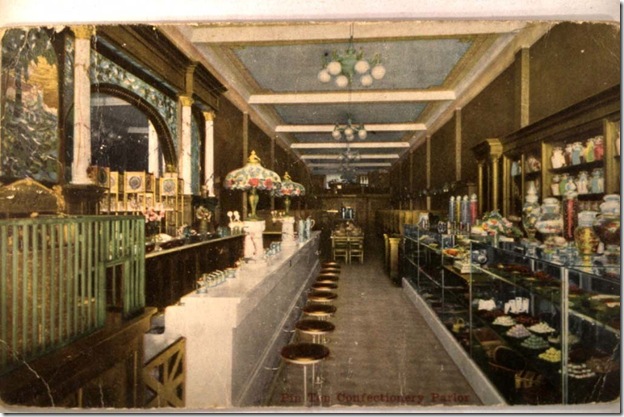
This postcard of the Pin-Ton candy store, 427 S. Broadway, has been listed on EBay as Buy It Now for $29.97.
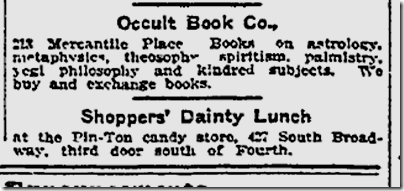
March 4, 1909: How about an ice cream and a stop at the occult bookshop?
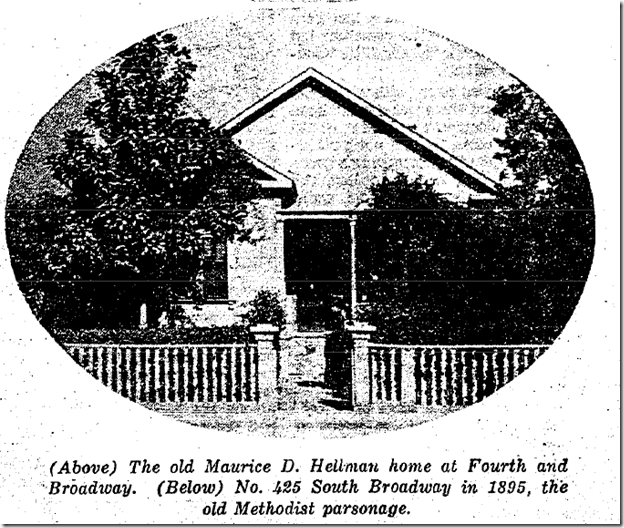
The Pin-Ton appears to have opened about 1909, judging by ads in The Times, and continued until about 1918. By 1919, it was Remick Song and Gift Shop. A search in the assessor’s records shows nothing for 427 S. Broadway, but lists a building at 425 S. Broadway with a construction date of 1932/36.
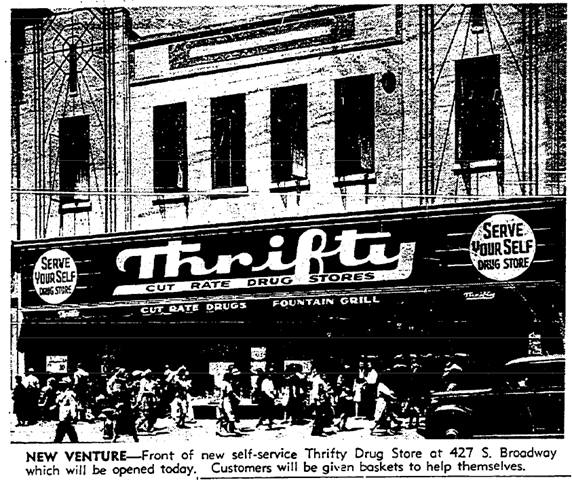
Aug. 12, 1942: The site of the Pin Ton became a Thrifty drugstore and introduced a new concept – self-service. Thrifty extensively remodeled the building in 1954, The Times says.
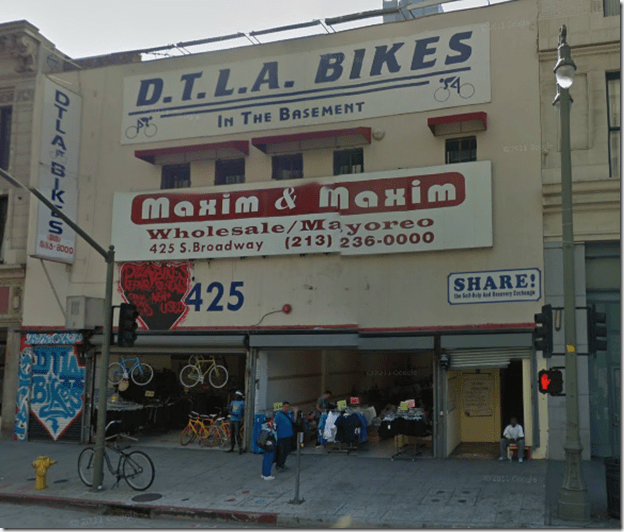
And here is the building, stripped of most architectural details, as shown by Google Street View. And yes, it’s labeled 425 S. Broadway.
And this is what the block once looked like:
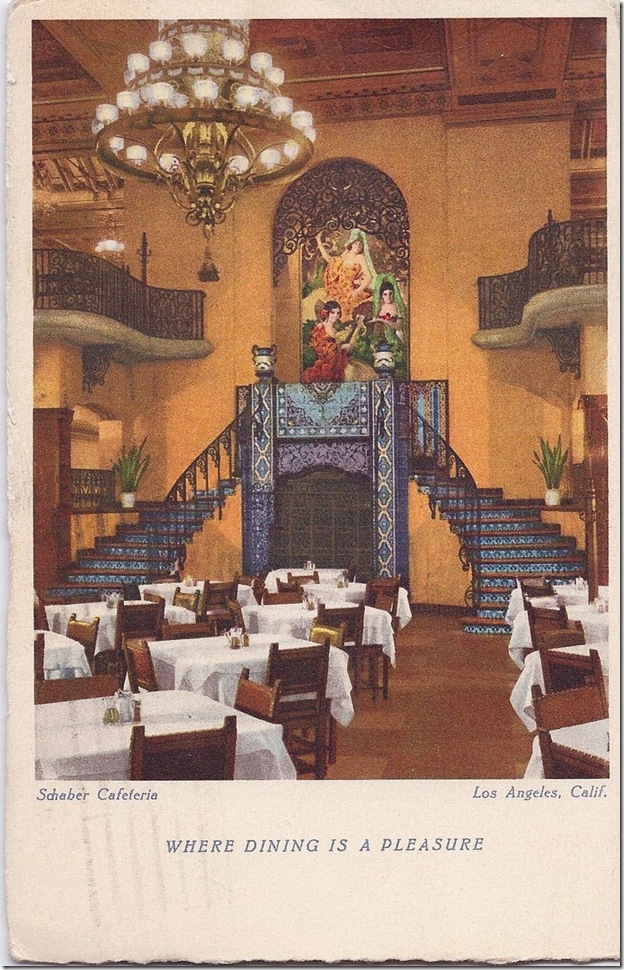
This remarkable postcard postmarked 1941 of Schaber’s Cafeteria at 620 S. Broadway, showing an Einar Petersen mural, has been listed on EBay at Buy It Now for $6.99.
The Schaber Cafeteria at 620 S. Broadway was built in 1928 by the Schaber Cafeteria Co. (Alfred T. Schaber, president) on the site of Platt Music Co. with an adjoining See’s Candy at 622 S. Broadway and a Bellin’s Tie Shop at 618 S. Broadway. The cafeteria could serve 10,000 people a day, The Times said.
Hollywood Heights: Mary Mallory on Einar Petersen
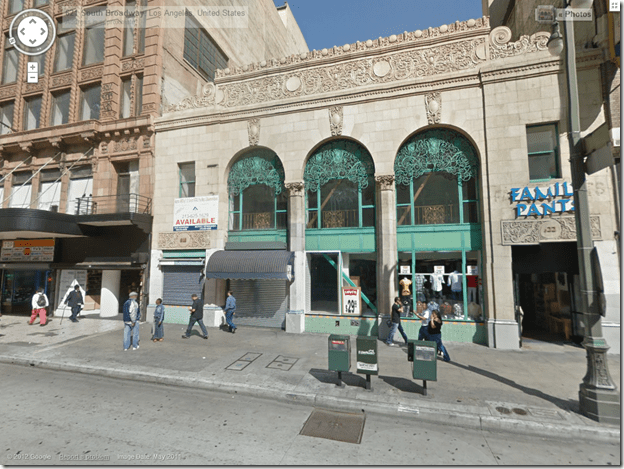
620 S. Broadway as shown by Google Street View.
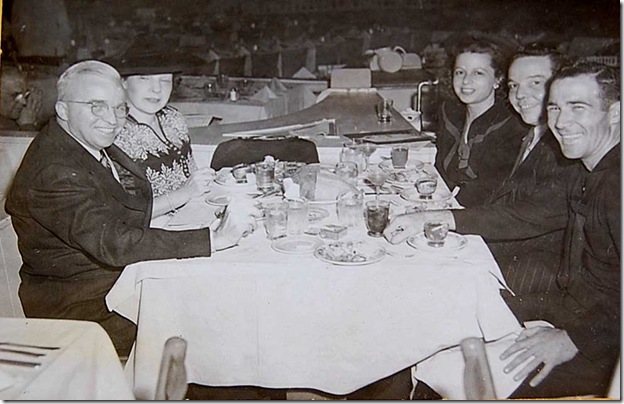
A photo of a group of happy people at the Florentine Gardens on Sept. 18, 1943, has been listed on EBay. It’s listed as Buy It Now for $8.99. The Florentine Gardens has a connection to the Black Dahlia case because Elizabeth Short stayed at the nearby home of the business manager, Mark Hansen. As you can tell from the picture, the Florentine Gardens was a huge club that seated 1,000.
I recently had lunch with Paul Bryan Gray, the author of a terrific new book “A Clamor for Equality,” a biography of Francisco P. Ramirez, who edited the Los Angeles Spanish-language weekly El Clamor Publico (1855-1859).
Gray is the subject of an upcoming column, so I won’t say too much about him, but in the course of researching Los Angeles in that era, I discovered that the Los Angeles Star, a four-page weekly published from 1851 to 1864, had been scanned and put online by USC. I thought it would be an interesting change of pace to delve back into Los Angeles in the 1850s-60s. Putting the Huntington Library’s copies of The Star online offers scholars an opportunity to explore a truly rare publication.
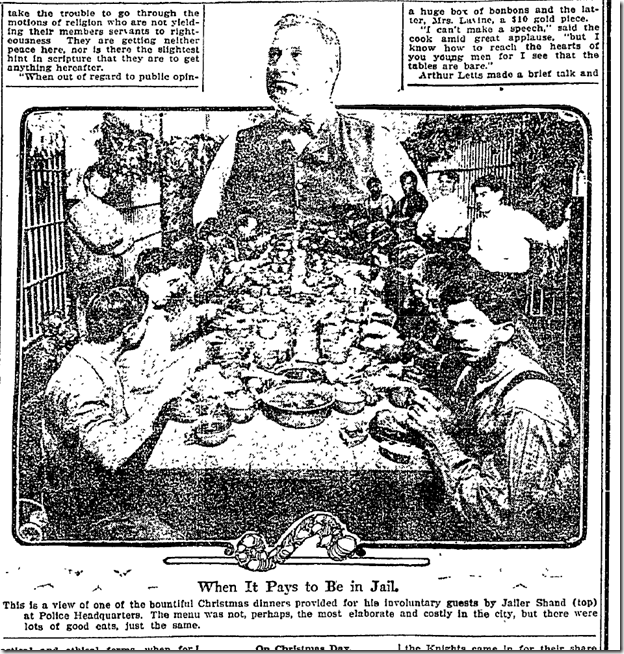
Dec. 26, 1912: The Times makes the rounds of Christmas celebrations among the less fortunate and discovers that the emergency wards are full – but readers are assured that no women or girls are among the victims.
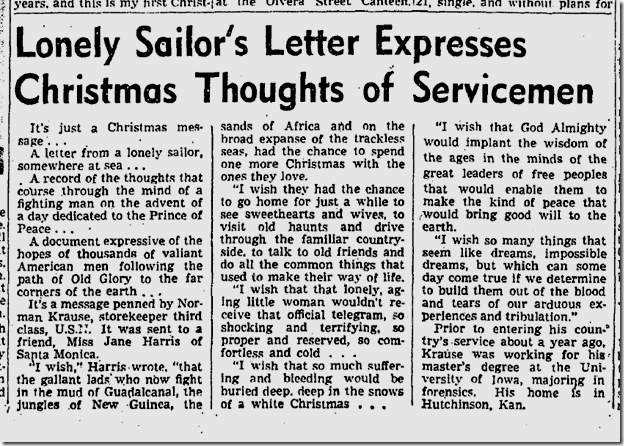

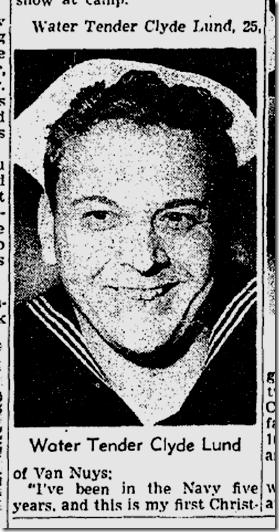
Merry Christmas, Storekeeper Third Class Norman Krause, Marine Private John Porter and Water Tender Clyde Lund, wherever you are.

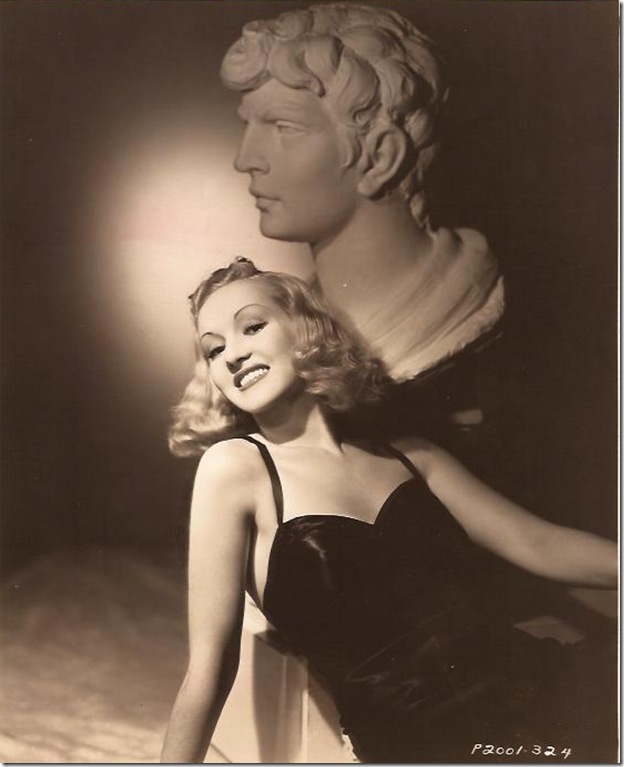
A 1938 publicity photo of Betty Grable listed on EBay with bids starting at $25.
Betty Grable
Betty Grable is so damned adorable. Her oft-repeated self-assessment does not do her justice: “As a dancer I couldn’t outdance Ginger Rogers or Eleanor Powell,” she once said. “As a singer I’m no rival to Doris Day. As an actress I don’t take myself seriously. I had a little bit of looks without being in the big beauty league. Maybe I had sincerity. And warmth. Those qualities are essential.” She was right about the sincerity and warmth, but she under-estimated her singing and dancing skills (I put her up there with Day and Dinah Shore as a singer). Her 1943 iconic pin-up photo—taken by Frank Powolny during the filming of Sweet Rosie O’Grady—will follow her through eternity, but you have to see Betty in action to appreciate her.
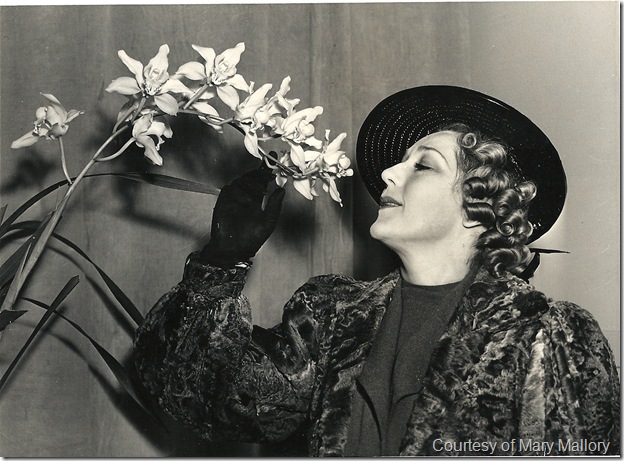
Photo: Mary Pickford admires a namesake orchid. Courtesy of Mary Mallory.
Flowers, like actors, sometimes have short-lived celebrity. Once their aura of uniqueness fades, many languish or fall by the wayside. Some disappear. Others continue to thrive because of their hardy nature, popularity, or beauty.
Breeders and growers of flowers have struggled to develop attention-grabbing names for their plants for hundreds of years. Many name discoveries after themselves; others give monikers to plants that resemble the person they are named for or might help it prosper. Most plants that gain popular names are hybrids developed through luck or discovery.
I’m busy with a project…. Check back Monday!

Licorice Pizza! Michael Jackson’s “Thriller!” Men at Work! Kenny Loggins! Stray Cats! J. Geils Band! Foreigner!
Dec. 19, 1982: In the lead story, Times reporter Tyler Marshall says:
“Despite three years of increasingly intense military operations and deepening political involvement, the Soviet Union appears to have accomplished virtually none of its major goals in Afghanistan.


 ladailymirror.com