
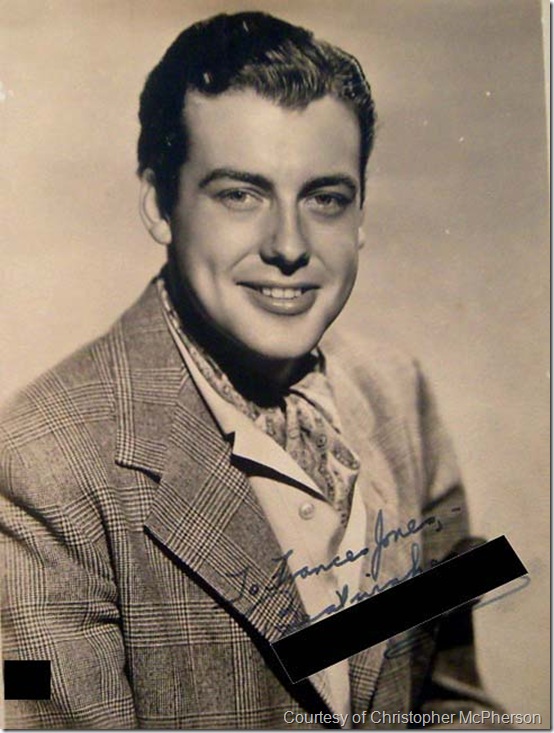
Here’s a mystery fellow for Wednesday, courtesy of writer Christopher McPherson.
Here’s a mystery fellow for Wednesday, courtesy of writer Christopher McPherson.
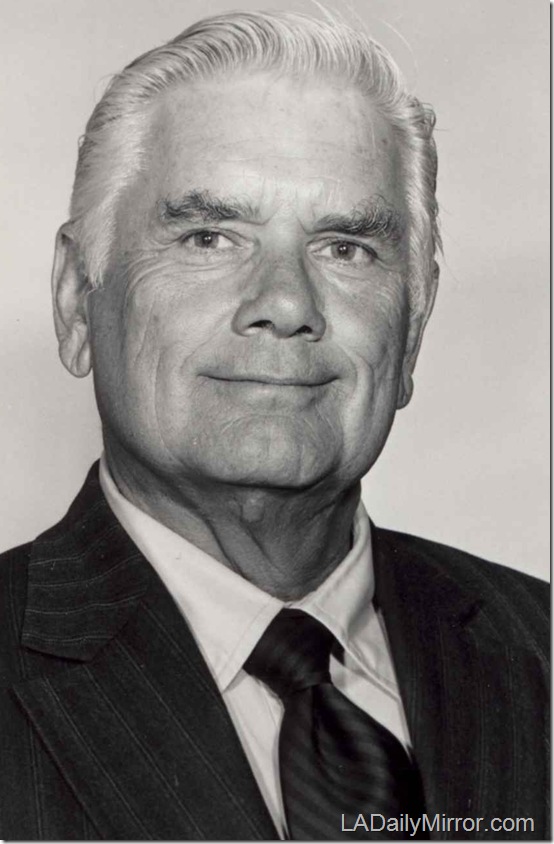
In case you just tuned in, I was given a box of material cleaned out of the press room at Parker Center that was crammed with photos, artist sketches, press releases and some tattered maps. I have organized the material to get a better understanding of what is there and I’m posting selections weekly.
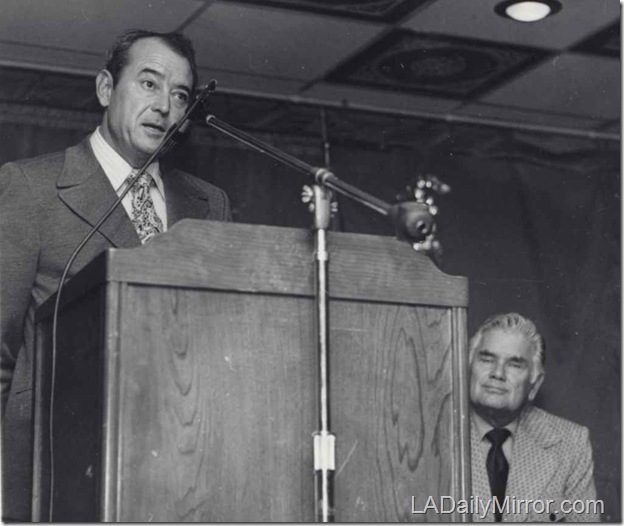
Here we have our first LAPD mystery guest. This gentleman had his portrait taken, above, and appeared with another mystery gent during what is apparently a presentation. Based on the clothing style and the other material with which the photos were found, I would say these pictures were taken in the 1970s.
This cryptic number “11 V3” is stamped on the back of this photo.
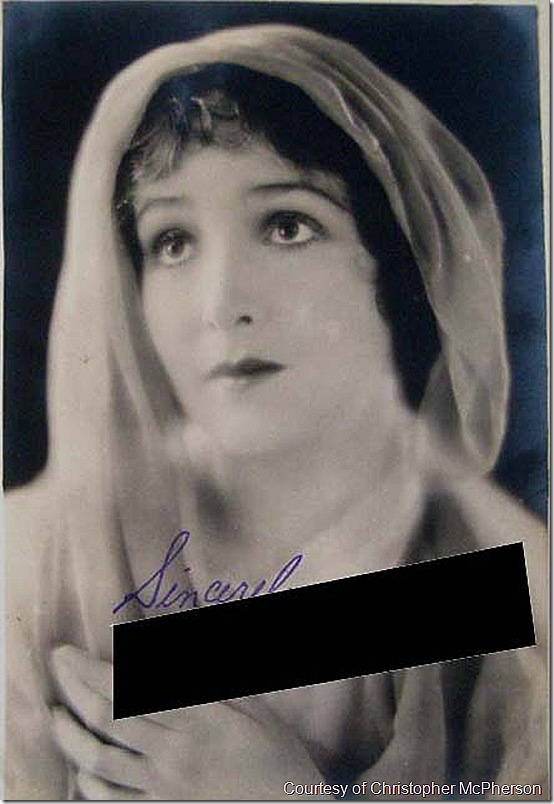
And for Tuesday, a mystery woman, courtesy of writer Christopher McPherson.
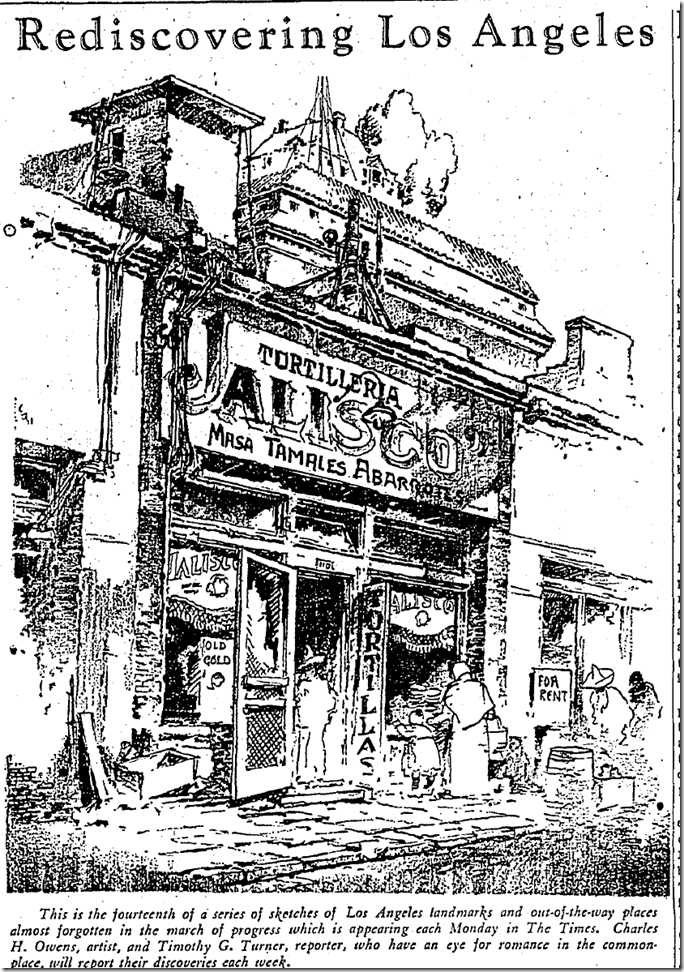
In case you just tuned in, Times artist Charles Owens and columnist Timothy Turner did a weekly series on some of the old landmarks in Los Angeles, many of them doomed by the impending construction of Union Station. Unlike the later series Nuestro Pueblo, by Owens and Joseph Seewerker, Rediscovering Los Angeles was never published in book form. The Times encouraged readers to clip and save the items. It is worth noting that even as early as 1935-36, when these stories were being written, Los Angeles was already being “rediscovered.”
Feb. 3, 1936: In this week’s installment of Rediscovering Los Angeles, Owens and Turner visit Tortilleria Jalisco on Republic Street near the Plaza. Notice the Hall of Justice in the background.
Turner describes women making Mexican women making corn tortillas by hand:
There is not one difference in this process of bread making than when found by Cortez and Pizarro. Corn culture indicates that the more civilized American Indian had skillfully and really scientifically cultivated it for millennia, longer than any European or Asiatic vegetable had been grown by man. So the tortilla is possibly the oldest prepared article of food in the world.
Mexicans especially of the lower classes have never given up their taste for the corn tortilla.
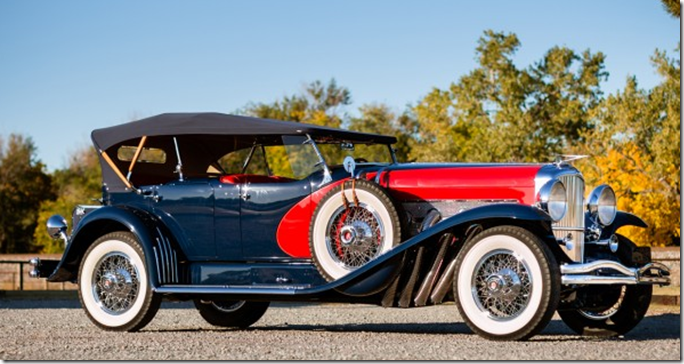
Here’s a little stocking stuffer: A 1929 Duesenberg Model J. Dual Cowl Phaeton, which is being auctioned next year in Scottsdale, Ariz. The estimated sale price, according to Gooding & Co. is $2 million to $2.3 million.

Several weeks ago, the L.A. Daily Mirror had lunch with Christina Rice, author of the new book “Ann Dvorak: Hollywood’s Forgotten Rebel” and it’s always fun when two ardent researchers get together to talk shop. We chatted about various archives, the thrill of the hunt in tracking down information and how many Hollinger boxes there are on such and such a subject.

Here’s another mystery fellow, courtesy of author Christopher McPherson.
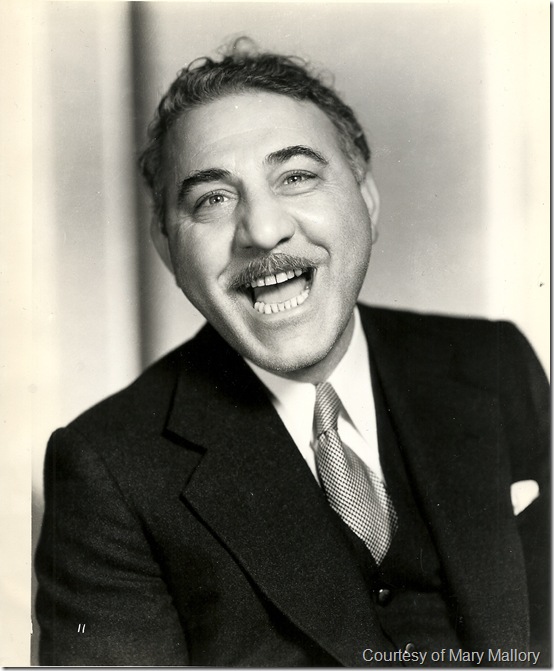
Henry Armetta, courtesy of Mary Mallory.
In many films of the 1930s and 1940s, what audiences remember most are the one-of-a-kind supporting players, with vibrant personalities, colorful ways of talking, recognizable tics and dramatic looks. Many of these people came to be called “picture stealers,” because their antics stood out in entertaining ways.
As an April 7, 1935, Los Angeles Times story put it, “Many of these men are middle-aged and so true to a “type,” according to movie standards, that they will continue to enact typical roles until they pass from the scene. They command good salaries, may only work a week on a picture, but are considered indispensable by casting directors.” One of these popular actors was the frantic and excitable Henry Armetta.
Mary Mallory’s “Hollywoodland: Tales Lost and Found” for the Kindle is available from Amazon.
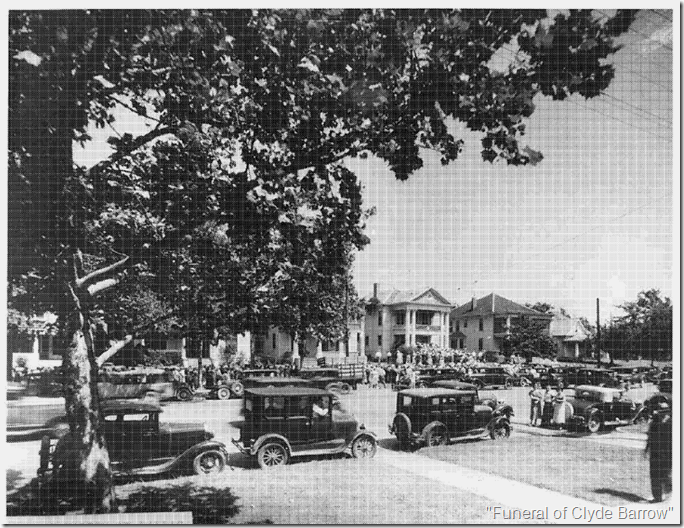
Speaking of FBI files, here’s an image of Clyde Barrow’s funeral found in his FBI file. Bonnie and Clyde’s FBI files are also online in seven sections.
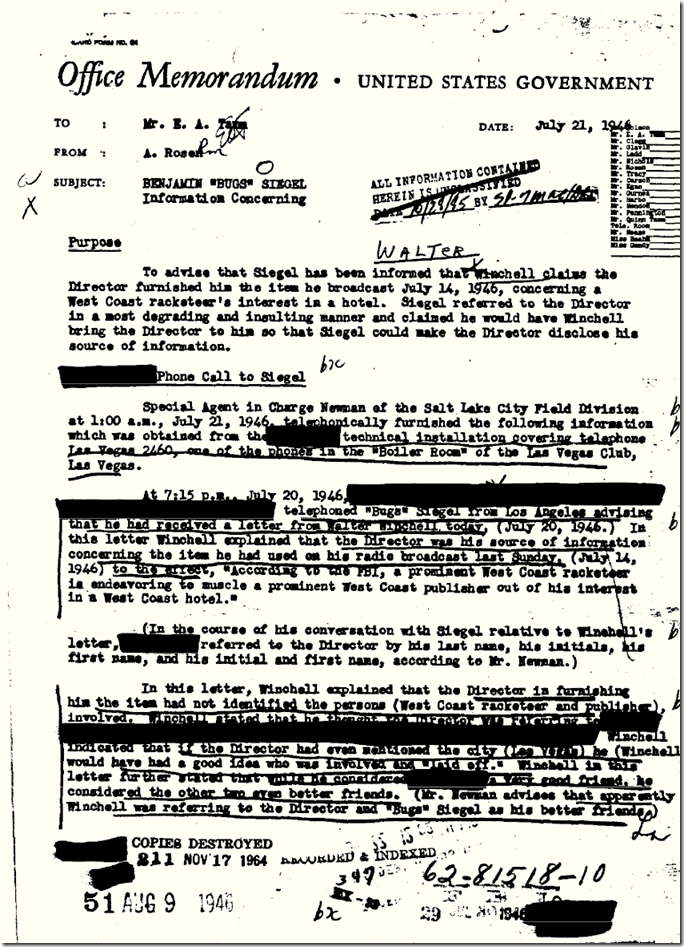
“Bugs” Siegel refers to FBI Director J. Edgar Hoover “in a most degrading and insulting manner.”
As long as we’re on the subject of Bugsy Siegel (d. 1947), fans of “Mob City” might consider perusing his FBI files, which are posted online in 32 often illegible, frequently censored sections. Notice his use of profanity. There is apparently a lot of this.
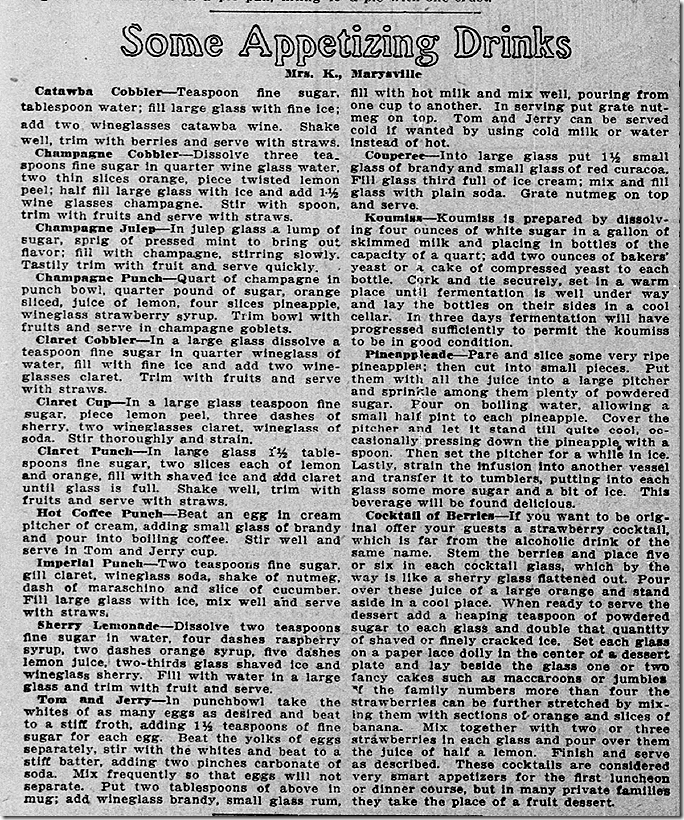
A recipe for the Tom and Jerry from the San Francisco Call, June 30, 1912.
Over on Facebook, Christopher McPherson asked whether the Tom and Jerry was named for the MGM cartoon characters. I said I suspected the opposite was true, rather like Disney’s Chip ‘n’ Dale being named for Chippendale furniture.
All the old newspaper stories give credit for the drink to bartender Jerry Thomas, who according to one account was born in New Haven, Conn., in 1825 (or Watertown, N.Y., in 1830),
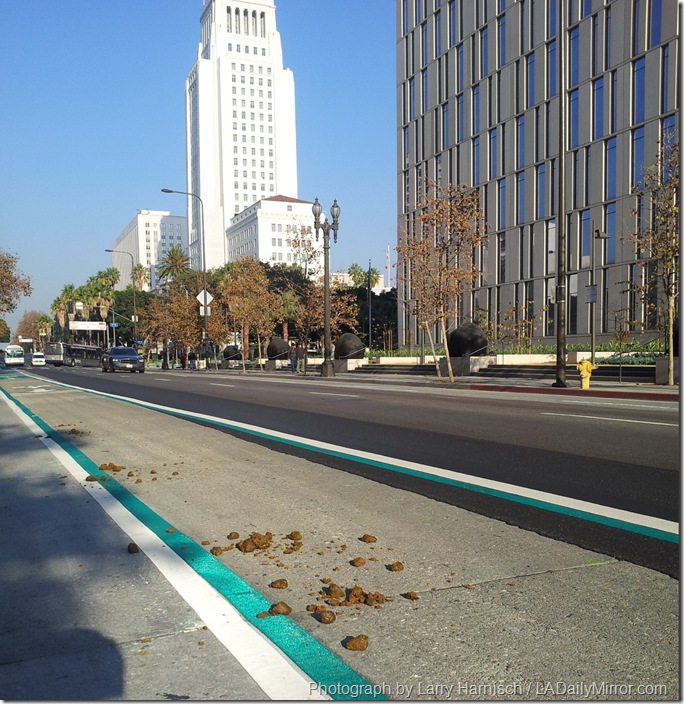
In the 21st century, one can still find horse flop on Spring Street near City Hall in downtown Los Angeles. So much for the predictions of yesteryear, in which we would be living in domed cities, get our power from clean, safe atomic energy and get around by personal jet pack or monorails. And the personal robots? Don’t ask.
I suspect this is a calling card from the LAPD’s mounted patrol, which was making the rounds Thursday.
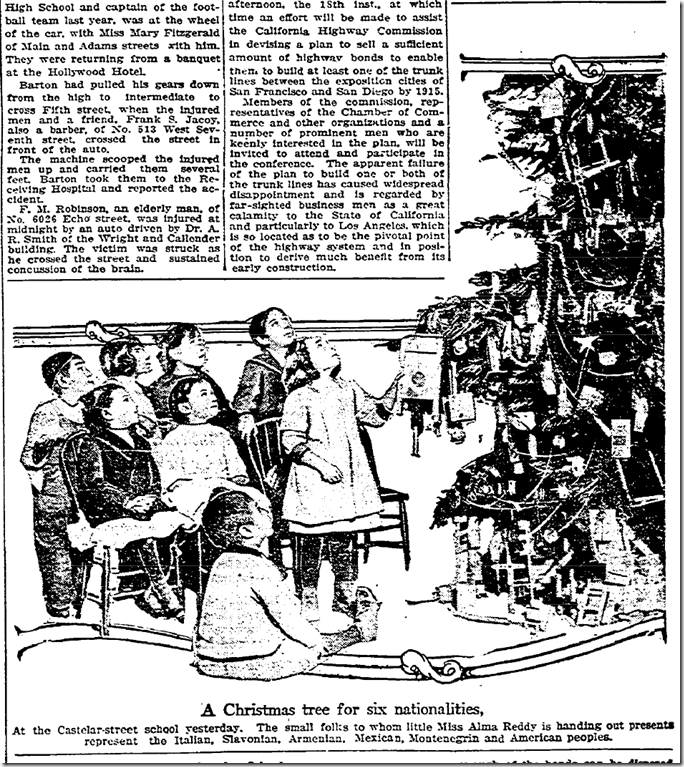
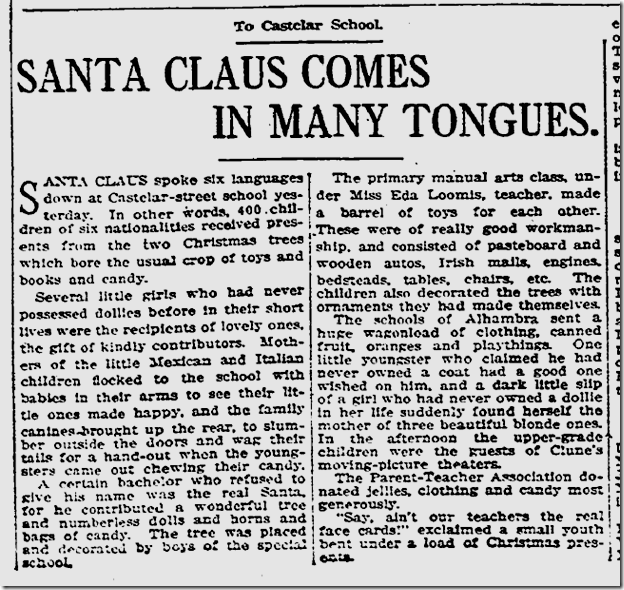
Dec. 13, 1913: Santa Claus visits the 400 students at Castelar Street School and “spoke six languages,” according to The Times.
Several little girls who had never possessed dollies before in their short lives were the recipients of lovely ones, the gift of kindly contributors. Mothers of the little Mexican and Italian children flocked to the school with babies in their arms to see their little ones made happy, and the family canines brought up the rear, to slumber outside the doors and wag their tails for a handout when the youngsters came out chewing their candy.
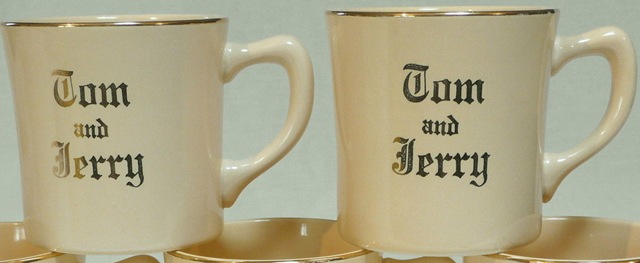
A set of five Tom and Jerry mugs listed on EBay as Buy It Now for $20.
We don’t keep a bottle of Scotch in our desk in the city room of the L.A. Daily Mirror. In fact, we are something of a wet blanket when it comes to imbibing.
However, we can’t resist a nod to drinks of the past during this time of year.
Our first is the Tom and Jerry (we still have grandma’s dozens of Tom and Jerry mugs stashed away somewhere or other). The Tom and Jerry was a seasonal favorite back in 1940s, but I can’t say I have seen them at a party or ever tasted one.
If you’re planning some retro holiday celebrating (you know who you are), here’s how to make them.
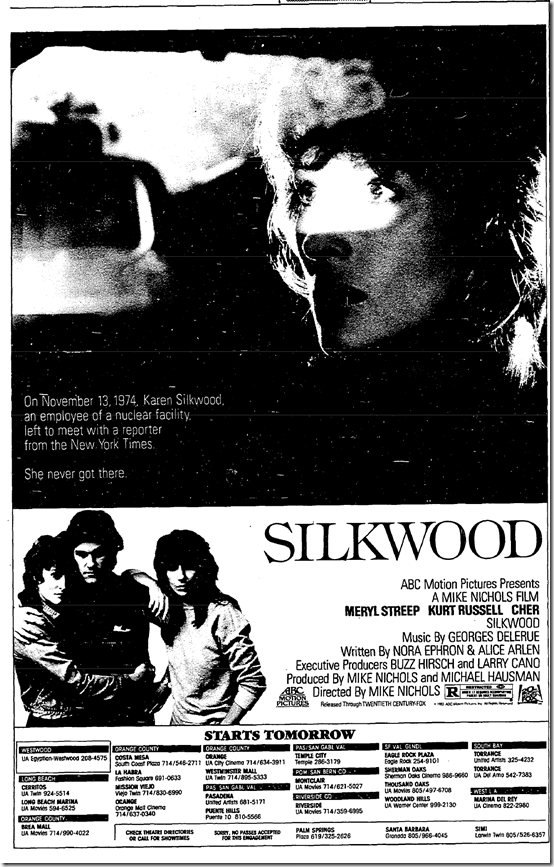
Starting tomorrow: “Silkwood.”
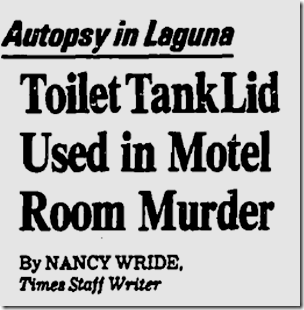
At 3:45 p.m. on Sunday, Dec. 11, 1983, a maid cleaning rooms at the Inn at Laguna on Coast Highway found the body of Ronald Jay Murphy.
Murphy, 22, who worked for an oil company in Santa Maria, had been hit in the head with the lid of a toilet tank with such force that the porcelain lid shattered.
His wallet, and what was believed to be a large amount of cash were missing, police said.
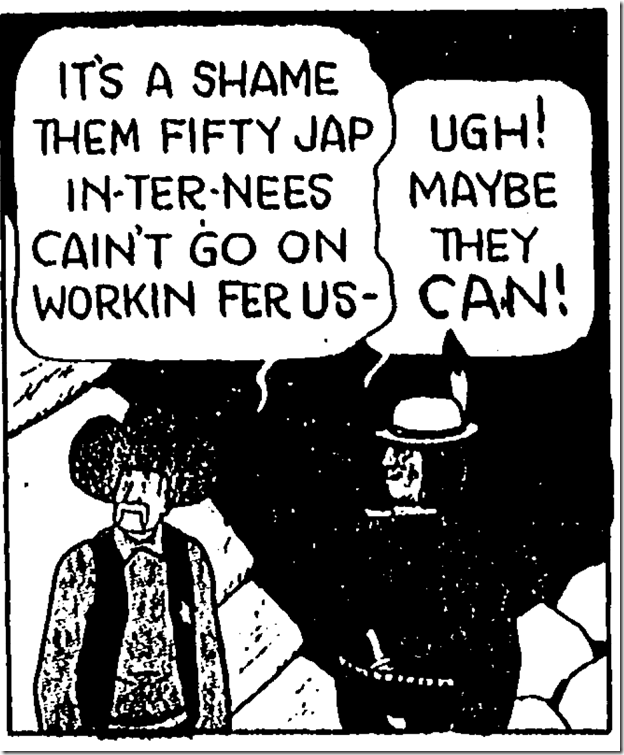
Dec. 12, 1943: Times columnist Tom Treanor, who will be killed in August 1944 covering the liberation of France, files a story about fighting between U.S. and Nazi troops around Filignano, Italy, about 100 miles southeast of Rome. Crawling in the dark, forward observer Pvt. George E. Clark finds himself among German troops and directs fire on them. The Germans, meanwhile drive a herd of goats toward the U.S. troops as a diversion.
A gang of young robbers is tracked down through their mascot, an adopted puppy named Stocky. Two of the young men were escapees from the Preston School of Industry and the other two were Army deserters, The Times says.
Now in Production: “Two-Man Submarine,” “Meet Me in St. Louis,” “The Golden Trail,” “The Outlaw Buster,” “The Merry Mountains” and “Make Your Own Bed.” [Out of those six movies, I have seen “Meet Me in St. Louis. How about you?]
Frank Filan, an Associated Press photographer now assigned as a combat photographer, visits his family in Los Angeles with tales of fighting on Tarawa. Filan’s cameras were lost when his landing boat sank 500 yards offshore, so after waiting for two days, he borrowed a camera and film from a Coast Guard officer. Filan’s photograph of a destroyed bunker on Tarawa won a Pulitzer Prize for photography the next year.
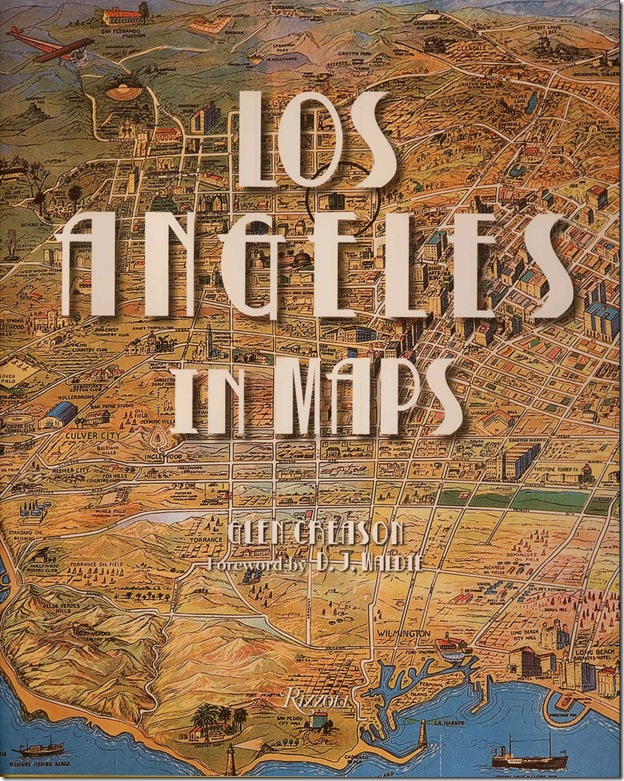
Glen Creason’s book on maps of Los Angeles shows the many ways people have viewed the city over the years. I interviewed him for The Times in 2012 and fortunately for all concerned, the column was seen by a real estate agent who was getting ready to sell off a rather curious home in Mt. Washington that had been owned by a man who had a mania for maps. The result was the discovery of the “map house,” one of the great (and strange) stories of Los Angeles.
“Los Angeles in Maps,” published in 2010, is in many local bookstores and available online.
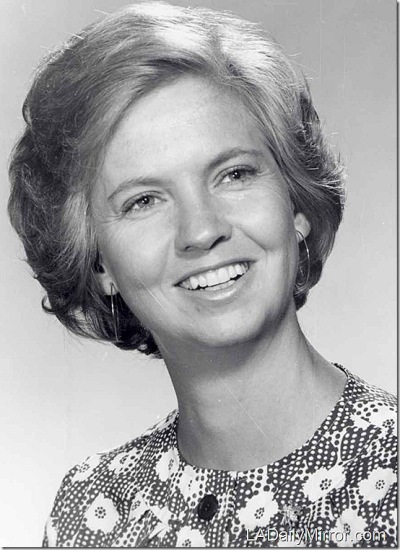
In going through the jumbled mass of pictures, press releases, artist sketches and tattered maps of the LAPD Parker Center Cop Shop Files, I found this photograph. And then a few more. And a few more. Was she a city official? A member of the Police Commission?
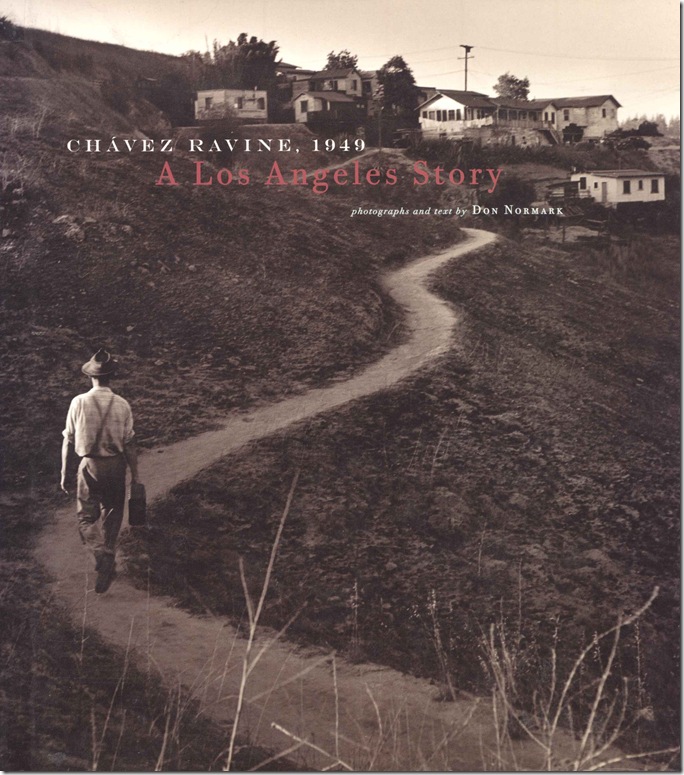
You might have to hunt a bit for Don Normark’s 1999 book “Chavez Ravine, 1949,” but your search will be rewarded. The photos are terrific and the residents’ recollections make the book even better. Copies can be found via bookfinder.com.
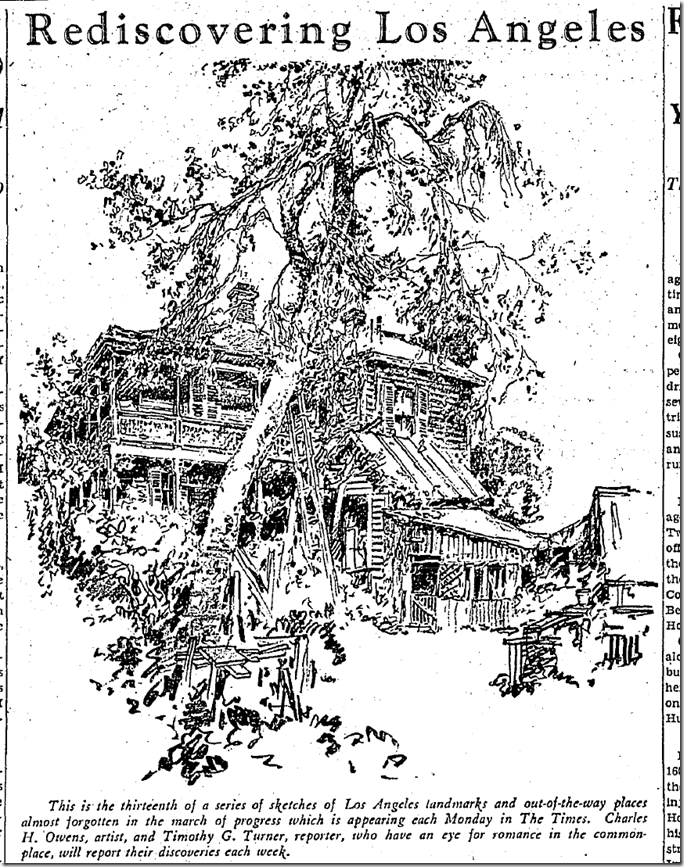
Jan. 27, 1936: Times artist Charles Owens and columnist Timothy Turner visit the Hopperstead home, which was built at Hill and Court streets in 1880. When Turner wrote this column, family members were still living in a portion of the house, while other parts were rented out to roomers.
Miller Hopperstead’s house was built with balconies on three of its sides from which the family used to look over all that was Los Angeles, lying eastward and north and south of them. In flood time they used to count the houses and barns floating down the Los Angeles River.
Fans of the Los Angeles River, please note.

