
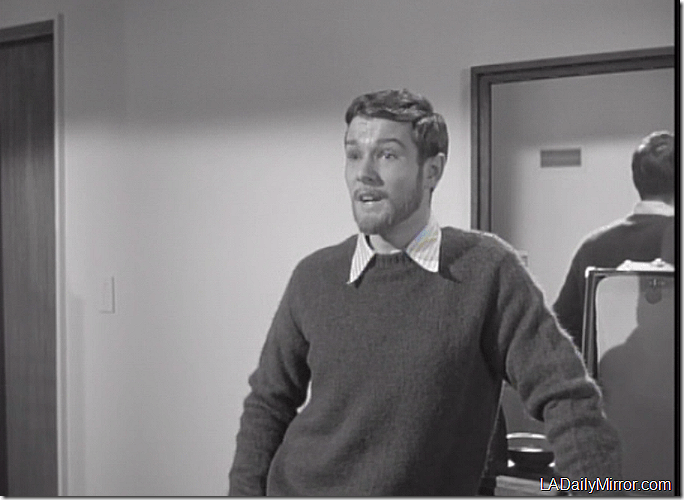
For Monday, we have a mysterious young man with a beard.
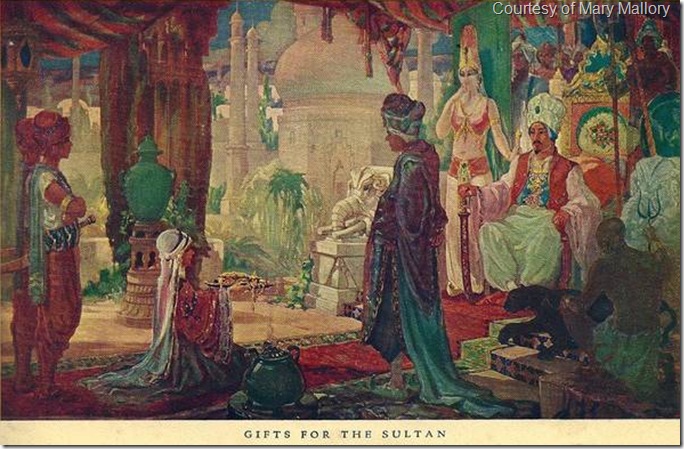
One of Einar Petersen’s murals at the Spring Street Guaranty Building and Loan Assn., courtesy of Mary Mallory
Fame is fleeting. An individual might go unrecognized while creating great art while alive, only for the works to be considered masterpieces decades after their death, as with painter Vincent Van Gogh. Others slowly build a portfolio of work, gaining increasing recognition and respect with each new piece. They maintain fame for a long while, but see it disappear as times, styles and values change. Many become forgotten.
Unfortunately, this second scenario applies to Einar C. Petersen, recognized as one of Los Angeles’ and California’s greatest muralists in the 1920s. Achieving great reviews for his first Los Angeles mural at the New Rosslyn Hotel in 1915, Petersen would go on to craft murals for San Francisco’s Hunter-Dulin Building as well as downtown’s Mayflower Hotel, Beverly Hills Security-National Bank, and particularly, the forest mural for Clifton’s Cafeteria on Broadway Street in downtown Los Angeles. As new owners and developers came along, most either removed or painted over Petersen’s murals, save for the one in Clifton’s.
Mary Mallory’s “Hollywoodland: Tales Lost and Found” for the Kindle is available from Amazon.
The Times ebook on the Titanic is a crossroads of old and new. Archival stories on a tablet. The book, unfortunately, was lost in the mass of Titaniciana on the centennial, but it’s a solid piece of work (I should know, I helped put it together). There are stories from the period, interviews with survivors, features on the making of various movies, book reviews and a look at the Titanic’s legacy.
It’s available at $5.99 from Amazon for the Kindle and $4.99 from The Times in Kindle and iPad formats.
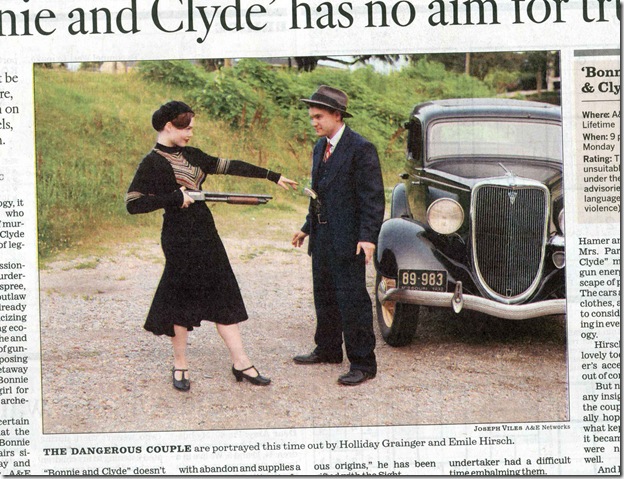
I don’t expect much from period productions these days. But my goodness, get a load of these two.
On Dec. 7, 1959, Paul Coates published an interview with Tokyo Rose. She says: “What’s the use? What good is it to talk to the press? Everybody’s mind is made up about me.”
A throwback from 2009, when my blog when it was at latimes.com.
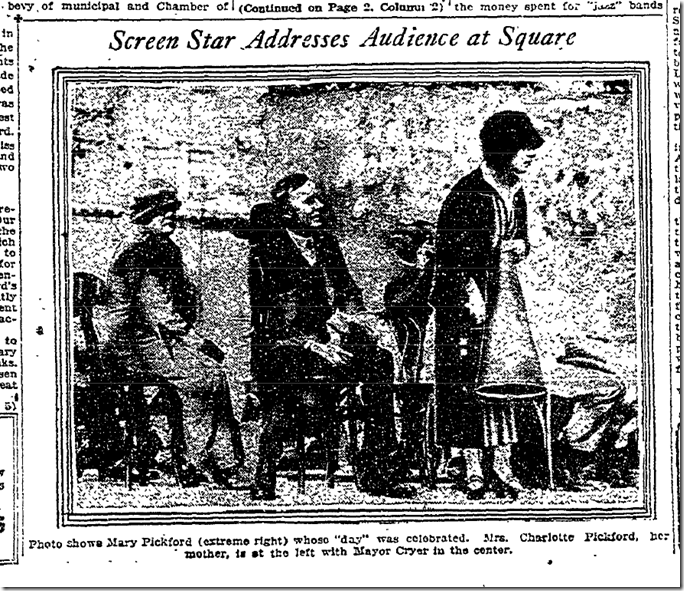
Dec. 4, 1923: Los Angeles celebrates Mary Pickford Day with an appearance by the silent screen star, her mother, Charlotte, and her husband, Douglas Fairbanks, before a crowd of fans (mostly women, The Times noted) at Pershing Square.
Speaking to the crowd without amplification, Pickford could hardly be heard by the crowd, but The Times reported that she devoted her address to the problem of the throngs of aspiring actors and actresses hoping to storm the gates of the movie studios.
The Times said: “It seems that the Chamber of Commerce statistics show that some 10,000 young men and women, less than legal age, come to this city every month to seek jobs in pictures, and of course only a small part of them have any talents or, if so, have the good fortune in the struggle to find places, for the directors are deluged with applications.”
Pickford didn’t discourage young people from seeking stardom, but she warned that they should expect to work for five years before attaining stardom and if they failed, be prepared for another line of work.
“The girls should be accompanied by their mothers,” Pickford warned, a strong rebuttal to the notion that at some point Hollywood “lost its innocence.” Hollywood never had any innocence to lose.
ps: Build a home in Inglewood, which boasted that it kept out people of color!

This is something of a find. “Los Angeles” is one of the most influential — though certainly not one of the most accurate — books ever written about local history and although it’s well known, the author, George “Morrow” Mayo is quite obscure. An EBay vendor has listed an autographed copy, and I don’t recall ever seeing another one. (Mayo’s final manuscript of the book, by the way, is at the Huntington and I once spent an afternoon going through it. Each page is has been punctured from being hung on a hook or stuck on a spike during the publishing process.)
Bidding on this item starts at $75 and if I didn’t already have a copy I would be tempted. As with anything on EBay, an item and vendor should be evaluated thoroughly before submitting a bid.
Read more about Morrow Mayo here | and here.

Today’s mystery chap is especially tricky because Christopher McPherson, who kindly shared these photos, has no idea about the identity of this gent. He could be someone’s Uncle Freddy, although this does look like a publicity shot.
Google’s image search (if you don’t know about this, you should, although you will now be on your honor not to use it to cheat on the mystery photos) is quite unhelpful.

The old Plaza area as drawn by Times artist Charles Owens. Along with the demolition to make way for Union Station, historic buildings between the Plaza and Union Station were torn down in February 1951.
Oct. 22, 1933: I came across this article while looking for something else and thought I would post it, followed by the Feb. 7, 1951, article on the demolition of the Lugo Adobe and 18 other buildings between the Plaza and Union Station.
Stanley Gordon takes a look at the area that will soon be leveled to make way for Union Station — and on an interesting side note, he refers to “a great union depot, and possibly a central airway terminal.”
He notes that the brick home of Mathew Keller, 726 Alameda, who once kept a vineyard and orchard, “will either be destroyed or moved away to make room for the concourse in front of the depot.
At Macy and Alameda, Gordon says, was the home of Benjamin D. Wilson, for whom Mt. Wilson was named.
Also at risk, Gordon says, are the Lugo Adobe, which was demolished in February 1951, along with 18 other buildings between the Plaza and Union Station.
Read on, but notice the references to “heathen Indians” and Chinese opium dens.

For the steampunk fan on your gift list, you might consider “Walking Your Octopus,” with wonderful illustrations by Brian Kesinger. I had an opportunity to chat with Brian at the Cartoon Expo and scored a signed copy.
Available from Brian Kesinger and Skylight Books

Here’s Thursday’s mystery woman, courtesy of Christopher McPherson.
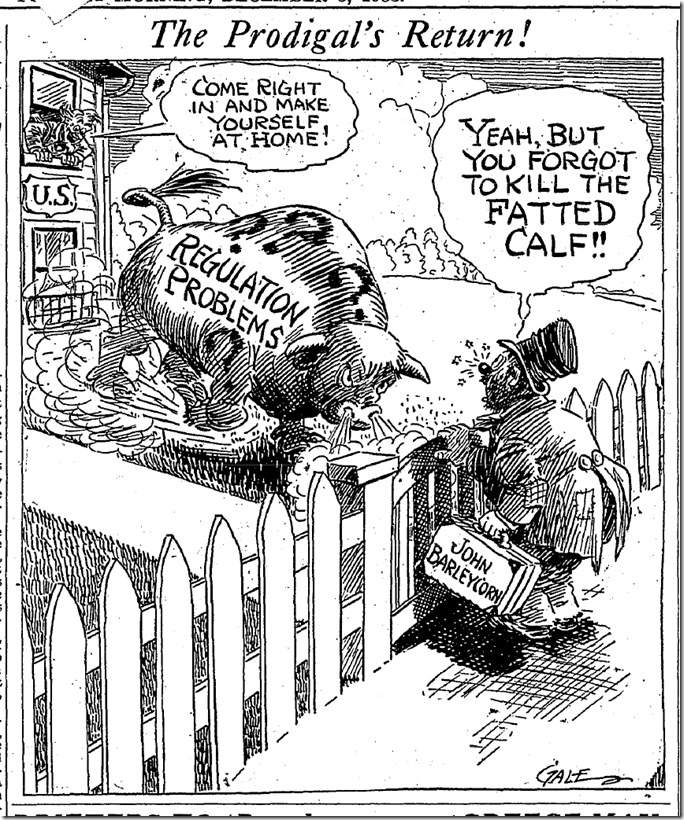
The Times marks the end of Prohibition with a front page cartoon by Edmund Waller “Ted” Gale, who quit in 1934 and went to the Examiner in a dispute over The Times’ editorial policies.
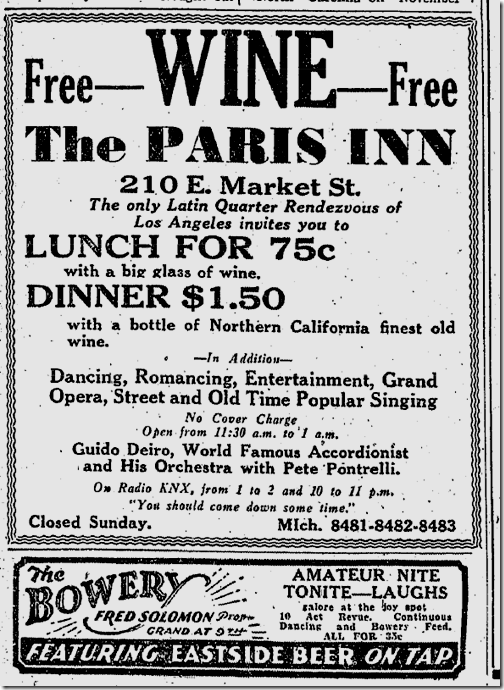
Dec. 5, 1933: With the passage of the 21st Amendment by Utah, the 18th Amendment is repealed, ending Prohibition. The Paris Inn offered lunch for 75 cents “with a big glass of wine” and the Bowery, Grand at 9th, advertised “Eastside Beer on tap.” The Times reported that WCTU speaker Justice Fidus E. Fish, 79, dropped dead after completing a speech.
Beverly Hills screenwriter Sidney Lazarus and his wife, Maud, 522 Palm Drive, are found dead in the back seat of their car, which was left running in the garage with a hose from the exhaust through the floor board and into the vehicle.
“The writer had placed his arm about his life mate and she nestled her head on his shoulder as they died,” The Times said. Authorities were alerted when Mrs. Sol Schiff, 2005 La Salle Ave., received a note. According to friends, the couple had been having health problems.
Lazarus was 43.
In the Theaters: “Roman Scandals” at Grauman’s Chinese; “Elysia” at Tally’s Criterion, Grand and 7th.
Joan Crawford and Franchot Tone deny rumors that they are engaged.
A nationwide effort targets the “itinerant unemployed” from sneaking rides on trains or hitchhiking. Los Angeles’ notorious “bum blockade” was attempted in 1936.
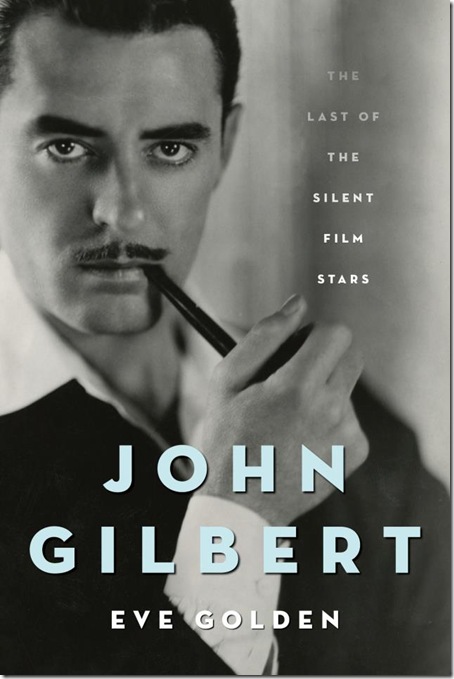
Today’s holiday gift suggestion is the latest biography from Eve Golden, “John Gilbert: The Last of the Silent Film Stars.”
The Daily Mirror likes to support its local independent bookstore whenever possible. But if you’re not close to a good local bookstore, “John Gilbert” is available from TCM and Amazon (both print and Kindle, and something called “Audible.”)
Before you watch TNT’s “Mob City” tonight, read these items from The Times about what Police Capt. William H. Parker was actually doing in the 1940s.
Parker served in the Army during World War II and was discharged in November 1945. On July 25, 1947, Parker was named head of the LAPD Traffic Division. By December 1947, Parker had attained the rank of inspector. He became head of Internal Affairs in May 1950 and became LAPD chief Aug. 2, 1950.
As I have noted before, by the time Parker became LAPD chief, Bugsy Siegel had been dead for three years.
Where was Mickey Cohen when Parker became chief? Traveling across the U.S. with John Stompanato.
And if the name Robert Gilmore in the Dec. 12, 1946, story seems familiar, you’re right. Regardless of what you may read elsewhere, “Severed” writer John Gilmore’s father was a traffic officer at this time.

And here is Wednesday’s mystery chap, courtesy of writer Christopher McPherson.
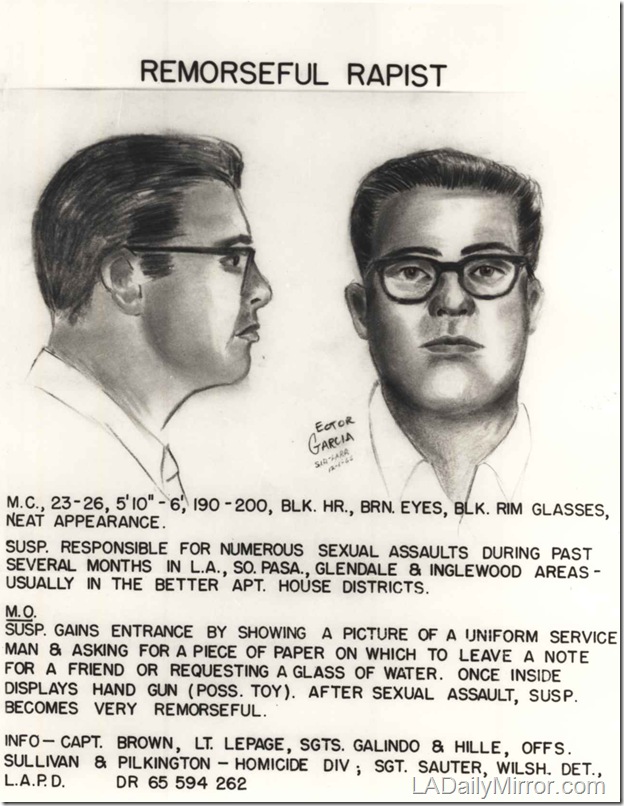
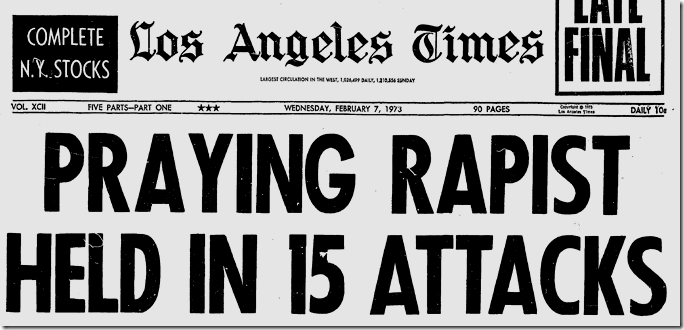
I was given a box of material that was cleaned out of the old press room at the LAPD’s Parker Center headquarters, sometimes called “the cop shop.” The box was a jumble of press releases, photographs, artists’ sketches and other items dating from the late 1960s to the early 1980s. I am organizing and cataloging the material and I’ll be posting selected items on a weekly basis.
The “Remorseful Rapist” is one the oldest items in the “cop shop files,” dating from 1965, as reflected by the LAPD case number DR 65 594-262.
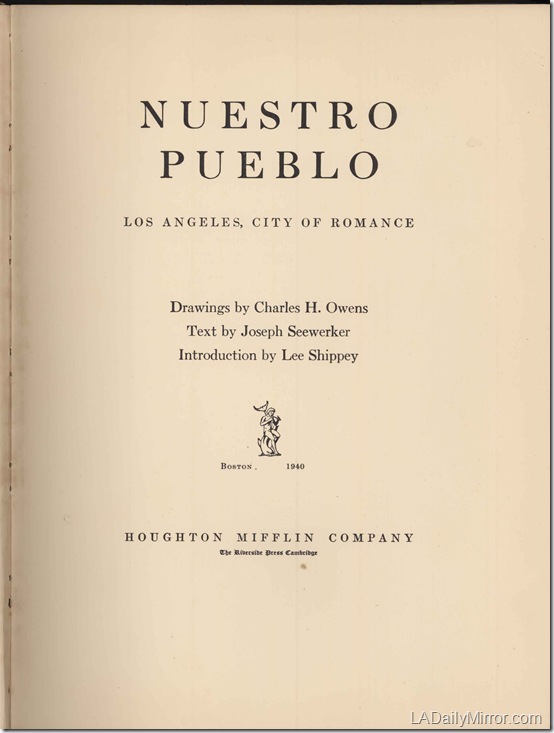
Whenever I’m asked about my favorite books on Los Angeles, my first recommendation is “Nuestro Pueblo,” a selection of features by Times artist Charles Owens and writer Joseph Seewerker that appeared in The Times. I went through all of them when the blog was at latimes.com, so I won’t repeat them now, but if you’re a fan of Rediscovering Los Angeles, which was illustrated by Owens with commentary by Timothy Turner, you may enjoy “Nuestro Pueblo.” Unfortunately, Rediscovering Los Angeles was never published in book form and has languished in obscurity.
“Nuestro Pueblo” is long out of print and the prices have gone up since I started writing about it, with some dealers asking more than $100 for a copy. A patient shopper can still find a copy for less than $20, however. One of my favorite tools for finding out of print books is bookfinder.com, which shows wide price range on copies of “Nuestro Pueblo.”
And what are your gift recommendations for this holiday season?
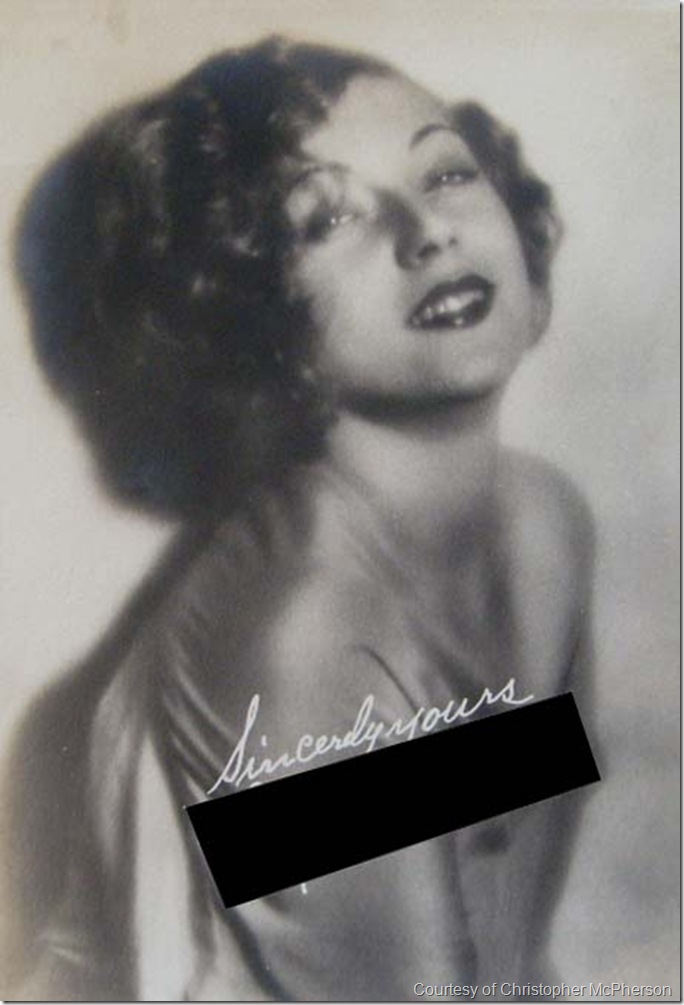
And for Tuesday, we have a mystery lady, courtesy of writer Christopher McPherson.
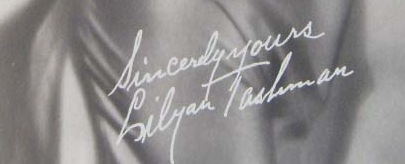
Yes, Eve, it’s Lilyan Tashman. Honest!
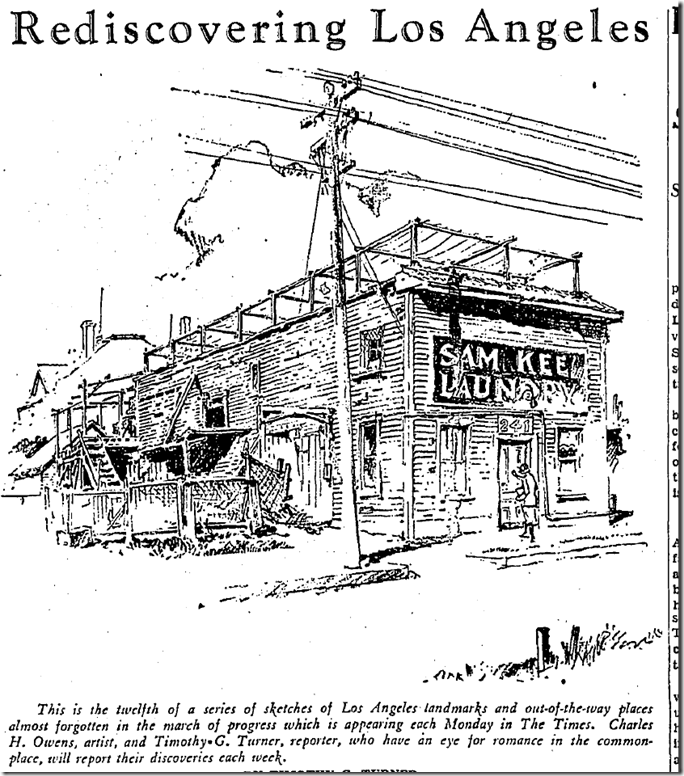
Jan. 20, 1936: For this installment of Rediscovering Los Angeles, Times artist Charles Owens and columnist Timothy Turner visit a Chinese laundry on Figueroa near Temple.
Turner writes:
It was a busy hive before John Chinaman cut off his pigtail, back when he had the quaint custom of taking a huge mouthful of water and spraying it over the bone-dry clothes before he applied the iron. This traditional custom was finally broken by threats and pleadings of municipal health officers, who accomplished the substitution of a tin mechanical sprayer.
“Chinatown,” anyone?
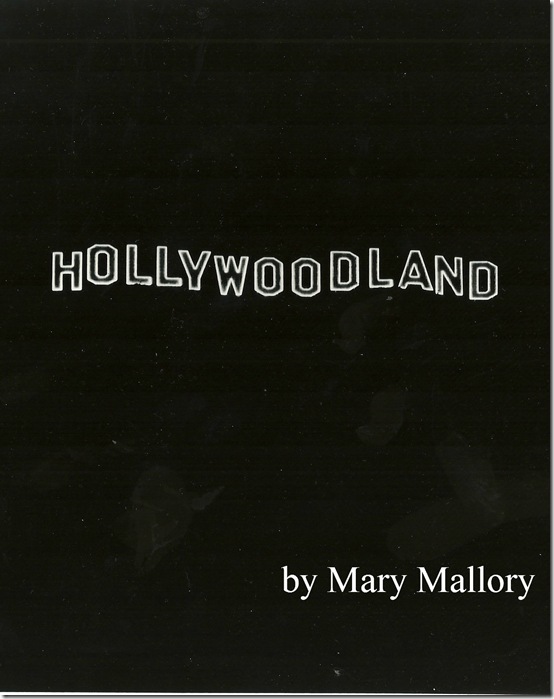
If you enjoy Mary Mallory’s columns (and our survey shows that readers do) you might like this anthology of Hollywood Heights called “Hollywoodland: Tales Lost and Found.” It’s available for the Kindle, but don’t forget that Amazon has a free app so you can read it on a PC or on an iPad.
 ladailymirror.com