
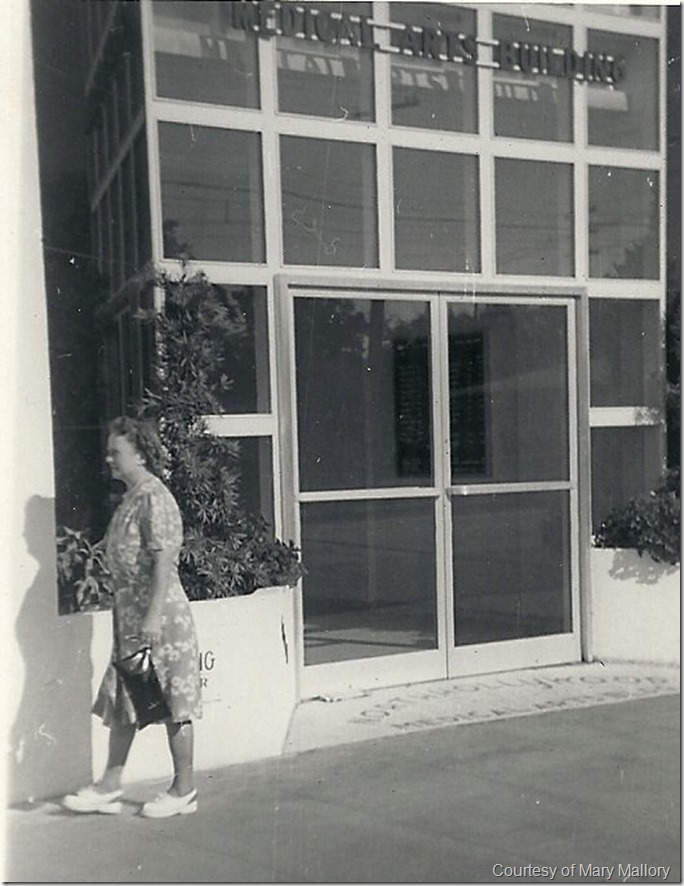
Mary went on a field trip to visit the Toluca Plaza building (formerly the Medical Arts Building) for her latest post, but some of her photos got caught in my spam filter. Here they are.
This is “Aunt Nell” “trying to hustle out of the picture.”
Mary went on a field trip to visit the Toluca Plaza building (formerly the Medical Arts Building) for her latest post, but some of her photos got caught in my spam filter. Here they are.
This is “Aunt Nell” “trying to hustle out of the picture.”

The northwest corner of Central and Manchester avenues, as shown on Google Earth. Notice the alley behind the stores.
In nine years of blogging about Los Angeles, I have learned that families often launder the past and, understandably, murder is rarely mentioned to the younger generations.

May 20, 1944
HOLLYWOOD, May 19 — Don Ameche and Twentieth Century-Fox are parting company. After a series of conferences failed to bring about an agreement, Don decided to move to another studio. His contract expires the last of June.
This news comes as something of a surprise, since Don has been with Twentieth for eight years. The only other pictures he made were when he has been on loan out.
Don was a radio star when he joined the Fox co. and has had some of their most important vehicles, perhaps the most important being “Heaven Can Wait.” He still has two unreleased pictures, “Greenwich Village” and “A Wing and a Prayer.”

Over the decades, towns and cities undergo great change as they evolve from agrarian societies into metropolitan areas. Multi-unit residential properties, modern office buildings and skyscrapers replace older buildings and styles of architecture, now considered too old-fashioned by some.
Many original buildings often survive a city’s transformation, some because they are located in what are now poorer communities that can’t afford to demolish them, while others undergo adaptive reuse. Currently, many buildings in downtown Los Angeles are undergoing gentrification and repurposing, such as decades-old factories seeing conversion as lofts and vintage hotels converted into apartments. Luck also helps some structures survive and continue operation just as originally intended.
Mary Mallory’s “Hollywoodland: Tales Lost and Found” is available for the Kindle.
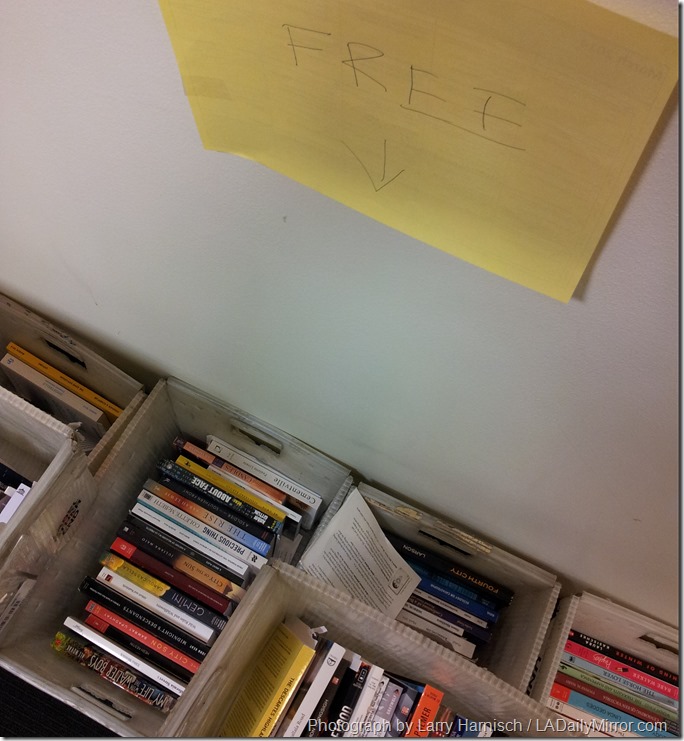
The bins of rejected review copies. Aspiring authors, avert thine eyes!

Note: I have been rummaging through the bins of review copies put out for the staff, trying to pick out books that are related in some fashion to the L.A. Daily Mirror’s themes.
“The Selected Letters of Elia Kazan,” edited by Albert J. Devlin and Marlene J. Devlin, published by Alfred A. Knopf, $40, caught my interest. I’m a snoop at heart and enjoy reading old letters and I suspect I’m not the only one. A volume of William Faulkner’s correspondence from World War I enjoyed a long and happy life in the guest bathroom at the Daily Mirror HQ before it eventually vanished.
This is a weighty book – 672 pages – but is, unfortunately, only half the conversation as we never hear from any of Kazan’s correspondents, who include Tennessee Williams, Clifford Odets, John Steinbeck, Budd Schulberg, Molly Day Thacher (Kazan’s wife) and many others.
An in-depth review appears in the New York Times | A review in the Hollywood Reporter
A few of the letters are short – like the one warning Warren Beatty to clean up his act to avoid being typed as a troublemaker. But most are long and involved. The book is certainly not beach reading and more likely to end up in nuggets in DVD commentaries, but it’s worth keeping around. On the jump, a sample selected at random, to Marlon Brando, Pages 241-244, regarding “On the Waterfront.”

May 16, 1944
HOLLYWOOD, May 15 — A year ago Dick Haymes sat on a park bench in New York and wondered how he was going to support his wife and baby. Today he is to have the lead opposite Betty Grable in “Diamond Horseshoe” when it goes before the cameras Aug. 1. That is an assignment any actor would welcome because Betty’s movies are tops at the box office.
After Darryl Zanuck took a look at Dick in “Irish Eyes Are Smiling,” he ordered retakes and added scenes. He realized he had something in Haymes who, in addition to that golden voice, has turned out to be quite an actor.
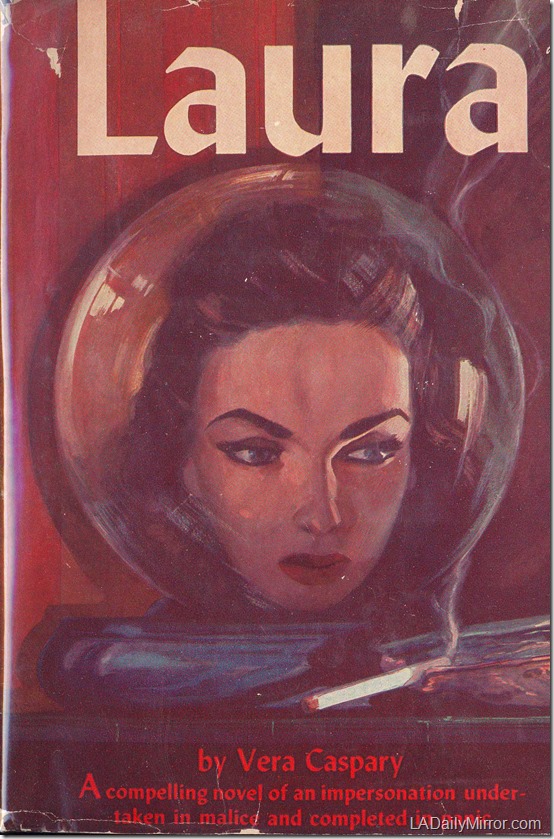
Louella Parsons’ May 15, 1944, item on Rouben Mamoulian being replaced as the director of “Laura” has inspired a long detour into the production of the film – beginning with Vera Caspary and her 1942 novel. Given the typical state of research in Hollywood biographies (heavy borrowing in lieu of original pick and shovel work) it’s not clear that much new work has been done on the film. Many sources seem to rely mainly on the account in Rudy Behlmer’s 1982 book “Behind the Scenes” (Behlmer also provided a commentary track on the DVD of the film).
Which brings me to my appeal to the brain trust:

The Library of Congress has the papers of Rouben Mamoulian, who was apparently reluctant to ever discuss being fired from the project. In the finding aid (which may be downloaded), we find intriguing items in Boxes 76 and 77 regarding “Laura,” including various scripts, “costume and hair tests” and schedules.
A trip to Washington to examine these tantalizing items is, alas, far beyond the travel budget of the L.A. Daily Mirror. But are there any members of the brain trust who are able to rummage through the Mamoulian items in search of something new on “Laura?” If so, drop me an email.

May 15, 1944
On the cover, George Rodger’s photo of Sir Bernard Montgomery.
This week’s movie: “The Hitler Gang,” starring Robert Watson as Hitler.
And a photo essay by Andreas Feininger on war production in the U.S.


May 15, 1944
Louella Parsons says: Rouben Mamoulian has asked to be released from directing “Laura” and Otto Preminger, the producer of this much discussed movie, will direct the picture. The trouble is a difference of opinion of the psychological treatment of the story and character. The two men could not see eye to eye and so Mamoulian stepped out.
“Laura,” based on Vera Caspary’s mystery drama, is one of the pictures — “Sunday Dinner With a Soldier” is the other — that is bringing about the $600,000 lawsuit which 20th Century-Fox filed against Jennifer Jones when she did not report for work. Gene Tierney and Clifton Webb are the stars.
Here’s a bit more on why Jennifer Jones didn’t appear in “Laura.”
According to a Times story published May 3, 1944, Jones failed to report for work on April 24, prompting 20th Century-Fox to take legal action.
Jones’ contract with Selznick Studios specified that she was to appear in one 20th Century-Fox film per year. According to Daniel T. O’Shea, executive director of Selznick Studios, Fox failed to meet one of the requirements of her contract, which was that the script had to be submitted in advance for approval.
O’Shea said that Fox failed to send an advance copy of “Laura.” Jones had not seen the script and therefore said “her personal plans precluded availability,” according to O’Shea.
The Times said: “Miss Jones, commenting on the dispute, said: ‘There is really nothing I can say. I am under contract to Mr. Selznick and know nothing of the discussions.”

A “true” crime book that was “written in secret” evokes “Black Dahlia Avenger” and it’s intriguing that “The Most Dangerous Animal of All” treads the same territory as Steve Hodel’s “Most Evil.” In case you don’t recall, retired LAPD Det. Steve Hodel, after claiming that his father killed Elizabeth Short and a lot of other women, also says Dr. George Hodel was the Zodiac killer.
And no, your memory isn’t deceiving you. We just had another book by a retired detective who calls himself “Cold Case Cameron” which says that the Zodiac killer was Edward Wayne Edwards.
Who also killed Elizabeth Short.
When he was 13.


May 14, 1944
The invasion of Europe is less than a month away. Even the Germans admit it.
On the jump:
Movies in production: “Farewell, My Lovely,” “The House of Fear” and “A Stranger in Our Midst.”
Best Sellers: “The Robe,” “A Tree Grows in Brooklyn,” “A Bell for Adano,” “Strange Fruit” and “Good Night, Sweet Prince.”
Book review: “The Red Cock Crows” by Francis Gaither. The story of a slave rebellion in the 1830s. A review in the Saturday Review, May 27, 1944.
May 14, 1944
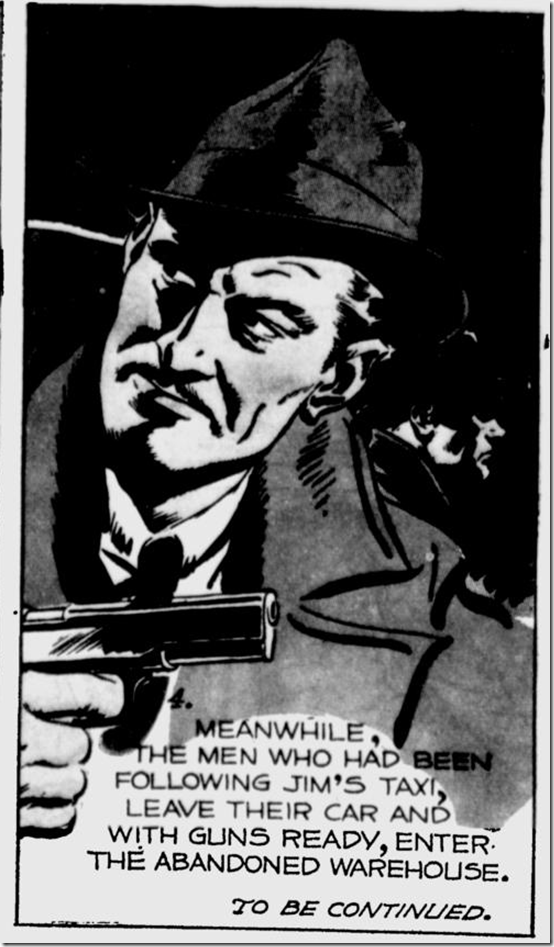
Joe E. Brown pioneered entertainment in Alaska and the South Pacific, and only Don Barclay beat him to China. Bill Gargan, who was with Paulette Goddard in China, says the name Barclay is known to every serviceman there. He does a mind-reading act the boys love and when he appeared at Hollywood Canteen he had Cary Grant, no less, for his stooge.
Some of the collateral damage from the redesign of latimes.com was the disappearance of the old Daily Mirror. It’s back online at the same old place. Google hates broken links, so I’m not sure what the outage did to its presence in search results, but it lives on.
With the passage of time, as more material vanishes from the Internet, the role of archive.org is becoming increasingly important. Much of the blog is at archive.org, where you can also find such Web rarities as Kareem Abdul-Jabbar’s short-lived blog at The Times.
May 13, 1944
HOLLYWOOD, May 12 — The warm admiration David Wark Griffith has for Preston Sturges and his delight in “The Miracle of Morgan’s Creek” will shortly result in a business association. D.W. wrote a motion picture version of Louis Bromfield’s “Up Ferguson Way,” which appeared in Cosmopolitan magazine, and through Lillian Gish’s insistence gave it to Preston to read. While it’s beautiful and poetic, Lillian and Sturges felt Griffith’s first picture should be strongly commercial. So Bromfield has been asked for added story suggestions.

Note: Last year I was given a box of news releases, photographs and random pieces of paper from the old press room at Parker Center. I’m gradually posting the material.
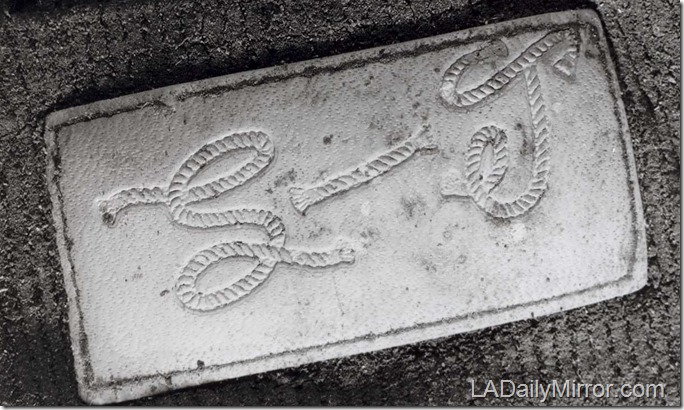
These are the earrings and the label from a pair of pants worn by a teenage girl whose body was found Sept. 5, 1973, in an open grave in Hacienda Heights. She had been dead about 30 to 90 days, authorities said. She had been shot in the head.
From the original press release:
Sheriff Peter J. Pitchess is requesting the cooperation of the public in identifying a young girl who’s body was found in an open grave on September 5, 1973, in Hacienda Heights.
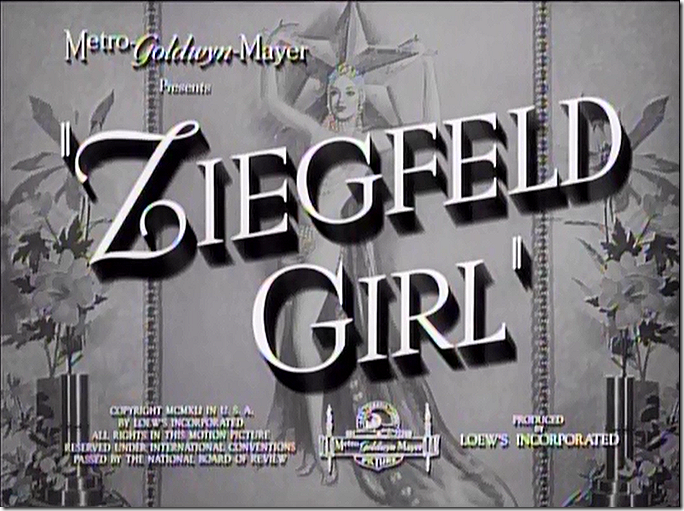
This week’s mystery movie is “Ziegfeld Girl.”
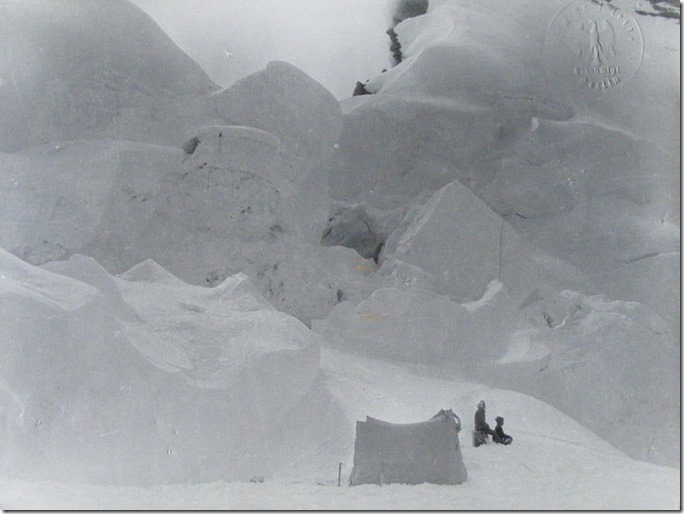
An image from “The Epic of Everest,” listed on EBay for $9.99.
Britain ruled the seas and world in the early 20th century, organizing expeditions to forlorn and distant lands like the poles and Mt. Everest to show British might and prestige in conquering nature and the unknown. Adventurous explorers like Robert Falcon Scott and Sir Ernest Shackleton set off to Antarctica in hopes of being the first to find and reach the South Pole. They planned filmic records of their journeys, both to pay for the travels and to demonstrate man’s superiority over nature. In the process, these motion pictures revealed the ingenuity and toughness of filmmakers shooting for the first time in some of the most brutal places on Earth.
Like filmmakers Frank Hurley and Sir Herbert Ponting before him, Capt. John F. B. Noel planned to capture personable, every day moments of the Royal Geographic Society’s 1924 journey to summit Everest, along with the great glory of showing British explorers conquering the unknown. Unfortunately, Noel’s “The Epic of Everest” matched Hurley’s “Endurance” and Ponting’s “The Great White Silence,” in becoming moving memorials documenting the great endurance and defeat of brave, courageous men by the overwhelming forces of nature, instead of the triumphal tour de forces they were intended to be.
Mary Mallory’s “Hollywoodland: Tales Lost and Found” is available for the Kindle.


A large lot of Black Dahlia material, including newspaper clippings, several magazines, newspaper photos, etc., has been listed on EBay. Bidding is currently 99 cents but I’m sure it will go much higher before the auction concludes. An unattached front page of the Jan.17, 1947, Examiner recently sold for more than $500.
It’s a bit difficult to determine the precise source, but the clippings include material from various Los Angeles newspapers.
And no, there don’t appear to be any crime scene photos or body shots, which I’m sure will be a disappointment to the ghouls who collect these things as if they are baseball cards.
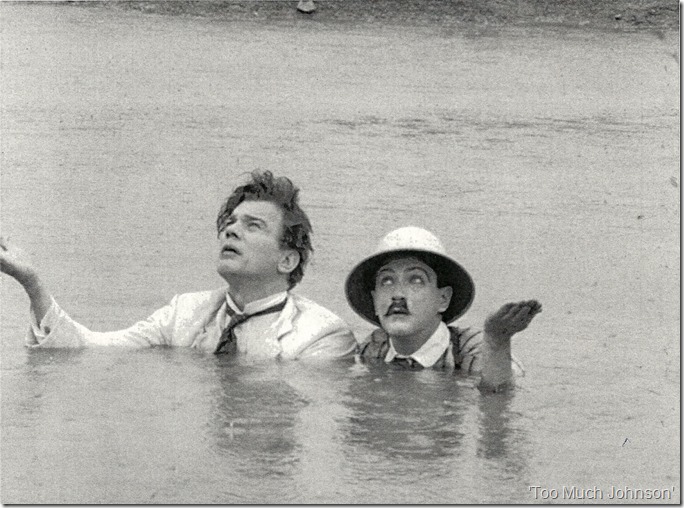
Joseph Cotten, left, in “Too Much Johnson.”
The Academy of Motion Picture Arts and Sciences and Los Angeles County Museum of Art opened their salute to Orson Welles Saturday, May 3, 2014, by screening the first films ever made by the famous director, “The Hearts of Age” and “Too Much Johnson.” Both demonstrated his great visual flair and theatrical storytelling while also providing evidence of his propensity for overreaching. “Too Much Johnson” shows a young filmmaker finding his way and gaining a love of his craft while also attempting to juggle too many plates.
RESTORATION
George Eastman House video on restoring “Too Much Johnson’”
ORIGINAL MUSIC (via Spotify)
Paul Bowles’ “Music for a Farce” I
Paul Bowles’ “Music for a Farce” II
Paul Bowles’ “Music for a Farce” III
Paul Bowles’ “Music for a Farce” IV
Paul Bowles’ “Music for a Farce” V
Paul Bowles’ “Music for a Farce” VI
Paul Bowles’ “Music for a Farce” VII
Paul Bowles’ “Music for a Farce” VIII
Before the films, AMPAS’ managing director of programming and education, Randy Haberkamp, led a panel discussion featuring Annette Melville of the National Film Preservation Foundation, Andrea Kalas of Paramount and Bruce Barnes, director of the George Eastman House, relating the background and history of this film, once believed to be lost. Discovered serendipitously in a Pordenone, Italy, warehouse in 2005, “Too Much Johnson” was repatriated to the United States and given to George Eastman House. After major damage was discovered to Reel 2, Haghefilm in the Netherlands executed a magnificent restoration and preservation, saving the reel. 99-year-young Norman Lloyd stole the show, however, regaling the audience with humorous tales of working with Welles as part of the Mercury Theatre in 1938.
Mary Mallory’s “Hollywoodland: Tales Lost and Found” is available for the Kindle.
 ladailymirror.com