
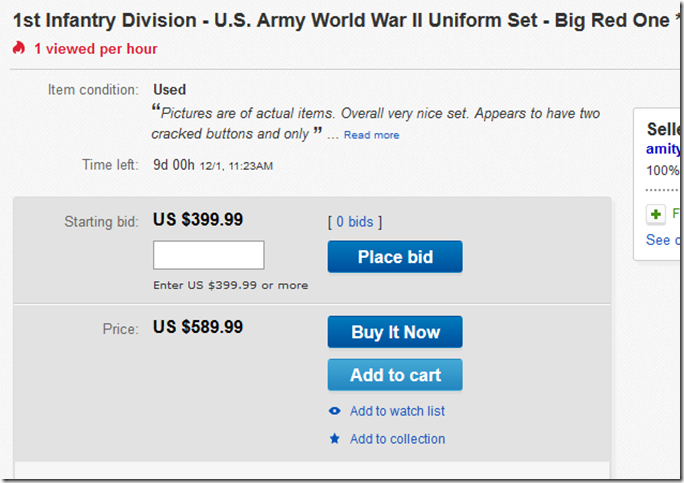
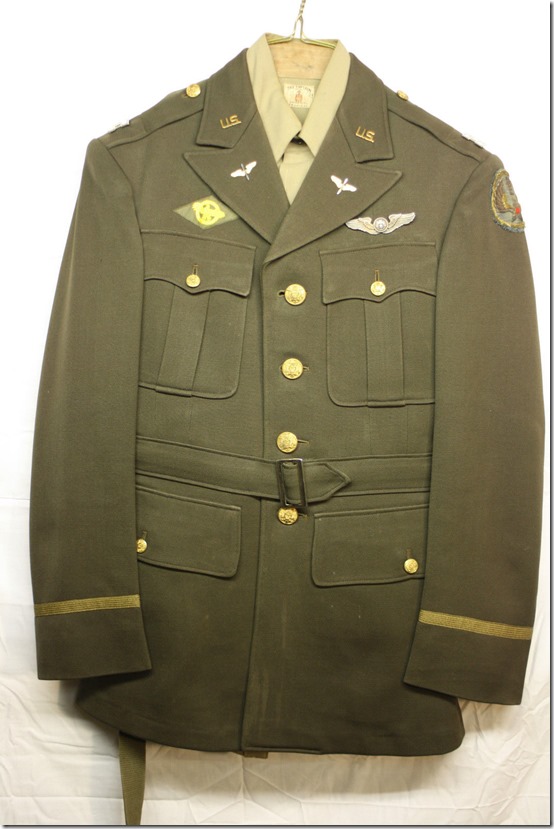
This Army uniform has been listed by an EBay vendor as being from the 1st Infantry Division.
Have you spotted the mistake yet?
This Army uniform has been listed by an EBay vendor as being from the 1st Infantry Division.
Have you spotted the mistake yet?

Nov. 22, 1963: The Times publishes an extra.
Note: In case you are wondering, this is a repost from 2013.
I recently attended graduation exercises for a local college and the commencement speaker spent quite a while talking about how the 1963 assassination of President John F. Kennedy was a watershed moment in her life.
As she was speaking, I studied the faces in the audience — the family and friends of people in their early 20s who were graduating from college — and wondered: “What on Earth do these kids make of this? Does it resonate at all?” Actually, no. Not in the least. And why should it?
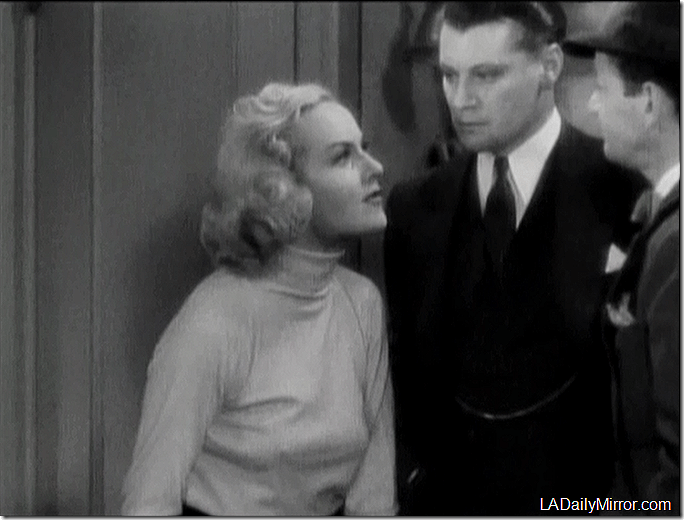
I watched “Twentieth Century” for the first time the other night and was more than a bit surprised to see Carole Lombard clearly braless in this scene. It’s not as apparent in a frame grab as it is in the film, but she jiggles mightily.

We don’t know much about the man who killed Georgette Bauerdorf, but let’s see what we can infer. The way he killed her was quite unusual (more about that later) and his behavior after the killing was also somewhat unusual. But rather than trying to take the phases of the crime in chronological order, let’s go from least speculative to most speculative.
Georgette Bauerdorf, an Unsolved Murder:
Part 1 | Part 2 | Part 3 | Part 4 | Part 5 | Part 6 | Part 7 | Part 8 | Part 9 | Part 10 | Part 11 | Part 12 | Part 13 | Part 14 | Part 15 | Part 16 | Part 17 | Part 18 | Part 19 | Part 20 | Part 21 | Part 22 | Part 23 | Part 24 | Part 25 | Part 26 | Part 27 | Part 28 | Part 29 | Part 30 | Part 31
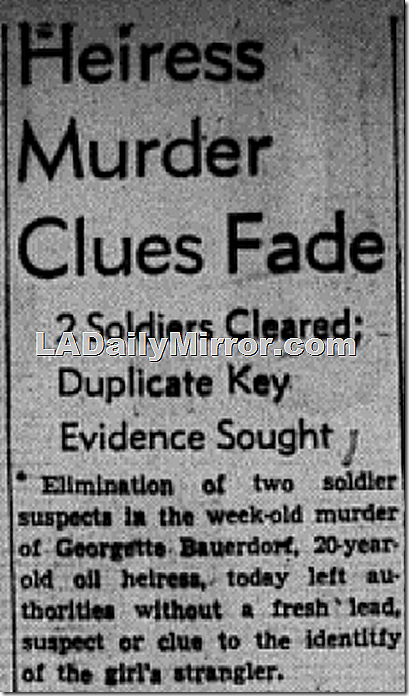
Oct. 19, 1944: Los Angeles Herald-Express
Before trying to theorize about what might have happened on the night of the killing, let’s sum up everything we know about our victim, Georgette Bauerdorf, and then take a look at what little we know about the killer.
Georgette Bauerdorf, an Unsolved Murder:
Part 1 | Part 2 | Part 3 | Part 4 | Part 5 | Part 6 | Part 7 | Part 8 | Part 9 | Part 10 | Part 11 | Part 12 | Part 13 | Part 14 | Part 15 | Part 16 | Part 17 | Part 18 | Part 19 | Part 20 | Part 21 | Part 22 | Part 23 | Part 24 | Part 25 | Part 26 | Part 27 | Part 28 | Part 29 | Part 30 | Part 31
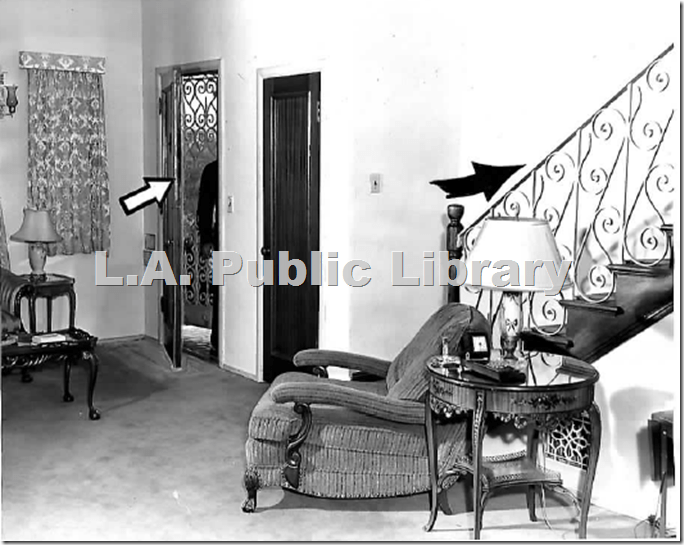
The front door of the Bauerdorf apartment, photo courtesy of the Los Angeles Public Library.
In the previous post, we examined the scenario about the light fixture in the entryway to the Bauerdorf apartment. At the time of the killing, there was intense speculation that the killer disabled the light so that Georgette Bauerdorf would be unable to see who was at the door and thus admitted the killer.
Georgette Bauerdorf, an Unsolved Murder:
Part 1 | Part 2 | Part 3 | Part 4 | Part 5 | Part 6 | Part 7 | Part 8 | Part 9 | Part 10 | Part 11 | Part 12 | Part 13 | Part 14 | Part 15 | Part 16 | Part 17 | Part 18 | Part 19 | Part 20 | Part 21 | Part 22 | Part 23 | Part 24 | Part 25 | Part 26 | Part 27 | Part 28 | Part 29 | Part 30 | Part 31
 |
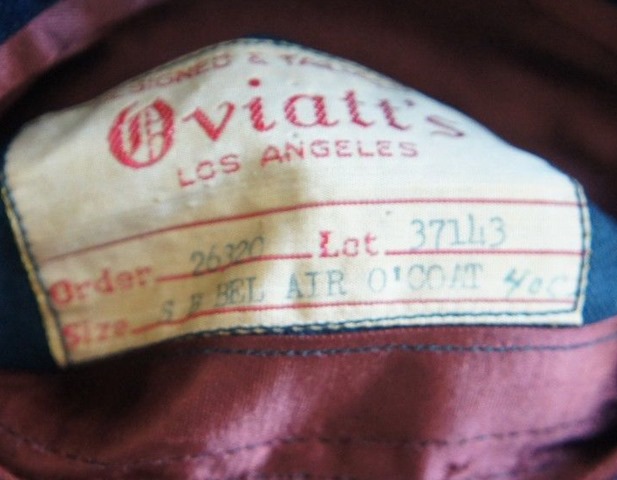 |
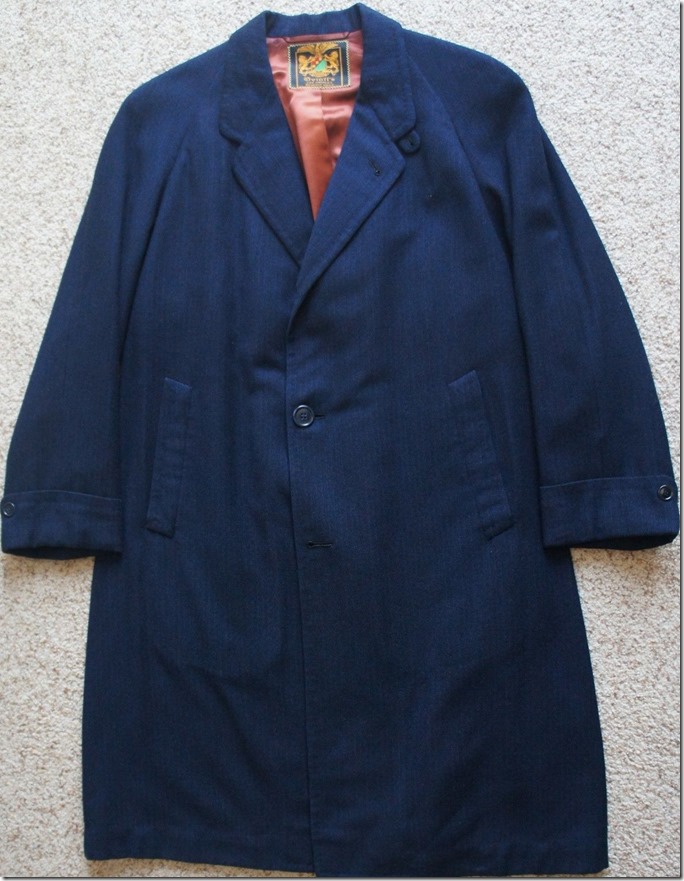
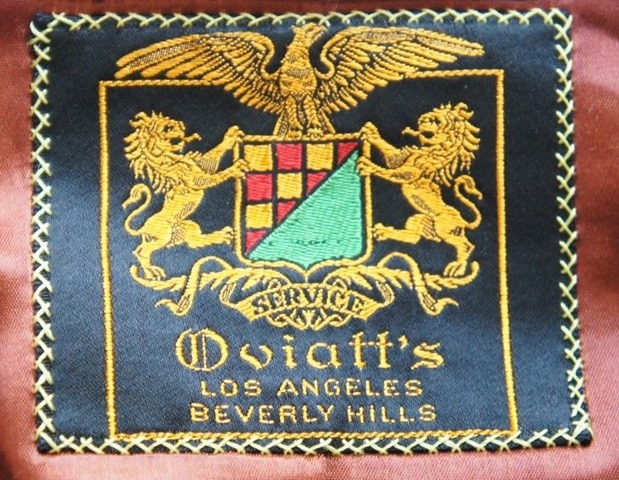
This overcoat, size 46, from Oviatt’s has been listed on EBay with bids starting at $4.99. There appears to be some moth damage and some less than expert repairs. Oviatt’s was among the leading men’s stores in Los Angeles its wares are prized by collectors of vintage clothing. (Sorry to miss the latest tweed crawl, chaps. I was working, but I was with you in spirit).
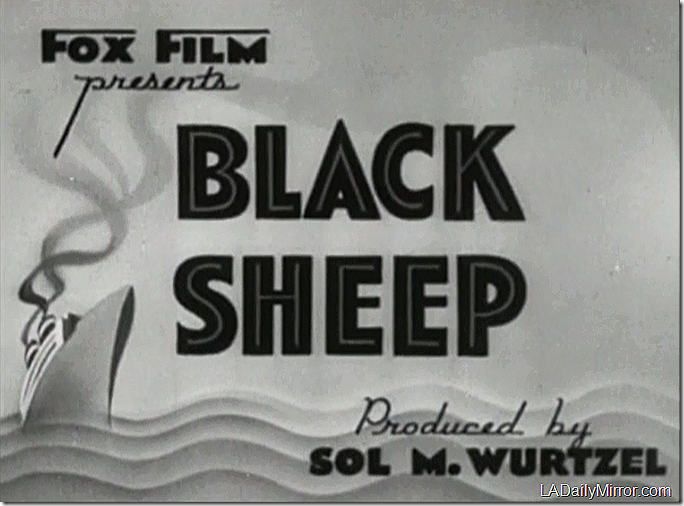
This week’s mystery movie has been the 1935 Fox film “Black Sheep,” starring Edmund Lowe and Claire Trevor (Friday’s mystery guests), Tom Brown (Wednesday’s mystery guest), Eugene Pallette (not shown), Adrienne Ames (Monday’s mystery guest), Herbert Mundin (Thursday’s mystery guest) and Ford Sterling (not shown). It was directed by Allan Dwan from a screenplay by Allen Rivkin based on a story by Dwan. Music by Oscar Levant!
I recorded “Black Sheep” several years ago from cable and I’m not sure it is generally available.
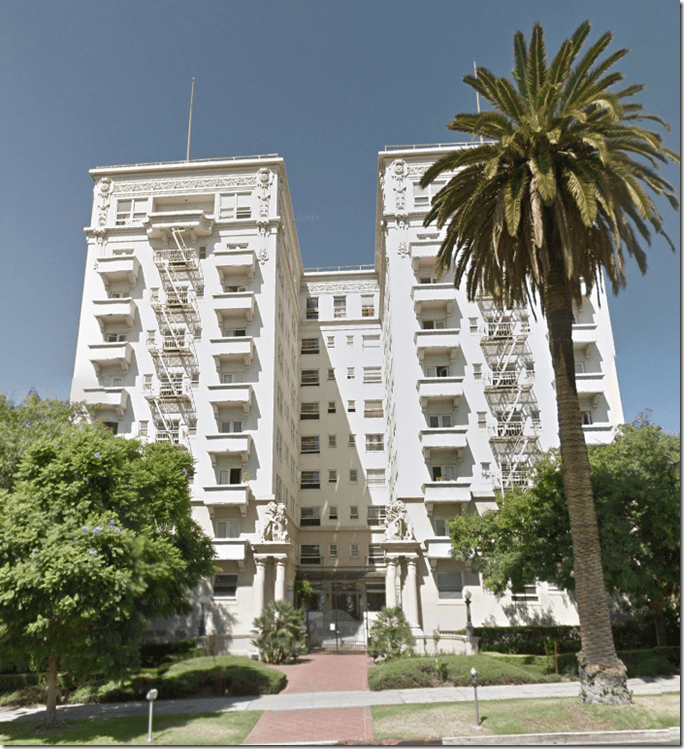
The Bryson Apartments, via Google Street View.
Considered by many to be one of the most attractive apartment buildings in Los Angeles, the regal Bryson Apartment Building at 2701 Wilshire Blvd. stands as a lovely example of 1910s high end apartment living, a stately survivor reflecting the optimistic, go-getter attitude of early Los Angeles residents. Combining superb construction, elegant looks, and luxurious decoration, the Bryson stands as a glorious monument to its builder, Hugh W. Bryson.
Community leader Bryson believed in constructing affordable large scale residential developments filled with beauty and taste. Born in Memphis, Tennessee, August 1, 1868, ambitious Bryson strove for excellence from a young age. After graduating from high school, he worked as clerk for a cotton brokers, working in banking, and selling real estate, before arriving in Los Angeles in 1902. Bryson joined leading contractor, F. O. Engstrum Co., and within a few years, married the owner’s daughter, Blanche. He was named a general manager and director of the company in 104, focusing on major projects. Recognizing the large migration of East Coast and Midwest residents to sunny LA, Bryson began financing and his own projects under his Concrete Appliances Company.
Mary Mallory’s “Hollywoodland: Tales Lost and Found” is available for the Kindle.
Continue reading

Here’s a fun toy I just discovered.
CamelCamelCamel.com tracks price fluctuations on Amazon (in case you haven’t noticed – and I hadn’t — the hardcover price of James Ellroy’s “Perfidia” has been dropping slightly every day). Handy for the holidays, no?
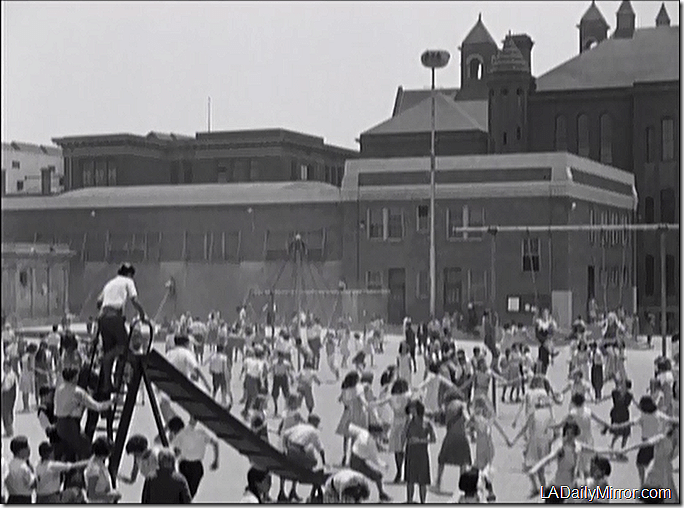
After I posted a photo of Ann Dvorak’s Duesenberg in the 1932 film “Three on a Match,” John Bengtson noted that the school scenes were filmed at Los Angeles High School on Fort Moore Hill. “Three on a Match” is, of course, set in New York.
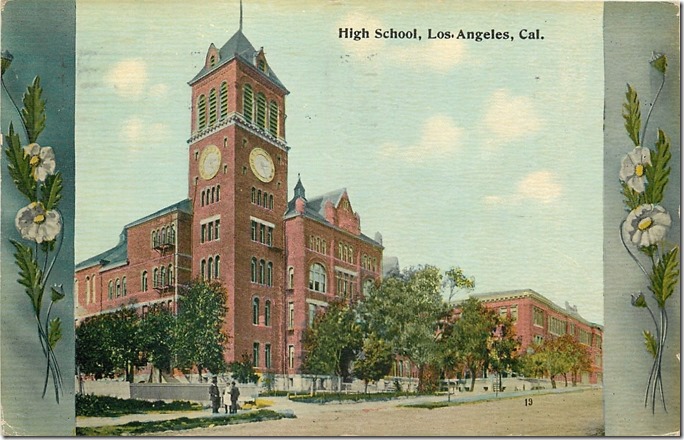
A postcard showing Los Angeles High School, listed on EBay as Buy It Now for $5.19.
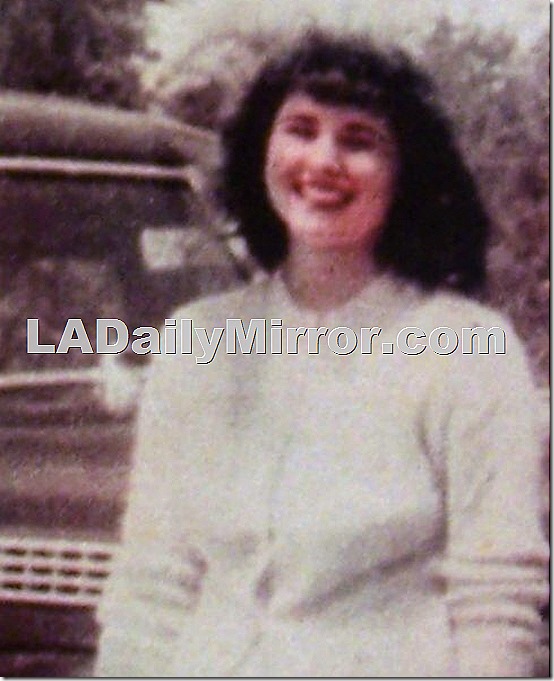
A photo (possibly hand-tinted) of Georgette Bauerdorf, National Police Gazette, August 1946, courtesy of Steven Bibb.
And now we enter the realm of speculation in the Georgette Bauerdorf case. We have looked at all the evidence as it was reported in the newspapers, but without access to the autopsy report or the Bauerdorf apartment, everything remains tentative at best. We can only theorize as to what might have occurred.
Let’s examine several scenarios that were suggested by the original investigators.
Georgette Bauerdorf, an Unsolved Murder:
Part 1 | Part 2 | Part 3 | Part 4 | Part 5 | Part 6 | Part 7 | Part 8 | Part 9 | Part 10 | Part 11 | Part 12 | Part 13 | Part 14 | Part 15 | Part 16 | Part 17 | Part 18 | Part 19 | Part 20 | Part 21 | Part 22 | Part 23 | Part 24 | Part 25 | Part 26 | Part 27 | Part 28 | Part 29 | Part 30 | Part 31
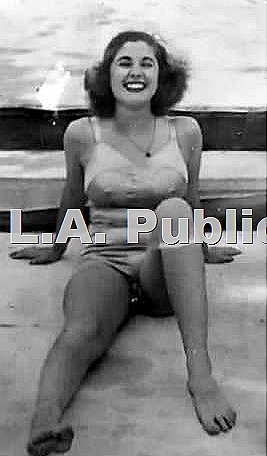
Georgette Bauerdorf in a photograph courtesy of the Los Angeles Public Library.
So far in our examination of the Georgette Bauerdorf killing, we have looked at almost every aspect except the way the investigation was conducted.
Georgette Bauerdorf, an Unsolved Murder:
Part 1 | Part 2 | Part 3 | Part 4 | Part 5 | Part 6 | Part 7 | Part 8 | Part 9 | Part 10 | Part 11 | Part 12 | Part 13 | Part 14 | Part 15 | Part 16 | Part 17 | Part 18 | Part 19 | Part 20 | Part 21 | Part 22 | Part 23 | Part 24 | Part 25 | Part 26 | Part 27 | Part 28 | Part 29 | Part 30 | Part 31
Continue reading

Henry James Lynch, a plumber who was found in the basement of El Palacio Apartments, explained that he could do a better job than the police in investigating the Georgette Bauerdorf killing, courtesy of the Los Angeles Public Library.
As the Georgette Bauerdorf investigation unfolded, it attracted the usual kooks, crackpots and nut jobs, including an anonymous note, purportedly from the killer, that was a hoax.
Georgette Bauerdorf, an Unsolved Murder:
Part 1 | Part 2 | Part 3 | Part 4 | Part 5 | Part 6 | Part 7 | Part 8 | Part 9 | Part 10 | Part 11 | Part 12 | Part 13 | Part 14 | Part 15 | Part 16 | Part 17 | Part 18 | Part 19 | Part 20 | Part 21 | Part 22 | Part 23 | Part 24 | Part 25 | Part 26 | Part 27 | Part 28 | Part 29 | Part 30 | Part 31
I thought it would be fun to do a British film for a change. This is the 1937 movie “Fire Over England,” with Sir Laurence Olivier, Flora Robson, Leslie Banks, Vivien Leigh, Raymond Massey, Tamara Desni and Morton Selten. Based on the novel by A.E.W. Mason and adapted for the screen by Clemence Dane and Sergei Nolbandov and directed by William K. Howard. Music by Richard Addinsell, photographed by James Wong Howe with costumes by Rene Hubert.
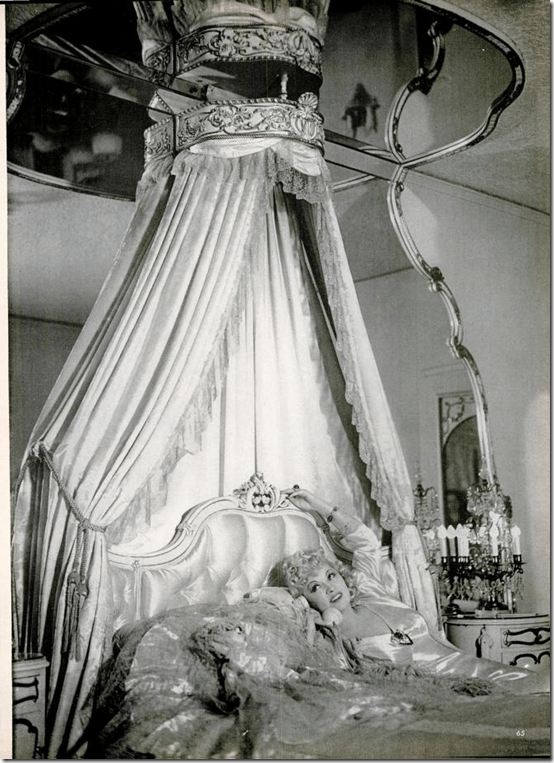
Mae West in her boudoir at the Ravenswood, Life magazine, Feb. 19, 1940.
Built during the early years of the Great Depression, the luxurious Ravenswood Apartment building at 570 N. Rossmore Ave. stands as one of the best examples of upscale apartment living in Los Angeles the 1930s. A gorgeous Zig Zag Streamline Moderne building, the Ravenswood features elegant decorations, adornments, and amenities, attracting many celebrity and discriminating residents.
Financier Maurice Feigenbaum obtained a permit for an eight-story, 240 room apartment building costing $350,000 in early June 1930, per the June 8, 1930 Los Angeles Times. He hired Max Maltzman, one of the few Jewish architects in Los Angeles at the time, to design an upscale structure. Originally from Boston, where he opened a draftsman’s office in 1923, Maltzman arrived on the West Coast in 1927, working as a draftsman for architect Leland A. Bryant. By 1929, Maltzman opened his own shop at 704 S. Spring Street, designing elegant apartment buildings throughout mid-Wilshire and the surrounding area. Feigenbaum, unfortunately, was indicted along with eleven others by a Federal grand jury November 18, 1931 for attempting to defraud more than $5 million through the U. S. mail.
Mary Mallory’s “Hollywoodland: Tales Lost and Found” is available for the Kindle.

Sorry for the short notice, but the Museum of the San Fernando Valley says that it’s having a grand opening today from 4 p.m. to 8 p.m. at 18860 Nordhoff St. in Northridge. More information is available here.

Wow. Just when I thought I had seen everything — and I mean everything — about the Black Dahlia case.
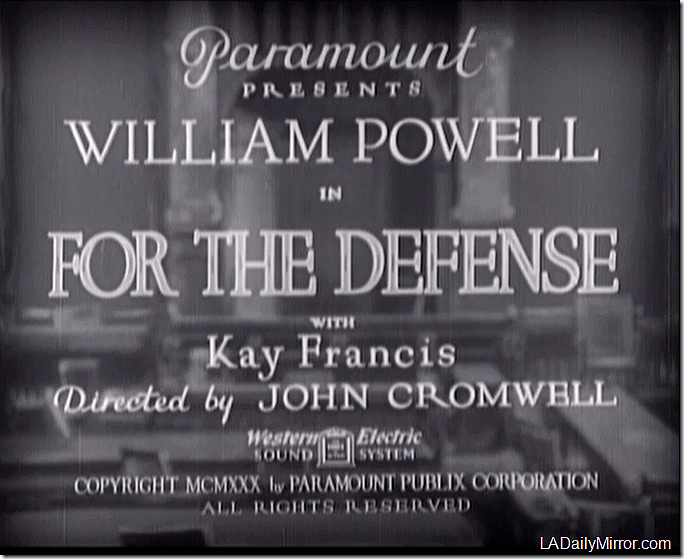
“For the Defense” is one of the old Paramount films now controlled by Universal.

As part of its pre-code marathon, TCM recently aired “For the Defense,” a 1930 Paramount film starring William Powell and Kay Francis.
Continue reading

An unidentified woman demonstrates how someone disabled the light fixture in the entryway to the Bauerdorf apartment, courtesy of the Los Angeles Public Library. I wondered whether this was Aggie Underwood because it is a Herald-Express picture and Herald reporters and photographers usually worked in teams. If a photographer wanted to show the height of the fixture, this would be a good way to do it. It’s impossible to be positive, however.
Several days after Georgette Bauerdorf was killed, investigators focused on the light fixture outside the front door to the Bauerdorf apartment at 8493 Fountain Ave. The fixture had been disabled when someone unscrewed the bulb by several turns so that it no longer made electrical contact, but appeared to be fine. The Times described this fixture as an “automatic night light,” raising the question of whether it might have been on a timer or triggered by an “electric eye.”
Georgette Bauerdorf, an Unsolved Murder:
Part 1 | Part 2 | Part 3 | Part 4 | Part 5 | Part 6 | Part 7 | Part 8 | Part 9 | Part 10 | Part 11 | Part 12 | Part 13 | Part 14 | Part 15 | Part 16 | Part 17 | Part 18 | Part 19 | Part 20 | Part 21 | Part 22 | Part 23 | Part 24 | Part 25 | Part 26 | Part 27 | Part 28 | Part 29 | Part 30 | Part 31
Continue reading
 ladailymirror.com