The Daily Mirror thanks its readers in advance for their patience.

The Daily Mirror thanks its readers in advance for their patience.

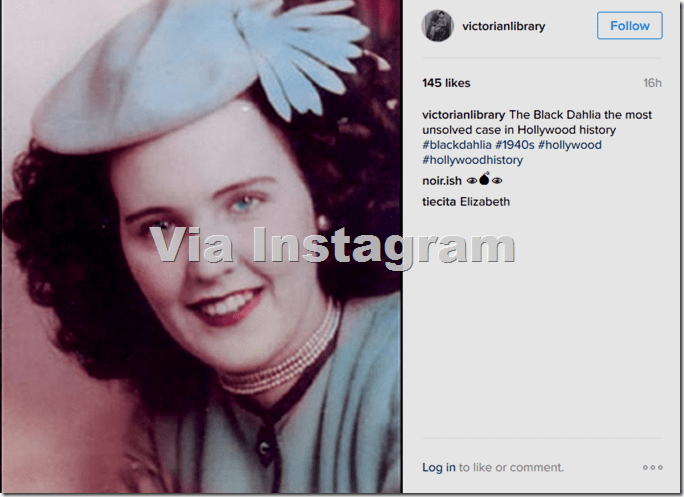
An EBay vendor has listed this portrait by Eleanor Merriam Lukits, stating that it “looks like Black Dahlia Elizabeth Short.”
Actually, no. The work appears to be skillfully done, but it’s not Elizabeth Short and doesn’t look like her. But I guess it’s a good sales gimmick. Bidding on this picture of “Not Elizabeth Short” starts at $49.

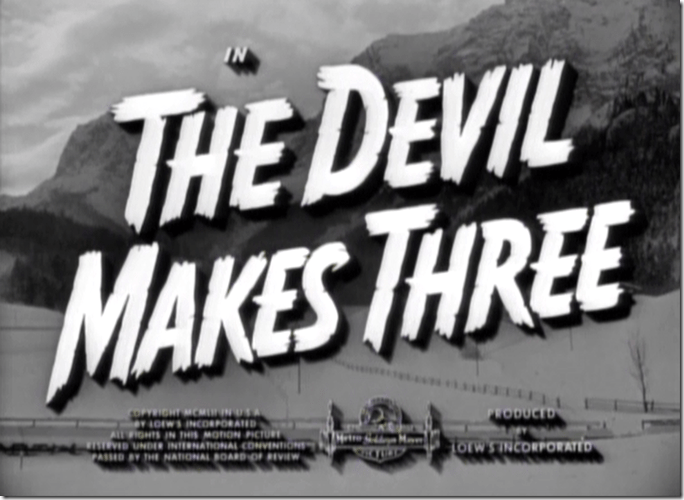
This week’s mystery movie has been the 1928 MGM film “Across to Singapore,” starring Ramon Novarro (Thursday’s mystery guest), Joan Crawford (Friday’s mystery guest) and Ernest Torrence (Monday’s mystery guest).
The film was based on the 1919 novel “All the Brothers Were Valiant” by Ben Ames Williams and adapted by Ted Shane. Settings were by Cedric Gibbons, wardrobe by David Cox, photography by John Seitz and editing by Ben Lewis. It was directed by William Nigh. The cast also included Frank Currier (Tuesday’s mystery guest), Dan Wolhelm, Duke Martin, Edward Connelly and James Mason (no, not that James Mason).
The Los Angeles opening at Loew’s State in April 1928 featured the Fanchon and Marco girls diving into what the Los Angeles Times described as a huge glass tank. Times film critic Marquis Busby said of Crawford: “unless I am badly mistaken Joan does the best work of her career.” Busby died in Los Angeles in 1934 at the age of 31.
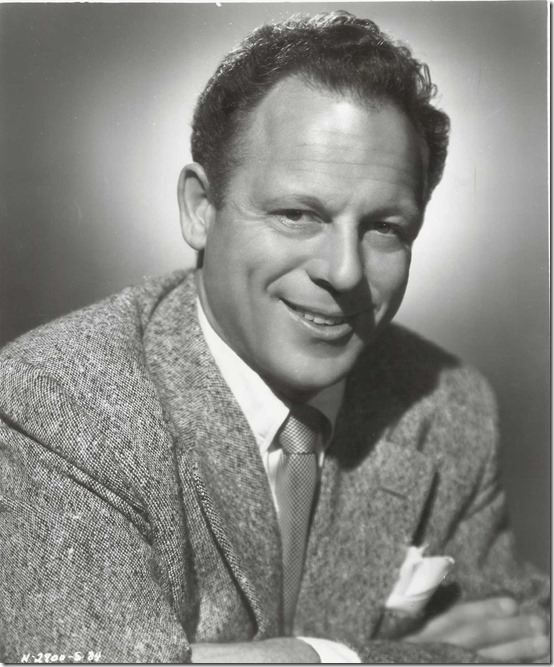
As I noted earlier, this week’s mystery person was cinematographer John Seitz, who gave us “Double Indemnity,” “Lost Weekend,” “Sunset Boulevard,” “Five Graves to Cairo,” “This Gun for Hire” and “The Miracle of Morgan’s Creek,” among many other film classics. If anyone at TCM is reading this, how about a birthday tribute on June 23?
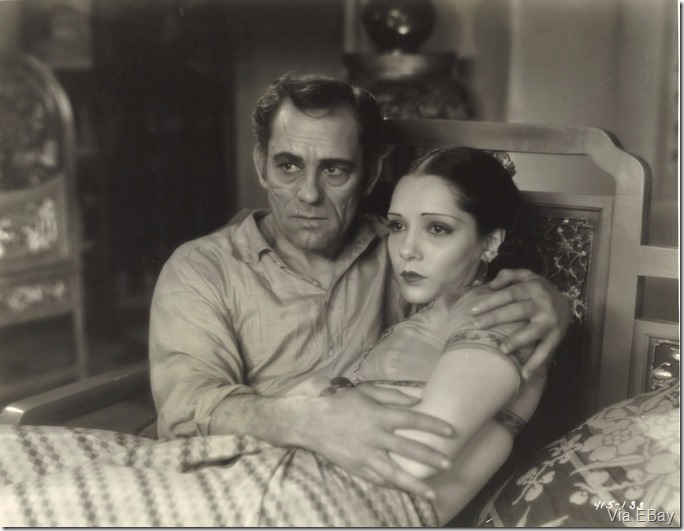
The film is available from Warner Archive, as is the 1953 MGM remake, “All the Brothers Were Valiant,” with Robert Taylor, Stewart Granger and Ann Blyth. “Across to Singapore” was itself a remake of “All the Brothers Were Valiant,” a 1923 Metro picture with Lon Chaney, Malcolm McGregor and Billie Dove, which Busby called “one of the best sea pictures ever made.”
Images of the badly damaged 1923 “All the Brothers Were Valiant” here.
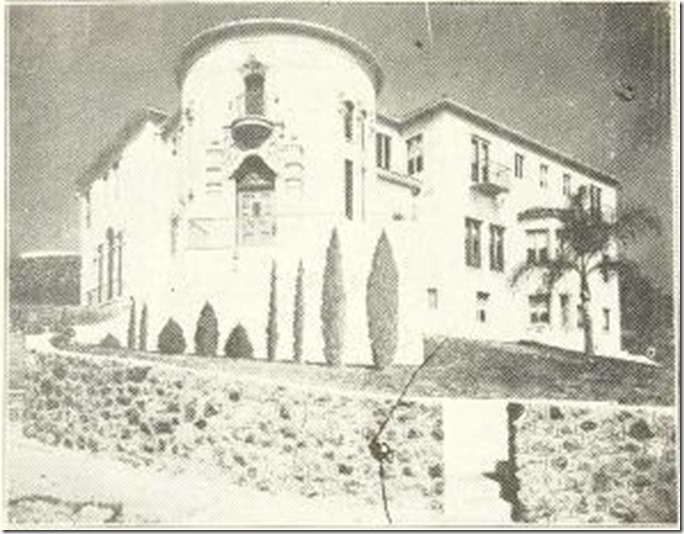
Feb. 27, 1926: The proposed building for the 233 Club in the Los Angeles Times.
The jazz-mad, high-flying 1920s celebrated adventure, life, and excitement after all the dreariness and death of World War I. New-fangled fads skyrocketed in popularity one day, sliding to the basement the next as something shiny and new caught the eye. People rushed to join social clubs, with new private, social, and charitable organizations opening every day. While lodges like the Elks and Moose, and veterans and patriotic groups like the American Legion, the Grand Army of the Republic, and the Sons and Daughters of the American Revolution had existed for decades, new organizations like the Rotary, Kiwanis, and Optimists exploded in growth. Not to be outdone, Hollywood formed its own social groups like the 400 Club, the Mayfair Club, and the Masquers Club.
At the same time, a group of 50 New York City Masons now in Hollywood decided to form their own Masonic Temple. Calling themselves the 233 Club, after the name of New York’s Pacific Lodge F & AM No. 233 which contained only theatrical and entertainment members, the group elected Edward Davis, former president of the National Vaudeville Association as President and Don Meany as Vice President, per the July 8, 1924 Los Angeles Times.
Mary Mallory’s “Hollywoodland: Tales Lost and Found” is available for the Kindle.

This is how I think of Julian Bond: At the 1968 Democratic National Convention in Chicago (notice the shots of Mayor Richard J. Daley) being nominated for vice president, but too young to hold the job. (Yes, Bond is talking to Dan Rather). Here’s the clip on YouTube.

My good friend Tony Valdez aired part of an interview with Marquette Frye last night as part of Fox 11’s coverage of the Watts riots. The arrest of Frye by CHP officers is what touched off the riots in 1965. Tony says that he will have more of the interview Friday night at 10:30 p.m. Set your DVRs!

I wanted to do a Michael Curtiz film, so as this week’s mystery movie, I chose the 1959 Mirisch Co. film “The Man in the Net,” starring Alan Ladd (Friday’s mystery guest), Carolyn Jones (Thursday’s mystery guest), Diane Brewster (Wednesday’s mystery guest), John Lupton (Friday’s mystery guest), Charles McGraw (Tuesday’s mystery guest) and Tom Helmore (Friday’s mystery guest).
The screenplay was by Reginald Rose, from a story by Patrick Quentin. Cinematography was by John Seitz , music by Hans J. Salter.
Monday’s mystery guest is identified in the credits as Steven Perry. IMDB, alas, has confused him with this Steven Perry.

Rather than this Stephen Perry.

I have given up trying to make fixes in IMDB, but it would be nice if they got this straightened out.

“Since Ma Is Playing Mah Jongg,” sung by Eddie Cantor, sheet music courtesy of Mary Mallory.
In the 1920s, life changed fast and furiously as people celebrated the Jazz Age. Dance mad, adventure-seeking flappers and flaneurs jumped from craze to craze enjoying the whirlwind of life. Games, foods, clothing, everything changed in a flash, tied to the experience hungry, new sensation-seeking younger Americans looking for excitement. Bridge, crossword puzzles, the Charleston, dance marathons, flagpole sitting, and the game of mah jongg enticed people of all ages insecure in their position and beliefs to jump onto the next big thing in order not to be left behind.
“Since Ma Is Playing Mah Jongg” by the Memphis Five.
For a few years in the 1920s, “mah jongg” became a household name and game, more popular than chess, checkers, or even certain card games. The game attracted many because of its exotic, mysterious game pieces and name, while also requiring some skill in remembering key rules and tiles.
Mary Mallory’s “Hollywood land: Tales Lost and Found” is available for the Kindle.

Myth destroyed: The Times publishes a photo Aug. 13, 1965 of Charles Hillinger in the riot area interviewing people.
As next week’s anniversary of the Watts Riots draws near, I am once again hearing the old urban myth that the Los Angeles Times was afraid of sending white reporters to cover the unrest so it drafted Bob Richardson, an African American from the advertising department.
Executive Summary: Totally False.
Here is an account by Charles Hillinger debunking the story, which had been revived by Bob Baker, both of whom have gone to the city room in the sky.

As I mentioned previously, I am slowly digitizing my Black Dahlia files. Here’s a frame grab from a video I shot of Will Fowler on South Norton Avenue in October 1996. Like many people who have written about the killing of Elizabeth Short, Will could not resist the temptation to embellish the facts.

A one-page biography of Tom Tyler.
This week’s movie has been a double threat: A silent Western. It’s the 1928 Film Booking Offices of America movie “The Texas Tornado,” starring Tom Tyler (Friday’s mystery guest) and child star Frankie Darrow and his dog Beans (Thursday’s mystery guests).
I thought it would be fun to do a Pandro S. Berman movie this week and decided to pick this one, on which he was the film editor. It can only be found in a few fragments on YouTube, but apparently it’s one of the few surviving F.B.O. movies.
“The Texas Tornado” Part 1 | Part 2 | Part 3 | Part 4 | Part 5 | Part 6 | Part 7

The “It” Cafe in the Hollywood Plaza Hotel, courtesy of the Los Angeles Public Library.
Restaurants go in and out of style in Hollywood just as quickly as go-go boots and bell bottoms, thanks to those following the hip crowd and looking for the next big thing. Insecure and superficial patrons ape trends rather than march to their own values and beliefs. They make bars, nightclubs, and restaurants hot and popular for short periods of time, in their insatiable quest for the new, different, and unique.
A movie star’s career often follows the same trend, as audiences tire of the same old thing and search out new, compelling talent. Some stars’ magnetic personalities and expressive eyes, however, draw others into their spells. To help maintain their celebrity status and financial rank, they open businesses taking advantage of their “brand” names and personalities.
Mary Mallory’s “Hollywood land: Tales Lost and Found” is available for the Kindle.

Here’s an excellent weekend read by Patrick Young, Esq., in the Long Island Wins, rebutting the contention that “No Irish Need Apply” was mere paranoia and legend. Thanks to Earl Boebert for the tip.
”No Irish Need Apply: A Myth of Victimization” by Richard Jensen, revised somewhat from its winter 2002 publication (password required).
“No Irish Need Deny” by Rebecca A. Fried in the current issue of Oxford’s Journal of Social History. (password required).

Hollywood Citizen-News, Jan. 15, 1947.
I’m slowly digitizing my files on the Elizabeth Short killing for easier access, and yesterday I was going through the Hollywood Citizen-News, which is one of the lesser sources on the case. And, of course, the unidentified reporter did exactly what we see today: a few graphs down, the writer dives into the clips. (Remember, Aggie Underwood’s Red Manley interview is the only time anyone received a byline in the original stories).
This is a trick used by reporters (or more frequently these days, online editors) to pad out a story when there aren’t enough details.

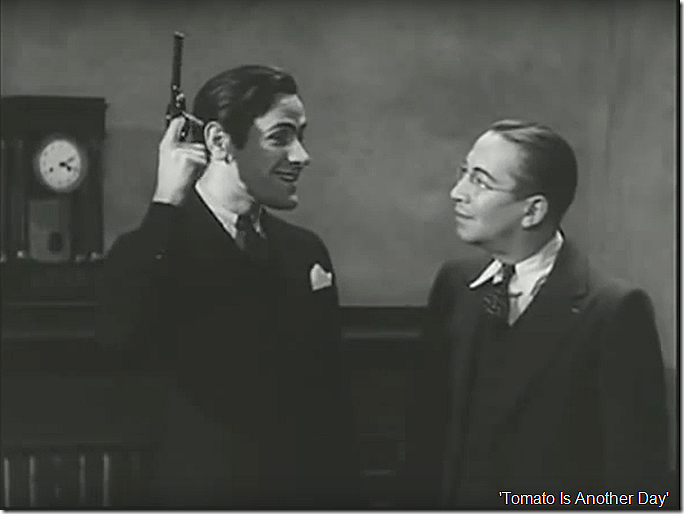
I wanted to do a Lloyd Bacon movie this week and “The Office Wife” (Warner Bros., 1930) is the earliest one in my collection, and as a bonus, it was the feature film debut of Joan Blondell (one of Friday’s mystery guests). Based on a story by Faith Baldwin serialized in Cosmopolitan in 1929, “The Office Wife” starred Dorothy Mackaill and Lewis Stone, with a screenplay by Charles Kenyon. It also featured Natalie Moorhead (Friday’s mystery guest), Hobart Bosworth (Thursday’s mystery guest), Blanche Friderici (Monday’s mystery guest), Brooks Benedict (Friday’s mystery guest), Dale Fuller (Tuesday’s mystery guest) and Walter Merrill (our mystery guest in the newsboy cap).
“The Office Wife” opened in Los Angeles at the Warner Bros’ downtown theater in September 1930 and was an immediate hit, according to film critic Edwin Schallert, who thought Lewis Stone was a bit too old for the part.

Club Indigo matchbook courtesy of Mary Mallory.
While some proprietorships remain in business for decades at one address, most often, occupancy at the site frequently changes due to economic and cultural cycles. Following owners usually continue in the same vein or type of business, but occasionally something totally different fills the site. Over the decades, most businesses occupying 4269 Lankershim Blvd., North Hollywood, have continued along the same lines, providing food and entertainment to thousands of San Fernando Valley residents.
Little can be found regarding this address prior to 1938, when it shows up in newspaper advertisements as the Cafe Indigo. The matchbook reveals the establishment served American and Chinese food, as well as selling liquor and wine. Per the inside of the matchbook, intimate entertainment was also offered nightly.
Mary Mallory’s “Hollywood land: Tales Lost and Found” is available for the Kindle.

I received a couple of comments about my statement on the mystery movie “History Is Made at Night” regarding the appearance (or non-appearance) of ventriloquist Senor Wences – or at least the appearance/non-appearance of his left hand.
So I thought I would take a break from my sabbatical to dig into it.

Feb. 1, 1947: I’m going through my clips on the Black Dahlia case and here’s an unrelated story from the Santa Barbara News-Press.
The state personnel board prohibits women from taking the Civil Service exam for Bay Bridge toll collector because they are “unstable employees” and can’t handle drunks and criminals.

This week’s mystery movie was “History is Made at Night,” a 1937 Walter Wanger production released through United Artists starring Charles Boyer and Jean Arthur (Friday’s mystery guests). It also featured Leo Carrillo (Thursday’s mystery guest) and Colin Clive (Wednesday’s mystery guest), and was directed by Frank Borzage from a screenplay by Gene Towne and Graham Baker, with additional dialogue by Vincent Lawrence and David Hertz.

Bessie Eyton by Junius Estep, courtesy of Mary Mallory.
In the early days of silent film production, moving picture companies promoted their brand names to consumers, selling films around the quality and type of pictures produced by their individual companies. By the early 1910s, these companies quickly discovered that stars drew fans’ interest more than brands, quickly creating publicity building up the stars to the general public.
Beautifully produced images created by portrait photographers crafted the iconography and importance of stars, inaugurating a mass form of publicity practiced to this day. Fans clamored to buy new issues of magazines, postcards, pennants, or any type of product featuring the likeness of their favorite celebrities. These powerful photographs sold the glamour and importance of the film industry, helping to expand profits and audience reach. The images also lured ambitious young people to growing film center Hollywood, exponentially growing the city.
Mary Mallory’s “Hollywood land: Tales Lost and Found” is available for the Kindle.