
Note: This is an encore post from 2010.
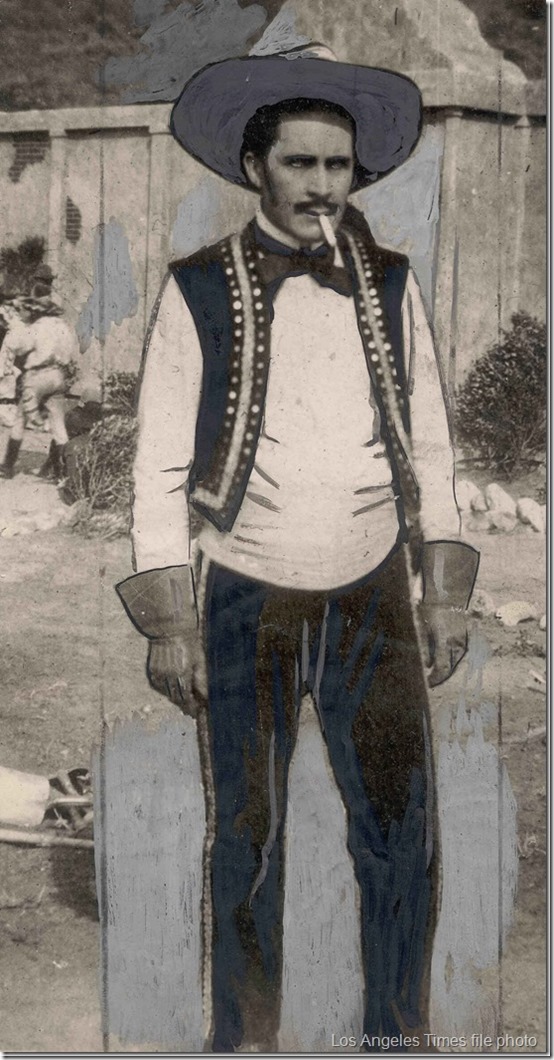
[Updated Oct. 30, 8:58 a.m. Yes, these are more photos from the William Desmond Taylor photo file. Above, a photo of Taylor from “Iconoclast.”]
Note: This is an encore post from 2010.
[Updated Oct. 30, 8:58 a.m. Yes, these are more photos from the William Desmond Taylor photo file. Above, a photo of Taylor from “Iconoclast.”]
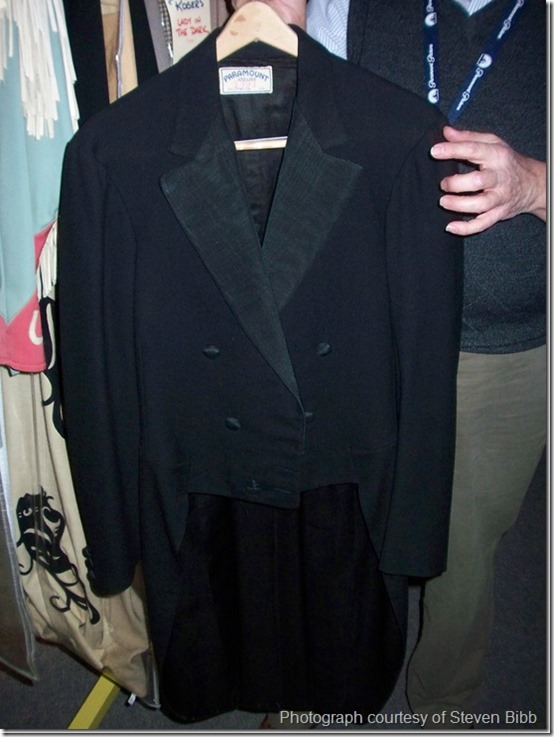
Photos Courtesy of Steven Bibb.
Note: This is an encore post from 2011.
Daily Mirror reader Steven Bibb sent these photos from a recent tour of Paramount. Keep reading for more details….
This week’s mystery movie was the 1948 MGM film The Search, with Montgomery Clift, Aline MacMahon, Jarmila Novotna, Wendell Corey, Ivan Jandl, Mary Patton, Ewart G. Morrison, William Rogers, Leopold Borkowski and Claude Gambier. Continue reading
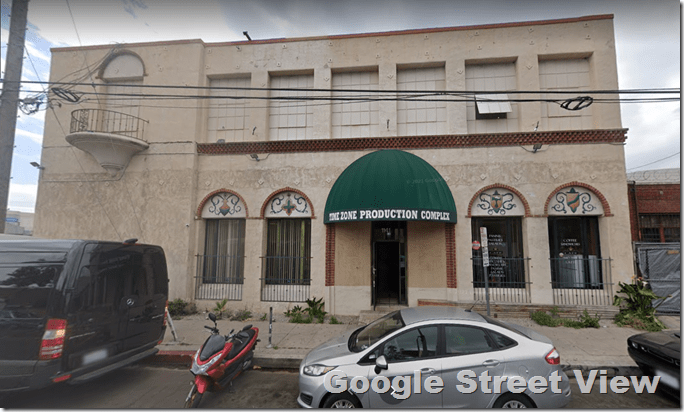
At a time when women faced enormous hurdles and obstacles in the workplace, possessing fewer opportunities and earning lower wages than men, the progressive and woman-owned and operated Averill Morgan Co. recognized the strength of working women and immigrants by offering them respect and chances to advance. Ahead of its time in the 1920s and 1930s, the cleaning and dye company offered not only superior service but also a classy work environment in its 1141 N. Seward headquarters.
Averill Morgan’s executives gained years of experience working for City Dye Works, many starting in menial jobs and advancing into leadership positions. Founded in 1881 and incorporated in 1901, City Dye Works was run by President John J. Jenkins and was considered Los Angeles’ largest and best equipped cleaners, dyeing textiles and garments for trade businesses and the official cleaners for the theatrical circuit. As with many textile manufacturing companies at the time, women made up a majority of employees because they earned lower wages and worked in more hazardous conditions as they desperately needed the income.

This week’s mystery movie was the 1939 Twentieth Century-Fox film Day-Time Wife (sometimes Daytime Wife, watch the hyphen), with Tyrone Power, Linda Darnell, Warren William, Binnie Barnes, Wendy Barrie and Joan Davis.
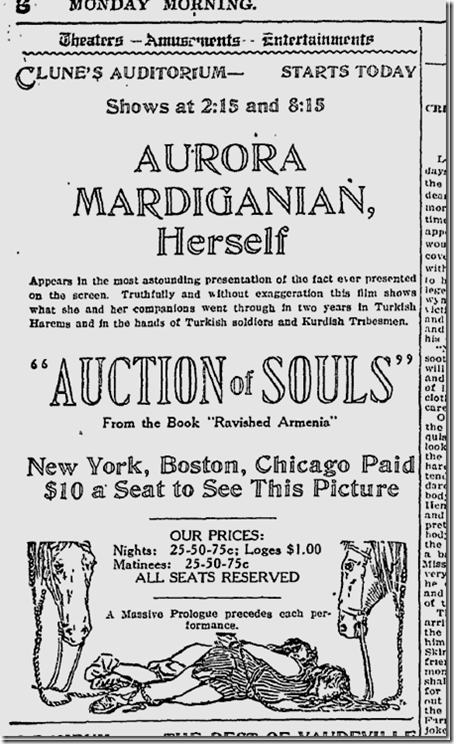
Photo: June 23, 1919, “Auction of Souls.” Credit: Los Angeles Times
Note: This is an encore post from 2011.
Los Angeles has long been a haven for refugees and artists, particularly those fleeing political and militaristic struggles. As early as 1915, Armenians began arriving in Southern California after fleeing from the massacres and pogroms inflicted on them by Kurds and Turks. By December of that year, 1,500 Armenians lived here without knowing the whereabouts of many members of their families back home.
Many continued to come, as the papers warned of massacres, imprisonment, torture, and murder of innocent men, women, and children. Genocide. An article’s headline in the September 27, 1915, Los Angeles Times read, “Massacre of Armenians at Height of Its Fury, … Report States that Five Hundred Thousand Men, Women, and Children Have Either Been Killed by the Turks or Driven to the Desert to Perish of Starvation – Extermination of Non-Moslems is Programme Decided Upon.” 850,000 were reported killed by late October, nearly three quarters of the population of the entire country.
 Oh dear. A self-styled “expert” has “new evidence” in the Black Dahlia case. I’m not even linking to this tacticool fool.
On the anniversary of Elizabeth Short’s murder, Chicagoland TV could apparently not resist some bizarre claims of “new evidence” in the Black Dahlia case, by a self-styled “expert.” Oh dear. Did they run their story past anyone who knows anything about the case? Well, this is Fox, so you can pretty much guess the answer is: “No, why would we do that?”
Note: If you are going to hang out your shingle as “solving” or “having new evidence” in the Black Dahlia killing, you better know the case forward and backward, upside down and right-side up, not just what’s been written about it in a couple of crackpot books, or what’s festering on the Web, ready to snare the unwary.
Continue reading
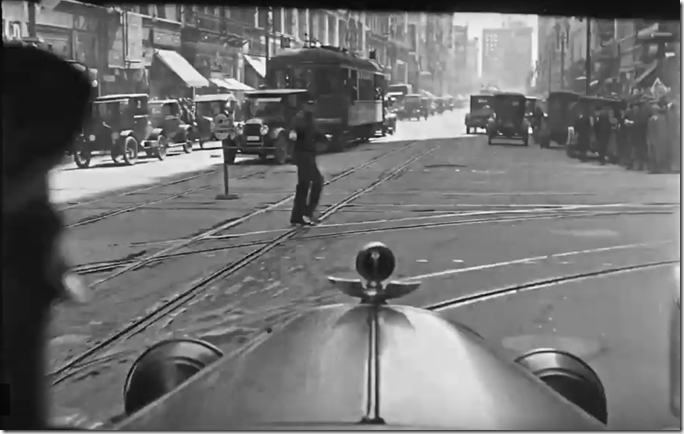
A compelling form of advertising from its beginnings thanks to its emotional power and ability to manipulate, film has been employed to sell and brand products as well as educate audiences on social, cultural, and educational issues virtually since its inception. The medium’s ability to move audiences through the visceral impact of editing and dynamic action created a worldwide language while sometimes subtly advancing political movements. By the 1920s, many realized the medium’s potent ability to inflame viewers’ passions and issues and thus influence and sometimes subvert political campaigns.
Long before German Leni Riefenstahl produced the poetic though propagandist Olympia in 1938, another German would produce one of the first American political commercials with a two-reel film in Los Angeles. Though not as powerful or artistic as Riefenstahl’s opus, stuntman/actor Richard Talmadge’s action thriller Soldiers of Security advocated for pay raises for Los Angeles’ firefighters and policemen before the April 1926 local election.
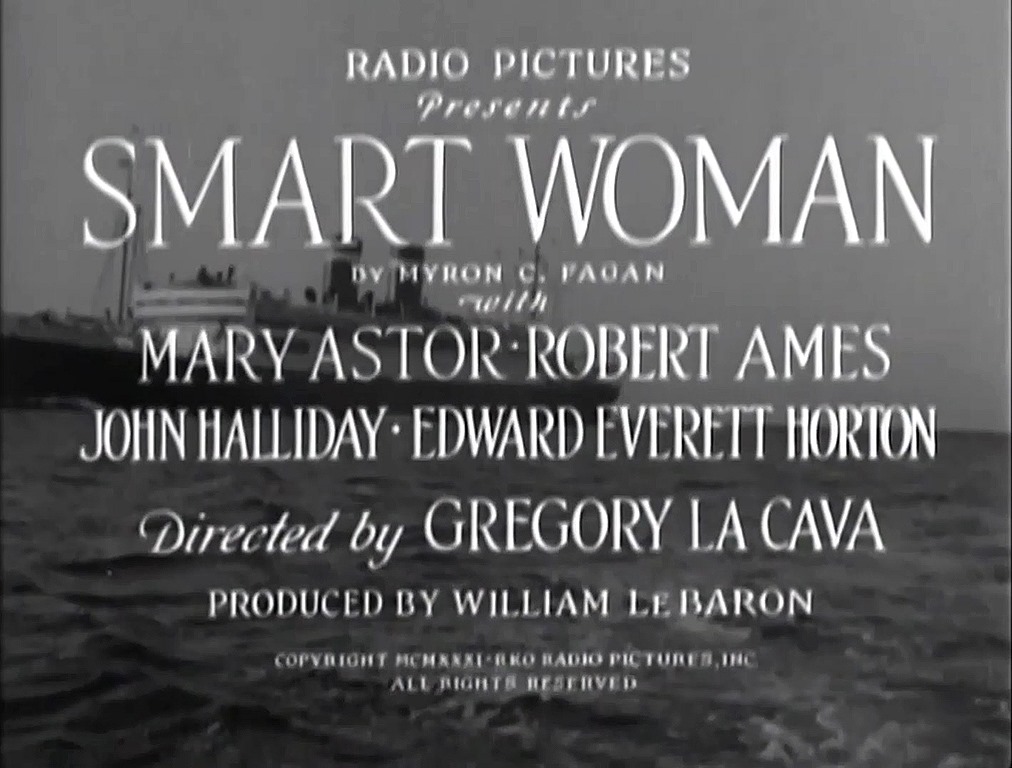
This week’s mystery movie was the 1931 RKO picture Smart Woman, with Mary Astor, Robert Ames, John Halliday, Edward Everett Horton, Noel Francis, Ruth Weston, Gladys Gale, Alfred Cross and Lillian Harmer.
Today is Jan. 15, the anniversary of Elizabeth Short’s death. As is the custom, the Daily Mirror will be dark.
Trim your roses in her memory.
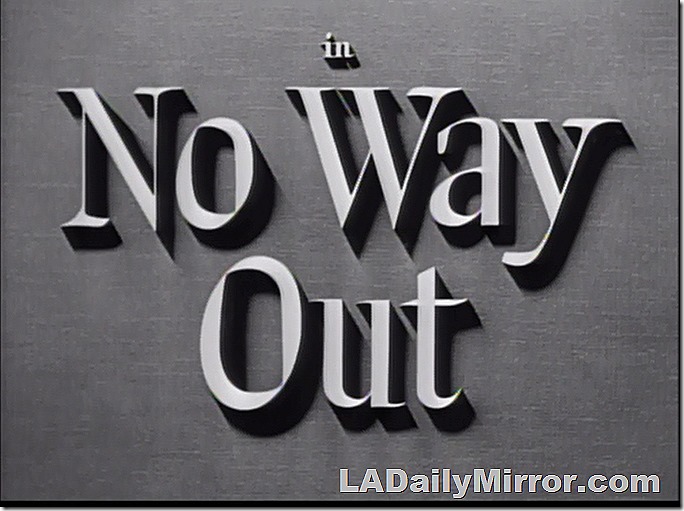
This week’s mystery movie was the 1950 Twentieth Century-Fox Film No Way Out, with Richard Widmark, Linda Darnell, Stephen McNally, Sidney Poitier, Mildred Joanne Smith, Harry Bellaver, Stanley Ridges and Dots Johnson. Continue reading
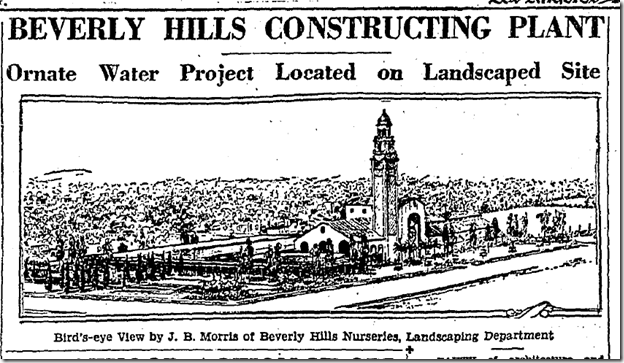
Note: This is an encore post from 2012.
Southern California and Los Angeles have grown by leaps and bounds over the last 150 years, and the most urgent requirement during that time has been water. Unable to provide enough water for its residents in 1910, Los Angeles acquired a water source and land in Owens Valley to provide a steady and reliable drinking source. An aquifer was constructed by William Mulholland to deliver this manna to the masses. Beverly Hills was no different in the 1920s, growing so much that it required a large and reliable water source for its growing population.
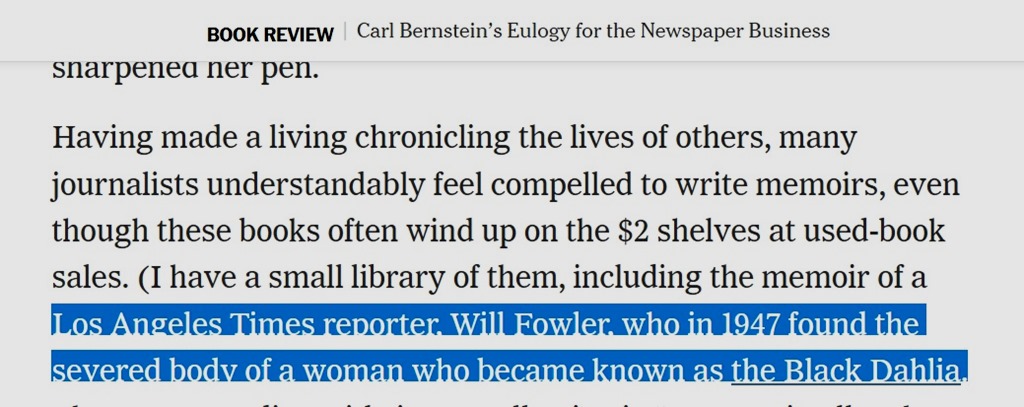
Do reporters check the clips when writing for publication? Or do they rely on a faulty memory?
In the case of Jill Abramson, reviewing Carl Bernstein’s Chasing History for the New York Times, faulty memory wins out, along with a lack of fact-checking.
In a mere two lines of her review, Abramson packs in several errors that ought to be corrected.
–Will Fowler was a reporter for the Los Angeles Examiner. He never worked for the Los Angeles Times.
–Will Fowler claimed he was the first reporter at the Black Dahlia crime scene. He never said he found the body of Elizabeth Short.
–Will Fowler was also lying when he said he was the first reporter at the crime scene. He was one of the last to arrive. Will told many tall tales about his involvement in the Black Dahlia story; this was just one of them.
Reporters: Check the clips (or Google) rather than relying on your memory, which is apt to be faulty.

Note: This is an encore post from 2021.
As longtime readers know, I always begin a new year with an annual donation in memory of Elizabeth Short to Heading Home, which works with the homeless in the Boston area. Partly because of my research on Elizabeth Short, I try to make the issue of homelessness a continuing theme of the Daily Mirror.
I donate to an agency in the Boston area because of Elizabeth Short’s connections there, but Los Angeles also has a severe, chronic problem with homelessness and there are many local agencies that welcome donations. I recently visited Hollywood and saw camps of homeless people along the exit ramp from the northbound 101 onto Hollywood Boulevard and along the Walk of Fame. Men pushing shopping carts. Women cowering in doorways of buildings that are boarded up or closed with roll-down shutters that are tagged.
I believe people will find helping the homeless more meaningful in the long term than, for example, leaving a bottle of liquor and some cigarettes at her grave, especially since Elizabeth Short didn’t smoke and rarely drank.
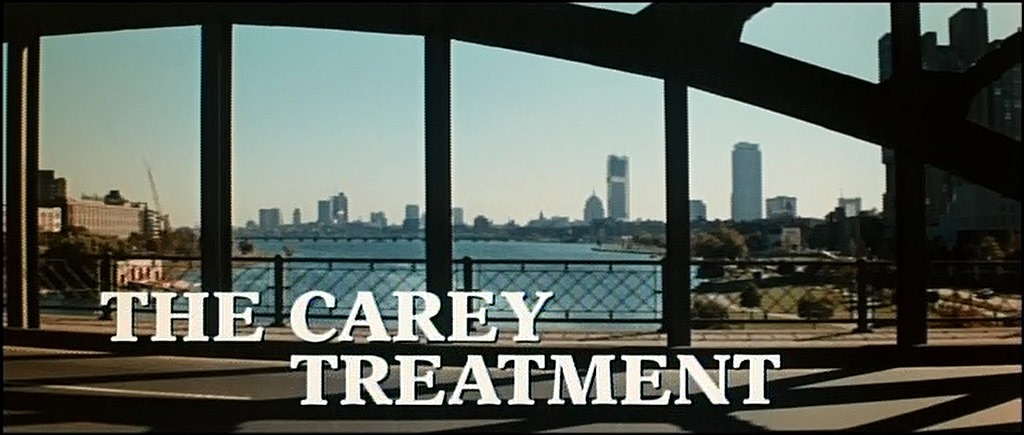
This week’s mystery movie was the 1972 MGM film The Carey Treatment, with James Coburn, Jennifer O’Neill, Pat Hingle, Skye Aubrey, Elizabeth Allen, John Fink, and Dan O’Herlihy as J.D. Randall, James Hong, Alex Dreier, Michael Blodgett, Regis Toomey, Steve Carlson, Rosemary Edelman, Jennifer Edwards, John Hillerman, Robert Mandan, Warren Parker, Robie Porter, Morgan Sterne and Melissa Torme-March. Continue reading
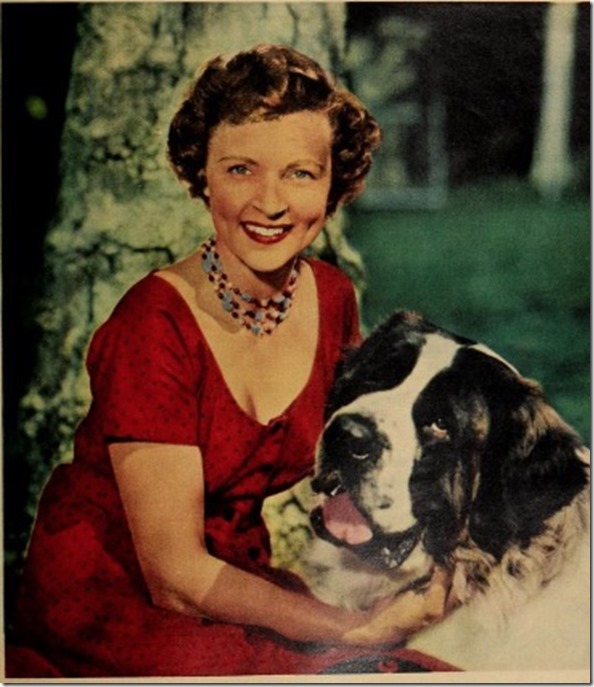
On December 31, beloved television actress Betty White passed away at the age of 99. For more than 80 years, she charmed audiences with her quick wit, sly smile, genuine warmth, and wicked sense of humor. White’s expert comic timing and understated reactions often stole the show, whether in a situation comedy, game show, or television commercial.
What is often forgotten, however, is that White helped birth American television as one of the first women producers, devising a show playing to her strengths and capturing the realities of American life. Continue reading
Note: This is an encore post from 2013.
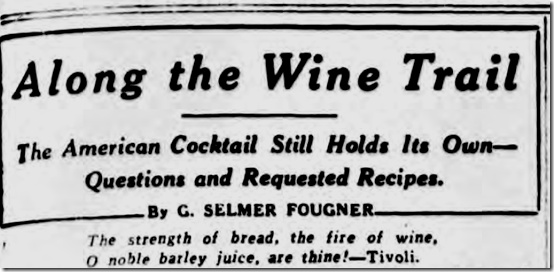
Just in time for New Year’s, we’ll take a look at a “lost drink,” making a brief inquiry into San Francisco’s Pisco Punch, made famous by Bank Exchange saloon owner Duncan Nicol (often spelled Nichol or Nicoll), who died in 1926 without revealing the recipe.
Note: This is an encore from January 2020.
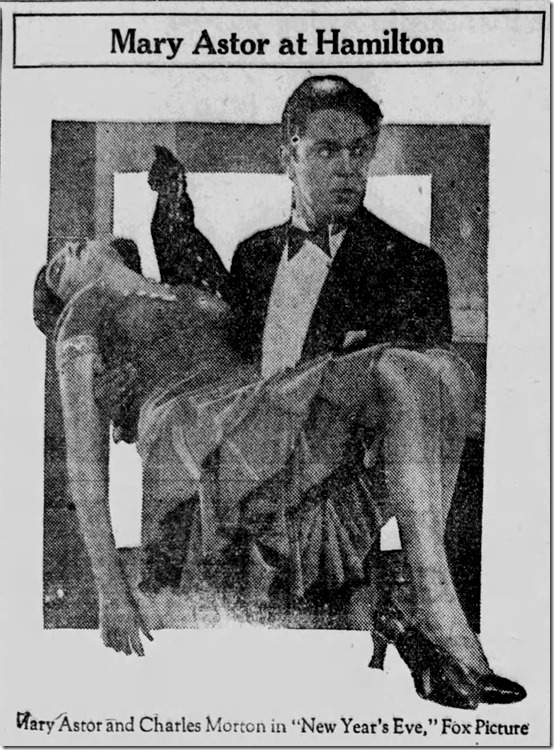
Since TCM is featuring Mary Astor, here’s a brief post on her lost movie “New Year’s Eve.” (A tip of the hat to Lou Lumenick, who tweeted about the movie on — New Year’s Eve.) I also uploaded a version of this post to IMDB, in case you see it there.
Fox originally announced the film under the title “Strong Arm,” based on the story “$100” by Richard Connell, published in the August 1928 issue of Cosmopolitan Magazine. The film was supposed to star Lois Moran and George O’Brien in the leads, under the direction of J.G. Blystone. Fox initially planned the movie as a talkie, but released it as “New Year’s Eve,” a silent directed by Henry Lehrman with sound effects and music, designated “sound on film.”
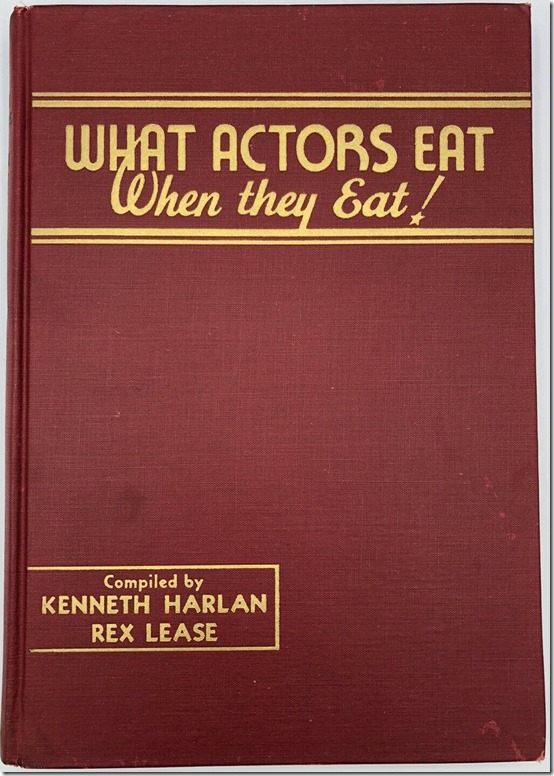
A copy of What Actors Eat (When They Eat!), a collection of celebrities’ recipes by Kenneth Harlan and Rex Lease, has been listed on EBay for $14.99. Copies are fairly rare an in good condition can sell for hundreds of dollars.
As always, an item and vendor should be evaluated thoroughly before submitting a bid.
Note: This is an encore post from 2017.
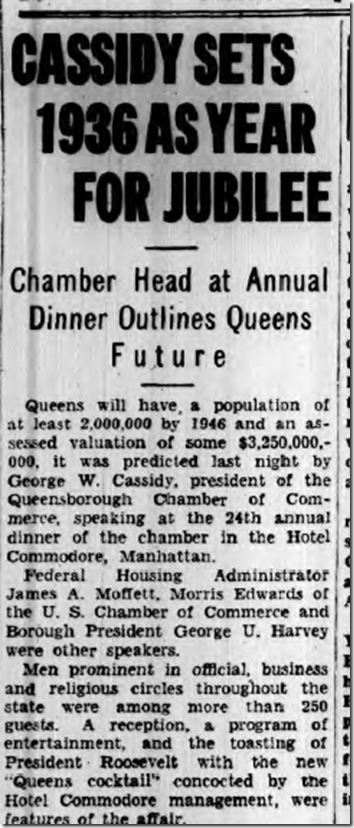
Joe Vogel asks if there was a Queens Cocktail. The answer is yes.
According to the Jamaica Long Island Daily Press, Jan. 24, 1935, the Queens Cocktail debuted at the Hotel Commodore in a toast to President Roosevelt. Via Fultonhistory.com.
(No word yet on the Staten Island Cocktail — and boy that sounds like a straight line).
 ladailymirror.com