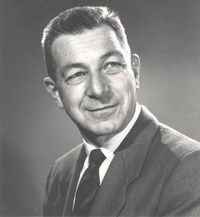
Old convict

1957_0502_toothpick

May 2, 1957
Los Angeles
1957_0502_toothpick_mug


Police officers had a kindly affection for old "Toothpick Charlie." At 93, the
dapper, neatly dressed man known as James J. Fitzpatrick, James Hennesy and
James Flannery had been  working his cons since before they were born. Of
course, in typically modest fashion, he denied everything, even his nickname.
"Never heard that term Toothpick Charlie till I read it in a newspaper story,"
he said.

Charlie, whose record at Folsom and San Quentin prisons dated to 1904 (he denied
ever being arrested, even when police showed him his voluminous file), was nice
to the police. "Always been a courteous man," he said. "A policeman who picks
you up when you’re breaking the law, he means no imposition. You got to
appreciate that. He’s just doing his job. Always a good idea to be courteous."

Early in his career, Charlie specialized in burglaries and police said he was
one of the best second-story men in the business. But by 84, he had switched to
stealing money from pay phones by jamming them with paper napkins.

In 1954, when he got 10 days for stealing coins from pay phones, he said he was
born in San Diego and had been in the service, fighting in Cuba and the
Philippines during the Spanish-American War.  He said most of his family
was dead. "Might be  a relative or two around  but I wouldn’t care
about looking ’em up.  Wouldn’t want to impose," he said.

Before that, he’d been arrested in 1948 for hitting pay phones in a drugstore at
401
W. 4th St
. and in 1949 for the same thing at the bus station, 6th and Los
Angeles streets.

His latest arrest was at
756
S. Spring St.
Police found he was carrying a few custom picks and $2.28.
Judge Mark Bandler gave him a suspended sentence of 180 days and warned Charlie
that if he was picked up again, he’d be sentenced for that crime plus the 180
days.

"It would be kind of nice if you mended your ways," Bandler said, "but I suppose
it’s too late."

According to The Times, Charlie planned to move to San Diego. "It’s high time I
retire," he said. And perhaps he did, for he never appears in The Times again,
nor is he listed in the California death index, raising the question of exactly
what became of the old con.

Email
me

Posted in #courts, Downtown | Tagged , , , , , | 1 Comment

No, No, No

Speedgraphic4x5_2
KCBS-TV Channel 2
reports idiotically that the Los Angeles County Sheriff’s Department photographed the Black Dahlia crime scene, a neat trick since Elizabeth Short was killed in the city of Los Angeles. Oops! The crime scene on South Norton Avenue was actually photographed by the LAPD’s Gilbert Laursen. People should at least make some attempt to do their homework.

Email me

Posted in Television | Tagged , , , , | Comments Off on No, No, No

Jealousy slaying

1957_0502_banner

May 2, 1957
Los Angeles

1957_0502_hamby01
Meet Henry C. “Clay” Hamby, 42, who lived with his wife, Mildred, and three
children in a 944-square-foot home at
14519
Paddock St., in Sylmar
.

Clay is a drophammer operator at Reylon Precision Products, a little machine
shop at 7145 Vineland, in North Hollywood. Mildred, who’s 10 years younger, used
to work there, too.

And then there’s the foreman of the night shift, Harold Decker, 36, who lived in
a fourplex  at
10632
El Dorado
, Pacoima.

Mildred says Clay never mistreated her. But there was something about Harold. “I
just met this man, and… well…,” she said.

In August 1956, Mildred left Clay and the three children and either moved in
with Harold or got another unit in the same fourplex.

“I was trying to find out through the trial separation if it was an infatuation
or what it was–my attraction to Harold,” she sobbed to detectives. “I’m torn
apart inside! I’m all mixed up!”

1957_0502_hamby02

On Sept. 13, 1956, Clay got his .270-caliber Winchester, drove to the machine
shop and killed Harold with one shot to the chest. He pointed the rifle at the
other workers and threatened to kill them if they moved, then said he was going
to shoot his wife. He fled, but not before one of the workers threw a vise and
struck him in the leg.

Someone at the shop wrote down the license number of Clay’s station wagon and
called police, who headed for Mildred’s apartment in Sylmar in time to arrest
Clay before he killed anyone else.

Held in the Van Nuys jail, Clay said: “I don’t remember anything.”

Clay was convicted of second-degree murder at his retrial after the first jury
deadlocked.

On May 1, 1957, Clay was declared insane at the time of the
shooting and transferred to the jurisdiction of Psychopathic Court, never again
to appear in the pages of The Times.

Mildred and her three children are likewise lost to history.

Email
me

Posted in #courts, Homicide, San Fernando Valley | Tagged , , , , , , , | Comments Off on Jealousy slaying

Drivers’ Ed Theatre

"What Makes Sammy Speed?"

Made by Sid Davis in cooperation with the Glendora Police Department.

Bad things happen when Sammy gets behind the wheel of a 1956 two-door Buick Special.

Immortal quote: "Even his girlfriend, Wendy, thought his speeding was manly and courageous."

Note Davis’ marvelous understatement. Rather than showing the fatal crash, he films a hubcap twirling and fluttering to the curb. Truly, he was the Sergei Eisenstein of drivers’ ed films. From the innocent days before "Signal 30" and "Red Asphalt."

Email me

Posted in Uncategorized | Tagged , , , , , | Comments Off on Drivers’ Ed Theatre

Mideast in turmoil

1957_0501_neumann_hed

May 1,
1957
Los Angeles

1957_0501_neumann
In early 1957, Robert G. Neumann, associate professor of political science at
UCLA, took a six-week tour of the Middle East arranged by The Times that
resulted in a series of articles and an April 30, 1957, speech given as the
William Henry Snyder Lecture at Los Angeles City College.

Historians are often criticized as assuming that anything covered with dust is
significant, and rightly so. What on earth could we learn today from something
written half a century ago by some UCLA professor, especially about a region as
volatile as the Mideast?

But before we get to the message, who’s the messenger?

Neumann, an Austrian who was held in a Nazi concentration camp for his political
activities, was a UCLA professor who wrote frequently about world events for The
Times, which in that era had an extremely limited foreign staff.

He headed the UCLA Institute of International and Foreign Studies and was U.S.
ambassador to Afghanistan and Morocco. His brief term as envoy to Saudi Arabia
ended abruptly in 1981 after a clash with President Reagan’s secretary of State,
Alexander Haig.

According to The Times: "Neumann believed that his boss was being too soft on
Israeli Prime Minister Menachem Begin by refusing to say that the Reagan
administration’s delay in shipping F-16 fighter planes to Israel was punishment
for its recent raid on Beirut."

Now for Neumann’s message. What did he have to say about the Middle East 50
years ago? You might expect some quaint observations. You would be wrong. His
remarks are painfully familiar.

The Times notes: "A peaceful answer to the turbulent Middle East situation must
lie in a five-point program of compromise and trust, and that won’t be
easy."

  1.     Arab states must accept existence of Israel as an integral part of the area.
     
  2.     Israel must accept principal responsibility for the return, resettlement or compensation of refugees.
     
  3.     Both sides must recognize that fear of aggression is mutual and genuine.
     
  4.     Arab leaders must realize that their frequent blood-curdling statements render a poor service to their cause.
     
  5.     Israel must recognize that as long as there is worldwide agitation for Jewish immigration into Palestine, Arab fears of Israel’s aggrandizement will persist.
     

Neumann died in 1999 after serving as senior associate at Georgetown
University’s Center for Strategic and International Studies. His son Ronald is
currently U.S. ambassador to Afghanistan.

Neumann’s obituary lists the following principles, taken from his entry in Who’s
Who in America:

  "1. When in doubt, choose the road of courage. The dynamics of action will carry others with you and confound your opponents.

  "2. While action must be carefully considered, it is generally better to act than not to act. It is easier to correct the course of action than to move from inaction to action.

  "3. Dream big and without restraint. There will always be time afterwards to reduce the scope of your action in the light of confining realities. But if you start dreaming small, you shackle your imagination from the outset.

  "4. Have some reasonable and constant ideas as to what you will not put up with and examine your conscience from time to time to check the possible corrosion success might have wrought. It might keep you honest, or at least humble."

  Bonus facts:

First mention of Yasser Arafat by a staff writer in The Times: 1968
First mention of Saddam Hussein by a staff writer in The Times: 1970
First mention of Osama bin Laden by a staff writer in The Times: 1997
First mention of Al Qaeda by a staff writer in The Times: 2000

Email
  me


Posted in Uncategorized | Tagged , , , , , , , , , , | Comments Off on Mideast in turmoil

Matt Weinstock


May 1, 1957

Los Angeles

Matt_weinstockd_2

Now that the law is catching up on the scandal magazines–seven were indicted in
New Jersey Monday–some things can be told.

For several years beaters for Confidential have been trying to hustle L.A.
newspapermen. With all the movie people and celebrities here, this is a fertile
field.

I happen to know several who have been approached. They’re competent reporters.
They know where to look and how to go about digging up dirt–or legitimate
material–and how to write it.

One was unemployed. Another was freelancing, a fancy term for being unemployed.
A third was doing publicity, not too successfully. They all could have used the
money, which was generous. But they all declined. It was not particularly a
matter of ethics, an overused word, but just good sense.

To them, working for Confidential would have been accepting money for tainted
writing. They are aware of the typographical leer, the distorted, slanted story
and the slippery writing that are the stock in trade of the scandal magazines.

Unfortunately, others were not so scrupulous.

I always become irked when someone says recklessly of newspaper reporters, "Well
what do you expect? They’re just a bunch of trained seals. They write what
they’re told to write."

I don’t think people half appreciate the care and objectivity that goes into
news writing.

Posted in Columnists, Matt Weinstock | Tagged , , , , , | Comments Off on Matt Weinstock

Death in La Mirada

May 1, 1957
Los Angeles

All he wanted to do was keep their dog, Roxy, out of the flowers.

Two weeks ago, aeronautical engineer Neil Thompson, 30, rigged up an electric wire to shock the boxer if it got near the flowerbed of the home he shared with his wife, Mary Lynn, and their young daughter, Pamela, at
14342 Figueras in La Mirada.

He plugged the system into an outlet in the garage and staked a wire around the flowerbed. But he didn’t have the right kind of fuse, so he improvised one, assuming that a 40-watt light bulb would provide enough resistance to reduce the current so it wasn’t lethal.

When Thompson came home from work that night at 6:30, he went into the garage
and noticed that the system’s warning light was on.

Instead of finding the dog, he discovered his wife lying face-down on the ground in a pool
of water with the her chest across the wire and a bump on her head. She had been
watering her flowers with a hose when she received an electric shock.


He called the Fire Department, but it was too late. When she was declared dead at Carobil
Hospital,  Thompson became hysterical and was placed under sedation. They had been married three years. Until their daughter was born, Mary Lynn Thompson had tutored deaf children at the John Tracy Clinic.

Email me

Posted in Uncategorized | Tagged , , , , , | Comments Off on Death in La Mirada

Follow the dots

More dots, on sale at Robinson’s.

Email me

Posted in Uncategorized | Tagged , , | Comments Off on Follow the dots

A little elegance

I always enjoy looking at the fashion ads in old newspapers. The drawings give the pages a stylish, classic look that is impossible with photographs. (I swear, 1957 must have been the year of the dots in women’s fashions).


Posted in Uncategorized | Tagged , , | Comments Off on A little elegance

Now playing at the Wiggle Room

April 30, 1957
Los Angeles

Some anonymous Times writer had fun with this story about the Exotic Dancers
League. There are all sorts of gags about baring grievances, making motions
and getting things off their chests. Continue reading →

Posted in Nightclubs | Tagged , , , , | 1 Comment

Matt Weinstock

April 29, 1957
Los Angeles

A bus driver who hauls a cargo of housemaids to the Beverly Hills area daily on his early morning run heard a conversation the other day that made him realize life isn’t always as orderly and legal as people might think.

Two women of about 50 got on his bus downtown and greeted each other warmly.

“I haven’t seen you for about a year!” said one. “Where have you been?”

“Oh, I just work once in a while now,” said the other. “I’ve got a baby.”

“A baby? You?”

“Oh, someone gave it to me. She couldn’t take care of it so she just gave it to
me. I got it when it was a week old.”

“Well, where is it now?”

“I leave it with the woman across the street when I work.”

“Well, is it yours? Have you adopted it?”

“Oh, we didn’t bother about that. The mother didn’t want it so we just took it
over. And it’s such a pleasure. My husband and I just love it.”

Posted in Columnists, Matt Weinstock | Tagged , , , | Comments Off on Matt Weinstock

A knight on the town


April 29, 1957
Los Angeles

When I saw this ad, my first reaction was: “You have GOT to be kidding me.”

My next reaction was: “Maybe it’s still there!” Continue reading →

Posted in Food and Drink, San Fernando Valley | Tagged , , , , , | 1 Comment

Rigoletto Village

April 29, 1957
Los Angeles

One of my favorite adventures while working on the 1947project was revisiting old neighborhoods that I found in The Times real estate sections from 1907, a feature I called “Architectural Ramblings.” Exploring the city, I discovered street after street of 100-year-old homes in the Adams district, Monrovia, Sierra Madre (which is celebrating its centennial this year) and Angeleno Heights.

But since I grew up up in a 1956 split-level tract home, the ubiquitous and banal 1950s developments held no allure for me. Then I ran across ads for Rigoletto Village, which offered the prospect of comic relief from true crime. Did the “Gilda model” have a pool? Did the “Duke model” have an attached garage? (A close second was Rebecca Park at San Fernando Mission Boulevard and Haskell Avenue. Did the “Manderley model” have a boathouse? I suspect not). Continue reading →

Posted in 1957, San Fernando Valley | Tagged , , , , , , | Comments Off on Rigoletto Village

Reprieve


1957_0428_train_2

April
28, 1957


Los Angeles

A boy (and how anyone knows it was a boy is never explained) came across a
stalled car on the Southern Pacific right of way
near Valley
Boulevard and Boca Avenue in Alhambra
.  He  ran along the tracks
to
Farnsworth
Avenue
and flagged down the oncoming Sunset Limited, The Times says. 

The boy’s actions saved the life of the driver, William Frasie McKeehan, 21, who
was booked at the City Jail for being drunk.


1957_ad_sunset_ltd

Rather like the Lone Ranger, the boy left before giving police his name. As for
McKeehan, he died Aug. 20, 1989, at the age of 53, 22 more years than he would
have had if  he hadn’t been  spared that night.  Let’s hope he
made use of them.

Email
me

Posted in Transportation | Tagged , , , | Comments Off on Reprieve

A shot in the dark

1957_0429_hed

1957_513_elm

April
28, 1957

Los Angeles

Let’s park here and sit in the car for a minute. It’s late, sometime between 11
p.m. on Jan. 3 and dawn on Jan. 4, 1957. The lights are on as if
someone’s home. Hear the music? That’s the record player. Let me warn you before
we go in that none of this will make any sense at all. Just a dumb little
murder.

1957_0429_smasonMany streets in Alhambra are named for trees, like Poplar, Birch
and this one: South Elm. There’s a pair of these little, boxy duplexes, both 3
years old, that look like they were built at the same time by the same
developer. In the picture above, 513 S. Elm St. is the front unit of the first duplex, and 517 S. Elm St. is the front unit of the second duplex. The matching
duplex on the end, 521 S. Elm St., was built in 1958. The Times says she was murdered around the back in
515
.

OK, come on in. Keep your hands in your pockets and don’t move anything. Someone
has already rummaged around.

That’s her sitting in the hallway, leaning against the wall next to the telephone. Notice that it’s off the hook. Her name is Susan Miller Mason. She’s
28 and worked in Alhambra as a receptionist in the office of Dr. H.
Lee Berry, a physician and surgeon. Her husband is named Raymond and he’s a
lineman. He’s 30. I don’t think they have any kids.

She’s got a couple old injection marks on her butt and one that’s fresh, which
is from the shot that killed her. The medical examiner will call it acute morphine
poisoning and says that based on the location, it’s almost impossible that she gave
herself the injection. She had asthma and the combination of morphine and asthma might have been what killed her.

About 6 p.m. on Jan. 3, she went to a doctor’s office out in the Valley for a shot
of cold vaccine in her left arm. When she got home, she and her husband had an
argument and she threw a flowerpot and her beaded key case.  He left about 9:30  p.m., hit a few bars, spent the night in his car and went
to work the next morning.

Berry, who lives at 1208 S. Garfield Ave.,  will testify that she called him about 1 a.m. and said she felt itchy all over. According to Berry, she said “Just a minute,” then her
voice trailed off and all he could hear was the music from the record player. He
figured she was drunk again.

According to The Times, he says that because her phone was off the hook, he
couldn’t break the connection, so he had to go across the street to a hospital
and call one of her neighbors to check on her. The Mirror says that Berry got a busy signal because her phone was off the hook so he went across the street to use a phone.

Either way, Mrs. Lena Talercio, 519 S. Elm, will say that Berry called at 1:15 a.m. and asked her go over to Mason’s home. Talercio will say the lights were
on and music was playing but Mason wouldn’t come to the door.

1957_0429_hlberry
In a few hours, according to The Times, Berry is going to call the Alhambra Police Department to check on Mason because she hasn’t shown up for work, and Detectives
Edmund Chappell and Carl Hoffman will come out to investigate. The Mirror, meanwhile, says Mason hadn’t shown up at work for two weeks.

I warned you it was complicated.

The medical examiner will say Mason died about 11 p.m.–flat on her back.  That
means someone came along and propped her against the wall. Notice there’s no
sign of the flowerpot or the key case. They’re missing. And there’s no
hypodermic needle anywhere. If she gave herself the shot, there should be a syringe someplace.

About 1:50 a.m. this morning, Jack Case, 517 S. Elm, will hear a man say: “Susie! Susie! Let me in!” And a woman is going to say: “Be quiet or you’ll wake the neighbors.”  The record player is going to keep going until about 4:30 a.m., when someone will turn it down, according to Case.

At the inquest, Berry will say he had been treating her for about six or eight
weeks and had given her several shots in the buttocks, but hadn’t kept any
records.  He will say that he bought 10 syringes of morphine from two
Arizona men two years ago and turned over six of them to his attorney. He says he used two on an injured
horse. He will claim that he asked Mason to clean out his medical bag a couple
weeks ago and that when she was done, the two remaining morphine syringes were
missing.

According to the April 28, 1957, edition of The Times, Mason was a hypochondriac and often hired a cabdriver to take her
to doctors’ offices all over Los Angeles, including the Valley, Pasadena, West
Los  Angeles and Beverly Hills.

Berry’s housekeeper, Elsie Otto, an immigrant from Brazil, is also going to
testify. Otto will say that at the time of the murder, Berry’s wife was out of
town with one of their four children. She’ll say that Berry went to his office
for 10 minutes between 6:30 p.m. and 7 p.m., got a phone call from Mrs. Berry
about 10:30 p.m. and went to bed about 11 p.m.

Mason’s husband is going to testify that after police left, he found the missing
flowerpot behind the garage and his wife’s key case in a kitchen drawer,
although the detectives are certain neither of those items was there when they
searched the house. The police will give him a polygraph test and he’ll come back
clean.

Notice that Berry’s housekeeper hasn’t said anything about a 1 a.m. phone call
from Mason. Notice that we don’t find out why Berry had Talercio’s phone number. Maybe none of it came up at the inquest. Maybe The Times
didn’t think any of it was important. Notice that Berry had a neighbor check on Mason and that he called the police, who found the body. He could have gone over to the house either time. It’s only three miles away. Notice that Berry’s housekeeper is a Brazilian immigrant.   Just speculating, mind you, but if she weren’t here legally she might be reluctant to rat out her boss.

Berry will also refuse to sign the death certificate, although we don’t know why. 

All we we know for sure is that somebody moved her after she died. And we know none of the stories add up.

According to the Medical Board of California, Herbert Lee Berry graduated from the University of Maryland Medical School in 1943. He died in 1997.

We better get going. The police will be here soon.

Email
me

Posted in Homicide | Tagged , , , , , , | 3 Comments

Head hunters

1957_0427_floristas06

April 27, 1957
Los Angeles

 
I have somehow managed to miss out on coverage of the "Headdress Ball" staged every year by
Las Floristas in which women wear the equivalent of Rose Parade floats on their heads in a fundraiser for children’s charities.

Here’s how they looked in 1957 in the newly renovated Cocoanut Grove at the Ambassador Hotel.

1957_0427_floristas01

1957_0427_floristas05_2

Above, Times society columnist Christy Fox, left, has a demure tiara while serving as TV announcer while Mrs. John M. Foley Jr. (recall that in the 1950s, married women had no first names), center, wears  "Love Is Crown Jewel" and Mrs. James Powell displays "The Imperial Jewel."


1957_0427_floristas04

And yes, they’re still being given.
Here’s
the link to coverage of this year’s event
.

Email me

Posted in Nightclubs | Comments Off on Head hunters

Locos

1957_0427a

April 27, 1957
Los Angeles

1957_0427c_2 Although the term "drive-by shooting" didn’t appear in The Times until two
decades later, what happened near
107th
Street and Juniper
has all the tragic characteristics that are so familiar
today.

The victim was Fred Gallegos, 16, 10221 S. Broadway, whom The Times called a member of the "Quarters
Gang" or "Little Quarters Gang," although Gallegos told police he was not a gang member.

The driver was Gilbert Rivera, 17, 8129 Santa Fe. Ave., a member of the
"Florence Gang." His passengers were Richard Juliana, 16, 8021 Croesus Ave., and
Henry Rodriguez, 18, 8127 Lou Dillon St. Police recovered two .22-caliber rifles
at Rodriguez’s house and two zip guns and some Molotov cocktails at Juliana’s
house.

According to police, Rivera’s car circled the block before shots were fired into
a crowd gathered at a traffic accident. Gallegos was hit in the abdomen and was
taken to the Georgia Street Receiving Hospital, then transferred to what is now
Los Angeles County-USC Medical Center.

Achiello Ernest Lopez, 18, 127 E. 85th St., chased Rivera’s car and got the
license plate number, even though three shots were fired at him, police said.

Soon after, teenagers in a car fired shots at another auto as they went
west on 66th Street between Avalon Boulevard and San Pedro Street., The Times said. (A neat trick since 66th doesn’t connect to San Pedro).  One
bullet hit the auto of Henry R. Elias, 19, 8125 Marbrisa Ave., who told police he
was not a gang member.

Police arrested Valentino Renteria, 3280 Compton Ave.,  Henry A.
Mangaser,  17,  8620 1/2  Makee Ave.,  and Joe Louis
Martinez,  17,  1408  E. 59th.  and  found a shotgun
and a .22-caliber rifle in the car.

Unfortunately, The Times never followed up on this story. But the violence
continued. On Sept. 1, 1957, members of the "Little Quarters" standing outside
10216 Lou Dillon St. fired at a passing car in the mistaken belief that it was
carrying rival gang members. They killed Emily Guzman, 18, 3238 E. 120th St.,
another Quarters member.

1957_0427d

Again, The Times didn’t follow up on the story.

The next year, Florence Gang member Richard Vasquez, 17, 243 E. 119th St., was
shot to death as he sat at the bus stop at 119th and San Pedro streets after he
threw a bottle at a car driven by George Guerena, 244 W. 61st., a Quarters
member.

And again, The Times didn’t follow up on the story.

On May 12, 1959, two members of the Peewees set of the Florence Gang were shot
by Quarters members near 8315 Maie Ave. The Times identified the victims as
Victor Maza, 16, 347 E. 84th St., who was hit in the chest while walking along
the streetcar tracks, and  Raymond Velasquez,  16,  2040  E.
76th St.
,  who was  struck in the arm.

And no, The Times didn’t follow up on the story.

First use of "vato loco" in The Times:
1974.

First use of the gang term "home boy" in The Times: 1975.

First use of "drive-by shooting" in The Times: 1977.

Email
me

Posted in Uncategorized | Comments Off on Locos

He was no Cupid

1957_0426_hed

April 26, 1957
Los Angeles
 

Albert Duarte, 20, was tired of hearing the noise made by the wrecking crews day after day as they demolished a building at 1st and Hope streets.

So he got a 5-foot bow and shot an arrow at them.

Charles Ousley, 25, of 11610 S. San Pedro told police he was standing in the bed of a dump truck when the arrow whistled past him.

1957_0426_3

The foreman of the crew, John Trott, 30, of 1215 S. Server Ave., in Montebello, looked up at the apartment building and saw a figure in the window at 700 W. 1st St. "This work is dangerous enough without somebody shooting arrows at my men," he said.

Duarte had fled by the time police arrived. But they confiscated his bow and arrows, The Times said.

Email me

Posted in 1957, Downtown | Comments Off on He was no Cupid

Not on Netflix

Ad_war_drums


    Note: Plot summaries are based on a variety of sources since it’s difficult to find
viewing copies of these cinematic gems from 1957.

  • "China Gate." Bad things happen in Viet-Nam when an American soldier (Gene "The Girls of Pleasure Island" Barry) is repelled by the appearance of the son born to him and his Eurasian wife (Angie "Tension at Table Rock" Dickinson–no kidding) only to be reunited with her as she guides his group of French  Legionnaires on a mission to  destroy a Red Chinese ammunition dump.  Look for Nat "King" Cole and Lee Van Cleef.  Oh, and she gets blown up. Oops. A Sam Fuller film.
  • "Dragstrip Girl." Bad things happen when a wealthy young man and a poor but honest youth compete for the attentions of a local beauty. Look for Frank "Twilight of the Ice Nymphs" Gorshin.
  • "Guns of Fort Petticoat." Bad things happen when a Texan in the Union
    Army (Audie "No Name on the Bullet" Murphy)  goes AWOL and discovers a
    group of women back home who are left defenseless against Indian attacks. Look for  Hope
    "Thieves’ Highway" Emerson.
  • "The Man Who Turned to Stone." Bad things happen as mad scientists electrocute young women to stay alive hundreds of years. Look for Victor "Cat-Women of the Moon" Jory.
  • "Pharaoh’s Curse." Bad things happen with archeologists and mummies. Look for Diane "Courage of Black Beauty" Brewster and Ziva "Macumba Love" Rodann.
  • "Rock All Night." Bad things happen when criminals take over a teenage hangout called Cloud Nine. Dick "Shorty" Miller comes to the rescue. Look for Mel "Chopping Mall" Welles, the Blockbusters and the Platters. Directed by Roger Corman.
  • "Spring Reunion." Bad things happen at Carson High School’s 15th reunion when hometown girl made good (Betty "Here Come the Waves" Hutton) reconnects with her old beau (Dana "Hot Rods to Hell" Andrews). Look for Irene "Beverly Hillbillies" Ryan and Jean "Panic in Year Zero" Hagen.
  • "The Strange One." Bad things happen when young scoundrel Jocko De Paris (Ben "Maneater" Gazzara) schemes his way through a Southern military college. Look for George "Groundstar Conspiracy" Peppard and Peter Mark "Girls on the Loose" Richman.
  • "Tears for Simon." Bad things happen when the child of American parents is kidnapped during a visit to London. Made as "Lost" in the UK. Look for David "Black Shield of Falworth" Farrar. (This is the movie in which Tony Curtis says: "Yonder lies the castle of my father." More or less.)
  • "War Drums." Bad things happen when a Latina (Joan "Earth vs. the Flying Saucers" Taylor) is kidnapped by an Apache warrior (Lex "Die Schlangengrube und das Pendel" Barker). 
  • "Zombies of Mora Tau." Bad things happen as the living dead go  underwater  to protect sunken  treasure from adventurers.  Look for Gregg "The Creature Walks Among Us" Palmer.
Posted in 1957, Film | Comments Off on Not on Netflix

Like gonesville

1957_ad_ella_fitzgerald

Ella Fitzgerald, "April in Paris"

Email me

Posted in #Jazz, #video, Television | Comments Off on Like gonesville