Jan. 27, 1908

Women prove themselves to be good shots during a target match in the Cahuenga Pass … A.C. Freeman scores 22 out of a possible 25 at 50 yards with his rifle upside-down and the stock resting against his forehead … An attorney attempts suicide … A waitress is injured when she steps between two men who are fighting over her … Chamberlain’s Cough Remedy contains no opium, chloroform or any other harmful ingredient!


1908_0127_guns

Posted in #games | Tagged , , , , | Comments Off on Jan. 27, 1908

Best sellers

Jan. 26, 1958
Los Angeles

1958_0126_bestsellers

Posted in books | Comments Off on Best sellers

Jan. 26, 1958

Sepulveda and Centinela is flooded after a heavy rain … Officials reveal that cattle and milk in the British countryside were contaminated by radioactive material unleashed when an Oct. 10, 1957, fire destroyed a plutonium pile … And the chairman of the New York Central Railroad commits suicide in the billiard parlor of his 25-room mansion.


1958_0126_cover

Posted in @news | Tagged , , , , | Comments Off on Jan. 26, 1958

Raymond bombing

This is getting complicated. Police Capt. Earle Kynette has been cleared by Police Chief Davis and has promised to capture whoever attached a bomb to Harry Raymond’s car. Kynette has already been charged with wiretapping Raymond’s phone. Now he’s in hiding because Dist. Atty. Buron Fitts wants to charge him with attempted murder … I have never head of the Wives of Spanking Husbands Club, but I can’t believe it was on the front page of the Los Angeles Times, never mind the Daughters of Spanking Parents … And the buffalo nickel is doomed!

On the jump, a judge halts formation of a grand jury in the Raymond case … And the Los Angeles Fire and Police Protective League accuses Kynette of trying to wreck the union. I can’t help but think 1938 must have been a fabulous year to be a reporter in Los Angeles.


1938_0126_cover

Continue reading →

Posted in #courts, #East L.A., City Hall, Downtown, LAPD | Tagged , , , , , , | 1 Comment

Jan. 26, 1908

Newspapering a century ago: The Times blasts the City Council’s spending in caustic language that is unimaginable today–and so much fun … Eight newsboys and messengers are arrested for–what’s this?–selling tips on the
horses … And complicated lawsuits in the courts. Note: A car that cost $4,200 in 1908 would be $87,639.37 USD 2006.


1908_0126_cover


Posted in #courts, City Hall | Tagged , , | 1 Comment

Man kills himself

1958_0122_delmer

Jan. 22-Feb. 22, 1958

Los Angeles

Bonnie saw him standing on the sidewalk in a crowd of people across the street from the theater. He was holding a gun.

His name was Delmer.  Delmer Dean Dobbs, 23.

1957_0122_la_ross_2
A month before, in the late afternoon, he had gone to the roof of the
Rosslyn Annex at 5th and Main. More than 100 police officers and
firefighters tried to control the thousands of people who gathered 14
stories below and yelled: "Jump! Jump! Jump! Jump, you coward, jump!
Chicken, chicken, chicken!"

As twilight fell, Delmer teetered on the edge of the roof, clinging to a metal railing.

Police Detectives L.W. Lane and Joe La Monica tried to talk to him, but he warned them away.

Then the Rev. D. St. Sure, a priest from Loyola University, approached.
"Don’t you want to talk with me a little bit about this, son?" he
asked.

Delmer cursed at the priest. Then he took off his wristwatch and threw it to the chanting crowd.

"I’m going to follow that unless you call Bonnie," he said.

Police rushed to the Rialto at 8th and Broadway and brought Bonnie La Ross, a 15-year-old cashier, to the roof of the hotel.

Detectives warned her to stay at least 15 feet away. Otherwise, Delmer might grab her and jump off the building, they said.

But Bonnie ignored them and walked to the railing, touching Delmer’s sleeve.

"You don’t want to die," she said.

"You’re right, I don’t," he said. "But I’m afraid to back down and quit now."

He looked down at the chanting mob. "I hate to disappoint that crowd."

Across the street in another hotel, a man pulled an overstuffed
chair to the window and sat, puffing on a pipe as he calmly watched the
drama of life and death.


1958_0222_delmer

Delmer slumped and Bonnie put her arms around him. Two detectives
rushed forward and grabbed the couple. Concealed on the roof in the
darkness, officers swarmed from their hiding places and grabbed all
four of them.  Delmer fought until the detectives dismissed the
officers and assured Delmer that they would not handcuff him. Then he
went downstairs and got into an ambulance.

Bonnie told police: "He had threatened to take his life before and I
finally got tired of that talk. He said he was going to get a gun and
try again and I told him to save the trouble and just go jump off a
building. So that is what he was going to do, I guess."

While Delmer was being treated in the psychiatric ward at General
Hospital, the city asked itself what made the crowd so bloodthirsty
that evening. Martin Grotjahn, an associate professor of clinical
psychiatry at USC, told The Times that the crowd’s reaction showed that
mobs are "no more than an inch higher than they were in the days of the
Roman circus, when the audience would laugh at the expression of people
being devoured by lions."

Delmer was released after two days in the psychiatric ward and began
threatening newspapers and reporters for publishing stories about his
suicide attempt.

And then, on that afternoon in February, Bonnie saw him on the sidewalk
across the street from the Rialto. Delmer had finally gotten a gun.

She called detectives. Before they arrived, Officer Joseph F. Scanlon,
who was walking the beat, saw Delmer and approached him. Delmer pointed
the gun at Scanlon and said: "Stay away."

Then, in the distance, police sirens.

Delmer Dean Dobbs, 23, pointed the gun at his abdomen and pulled the trigger. He died a few hours later at General Hospital.

The Times never reported anything further of Bonnie LaRoss.

Email me


Posted in Downtown, LAPD, Suicide | Tagged , , , , | Comments Off on Man kills himself

Found on EBay


1908_spring_street_ebay

The Hotel Alexandria in the background identifies the location as Spring Street south of 6th Street. Note the early design of the streetlights and the streetcar tracks.

Here’s a nice little trove of historic Los Angeles images that I stumbled across on EBay. The same vendor is selling some photos of firefighters, like this one:


1908_lafd_wagon_ebay02

There are also some shots of firefighters here and here.

Posted in Downtown | Tagged , , , | Comments Off on Found on EBay

Jan. 25, 1958


1958_0125_cover

Posted in @news | Tagged , , , , , , , | Comments Off on Jan. 25, 1958

Raymond bombing


1938_02_vogue_02_2 
The February 1938 issue of Vogue–delayed because of antisemitic words hidden in a cartoon.

A big news day: Japanese soldiers brutalize Nanking, China, while Japanese authorities apologize and eventually issue an edict that malicious cables discrediting the Japanese army will not be allowed to circulate abroad …  A grand jury is impaneled in the Harry Raymond bombing …  Antisemitic words hidden in a Cecil Beaton cartoon force Vogue to delay its February issue so a corrected page can be printed … And a battle between union leaders Harry Bridges and Dave Beck over West Coast ports.


1938_0125_cover


Continue reading →

Posted in #courts, City Hall, LAPD, Religion | Tagged , , , , , , , , , | 1 Comment

Jan. 25, 1908

Abbot Kinney is the target of 150 complaints about a tent city in Venice … Los Angeles County collects nearly a quarter-million dollars in taxes in one day, its highest record to date … Secondhand dealers — mostly Jews, The Times notes — are furious over items they bought at a warehouse sale of unclaimed boxes … Residents drink 40,000 quarts of milk a day — and use 16 tons of butter … The marital travails of a wandering barber … And someone has stolen a 250-pound cannon from 222 E. 29th.


1908_0125

Posted in #courts | Tagged , , , | Comments Off on Jan. 25, 1908

Matt Weinstock

Jan. 24, 1958

Matt_weinstockd
There are about 110,000 streetlights in the city of Los Angeles. Keeping them lighted is quite a chore.

The
Department of Water and Power has 23 two-man crews assigned to service
and maintenance. Last month they replaced 15,800 damaged or burned-out
globes.

The lamps are regularly washed inside and out, a job
requiring the steady attention of 15 men. Know where the globes get the
dirtiest the fastest? On Hollywood Freeway outbound, just beyond
Hollywood Bowl. Diesels chugging up the grade are believed the cause.
It was on this stretch, by the way, that a WP serviceman was killed
recently when an out-of-control truck knocked him from a ladder.

All
this service is provided at an average of 5 cents a day to taxpayers,
including replacements and maintenance. It is generally accepted that
good street lighting is cheap insurance against accidents and
burglaries.

When a light standard is knocked down, the
replacement is made by the Board of Public Works’ Street Lighting
Department, not WP. The board also makes the original installation and
pays the original cost, WP takes over the rest.

Some persons
expect a great deal for their 5 cents a day. One indignant lady berated
an emergency crew for not being there when the light went out. She
didn’t like waiting in the dark. That’s quite an order, with about 500
globes to replace nightly throughout the city’s spread-out 455 square
miles.

BY NOW it
must be obvious to regular readers that all this is leading to a
question raised here
by Julie Byrne. When she reported the light in
front of her home broken, a crew came and replaced the outer globe.
When darkness came, however, it didn’t go on. But around 10 p.m.
another crew came and put in a new bulb. Why, asked Julie.

1958_0124_bardotWell,
WP procedure is for the daytime crew, replacing an outer globe, to
leave the inner bulb intact if it isn’t broken. It isn’t feasible to
turn on a whole string of lights to test one lamp. At night, when the
circuit goes on and the lamp stays dark, another crew replaces the
bulb. Experience has proved this seemingly duplicated service is
cheaper than arbitrarily replacing every bulb. That’s that the WP man
said.

But let us look to the brighter side–a view of Los
Angeles at night from a plane. With its 110,000 streetlights and
colored neon, it’s an immense, incomparable, breathtaking jewel.

A BOY NAMED Roland,
9, returned to Cedars of Lebanon clinic a few days ago to have several
stitches removed from his forearms–a quick, painless process.

Nevertheless,
Roland was obviously scared and dreaded the "ordeal." As the nurse made
ready, he looked around furtively, then began removing his belt from
around his waist. Whenthe nurse asked what he was doing he replied grimly, "I got to have something to bite down on."

Been seeing too many bullet-between-the-teeth sequences on TV westerns.

BIG ITEM on
the agenda at the meeting of the L.A. County Locksmiths Assn. Tuesday
was the counting of votes for the new officers. But, irony of ironies,
the custodian of the ballot box had lost his key. Fortunately, someone
had a set of picks and got it open, disclosing that Morey Gold of East
L.A. had been reelected president, Bill Myers of Compton and Lou
Merritt of Temple City veepees.

AT RANDOM — George
Vaughan of Hawthorne can hardly wait for the first TV western with
villainous, sneering Ku Kluxers trying to take advantage of poor
Indians … A U.S. mail truck was coming out of Calvary Cemetery on
Whittier Boulevard as Paul Grimes passed. Couldn’t decide whether it
was picking up or delivering dead letters … Very provocative article,
"Let Your Kids Alone," by Robert Paul Smith in Life. Contends
youngsters today are victims of too much planning and supervision.


Posted in Columnists, Matt Weinstock | Comments Off on Matt Weinstock

Paul Coates

Jan. 24, 1958

Paul_coates
In 1924, Nathan F. Leopold Jr. was sentenced to life
imprisonment for one of the most vicious, senseless crimes ever
committed in this country.

He and a fellow University of Chicago student, Richard Loeb, were responsible for the kidnap and brutal "thrill" slaying of 14-year-old Bobby Franks, the son of a rich Chicago neighbor.

Their sole explanation for killing the boy was to see if they could commit the so-called perfect crime.

Both Loeb and Leopold were 19 at the time, sons of millionaire fathers. And both were sentenced to life imprisonment.

The
slaying is possibly the most famous in the annals of American crime.
Newspapers followed the prison life of Loeb until he was knifed and
killed in a fight with another inmate in 1936.

And they still
write occasionally about Leopold, who, at the age of 52, is presently
serving his 33rd year in the Illinois State Prison at Joliet.

In
1949, Adlai Stevenson, then governor of the state, cut his sentence to
85 years, offering the eventual possibility of parole after the convict
voluntarily served as a guinea pig for malaria drugs in World War II.

1958_0221_leopold
But on July 30, 1957, Gov. William Stratton turned down his request for parole.

Following is a letter written recently by Leopold to a friend of his in Southern California. It concerns his denial of freedom.

His sincerity, naturally, I cannot determine. I offer the letter only as one which can’t help but stimulate some thought:

"Naturally, I am disappointed at the denial of my application of executive clemency, as I know you are. But I have by no means given up.

"My motives for continuing the fight are, of course, far from unselfish.

"Little
of it as may be left to me, the prospect of life outside is still, with
all its handicaps in my case, very attractive to me personally.

"But there is a wider implication.

"If
symbol I must be, I hope I can become the symbol of the rehabilitation
theory of imprisonment, that by vindicating myself, I can vindicate it.

"It
is, partly, for the sake of generations of convicts yet unborn that I
hope and pray that at least some of the valiant souls who have come to
my aid will not give up easily.

"Maj. Dreyfus was finally vindicated. So was Tom Mooney. These were innocent men; I am guilty as sin.

"But
you need a guilty man to be the symbol of reformation, or re-formation.
I ardently hope that people–kind, thoughtful, charitable people–will
think this principle is worth fighting for. I am sure you will be one.

"My
disappointment, you see, goes beyond the personal. Just because,
lamentably for me, my particular case has assumed symbolic
significance, it strikes me that the denial goes far beyond my little
case and my puny self.

"It seems to me that the case of progressive penology has suffered something of a setback–a setback, knowledge of which has reached and affected many just because my case is known to so many.

"Why do we punish criminals? For deterrence?

"Then
why aren’t we consistent about it? Why don’t we hang our murderers atop
the highest hill instead of hiding them away in a locked jail in the
dead of night, with admission by card only?

"Or is it
punishment, retaliation? Why not some really severe form of punishment
then? Why not go back to the lash and the dungeon and the thumbscrew?

"Most
people who think nowadays hold the purpose of incarceration to be the
protection of society and the rehabilitation of the offender. At least,
that’s what they really believe they believe.

"But the effect of
long conditioning is strong; I wonder if there aren’t a good many
people who think and say that rehabilitation is the goal, but act as if
punishment for its own sake were.

"Old habits are hard to break.

"And if rehabilitation is the goal, are we ready to admit that it has failed in my case?

"If
a 19-year-old lad, of reasonable intelligence and good background, who
had never been in a police station before, is subjected to 33 years of
continuous application of what are considered the most advanced
rehabilitative methods, and then it is found that rehabilitation has
not been effected, don’t you think we ought to re-examine our methods?
On whom could they work?

"I feel that we have lost a battle; not necessarily the war.

"And if we do lose, everything is lost.

"For
if I die in prison, I can still be a symbol–the symbol of the utter
futility of deterrence theory. For there will still be murderers."

[Leopold was granted parole Feb. 20, 1958–lrh].


Posted in #courts, Columnists, Homicide, Paul Coates | Tagged , , , , , | Comments Off on Paul Coates

Former mayor dies


1958_0124_shaw_cover02

Two decades after the Harry Raymond bombing, former Mayor Frank Shaw dies. He denied allegations of corruption, explaining: "They said my administration was filled with graft. Nobody stole any money. There wasn’t any money to steal," according to his Times obituary.

Interestingly enough, Shaw was born in Canada and brought to the U.S. by his parents when he was a child of 5. According to his obituaries, Shaw was elected to the City Council in 1925, the Board of Supervisors in 1928 and became mayor of Los Angeles in 1933 although he wasn’t legally a U.S. citizen.  Shaw didn’t become a naturalized U.S. citizen until after his reelection in 1937 to quiet his political opponents, The Times says.

Isn’t it fun to think how we might react today if Shaw were mayor of Los Angeles and his family had brought him from Mexico instead of Canada and never became U.S. citizens? I suppose he would have been deported. What an amusing idea.

Email me

Continue reading →

Posted in City Hall | Tagged , , , | Comments Off on Former mayor dies

Bus strike ends


1958_0124_bus

Photograph by the Los Angeles Times

Julia Mendoza, left, and Florence Estrada dry a bus that has just come out of the wash rack in preparation for the resumption of service.

The bus strike ends after 54 days, the longest in Los Angeles history, The Times says. (A mechanics’ strike in 2003 shut down service for 35 days and a drivers’ strike in 2000 lasted 32 days). A 10-cent raise granted to bus drivers under their new contract brings their pay to $2.16 an hour. In December, another raise will bring their pay to $2.27 an hour. The drivers will now work a five-day, 40-hour week instead of a six-day, 48-hour week, The Times says. Drivers also won better pensions and vacations, better overtime pay and double time on holidays. Adjusted for inflation, the new contract brings the drivers’ pay to $15.70 an hour USD 2006. The average pay for a 48-hour week would have been $103.68; under the new 40-hour week, drivers will earn $90.80.

Email me

Posted in Transportation | Tagged , , | 1 Comment

Jan. 24, 1958

Car dealer H.J. Caruso goes to jail … A witness in the L. Ewing Scott case attacks a TV cameraman … Imperial Emperor Bill Hendrix orders the Knights of the Ku Klux Klan to disband … And The Times leads all U.S. newspapers in total advertising linage. "The Times’ 1957 volume of advertising was the largest ever published by an American newspaper in a single year."


1958_0124_cover

Posted in #courts, @news | Tagged , , , , , | 2 Comments

Raymond bombing

You’re reading this correctly: Police Chief Davis insists the LAPD had nothing to do with the Harry Raymond bombing, and Capt. Earle Kynette, who is out on bail on charges of wiretapping Raymond’s home, says he’ll have the culprits in custody quite soon … An update from the Spanish Civil War … And a racehorse owner denies being involved in a bookie operation at Santa Anita …


1938_0124_raymond_cover

Continue reading →

Posted in #courts, #East L.A., City Hall, LAPD | Tagged , , | Comments Off on Raymond bombing

Jan. 24, 1908

Here’s what happens when a streetcar jumps the tracks on Los Angeles’ sainted transportation system: There’s a huge traffic jam on the Eastside because no other cars can pass. Throw in human error and the congestion only gets worse … We run a weather story … An apartment house is destroyed by a fire that started when an electric meter exploded … And a campaign is revived to form a new county from western San Bernardino County and eastern Los Angeles County with its seat in Pomona.


1908_0124_cover

Posted in Transportation | Tagged , , , | Comments Off on Jan. 24, 1908

January 23, 1958: Matt Weinstock

January 23, 1958

Matt WeinstockConfidential magazine may have purged itself of obscenity but the expose complex it created is not so easily dispelled.
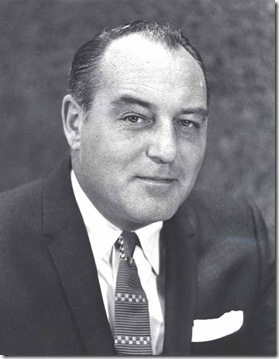
So says an experienced writer of fact articles.

The way he analyzes the present situation, the public’s appetite for gossip and scandal, whetted by Confidential, is now being satisfied by the so-called conservative magazines.

Their editors who a year ago wouldn’t have dreamed of going for the racy stuff are now rejecting assigned articles on celebrities when the subject refuses to tell all. These editors insist their writers get full confessions, regardless of whose privacy is invaded, or no sale. Continue reading →

Posted in Columnists, Matt Weinstock, Transportation, UFOs | Tagged , , , , , , | Comments Off on January 23, 1958: Matt Weinstock

January 23, 1958: Paul Coates

Jan. 23, 1958

Paul Coates, in coat and tieThere’s an old saying that I frequently call upon which goes:

“Omnia vincit amor.”

It means “Love conquers all”–and I think it’s pretty applicable to what’s going to happen to the U.S. Marines.

I think so because, shortly after dusk last night, I was invaded by some dozen wives of the corps. And I can truthfully say that I think the shores of Tripoli fared better than I did.

The women were, in mild English, disgruntled. In stronger English, angered. Or in corps English, fighting mad.

–Not, fortunately, at me. Continue reading →

Posted in Columnists, Paul Coates | Comments Off on January 23, 1958: Paul Coates

Jan. 23, 1958

A crowd at 5th Street and Main yells "Jump, Jump, Jump! Jump, you coward–jump!" as an unemployed railroad engineer stands at the edge of a hotel roof (the building isn’t identified, but I’m guessing it’s the Hotel Rosslyn) … And the bus strike is over.


1958_0123_cover

Posted in Downtown, LAPD, Suicide, Transportation | Tagged , , , | Comments Off on Jan. 23, 1958