January 31, 1959: Paul Coates — Confidential File

CONFIDENTIAL FILE

Junks ‘Junk’; Grads Applaud

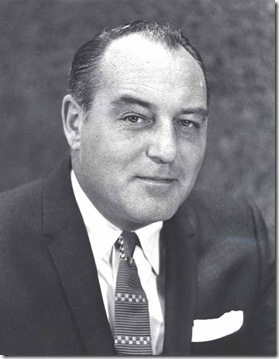
Paul Coates, in coat and tieIt’s commencement week, but the proudest graduate in Southern California today isn’t from any institution of learning.

He went through his ceremony in a shabby Ocean Park store-front dwelling crowded with friends whose combined arrest records could overflow the filing cabinets of any middle-sized town in the country.

Most of the guests, like the graduate, were former gutter dope addicts.

A couple of months ago I wrote about their experiment in “communal kicking” of the habit.

The group calls itself Synanon. Continue reading →

Posted in #courts, 1959, Columnists, Film, Hollywood, LAPD, Paul Coates | Comments Off on January 31, 1959: Paul Coates — Confidential File

Voices — Christine Collins, August 17, 1932


1932_0817_warden_telegram_01

Posted in #courts, Changeling, Film, Hollywood, LAPD | 3 Comments

google7971355090e933b6.html

Posted in Uncategorized | Comments Off on google7971355090e933b6.html

Company Town

1936_0523_shippey 1940_0505_bosworth_crop_2

You may recall my recent post about lunch with Harry Medved and the continuing quest to determine the name and date of the first film shot entirely in Los Angeles.

Val Almendarez, collections archivist at the Academy of Motion Picture Arts and Sciences, writes:

The first fiction film made in Los Angeles
(as travelogues and documentaries had been filmed here earlier) was probably THE
HEART OF A RACE TOUT, which was released July 29, 1909. 

William Selig later
named this film as the first one shot here.  It is not known when the film was
shot, but as the company arrived in Los Angeles on March 21, 1909, it is
probable it was made either at the end of March or the first week of April.

According to a Selig scholar, IN THE SULTAN’S POWER was the fourth film made by
the Selig Company in Los Angeles.

As to your second question, Sing Lee’s
laundry was on Olive between 7th and 8th Streets.

We do have some of Bosworth’s papers here at the library, but did not receive
the journal pictured in your blog.

We also got his scrapbooks, but he only has a
few pages about his time at Selig, and nothing about IN THE SULTAN’S POWER.

Below, a long list of Los Angeles firsts by E.V. Durling, including "The Heart of a Race
Track Tout."
I’m not sure what a "roundhouse" haircut is–but I don’t think I want one.
1938_0523_firsts


Posted in Downtown, Film, Hollywood | Comments Off on Company Town

Found on EBay — Haggarty’s

1961_0116_haggartys Haggartys_ebay

A 1961 catalog for Haggarty’s has been listed on EBay. Bidding starts at $1.99.

Haggarty’s, a prestigious chain of women’s clothing stores that began in 1917, closed in 1970 with $4.4 million in debt after losing money for years, The Times said.

Posted in Fashion | Comments Off on Found on EBay — Haggarty’s

Matt Weinstock — January 30, 1959


Life Can Be Lovely

Matt_weinstockd_2
Everywhere a person turns, it seems, another Tishman
building is springing up. It’s a magic name in the construction
industry. And the other day there was 56-year-old, Harvard-educated,
serene-looking Norman Tishman himself, proudly showing people around the latest Tishman triumph, the $13 million Wilshire Terrace, perhaps the most luxurious apartment structure ever built. 

Located
on Wilshire Boulevard at Beverly Glen, the highest point on the
fabulous boulevard, the 14-story edifice is distinguished by its
staggering design and by large salmon-colored Italian glass plant
boxes, one for each suite.

1958_0711_tishman
There are 112 apartments and five
penthouses. They are intended for wealthy people; for instance, those
whose children have grown up and gone off, and who wish the privacy and
elegance of a home without the headaches of running one. You now,
mowing the lawn and taking out the garbage and trapping gophers and all
those little irritations.

IT IS ALMOST superfluous to
mention that there is a maid service, a beauty shop, a restaurant, a
70-foot pool and an underground garage for 300 cars — two and a half
cars per apartment.

The Wilshire Terrance is a co-operative
apartment building which means tenants don’t rent, they buy. The
smallest apartment, four rooms and two baths, goes for from $24,000 to
$36,000. The largest, eight rooms and three baths, $71,000 to $81,000.
Penthouses are up to $125,000.

There also are maintenance charges, $2,640 to $13,750.

However, tenants can claim substantial tax deductions, $1,668 to $8,687.

Chatting with Edgardo Contini of Victor Gruen
Associates, who designed the place, I brought up a question that has
always fascinated me: "Where in the world do all the people who can
afford such luxury get all that money?"

He sighed and he said
he didn’t know, but they do. And he pointed out there are scores of
$150,000 homes nearby, many even more expensive, whose owners will be
attracted to the Wilshire Terrance.

Very classy joint.

* *

A PRESS RELEASE
from the National Association of Suggestion Systems in Chicago states a
personnel officer in Sacramento recently developed a novel idea to
attract employee attention. As a worker approached a Genie suggestion
box, an electric eye sets in motion. To quote: "A music box plays and
moving, printed tapes, give a suggestion pep talk. At the bottom of the
box, a mechanism provides a free shoe shine."

1958_0731_tishman
Sometimes a person can’t help wondering whither electronics leadeth.

* *

TWO MEN got
into a political argument and soon were shouting violently at each
other. A friend broke it up, but a lady who’d been listening
disapprovingly was overheard by Rosetta Case Bent in this charming malaprop: "You wait! In a minute they’ll go through the whole rigamaroar again!" 

* *

A FISHERMAN asked Tony Costa, who tends the boat rentals at Paradise Cove, where the fish were hitting.

"It
is very good at the Depot," Tony replied. Or at least that’s what the
fisherman’s baffled expression indicated he thought Tony said. Tony, of
course, was referring to the Deep Hole, a spot between the Cove and Zuma Beach, where the big ones lurk. 

* *

MISCELLANY-
It was old home week for customers and clerks again yesterday when
supermarkets reopened. One lady asked a checker what she’d done all the
time. "Just sat there on my hands," was the reply . . . Wonder if it’s
true that engineers at a plant here have developed a laboratory model
which cancels the force of gravity? Could be the biggest thing since
splitting the atom . . . A waitress in the Sparkletts plant commissary
has an effective formula for dispersing girl employees who block her
path. Instead of the usual warning, "Hot stuff! Coming through!" she
says, "Watch your nylons!" They scatter like frightened birds.

Posted in Architecture, Columnists, Matt Weinstock | Comments Off on Matt Weinstock — January 30, 1959

Paul Coates — Confidential File, January 30, 1959


CONFIDENTIAL FILE

Crackdown Hits Death Ballads

Paul_coates_2
Stop that dancing up there. And sit down a minute. I want to talk to you.

I suppose you know that most of this town’s top disc jockeys have —
either by choice or station edict — banned a new release called "The
Ballad of Barbara Graham.
"

If you didn’t know, I’m telling you now. The record’s subject matter, they say, is too hot. Too controversial.

It’s such a sizzling "political" issue that in the space of a week, KFWB has jerked it off the air, KDAY has gone out of its way to inform listeners that the record is banned, and KMPC program director Bob Forward has warned his disc jockey staff by memo:

"There are several new recordings on the market which appear to be out-and-out propaganda against capital punishment.

1959_0130_cover
"The decision as to whether to be for or against capital punishment is
one that will be made by station management and will be plainly stated
in an editorial campaign.

"I am referring specifically to ‘The Ballad of Barbara Graham’ and ‘The
Last Mile.’ Please do not play these or any other similar records
without first discussing it with me personally."

Now, hold on a minute, boys. I’ve heard this ballad about Barbara
Graham. But the only controversy I can work up with myself is whether
it’s music.

But that’s something I could question about a lot of the stuff passed off as "hit" material.

The Graham piece- if you’ll excuse my close scrutiny- has a melody
which sounds suspiciously like the tune I used to sing "Sweet Rosy O’Grady" to, years ago.

I quote, in B-flat:

1959_0130_runover
"Poor Bar-bar-a Gra-ham was wild and couldn’t be tied.

"But could she com-mit mur-der? And should she real-ly have died!"

That’s about as controversial as the lyrics get. And the only question
they seem to bring up, somewhat belatedly, is whether Mrs. Graham was
guilty.

And now, it’s my turn to raise an issue.

Who let Tom Dooley in? According to his defense attorneys, the Kingston
Trio, the poor boy is going to be strung up tomorrow at dawn for a
crime of passion. Any decent criminal attorney in the land could almost
guarantee to get him off on second-degree murder, at the worst.

It’s clearly and issue involving capital punishment.

Vocalist Avoids Arguments

Out of idle curiosity, I telephoned the vocalist and co-writer of
the Barbara Graham ballad last night to find out what kind of a fanatic
this town’s disc jockeys were barring from the turntables.

The young man’s name was Val Norman, and he admitted that the idea for the song came to him after he’d seen the movie.

"It had commercial possibilities," he told me.

"Do you have any views on capital punishment?" I asked.

1959_0129_plane
He
hesitated, then answered, "Well, I have some personal opinions. But I’d
rather not get involved. Religion, subjects like that- I just don’t get
into arguments."

Still, I’m bothered. Not so much for Mr. Norman.

But because of what looks like the beginning of a trend.

It
just so happens that Chuy Reyes and I have been collaborating in our
spare time on a jumpy little tune called "The Cahan Decision Cha-Cha."

But I guess we better forget the whole thing. Some disc jockey is bound to call it too controversial.  

Posted in Columnists, Paul Coates | Comments Off on Paul Coates — Confidential File, January 30, 1959

Voices — Christine Collins, August 16, 1932

1932_0816_death_certificate_01
Posted in #courts, Changeling, Film, Hollywood, LAPD | 5 Comments

Movie Star Mystery Photo

January 26, 2009, Cecil B. De Mille and Mary PickfordUpdate: This is a Los Angeles Times photo of Mary Pickford and Cecil B. De Mille after he received an Oscar and an Irving Thalberg Award at the 1953 Academy Awards.


Update: Many Daily Mirror readers have correctly identified the people in the photo (or at least one of them). Congratulations! If I haven’t posted your answer, you’re right. (I’m delaying the correct answers to give other people a chance). Check back tomorrow for more pictures! Continue reading →

Posted in Film, Hollywood, Mystery Photo | 114 Comments

Man Kills Dentist Over Picture, 1936

1936_0426_voiss_crop
I said in a previous post that the fate of Peter Voiss' burros was unrecorded. Unrecorded in The Times, that is. Regular Daily Mirror reader Dick Morris sent along some information about Voiss and his beloved animals, Trixie, Jimmie and another whose name is illegible in an old story from the Hayward (Calif.) Review.

In his later years, Voiss worried about what would become of his burros, and he prepared a will in which he bequeathed the burros to a beneficiary. In fact, any time someone lent him money, he left them a will in which he bequeathed them the burros.

"He scattered 'wills' along the coast from Los Angeles to Seattle like Johnny Appleseed," the Hayward paper said.

Of course, this came to light only when he was on his deathbed and there were competing claims for the animals.   

According to census records, Voiss was born in Germany about 1867. He immigrated to the U.S. in 1886. He apparently was a brewer before becoming a gold miner.

Thanks to Dick Morris for the info!

Posted in #courts, Animals, Homicide | Comments Off on Man Kills Dentist Over Picture, 1936

Marilyn Monroe Mystery

Chamales_naked Chamales_intro

Until I came across the news stories about him threatening his wife with a butcher knife, I’d never heard of Thomas T. Chamales. I picked up a copy of "Never So Few" because The Times’ Robert Kirsch called it "Easily one of the best novels to come out of World War II." I also got a copy of "Go Naked in the World," at left. Check out the acknowledgment, above. Marilyn Monroe and Tom Chamales? That’s a new one on me. Or maybe it was just wishful thinking…. 

Posted in books, Film, Hollywood | 2 Comments

Matt Weinstock — January 29, 1959


Samaritan on Trial

Matt_weinstockd
Alvin Thomas is deeply distressed.

Health inspectors came into his apartment on N Van Ness Avenue a few weeks ago and cited him for violating a city ordinance, harboring pigeons, nine of them.

He told them he was merely taking care of injured and sick birds and
that when they were well he turned them loose. He pointed out that he
carefully sprayed every bird and took every health precaution.

Out of his love and understanding of pigeons, he decided to fight the
case. He felt he had done no wrong, that his rights had been invaded.
He pleaded not guilty and asked for a jury trial.

1959_0129_burlesque
When he appeared in court a few days ago the judge took him aside and
questioned him, then gave him until Feb. 19 to remedy the situation.
This means disposing of the pigeons.

THOMAS HASN’T decided what to do. All but two of the birds
probably will be all right by that date, but these two need constant
attention. To turn them loose, he said, would mean certain death for
them. "After a while they lose their wild instincts," he explained.

Although he feels that he has been harassed, Thomas is not angry at the
health inspectors. He found them friendly and considers them merely
doing their duty. But helping needy pigeons comes first with him. He is
very proud of his work.

"Sometime when you’re around Sunset and Gower take a look at the
pigeon that stands on the neon sign that reads ‘Cut Rate Drugs,’ " he
said. "He keeps his feet warm on the sign. He’s there every night. He’s
one of mine, No. 27. I put a band on them when I turn them loose, you
know. I found him in the alley on 11th Street between Broadway and Hill. He was in bad shape."

1959_0129_studebaker
Thomas, who served on Guadalcanal and New Guinea in WW 2, added, "I know what it is to lie in a field, wounded."

* *

SOMETIMES the best thing is to walk away and pretend you didn’t
hear what someone said. As in the case of a young lady at a party. The
host asked what she’d like to drink. She frowned thoughtfully, then
replied, "I’m driving, I guess I’ll have a Martini."

* *

THE WAY Eloise Lomas tells it, a sports fan enthusiastically
addicted to photography became fascinated by the graceful postures of
basketball players in action and concentrated on taking pictures at
games.

He kept improving his technique, and at the recent UCLA-SC games
captured a shot that was poetry in motion. A friend couldn’t believe it
was read and said it looked like a posed studio shot.

"Naw," was the reply, "it was just a flash in the Pan."

* *

1959_0129_million

THE PHONE RANG at the home of Nancy, 6, while her mother was next door and the caller said, "Please have her call me at Capitol 3-2210."

There was a long silence so the caller asked, "Are you sure you have the number?"

 
"Oh yes," Nancy replied, "only I’m not sure how to make a capital 3."

* *

1959_0129_page02PAGE 1 ANY DAY
Seems a fellow went to prison
‘Cause he took what wasn’t his’n.
–HERB PRUITT

* *

AT RANDOM — Believe it or not, there is such a thing as
National Break a Cold Month and, according to a communique from a N.Y.
public relations firm, this is it . . . Inquiry by Nate Fischer: Is it
true that Emile Zola’s mother was calledMaZola? No, Lalapazola . . .
What difference a comma can make. An apartment house in Hollywood has
this sign: "Apt for rent all electrical fixtures patio swimming pool
fully carpeted" . . . Redundancy note J. OrlandoNorthcutt heard a TV
announcer mention programs "in the future weeks to come" . . . Simile:
As conspicuous as a bandage on a girl’s ankle.  


Posted in Columnists, Matt Weinstock | Comments Off on Matt Weinstock — January 29, 1959

Paul Coates — Confidential File, January 29, 1959


CONFIDENTIAL FILE

Here’s Volunteer for Outer Space

Paul_coates
NEW YORK, Jan. 28– T. Keith Glennan, U.S. space chief, announced last night that the selection of America’s first human space traveler is under way.

According to Glennan, the new Federal Space Agency has picked 110
rugged young Americans as candidates for the first manned satellite to
orbit the earth.

The man finally selected will have to meet the following
qualifications: He must be a graduate of an Air Force or Navy
test-pilot training school with at least 1,500 flying hours. He must
have a university degree in engineering. He must be in superb physical
condition, with the physical and psychological attributes suited for
space flight as determined byaero-medical scientists. And he must be younger than 40, no taller than 5 ft. 11 in.

* *

1959_0129_house
I’d like to lay it right on the line to T. Keith Glennan. Why hasn’t he considered me for this assignment?

It’s
understandable that it might never have occurred to him I’d like to go.
But it wouldn’t kill him to ask. I mean, I’m not going to bite his head
off.

The fact is that under certain, reasonable conditions I am quite willing to be the first human who will soar into space.

My qualification are, I think, impressive.

Admittedly,
I don’t have a university degree in engineering, and I’m not a graduate
of an Air Force training school with at least 1,500 flying hours.

But we can skip that nonsense. All we have to do is send me up and guide me back again by radar.

1959_0129_mirror_red_streak
Physically,
I’m not the greatest specimen you’ll ever meet. But I’m not the worst,
I’ve got a touch of bursitis in my left shoulder, I have an allergy
that makes me break out when I drink hot chocolate. I’m missing a few
molars. And my adenoids act up in damp weather.

My medical case history is blemished only by the fact that I had German measles right in the middle of World War II.

The
important thing, however, is that psychologically I’ve got it all over
these 110 rugged young Americans our space agency is considering.

We must assume that every blessed one of them is a normal, well-adjusted youngster. And that’s the rub.

It doesn’t take a normal, well-adjusted person to volunteer for a trip into space. It takes a nut.

1959_0129_murder_ro
Space,
if you’ll permit me an observation, is a lonely place. The man who goes
out there will need the unique emotional talent of being able to enjoy
his own company. Putting it bluntly, he’ll have to be a guy who talks
to himself.

And I, Mr. Glennan, am that guy.

It seems to me that I’m the obvious man for the trip into the silence of space. My requirements are quite simple.

In
the first place, I must insist on a guarantee of adequate publicity.
Let’s be quite frank with each other. I’m a businessman. I’m not doing
this thing for laughs. If I’m going into orbit, I’d like my public to
know about it.

Therefore, I want them to hire a gasser of a press agent like Russell Birdwell or Arthur Wenzel who can get me a little coverage in the papers.

Secondly,
I want a guarantee that I will retain merchandising rights on any space
product ideas that might be promoted when I come home.

And thirdly, I want a guarantee that I will come home.  


Posted in Columnists, Paul Coates, Science, Transportation, UFOs | Comments Off on Paul Coates — Confidential File, January 29, 1959

Found on EBay — Player Ejected During Dodger Game, 1958

1958_0604_sports

1958_0604_runover

Ump_eject_ebay

Here’s an interesting little item. Umpire Bill Jackowski’s report on why he ejected Don Hoak. Bidding starts at $49.95.

The Times’ story doesn’t mention Hoak getting thrown out, but the box score revealed there were only three umpires. Maybe that’s why Hoak thought they missed the call.

It also happened to be election night in Los Angeles, with voters deciding on the contract between the city and the ballclub to build a stadium in Chavez Ravine.

Posted in Dodgers, Front Pages, Sports | Comments Off on Found on EBay — Player Ejected During Dodger Game, 1958

Voices — Christine Collins, August 16, 1932

1932_0816_warden_01
Posted in #courts, Changeling, Film, Hollywood, LAPD | Comments Off on Voices — Christine Collins, August 16, 1932

Woman Loses Children Over Nude Photos; Angels Earn Most of Cubs’ Income, January 29, 1949

1949_0129_pirates

A panel from "Terry and the Pirates," by George Wunder.

1949_0129_comics At left, The Times’ comics page from 1949. Moon Mullins … Li’l Abner …  Brenda Starr … Dick Tracy … Orphan Annie … but also Ella Cinders … Napoleon … Harold Teen … Abby an’ Slats … And Nancy. Always Nancy.

Below left, Jeanne Shapiro pleads on her knees as a court awards custody of her children to her estranged husband, Arthur, a musician, after he introduces as evidence a picture of her in bed with another musician, Thomas Mace. "Mrs. Shapiro … protested that she was a good mother and cited her work with children’s groups," The Times said.

1949_0129_police

A woman sues General Hospital, accusing a doctor of brutality.

1949_0129_theater

MGM denies rumors that it plans to make "Brigadoon" with Gene Kelly.


1949_0129_sports There was nothing minor about the money made by Los Angeles Angels in 1949.

The Angels’ profit was big enough to help the other team playing in a ballpark called Wrigley Field–the Chicago Cubs. A story in The Times from the Cubs’ board of directors meeting tried to put the money in some perspective. Perhaps the paper was already starting to promote the idea of the major leagues should look toward California–or at least that the Pacific Coast League deserved major league status.

The Cubs earned $141,000, but $109,890 came from the Angels, who played in Los Angeles’ Wrigley Field. Much of the Angels’ profit had been spent to retire part of the corporation’s stock, which left the minor leaguers $39,890 to work with in the coming season.

So permit a little bit of math here. According to the story, if you subtract the Angels’ profit from the Cubs’ overall profit, the big club had $39,110 for working capital. So the major league team and the minor league team ended up with about the same money? Granted the Cubs were dreadful in 1948. But the Angels obviously were a major help to Chicago’s bottom line.

Or as The Times’ story concluded, "There’s your argument, fellas. Is the Angel team big league or minor?"

Wonder if Walter O’Malley was already taking notes.

–Keith Thursby

Posted in #courts, #Jazz, @news, art and artists, classical music, Film, Front Pages, Hollywood, Sports | 3 Comments

Jewish Home for the Aged — Ida Mayer Cummings


Ida_mayer_cummings_1957_1215

Photograph by Ken Dare / Los Angeles Times

Ida Mayer Cummings, Dec. 15, 1957.

Alicia Mayer Beverley writes from Australia:

I ran across your blog entry on the 1957 Women of the Year. My great-grandmother Ida Mayer Cummings is one of them (she’s to the left of the "Women of the Year" banner). While I’m sure you won’t be heading into this territory again, I thought I might clarify her background as she was in no way obscure.

Ida Mayer Cummings was the older sister and closest confidante of her brother Louis B Mayer. She was also the mother of famed producer Jack Cummings who produced many MGM favorites, such as Seven Brides for Seven Brothers and most of the Elvis films. Both of her sons-in-laws were also very active producers.

Ida_mayer_cummings_1951_0219_crop

Los Angeles Times file photograph

From left, Ida Mayer Cummings, Mrs. Adolph Weinberg, George Murphy, Adolph Weinberg and Louis B. Mayer with a portrait of Ida Mayer Cummings presented to the Jewish Home for the Aged, Feb. 19, 1951.


But on her own account, she was one of the best known philanthropists of her time and was known by famous actors and Hollywood types as well as politicians and even world leaders through her fundraising activity. She wrote hundreds of letters to some of the world’s most powerful people, encouraging them to give generously to the Jewish Home for the Aged, and in fact, they all seemed to write in return as I have seen folders and folders of letters to and fro. Today, her legacy carries on through the same organization which was renamed some years ago to Associates IMC (Ida Mayer Cummings). They still hold several annual events (a ball and a luncheon), all of which span back 80 years or more to when she started them.

Bob Hope once said of Ida that she was "the only woman I know who can reach through the telephone and grab a man by the lapels!" While her generation has mainly all gone, there are still a handful of very old women who tell you that "everbody knew Ida". She evidently was the female, philanthropic version of her little brother Louis B Mayer, and in fact, they are interred together, along with their brothers Gerald and Ruben Mayer.

So there’s a little bit more insight into a woman I am very proud of. In fact, exactly 50 years after she was named a 1957 Woman of the Year, I was given the International Women’s Day Most Inspiring Leader award here in Australia where I have lived for 20 years.

Thank you for your time Larry and thank you so much for covering that piece. It brought tears to my eyes.

Best,

Alicia Mayer Beverley


Posted in Downtown, health, Religion, San Fernando Valley | Comments Off on Jewish Home for the Aged — Ida Mayer Cummings

Found on EBay — Batchelder Tile

Here’s a matched pair of Batchelder tile….

Batchelder_01_ebay

This tile is listed here >>>

Batchelder_02_ebay

This tile is listed here >>>

Posted in Architecture, art and artists, books, Real Estate | Comments Off on Found on EBay — Batchelder Tile

Matt Weinstock — January 28, 1959


Murder Can Be Fun

Matt_weinstockd
The
science-fiction magazine If for February has a story by George H. Smith
titled "The Last Days of L.A.," and if you frighten easily this will do
it. The subcaption will give you the idea: "Murder on a small scale can be the most exhilarating thing tin the world!"

The
story is presented as a rambling, blood-curdling dream sequence having
to do with enemy bombs wiping out our city. The narrator, who drinks
continually, is the only one who realizes the jig is up, but no one
will believe him.

The tale is fortified with a sexy lady evangelist and some nasty, if slightly true, cracks at our local perversities and civilization generally.

The
only complication to the reader is that the narrator has difficulty
separating his drunken dreams from reality. Doubtless this was
intended.

1959_0128_olvera
You have to keep in mind the science-fiction boys
have been far ahead of the rest of us. For them, the space age we are
now entering is old stuff.

THE LEAD STORY in the same issue is a little number by Fritz Leiber titled "Pipe Dream," and as one who admires provocative, compelling opening sentences, I submit that here we have a classic.

Leiber’s
story starts: "It wasn’t until the mermaid turned up in his bathtub
that Simon Grue seriously began to wonder what the Russians were doing
on the roof next door."

There’s a sentence that has everything.

* *

AMPLY WATERED
Whether it’s a human or a faucet,
Will you take this tip?
There is nothing more monotonous
Than the noise made by a drip.
– AULYN E. KANSTON

* *

HIGH SCHOOL
seniors know what their grades will be and they’re coasting in.
Attending classes is a mere formality. Their minds are on the big
event, graduation for which they’re rehearsing.

In this prevailing mood, a certain teacher was surprised to come upon Billy Jarman, a senior, reading Tressler’s
"English in Action, Book No. 1." Billy is a fine boy, good-humored,
eager to help, but he is not distinguished for scholarship, especially
unnecessary application.

Curious, she tiptoed behind him and
saw that his attention was riveted to a short section near the back of
the book titled, "Getting to Know Your Teacher."

1959_0128_desotoInasmuch as
Billy hadn’t bothered much about this phase of education, she considers
it one of the nicest things that has happened to her all semester.

* *

ALTHOUGH the plethora of TV westerns is generally deplored, the horses keep galloping across the living room.

During a discussion of this phenomenon at a party a guest said, "I think ‘Maverick’ is the best of them."

John J. Anthony, the problem solver and a man who draws fine distinctions, replied. "Yes, but it’s a cowardly western."

* *

MISCELLANY — A Hill St. tavern has a sign, "Come in and be yourself." Which a patron interprets thusly:
Two drinks and you become yourself. Two more and you’re Superman. After
that, anonymity . . . Inflation note. Beverly Hills business license
fee last year was $5, this $25. As a result there are cries, "You can’t
do this to me." But they’re doing it . . . A recent bride named Sandy
was telling her mother her husband will never have to take cold
sandwiches in his lunch. "I’ll make hot chili and things that he can
put in his thermostat," she malapropped . . . Les McMurray’s sporting goods store on Ventura
Boulevard has a sign, "Have Gone, Will Return" . . . The Madison Avenue
boys are moving into Cuba, an NBC newscaster reported. This can mean
only one thing- they’re going to get Fidel Castro and his bearded
friends to make some razor and shaving cream commercials.


Posted in books, Columnists, Matt Weinstock | Comments Off on Matt Weinstock — January 28, 1959

Paul Coates — Confidential File, January 28, 1959


CONFIDENTIAL FILE

They Lost — They Were Lucky

Paul_coates
The Baumans, mother and daughter, had dinner at 9 o’clock last
Sunday — not an unreasonable hour when you’re relaxing in a pleasant
coastal resort likeBaja California’s Rosarito Beach.

But now, looking back, they’re more than a bit sorry that they didn’t
skip the meal, head back for the U.S. border, and turn in early.

Miss Lorraine Bauman, 34, and her widowed mother, Mrs. Katherine Bauman, 63, both of Santa Rosa, were among the unfortunate many seized by Mexican federal police in the resort’s gambling casino that night.

But they had their good fortune, too. So far they’re the only Americans who have been released following the raid.

"We’ve been released outright, I guess," she told me by telephone from Chula Vista last night. "Right now, we’re busy trying to contact relatives of some of the people who are still being held."

1959_0128_mirror_cover
I asked Miss Bauman, who is owner of a gift shop, how she and her mother happened to be caught in the raid.

"After we finished dinner," she replied, "we were told that we could go
into the gaming rooms if we just filled out a card. Why not, we decided.

"After we filled them out, we were directed into a room where there
were a bunch of blackjack tables. I was going to leave right then."

"Why was that?" I asked.

"I only like to shoot craps," she answered. "Then a man told us there was another room with crap tables. I’ve played before at Las Vegas, so after going in and watching a while, we each bought $20 worth of chips.

"Do you know," Miss Bauman told me, "that when those men came charging in, I’d built my bankroll up to $110, and that Mother had hers up to $80 or $90.

"When those men broke in with shotguns and machine guns, I thought they
were bandits. It was about 15 minutes before I saw a man in uniform and
knew what was happening."

"How were you treated?" I asked.

1959_0128_page
"For the first two hours they wouldn’t let us women go to the rest
room," she said. "The men had to wait longer. About four hours. It’s
already been in the papers about not getting anything but toast and
coffee to eat and about how they took our possessions.

"But, on the whole, after the initial shock, they treated us very well, I’d say."

Doctor Was Helpful

Then she continued: "Especially, my mother and I. One of the other
prisoners was a doctor from Tijuana, and he was extremely helpful in
convincing the soldiers that my mother, who’s a diabetic, should have
her nerve pills back and get her insulin shot."

U.S. Vice-Consul Joseph Cicala also was helpful, she added. "It was because of my mother’s health that we were released, I’m sure."

"Did you get all of your possessions back?" I asked.

"When
we were let go, they told us to pick out what was ours from a pile on a
big table," she said. "But when we checked the wallets we had in our
purses, they’d been cleaned out. More than $800 between us, we had.

"When I asked the young interpreter about our money," she explained, "he just smiled.

"He said, ‘Aren’t you glad you’re being released?’"

Miss Bauman sighed heavily.

"I suppose I’ll never see it

"And to think," she added wistfully, "I almost came home a winner for the first time in my life."  

Posted in Columnists, Paul Coates, travel | Comments Off on Paul Coates — Confidential File, January 28, 1959