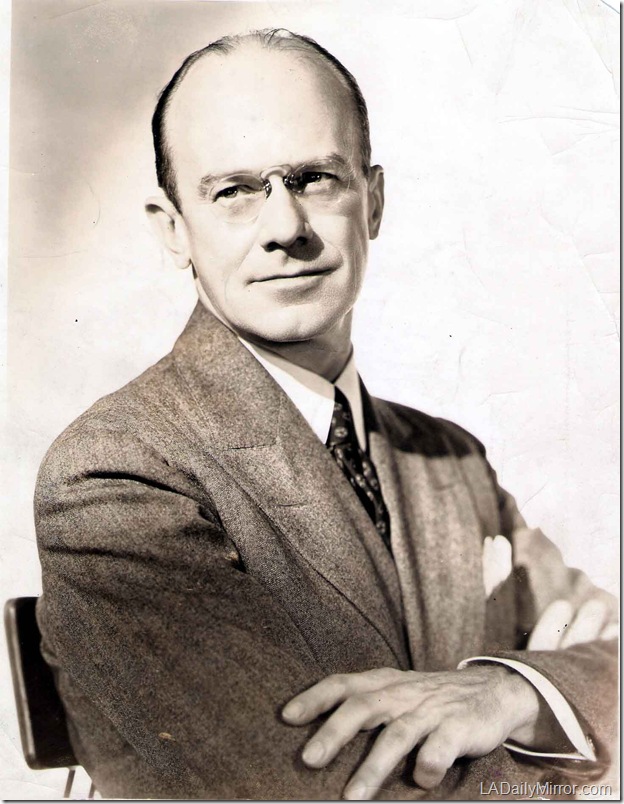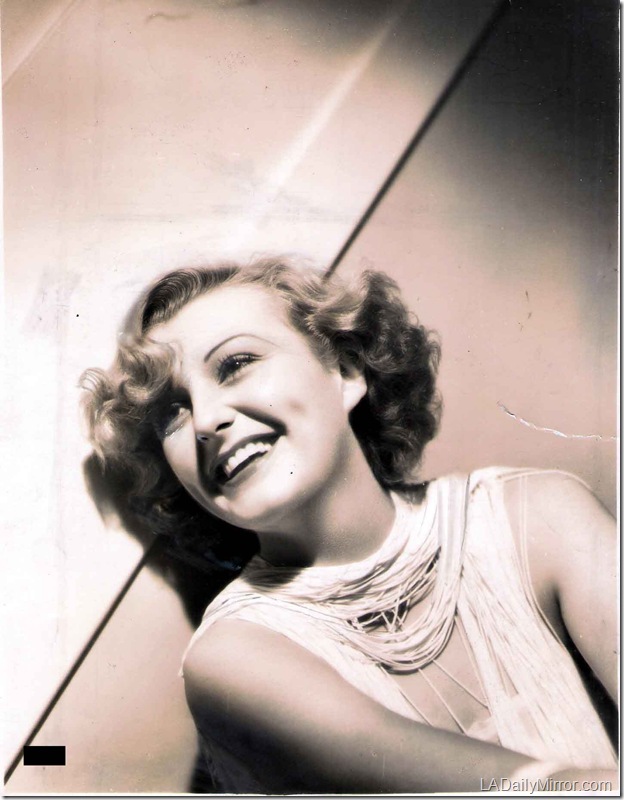
Here’s a mystery pair from the incredible collection of Steven Bibb – in the news business this pose is often called a “grip and grin.”
[Update: Producer Harlan Thompson welcomes Gladys Swarthout to Hollywood to appear in “Champagne Waltz,” 1936. ]

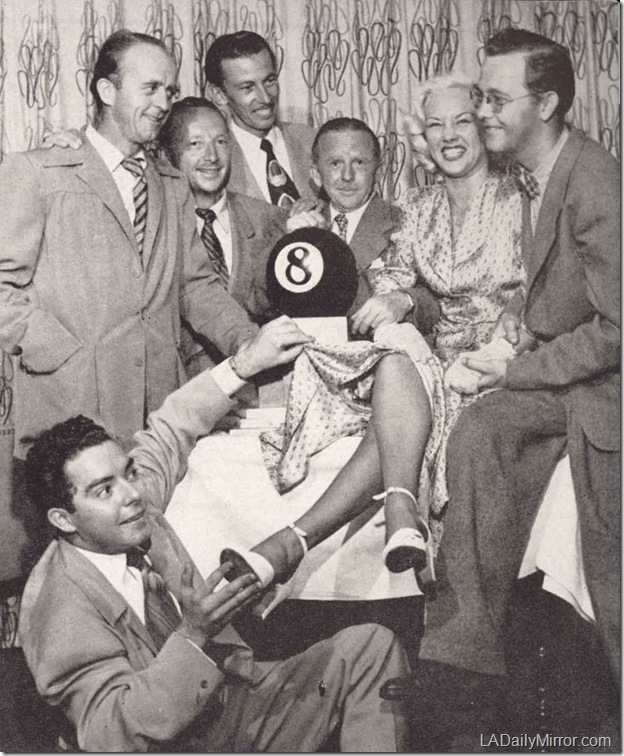
Here’s a mystery pair from the incredible collection of Steven Bibb – in the news business this pose is often called a “grip and grin.”
[Update: Producer Harlan Thompson welcomes Gladys Swarthout to Hollywood to appear in “Champagne Waltz,” 1936. ]


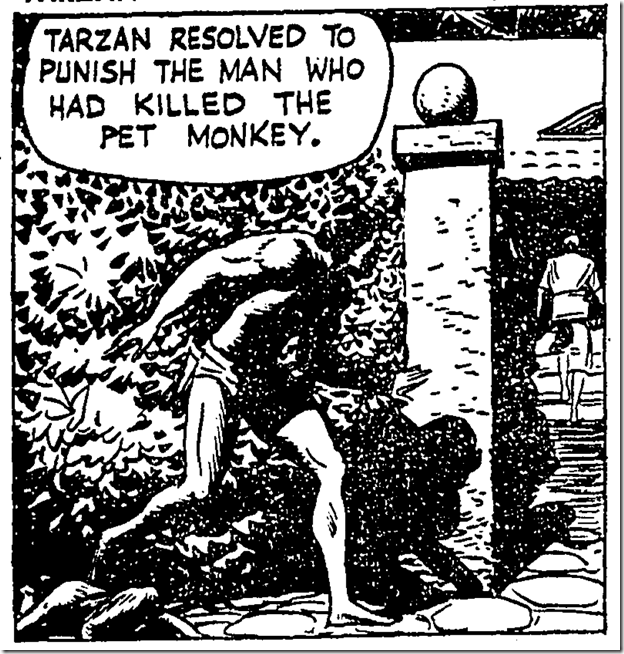
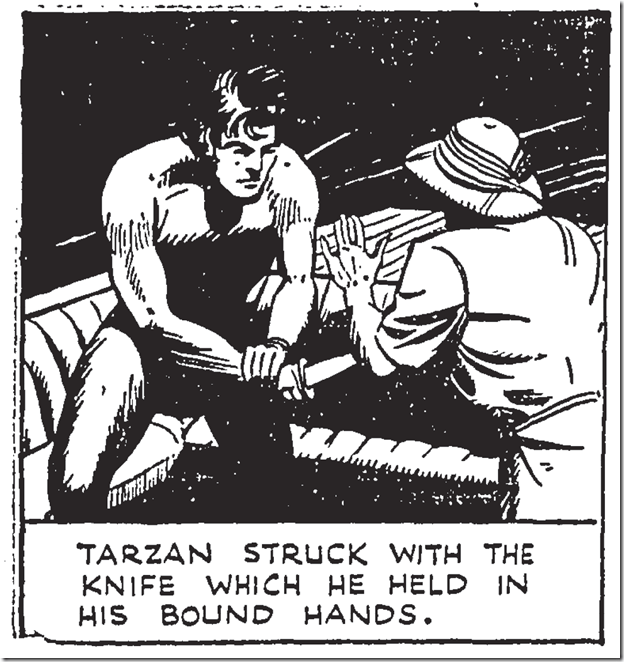
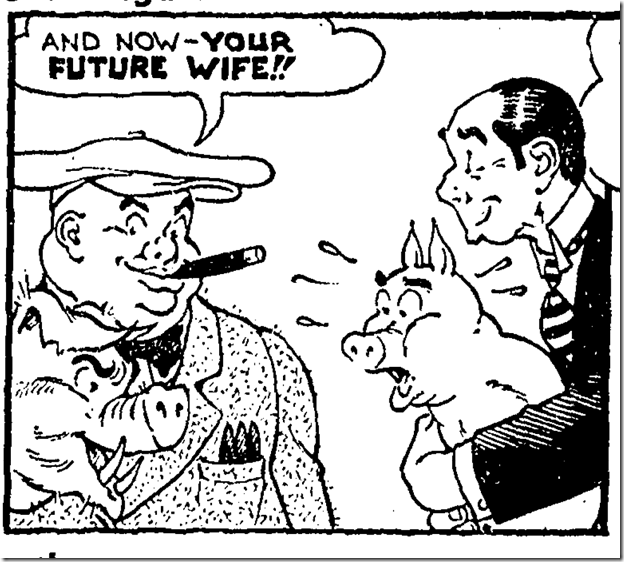
Terrific artwork from the incredible Milton Caniff.
Dec. 15, 1941: A group of soldiers was stopping motorists on Sepulveda Boulevard near the airport to strip off blue cellophane that had been illegally put over the headlights in the new wartime blackout. Dr. Harry Brandel, assuming that the soldiers were hitchhiking, ignored the order to stop and Private Eugene I. Tuttle, 19, fired what he said was a warning shot. The bullet struck the car, killing Brandel’s wife, Adele. The case was turned over to military authorities and The Times never published anything further about the resolution of matter.
Hedda Hopper writes a Hollywood version of the “Yes, Virginia” Christmas column, which was an old chestnut 60 years ago.
Jimmie Fidler says: A few minutes after war was declared, Rosalind Russell and Linda Darnell led a daylong parade of screen stars who volunteered their services to the Women’s Emergency Corps of Beverly Hills.


![]() |
![]() |
Dec. 14, 1941: The Rose Parade is canceled and the Rose Bowl – between Duke and Oregon State – is moved to Durham, N.C. The streets of Pasadena were oddly quiet on New Year’s Day as millions reviewed memories of previous parades in all their glory, The Times said.
The comics of the “Greatest Generation”: flogging a woman who won’t cook. And this is “Brenda Starr,” drawn by Dale Messick.
Tom Treanor writes that until the Japanese attack on Pearl Harbor, America had been suffering “a mania of superiority.”
Jimmie Fidler talks with Laird Cregar.
Fidler asks: “Why, if I may pry, are you not married?”
Cregar: “I’ve never felt I could afford it. Now that I am making a movie salary I–well, I am looking around.”

Gosh, a mystery photo in color? Yes, thanks to Steven Bibb! And no, I can’t think of any Native Americans who actually dress like this, except for Hollywood Indians.
[Update: This is Lisa Gaye. Please congratulate CandyC, Don Danard and Gary Martin for identifying her! ]


Dec. 13, 1941: The Daily Mirror HQ was thrilled to see a brief appearance by Jimmie Fidler in “Garden of the Moon,” so here he is, in case you ever wondered what he looked like.
On the jump:
Times artist Charles Owens provides a map of the latest war news.
President Roosevelt announces that the military will not release casualty lists to avoid giving information to the enemy. Military personnel will notify families directly, and the news media will only be given totals of casualties. Roosevelt also asked the news media to stop compiling its own casualty lists from death notices submitted by relatives.
Frank Capra, a math instructor in the military during World War I, is expecting to be called for the Army Signal Corps.
Chief County Jailer William J. Bright says authorities have arrested so many suspected enemy Japanese (345), Germans (82) and Italians (14) that the county jails are being forced to move other inmates to prison farms, The Times says.
Jose Ferrer and Ruth Wilk announce the withdrawal of the Broadway play “The Admiral Had a Wife,” Lowell Barrington’s comedy about Pearl Harbor. The play dealt with a socially ambitious Navy wife who wants to advance the rank of her husband, a lieutenant. The play got mixed reviews in Baltimore and was revised after the war as “Commander’s Wife.”
Jimmie Fidlersays that Hugh Herbert is tired of his eight-year stint of saying “woo-woo” after an unplanned moment caught on camera while shooting the 1933 film “Diplomaniacs.”
And, “the better local niteries are frowning on femmes who step out in slacks,” Fidler says.

A Witzel photo of Sid Ziff, the Mirror’s sports editor from 1950 to 1962 and a sports columnist at The Times until his retirement in 1967, has been listed on EBay. Ziff was “one of the most controversial and opinionated sports writers in Los Angeles history,” according to his 1991 obituary by the legendary Shav Glick. Bidding starts at $9.95.

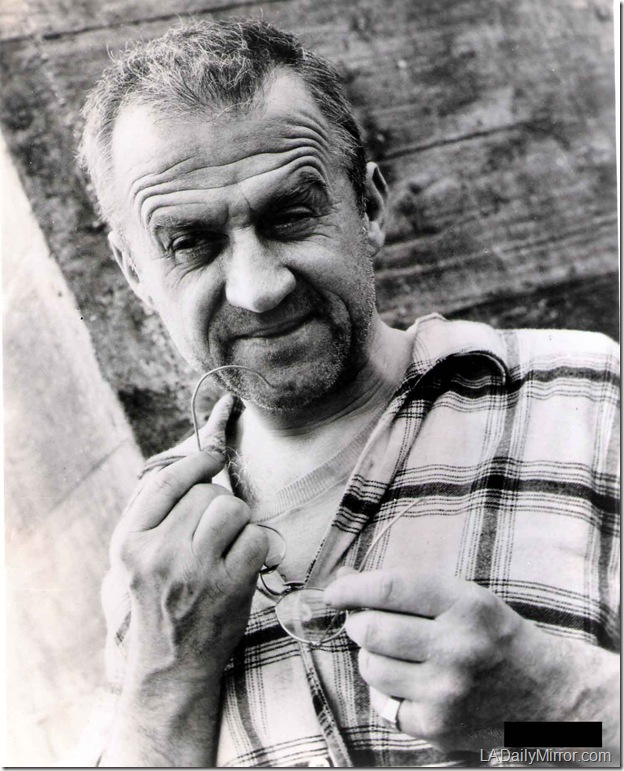
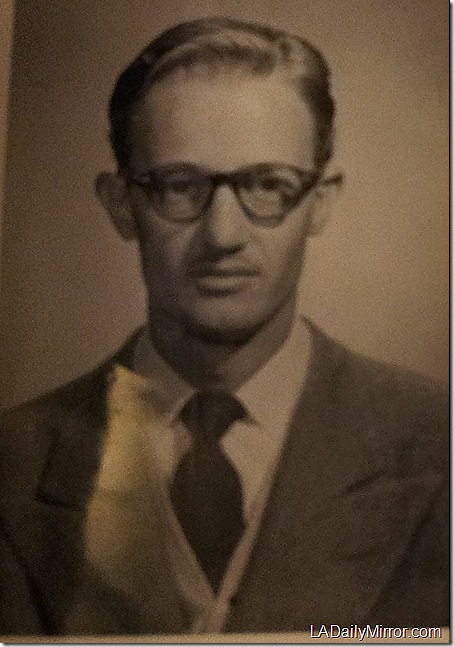
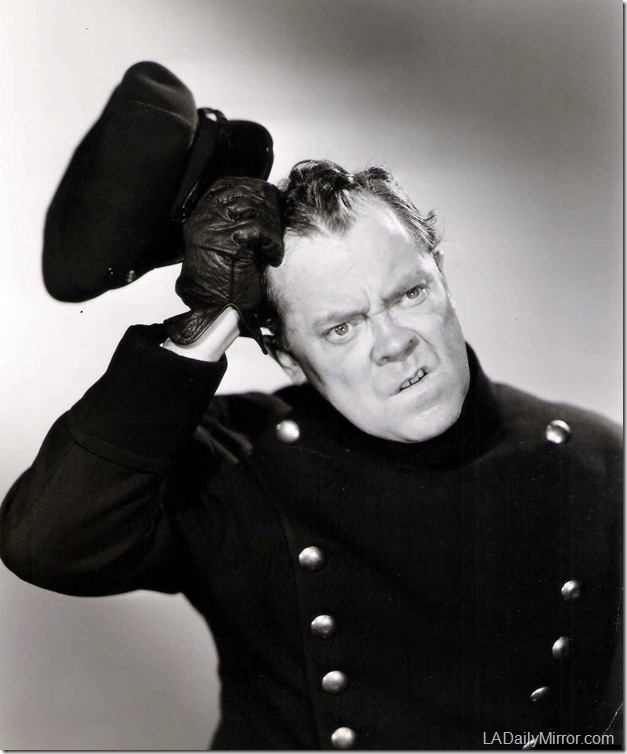
Here’s a mystery fellow, from the collection of Steven Bibb.
[Update: This is Juan Varro. According to imdb, his roles include a gigolo in “Mighty Joe Young.” I don’t recall a gigolo in “Mighty Joe Young,” but I haven’t seen it in years.]

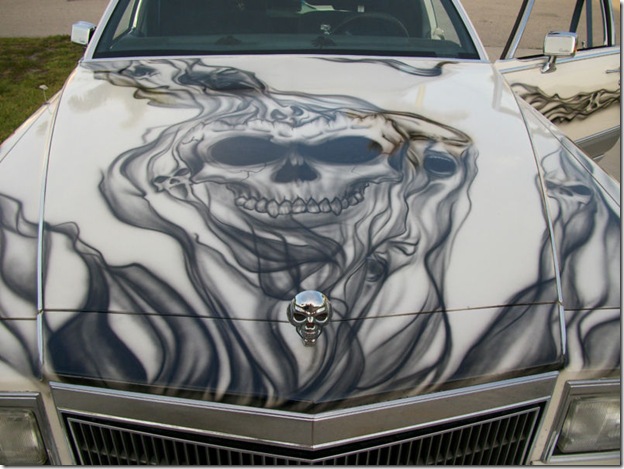
Photo: A model of a 1959 Cadillac hearse listed on EBay at $599.99.
Queen of the Dead—dateline December 12, 2011
• For all its youthquake aura, Laugh-In had a lot of middle-aged folks in its cast: the delightfully camp and nelly Alan Sues (“Uncle Al, the Kiddie’s Pal”), 85, died on December 1. Sues hit his stride in the Off-Broadway revue The Mad Show, and you might also remember him as the sullen son on “The Masks” episode of The Twilight Zone (trivia bonus: the man who played the vengeful grandpa in that episode, Robert Keith, was once married to HOLLYWOOD sign-jumping actress Peg Entwistle!). Sues kept working post-Laugh-In, but nothing high-profile: commercials, regional theater. I would have paid a lot of money to have seen Alan Sues and JoAnne Worley do Who’s Afraid of Virginia Woolfe? Maybe with and Henry Gibson and Goldie Hawn as Nick and Honey.


Hey, it’s the Florentine Gardens! Here it is via Google’s Street View.
I was watching the 1950 Columbia film “Between Midnight and Dawn” and several locations caught my eye.
The first one is an aerial view during the credits that shows The Times Building lit up at night in the shadow of City Hall. And I do mean the shadow. And there’s a shot of the Florentine Gardens, dressed as the Starlight Club.
Most of the film is process shots or apparently done in the studio, but there’s a five-minute chase sequence, starting about the 49-minute mark, that shows downtown Los Angeles. Cool discoveries include the Cozy Theater and the Central Theater in the 300 block of South Broadway. The Bradbury Building is there too, so junked up with signage that it’s almost unrecognizable.
Other locations appear to be the Pacific Electric terminal near 6th and Main, the 3rd Street tunnel and several I can’t identify.


Dec. 10, 1941: At Los Angeles City College, Japanese American students are stunned by the Pearl Harbor attack and promise loyalty to the United States.
“We American students of Japanese blood have confidence in the fairness of white Americans. Everyone I know has been sympathetic in recognizing our position. There will be no trouble.”
–Thomas Koichi Kido.
Also on the jump:
The FBI rounds up Japanese, German and Italian aliens. Germans arrested include Hermann Max Schwinn, a former leader in the German-American Bund, and Hans Diebel, a leader in the German youth movement.
A war mapby Times artist Charles Owens.
Solar Aircraft Co. of San Diego begins training 15 women as welders in anticipation of the loss of men to the war effort. “We have found that because women generally have more dexterity with their hands, they learn this trade more rapidly than men,” says welding instructor Carl H. Keller. Consolidated Aircraft Corp. already has 650 women on the payroll and Ryan Aeronautical has 30 to 40 women employees.
“Rise and Shine”opens tomorrow at Grauman’s Chinese Theatre and Loew’s State.
Jimmie Fidler says:For a few hours Monday morning, work came to a standstill in the studios, where hundreds of radios resounded with the speeches of President Roosevelt and other government officials. Then questions began to fly.
Would Jimmy Stewart remain in service now? How soon will Robert Montgomery, Douglas Fairbanks, ex-producer Gene Markey and other motion picture people now in uniform see Pacific war action?
![]()
Aug. 10, 1942: Politics is politics, war or not.
My distinguished colleague George Skelton, who understands Sacramento like a watchmaker knows the inner workings of a precision timepiece, has gazed rather fondly into the rose-colored rearview mirror with a column on how the Pearl Harbor attack unified Americans with a common goal of defeating the Axis.
Greater minds than mine, notably Emily Rosenberg in “A Date Which Will Live: Pearl Harbor and American Memory,” have examined the repurposing of Pearl Harbor, so I won’t explore the matter in detail. It’s a noble view – part Norman Rockwell and part Steven Spielberg – that the “Greatest Generation” put its shoulder to the wheel as eminent statesmen of both parties set aside political squabbles “for the duration.” Demanding a tax cut, Skelton tells us, would have been “unpatriotic.”

Here’s a stunning discovery. You may recall the saga of Everett Ruess, the young vagabond artist, photographer and poet who vanished in 1935 while exploring southern Utah and whose life remains an inspiration for people intoxicated with the romance of the desert.
This book, “Los Angeles in Blockprint,” is by Ruess’ mother, Stella, and was published in 1932, possibly for the Olympics, which were held in Los Angeles. The cover artwork, above, shows the Coliseum.

And here’s City Hall, with the windows lit to form a cross.
Bidding on this item starts at somewhat staggering $575, so it won’t be coming to the Daily Mirror HQ. But it is a remarkable find. As with anything on EBay, an item and vendor should be evaluated thoroughly before submitting a bid.


Dec. 8, 1941: The FBI begins rounding up 200 “alien Japanese suspected of subversive activities”
Several truckloads of Japanese were seen passing through Brea toward Pomona, Brea police reported, and orders to stop all cars bearing Japanese and to confiscate maps and binoculars or radios were given.
Gen. H.H. “Hap” Arnold, head of the Army Air Corps, was hunting quail in Kern County with Donald Douglas, president of Douglas Aircraft, when he learned of the attack from notes dropped by the sheriff’s aviation squadron.
Times artist Charles Owens draws a map of Oahu, showing the location of Pearl Harbor and other military installations.
Tom Treanor, who was killed covering the liberation of France, reflects on his stint as a movie critic and interviews Jack Oakie at his Northridge home in hopes of finding some humor in the U.S. entry into World War II.
“Dumbo” is opening at the Carthay Circle Theatre on Dec. 19.
Jimmie Fidler says: Weeds have so overrun the Clark Gable-Carole Lombard garden they’re offering cuttings of tuberous burdock and night-blooming pigweeds to friends.

![]()
Dec. 8, 1941: The Times interviewed average Angelenos (if there is such a thing) for their opinions about the Japanese attack on Pearl Harbor. Many, like Horace Goodrich, thought the U.S. would wrap up the war in a few weeks. J.H. Allen was the only one with a contrasting view: “From what I gather, the Japanese must be well prepared. If they are, then we’re in for a long battle.”
In 1962, I was a seventh-grader at Washington Junior High School in Naperville, Ill. On Dec. 7, Mr. Humbert, our social studies teacher, put aside the regular curriculum to give his young pupils a firsthand account of Pearl Harbor.
Many years later, I contacted Mr. Humbert. He didn’t remember me (I was not a stellar student) but he was thrilled to get a phone call from one of his former charges who wanted to hear once more about Pearl Harbor.
Rene P. Humbert died in 2002 at the age of 81. I was his student in a much more formal era of American life. Male teachers wore coats and ties, and didn’t share much about their personal lives. I don’t even remember him mentioning that his brother’s fighter plane had been shot down in June 1944 over France.
What I learned many years later was that Mr. Humbert joined the Navy at 19, went through all of World War II and was called back for the Korean War. Perhaps one reason he was a little hard on us Baby Boomers in the wealthy suburbs of Chicago was because he didn’t graduate from high school, but got a GED and started college at the age of 31 under the G.I. Bill
Mr. Humbert was on the San Francisco, a heavy cruiser, during the Pearl Harbor attack and the ship was untouched except for shrapnel because the Japanese were concentrating on the larger ships. He was also in the Battles of the Coral Sea, Midway and Guadalcanal. In one battle, Rear Adm. Dan Callaghan and Capt. Cassin Young were killed by a 14-inch shell that hit the San Francisco’s bridge.
What follows is his account. I have edited his brief biography very lightly after scanning a typewritten copy with my optical character recognition software. And I have incorporated portions of his Pearl Harbor account from the Pearl Harbor Survivors website.
Photo 1: Rene Humbert, Washington Junior High, 1964.
Photo 2: Rene Humbert, no date.


Dec. 6, 1941: Burt Lancaster gets an important phone call from Deborah Kerr.
Edgar Ansel Mowrer of the Chicago Daily News Foreign Service says “… well-informed American officials are still convinced that Japan will start a fight in the near future. One of them called it a 60-40 bet in favor of immediate war.”
Times correspondent Tom Treanor, who was killed during the liberation of France, writes about what life will be like after the war.
Jimmie Fidler says: How come reporters aren’t hep to the Carole Landis-Cary Grant datings, specifically to the Ocean Park fights?

![]()
Dec. 5, 1941: There’s almost too much interesting news on Pearl Harbor Day minus 2.
Josephine Trout Barnes is reunited with her baby girl Camelia/Camellia/Carmelia (newspapers in the Linotype era sometimes had a fluid sense of spelling when it came to names), whom she abandoned at a downtown hotel.
Ann “Black Widow” Forrester is sentenced to prison on charges of pandering.
Special investigator Wallace Jamie appears on Mayor Fletcher Bowron’s weekly radio program to deny charges that there is a secret “listening post” in City Hall.
And Tom Treanor interviews playwright Erskine Caldwell, who gives a firsthand account of Soviet fighting against the Nazis.
Jimmie Fidler says: The V lettered sweater on Joan Blondell is not war propaganda; the garment is a relic of her Venice High School days.

Photo: 1955 Cadillac hearse, listed on EBay at $7,500.
Queen of the Dead—dateline December 5, 2011
• With Loretta Young and Clark Gable as parents, Judy Lewis was bound to be a knockout—and since she looked like a Photoshop mash-up of Young and Gable, everyone knew damn well who her parents were, despite their lifelong denial. Lewis (who died on November 25, at the age of 76) was conceived during the filming of The Call of the Wild (heh heh), while Saint Loretta the Young was divorced and Gable married to his second wife. (Really, I think even the pope would have given Loretta a dispensation on schtupping 1935-era Clark Gable.) Young later “adopted” her daughter from a cooperative orphanage, and Judy did not find out the identities of her biological parents till later in life—she and Loretta Young remained close, but Gable never even privately admitted his fatherhood (his death in 1960 just before the birth of his “only child” was widely considered a great tragedy—Clark Gable could be a real putz sometimes). Lewis acted on TV (Perry Mason, Outlaws, 77 Sunset Strip, Kitty Foyle, Police Woman, One Day at a Time), though she never approached stardom; she later worked as a psychotherapist in Los Angeles.

[Update: This is Mona Barrie.]
Here’s another mystery lady from the collection of Steven Bibb.
There’s a new photo on the jump!