

And for Monday, we have a mystery marksman.

A postcard of Hamburger’s Department Store is listed on EBay as Buy It Now for $2.99.
The classy, oversize May Co. Department Store located at 801 S. Broadway in downtown Los Angeles is up for sale. Today, the mostly empty Broadway Trade Center hosts makeshift swap meet stalls on the first floor in this once celebrated building, the largest department store west of the Mississippi River. Once known as Hamburger’s Department Store, the facility later operated as the May Co. Original owner Hamburger’s was a more elegant and upscale Wal-Mart, hosting every type of business under its roof, even a movie theater.
Hamburger’s Department Store ranked as one of Los Angeles’ premier shopping centers in the early 1900s. Asher Hamburger and his son David immigrated to Los Angeles from Sacramento in 1881, establishing the 20 x 100 foot People’s Store at Main Street and Requena. This department store featured mass but quality goods at fair prices, popular with penny-pinching consumers.
Also by Mary Mallory
Keye Luke
Auction of Souls
Busch Gardens and Hogan’s Aristocratic Dreams
Also on the Daily Mirror
On Location, the May Co.
Movieland Mystery Photo – Architecture Edition

July 5, 1983: Calendar writer Judith Michaelson has a most enjoyable story about De Forest Research, founded in 1952 by Kellam de Forest and located on the Paramount lot in Hollywood. At that time, the company had seven researchers, 16,000 books, as well as magazines and photos.
De Forest’s work was divided between research on factual questions and “script clearance,” such as checking to be sure characters’ names, license plate numbers, addresses and other details didn’t wrongly identify an actual person.
The firm had many industry clients, Michaelson said, although Universal and Columbia had their own in-house research staffs. It charged $150 for a half-hour sitcom to $4,000 to $5,000 for a feature film, Michaelson says.

This photo labeled as the Central Police Station has been listed on EBay as part of a collection of photos from the estate of former Deputy Chief Cleveland Heath, who died in Phoenix in 1956 at the age of 71. The current high bid is $29.99.

The complete July 4, 1863, issue of the Los Angeles Star is available from USC, which scanned a copy at the Huntington.
July 4, 1863: Los Angeles plans to celebrate the Fourth of July with a 34-gun salute and a fireworks display in the evening. A ball was planned at the Willow Grove House in the afternoon and another ball in town in the evening.
The Star, a staunch supporter of the Confederacy, said: “This Declaration is being now reenacted. The same soil which sent forth its heroes to do battle for these fundamental truths is again called upon to endure a baptism of blood in their vindication.”
The Star also reports on a measure in Sacramento “requiring foreigners to show their papers before voting.”
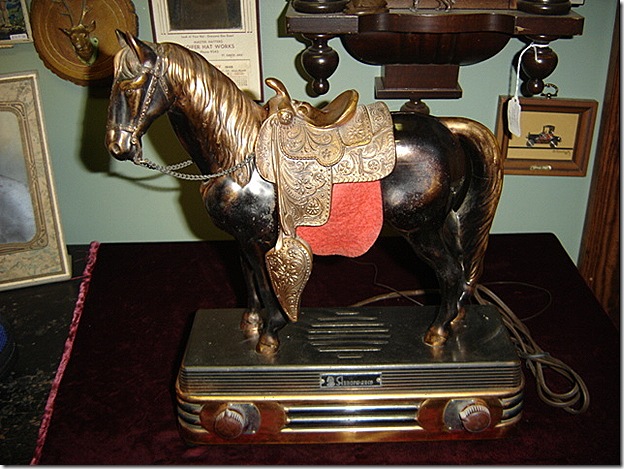
This kitsch masterpiece from the 1940s has turned up on EBay. This is one of the Abbotwares radios, which were made in Los Angeles. Abbotwares produced a whole series of these bronze figurines with radios, but my favorite is the hula girl. This radio is listed as Buy It Now for $399.99. As with anything on EBay, an item and vendor should be evaluated thoroughly before submitting a bid.
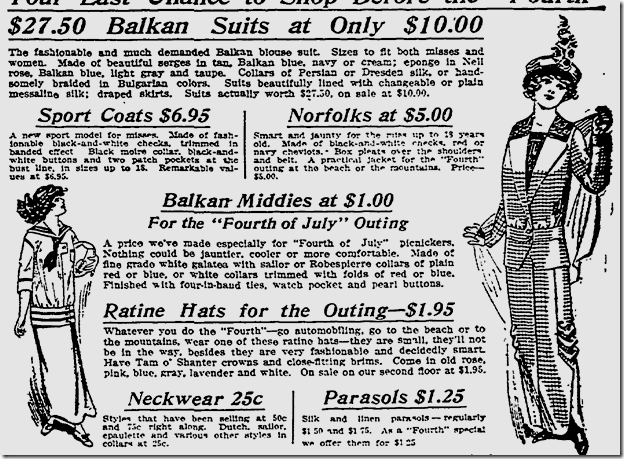
The latest in women’s apparel at Hale’s Good Goods, 541, 543, 545 S. Broadway. Young women, you are slaves to fashion!
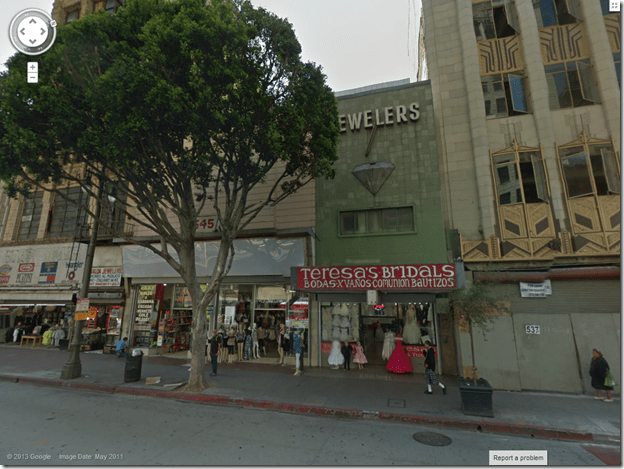
541-545 S. Broadway via Google Street View.
July 3, 1913: A rabid dog runs through the streets of Tucson, biting four children and a man. “Police rounded up every dog in town suspected of having been bitten by the mad animal and drowned them,” The Times says.
J.A. Flicher, Sacramento’s finance commissioner, is finally able to say the word “damn” because the city’s only woman commissioner, Mrs. A.J. Johnston, had completed her term, having been defeated for reelection.
Dr. Calvin S. White, secretary of the state Board of Health, bemoans the decadence of society.
“One of the principal causes of unhappiness,” White says, is “the foolish fashion in which women now bedeck their bodies.”
One cause of our moral decay is that the good, solid home life of the old days has been abandoned. “Now, after the dinner, instead of gathering around the table, the sons and daughters go out for the night, and very probably, the parents go out also,” White says.
White also cites: “the desire of girls for the so-called ‘good time,’ which, interpreted by them, means dress, dinners, late hours and amusements which surround them with temptations.
“There are a hundred temptations today besetting boys and girls to one that existed 25 years ago,” White says. “The old-fashioned home life is gone.”
Also to blame: “craving for excitement, suggestive plays, billboard displays and other similar temptations.” Oh yes, and people are reading cheap dime novels instead of “good, clean stories of other days.”

The entire Los Angeles Star for June 27, 1863, is online at USC’s digital library, scanned from a copy at the Huntington.
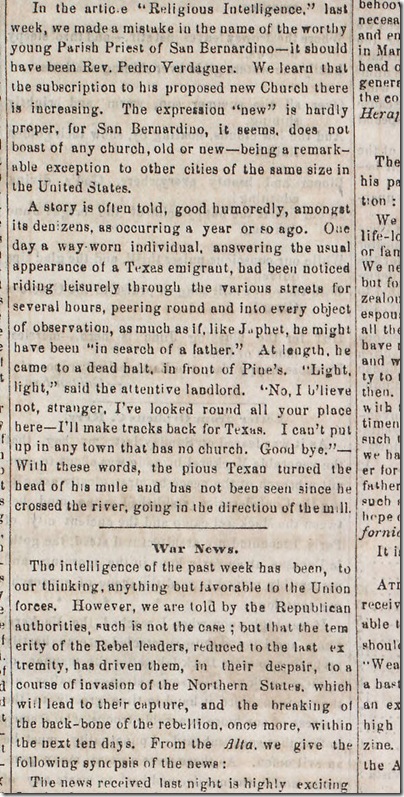
Jan. 27, 1863: As usual, this issue is mostly devoted to the Civil War. But the Star reports that the Rev. Pedro Verdaguer is taking up a collection to build the first church in San Bernardino.

I can hear you saying “But we just did newsboy caps!” I know. I popped the DVD into the player and voila! There he was. What else could I do?
How to Wear a Hat — Newsboy Cap Edition
How to Wear a Hat — ‘Grapes of Wrath’ Edition
Movieland Mystery Photo — Newsboy Cap Edition I
Movieland Mystery Photo — Newsboy Cap Edition II
Movieland Mystery Photo — Newsboy Cap Edition III
Movieland Mystery Photo — Newsboy Cap Edition IV
Movieland Mystery Photo — Newsboy Cap Edition V
Movieland Mystery Photo — Newsboy Cap Edition VI
Movieland Mystery Photo — Newsboy Cap Edition VII
Movieland Mystery Photo — Newsboy Cap Edition VIII
Movieland Mystery Photo — Newsboy Cap Edition IX
How to Wear a Newsboy Cap — Marc Chevalier Edition
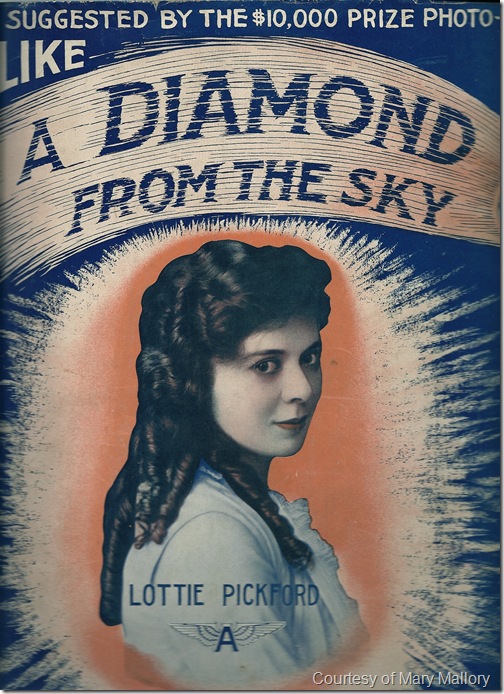
“Like a Diamond From the Sky,” by Leo Bennett and Leo Wood, courtesy of Mary Mallory.
Thanks to “What Happened to Mary?” (Edison, 1912), “The Adventures of Kathlyn” (Selig, 1913) and “The Perils of Pauline” (Eclectic/Pathé, 1914), serials skyrocketed in popularity with the American movie-going public. Production companies raced to meet the growing demand and grab their own share of box office glory.
American Film Manufacturing Co., more popularly known as the Flying A, eagerly joined the throng in 1915, hoping to top other companies with special bonuses: hiring one of the world’s best known actresses, and adding a competitive note to the series. They hoped to capitalize on the Thanhouser Co.’s innovation of offering a $10,000 prize to the winning suggestion of a sequel to its highly popular serial, “The Million Dollar Mystery.”
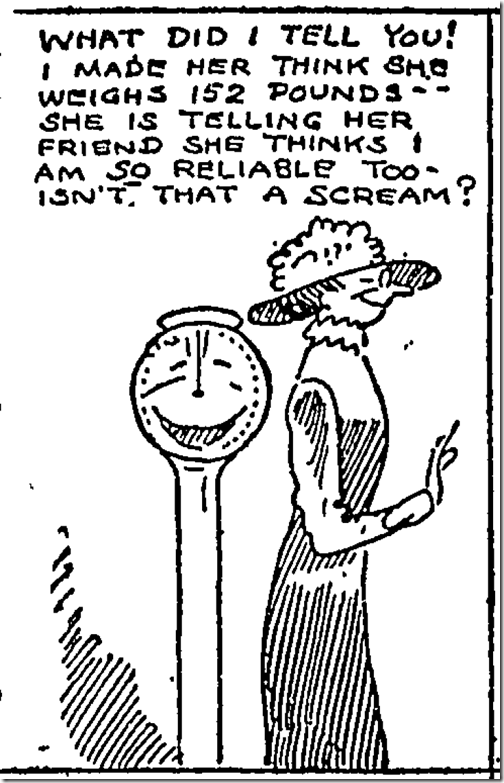
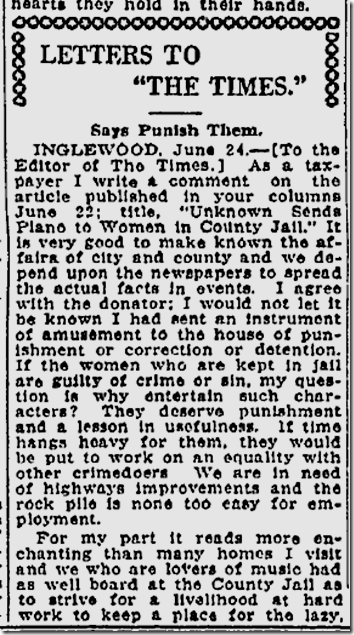
Jun2 28, 1921: Mrs. K.T. Lindy of Inglewood thinks jails are for punishment. Now that someone has given women prisoners a piano, she hopes they have to practice chromatic scales and not that evil jazz!
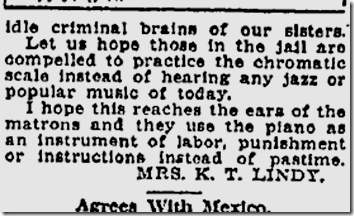
Lindy says: “I hope this reaches the ears of the matrons and they use the piano as an instrument of labor, punishment or instruction instead of pastime.”
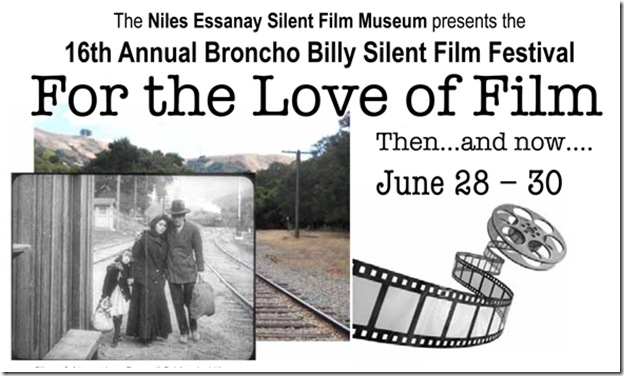
Northern California plays host to two wonderful silent film festivals in the next few weeks, the Niles Essanay Silent Film Museum’s Bronco Billy Silent Film Festival, and the San Francisco Silent Film Festival. Both celebrate the art of silent film as well as the talented musicians who provide musical accompaniment for them, adding in extra features like special introductions by historians and author book signings.
The Niles Essanay Silent Film Museum presents their Sixteenth Annual Festival this year from June 28-30 in the 1913 Edison Theatre, called “For the Love of Film Then…and Now…,” featuring movies about the movies. Not only will the festival screen wonderful classic films like “Show People (1928)” starring Marion Davies and Buster Keaton’s “Sherlock, Jr. (1924),” but also a little known 1921 movie about a movie, “His Nibs,” starring Chic Sale. The lineup also includes “Broncho Billy” shorts filmed on location in Niles and the gorgeous 1926 animated film “Prince Achmed.”
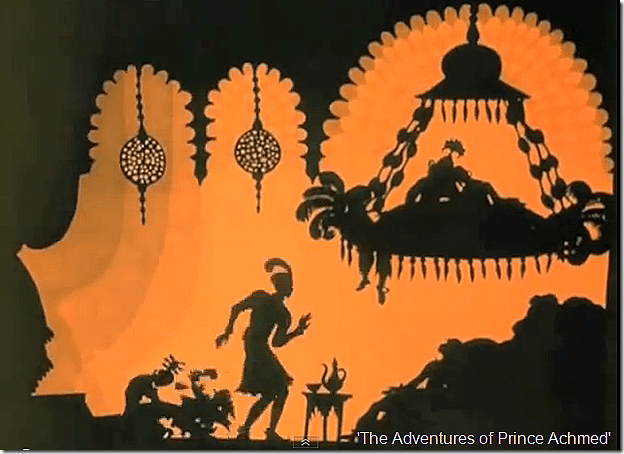
“The Adventures of Prince Achmed”
New films saluting silents will also play at the festival. The 2011 documentary “Stunt Love” screening Sunday looks at the life and career of actress/stuntwoman extraordinaire Helen Holmes and her husband, J. P. McGowan. Premiering at the festival is “The Canyon,” a new two-reel silent western directed by the Museum’s own David Kiehn with a silent film camera, saluting Broncho Billy and the Essanay cowboys.
Several special attractions are included in this year’s festival, with chanteuse Janet Klein performing at the opening night party, Diana Sera Cary (silent film’s “Baby Peggy”) and historian Robert Birchard leading a panel discussing stunts in silent films following “Stunt Love,” and author/historian John Bengtson giving a presentation on “Sherlock Jr. (1924)” filming locations preceding the film screening.
Check here http://www.nilesfilmmuseum.org/the-2013-bbsff.htm for more information.
The San Francisco Silent Film Festival annually presents an eclectic mix of silent films from around the world, accompanied by diverse types of music, as well as special one-time-only presentations like “Napoleon” in 2012 and the just concluded “Hitchcock 9.” This year’s Festival from July 18-21 at the Castro Theatre presents another diverse line-up of films, offering something for everyone.
Old standbys like Marion Davies’ “The Patsy (1928),” Harold Lloyd’s “Safety Last (1923),” and the “Kings of (Silent) Comedy,” featuring shorts by top silent film comedians play during the weekend. A restored print of Douglas Fairbanks’ 1916 film, “The Half-Breed,” also premieres during the fest, offering shots of Fairbanks’ almost nude backside.
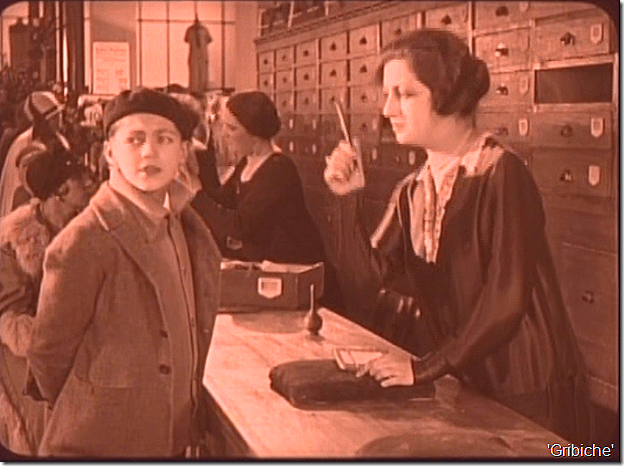
A scene from “Gribiche.”
The Festival also features a smorgasbord of worldwide programming this year, including Films Albatros “Gribiche (1926),” France’s “Prix de Beaute (1930),” starring Louise Brooks, Germany’s 1925 “Joyless Street,” starring a young Greta Garbo, Denmark’s “The Golden Clown (1926),” Ozu’s 1931 film, “Tokyo Chorus,” Russia’s “The House on Trubnaya Square (1928),” and “Legong: Dance of the Virgins,” a 1935 two-strip Technicolor documentary about Bali.
As always, the Fest includes special items and screenings, like their free “Amazing Tales from the Archives” presentation. After their recent presentation of the “Hitchcock 9,” SFSFF offers another British presentation, “The First Born (1928),” the directorial debut of actor/writer/producer Miles Mander, adapted from his book and play, and featuring young actors Madeleine Carroll and John Loder. The premiere of the 1925 restored film, “The Last Edition,” by Festival Board President Rob Byrne, promises to be the highlight of the weekend. Starring young William Bakewell and Wade Boteler, the action-packed “The Last Edition” is shot in and around The San Francisco Chronicle building, featuring newspaper production from press to print, thrilling chases throughout the city, and a “stop the presses” climax.
Over the next month, Northern California is the place to be to view outstanding silent films, hear beautiful accompaniment, and meet respected authors and historians.
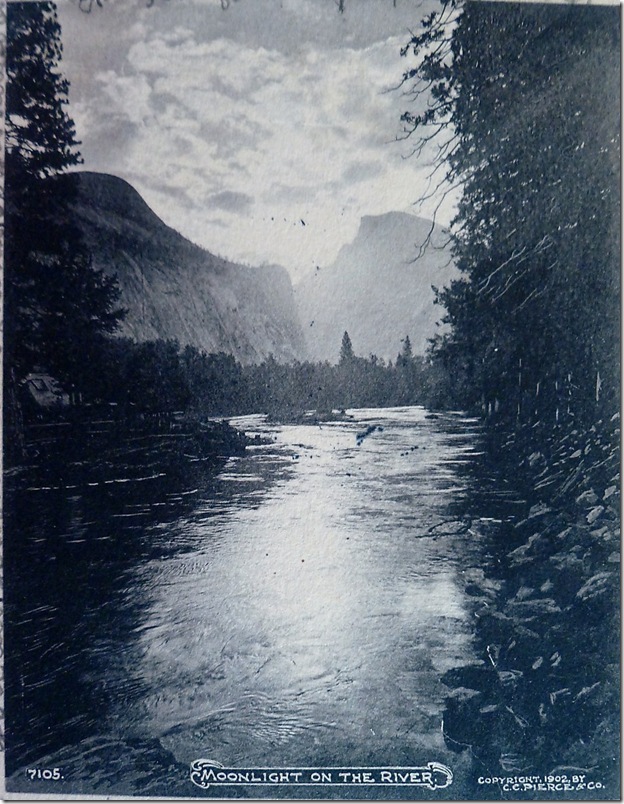
C.C. Pierce, one of our favorite photographers, not only sold photos and glass lantern slides – he also produced postcards, like this one, which has been listed on EBay. It’s listed as Buy It Now for $5.99.
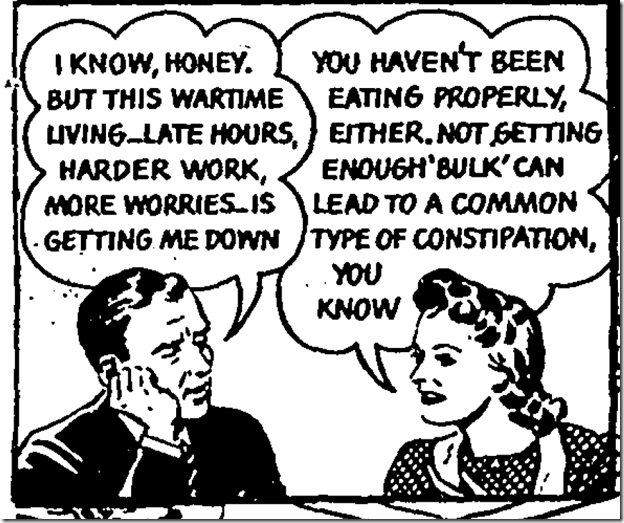
June 27, 1943: The “Greatest Generation” isn’t getting enough “bulk.”

Let’s rename Bunker Hill as Angels’ Terrace. Or not.
The Courtemanche family lived in the old Sepulveda place at 751 N. Palos Verdes St., on a hill above the Wilmington-San Pedro Road, across from the Los Angeles Shipbuilding Corp.
The home was owned by the Courtemanches, who lived downstairs, and the Worden family, who had the upper floor.
The Courtemanche family consisted of the mother, Hazel; a son, Pete; and two daughters, Marilyn and Dorothy — known as Doris. Another son, Robert, was married with a wife and two children and lived in Wilmington.
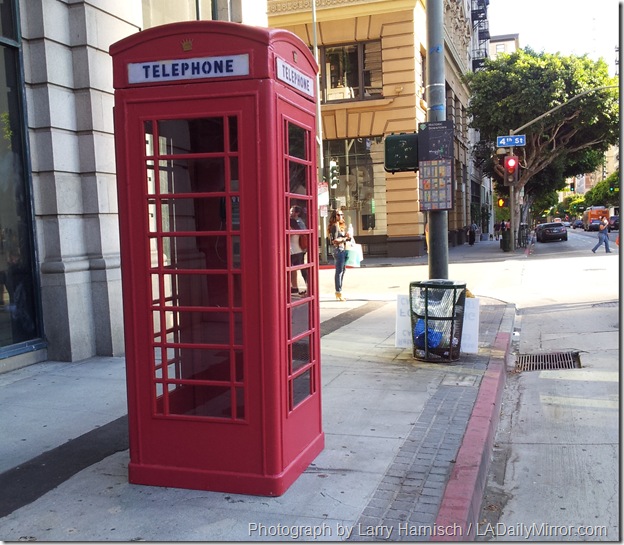
Spring Street and 4th in downtown Los Angeles is one of the most popular film locations in the city. It recently stood in for New York, complete with an NYC bus and a subway entrance. Last night, we had the British invasion. There was also a double-decker bus and little sentry booth for a Queen’s Guard.
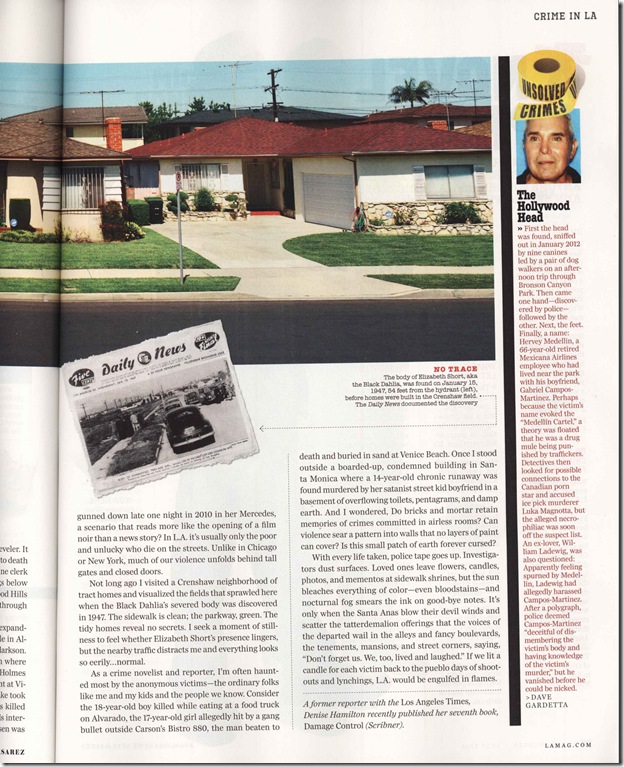
The Black Dahlia crime scene in Leimert Park gets a visit from Denise Hamilton for Los Angeles magazine.
Los Angeles magazine does its “first-ever” crime issue. I’m curious about several statements (Did Harold Lloyd really cling to the “Italianate columns” of the Hall of Justice “for his one-reel comedies?” I don’t think so.) and fortunately they didn’t do much on the Black Dahlia case except mention it.
I had worked with one of the magazine’s editors, who emailed me in an attempt to determine who owns an image showing the Black Dahlia crime scene on South Norton Avenue. I replied that it was a Daily News photograph and was probably at UCLA Special Collections, which has whatever remains of the Daily News photos.
(Note to people looking for old newspaper photos: The Los Angeles Examiner photos are at USC. The Daily News and many Los Angeles Times photos are at UCLA Special Collections. The Herald Examiner photos are at the Los Angeles Public Library, with the exception of the majority of the Black Dahlia photos, which are in the John Gilmore material at UCLA. Welcome to research in Los Angeles).

The Los Angeles Star, from the Huntington Library and scanned by USC, is available on USC’s website.
June 20, 1863: The Star, a strong advocate for the Confederacy, puts the Richmond Whig’s account of Stonewall Jackson’s death on the front page.
C. Laubenheimer opens Tivoli Garden, describing it as “furnished with every necessity conducive to the pleasure and amusement of lovers of nature.”
The Tivoli has shade trees, fruit trees, a running stream, a vineyard and “complete GYNMASIUM” and “WINES and LIQUORS” and “CIGARS.” And in the LADIES’ DEPARTMENT, SWINGS for the children.
The location is a bit puzzling because Los Angeles and San Pedro Streets are parallel in the earliest map I can find, in W.W. Robinson’s “Lawyers of Los Angeles.” Harris Newmark (“Sixty Years in Southern California) says the Tivoli Garden — operated by a different proprietor — was “on the Wolfskill Road (Page 273), noting “as there was no charge for admission, the place was well patronized.”
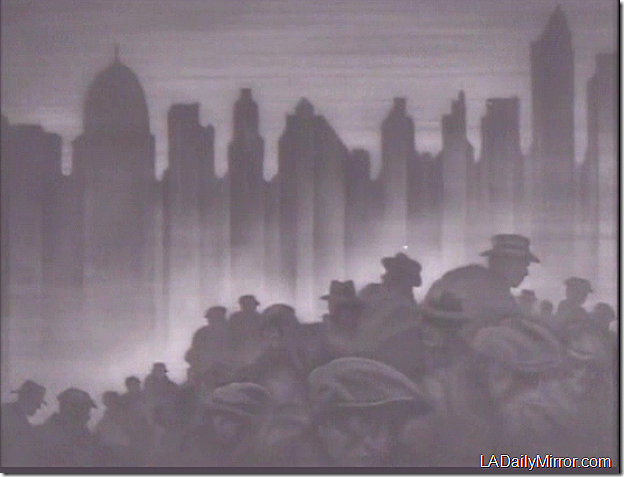
The opening credits for our mystery film have … newsboy caps!
How to Wear a Hat — Newsboy Cap Edition
How to Wear a Hat — ‘Grapes of Wrath’ Edition
Movieland Mystery Photo — Newsboy Cap Edition I
Movieland Mystery Photo — Newsboy Cap Edition II
Movieland Mystery Photo — Newsboy Cap Edition III
Movieland Mystery Photo — Newsboy Cap Edition IV
Movieland Mystery Photo — Newsboy Cap Edition V
Movieland Mystery Photo — Newsboy Cap Edition VI
Movieland Mystery Photo — Newsboy Cap Edition VII
Movieland Mystery Photo – Newsboy Cap Edition VIII
How to Wear a Newsboy Cap — Marc Chevalier Edition
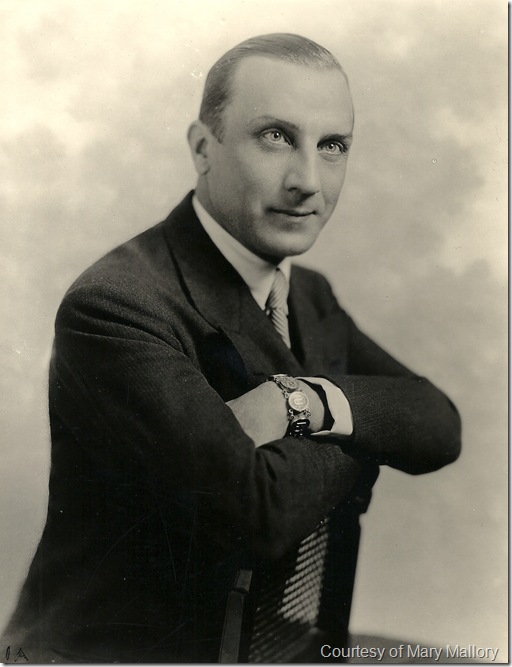
Ivan Mosjoukine, courtesy of Mary Mallory.
Not as well known as other silent film stars like Douglas Fairbanks, Mary Pickford, Buster Keaton or Rudolph Valentino, the recently rediscovered Russian motion picture actor Ivan Mosjoukine ranks among the greats for his charismatic star turns in several 1920s French silent films. While a superstar in Russia and France, Mosjoukine acted in only one Hollywood feature, which eventually helped push him into obscurity. But, as writer Liam O’Leary stated, “What Nijinksy was to dance in Russia, so Mosjoukine was to film.”
Born in Penza, Russia, Sept. 26, 1889, to wealthy parents, Ivan Ilich Mozhukhin attended private schools before studying law in Moscow. Quickly enthralled by the flamboyant world of the theater, Mosjoukine joined a touring theatrical troupe to learn his new trade. Within a few years, he returned to Moscow and entered the Dramatic Theatre for serious work.
Also by Mary Mallory
Keye Luke
Auction of Souls
Busch Gardens and Hogan’s Aristocratic Dreams
Mosjoukine began film acting in 1911 with the Khanzhonkov Company, starring in dramatic roles that emphasized his physical stage presence and sharp-featured good looks, finding time to occasionally write and produce films as well. Five years later, he studied and made films with Evgeni Bauer, learning to modulate his performing, to expertly apply makeup, and to fully inhabit his roles. Becoming one of Russia’s top romantic leads he frequently co-starred with his lovely, soon-to-be wife, Nathalie Lissenko, in such films as “Behind the Screen,” “Satan Triumphant” and “Father Sergius,” burying himself behind makeup, a Russian Lon Chaney.
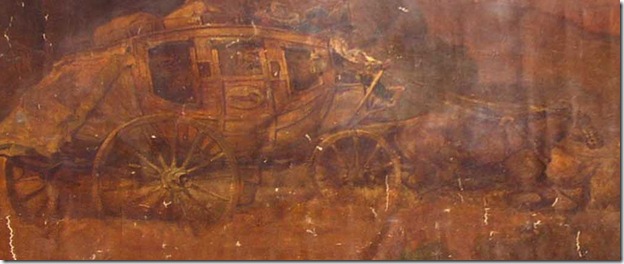
An Einar Petersen mural from the Rosslyn Hotel.
A vendor on EBay has listed what is apparently one of Einar Petersen’s long-lost murals from the Rosslyn Hotel — in rather sorry condition. The price is Buy It Now for $5,000.
The Times said the five panels installed at the hotel were 9 feet by 19 feet and described this panel: “A stagecoach entering Los Angeles in a gay and lively way, horses and driver full of spirited action.”
 ladailymirror.com