

May 15, 1944
On the cover, George Rodger’s photo of Sir Bernard Montgomery.
This week’s movie: “The Hitler Gang,” starring Robert Watson as Hitler.
And a photo essay by Andreas Feininger on war production in the U.S.
May 15, 1944
On the cover, George Rodger’s photo of Sir Bernard Montgomery.
This week’s movie: “The Hitler Gang,” starring Robert Watson as Hitler.
And a photo essay by Andreas Feininger on war production in the U.S.


May 15, 1944
Louella Parsons says: Rouben Mamoulian has asked to be released from directing “Laura” and Otto Preminger, the producer of this much discussed movie, will direct the picture. The trouble is a difference of opinion of the psychological treatment of the story and character. The two men could not see eye to eye and so Mamoulian stepped out.
“Laura,” based on Vera Caspary’s mystery drama, is one of the pictures — “Sunday Dinner With a Soldier” is the other — that is bringing about the $600,000 lawsuit which 20th Century-Fox filed against Jennifer Jones when she did not report for work. Gene Tierney and Clifton Webb are the stars.
Here’s a bit more on why Jennifer Jones didn’t appear in “Laura.”
According to a Times story published May 3, 1944, Jones failed to report for work on April 24, prompting 20th Century-Fox to take legal action.
Jones’ contract with Selznick Studios specified that she was to appear in one 20th Century-Fox film per year. According to Daniel T. O’Shea, executive director of Selznick Studios, Fox failed to meet one of the requirements of her contract, which was that the script had to be submitted in advance for approval.
O’Shea said that Fox failed to send an advance copy of “Laura.” Jones had not seen the script and therefore said “her personal plans precluded availability,” according to O’Shea.
The Times said: “Miss Jones, commenting on the dispute, said: ‘There is really nothing I can say. I am under contract to Mr. Selznick and know nothing of the discussions.”

A “true” crime book that was “written in secret” evokes “Black Dahlia Avenger” and it’s intriguing that “The Most Dangerous Animal of All” treads the same territory as Steve Hodel’s “Most Evil.” In case you don’t recall, retired LAPD Det. Steve Hodel, after claiming that his father killed Elizabeth Short and a lot of other women, also says Dr. George Hodel was the Zodiac killer.
And no, your memory isn’t deceiving you. We just had another book by a retired detective who calls himself “Cold Case Cameron” which says that the Zodiac killer was Edward Wayne Edwards.
Who also killed Elizabeth Short.
When he was 13.

May 14, 1944
The invasion of Europe is less than a month away. Even the Germans admit it.
On the jump:
Movies in production: “Farewell, My Lovely,” “The House of Fear” and “A Stranger in Our Midst.”
Best Sellers: “The Robe,” “A Tree Grows in Brooklyn,” “A Bell for Adano,” “Strange Fruit” and “Good Night, Sweet Prince.”
Book review: “The Red Cock Crows” by Francis Gaither. The story of a slave rebellion in the 1830s. A review in the Saturday Review, May 27, 1944.
May 14, 1944
Joe E. Brown pioneered entertainment in Alaska and the South Pacific, and only Don Barclay beat him to China. Bill Gargan, who was with Paulette Goddard in China, says the name Barclay is known to every serviceman there. He does a mind-reading act the boys love and when he appeared at Hollywood Canteen he had Cary Grant, no less, for his stooge.
Some of the collateral damage from the redesign of latimes.com was the disappearance of the old Daily Mirror. It’s back online at the same old place. Google hates broken links, so I’m not sure what the outage did to its presence in search results, but it lives on.
With the passage of time, as more material vanishes from the Internet, the role of archive.org is becoming increasingly important. Much of the blog is at archive.org, where you can also find such Web rarities as Kareem Abdul-Jabbar’s short-lived blog at The Times.
May 13, 1944
HOLLYWOOD, May 12 — The warm admiration David Wark Griffith has for Preston Sturges and his delight in “The Miracle of Morgan’s Creek” will shortly result in a business association. D.W. wrote a motion picture version of Louis Bromfield’s “Up Ferguson Way,” which appeared in Cosmopolitan magazine, and through Lillian Gish’s insistence gave it to Preston to read. While it’s beautiful and poetic, Lillian and Sturges felt Griffith’s first picture should be strongly commercial. So Bromfield has been asked for added story suggestions.

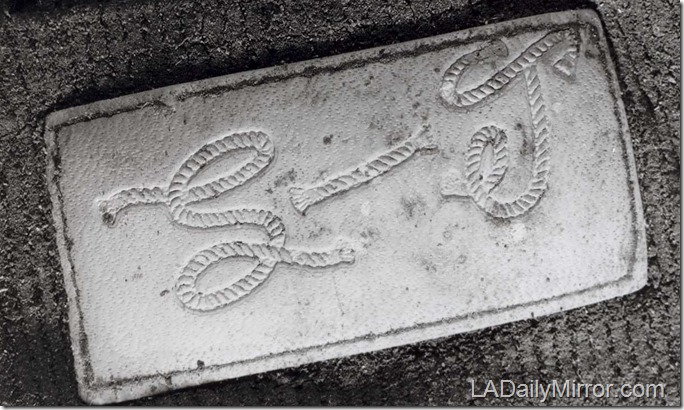
Note: Last year I was given a box of news releases, photographs and random pieces of paper from the old press room at Parker Center. I’m gradually posting the material.
These are the earrings and the label from a pair of pants worn by a teenage girl whose body was found Sept. 5, 1973, in an open grave in Hacienda Heights. She had been dead about 30 to 90 days, authorities said. She had been shot in the head.
From the original press release:
Sheriff Peter J. Pitchess is requesting the cooperation of the public in identifying a young girl who’s body was found in an open grave on September 5, 1973, in Hacienda Heights.
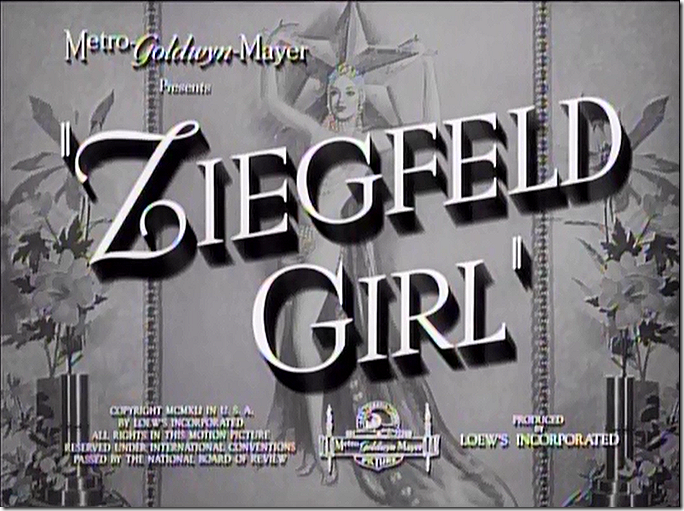
This week’s mystery movie is “Ziegfeld Girl.”
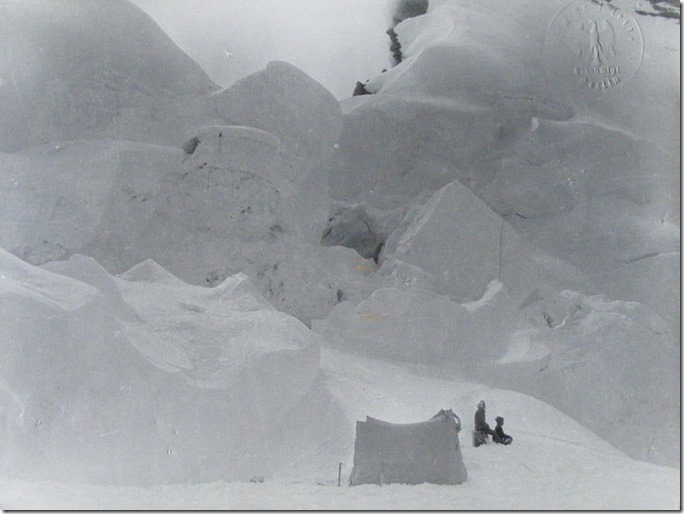
An image from “The Epic of Everest,” listed on EBay for $9.99.
Britain ruled the seas and world in the early 20th century, organizing expeditions to forlorn and distant lands like the poles and Mt. Everest to show British might and prestige in conquering nature and the unknown. Adventurous explorers like Robert Falcon Scott and Sir Ernest Shackleton set off to Antarctica in hopes of being the first to find and reach the South Pole. They planned filmic records of their journeys, both to pay for the travels and to demonstrate man’s superiority over nature. In the process, these motion pictures revealed the ingenuity and toughness of filmmakers shooting for the first time in some of the most brutal places on Earth.
Like filmmakers Frank Hurley and Sir Herbert Ponting before him, Capt. John F. B. Noel planned to capture personable, every day moments of the Royal Geographic Society’s 1924 journey to summit Everest, along with the great glory of showing British explorers conquering the unknown. Unfortunately, Noel’s “The Epic of Everest” matched Hurley’s “Endurance” and Ponting’s “The Great White Silence,” in becoming moving memorials documenting the great endurance and defeat of brave, courageous men by the overwhelming forces of nature, instead of the triumphal tour de forces they were intended to be.
Mary Mallory’s “Hollywoodland: Tales Lost and Found” is available for the Kindle.
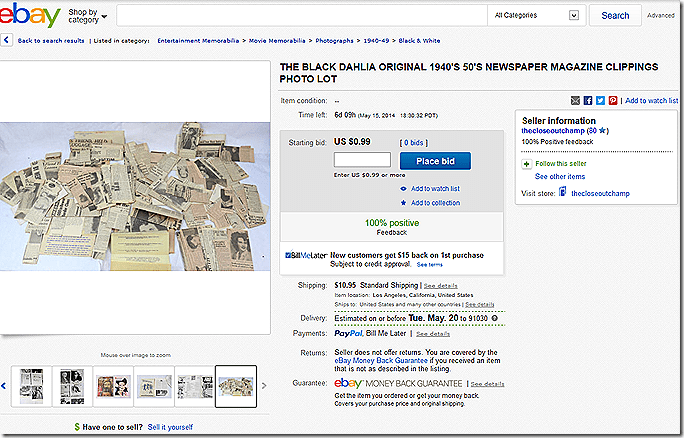

A large lot of Black Dahlia material, including newspaper clippings, several magazines, newspaper photos, etc., has been listed on EBay. Bidding is currently 99 cents but I’m sure it will go much higher before the auction concludes. An unattached front page of the Jan.17, 1947, Examiner recently sold for more than $500.
It’s a bit difficult to determine the precise source, but the clippings include material from various Los Angeles newspapers.
And no, there don’t appear to be any crime scene photos or body shots, which I’m sure will be a disappointment to the ghouls who collect these things as if they are baseball cards.
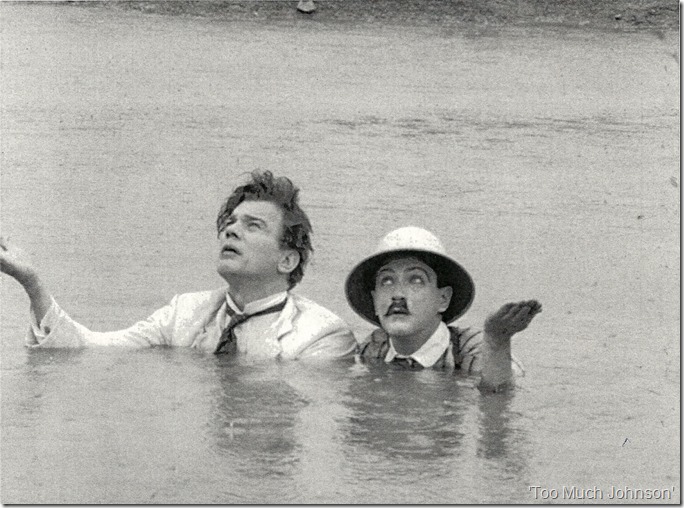
Joseph Cotten, left, in “Too Much Johnson.”
The Academy of Motion Picture Arts and Sciences and Los Angeles County Museum of Art opened their salute to Orson Welles Saturday, May 3, 2014, by screening the first films ever made by the famous director, “The Hearts of Age” and “Too Much Johnson.” Both demonstrated his great visual flair and theatrical storytelling while also providing evidence of his propensity for overreaching. “Too Much Johnson” shows a young filmmaker finding his way and gaining a love of his craft while also attempting to juggle too many plates.
RESTORATION
George Eastman House video on restoring “Too Much Johnson’”
ORIGINAL MUSIC (via Spotify)
Paul Bowles’ “Music for a Farce” I
Paul Bowles’ “Music for a Farce” II
Paul Bowles’ “Music for a Farce” III
Paul Bowles’ “Music for a Farce” IV
Paul Bowles’ “Music for a Farce” V
Paul Bowles’ “Music for a Farce” VI
Paul Bowles’ “Music for a Farce” VII
Paul Bowles’ “Music for a Farce” VIII
Before the films, AMPAS’ managing director of programming and education, Randy Haberkamp, led a panel discussion featuring Annette Melville of the National Film Preservation Foundation, Andrea Kalas of Paramount and Bruce Barnes, director of the George Eastman House, relating the background and history of this film, once believed to be lost. Discovered serendipitously in a Pordenone, Italy, warehouse in 2005, “Too Much Johnson” was repatriated to the United States and given to George Eastman House. After major damage was discovered to Reel 2, Haghefilm in the Netherlands executed a magnificent restoration and preservation, saving the reel. 99-year-young Norman Lloyd stole the show, however, regaling the audience with humorous tales of working with Welles as part of the Mercury Theatre in 1938.
Mary Mallory’s “Hollywoodland: Tales Lost and Found” is available for the Kindle.
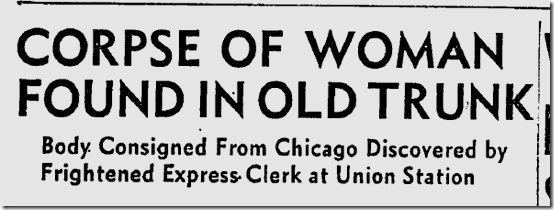
May 6, 1944
An old trunk wrapped with wire and tied with rope arrives at Union Station, where people noticed that it was leaking — and smelled. Sent to the repair department for inspection, the trunk was opened by Eugene Biledeau, who discovered a woman’s body wrapped in a sheet.
The victim had been dead about six days and was described as a young, 5-3 brunette, weighing 130 pounds. She was wearing a girdle, bra, slip and white bobby socks, with fingernails painted a “brilliant red,” The Times said. She had curlers in her hair.

The glittering suit worn by Lynn Davis bears the label of Hattie Carnegie, America’s No. 1 fashion designer.
May 8, 1944
This week’s movie: “The Adventures of Mark Twain.”
The Ohio Reformatory for Women puts on a show.
On the jump, part of a feature on “Carmen Jones,” four scenes painted by Miguel Covarrubias.

John Bengtson, who has researched and written so much about early movie locations in Los Angeles, sends this Spence Air Photo of the Civic Center and weighs in on “While the City Sleeps.”
Hi Larry – thank you for the City Sleeps posts. I too was puzzled by those cityscapes with City Hall in the background, and came to a similar conclusion that it must have been a special effect. For one thing, City Hall was the tallest building in town. You can see the Harper & Reynolds sign on Main Street in this photo.
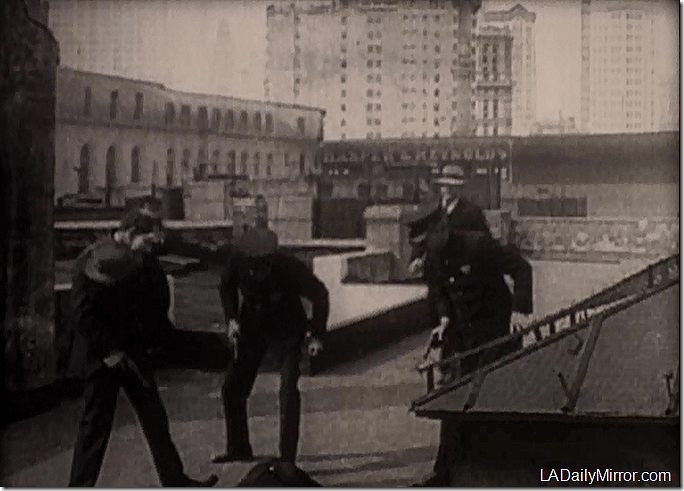
The Harper & Reynolds sign in “While the City Sleeps,” with Lon Chaney, left, showing City Hall in the background.

Those towers in the background of the movie frames are reminiscent of Manhattan towers, but with the image quality it’s difficult to tell whether they are copied after true buildings, or are just an artistic approximation of what Manhattan would look like.
Either way, as shown by this photo, there would have been only low buildings in the background of that shot without the special effect.
Thanks John!
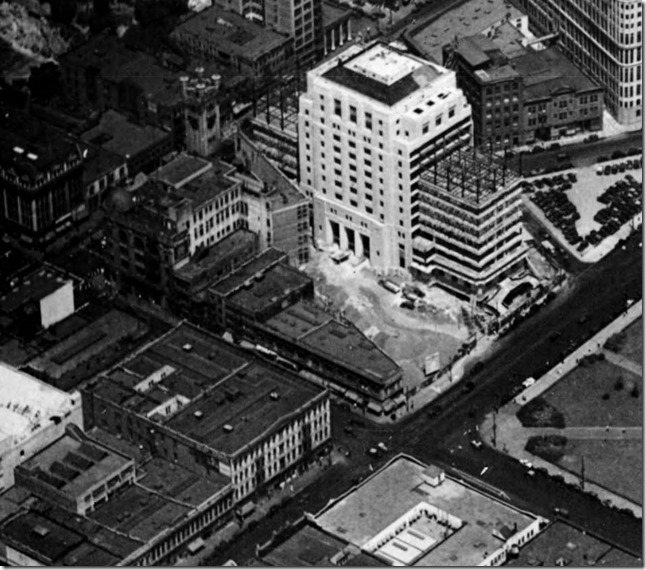
I’ll take time to point out that another part of the photo shows the state office building under construction (this is vacant lot on 1st between Broadway and Spring), the third Los Angeles Times Building with the tower at 1st and Broadway and in the lower left-hand corner, the Hotel Nadeau, the current site of the Los Angeles Times.
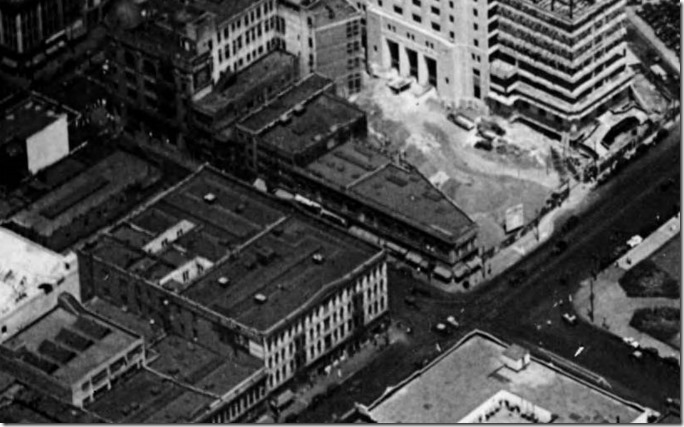
Here’s a better look at 1st and Spring. Notice how narrow 1st Street is west of Spring. Once the old Times Building and the adjoining storefronts were demolished, 1st Street was widened. I mention this because traffic congestion in Los Angeles isn’t new. It’s a 100-year-old problem.
May 8, 1944
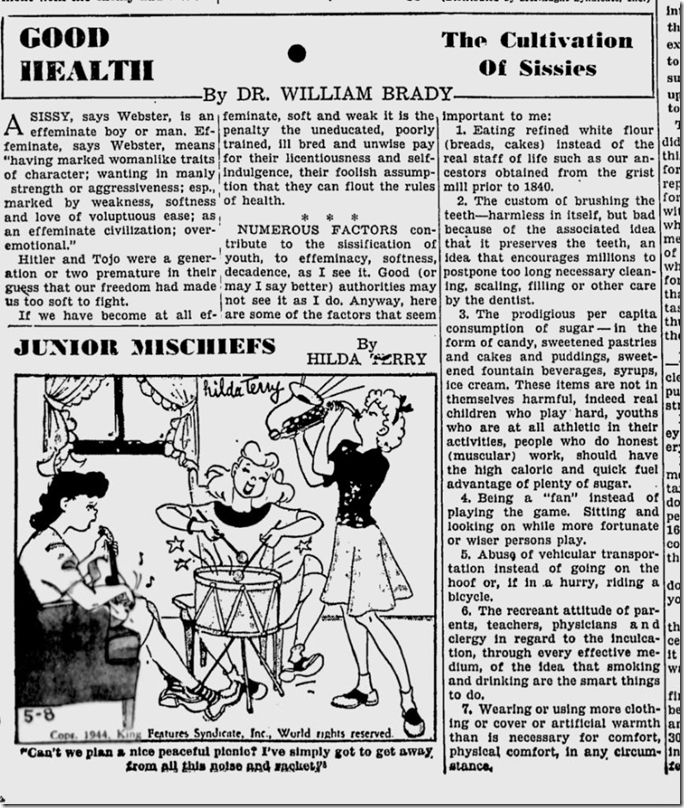
Many factors contribute to the “sissification” of youth: White flour, not getting your teeth cleaned, sugar, being a sports fan instead of a player, riding in a vehicle, smoking and drinking, and wearing too much clothing.


May 8, 1944
HOLLYWOOD, May 7 — Susan Hayward’s radiant happiness at playing the lead in “Dark Waters” was short lived, for Susie is out and Merle Oberon is in. This is the way it happened. Before Susan was so much as mentioned, Ben Bogeaus, the producer, was doing his best to get Merle. The deal was nearly closed, with Mike Levee negotiating the contract. But it wasn’t until Saturday that Merle found she could accept the offer.

This is the last in our series of posts on the 1928 Lon Chaney film “While the City Sleeps.” We have previously looked at the history of the film, the plot (convoluted), the reviews (mixed) the condition of this print (damaged and missing about 20 minutes), and the use of Los Angeles’ then-new City Hall.
Today, we’re going to pull back the curtain on a bit of movie trickery used in the film.
Warning: Spoilers ahead.
In the three previous posts on the 1928 Lon Chaney film “While the City Sleeps,” we took a brief look at the production history and the plot, the critical reaction (mostly mixed) and the curious condition of the print, which is missing fairly substantial portions of the film and has nitrate damage.
In this post, we will examine the film’s use of Los Angeles City Hall, which was dedicated April 26, 1928, a little more than a month before shooting began on “While the City Sleeps.” I hesitate to say that this is the first use of City Hall in a motion picture (one never knows what crazy movie people were doing in the crazy ‘20s), but it must be one of the earliest.
This is going to be a breakdown of the film sequence. Then we’ll go back and look for locations.
Warning: Spoilers ahead.
 ladailymirror.com