
Note: This is an encore post from 2006.
“A dollar’s worth of wholesome fun is really worth a dollar and a half ($40.04 USD 2017).”

Note: This is an encore post from 2006.
“A dollar’s worth of wholesome fun is really worth a dollar and a half ($40.04 USD 2017).”

 Note: This is an encore post from 2006.
Oct. 24, 1907
Los Angeles
Upon the suicide in February of Dr. H. Russell Burner, advocate of the “radium milk” cure, his sanitarium at 2033 E. 4th St. was taken over by Dr. F. S. Kurpiers, who is now in trouble with the Health Department.
Kurpiers didn’t have a medical license, so he obtained the certificate of Dr. C.H. King, a dying physician who wept as he told authorities that the only way he could support a few relatives was to rent out his license.
Rather than a “radium milk” cure, Kurpiers suggested that patients follow their instincts in when to eat—preferably never. Rachel Golder, a nurse at the sanitarium, quit because she never got to eat and relatives charged that one patient had become a bag of skin and bones under Kurpiers’ care.
 Note: This is an encore post from 2005 and originally appeared on the 1947project..
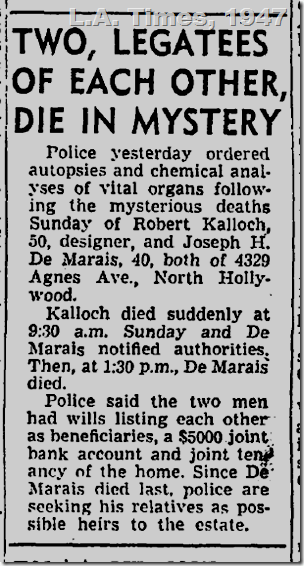
Robert and Joseph were close—even in death. They shared a home filled with antiques, bric-a-brac and paintings at 4329 Agnes Ave. in North Hollywood, as well as their bank accounts, and were the beneficiaries of each other’s wills.
But after they died within a few hours of one another, leaving a combined estate of $25,000 ($236,604.65 USD 2005), their families said they were too close. A lawsuit brought by Robert’s aunt and uncle charged that Joseph and Robert had “a strange attachment.”
Robert M. Kalloch, who died at the age of 50, was one of Hollywood’s leading dress designers in the 1930s and ’40s, beginning at Columbia, where he was the studio’s first major designer, working on such pictures as “It Happened One Night,” “Mr. Smith Goes to Washington” and “His Girl Friday,” and then MGM. Born in New York, he attended the School of Fine and Applied Arts and spent several years in Europe designing for Lucille Ltd. before coming to Los Angeles.
Kalloch occasionally wrote about fashion for The Times and was frequently interviewed. In a 1940 Times article, he said: “Stop dressing to please yourself and dress to please men.” He exploded with wrath at the suggestion women already dress to please their boyfriends. “They certainly don’t, otherwise they would not wear open-toed shoes, painted nails, heavy eye shadows, tricked-up hair, incredible hats and all the other things most men hate,” he snapped.
Very little is known about Kalloch’s inseparable companion, Joseph H. De Marais, except that he was 10 years younger, had a brother in Massachusetts and another in Rhode Island.
Since Kalloch died at 9:30 a.m., and De Marais died at 1:30 p.m. after contacting authorities, De Marais’ survivors stood to inherit everything, prompting the suit by Kalloch’s family.
Unfortunately, The Times never followed up on this story, so there’s no further information. It seems fairly apparent that this was a gay couple and certainly newspapers were extremely squeamish about the subject of homosexuality in the 1940s. The contents of the house were auctioned off in December 1947 and included sterling silver, Rogers 1847 plate, miniatures, books and miscellaneous items.
Many of Kalloch’s drawings are in UCLA Special Collections in the materials of Peggy Hamilton Adams, described in the library’s website as “a colorful figure whose voluminous papers document her career as the self-proclaimed best dressed girl in Hollywood.”
Quote of the day: “To me, the American woman will be more interesting than ever because with her willingness to put her shoulder to the wheel she will at the same time not forget to be her ‘loveliest to look at’ self.”
Robert Kalloch, on military influences in women’s fashions during World War II.
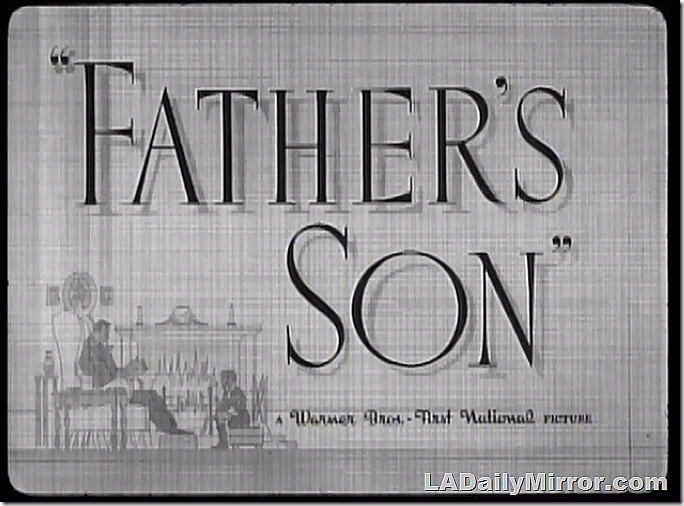
This week’s mystery movie has been the 1941 Warner Bros. picture “Father’s Son,” with John Litel, Frieda Inescort, Billy Dawson and Christian Rub. The screenplay was by Fred Niblo Jr., from a story by Booth Tarkington. Photography by Allen G. Siegler, dialogue direction by Harry Seymour, art direction by Charles Novi, gowns by Milo Anderson and makeup by Perc Westmore. Directed by D. Ross Lederman.
“Father’s Son” was a remake of a 1931 version starring Lewis Stone. Neither version has ever been commercially released. It was released in New York in February 1941 as the bottom half of a double bill with “High Sierra” and was not reviewed.
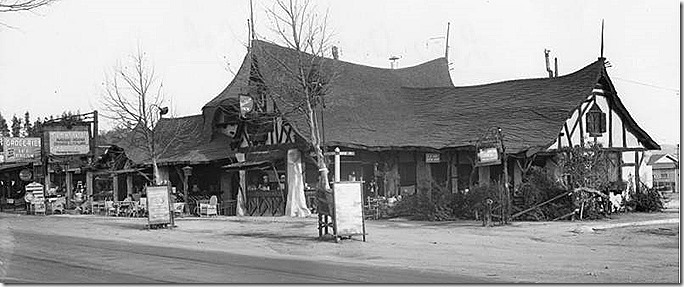
The Tam O’Shanter, as seen in the 1920s, when Los Feliz Boulevard was a dirt road. Courtesy of the Los Angeles Public Library.
Opened 96 years ago, the storybook-style Tam O’Shanter Inn has always provided homey dining with stylish flair. A bit of whimsy in the middle of Atwater Village, the restaurant has evolved from simple country inn to unpretentious but romantic dining establishment.
In 1922 brother-in-laws Lawrence Frank and Walter Van de Kamp of bakery fame took over the Montgomery’s Country Inn, a box lunch stop along dusty Los Feliz Boulevard catering to drivers. The September 1938 Pacific Coast Record called establishment the United States’ first drive-in, serving some of the finest hamburgers with outstanding curb service. The magazine’s statements must be taken with a grain of salt however, as there are many errors, including claiming that MGM studio carpenters were involved in construction of the building, though the studio itself did not exist until 1924.
Mary Mallory’s latest book, “Living With Grace: Life Lessons from America’s Princess,” is now on sale.
Note: This is an encore post from 2005 and originally appeared on the 1947project.
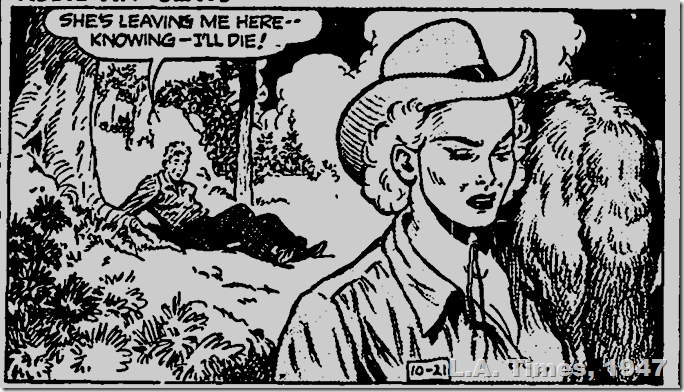
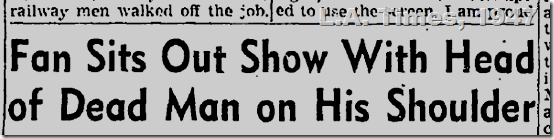
Moviegoers Walter Saul of Cincinnati and his wife had just settled into their seats for a double feature with his friend Aloysius Bollin and son Joseph when he felt Bollin’s head on his shoulder.
Saul, a firefighter, thought Bollin had fallen asleep but after checking his pulse a few minutes later, realized that his friend was dead—and already getting cold.
But rather than disturb the audience, Saul sat with Bollin’s head on his shoulder through both features, later explaining he “didn’t want to cause a disturbance that might have led to a panic.”
Note: This is an encore post from 2006.
Oct. 22, 1907
Los Angeles
A trolley conductor at 4th Street and Hill complained to a patrolman that one of the passengers looked like a holdup man. The officer investigated and laughed when the man produced a deputy’s badge and claimed that he was Mayor Harper’s son, Oscar.
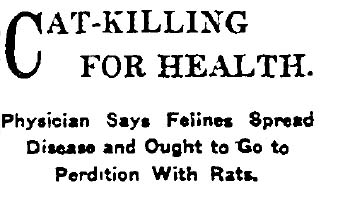
Note: This is an encore post from 2006. Evel (whom I mistakenly called “Evil”) in the last paragraph was the cat of Kim Cooper and Richard Schave.
Oct. 21, 1907
Los Angeles
There’s no shortage of opinions on how to improve the quality of life in Los Angeles. Most people advocate better roads—paved roads that connect the city with Pasadena and the beach. Others suggest more schools, hospitals, better jail facilities, enforcement of blue laws and closing the saloons.
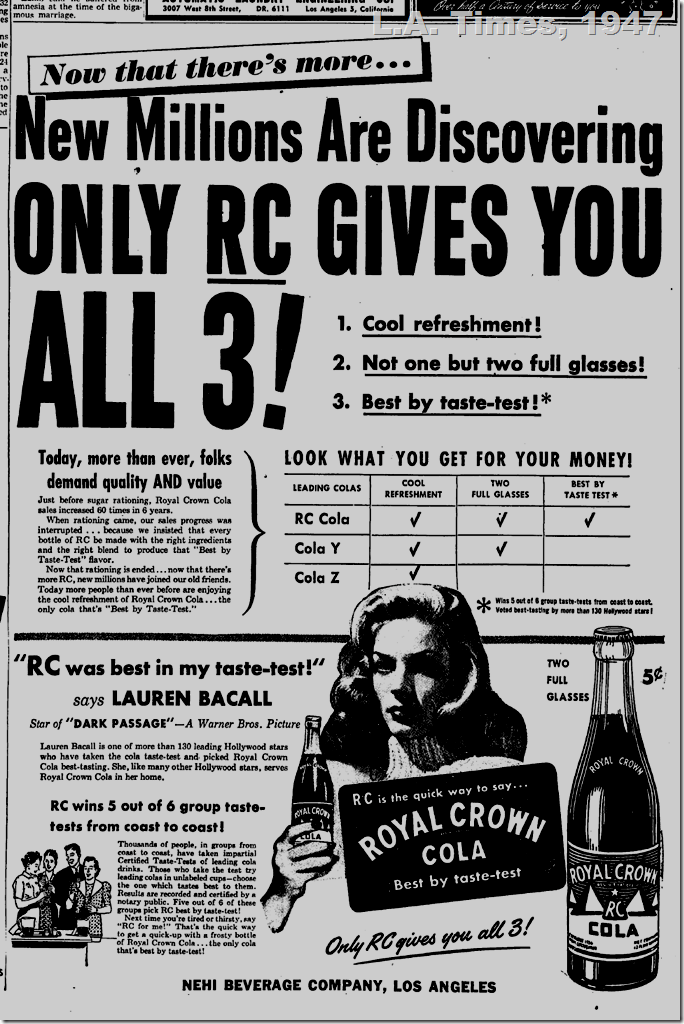
Did Lauren Bacall really drink RC Cola? Use Lux soap? Smoke Chesterfields? Possibly.
Note: This is an encore post from 2006.
October 20, 1907
Los Angeles
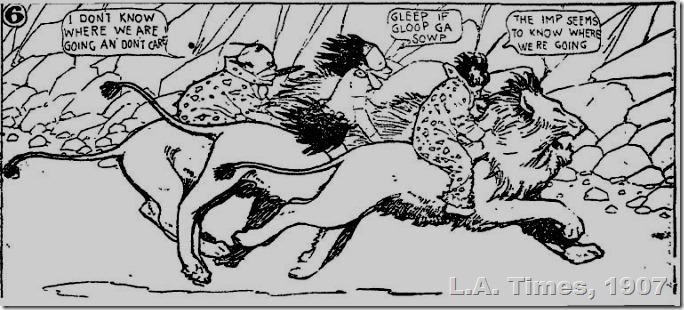
Winsor McCay and his cartoons never completely go out of fashion and are periodically rediscovered—as in the current Taschen anthology. He was a fabulous artist and his Sunday panels remain a marvel of fantasy and rebellion against the tyranny of pigeonhole boxes. Living as we do in the era of legacy comics (Charles Schulz has been dead since 2000); bland, humorless writing; weak drawing; and panels shrunk to the size of postage stamps, it’s easy to think that comics aficionados 100 years ago were fortunate to get strips that ran a full page.
———-
Correction: This post (and the original version from 2006) misspelled the artist’s first name, Winsor, as Windsor. We were so worried about spelling his last name, McCay, properly that we overlooked his first name.
———-
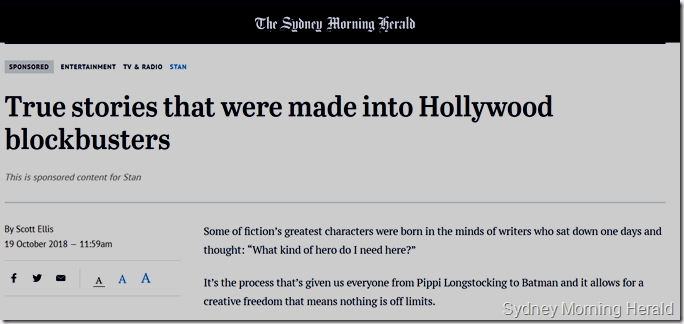
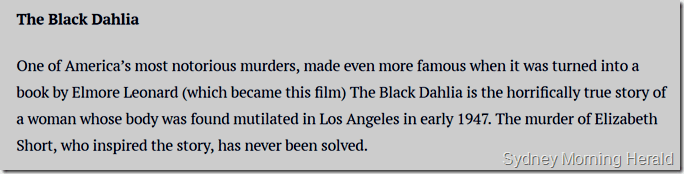
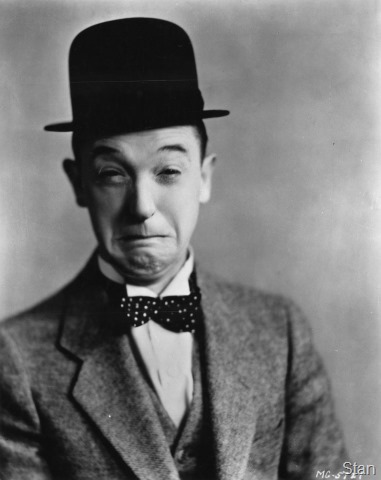 Who needs editors? Certainly not the Sydney Morning Herald and Scott Ellis.
ps. This is “sponsored content for Stan,” an Australian streaming video service.
Mistakes like this make Mr. Laurel, who will always be the real Stan to us, very sad.
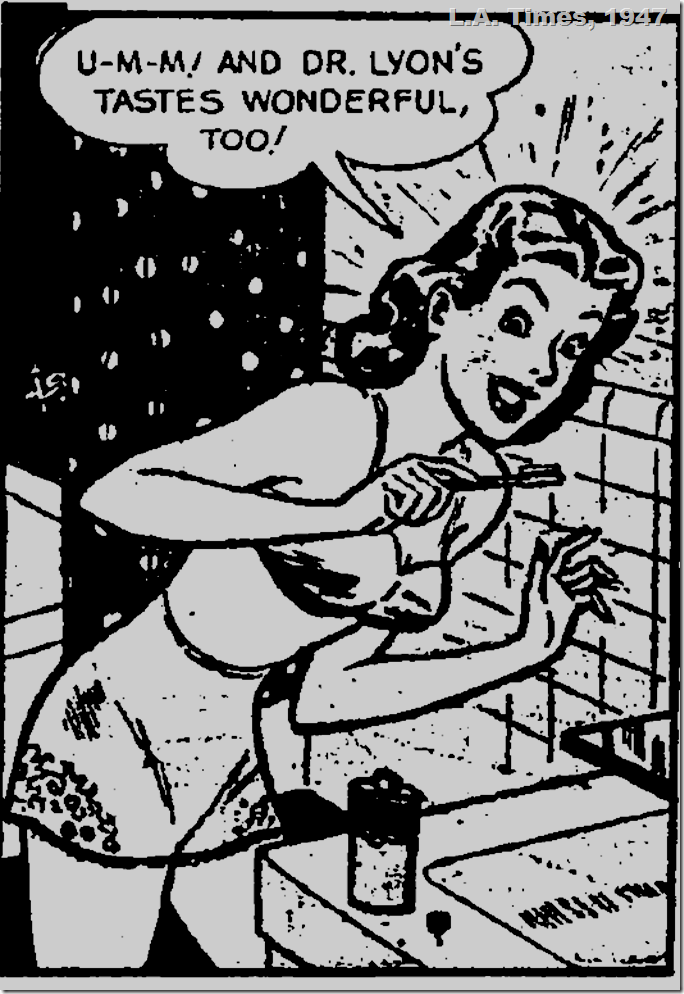
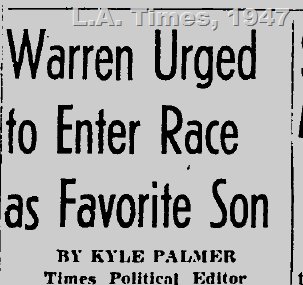 Note: This is an encore post from 2005 and originally appeared on the 1947project.
RIVERSIDE, Oct. 18.—Gov. Earl Warren was formally and officially called on here today by the executive committee of the California Republican State Central Committee to become a candidate for president of the United States.
Resolutions urging Warren to consent to the selection of the delegates pledged to place him in nomination at the GOP convention in Philadelphia June 20, 1948, were adopted without a dissenting vote.
Earlier in the day the candidates and fact-finding committee of the California Republican Assembly, meeting in Riverside’s Mission Inn coincidentally with the executive committee session, adopted a similar resolution…..
Note: This is an encore post from 2006.
Oct. 19, 1907
Los Angeles
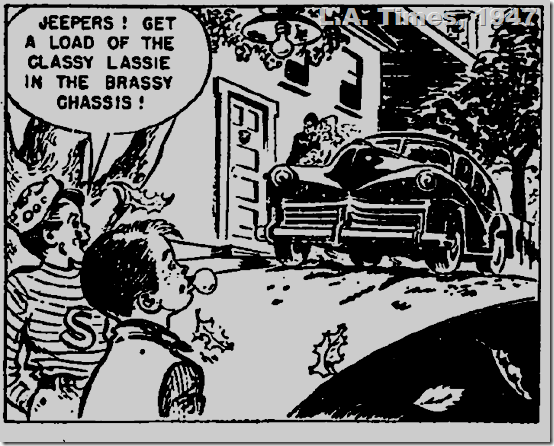
On a visit to Japan, K. Tsuneda of California met an attractive young woman named Toku. Telling her family that he was a wealthy Stanford student, Tsuneda married Toku and they embarked for the United States so his new wife could get an American education.
Her education began the moment they arrived in San Francisco: Tsuneda revealed that he was neither wealthy, nor a Stanford student. In fact, they both had to go to work. They moved from Berkeley to Redlands, where they separated. After reuniting briefly in Los Angeles, Tsuneda vanished, Toku said in seeking a divorce.
 Note: This is an encore post from 2005 and originally appeared on the 1947project.
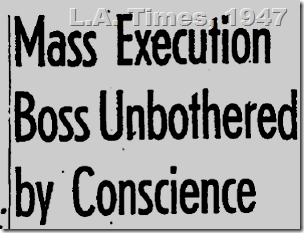
NEURNBERG, Oct. 17 (A.P.)—S.S. Gen. Erich Naumann, whose commandos killed thousands of Jewish men, women and children on the eastern front, told a war crimes court today he saw nothing wrong with that.
He was one of the leading defendants in the case against the Einsatz command groups which Gestapo Chief Heinrich Himmler formed to eradicate whole races.
Note: This is an encore post from 2006.
Oct. 18, 1907
Los Angeles
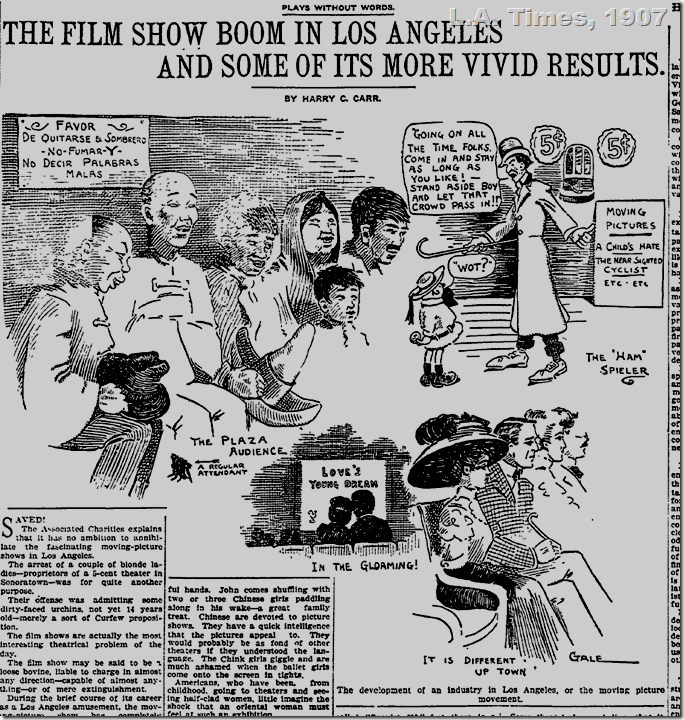
For the last month, the pages of The Times have been peppered with pen-and-ink cartoons signed Gale—in fact some of them have already appeared in the blog, with Nathan’s post on Japanese hobos and mine on Marco Vessella. But that was only the beginning. By the end of the month, Gale’s cartoons have become a regular feature of The Times, usually paired with text by Harry Carr. Gale specializes in ethnic caricatures: Chinamen with long queues, bucktoothed Japanese, Mexicans with sombreros—and don’t even ask how he draws African Americans.
His name was Edmund Waller Gale, but he was known as Ted or “Cartoonist Gale” and he was an institution at The Times, drawing editorial cartoons for decades, on an irregular basis before they became a daily feature in 1922.

 Note: This is an encore from 2005 and originally appeared on the 1947project.
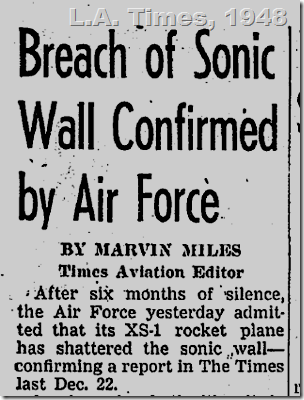
Hm…. U.S. prison population up for the first time since World War II…. Lawsuits over deed restrictions in South Pasadena…. A 35-year-old merchant seaman in San Francisco is badly injured while walking down a street when he’s struck by a 67-year-old woman who committed suicide by jumping from a 10-story building….
But the story I’ve been anticipating—one of the biggest of 1947—can’t be found: Capt. Charles E. Yeager breaking the sound barrier Oct. 14, 1947. In fact Yeager’s name didn’t even appear in The Times in 1947, at least according to a Proquest search, which admittedly is less than perfect.

Note: This is an encore post from 2006.
Oct. 17, 1907
Los Angeles
Mr. Woolin, left tackle of the USC team, took great exception to be tackled by one of the black players on the Whittier State team (one of Whittier’s five black players) and voiced his displeasure, emphasizing his point with his fist.
Whittier’s coach, Mr. McLouth, rushed to intervene, whereupon Mr. Woolin further expressed his disdain by striking him in the face. Coach McLouth responded in kind. Peace was eventually restored until Whittier’s water boy came onto the field and retaliated against Mr. Woolin, and had the Whittier team not retreated from the field, the unpleasantness might have continued.
Continue reading

Note: This is an encore post from 2006.
The Detroit News has published an article (Note: The link is broken) on book dealer John K. King, who is offering “Man Ray: Photographs 1920-1934 Paris” inscribed by Man Ray to Dr. George Hodel. The book sold Sept. 14, 2006, for $4,600 (Update: The gallery page now say $4,800) in an auction by PBA Galleries. The listing at PBA Galleries notes that “The Minotaur,” which Steve Hodel claims inspired his father to pose the body of Elizabeth Short, does not appear in the book.
King is offering it for $8,500. Not a bad profit. Of course it would be worth even more if Man Ray had said something incriminating like, “In fond memory of our murderous little rampage across Los Angeles, you evil genius, you.”
2018 update: 12 years later, King still has the book, now marked up to $9,775 plus $4 shipping. No free shipping on a $9,775 book? Seriously?
 Note: This is an encore post from 2005 and originally appeared on the 1947project.
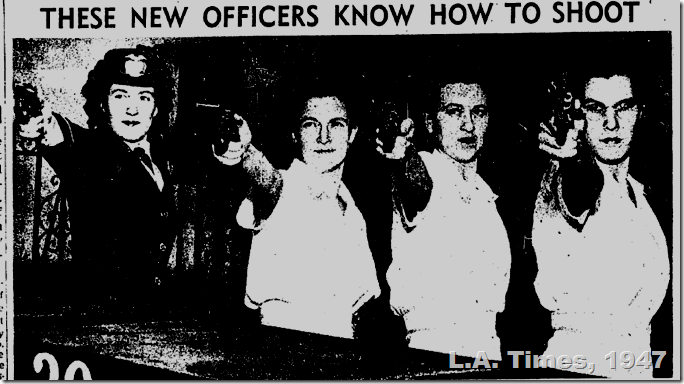
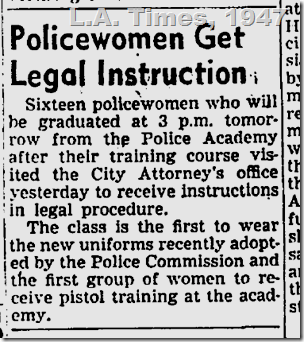
Sixteen policewomen who will be graduated at 3 p.m. tomorrow from the Police Academy after their training course visited the City Attorney’s office yesterday to receive instructions in legal procedure.
The class is the first to wear the new uniform recently adopted by the Police Commission and the first group of women to receive pistol training at the academy.
This is a puzzlement. Does this mean policewomen didn’t carry weapons before 1947? Stay tuned.
Answer: Yes! In 1947, the LAPD changed the uniform for policewomen and gave them a shoulder-slung black purse with a .38 revolver and handcuffs.
Quote of the day: “I Like Ike”
New slogan of the Draft Eisenhower for President League.

