
Note: This is an encore post from 2017.
Paul Bryan Gray was recently mentioned in the Los Angeles Times as the author of “A Clamor for Equality,” the biography of Francisco Ramirez, who published Los Angeles’ first entirely Spanish-language newspaper, “El Clamor Publico.”
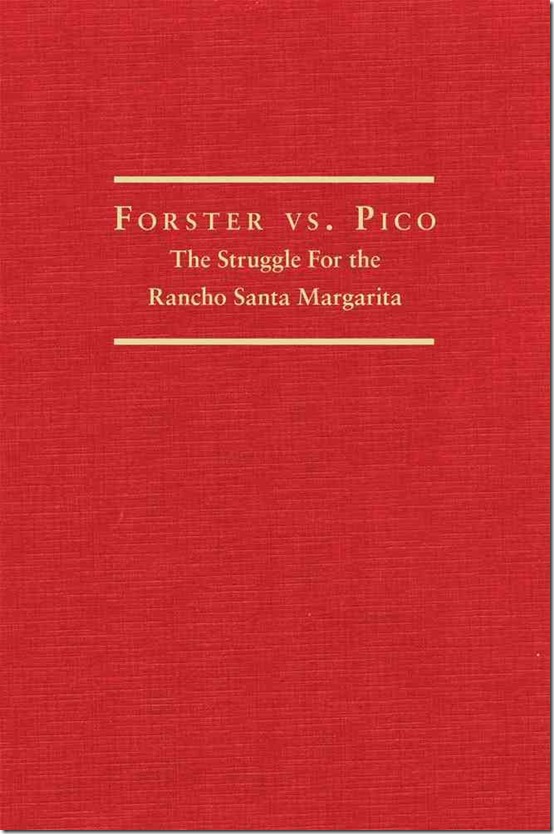
Gray also wrote “Forster vs. Pico,” the story of a 19th century lawsuit between Pio Pico, the last Mexican governor of California, and his brother-in-law John Forster in a dispute over Rancho Santa Margarita y Las Flores in San Diego County. Concisely written, the book is a thorough recounting of the case and an excellent microcosm of the way large Mexican ranchos were acquired by the newly arrived Americans.
As Gray says in his introduction:
… The basic causes of Mexican land loss are interwoven in their story (of Pico and Forster). A new culture imposed by military conquest, taxation, outrageous interest on loans, proceedings before the Land Commission, Mexican improvidence, and a devastating drought all prominently figure in their struggle and the ultimate fate of the Ranch Santa Margarita.”
Copies of “Forster vs. Pico” can be easily located via Bookfinder.














 ladailymirror.com