
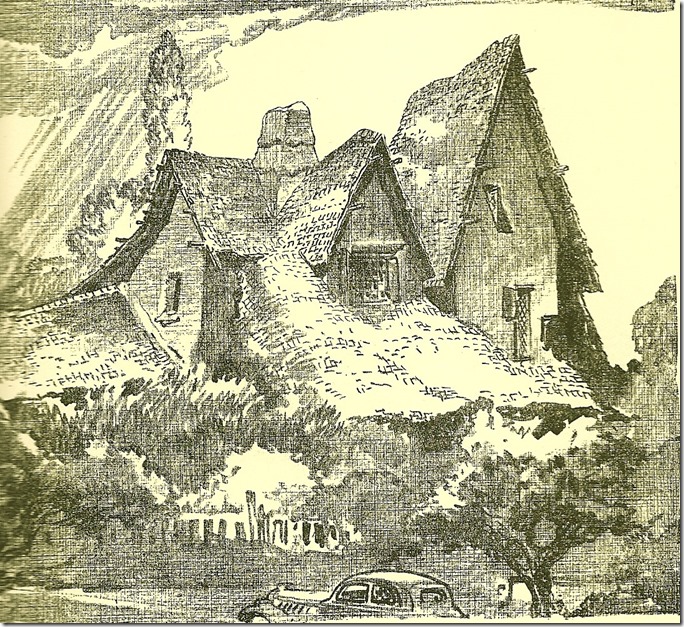
A sketch of the “The Witch’s House” by Charles Owens from “Nuestro Pueblo,” courtesy of Mary Mallory
Note: This is an encore post from 2013.
Once upon a time, home design and architecture saluted fantasy and make-believe, and not just in fiction. Bilbo Baggins and lucky leprechauns resided in twee little bungalows, short, off-kilter, hutch-like, but so did imaginative and childlike Los Angeles residents of the 1920s. Storybook architecture, dreamed up and promoted by film industry veterans, flourished near movie studios, magical little Brigadoon-like structures.
A strong proponent of storybook design was Hollywood art director Harry Oliver. Noted for his work as art director on films “7th Heaven” (1927) and “Street Angel” (1928). Oliver merrily dreamed up colorful structures on the side, like the famous Van de Kamp’s windmills and Los Feliz’s Tam-o-Shanter restaurant. Another whimsical structure, however, remains his most famous design, the Witch’s House in Beverly Hills.
Mary Mallory’s “Hollywoodland:Tales Lost and Found” is available as an ebook.
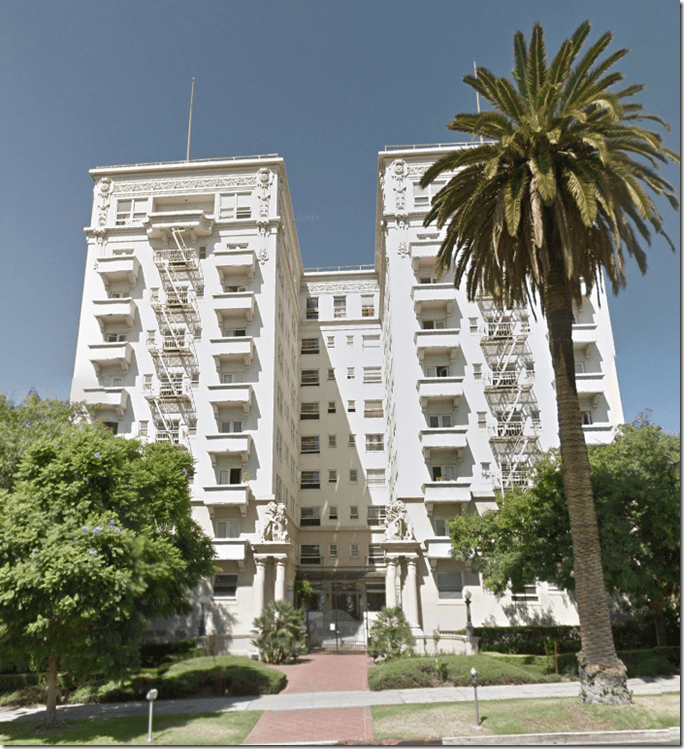
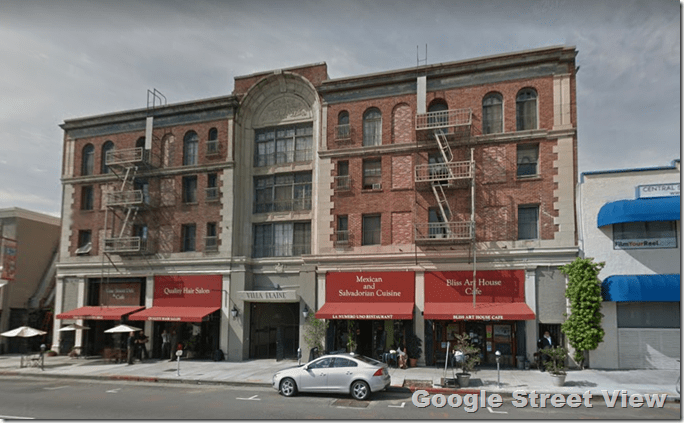 The Villa Elaine via


 ladailymirror.com