
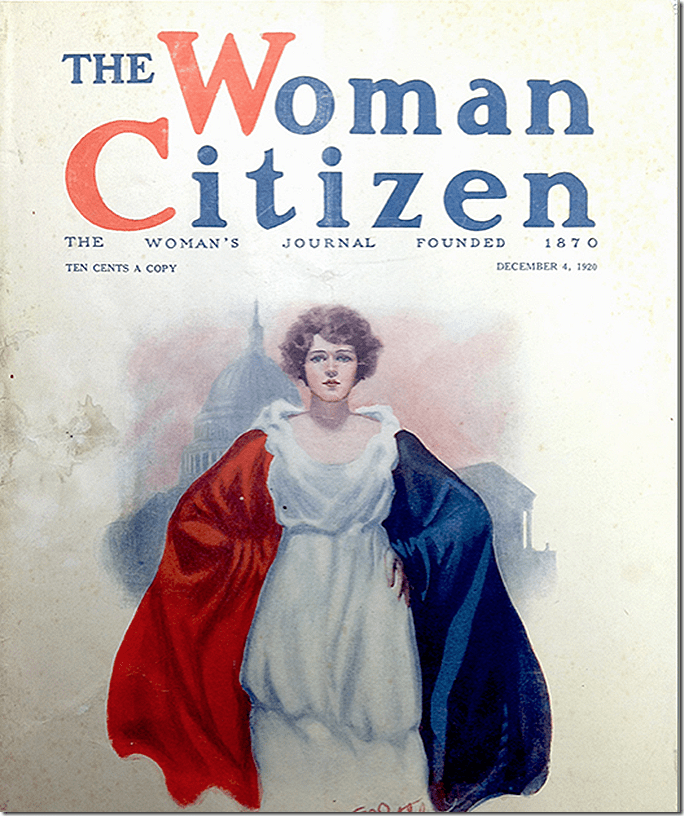
Women began campaigning for universal suffrage in the United States at the 1848 Seneca Falls Convention. Over the next seven decades, they would patiently and persistently push the message of enfranchisement through ridicule, patronization, and insults from their opponents. Moving from genteel lectures, magazines, and pageants to marches and mass marketing, women took their message to Americans. With the advent of motion pictures, more people could be reached at one time.
Traditional moving picture companies discovered the power of movies to inflame emotions and influence action early on. Renowned director D.W. Griffith focused on social issues in many of his early shorts, particularly “A Corner in Wheat”, revealing the degradation, manipulation, and enslavement of the poor by unscrupulous merchants and investors. Reformers influenced by these films worked to improve living and working conditions of struggling Americans and punish those inflicting pain.
Mary Mallory is giving a virtual presentation on “Your Girl and Mine” on Aug. 19 at 7:30 p.m. PDT. Tickets are $7.50 for Hollywood Heritage members and $15 for nonmembers.



 ladailymirror.com