
 Photograph by Ken Hively / Los Angeles Times Author Michael Crichton in Santa Monica in 2002 |
Michael Crichton
|
Photograph by Ken Hively / Los Angeles Times Author Michael Crichton in Santa Monica in 2002 |
Michael Crichton
|

|
From Librarian on the Run:
I’ve been getting a lot of hits recently by people searching for "how Will there be a lot of librarians It’s been my experience, that real-life librarians fall somewhere in |

Hank Williams’ obituary in The Times, Jan. 2, 1953 |
| October 28, 2008
By Robert Hilburn More than a half century after his death, Hank Williams remains so revered as a songwriter that his gifts as a singer are often underappreciated. But one of the strengths of "The Unreleased Recordings," a remarkable new CD boxed set released today, is the way it showcases the brilliance of his vocal skills. Besides his singing prowess, the three-disc package, which features 54 radio show performances, also underscores Williams’ musical influences, including his affinity for gospel songs and his playful personality |
 Photograph courtesy of Architecture for Sale The exterior of the Johnson/Stone residence, designed by Craig Ellwood |
||
|
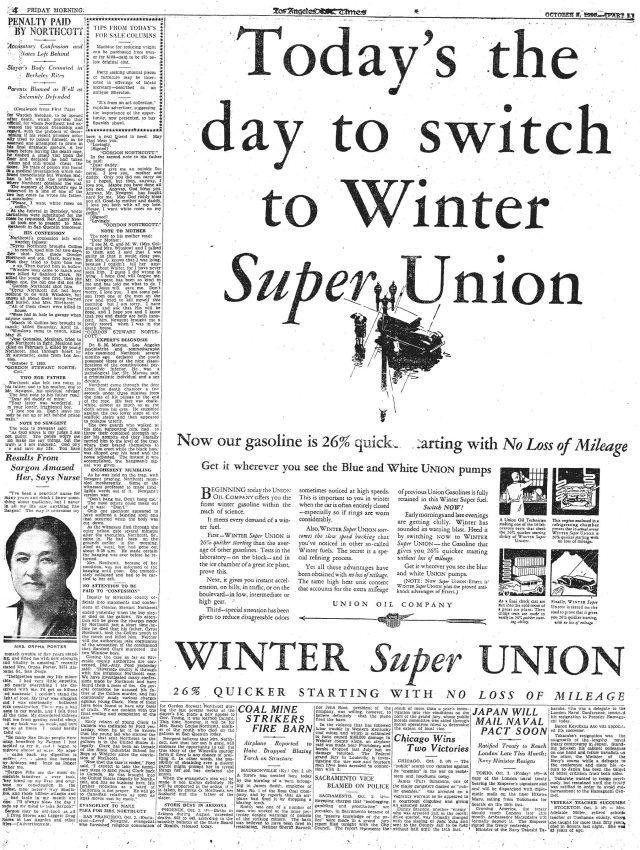
 Los Angeles Times file photo Gordon Northcott: "Youth Convicted as Boy-Butcher." |
||
|
||
|
||
|
||
|
||
 Los Angeles Times file photo Gordon Northcott, right, questions Rex Welch, analytical expert, about bloodstains on a bucket introduced as evidence in a photograph published Jan. 28, 1929. |
 |
Here’s a little black number by Rimini from the Wynshire department at Bullock’s Wilshire, which was converted to a Macy’s in 1995. Bidding starts at $49. |

1968, when percentages were calculated by hand.
|
|
Quotes of the game: "That’s got to be the most agonizing game I’ve "I have nothing to say," Gabriel told Florence in the locker room. "Let’s just say it’s self-imposed silence." Headline on the game: "Rams Prevail in Stone-Age Battle." Despite –Keith Thursby |

Billy Wilder discusses the strengths of typecasting in "Some Like It Hot," a movie that was filmed in 1958. |
||
Add this story to the list of things from the 1950s you’d rarely see today. Don Drysdale and Carl Furillo visited The Times and The Mirror to "We want them to meet as many fans as possible at handshaking range Hard to imagine seeing Manny Ramirez at the office. –Keith Thursby |
 Los Angeles Times file photo From left, prosecutor Earl (sometimes spelled Earle) Redwine, Loyal Kelley, A.H. de Tremaudan (sometimes spelled Tremandon), J. McKinley Cameron, David Sokol, Gordon Northcott and Norbert Savay. |
||
|
||
|
||
|
||
 Los Angeles Times file photo Gordon Northcott, left, and Louisa Northcott in court, Dec. 13, 1928. |
||
|
||
|
||
|
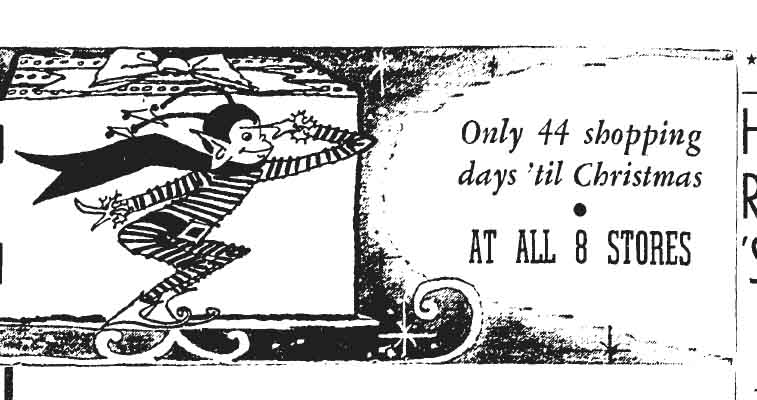
Honestly! The Christmas ads start earlier every year. I remember when they used to wait until after Thanksgiving! Continue reading
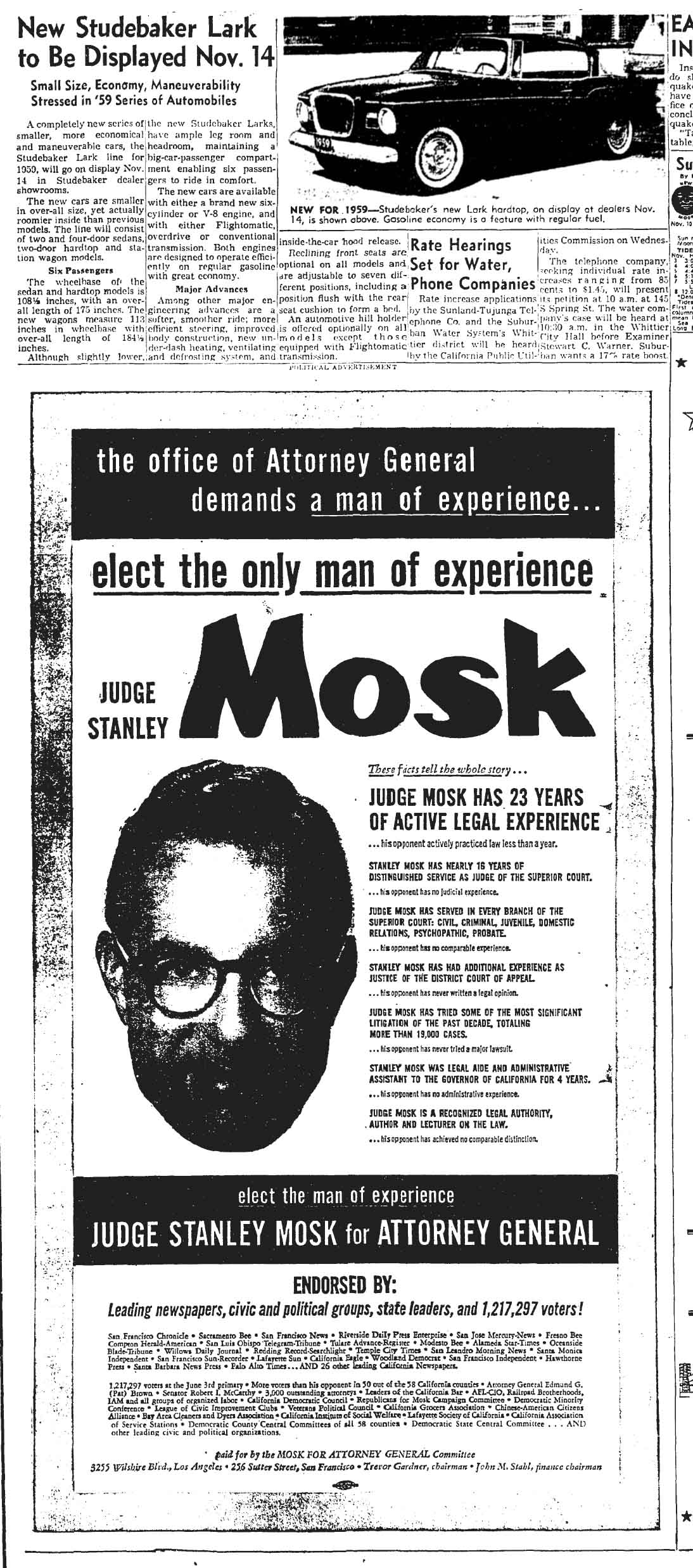 Look beyond the nostalgia factor in this film produced for Studebaker dealers. Listen to the comments. The Studebaker Lark was, according to this film, intended to give consumers what they wanted: a low-priced, fuel economy car. We know today, of course, that Studebaker failed for many reasons. But these executives were positive they had read the market correctly.
“Your product philosophy is right. This is exactly what our customers want.”
 Los Angeles Times file photo Los Angeles Times file photo
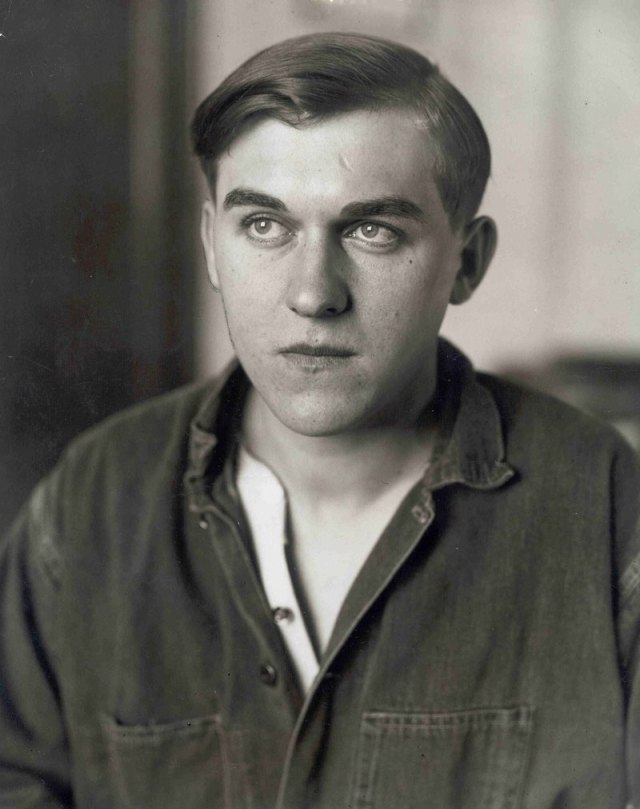
In going through the photographs from the Gordon Northcott case, I’m struck by how different Northcott looks from one image to another. Sometimes he appears thoughtful, even bookish. In others, he looks quite demonic. In the undated picture above, probably taken at San Quentin, he seems sensitive and reflective. |
||
 Los Angeles Times file photo Los Angeles Times file photo
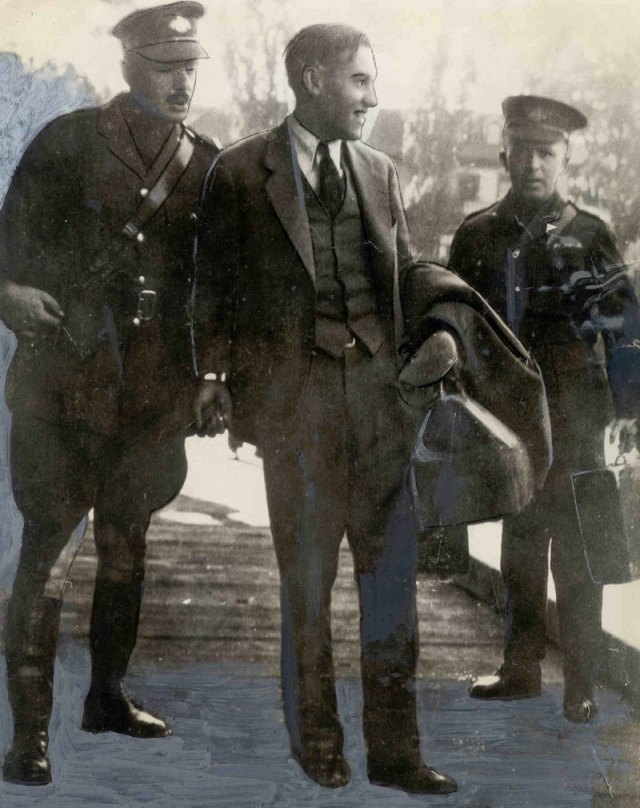
At Kamloops, B.C., Sgt. Fraser of the British Columbia Provincial Police, left, escorts Gordon Northcott to Vancouver after Northcott was captured in Vernon, B.C.. The Times published this photo Sept. 23, 1928. |
||
|
||
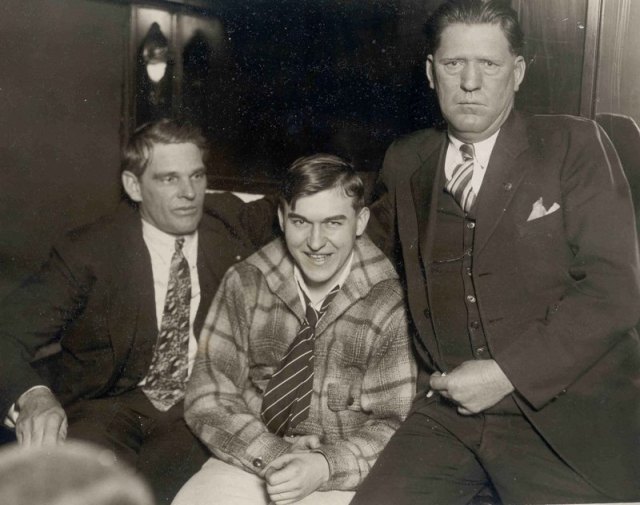 Los Angeles Times file photo Los Angeles Times file photo
C.F. Rayburn, left, and Jack Brown in the drawing room of the Southern Pacific’s Owl train as they escort Gordon Northcott to San Quentin, where he was hanged. |
||
|
 |
"Tight vests and suspenders worn by men are contrary to hygienic principles. These articles should be loose enough to permit free exercise of the lungs and heart. No article of clothing that fits tightly should be worn. Among this list are shoes, gloves, collars, garters, belts, corsets, etc. The most harmful of all clothing and the article that has done more to destroy the health of the race and make women slaves to internal weakness is the corset. No one can breathe normally in one of those destroyers of health and wreckers of otherwise happy homes."
–A. Victor Segno,
"How to Live 100 Years," Los Angeles, 1903
|

A Methodist church in Little Rock offers a facility rent-free for segregated classes after Gov. Orval Faubus refuses to open the city’s integrated high schools. And an African American boycott of segregated buses in Birmingham, Ala., gets a slow start.
|
||||
|
Anne Elisabeth Dillon is neither a scholar nor a gentleman; she just likes watching movies. A copy editor on The Times' National desk, she's been at the paper since 2006.
Keith has been an editor at The Times in news, sports and design since
1986. The Rams moved to St. Louis on his first day as assistant sports
editor of the paper's Orange County edition. He grew up in Norwalk and
lives in Irvine.
The leading Black Dahlia expert and a collaborator in the
1947project, Harnisch has been a copy editor at The Times since 1988.
He has appeared on many TV shows discussing the Dahlia case, notably
"James Ellroy's Feast of Death."
Join him for a spin through old Los Angeles in the Mirror's radio
car. Keep your eyes open for Mickey Cohen and Tempest Storm. It's quite
a ride.
The reporter's badge at left belonged to Sid Hughes (1908-1958), legendary reporter who worked at nearly every newspaper in Los Angeles.

Newsmen gather outside Ramon Novarro’s house, 3110 Laurel Canyon, after he was found beaten to death, 1968. The 3100 block of Laurel Canyon, where Ramon Novarro lived, via Google maps’ street view. |
||||
|
 Photograph by Lawrence K. Ho / Los Angeles Times Studs Terkel, Los Angeles County Museum of Art, Oct. 23, 2001. |
Bewildered, Insecure, Cynical
|


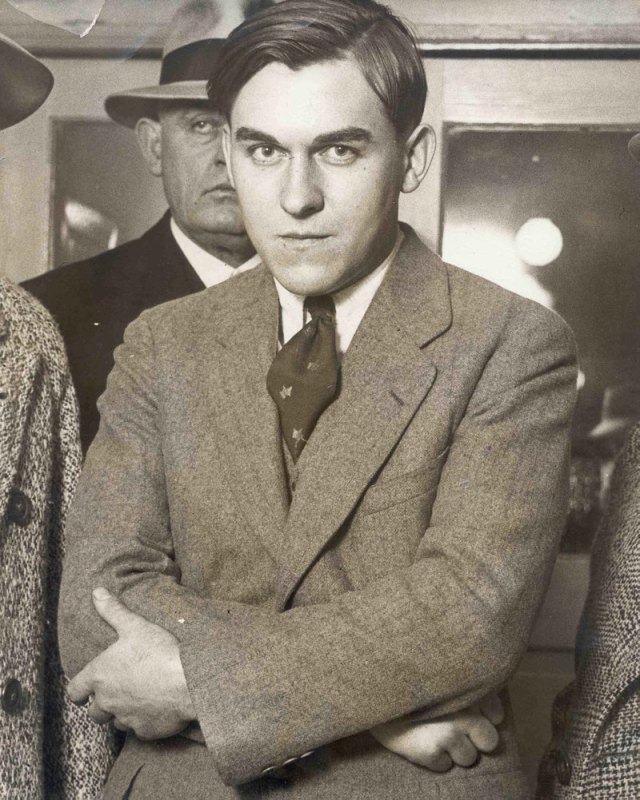 Los Angeles Times file photosHere, he looks like a young writer.
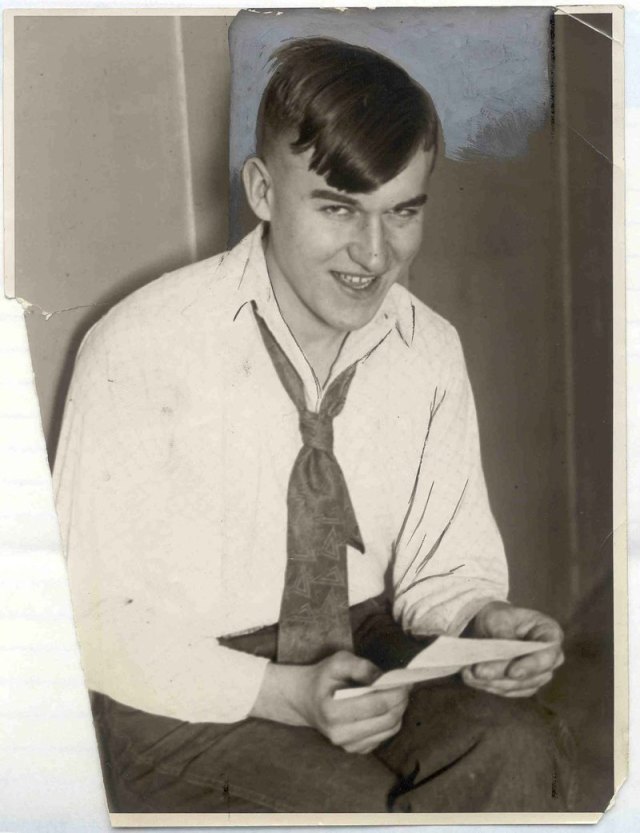 And here, he looks demonic.
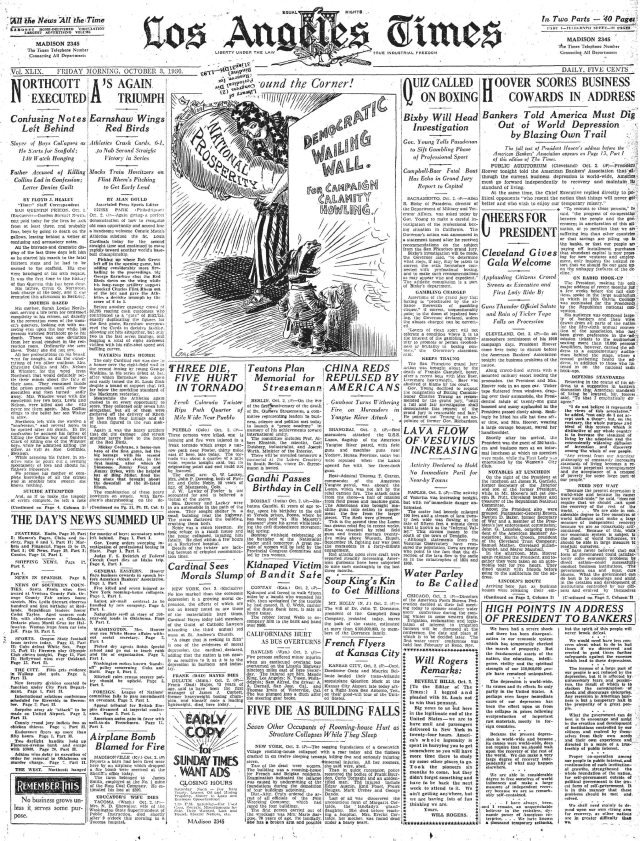 Northcott executed
 “Don’t hang me. Don’t hang me.”


