
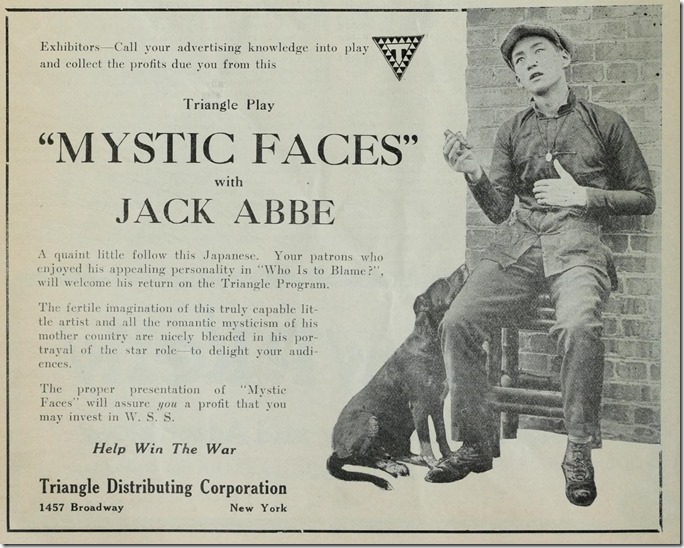
Jack (Yutaka) Abe in an ad for Mystic Faces in Film Daily, Sept. 1, 1918.
Note: This is an encore post from 2022.
Virtually unknown today, young Yutaka Abe gained fame in the American silent film industry after immigrating to the United States in 1912. While not as successful as fellow Japanese immigrant Sessue Hayakawa, Abe received excellent reviews for his film work, even writing for the screen. When the country became increasingly intolerant in the early 1920s and added Japanese immigrants to the harsh dictates of the Exclusion Act, originally written to handcuff the Chinese in the United States, Abe returned to his home country, becoming a successful director.
Born February 2, 1895, in Yamato, Miyagi, district, Abe and his younger brother, Toshinaka, immigrated to the United States with their father from Japan’s Sensai district, arriving in San Francisco on June 3, 1912. Later newspapers would claim that he was the son of the renowned Japanese ship builder. They arrived the year before California passed an alien land bill against the Japanese in 1913, preventing them from purchasing land or working certain professions.

 Note: This is an encore post from 2013.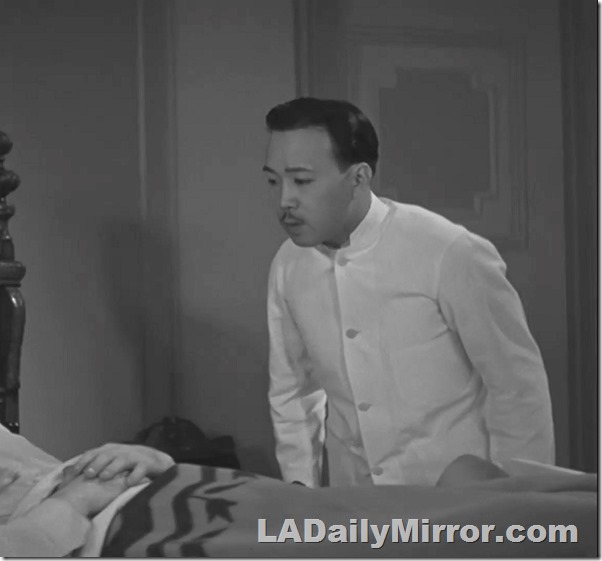




 ladailymirror.com