


- #courts 1907 1944 1947 Architecture art and artists Black Dahlia Books and Authors Cold Cases Columnists Comics Crime and Courts Downtown Film Front Pages Hollywood Hollywood Heights Homicide LAPD Mary Mallory Matt Weinstock Music Mystery Photo Paul Coates Photography Politics Sports Streetcars Transportation Uncategorized
Categories
- #courts
- #East L.A.
- #games
- #gays and lesbians
- #Jazz
- #Jim Murray
- #opera
- #video
- 1677
- 1781
- 1819
- 1823
- 1847
- 1852
- 1853
- 1855
- 1859
- 1862
- 1863
- 1864
- 1871
- 1872
- 1880
- 1881
- 1882
- 1883
- 1884
- 1885
- 1886
- 1887
- 1888
- 1889
- 1890
- 1891
- 1892
- 1893
- 1895
- 1897
- 1898
- 1899
- 1900
- 1901
- 1902
- 1903
- 1904
- 1905
- 1906
- 1907
- 1908
- 1909
- 1910
- 1910 L.A. Times bombing
- 1911
- 1912
- 1913
- 1914
- 1915
- 1916
- 1917
- 1918
- 1919
- 1920
- 1921
- 1922
- 1923
- 1924
- 1925
- 1926
- 1927
- 1928
- 1929
- 1930
- 1931
- 1932
- 1933
- 1934
- 1935
- 1936
- 1937
- 1938
- 1939
- 1940
- 1941
- 1942
- 1943
- 1944
- 1945
- 1946
- 1947
- 1948
- 1949
- 1950
- 1951
- 1952
- 1953
- 1954
- 1955
- 1956
- 1957
- 1958
- 1959
- 1960
- 1960 Democratic Convention
- 1960 Republican Convention
- 1961
- 1962
- 1963
- 1964
- 1965
- 1966
- 1967
- 1968
- 1969
- 1970
- 1971
- 1972
- 1973
- 1974
- 1975
- 1976
- 1977
- 1978
- 1979
- 1980
- 1981
- 1982
- 1983
- 1984
- 1985
- 1986
- 1987
- 1988
- 1989
- 1990
- 1991
- 1992
- 1993
- 1994
- 1996
- 1997
- 1998
- 2001
- 2003
- 2005
- 2006
- 2007
- 2008
- 2009
- 2010
- 2012
- 2013
- 2014
- 2015
- 2016
- 2017
- 2018
- 2019
- 2020
- 2021
- @news
- A Kinder, Simpler Time
- Abortion
- Adolf Eichmann
- Adoptions
- African Americans
- Animals
- anorexia
- Another Good Story Ruined
- Architecture
- Art & Artists
- art and artists
- Art Seidenbaum
- Artist's Notebook
- Asians
- Ask Me Anything
- Aviation
- Baseball
- Batchelder Tile
- Black Dahlia
- Black Dahlia Book Club
- Blue Dahlia
- Blues
- books
- Books and Authors
- boxing
- Brain Trust
- broadcasting
- Broadway
- Budd Schulberg
- Caryl Chessman
- Cemeteries
- Changeling
- Charles Hillinger
- Chicago
- Chinese Massacre
- Christine Collins
- City Hall
- Civil War
- classical music
- Cold Cases
- Columnists
- Comics
- Coming Attractions
- Countdown to Watts
- Courts
- Crime and Courts
- Current Affairs
- Dance
- Death Rays
- Dodgers
- Donald Wolfe
- Downtown
- Education
- Elections
- Environment
- Eurasians
- Eve Golden
- Fashion
- Fashions
- Film
- Fire Department
- Fires
- Food and Drink
- football
- Forest Lawn
- Found on EBay
- Freeways
- Frightening Food From the 1940s
- From the Reference Desk
- From the Stacks
- From the Vaults
- Front Pages
- Futurism
- Genealogy
- golf
- Grim Sleeper
- Harbor
- Harbor Division
- health
- Heaven Is Here!
- Hill Street
- History
- Hollywood
- Hollywood Division
- Hollywood Heights
- Homicide
- Horoscope
- Hot Stove League
- Howard Rosenberg
- Immigration
- Interior Design
- Jack Smith
- James Curtis
- JFK
- Jimmie Fidler
- Judith Mae Andersen
- Keith Thursby
- L.A. Voices
- Labor
- Lakers
- LAPD
- Latinos
- Lee Shippey
- Lesbian, Gay, Bisexual, Transgender
- Libraries
- Location Sleuth
- Long Beach
- Los Angeles Star
- Los Angeles Times Bombing
- Louis Adamic
- Main Street
- Maria Ridulph
- Marion Eisenmann
- Marion Parker
- Mary Mallory
- Matt Weinstock
- Medicine
- Mickey Cohen
- Middle East
- Millennial Moments
- Motor Sports
- Motorsports
- Museums
- Music
- Mystery Photo
- Native Americans
- New York
- Nightclubs
- Nuestro Pueblo
- Obituaries
- Olive
- One-Page Fact Check
- Pages of History
- Parker Center Cop Shop Files
- Parks
- Parks and Recreation
- Pasadena
- Paul Coates
- Pepe Arciga
- Philadelphia
- Photography
- Pico-Union
- Politics
- Preservation
- Queen of the Dead
- Radio
- Raymond Chandler
- Real Estate
- Religion
- Retro
- RFK
- Richard Nixon
- Robberies
- Rock 'n' Roll
- Roderick Mann
- Ronald Reagan
- San Diego
- San Fernando Valley
- San Francisco
- Science
- Seattle
- Second Takes
- Sports
- Spring Street
- Stage
- Streetcars
- Suicide
- Sunday Journal
- Sunset Strip
- Television
- Temple City
- Theaters
- Thelma Todd
- Tom Treanor
- Track and Field
- Transportation
- travel
- UFOs
- Uncategorized
- Venice Division
- Vietnam
- Walter Cronkite
- Washington
- Web/Tech
- Weblogs
- West Hollywood
- Wikipedia
- Witzel
- World War I
- World War II
- Zombie Reading List
- Zoom
- Zoot Suit
Archives
- November 2026
- October 2026
- September 2026
- August 2026
- July 2026
- June 2026
- May 2026
- April 2026
- March 2026
- February 2026
- January 2026
- December 2025
- November 2025
- October 2025
- September 2025
- August 2025
- July 2025
- June 2025
- May 2025
- April 2025
- March 2025
- February 2025
- January 2025
- December 2024
- November 2024
- October 2024
- September 2024
- August 2024
- July 2024
- June 2024
- May 2024
- April 2024
- March 2024
- February 2024
- January 2024
- December 2023
- November 2023
- October 2023
- September 2023
- August 2023
- July 2023
- June 2023
- May 2023
- April 2023
- March 2023
- February 2023
- January 2023
- December 2022
- November 2022
- October 2022
- September 2022
- August 2022
- July 2022
- June 2022
- May 2022
- April 2022
- March 2022
- February 2022
- January 2022
- December 2021
- November 2021
- October 2021
- September 2021
- August 2021
- July 2021
- June 2021
- May 2021
- April 2021
- March 2021
- February 2021
- January 2021
- December 2020
- November 2020
- October 2020
- September 2020
- August 2020
- July 2020
- June 2020
- May 2020
- April 2020
- March 2020
- February 2020
- January 2020
- December 2019
- November 2019
- October 2019
- September 2019
- August 2019
- July 2019
- June 2019
- May 2019
- April 2019
- March 2019
- February 2019
- January 2019
- December 2018
- November 2018
- October 2018
- September 2018
- August 2018
- July 2018
- June 2018
- May 2018
- April 2018
- March 2018
- February 2018
- January 2018
- December 2017
- November 2017
- October 2017
- September 2017
- August 2017
- July 2017
- June 2017
- May 2017
- April 2017
- March 2017
- February 2017
- January 2017
- December 2016
- November 2016
- October 2016
- September 2016
- August 2016
- July 2016
- June 2016
- May 2016
- April 2016
- March 2016
- February 2016
- January 2016
- December 2015
- November 2015
- October 2015
- September 2015
- August 2015
- July 2015
- June 2015
- May 2015
- April 2015
- March 2015
- February 2015
- January 2015
- December 2014
- November 2014
- October 2014
- September 2014
- August 2014
- July 2014
- June 2014
- May 2014
- April 2014
- March 2014
- February 2014
- January 2014
- December 2013
- November 2013
- October 2013
- September 2013
- August 2013
- July 2013
- June 2013
- May 2013
- April 2013
- March 2013
- February 2013
- January 2013
- December 2012
- November 2012
- October 2012
- September 2012
- August 2012
- July 2012
- June 2012
- May 2012
- April 2012
- March 2012
- February 2012
- January 2012
- December 2011
- November 2011
- October 2011
- September 2011
- August 2011
- July 2011
- June 2011
- May 2011
- April 2011
- March 2011
- February 2011
- January 2011
- December 2010
- November 2010
- October 2010
- September 2010
- August 2010
- July 2010
- June 2010
- May 2010
- April 2010
- March 2010
- February 2010
- January 2010
- December 2009
- November 2009
- October 2009
- September 2009
- August 2009
- July 2009
- June 2009
- May 2009
- April 2009
- March 2009
- February 2009
- January 2009
- December 2008
- November 2008
- October 2008
- September 2008
- August 2008
- July 2008
- June 2008
- May 2008
- April 2008
- March 2008
- February 2008
- January 2008
- December 2007
- November 2007
- October 2007
- September 2007
- August 2007
- July 2007
- June 2007
- May 2007
- April 2007
- March 2007
- February 2007
- January 2007
- December 2006
- November 2006
- October 2006
- September 2006
- August 2006
- July 2006
- June 2006
- May 2006
- April 2006
- March 2006
- February 2006
- June 2005
- May 2005
- April 2005
- March 2005
- February 2005
Did Ancient Lizard Cult Hide Gold Tablets in Tunnels Under L.A.? Jan. 29, 1934
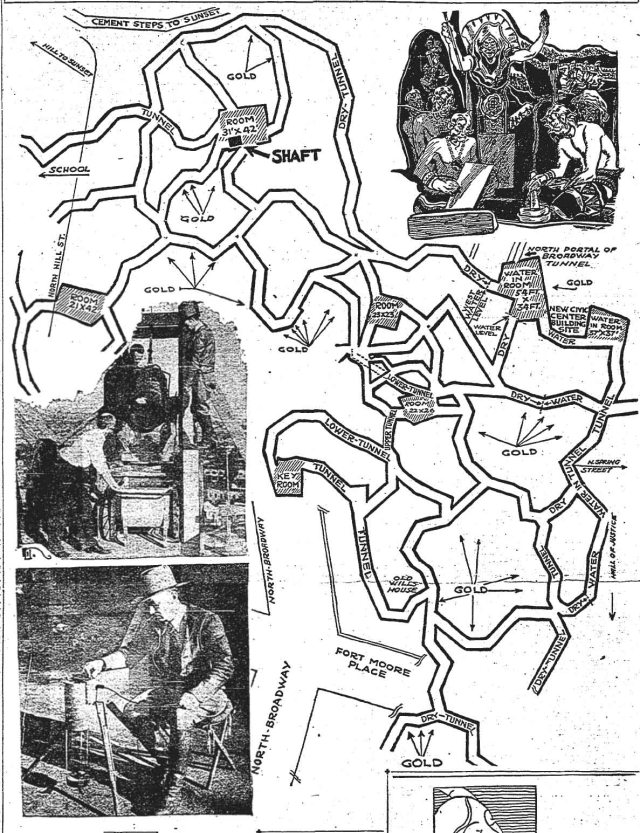
Jan. 29, 1934: Gold hidden in network of tunnels under downtown Los Angeles! Continue reading
Posted in Architecture, Downtown
2 Comments
Second Takes — Billy Wilder
|
|
||
|
||
|
July 23, 1948: "The bitterness of 'A Foreign Affair' is thus likely to linger after its laughs have passed," Edwin Schallert says.
|
||
|
Jan. 3, 1972: Kevin Thomas interviews Charles Lang, cinematographer on Billy Wilder's "A Foreign Affair," "Ace in the Hole," "Some Like It Hot" and "Sabrina."
|
Posted in Film, Hollywood, Second Takes
Comments Off on Second Takes — Billy Wilder
GOP Neglects Blacks, White House Aide Says; Dodgers Lose, April 15, 1959
|
||
USC students use bikes to get around campus. Note the coat and tie, guys. |
||
A glimmer of the upcoming presidential race. |
||
E. Frederic Morrow, a White House administrative officer, says black voters don't support the Republican Party because it doesn't recognize them as first-class citizens.
|
||
Frank Sinatra at the Sands — with Buddy Lester! |
||
|
||
|
Wally Moon, who would become part of Dodger lore with his Moon shots over the short left-field screen, had three hits but no homers in his home debut. Gil Hodges hit one in the ninth but it judged by The Times' Frank Finch to be just a "cheap homer that barely cleared the screen." Before the game, Roy Campanella was wheeled to the field by his longtime teammate, Pee Wee Reese and flipped the ball to starting pitcher Johnny Podres. Campanella also addressed the crowd: "It's an honor and pleasure to be here, especially behind the plate. That left-field fence looks great. I just wish I could swing and put a few over it." It was only one game, but the paper's sports editor, Paul Zimmerman, saw enough to write a blistering column the following day. "Let's see now. Last year the explanation of the Dodgers' early season plight included such talk as the uncertainty of the Chavez Ravine situation, the transfer to Los Angeles, etc. etc," Zimmerman wrote. "Chavez Ravine now seems to be as good as in the bag and our lads are pretty well housebroken here but their opening game was hardly an artistic success." That might not sound tough, but most Times sportswriters in 1959 didn't go negative very often. Zimmerman said the Dodgers' hitting and fielding troubles seemed "designed to do nothing but discourage a host of willing fans." He might have been right about that–the second game's attendance dipped to 14,491, which in the Coliseum must have felt like just 491. –Keith Thursby |
Found on EBay — Early Views of Los Angeles
| This postcard, c. 1908, showing views of Los Angeles, including the courthouse, oil wells, the Plaza, and Echo Park, has been listed on EBay. Bidding starts at $6. |
Posted in Architecture, Downtown
Comments Off on Found on EBay — Early Views of Los Angeles
Matt Weinstock — April 14, 1959
Clever, These Hollywooders
They started hiking and Could they rent a room and then, as :: THEY WALKED BACK to the car and finally flagged down a passing motorist who drove them to a gas station. Along toward dawn they got home. One of them recently scored a ::
PAY NO attention to Bill Graydon,
the ad man. He claims he took a wrong turn at the open house of IBM's new western headquarters on Wilshire Blvd. and came upon a technician working on the open back panel of a huge computer. Was it a maze of coils, wires, transistors, fuses and whatnot? Nope, just ants, millions of them, adding, subtracting and eating holes in the punch cards. "It's tough on the ants," Bill says, "but I guess you can't stop progress." ::
FOR NON-VOTERS
He who will not speak will find he's spoken for By spokesmen who may make decisions he'll deplore. -William Baffa ::
DEATH OF
Frank Lloyd Wright recalled to publicist Lee Pitt the time the iconoclastic architect came to Houston and met the press in the much ballyhooed Shamrock Hotel. First question asked was, "Mr. Wright, I'd like to ask what you think of the design of this hotel?" Wright glared at him and snapped, "Why?" and walked away. Shortest press conference Lee Pitt, then a reporter, ever covered. ::
Well, Furthermore, those who go under the pole become members of the Polecats in an even more gruesome ceremony. ::
and make resilient the intellectual vigor with which we face our problems; expand our mastery of the scientific revolution in which we live; enlarge our understanding of the other peoples of the world; renew our spiritual and cultural heritage; rededicate ourselves to the ideals of a free society." And to escape television. ::
AT RANDOM —
People who weren't afraid of lung cancer say they'll quit cigarettes if the 3-cent tax on them goes into effect … Russ Morgan, just returned from a tour with his orchestra, reports a coffee shop in a small Texas town had an item on its breakfast menu, "Three-minute eggs at your own risk." He didn't order them … The Dodgers were rained out at Vero Beach, snowed out in their opener. Next spring, Les Wagner thinks, maybe they should stay home. We need the rain. |
Posted in Columnists, Matt Weinstock
Comments Off on Matt Weinstock — April 14, 1959
Paul Coates — Confidential File, April 14, 1959
CONFIDENTIAL FILEButch Harris Feels Better About Things
That Sleeping Beauty always gets bussed by her handsome prince, or that
Cinderella's post midnight dreams always wind up with her dainty foot encased in glass. But I suffer from a chronic skepticism, only rarely relieved by the fairy-tale finale. Somehow Scrooges "Bah humbug!" overpowers Tiny Tim's "God bless us, every one" when I'm tuned in. Then a bunch of people suddenly get together and pour sugar all over my sour outlook on life. So here I sit, on one of those rare occasions, with a sweet taste in my mouth. Some months ago, I told you a story. I labeled it "A Story I'd Rather Not Print." I told you about a 9-year-old youngster. A kid like almost every other kid. Get the idea? Just a kid. Except for one important detail. And because his skin is black, a group of mothers, parents of other 8, Butch, with the innocence of It never occurred to him that in some limited circles around town "ALL" is spelled "WHITE." And it wasn't entirely innocence. He'd read a Scout pamphlet which said: "It makes no difference whether he's a fat boy, a skinny bot, a tall "Nor does it make any difference what color skin a boy may have – Scouting's hand of fellowship is extended to him."
Yesterday, I got a letter from Butch's mother. "I have been meaning to write to you," she said, "but I wanted to wait The Lt. Gov. Glenn Sen. Richard Richards showed him around the upper house. Gov. Brown asked Butch to drop by his office for a private chat. The overjoyed youngster capped the day with dinner at the lieutenant governor's home. The Way Things Should Be
"I know it was a trip he'll never forget," his mother wrote.
And I'm sure she's right. But even more important, Butch is now a member of a newly formed Cub Scout pack. The Kiwanis Club and the Boy Scout Council helped get it rolling. "We have five boys in the pack," Mrs. Harris told me, "and we will Which isn't strange. Blue's a nice color. It goes well with red and white.
|
Posted in Uncategorized
Comments Off on Paul Coates — Confidential File, April 14, 1959
In the Theaters — April 14, 1942
| Edwin Schallert reports that Adolphe Menjou has been cast in the critical role of the innkeeper in "Casablanca." "Menjou's part is to be the most important of the character type and he will have much to do with motivating the plot," Schallert says. |
Second Takes — Billy Wilder
|
Coming soon: "The Emperor Waltz," May 24, 1948. |
||
|
||
|
May 27, 1948: " 'The Emperor Waltz' has the rather pleasing quality of seeming to kid itself along, and I can't imagine that either Mr. Brackett or Mr. Wilder ever took what they did too seriously."
Dec. 26, 1948: Philip K. Scheuer takes a look at the year's films, what we consider today the prime of film noir: "The Naked City," "Street With No Name," "He Walks by Night" and "Kiss the Blood Off My Hands." He dismisses "The Emperor Waltz" and "A Foreign Affair": "The impeccable Brackett taste had likewise evaporated from his (and Billy Wilder's) "The Emperor Waltz" (love me, love my dog) and "A Foreign Affair" (fun among the Nazis), despite certain scattered merits in each."
|
Posted in Film, Hollywood, Second Takes
Comments Off on Second Takes — Billy Wilder
City Hall Protest Over Chavez Ravine Evictions, April 14, 1959
|
SLA Pipe Bombs Revisited
|
Aug. 23, 1975: Bombs are found under two LAPD cars. |
To settle the differences, the Daily Mirror turned to Sandi Gibbons of the Los Angeles County district attorney's office, who provided a transcript of testimony on the incident given to the grand jury in 1976. The following account is based on that testimony. On the night of Aug. 21, 1975, Officers James J. Bryan and John David Hall were working the mid-watch patrol in Hollywood. About 11:15 p.m., the officers stopped to eat at the International House of Pancakes, 7006 Sunset Blvd. Bryan, who was driving that night, said they left about midnight and responded to a radio call. As the police car was backing out of its parking space, it was seen by a group of friends pulling into the lot, according to Mervin William Morales. Morales testified that he and his friends parked in the spot next to the one vacated by the police and went into the restaurant. Morales said that when they left the restaurant 10 or 15 minutes later, they noticed what might have been a bomb in the vacant space where the police car had been parked. (To clear up one common misconception, the bombs were placed on the ground. Only a part of the trigger mechanism was attached to the police cars.)
Morales said he ran about two blocks to contact officers he had seen earlier that evening, Paul McMillen and his partner, Larry Riviera. In the meantime, one of Morales' friends went into the restaurant to notify the manager. Officer McMillen said he and his partner talked to Morales about 12:10 a.m. on Aug. 22, 1975, and arrived at the restaurant five or 10 minutes later. "I saw what appeared to be the end of a pipe, a plumbing fixture, wrapped in some black plastic or a black covering," McMillen said. He went into the restaurant and made a telephone call to the watch commander to report what happened. Officers responded to the restaurant, including Bryan and Hall, who were called to handle traffic control at Sunset and Highland as police blocked off Sunset Boulevard and several side streets and evacuated some areas. About 1:30 a.m., Officer Lawrence L. Baggett arrived at the restaurant. Baggett, of the firearms and explosives unit of the LAPD Scientific Investigation Division, said he was met by a sergeant and investigators who told him about what might be a bomb in a parking space. Baggett said: "I approached it; performed what we call an initial render-safe. And then called out the rest of my unit to assist me in the transportation of it." In the meantime, Bryan and Hall had responded to a robbery call at Sunset and La Brea. Bryan said that officers had been informed about the bomb and he decided to look under their car. "I saw a red U-shaped magnet attached to the frame of the car and attached to the magnet was a piece of fishing line," Bryan said. Shortly thereafter, Baggett went to Sunset and La Brea to examine Bryan and Hall's police car. About 2 a.m., as part of a general inspection of LAPD vehicles ordered as a safety precaution after the restaurant incident, Officer Martin Joseph Feinmark and his partner, Officer Hohan, checked the black-and-white patrol cars at the Hollenbeck Division. After finding nothing under the marked cars, the officers checked three unmarked vehicles parked on St. Louis Street. Feinmark said that he found a bomb in a trash bag placed beneath the oil pan of one of the unmarked cars. Baggett and an unidentified officer arrived and as Baggett watched, the other officer disarmed the second pipe bomb. The Bombs
Although the bomb wasn't as large as described in initial news reports (The Times said it was about 18 inches long) it was still sizable. The bomb was housed in a foot-long piece of 3-inch galvanized pipe. The volume of the cylinder is 85 cubic inches, a little more than a quart, dry measure. When fully assembled as described in the transcript, including battery, nails and sand in lieu of powder, the bomb weighs about 20 pounds. These days, the SLA pipe bomb is not something that can be made after a quick trip to Home Depot or even the average plumbing supply store. Tracking down the components was a scavenger hunt and some of them were so hard to find they had to be ordered. Without revealing all the components, I have to say I was struck by how few nails were used. News accounts say the bomb was "tightly packed" with nails, and although that statement is true, it's misleading. The bombers used about 120 small nails, according to the transcript, a fairly modest amount considering the capacity of the pipe. Clearly, most of the space was used for explosives.
We do know with some certainty what would have happened if the bomb had exploded. In 1976, according to the transcript, the LAPD reproduced the SLA pipe bomb and blew up an old patrol car with two mannequins inside at El Toro Marine Corps Air Station. The blast was photographed and videotaped, according to police testimony. Baggett said: "It ripped a big hole in the floor of the vehicle, a number of them. It sent fragmentation through the floor of the vehicle; through the seats and through the roof of the vehicle, all out through the hood of the vehicle. It caused extensive damage to the interior of the vehicle. "The mannequins, the passenger mannequin was shoved practically up into the ceiling. The driver mannequin was also moved around; distorted." Baggett said: "had the device been placed under, say, the passenger side of the vehicle, putting the passenger officer directly above it or in extremely close proximity to it, I would say the odds of him being extremely or gravely injured, if not killed outright, would be very good.
Photographs by Larry Harnisch / Los Angeles Times
When filled with sand and attached to a battery, this re-created bomb weighs 20 pounds. "And the driver, the other officer, would be sitting to his left; would also stand a very good chance of being severely injured if not killed." In some of the most chilling testimony, Baggett was asked what would have happened if the bomb had gone off while he was disarming it. He said: "Had I been in the position of trying to render it safe, then — that is, in direct proximity to it, I am sure I would have been seriously injured and I, just from the overall power and the amount of fragmentation and shrapnel, I honestly believe I probably would have been dead." The big question, of course, is why the pipe bomb didn't explode. Its failure wasn't due to SLA incompetence. The answer is simple mechanical failure of one improvised component of the bomb. The trigger mechanism used two metal contacts placed in the jaws of a wooden clothespin. The contacts were held apart by a small wooden wedge connected by fishing line to a magnet attached to the police car. When Bryan and Hall pulled out of the parking space, the wedge was pulled out of the clothespin, but the jaws closed off-center instead of coming together squarely, so the contacts missed each other. Footnote: According to Clinton Erickson, an LAPD retiree who tracks the deaths of former LAPD officers, Baggett died in 2006. |
Posted in #courts, Hollywood, Hollywood Division, LAPD
Comments Off on SLA Pipe Bombs Revisited
Disney Plans ‘Vacation Land,’ April 14, 1959
| The planners at Disneyland apparently toyed with adding a "Vaction Land" adjacent to the park, according to The Times' Jeane Hoffman. "Walt has an entirely different concept of what a show for sportsmen should be," Disney official Jack Sayers said. "He visualizes it in a real-life, natural setting as though the tourist were on an actual camping trip in the High Sierra." Hoffman said Disney officials were visiting boat shows and talking Nothing was mentioned in the story about singing bears–perhaps they were envisioned for Phase 2. –Keith Thursby |
Posted in Sports
Comments Off on Disney Plans ‘Vacation Land,’ April 14, 1959
Nuestro Pueblo, April 14, 1939
Posted in Architecture, Downtown, Nuestro Pueblo
Comments Off on Nuestro Pueblo, April 14, 1939
Found on EBay — Black Mask Magazine
|
|
||
| Speaking of Black Mask, two more issues that have been listed on EBay, At left, July 1946 (Bidding starts at $18.99) At right, September 1947 (Bidding starts at $18.99). The vendor has another July 1946 issue listed at $17.99. |
Posted in books
Comments Off on Found on EBay — Black Mask Magazine
Matt Weinstock — April 13, 1959
On Conformity
The This, of course, is abhorrent to individualists. It gives them a trapped feeling. The more resolute fight back by exposing the villains. One such conformity fighter, Juan Gonzales of West 4th Street, claims to have discovered the root of all such evil. IT STARTED, HE SAYS, when someone conceived the diabolic idea of dividing a gallon of liquor into fifths. Juan He asks, "Where are the valiants It could be that Juan has been watching too many westerns. ::
What Thank you, George AFB. But who pays for the cracked walls and the broken windows? Another And ::
Soon the contractors will turn over to the state of California two stretches of highway near Oroville But there's one slight omission. No bridge. The legislators allocated $8 million for the new highway, but got busy with other things and neglected to appropriate And so the fine roadway will likely remain unused for about three years — a monument to, well, you name it. ::
When ::
|
Posted in Columnists, Matt Weinstock
Comments Off on Matt Weinstock — April 13, 1959
Paul Coates — Confidential File, April 13, 1959
Confidential FileTrujillo Jr. No Playboy at Home
The luxury yacht had come here to pick up its owner, Gen. Rafael Trujillo Jr., handsome son of the Dominican Republic's ruler. But the young general wasn't quite ready to be picked up. At least not in that sense of the word. He wanted to stay awhile. And his visit burst into international headlines when it became known that he had handed out a couple of Mercedes-Benzes (well, what is the plural of Benz?) to Kim Novak and a Hungarian refugee lady named Zsa Zsa Gabor. This
In an angry denial, Trujillo Jr. He "The investments," he added modestly, "have prospered." And that would be a hard claim to challenge. After all, he's a boy not without connections in his home town. "I After that furor died down, another one was sparked when Then, as an afterthought, he added that he was separated from his wife and in the throes of getting a divorce. Finally, the Angelita got up steam and, to the strains of mambo music, the general left us.
The Office Neighbor of Dad's Although I saw quite a bit of social When I finally got a chance to talk with him, I told him that I was impressed with the Spartan existence he seemed to lead. "That's not the way you're remembered where I come from," I reminded him. The general sighed. "I hope you don't say anything about it," he told me. "You'll ruin my reputation in Hollywood." |
Posted in Columnists, Paul Coates
Comments Off on Paul Coates — Confidential File, April 13, 1959
Voices — Marilyn Chambers, 1952 — 2009
|
Posted in #courts, Film, Hollywood, Obituaries
1 Comment
Second Takes — Billy Wilder
|
||||
|
Hedda Hopper runs an item on Wilder on April 6, 1945. |
||||
Nov. 12, 1945: Edwin Schallert reports that Billy Wilder has expressed interest in a story by Guy Endore.
|
||||
July 24, 1946: Doane Harrison briefly takes over for Wilder. |
||||
March 22, 1947: Brackett and Wilder are at work on "Foreign Affair." It will also be referred to in the gossip columns as "Operation Candy Bar."
|
||||
|
Posted in Film, Hollywood, Second Takes
1 Comment

