
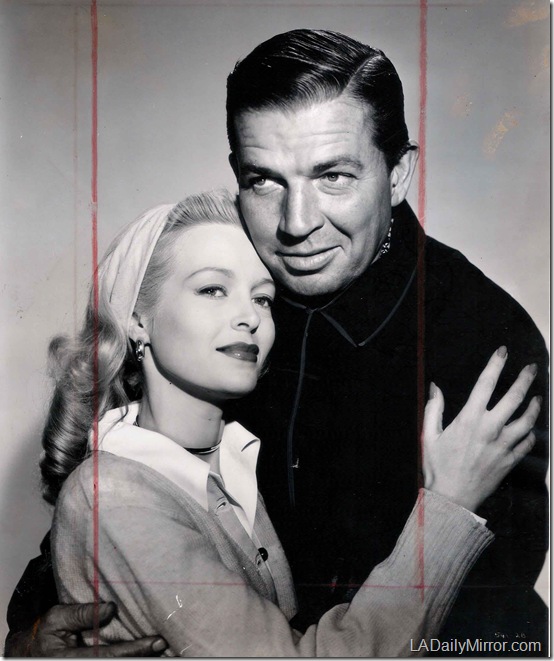
[Update: As most people realized, this is Bruce Cabot. He’s with co-star Helen Mowery in the 1946 film “Avalanche.”]
Here’s a mystery couple, courtesy of Steven Bibb!
[Update: As most people realized, this is Bruce Cabot. He’s with co-star Helen Mowery in the 1946 film “Avalanche.”]
Here’s a mystery couple, courtesy of Steven Bibb!
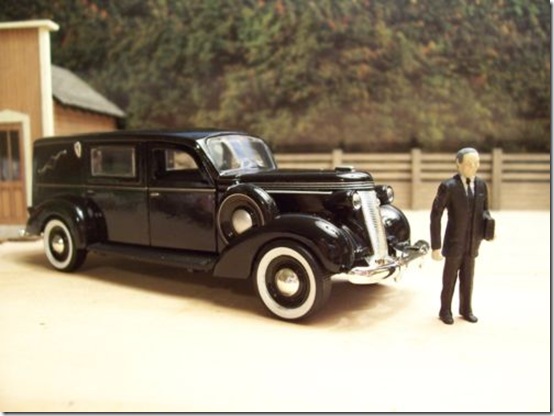
Photo: 1/43 model Studebaker hearse for sale on EBay. It’s listed as Buy It Now for $49.99.
Queen of the Dead – dateline October 3, 2011
• One way I knew I had become my mother was when I started watching—and enjoying—reruns of Are You Being Served? David Croft, who died at 89 on September 27, wrote, produced and directed numerous episodes of that low-comedy classic, along with other such Britcoms as Dad’s Army, Hugh and I, Up Pompeii!, Oh Happy Band, It Ain’t Half Hot Mum, ‘Allo ‘Allo!, You Rang, M’Lord? and Oh Doctor Beeching! Croft also produced stage and movie versions of many of his shows and, in a sentence which means absolutely nothing to us Yanks, “spent some time working for Billy Butlin putting on shows in his holiday camps around the UK.”
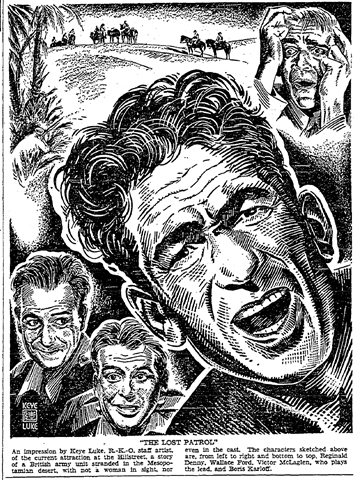
Image: “The Lost Patrol,” illustrated by Keye Luke, The Times, Feb. 18, 1934.
Coming up this week, Eve Golden has a roundup of unusual obituaries in Queen of the Dead and Mary Mallory looks at the artwork of Keye Luke in Hollywood Heights. Plus more Navy documents in the Zoot Suit Riots, mystery photos and maybe a surprise or two.
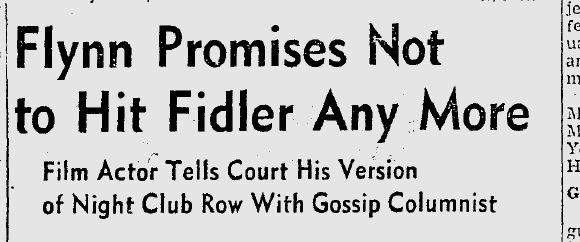
Oct. 1, 1941: Errol Flynn promises he won’t punch Hollywood columnist Jimmie Fidler anymore. The actor invoked the famous “everything went black” defense for the melee at the Mocambo, in which Fidler’s wife stabbed him with a fork.
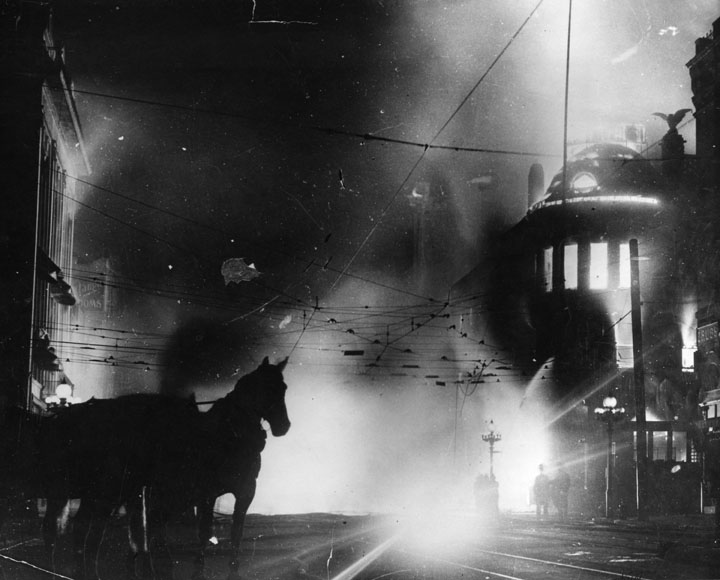
Courtesy of University of Southern California, on behalf of the USC Special Collections.
October 1, 1910: The Times Building in flames, as seen from Broadway just south of First Street. Notice The Times Eagle outlined by the fire.
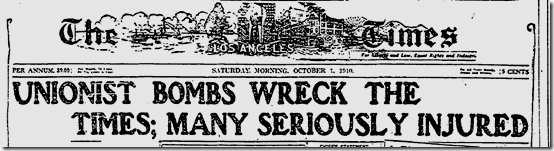
El Alisal, October 1, 1910:
This is a sad day for me and for every other man that loves Los Angeles.
At one this morning I was dictating to Brownie and heard a terrible roar in town and remarked that it sounded like dynamite and just casually thought it might be The Times.
 |
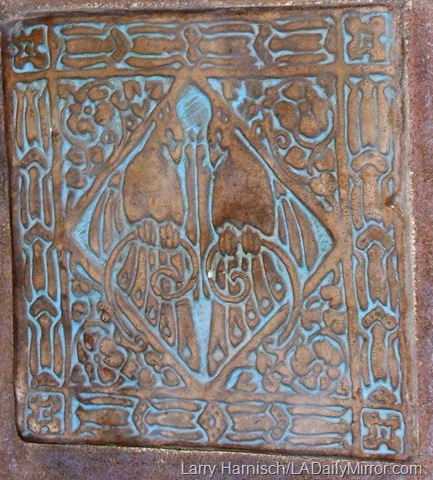 |
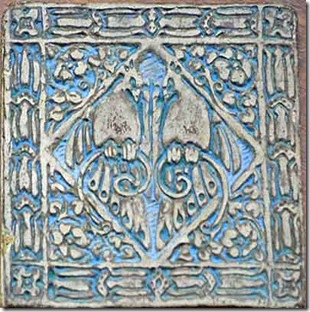
This Batchelder tile, above left, showing a pair of peacocks, has been listed on EBay. Interestingly enough, it’s the same pattern as the piece on the right, which I found in Aimee Semple McPherson’s quarters at Angelus Temple on a tour several years ago. Bidding on a pair of these peacock tiles, marked Batchelder Pasadena, starts at $137.50.
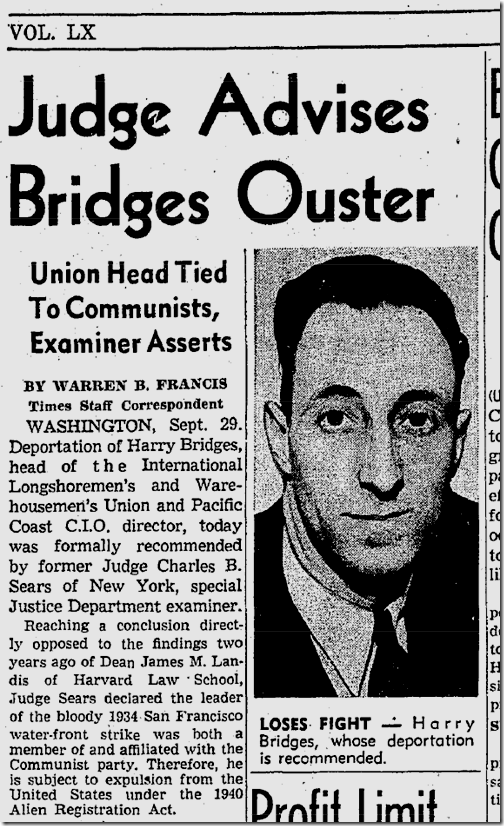
Sept. 30, 1941: A judge recommends the deportation of Harry Bridges, head of the International Longshoremen’s and Warehousemen’s Union, a decision that was cheered by The Times. Of course, Bridges was never deported, despite a prolonged campaign to send him back to Australia. He died in San Francisco in 1990.
L.A. Times obituary by Harry Bernstein | New York Times obituary by Wolfgang Saxon
Lee Shippey takes a look at a book titled “How to Read a Newspaper” and Tom Treanor, who was killed covering World War II for The Times, visits a grammar school orchestra.
Jimmie Fidler: Reason for Universal yanking blond beauty Marie McDonald from “Melody Lane” is that studio bosses have bigger plans for her.
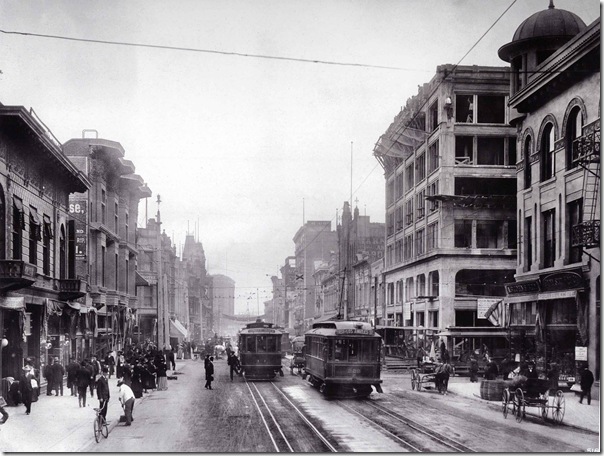
I picked up “A Southern California Album: Selected Photographs, 1880-1900” at the Last Bookstore the other day and was pleased to discover a number of pictures by C.C. Pierce, including this shot of Main Street looking south from 3rd Street in 1906.
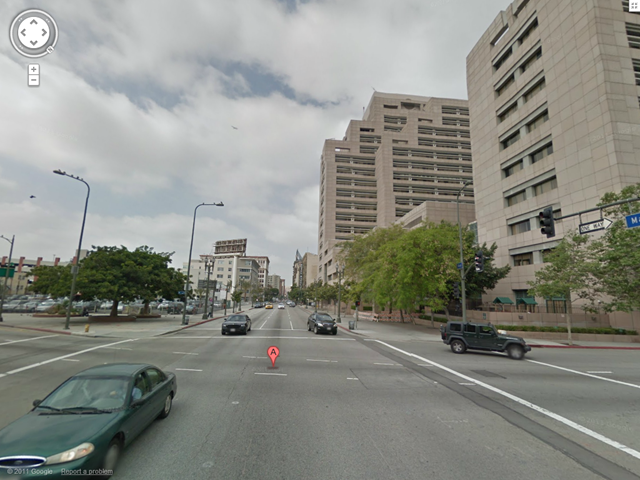
And just for contrast, here it is now via Google’s Street View.
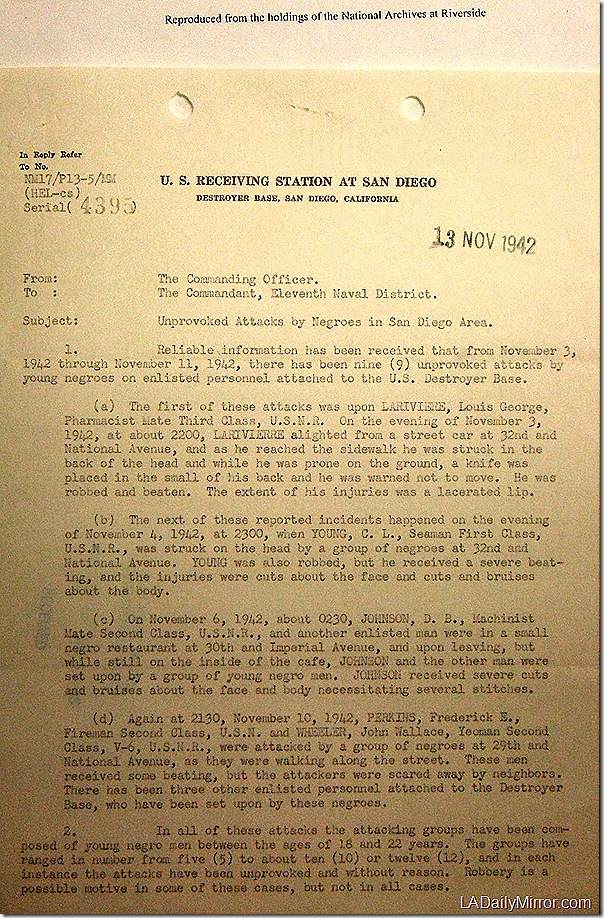
Image: Racial incidents between servicemen and African Americans in San Diego. Credit: The National Archives at Riverside.
To recap briefly, I have been digging into the historical basis of the movie “Zoot Suit,” which I saw this summer in the Last Remaining Seats series. The Times ignored the 1943 Zoot Suit Riots for several days, in what must be one of the worst news decisions the editors ever made, so I was forced to dig into the government records at the National Archives in Riverside for further information.
Another thread of the Zoot Suit Riots – racial tensions – also emerges in the Navy records immediately before and after the riots. This Nov. 13, 1942, document reports attacks by blacks on servicemen in San Diego.
The paragraph, written about eight months before the riots, is particularly resonant:
Additional reliable information is to the effect that the enlisted personnel of the U.S. Navy have a growing unrest due to the above situation, and are contemplating some concerted action in reprisal to these attacks. The local police authorities have been officially notified of the subject attacks.
What’s also clear in the following reports is that young men, presumably Latinos since they were “talking in a foreign language,” continued to wear zoot suits and that ethnic tensions rather predictably increased in the aftermath of the riots. Notice the October 1943 LAPD report on two servicemen who reported being beaten by two blacks who told them: “Get the hell out of Watts and stay out.”
“Zoot Suit” and History, Part 1| Part 2 | Part 3 | Part 4 | Part 5 | Part 6 | Part 7 | Part 8 | Part 9
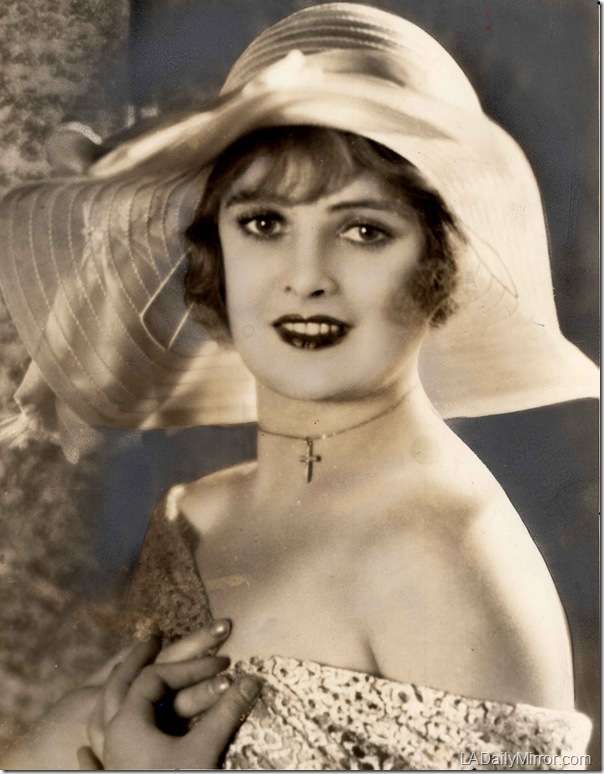
[Update: This is Molly O’Day! L.A. Times obituary | ]
Here’s another mystery gal!
There’s another photo on the jump!

The Daily Mirror HQ recently acquired the October 1927 issue of Haldeman-Julius Monthly, which includes Louis Adamic’s “Cecil B. DeMille – Movie Evangelist.” Join him for the premiere of “The King of Kings” the first film shown at Grauman’s Chinese Theatre, on May 18, 1927.
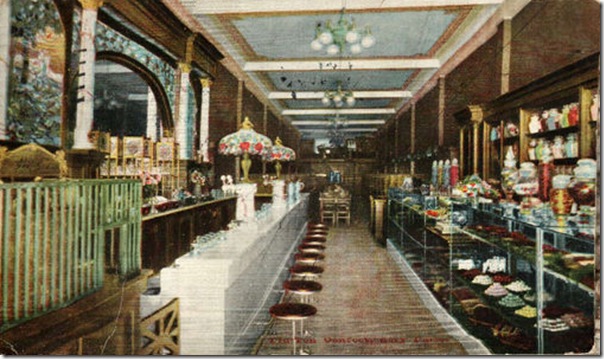
A postcard showing the Pin Ton Company Confectionary, 427 S. Broadway, has been listed on EBay. I don’t recall ever hearing of this business or seeing this interior. The store flourished around 1915. Bidding on the postcard starts at $9.99.
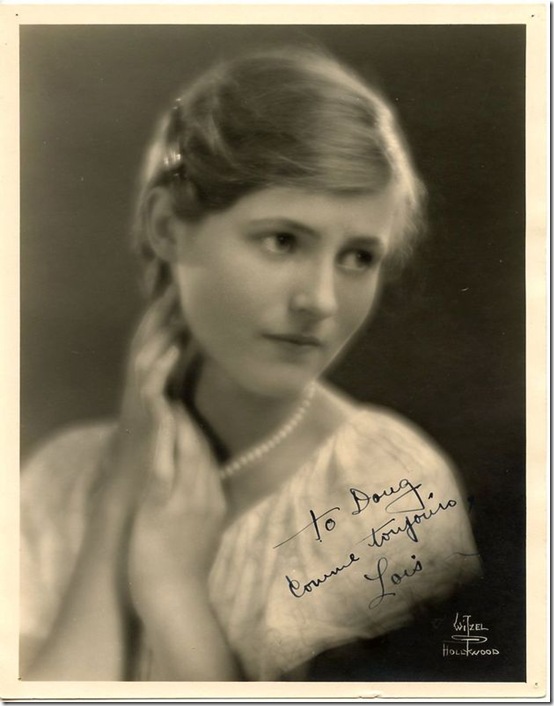
This Witzel photo of Lois Moran, which the dealer says is inscribed to Douglas Fairbanks from Lois Moran (d. 1990), has been listed on EBay. Bidding starts at $4.95.
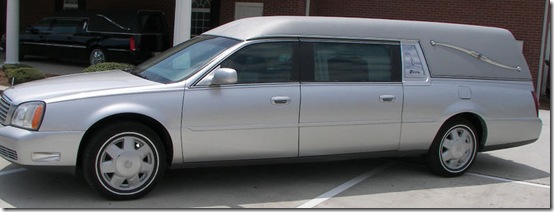
Photo: 2003 Cadillac Superior Hearse for sale on EBay. Bidding starts at $12,100 with a reserve.
Queen of the Dead – dateline September 26, 2011
• Last week I announced the last Black Knight of Glin, this week it is ninth and last Nawab of Pataudi—Mansoor Ali Khan Pataudi, 70, died on Sept. 22. “Tiger” Patudi was a champion cricket player (a right-hand batsman and right-arm medium pace bowler, for those of you who follow these things) in the 1960s and ‘70s. He was also the Nawab of Pataudi, a line of Turkish princes dating back to 1806—sadly for Nawabs everywhere, India abolished royal entitlements in 1971.
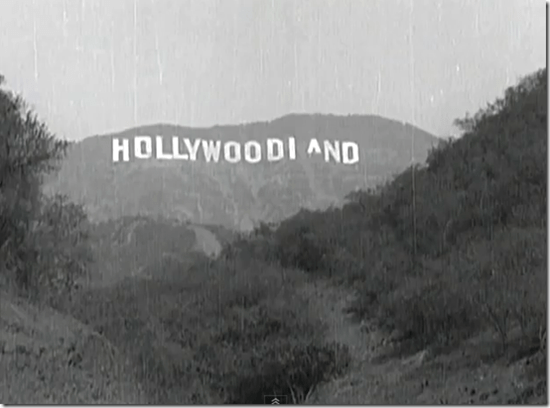
Photo: The Hollywoodland Sign. Credit:Hope Anderson @www.underthehollywoodsign.com
On Monday, we have Eve Golden’s roundup of unusual obituaries in Queen of the Dead and Mary Mallory looks at the history of the Hollywood Sign in Hollywood Heights.
On Tuesday, join author Louis Adamic for the 1927 opening of Grauman’s Chinese Theatre with the premiere of “The King of Kings.”
Plus our continuing coverage of the 1943 Zoot Suit Riots and the 1941 Silver Lake Hammer Murder…
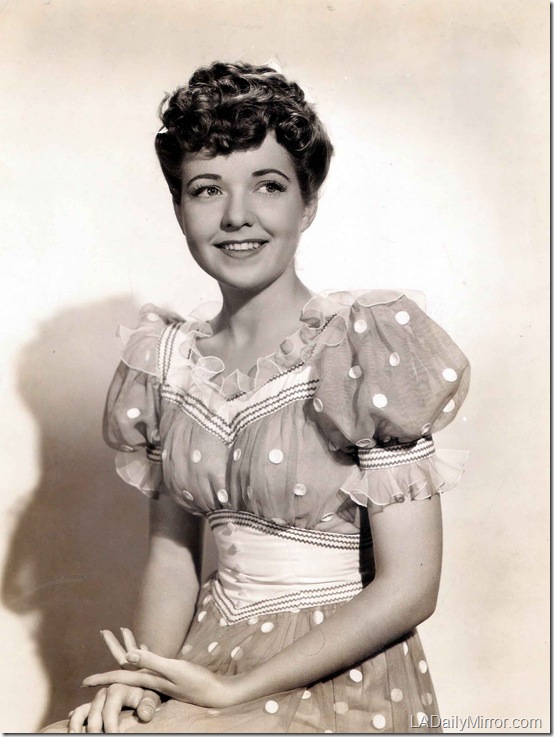
[Update: This mystery gal is the victim of erroneous caption information – the right movie, but the wrong actress. She is Margaret Early. Please congratulate Bob Hansen for identifying her!]
Here’s today’s mystery lady, courtesy of Steven Bibb!
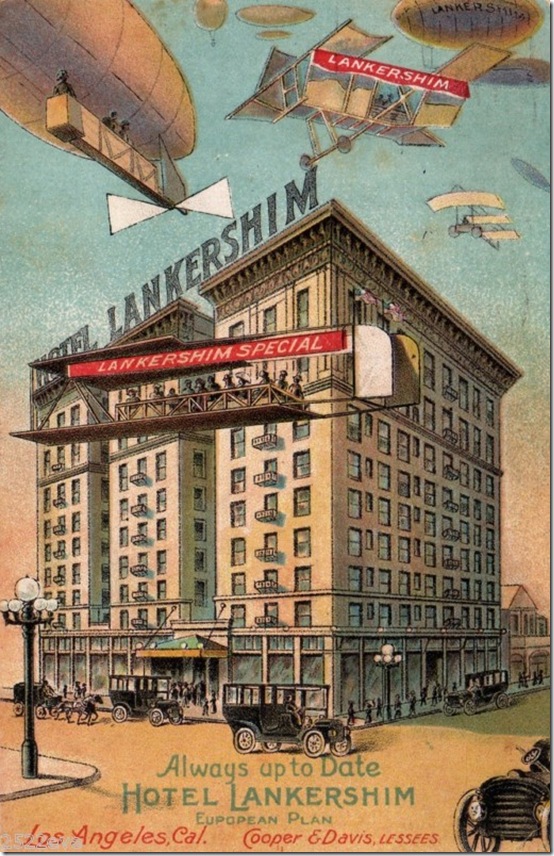
This rather wonderful postcard showing an artist’s conception of what the future might look like has been listed on EBay. Built in 1902, the Hotel Lankershim was often described the city’s largest unreinforced building. After the 1971 Sylmar quake, the city of Los Angeles imposed laws requiring owners to reinforce buildings – or demolish them. The Lankershim had been closed since the 1970s except for the ground floor, which was occupied by stores and restaurants.
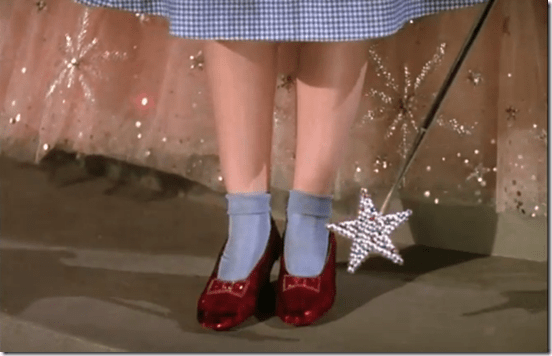
Photo: Dorothy (Judy Garland) is wearing the ruby slippers. But which pair?
Reuters is reporting that Profiles in History is auctioning off one of the pairs of ruby slippers used in “The Wizard of Oz.” Auction house owner Joe Maddalena estimates the sale price at $2 million to $3 million.
Readers with long memories may recall a monumental two-part series by Rhys Thomas that Calendar published in 1988 about the intrigue surrounding the various pairs of ruby slippers. The series is one of the longest from the Irv Letofsky era and it’s worth revisiting as a reminder of Calendar’s golden age.
The story of the slippers – perhaps as many as seven pairs – begins with Hollywood costumer Kent Warner (d. 1984):
Warner’s fascination with the shoes–and countless other pieces of Hollywood memorabilia–took on bizarre dimensions–of questionable legality. He apparently lavished more love and attention on a nearly flawless pair of the ruby slippers displayed in his living room than on almost anything else in his life. He held special screenings of famous films in his home in which he paraded in vintage dresses from the very movies he was showing–costumes acquired from dusty studio storage vaults or rescued from dumpsters and incinerators.
Warner, whose everyday work took him in search of clothes for movie stars, almost single-handedly started a shady memorabilia market in Hollywood by mastering the art of what he might have thought of as rescuing the forgotten treasures from the studios. Sources say he walked onto the MGM lot one spring day in 1970 with an empty, seemingly innocent duffle bag–and left with it full of sequinned red shoes.
The Ruby Slippers: A Journey to the Land of Oz Part 1 | Part 2
Thomas later wrote a 1989 book on the slippers, “The Ruby Slippers of Oz.”
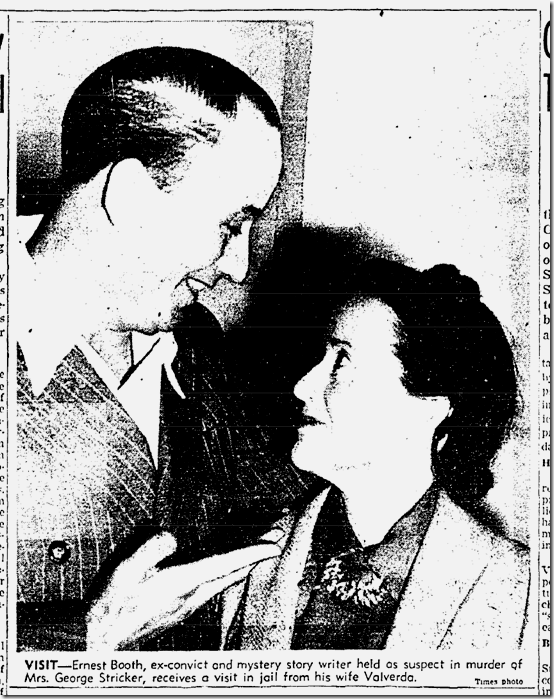
Sept. 19, 1941: Valverda Booth visits her husband, Ernest Booth, while he is in custody in the Silver Lake Hammer Murder of heiress Florence Stricker.
Is there anything more delightful to the heart of a research drudge than a notice from the Los Angeles Public Library that a book is available for pickup? Not this time, anyway.
The book that zipped to the top of my Zombie Reading List is “Stealing Through Life,” the utterly forgotten autobiography of a completely forgotten fellow named Ernest Booth, who was held as a suspect in the Silver Lake Hammer Murder of Florence Stricker. The battered copy, with crumbling pages, arrived at the local branch, and I’m making my way through it.
Judging by the initial news coverage of the killing, it was hard to see why detectives charged Booth. Granted, he had a somewhat fishy story about his actions on the day of the killing. (He supposedly met with Stricker’s husband, George, an osteopath, in the morning to discuss a medical story he was writing.) But at first glance, it seemed that Booth was nothing more than a somewhat colorful, smalltime ex-con who had turned his time behind bars into a career writing prison pictures and generally floating on the fringes of Hollywood.
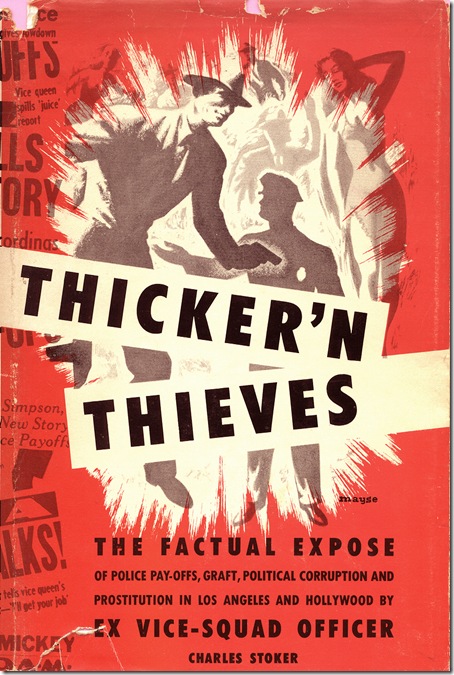
Every so often, Charles Stoker’s “Thicker’n Thieves shows up on EBay for way too much money. There was a time when you could pick up a copy for $8 or $10 in almost any used book store in Los Angeles (always unread, which should tell you something), but the noir craze has pushed the asking price insanely high.
Like other self-published rants (“Billion Dollar Blackjack” and “LAPD’s Rogue Cops, Coverups and the Cookie Jar”) “Thieves” is useless to a conscientious researcher and the price is ridiculously high for what is nothing more than a literary curio.
And no, there isn’t a single word in “Thieves” about the Black Dahlia case.
The latest copy on EBay is listed at $148.88 or Buy It Now for $164.88.
Save your money. If you really want to waste a few hours of your life trying to get through “Thicker’n Thieves,” get it from the library.

