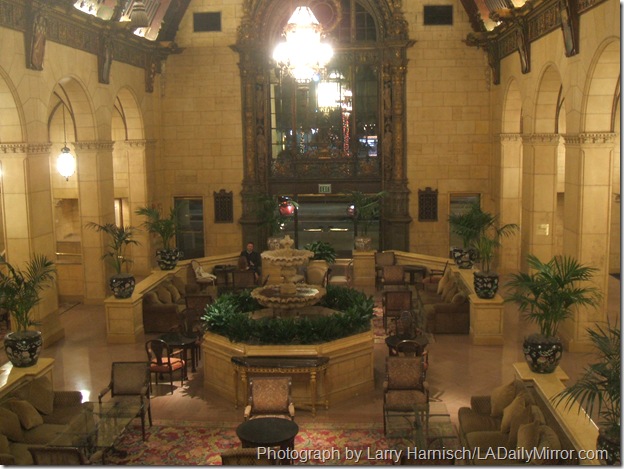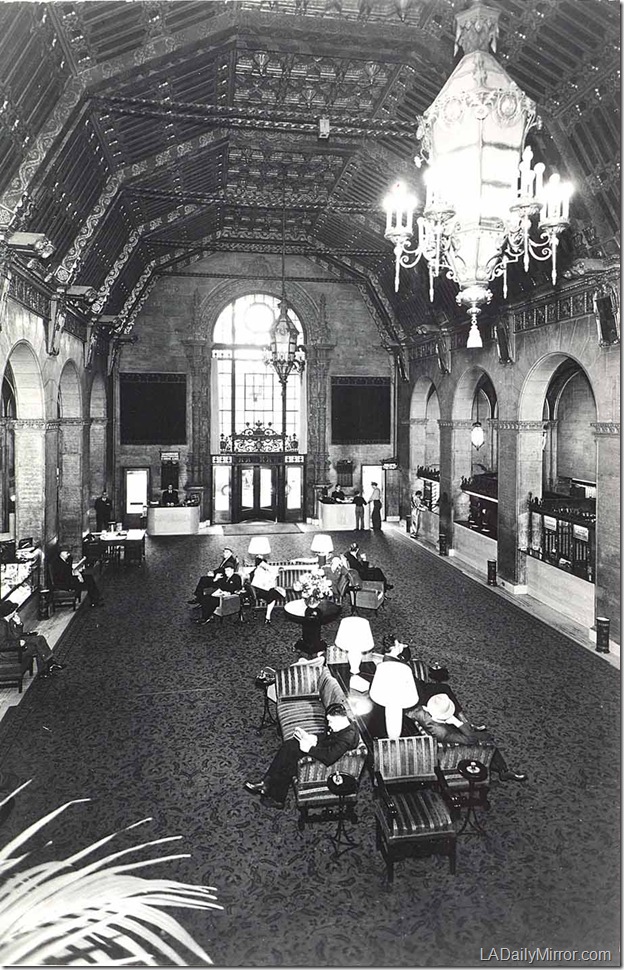
[Update: This is Karin Booth (d. 2003)]
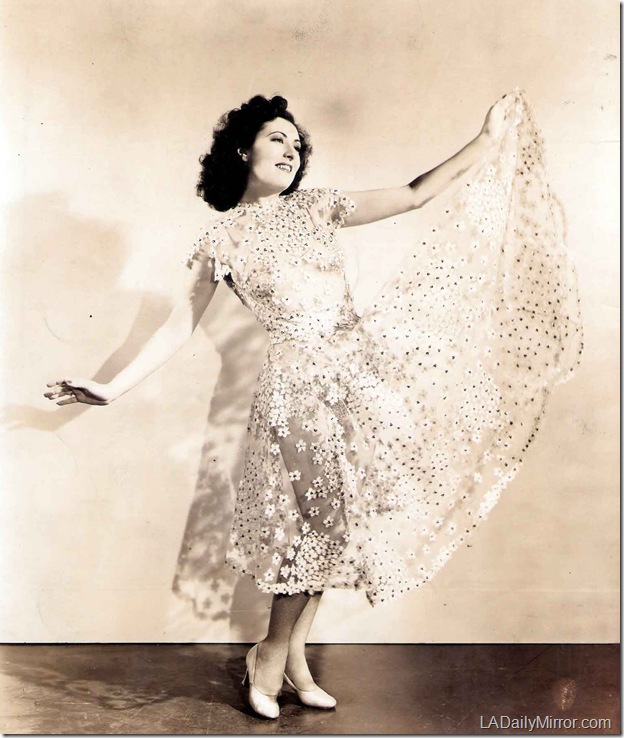
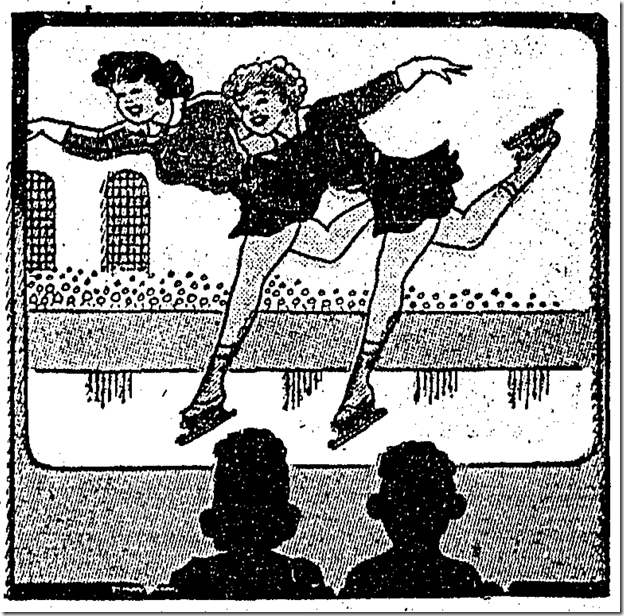
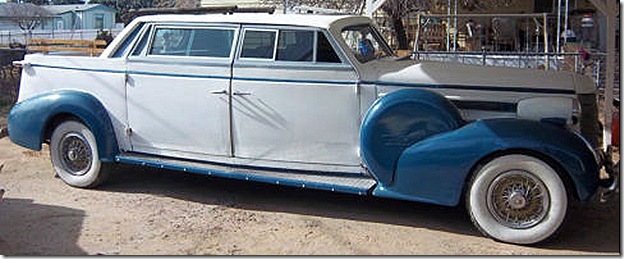
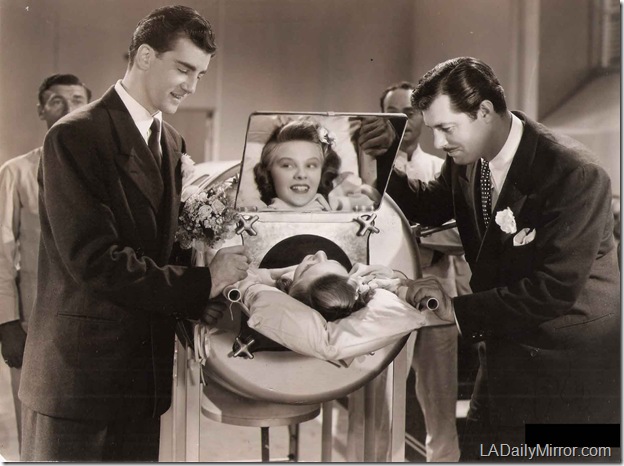
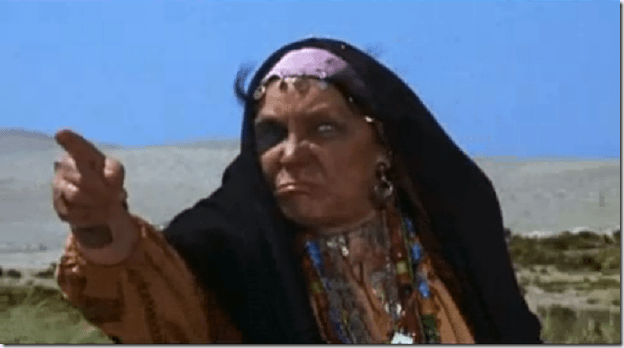
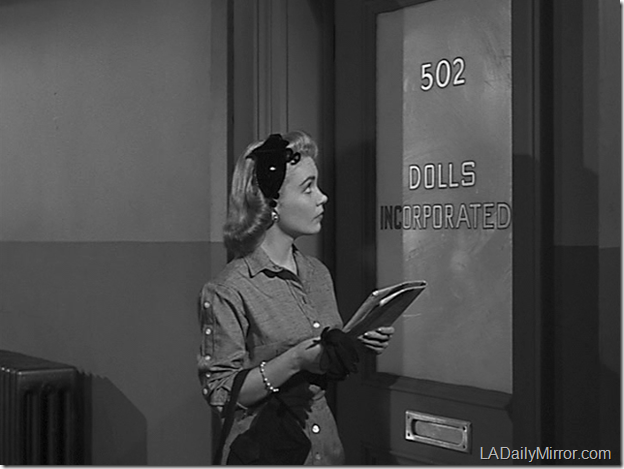
Here’s our mystery gal, courtesy of Steven Bibb!

[Update: This is Karin Booth (d. 2003)]
Here’s our mystery gal, courtesy of Steven Bibb!
The National Air and Space Museum in Washington is closed after antiwar demonstrators try to enter to protest an exhibit on drones. The crowd dispersed after being pepper-sprayed by a security guard coming to the rescue of another guard. Washington Post | AP via Wall Street Journal.
Sarah Schweitzer of the Boston Globe writes that Boston is honoring Patrolman Andrew Cuneo, the Boston Police Department’s first Italian-born officer, who was killed Aug. 13, 1921, in a shootout with a former officer. He was also the department’s first Italian-born officer killed in the line of duty. The Saskatoon Phoenix, Aug. 16, 1921.
L.A. Daily Mirror and L.A. Crime Beat curated by the bots at paper.li, who are over their Tupac sex tape thing. Finally.

Photo: Wilshire Boulevard Temple, interior. Credit: Jim Winstead
On the 140th anniversary of the Chicago fire, it’s a time to celebrate the city’s libraries. Rick Kogan explains in the Tribune’s Sidewalks blog.
Jay Jones, writing for the Los Angeles Times, recalls the Peshtigo, Wis., fire, the same night as the Chicago fire, which killed 1,200 people.
Mary Mallory notes that restoration of the Hugo Ballin murals is part of the work being done during renovations of the sanctuary at Wilshire Boulevard Temple. Times colleague Martha Groves has the story.
Wilshire Boulevard Temple, by the way, began as Congregation B’nai B’rith on Broadway between 2nd and 3rd streets and is marked by a plaque in the sidewalk. Portions of it were discovered during excavation for The Times parking structure. (The temple’s website says incorrectly that Congregation B’nai B’rith used to be at Temple and Broadway).
Will the footnote be killed by electronic books, which often convert them to nearly invisible end notes? Alexandra Horowitz shares her thoughts with the New York Times.
The footnotes are among the first things I look at when I pull a book from a store shelf. My editor gamely tolerated my inclusion of many in my own book (though we removed more than we left in). I would be proud to be a footnote in someone else’s work.
… But I champion another species of footnote: the wandering footnote. These digressive notes, seeing a sentence that some might consider complete, determine to hijack it with a new set of ever more tangential facts. In the wayward note, the bumps and curves of the author’s mind seem to be laid plain on the paper. I came of intellectual age hearing the author’s sotto voce asides in the philosophy essays I loved. I still recall footnotes that begin, enticingly, “Imagine that . . . ”; “Consider . . . ”; or even, in one of J. L. Austin’s famous thought experiments, “You have a donkey. . . . ” I had the feeling of being taken into confidence by a wise fellow during an erudite lecture, and being told something even more clever and lucid.
The L.A. Daily Mirror and L.A. Crime Beat curated from only the finest Twitter feeds by the tireless bots at paper.li. I wish the bots would get over their thing for the Tupac sex tape.
This rather bedraggled postcard of Julian Eltinge in “The Fascinating Widow” has been listed on EBay. Hm. Eltinge Cold Cream is a new one on me.
Eltinge was one of the most famous female impersonators of his day and built a large house at 2328 Baxter St. in Silver Lake. Bidding starts at $7.99.
[Update: This is Dorothy Jordan (d. 1988). Please congratulate Mike Hawks, Mary Mallory, Bob Hansen and Don Danard for identifying her! ]
Here’s today’s mystery photo – courtesy of Steven Bibb!

Dec. 27, 1978: Four more bodies are found under the home of John Wayne Gacy.
Adam Nagourney of the New York Times reports on the slow process of bringing a 21-foot granite boulder to the Los Angeles County Museum of Art for Michael Heizer’s “Levitated Mass.”
“A million permits,” says director Michael Govan. “And the State of California is always reviewing the state of its bridges and roads. So a route plan that would have worked a couple of days ago doesn’t work today.” He compared the project to erecting the great pyramids of Egypt. “The Egyptians didn’t have rubber tires or diesel engines,” he said. “But they also didn’t have weak streets.”
Gregory Powell, convicted in the 1963 “Onion Field” killing of LAPD Officer Ian Campbell, is up for parole as a “compassionate release.” Powell, 77, has said he has terminal prostate cancer. His hearing is Oct. 18. AP via San Jose Mercury News. Powell’s release is opposed by the Los Angeles Police Protective League and by Campbell’s daughter Valerie.
The kidnapping of Campbell and his partner Karl Hettinger is told in Joseph Wambaugh’s “The Onion Field,” which was made into a film starring John Savage, James Woods, Franklyn Seales and Ted Danson.
Erika Slife of the Chicago Tribune reports that a judge has approved exhumation of a body for DNA testing to determine whether it is Michael Marino, believed to be one of the victims of John Wayne Gacy.
The L.A. Daily Mirror and L.A. Crime Beat curated with loving precision by the bots at paper.li

Oct. 7, 1941: You’re probably wondering how fast Blanche Roberts was driving. The story doesn’t say anything more specific than “an exceedingly low rate of speed” on the Calabasas Grade. Apparently no one thought to query the reporter — the “women drivers” gag was good enough.
Tom Treanor says a radio announcer jinxed Dodgers pitcher Hugh Casey in the third game of the World Series, which the Yankees won, 2-1. Casey took over as reliever after Fred Fitzsimmons was struck in the knee by a line drive from Yankee pitcher Marius Russo.
Warner Bros. “The Maltese Falcon” (Humphrey Bogart – Mary Astor) — A “whodunit” chiller that will make theater cooling systems unnecessary, Jimmie Fidler says.

March 28, 1964: New Yorkers shrugged as Catherine “Kitty” Genovese was killed.
Winston Moseley, convicted in the infamous 1964 killing of Catherine “Kitty” Genovese, is up for parole and Sam Favate takes a look in the Wall Street Journal’s Law Blog.
Barbara Brotman of the Trib talks to the women who helped bring Judy Chicago’s “The Dinner Party”to Chicago in 1981.
The Detroit News reports that a police dive team has recovered a 1,200-pound cannon that was lost in the Detroit River while being ferried to a British ship in 1796. Officials say that the cannon may go on display at the Dossin Great Lakes Museum after its condition is stabilized.
Still no word on what became of the Pershing Square cannon nicknamed “The Last Argument of Kings” that was moved to Travel Town and eventually vanished.
The L.A. Daily Mirror and L.A. Crime Beat curated with tireless precision by the bots at paper.li. The bots have finally decided the death of Steve Jobs is more important than the Tupac sex tape.

Photo: “Los Angeles,” by Morrow Mayo. Credit: Larry Harnisch/LADailyMirror.com
Earlier this year, I queried readers about the best books on Los Angeles. It was interesting to see how many people suggested novels – by Raymond Chandler and John Fante – which is appropriate, I suppose, considering our largely fictionalized history. I would argue strongly that Chandler paints a better picture of Los Angeles than most historians, not necessarily because of his brilliance but because historians who write about Los Angeles tend to be dreadful researchers who can’t even poach from earlier writers without mangling the facts. Consider the lesson of Gen. Otis’ Armored Car.
My Times colleague Christopher Reynolds has compiled fiction and nonfiction lists of the best books on L.A., an exercise that can be fun but is ultimately subjective. Most of his selections are fairly recent. Other than “Ramona” (1884), his earliest fiction work is “Oil!” (1927) and the earliest nonfiction book is a reprint of the WPA guide to Los Angeles (1941/2011). And no, Morrow Mayo’s book (above) isn’t included.

Note: The Daily Mirror HQ recently acquired another issue of Haldeman-Julius Monthly with another piece by Louis Adamic, author of “Cecil B. DeMille: Movie Evangelist.” Here it is, courtesy of the OCR software of the HQ’s scanner.
THE Reverend “Sister” Aimee Semple McPherson’s factory of moron faith, the be-oo-ti-fool Angelus Temple, situated on the shore of Lake Echo, beneath the benign sky that daily spreads like an azure canopy over the city of Los Angeles, is these days in a lamentable plight. Its predicament is, in a general way, analogous to that of a backhouse in a Nova Scotia storm. Not that its walls of concrete and steel have begun to crumble-I hasten to allay your alarm.

This image of a wishing well on Broadway in Chinatown built by professor Henry K. Liu has been listed on EBay. If you have looked at Charles Owens and Joe Seewerker’s “Nuestro Pueblo,” (which you really should) you might recall it.
Bidding starts at 90 cents, or Buy It Now for $4.99.
You might also consider tracking down a copy of “Nuestro Pueblo,” which includes terrific artwork by The Times’ Charles Owens.

Ken Burns’ series on Prohibition has brought a reexamination of the era. John McCormick of the Chicago Tribune looks at the tawdry end of the Trib’s Alfred “Jake” Lingle, who was shot to death in 1930, revealing a secret life.
A 1919 letter by Adolf Hitler outlining his plan removing Jews is going on display at the Museum of Tolerance. The text (in German) is here.
Here are three words I never thought I would see together: “Wayne Newton Museum.” Never mind the theater, zoo and exhibits of celebrity tchotchkes. It’s going to have a theme carwash that is being expanded to accommodate tour buses. AP via Washington Post.
The L.A. Daily Mirror and L.A. Crime Beat carefully curated by the discriminating bots at paper.li
Photo: Kisses on the tomb of Valentino. Credit: Larry Harnisch/LADailyMirror.com
The Daily Mirror lunch at Astro Burger and tour of Hollywood Forever Cemetery was a pleasant way to spend a Sunday afternoon. Our distinguished guide, Karie Bible, showed us around and after 2 1/2 hours there were plenty of folks left for another excursion. Karie gave us a thumbnail sketch of the cemetery’s revival and showed us the graves of the famous, infamous and forgotten.

Photo: Main and Cesar Chavez via Google’s Street View.
The photo postcard of China City, stamped 1941, has been listed on EBay.
Notice the sign says that China City is at Main and Macy, which became Cesar Chavez Avenue in 1993. You might be curious because you think of Chinatown a few blocks farther north, where Hill Street (formerly Castelar) comes off the Pasadena Freeway/Arroyo Seco Parkway. (Yes, we do like to rename our streets in Los Angeles.) Notice the traffic semaphore and the overhead cable for the streetcars.

[Update: As most people realized, this is Bruce Cabot. He’s with co-star Helen Mowery in the 1946 film “Avalanche.”]
Here’s a mystery couple, courtesy of Steven Bibb!

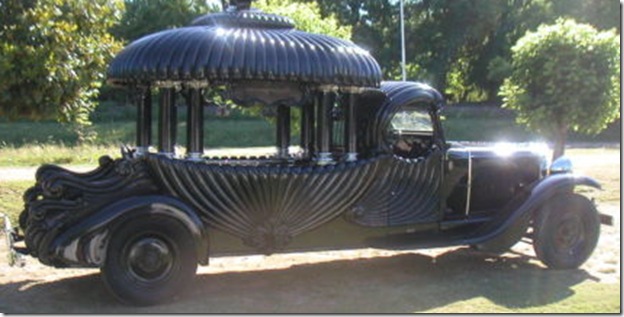
Photo: 1/43 model Studebaker hearse for sale on EBay. It’s listed as Buy It Now for $49.99.
Queen of the Dead – dateline October 3, 2011
• One way I knew I had become my mother was when I started watching—and enjoying—reruns of Are You Being Served? David Croft, who died at 89 on September 27, wrote, produced and directed numerous episodes of that low-comedy classic, along with other such Britcoms as Dad’s Army, Hugh and I, Up Pompeii!, Oh Happy Band, It Ain’t Half Hot Mum, ‘Allo ‘Allo!, You Rang, M’Lord? and Oh Doctor Beeching! Croft also produced stage and movie versions of many of his shows and, in a sentence which means absolutely nothing to us Yanks, “spent some time working for Billy Butlin putting on shows in his holiday camps around the UK.”
Image: “The Lost Patrol,” illustrated by Keye Luke, The Times, Feb. 18, 1934.
Coming up this week, Eve Golden has a roundup of unusual obituaries in Queen of the Dead and Mary Mallory looks at the artwork of Keye Luke in Hollywood Heights. Plus more Navy documents in the Zoot Suit Riots, mystery photos and maybe a surprise or two.

![]()
Oct. 1, 1941: Errol Flynn promises he won’t punch Hollywood columnist Jimmie Fidler anymore. The actor invoked the famous “everything went black” defense for the melee at the Mocambo, in which Fidler’s wife stabbed him with a fork.

Courtesy of University of Southern California, on behalf of the USC Special Collections.
October 1, 1910: The Times Building in flames, as seen from Broadway just south of First Street. Notice The Times Eagle outlined by the fire.

El Alisal, October 1, 1910:
This is a sad day for me and for every other man that loves Los Angeles.
At one this morning I was dictating to Brownie and heard a terrible roar in town and remarked that it sounded like dynamite and just casually thought it might be The Times.
![]() |
This Batchelder tile, above left, showing a pair of peacocks, has been listed on EBay. Interestingly enough, it’s the same pattern as the piece on the right, which I found in Aimee Semple McPherson’s quarters at Angelus Temple on a tour several years ago. Bidding on a pair of these peacock tiles, marked Batchelder Pasadena, starts at $137.50.