
Jan. 5, 1944: Here’s “Mail Call,” an Armed Forces Radio Service program featuring Jack Benny, Skinnay Ennis, Judy Garland and Johnny Mercer, announced by Harry von Zell. Courtesy of Archive.org.
Jan. 5, 1944: Here’s “Mail Call,” an Armed Forces Radio Service program featuring Jack Benny, Skinnay Ennis, Judy Garland and Johnny Mercer, announced by Harry von Zell. Courtesy of Archive.org.
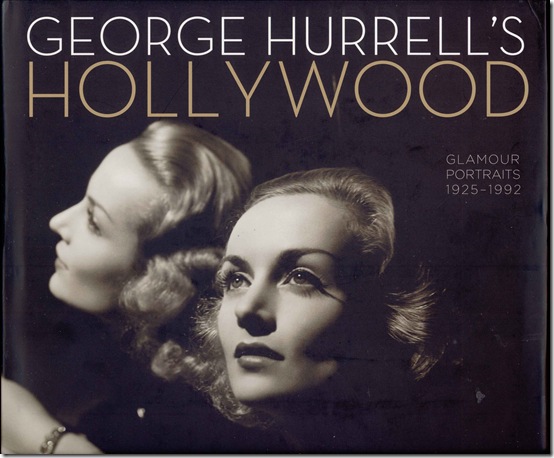
I had the great good fortune of spending several hours Saturday with Mark A. Vieira, a regular commenter on the mystery photos and author of several books, including the current release “George Hurrell’s Hollywood.” I will post more about our chat, but you should know that Mark will be delivering a presentation on George Hurrell on Jan. 8 at 7:30 p.m. at the Hollywood Heritage Museum’s barn, 2100 N. Highland Ave. Tickets are $15, $5 for members.
“George Hurrell’s Hollywood is available on Amazon ($42.67) and at local bookstores for $60. I paid the full $60 to support Vroman’s, my local, independent bookstore.

Jan. 4, 1944: A Canadian Broadcasting Corp. news program, courtesy of Archive.org.
Jan. 4, 1944: “Duffy’s Tavern,” with guest Fred Allen, courtesy of Archive.org.
Jan. 3, 1944: We have three programs on today’s schedule:
“Information Please,” with John Kieran, Franklin P. Adams, Oscar Levant and Louis Bromfield, hosted by Clifton Fadiman.
“Lux Theater,” with the radio version of “Shadow of a Doubt” with Teresa Wright and William Powell.
“Screen Guild Theater” has that troublesome story “The North Star,” with Walter Huston, Anne Baxter, Jane Withers, Farley Granger. Later on, during the Red scare, “The North Star” will be one of the movies cited as evidence of Communist influences in Hollywood.
Happy listening!
All courtesy of Archive.org.
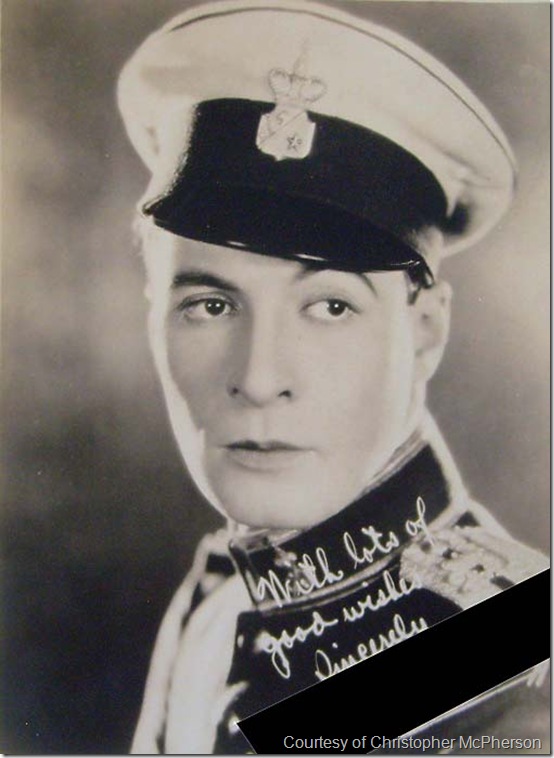
And here’s a mystery chap for Friday, courtesy of writer Christopher McPherson.
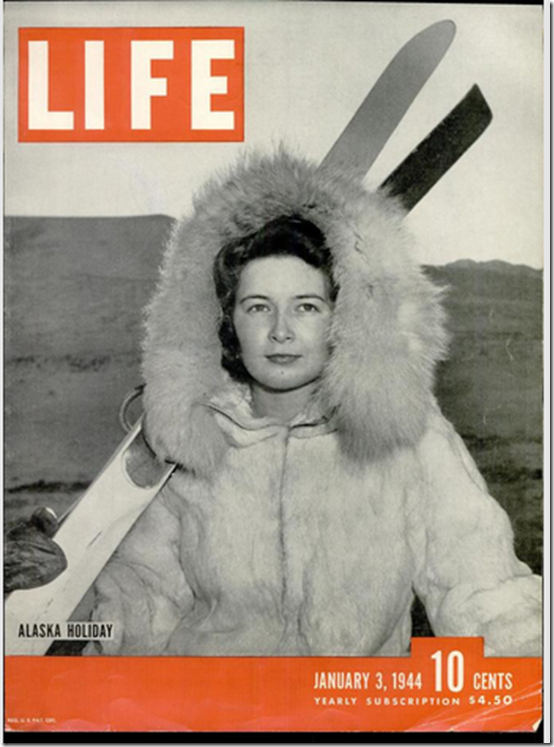
Jan. 3, 1944: Google has thoughtfully scanned Life magazine for 1944. Here’s the first issue of the year.
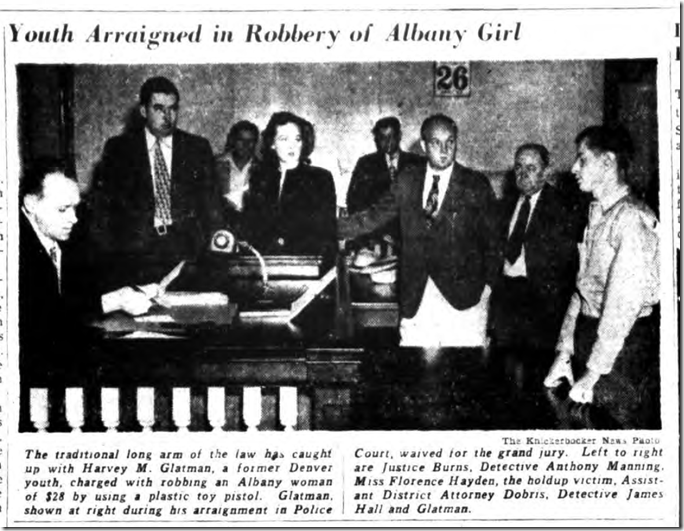
Aug. 26, 1946: Harvey Glatman is arraigned on robbery charges in Albany, N.Y.
When he was still a teenager, Harvey Glatman was already displaying the behavior that led to the deaths of three Southern California women in the 1950s and his execution in the gas chamber.
Glatman was born in New York, but moved with his parents, Abe and Ophelia, to Denver, where he apparently lived until his middle teens.
Joining us in our question, blogger Militant Angeleno also asks “What happened to the Lindbergh Beacon on City Hall?”
The Militant says: “Leaving the Lindbergh Beacon off during the holiday season makes Huell Howser’s angel cry.”
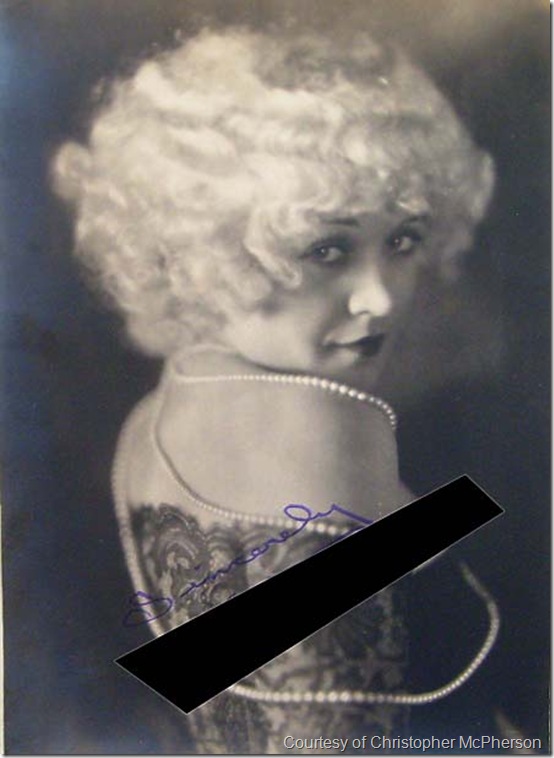
And for Tuesday, a mystery woman, courtesy of writer Christopher McPherson.
Jan. 2, 1944: “Texaco Star Theater” with Fred Allen, Portland Hoffa and violinist Albert Spalding. Courtesy of archive.org.
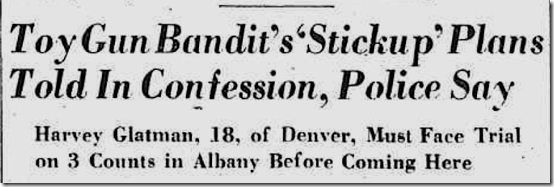
Aug. 27, 1946: Harvey Glatman in the Yonkers, N.Y., Herald Statesman.
 Whenever I am contacted by TV producers about appearing on a crime show, I always caution them that I’m a specialist not a generalist. I don’t do Sal Mineo, Marilyn Monroe, the Manson family or O.J. Simpson, etc., etc. Just the Black Dahlia.
But as I was reminded by a television production company from Australia, I had written several entries on Harvey Glatman when the blog was at latimes.com. They asked if I would please consider discussing him.
So I reluctantly agreed.
To be honest, I don’t like talking about Harvey Murray Glatman, at right, about 1946, who was born Dec. 10, 1927, in New York and executed in the California gas chamber Sept. 18, 1959. The women he killed were nothing but objects to him and they endured horrible ordeals before being strangled. Oh yes and he took pictures of them, in case you didn’t know.
The deaths of his Los Angeles victims Judith Ann Dull, Shirley Ann Bridgeford and Ruth Rita Mercado were already covered when the blog was at latimes.com, so I won’t repeat that information here.
But I think it’s wrong to waste research, so over the next few days we will look at Glatman’s earlier crimes, the ones that occurred in New York in the 1940s.
To be continued.
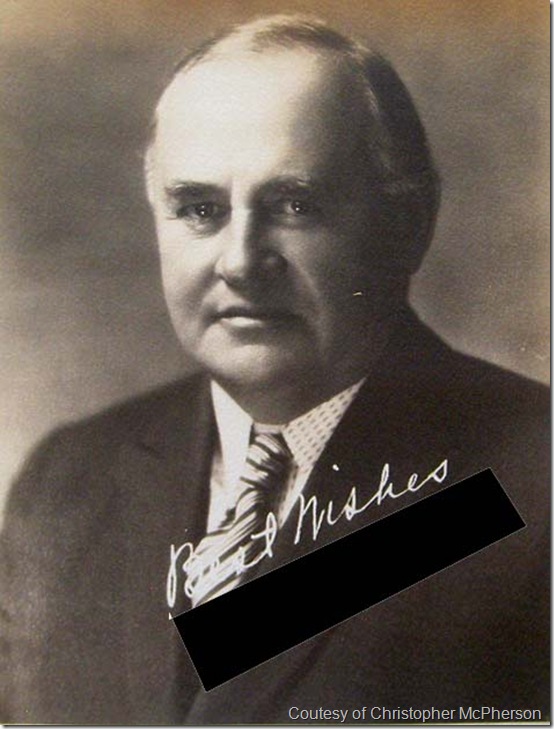
And here’s our first mystery photo of the new year, courtesy of writer Christopher McPherson.

January 1944 Weird Tales, for sale on EBay at $49.99.
I had so much fun adding radio broadcasts for Christmas 1943 that I thought I would add radio shows throughout the year, on the days that they aired in 1944 – our base year for 2014.
That’s been interesting (there are lots of old-time radio shows out there). Some of the shows are timeless, but I discovered that our friend Fred Allen was making lots of lots topical references in his programs, including one to an article in Life magazine about comedians. Fortunately, Google has scanned all of Life for 1944, so those got added to the mix.
Then I remembered another website that has scanned lots of old magazines, like the American Mercury, Saturday Review of Literature and Weird Tales.
So now we have the 1944 magazine rack. Hope you enjoy the reading! Courtesy of Unz.org
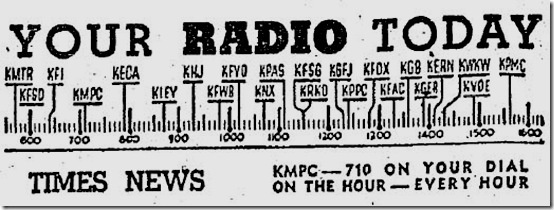
Jan. 1, 1944: And so we start with our experiment of going through 1944 on the radio, beginning with “Challenge of the Yukon,” a 15-minute program later named “Sgt. Preston of the Yukon.” Courtesy of archive.org.
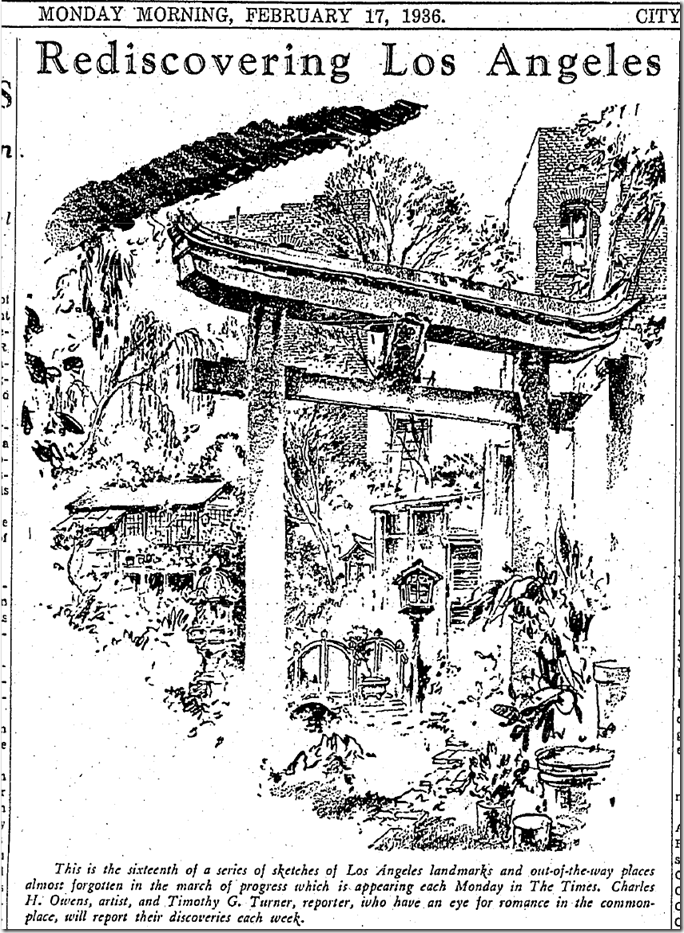
Feb. 17, 1936: I think this may be my favorite entry so far. Times artist Charles Owens and columnist Timothy Turner visit a Japanese flower shop on San Pedro Street north of 1st Street, which was converted by Toyo Y. Maeda from a garage and parking lot.
Enter a hidden garden of a size and beauty that makes us say “Oh!” It is a completely Japanese garden with miniature landscaping in large plats or little flower boxes one can pick up; with miniature bridges over imaginary streams, a Shinto shrine in the corner — an apparently accidental yet carefully studied arrangement of flora in profusion…
Traffic cannot be seen or heard, for the walls keep the sound out. You can stand there right in the heart of old Los Angeles, with streetcars and motor trucks jammed on all sides, and hear birds sing and look up at the blue square of sky and write a poem or chew gum meditatively — commune with nature according to your desires.
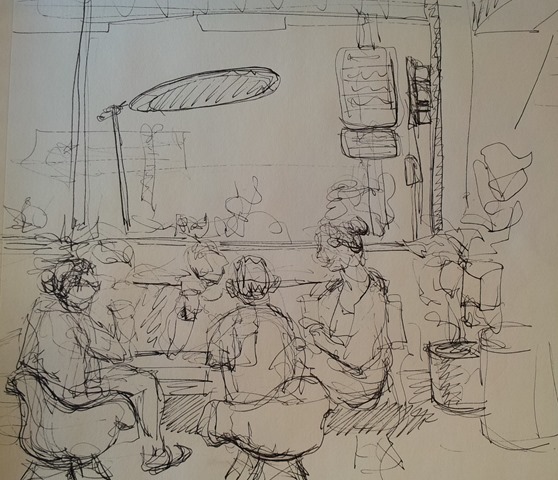
An anonymous drawing of Cafe de Leche found in Cafe de Leche.
I am at Cafe de Leche in Highland Park this morning and a little while ago I heard the woman at the next table tell her companion that “All in the Family” starred Ed Asner. So I had to do an emergency Baby Boomer cultural intervention. She was very nice and explained that she’s a history teacher and was trying to think of sitcoms that her students could watch to compare modern situation comedies with those of earlier eras.
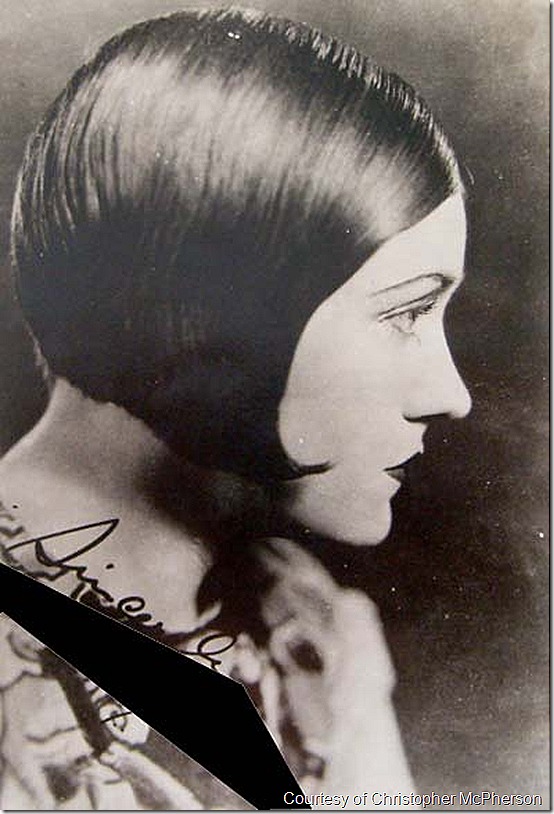
And for the last mystery photo of 2013, we have this New Year’s Eve mystery woman.
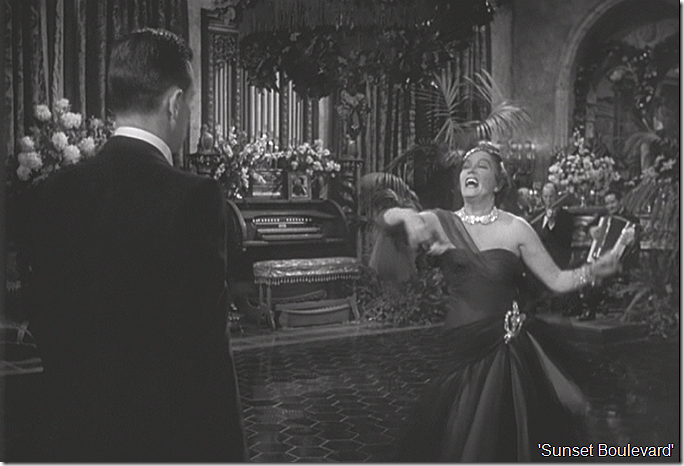
Yes, it’s Gloria Swanson. And why would there be a photo of Gloria Swanson on New Year’s Eve? To reference this scene, set on a very different New Year’s Eve. (Back of the Head Guy = William Beedle Jr.)

Happy New Year’s Eve 1943 from the pen of Ernie Bushmiller!

Dec. 31, 1943: The Times lists the top stories of 1943. For Los Angeles, that included Zoot Suit Riots (June 7), the 48-hour work week (July 21) and Frank Sinatra at the Hollywood Bowl (Aug. 11).
Film columnist Philip K. Scheuer goes through his calendar, listing what he considered the hits and duds for every month of the year. The titles will challenge all but the hardest-core TCM fans. For every “Casablanca” or “Ox Bow Incident” there’s half a dozen “Chetniks” (later titled “The Fighting Guerrillas”) or “Lucky Jordan.”

Here’s Monday’s mystery chap, courtesy of writer Christopher McPherson.
 ladailymirror.com