
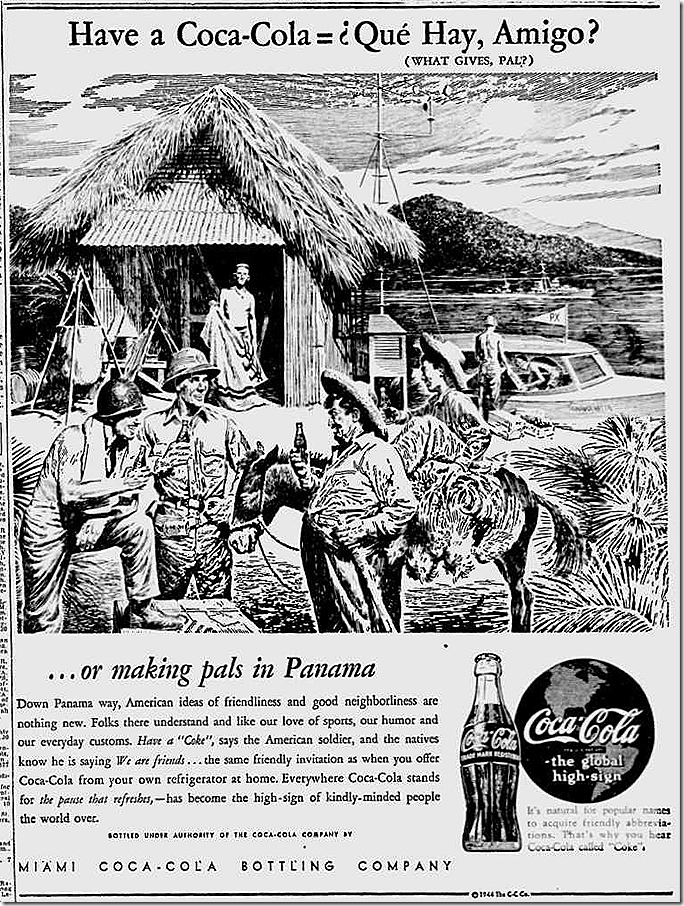
April 11, 1944
HOLLYWOOD, April 11 — Greer Garson’s underwear scene in “Mrs. Parkington” is giving the Hayes office a problem.
April 11, 1944
HOLLYWOOD, April 11 — Greer Garson’s underwear scene in “Mrs. Parkington” is giving the Hayes office a problem.
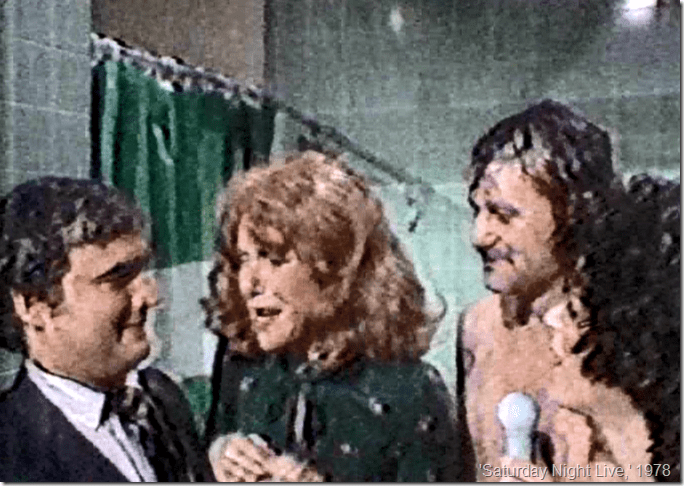
I recently watched an episode of “Saturday Night Live” (guest star Jill Clayburgh) that I taped in 1978, and I found rather sad. Out of the four people in this skit, only Bill Murray is still alive. John Belushi, Clayburgh and Gilda Radner are all long gone.
And then there’s this:
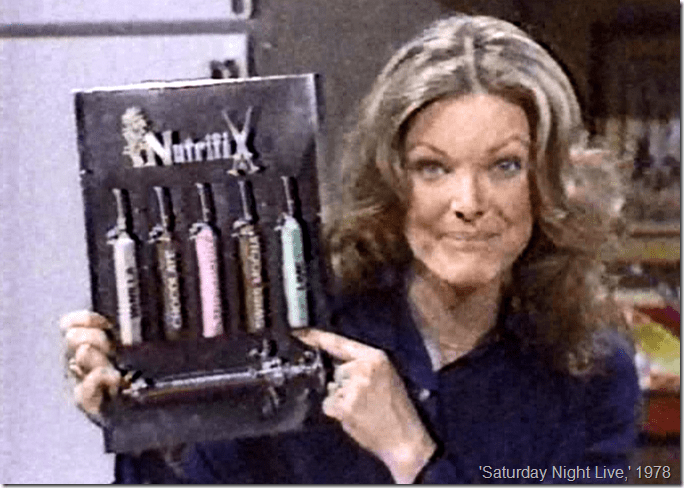

Belushi gets a fix from Jane Curtin in a satiric ad for “Nutrifix.”

April 10, 1944
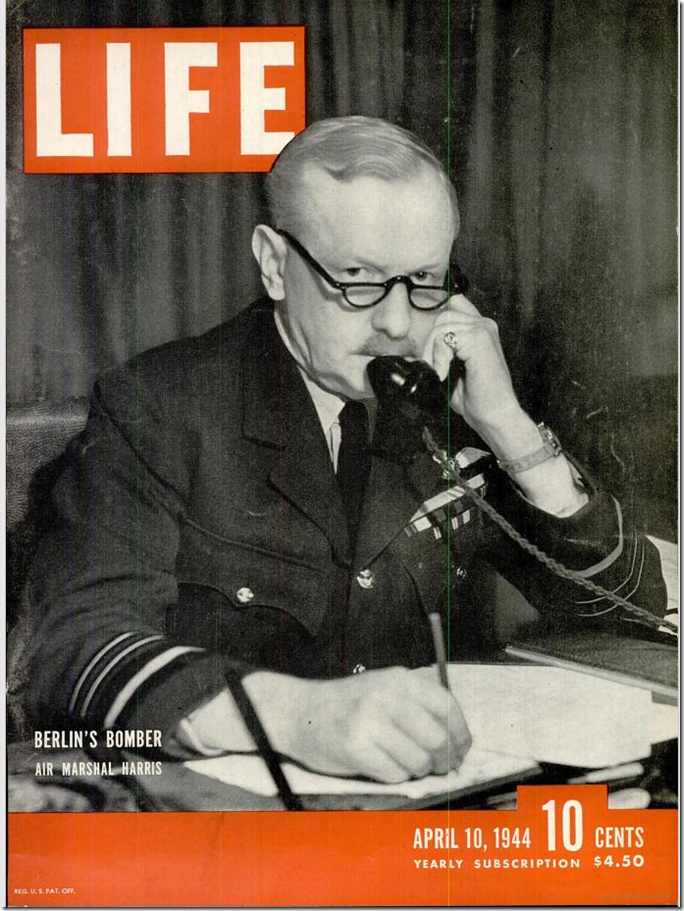
Life’s cover story is Air Chief Marshal Arthur T. Harris, who backed the theory of mass bombing. The movie of the weeks is “Buffalo Bill,” starring Joel McCrea.
Life visits the home “in the majestic setting of California’s San Gabriel Valley” of Disney artist Ward Kimball, who is giving a party featuring his Grizzy Flats Railroad, which he keeps on his two-acre lot.

April 10, 1944: Return with us now to those thrilling days of yesteryear! “The Lone Ranger.” Courtesy of otronmp3.com.
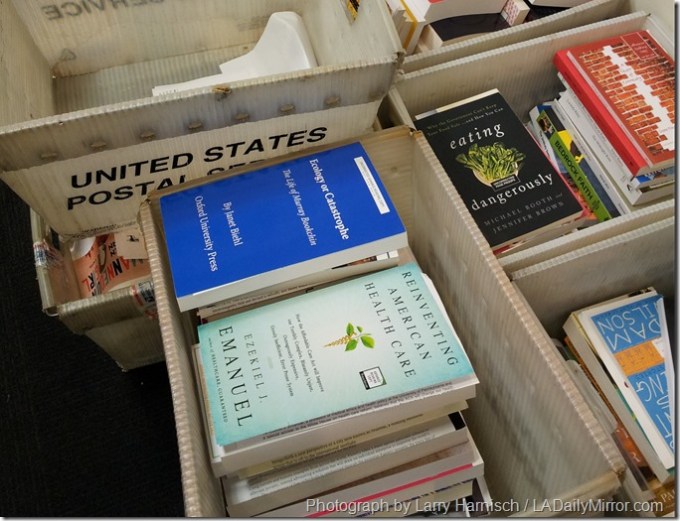
The reject pile! Aspiring authors, avert thine eyes!
This is a sample of review copies that are cast aside in bins to be rummaged through by the staff. Usually they are contemporary genre fiction (“50 Shades of Stealing Maps for the OSS/CIA/NSA/FBI Written by Tom Clancy From Beyond the Grave”), self-help books (“Lose Those Stubborn Last 50 Pounds While Raising Young Einsteins in Five Days!”) and scholarly works (“The Socio-Cultural Effect of the Introduction of the Crimped Bottle Cap in the Belgian Congo.”)
But occasionally there are books that seem somewhat interesting. At least interesting enough to lug back to the Daily Mirror HQ. Because it’s sad to see them junked by the cartload.
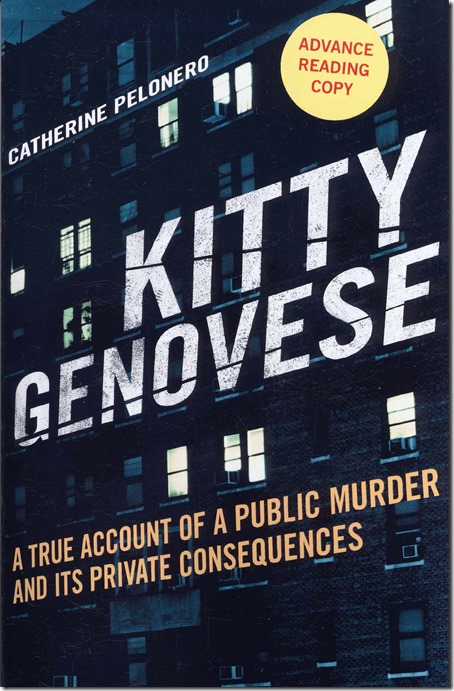
This week’s subject is “Kitty Genovese,” by Catherine Pelonero, which looks fairly interesting.
Continue reading

Here’s another political cartoon by Edmund Waller “Ted” Gale, formerly of The Times, who moved to the Examiner. “There’s a Burma Girl a-Settin’ ” refers to the poem “Mandalay” by Rudyard Kipling.

April 10, 1944
JUST THE DAY BEFORE JOAN BLONDELL signed her contract to play Aunt Sissy in “A Tree Grows in Brooklyn” she took her two children, Norman and Ellen, to the beach and got a terrific sunburn. I talked with her Friday and she was applying every known remedy to her face to try to get it in shape before she starts at 20th. Joan and her suit for divorce against Dick Powell will be filed this week. I understand she will ask for custody of the children, although that is only hearsay. Dick is still living in the house, but there is no chance of a reconciliation.
April 9, 1944
Sidney Skolsky says: In “Objective Burma,” there is a soldier named Cesar Negulesco who is described as being “very concerned about his lack of experience with women,” which is a rib directed at wolf Jean Negulesco.


April 9, 1944
“A man is downstairs with a black eye,” announced Collins, my butler, who in the nine years he has been with me has seen many stars come through that front door.
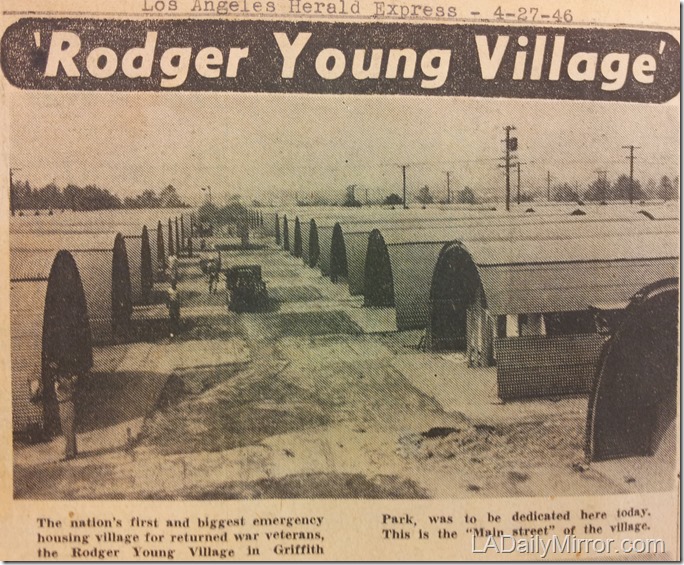
I stumbled across this photo in going through the LAPD scrapbooks at the city archives. This is Rodger Young Village, built for returning veterans due to the acute housing shortage in Los Angeles. This site is now occupied by the Autry museum.

I recently visited the city archives and thanks to archivist Michael Holland, I learned that the LAPD kept scrapbooks in the 1940s.
This is an editorial from the California Grocers Journal, which says: At one time police brutality was common and the need for reform existed. Now the pendulum has swung too far the other way. The criminal, with the support of sob sisters and radical political groups, is winning public sympathy.

Why look! It’s our old friend cartoonist Edmund Waller “Ted” Gale, who left The Times to go to the Los Angeles Examiner. In 1944, April 8 was Holy Saturday and the papers are full of stories and ads for Easter. This was, of course, in the days when many papers (including The Times) published Bible quotations every day.

April 8, 1944
HOLLYWOOD, April 7 — The official choice of Joan Blondell to play Aunt Sissy in “A Tree Grows in Brooklyn” is an inspiration. Who, better than Joan, can play these goodhearted gals whose mistakes in life are often more on the comic than the tragic side. Aunt Sissy is a wonderful character and Joan will play her to the nth degree.
As is Darryl Zanuck’s custom when he hands out a surefire role, he signs the player on a long term contract. Joan, therefore, becomes today a 20th star with a grand array of movies planned for her. Alice Faye, who was to have played Aunt Sissy, has told her company she can not report for work before June or July. Her baby is due any moment.
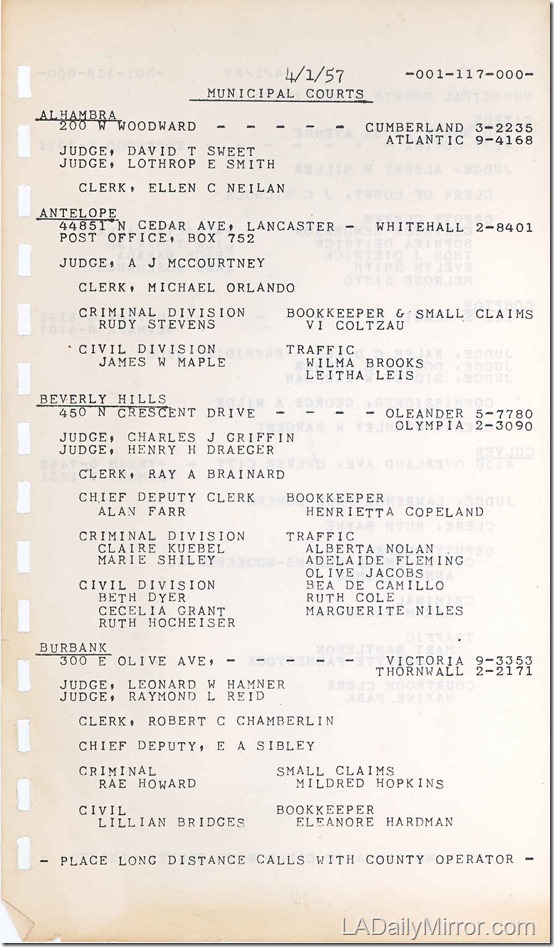
In 2013, I was given a box of material that was cleaned out of the old press room at the LAPD’s Parker Center headquarters, sometimes called “the cop shop.” The box was a jumble of press releases, photographs, artists’ sketches and other items dating from the late 1960s to the early 1980s.
This is one of the oldest items in the cop shop files: Two pages from a 1957 phone directory for the municipal courts, which no longer exist. Notice the telephone exchanges: AT lantic, CU mberland, OL eander, OL ympia, TH ornwall, VI ctoria, etc. Notice Judge Ralph C. Dills (d. 2002), who was also an assemblyman and a state senator.
As readers remember (some fondly, others not so much) the late Mickey Rooney, here’s a post I wrote about the fifth Mrs. Mickey Rooney (Barbara Thomason) in 2008.

This is “While the City Sleeps,” and although we did Lon Chaney’s “Mr. Wu” recently, I thought it was worth looking at “While the City Sleeps” because a rooftop shootout and another scene provide early glimpses of Los Angeles City Hall, even though the movie is set in New York.
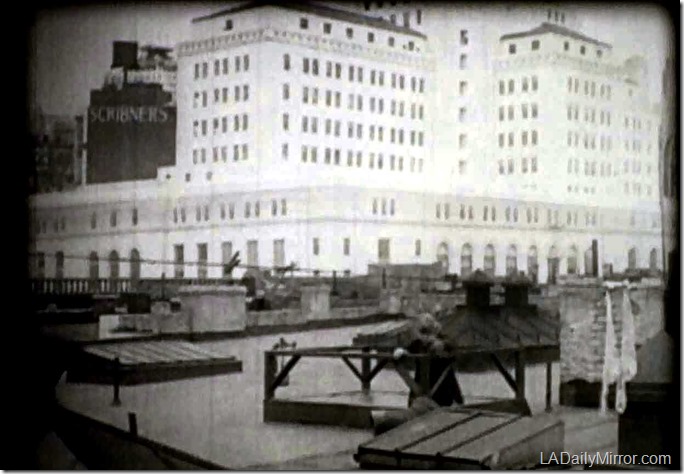
Here’s Lon Chaney climbing up to the roof of a building with City Hall in the background. A production still on Page 10 of “Location Filming in Los Angeles” also shows the Hall of Records in the background, so we know this was filmed on the Main Street side of the building.
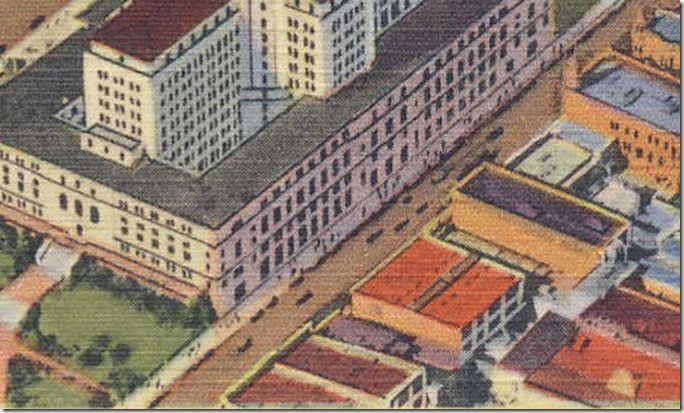
Here’s a detail of a vintage postcard showing a similar angle of the Main Street side of City Hall. I’m not John Bengtson, but it seems likely that the scene was shot from a rooftop somewhere in the lower part of this image.
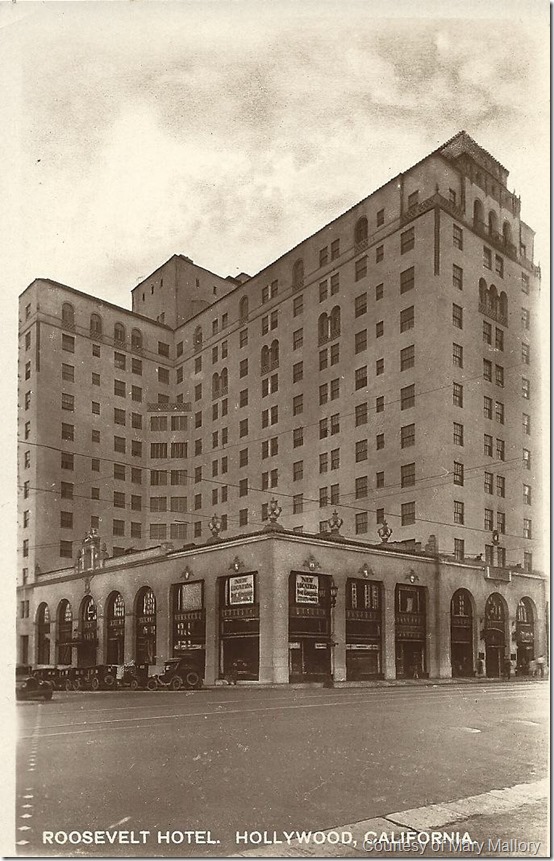
The Hollywood Roosevelt Hotel, courtesy of Mary Mallory.
Once movie studios moved into Hollywood, life changed in the sleepy, little farming community. Easygoing small town life gave way to the jazzy bustle of a moviemaking metropolis. Office towers, theaters and hotels replaced churches, small businesses and bungalows. Nightlife and nightclubs exploded. Small town went uptown.
Accommodations also experienced a dramatic shift. The relaxing, quaint Hollywood Hotel gave way to the modern, up-to-date Christie, Hollywood Plaza and Knickerbocker hotels. In 1927, the stylish Roosevelt Hotel opened, this time as a central gateway to the entertainment district surrounding it. It served as the ultimate Hollywood party location.
Mary Mallory’s “Hollywoodland: Tales Lost and Found” is available for the Kindle.
The TCM Classic Film Festival at the Hollywood Roosevelt Hotel.
April 5, 1944: Return with us now to those thrilling days of yesteryear! “The Lone Ranger.” Courtesy of otronmp3.com.
I recently heard from someone who had taken a bus tour of Los Angeles and wondered why the tour guide said that Bevo Means had named the Black Dahlia case.
The answer, of course, is no, if the tour guide said that, then the tour guide was wrong.
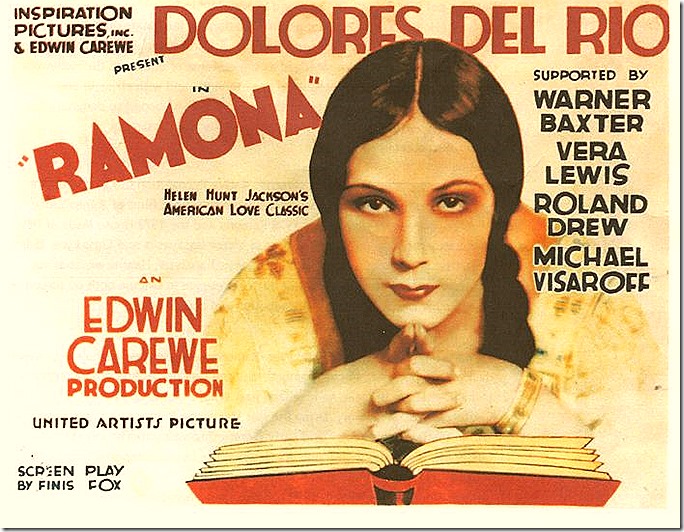
A poster for “Ramona” featured on the program for the premiere of the restored film.
Only 86 years after it originally opened in Los Angeles, the newly restored motion picture “Ramona” premiered March 29, 2014 at UCLA’s Billy Wilder Theatre. Long thought lost, the film’s survival is as inspiring as the original “Ramona” tale itself.
Author Helen Hunt Jackson’s wildly popular novel “Ramona” appeared in 1884, saluting Mexican cultural life. Jackson aimed to raise awareness about the plight of California’s Native Americans while telling an entertaining story. The story revolved around the mixed-race orphan girl, Ramona, who endures discrimination and hardship. With the way the story glamorized Mexico’s native born or those of mixed blood, it could be described as perhaps America’s first romance novel. Readers fell in love with the soaring visuals as much as the romantic myth. Many readers loved the story so much that they considered the characters real.
Mary Mallory’s “Hollywoodland: Tales Lost and Found” is available for the Kindle.
April 4, 1944
Billy Wilder’s handwriting, though it looks neat, is almost undecipherable. He sent a memo on “Double Indemnity” to Buddy De Silva which was returned because it was too difficult to read. Wilder answered, “I know what I think on this subject but cannot tell what I wrote.”
April 4, 1944
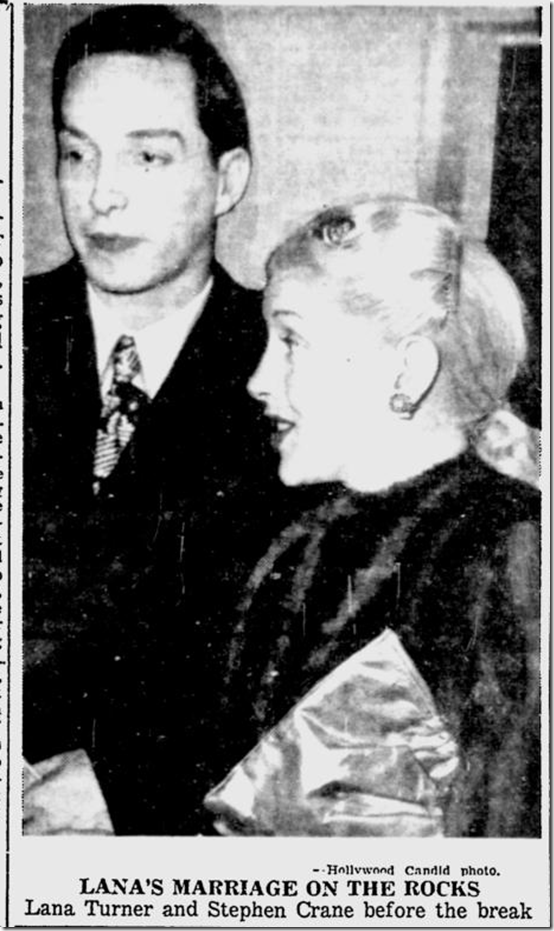
A day after Lana Turner told Louella Parsons that she and Stephen Crane weren’t separating, Crane says they are.
 ladailymirror.com