
Feb. 11, 1944
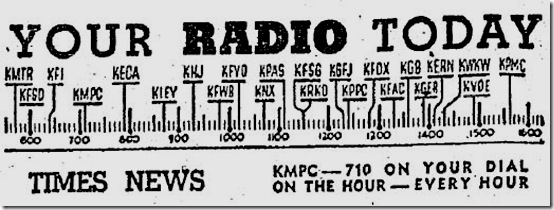
Today we have:
— Andy adopts a soldier — or so he thinks on “Amos ‘N’ Andy.” Courtesy of Archive.org.
Feb. 11, 1944
Today we have:
— Andy adopts a soldier — or so he thinks on “Amos ‘N’ Andy.” Courtesy of Archive.org.
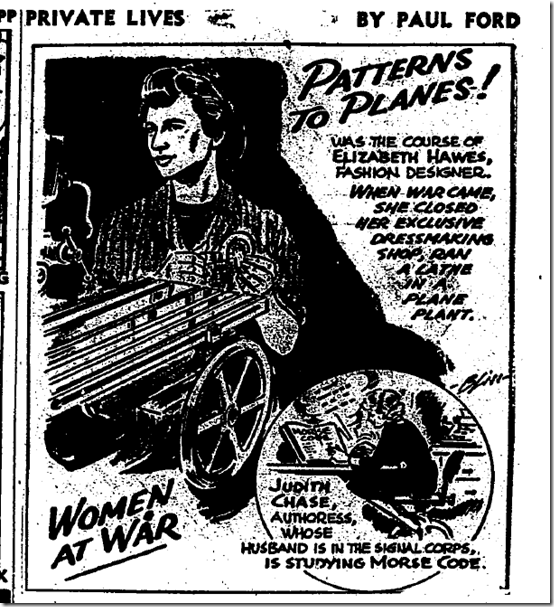
Feb. 11, 1944: A P-38 rushes from Los Angeles to Santa Barbara and back in an hour to get penicillin for a Jimmy Doyle, 15 months old, who has peritonitis.
“Precious little of the stuff is available and that is controlled by Dr. Chester Keefer of Boston, custodian of civilian supplies of the drug,” The Times says.
The P-38 was flown by test pilot Lt. Col. Clarence A. Shoop, who turned the plane over to the Army when he was finished after picking it up from Lockheed, where Jimmy’s father is an employee.
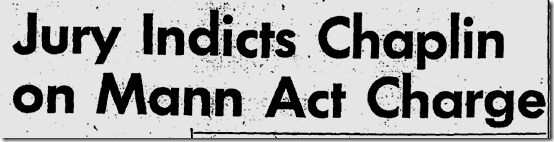
Actor Charlie Chaplin is indicted under the Mann Act and is also accused of criminal conspiracy along with six others.
According to charges, on Oct. 5, 1942, Chaplin “feloniously transported and caused to be transported Joan Berry from Los Angeles to the city of New York” … “with the intent and purpose of engaging in illicit sex relationship with him and live with him as his mistress.”
A second charge accused of him of bringing her back to Los Angeles for the same purpose.
The rest of the charges against Chaplin’s co-defendants involved an alleged plot to run Berry out of town on a charge of vagrancy that would be dropped if she left the state. Accused in the conspiracy were Beverly Hills Police Judge Charles Griffin, Beverly Hills Police Capt. W.W. White, Beverly Hills Police Lt. Claude Marple, Beverly Hills Police matron Jessie Billie Reno, radio commentator Robert Arden and movie producer Thomas Wells “Tim” Durant.
Observing the fighting between U.S. and Nazi troops in Cassino, Tom Treanor writes: “We see houses disappear in smoke and dust, fragments spinning slowly into the air. Then when the smoke clears, the house looks almost as it did before except for another hole in one corner, usually high up.
“Jerries in the basements are almost impossible to reach with shells, apparently even with delayed-action shells. These houses almost never collapse. Shells usually knock out a clean piece of masonry, leaving the rest intact.”
“Jane Eyre,” starring Orson Welles and Joan Fontaine, “is precedent-shattering and even bizarre,” Edwin Schallert writes.
Opening today: “The Iron Major” with “Escape to Danger” (Ann Dvorak alert!) at the Fox Ritz, Los Angeles Theatre and the Egyptian.
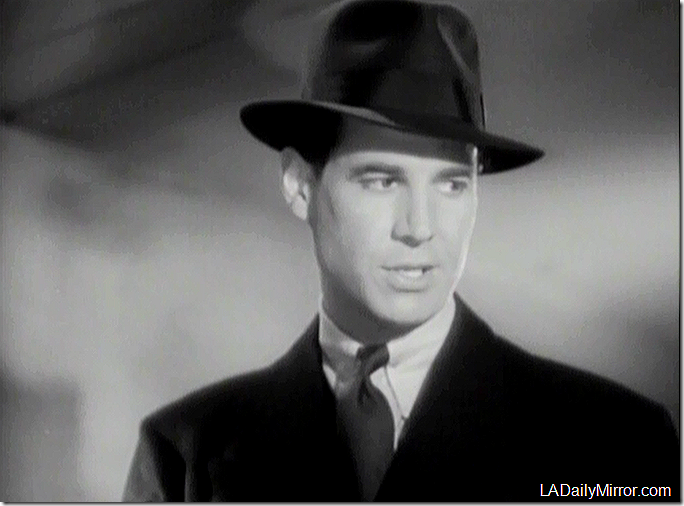
And for Monday, we have a mystery gent … who knows how to wear a hat!
Update: Our mystery movie is “Forty Naughty Girls.” (Catchy title, no?) Monday’s mystery chap is George Shelley as Bert.

Feb. 10, 1944
Today we have:
— Charles Laughton is the guest on “The Abbott and Costello Show.” Courtesy of Archive.org.
— Dinah Shore sings “Sleepy-Time Gal” and Cornelia Otis Skinner appears on “The Dinah Shore Show.” Courtesy of Archive.org.
— Lum tries to join the WAVES on “Lum and Abner.” Courtesy of Archive.org.
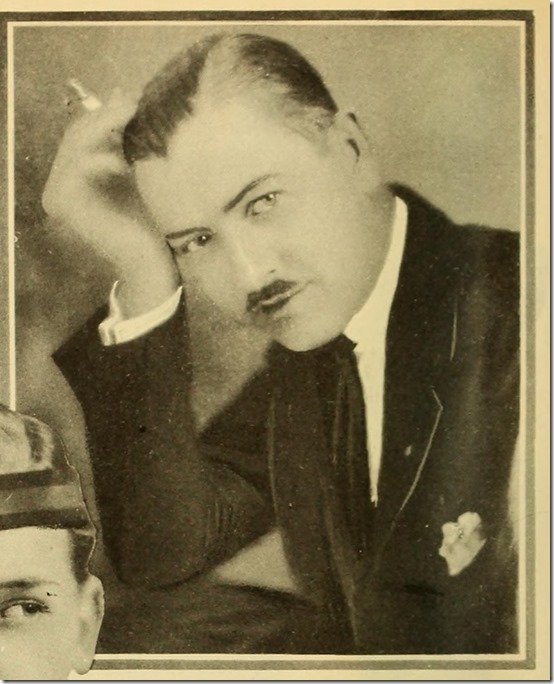
Max Munn Autrey, from Pictures and Picturegoer, August 1925
“In Hollywood, photographers spring into fame overnight. They are, for a time, a fad—and only become recognized as established worth when they prove that their ideas are not limited. All an ambitious camera artist needs to start him off on the road to fame and fortune is to display two or three portraits of big stars and if he has obtained something of beauty in photographing them, he is made. The fact, alone that a star admired his work enough to pose for him, is recommendation, and soon the other stars follow. When the picture trade is established, the photographer expands his business proportionately, and sets his prices. The more famous photographers have been known to charge as much as $350 for 12 prints of a single portrait.”
— Walter Irwin Moses, Pictures and Picturegoer, August 1925
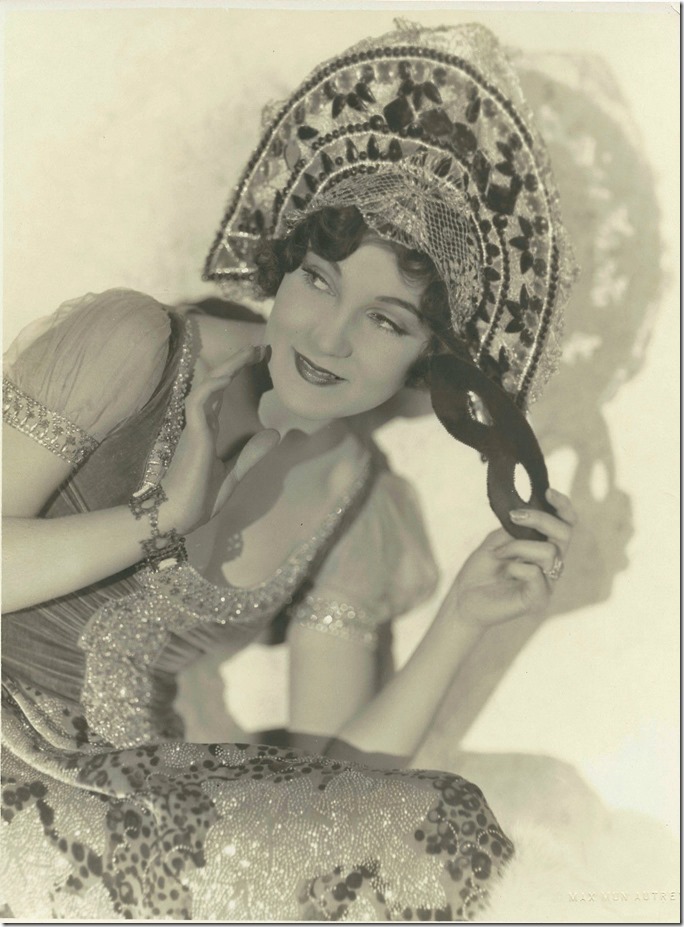
Max Munn Autrey’s portrait of Jane Winton, for sale on EBay listed at $199.95.
Texan Max Munn Autrey sauntered into the world of Hollywood still photography in the 1920s, a journeymen cameraman looking to settle down. He found his niche in portraiture, helping devise mystique and sensuousness in star portraits.
Born June 24, 1891, in Hamilton, Texas, Autrey moved around the state taking photographs as an adult. He was employed by P.T. Collier & Son in Dallas, per his World War I registration papers. In 1918, he married his wife, Bonnie, in her hometown of Tyler. They lived in Burleson in 1920, but soon decided to move to California.
Mary Mallory’s “Hollywoodland: Tales Lost and Found” is available for the Kindle.

Feb. 10, 1944: Yawn of the Week: The raging waste of words about Steinbeck’s script of “Lifeboat” being distorted (to make the Nazi look good and the rescued look weak and yappy, etc.) is a bore of an argument over at this lodge.
Suppose you change the characters to a representative group en route to survey battle zones. Suppose they were torpedoed and met in a lifeboat with a German. Do you think they wouldn’t behave almost exactly as those in “Lifeboat?” We have weaklings and whackpots in Congress, as well as legislators who have good minds and hearts. The point is this: Until they united they couldn’t combat the superior strength of a navy-trained Nazi, who (it is established) was a sea captain as well as a surgeon. I saw it again last night. Every moment of it kept me on the edge of my seat. The direction is breathless. The cast is superb except T. Bankhead, who is only very wonderful.
From the Palm Beach Daily News.
Feb. 9, 1944
Today we have:
— “The Lone Ranger.” Courtesy of Archive.org.
— Adolphe Menjou and Irene Manning appear on “Mail Call” from Armed Forces Radio Service in Los Angeles. Courtesy of Archive.org.
— A 30-minute choral music program with operatic contralto Elizabeth Wyser performing “Adieu Foret” from “Jeanne d’Arc” by Tchaikovsky on “The Squibb Show.” Courtesy of Archive.org.

Feb. 9, 1944: Al Jolson is Jinx Falkenberg’s most constant visitor at her St. Luke’s Hospital bedside…. New Yorkers suspect that Wayne (wife-killer) Lonergan’s sudden coin (to hire a lawyer) came from men named in her diary … Betty Hutton is Capt. C. Gable’s morale builder this week … Rumor says more than 50 bars and grills in town may be refused their license renewals by March 1. Because of trading in the sepia market.
Hollywoodites are depressed over “where to move now?” because of rumors that the Air Force will take over a score of coast hotels, including the two top ones in Beverly Hills.
Warning: Some pressure outfits are plotting to foment race disturbances by causing a series of inflammatory incidents in nearly all the prominent New York hotels … The program may even be extended to a nationwide basis. Certain persons are being coached in what to say and do in lobbies and cafes.
Feb. 8, 1944
It’s Tuesday in 1944 and today we have:
— “Fibber Makes Ice Cream” on “Fibber McGee and Molly.” (Notice the gag about loansharking and recall that New York Mayor Fiorello LaGuardia was calling for a crackdown on loan sharks). Courtesy of Archive.org.

Just when I thought I had seen every sort of lunacy that’s possible about the Black Dahlia case, I found this in my local paper yesterday. Did someone finally confess to the “grusome” murder? Look! It’s a saga of “explotation!” With cover art swiped from the James Ellroy novel.

Feb. 7, 1944: Karsh photographs George Bernard Shaw, 87, for the cover, with more Karsh portraits inside. Features include American prisoners who escaped from the Japanese in the Philippines, the radio show “Inner Sanctum” and the movie “Gung Ho.” Courtesy of Google.

February 7, 1944
It’s Monday in 1944 and today we have:
— Hop Harrigan refuses to leave Tank behind in escaping from Berlin with the secret plans in “Hop Harrigan.” Courtesy of Archive.org.
— “His Butler’s Sister” with Deanna Durbin, Pat O’Brien and Robert Paige on “Lux Radio Theater.” Courtesy of Archive.org.

March 7, 1944
The Magic Lantern: Danny Kaye, who knocked off B’way in his first start, put Hollywood in his pocket the same way. His starter, “Up in Arms,” makes him a Milquetoast in khaki and gives him a chance for his grand clowning and his jabber-jive. Constance Dowling and Dinah Shore breeze home with him…. “The Curse of the Cat People” is a floorer to the claim that you meet nicer people in your dreams.
Too many radio jesters really believe the studio audiences’ howls as legitimate. The result is that the comics are getting careless. What brings laughter in studios often brings yawns in the parlor.
The Love Letter of the Week: From Quentin Reynolds’ book “The Curtain Rises”: “Most of what I wrote in the diary is nothing but gossip. Still, I suppose if a thousand years from now someone were to dig up the Winchell columns of the 1920s, he would get a pretty clear picture of life here during those hectic days. You cannot dismiss gossip columns by saying they discuss only trivial things. To a great extent they reflect the age in which we live.”

Feb. 7, 1944: For many years Rachel Field worked in Paramount’s New York office as a script reader, examining the merit of all submitted material … She once remarked: “Hmf, I can do better than some of this stuff. Some day I’m going to write one and see it made into a Paramount film” … Years after, she finished her first best-seller, “All This and Heaven, Too” … The royalties and prestige were tremendous, but Rachel’s ambition was not yet fulfilled. The book was filmed by Warner’s … Last year she wrote “And Now Tomorrow” — and died shortly after — before the agent sold it … To Paramount.
Feb. 6, 1944
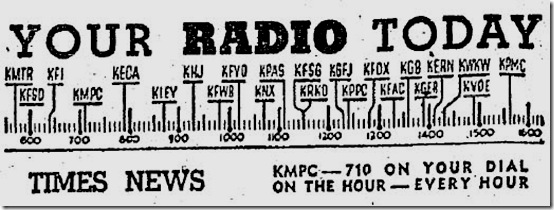
It’s Sunday in 1944 and today we have
— From Roosevelt Base on Terminal Island, it’s “The Jack Benny Show.” Note the gags about fish canneries on Terminal Island. Courtesy of Archive.org.
Feb. 5, 1944
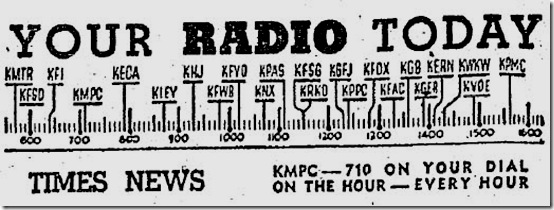
It’s Saturday in 1944 and today we have:
— The Band of the Training Command of the Army Air Forces under the direction of Capt. Glenn Miller with Cpl. Ray McKinley. The opening “In the Mood” sounds like the familiar arrangement, but what an odd version of “Holiday for Strings.” Courtesy of Archive.org.

Feb. 5, 1944: American troops encounter tough fighting against the Nazis as they get closer to Rome. An NBC broadcast, courtesy of Archive.org.

Feb. 5, 1944: Grace Moore, who uses the Stork Club’s back door — which is what most celebs wish they could do — to avoid the starers, oglers and other celebrity-worshipers … Jean Arthur, the lovely lady in the red dress at Carnegie Hall … Michele Morgan in tweeds at Coq Rouge — eclipsing all the ladies in decolette.
We hear a midtown hotel murder has never hit the front pages. The pair registered as Mr. and Mrs. George Washington. She was found nude, dead. The Sherlocks haven’t located him yet … Bob Dunn says he knew The Paper Doll when she was An Old Bag.
From the St. Peterburg Times.
Continue reading

March 16, 1936: Times artist Charles Owens and columnist Timothy Turner visit the St. Charles Hotel at 314 N. Main, which was formerly the Bella Union Hotel.
“This was one of the two best hotels in Los Angeles not so long ago as history goes,” Turner writes. “It was the famed Hotel Bella Union, built first of adobe about 1849 and rebuilt in exactly its present form in the late ’50s.”
Feb. 4, 1944
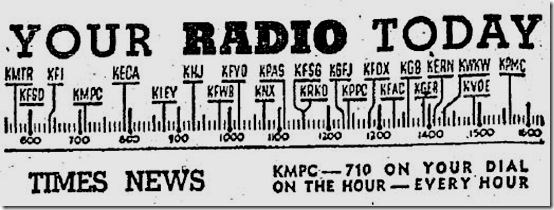
Today we have:
— “Missing People’s Bureau” on “Amos ‘N’ Andy.” Courtesy of Archive.org.
 ladailymirror.com