Black L.A. 1947: Racist Street Sign Removed; Advertisers, Officials Repudiate ‘The Equalizer’

image

Jan.

image

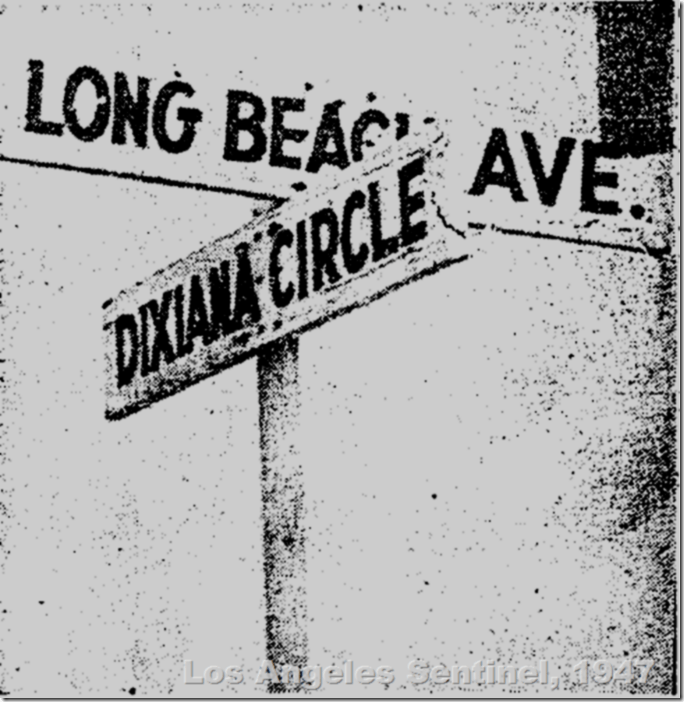
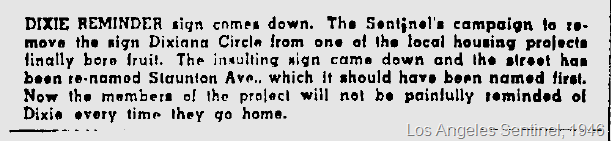
Jan. 2, 1947: The Los Angeles Sentinel publishes a photo of a street sign reading “Dixiana Circle” at 23rd Street and Long Beach Avenue. The Sentinel reported June 6, 1946, that the street had been renamed Staunton.  Not too surprisingly, the Los Angeles Times did not report this story. The records at the City Archives don’t show any relevant listings for “Dixiana” or “Staunton.” The 1946 and 1956 Thomas Bros. Guides are similarly unhelpful.
image
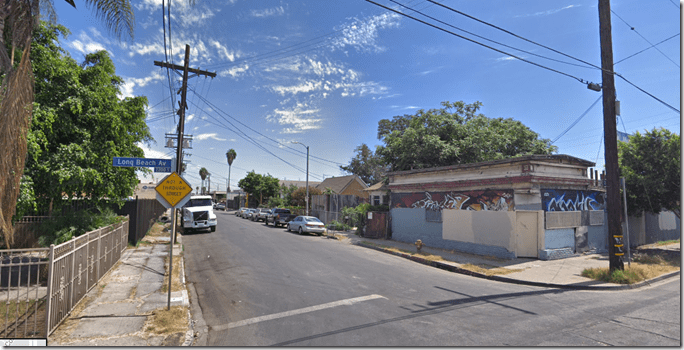
Long Beach Avenue and 23rd Street as shown by Google Street View. There’s no trace of what was once Dixiana Circle.


The Sentinel also reports on a race-baiting local publication named The Equalizer, which published the juvenile crime records of several individuals, even though such records were typically unavailable to reporters.

 

Continue reading

Posted in 1946, 1947, African Americans | Tagged , , , , , | Comments Off on Black L.A. 1947: Racist Street Sign Removed; Advertisers, Officials Repudiate ‘The Equalizer’

Some Nice Boring Statistics

Note: This is an encore post from 2007.

Jan. 2, 1907
Los Angeles

Some diligent soul at The Times dug through the number of marriage licenses and divorces and put together a small story that traced the city’s growth through the increase in couples that joined or separated. This is the kind of information you could never find if you were looking for it; only through happenstance can you discover this data.

So here we go:


Year

Marriages

Divorces

1906

4,714

719, 13 annulments

1905

3,841

567

1904

3,283

557, 10 annulments

1903

3,005

473, 7 annulments

1902

2,351

386

1901

1,917


1900

1,503


1899

1,505?


1898

1,381?


1897

1,432


1896

1,405


1895

illegible


1894

1,251


1893

1,201


1892

1,023


1891


1890

1,182


1889

576


Apparently Los Angeles did not have a thriving reputation as an early day Reno. Divorces were only granted to those who had lived here for a year. The Times writer notes a difference between a final decree and an interlocutory decree: Those with a final decree could remarry while those with an interlocutory decree had to wait a year. For 1906, the figures were 719 interlocutory decrees and 542 final decrees.

The Times also notes that given the Episcopal Church’s tight restrictions on performing marriages of divorcees, the number of ceremonies by justices of the peace has increased markedly.

As regular blog readers will recall, getting a divorce in 1907 could be quite a challenge.

Lmharnisch.com
Lmharnisch.blogspot.com

e-mail: lmharnisch (AT) gmail.com

Posted in 1907, Black Dahlia, Books and Authors, City Hall, LAPD, Streetcars | Comments Off on Some Nice Boring Statistics

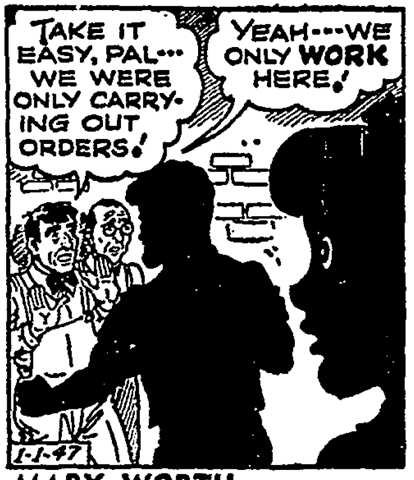
Jan. 1, 1947: New Year’s Resolutions

Jan. 1, 1947, Ella Cinders

Note: This is a post I wrote in 2006 for the 1947project.

Also notice that because newsprint was scarce, the Los Angeles Times didn’t publish the classified ads so it could provide adequate space for stories – I cannot imagine any American newspaper doing that today.

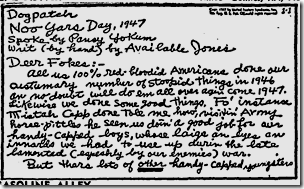
Dogpatch
Noo Yars Day, 1947
Spoke by Pansy Yokum
Writ (by hand) by Available Jones


Li'L Abner Deer Fokes:
All us 100% red blooded Americans done our customary number of stooped things in 1946 an no doubt will do ‘em all over again come 1947.

Likewise we done some good things. Fo’ instance Mistah Capp done tole me how, visitin’ Army horse-pittles, he seen us doin’ a good job for our handy-capped boys whose laigs an eyes an innards we had to use up during the late, lamented (espeshly by our enemies) war.

Continue reading

Posted in 1947, Art & Artists, Comics, World War II | Tagged , , | 3 Comments

Black L.A. 1947: Buddy Young — First African American to Score a Touchdown in the Rose Bowl

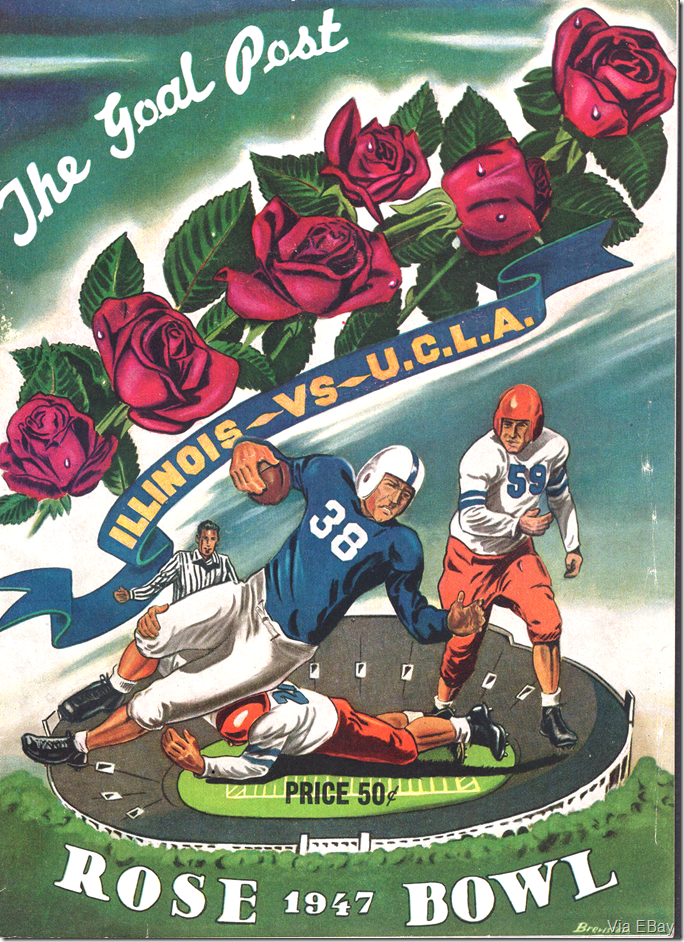
1947_rose_bowl_program

A 1947 Rose Bowl program, listed on EBay, with bids starting at $10.50.


Jan. 1, 1947: On the program’s cover, the players are white…

image

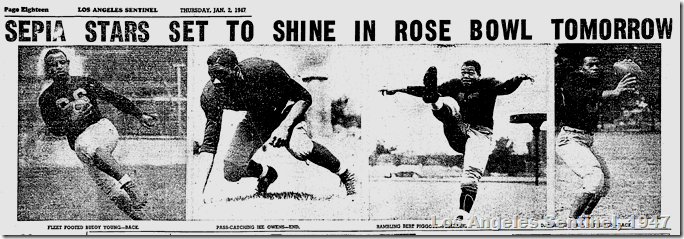
… but the Sentinel’s sports section highlights five African Americans playing in the Rose Bowl: Claude “Buddy” Young, Ike Owens, Bert Piggott and Paul Patterson of the University of Illinois, and Bob Mike of UCLA.

Los Angeles Sentinel, 1947

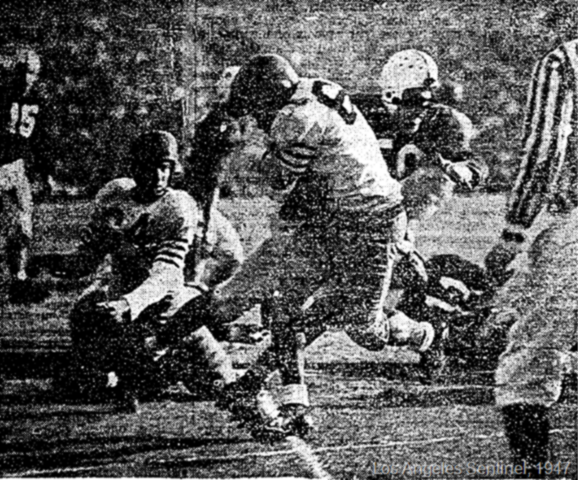
Much could be written about this game, in which Illinois dealt an upset to UCLA 45-14, but that’s way beyond the scope of this blog. I’ll stick to the five African Americans playing in the game, highlighting Claude “Buddy” Young, a 5-foot-4 running back who scored two touchdowns, the first by an African American in the Rose Bowl.

Note: For those who just tuned in, we’re going to reboot the concept of the 1947project (founded by Kim Cooper and Nathan Marsak) by going day by day through 1947 – but using the Los Angeles Sentinel, an African American weekly, rather than the very white and very conservative Los Angeles Times. We promise you an extremely different view of Los Angeles.

image

(The historic Los Angeles Sentinel is available online from the Los Angeles Public Library. We encourage anyone with a library card to delve into the back issues and explore the history of black L.A.

Continue reading

Posted in 1947, African Americans, Sports | Tagged , , , , , , , , , | 1 Comment

Movieland Mystery Photo (Updated + + + +)

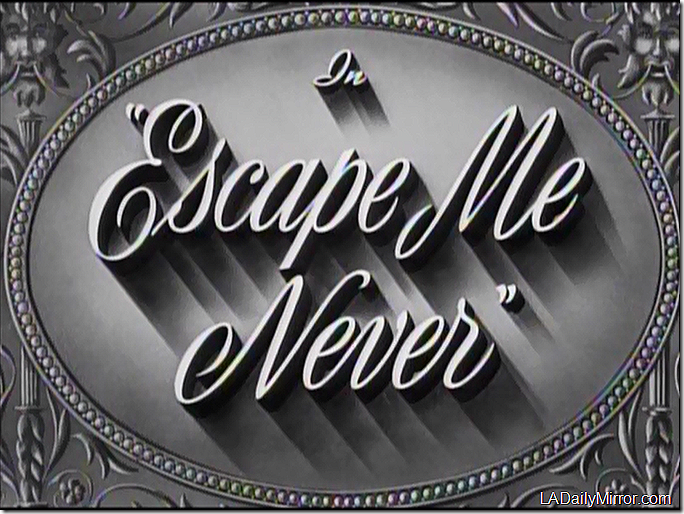
Escape Me Never
This week’s mystery movie has been the 1947 Warner Bros. picture “Escape Me Never,” with Errol Flynn, Ida Lupino, Eleanor Parker, Gig Young, Reginald Denny, Isobel Elsom, Albert Bassermann and Ludwig Stossel. The screenplay was by Thames Williamson, from the novel and play by Margaret Kennedy. The ballet sequences were staged and directed by LeRoy Prinz, with Milada Mladova and George Zoritch and the corps de ballet. The photography was by Sol Polito, art direction by Carl Weyl, set decorations by Fred M. MacLean, special effects by Harry Barndollar and Willard Van Enger, wardrobe by Bernard Newman, ballet costumes by Travilla, makeup by Perc Westmore, orchestration by Hugo Friedhofer and musical direction by Leo F. Forbstein. Music by Erich Wolfgang Korngold. The producer was Henry Blanke and the director was Peter Godfrey.

“Escape Me Never” is available from Warner Archive for $21.99.

Continue reading

Posted in Film, Hollywood, Mystery Photo | Tagged , , | 51 Comments

Alive!

Jan. 1, 1907

Jan. 1, 1907

Note: This is an encore post from 2007.

Dec. 7, 1906-Dec. 22, 1906,
Bakersfield

Jan. 1, 1907
Los Angeles

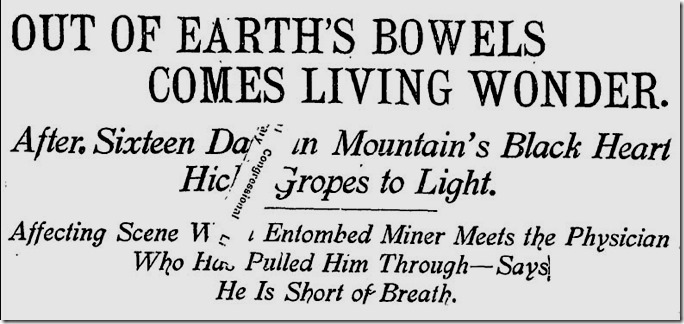
For 15 days, miner Lindsay P. Hicks lay trapped by a cave-in that killed his five companions tunneling in a mountain above the Kern River for an Edison hydroelectric project. On the 16th day, crews finally cut through the last of the steel and scraped away rocks and debris to free the man who had been kept alive with gallons of milk poured down a 60-foot iron pipe.

At first, Edison officials assumed that no one survived the collapse of the tunnel. Then someone heard the faint signal tapped on one of the steel rails for the mining cars: the code for “trapped miner.” The iron pipe was driven through the side of the mountain to provide air and food as Hicks lay either under a rail car or next to it, sheltered by a pile of collapsed timbers that prevented him from being crushed.


Continue reading

Posted in 1907, Black Dahlia, Books and Authors, Food and Drink, LAPD, Pasadena, Streetcars, Theaters | Comments Off on Alive!

Mary Mallory: Hollywood Heights – Mack Sennett’s Rose Parade Gag

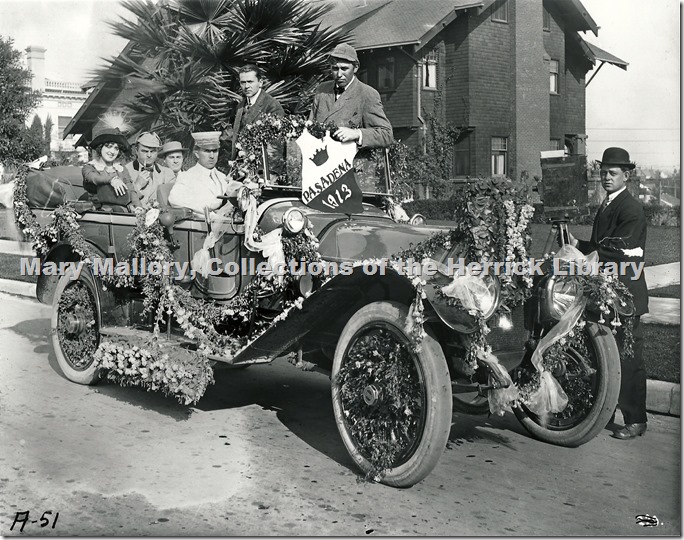
Sleuths at the Floral Parade
Photo: “The Sleuths at the Floral Parade.” Credit: Mary Mallory, the Collections of the Margaret Herrick Library.


Note: This is an encore post from 2011.

The Tournament of Roses Parade is going on its 122th year, and grows more elaborate and beautiful every year.  Bands, floats, cars, horses, and even celebrities take part in this festive annual event.  This year, Paramount Pictures is even entering a float celebrating its 100th anniversary, honoring “Titanic” and “Wings,” the first feature film awarded the Best Picture Oscar by the Academy of Motion Picture Arts and Sciences in 1927/1928.

Continue reading

Posted in 1913, Film, Hollywood, Hollywood Heights, Mary Mallory, Photography | Comments Off on Mary Mallory: Hollywood Heights – Mack Sennett’s Rose Parade Gag

L.A. Daily Mirror Retro Drinking Guide — Pisco Punch

New York Sun, April 23, 1934

Note: This is an encore post from 2013.

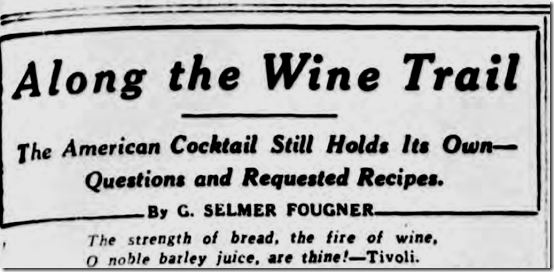
Just in time for New Year’s, we’ll take a look at a “lost drink,” making a brief inquiry into San Francisco’s Pisco Punch, made famous by Bank Exchange saloon owner Duncan Nicol (often spelled Nichol or Nicoll), who  died in 1926 without revealing the recipe.

Continue reading

Posted in 1915, 1934, 1939, Food and Drink, San Francisco | Tagged , , | 2 Comments

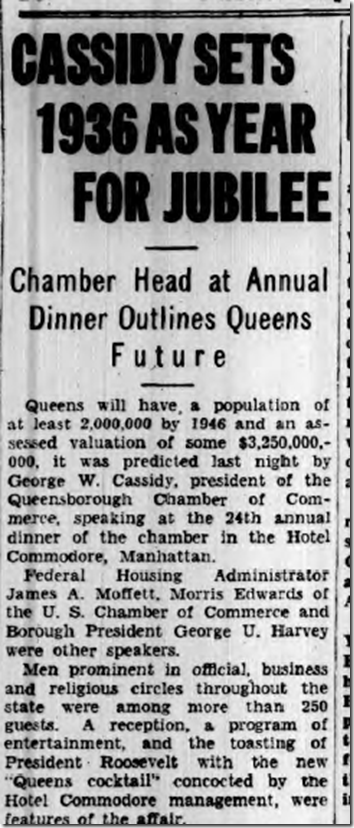
L.A. Daily Mirror Retro Drinking Guide – The Queens Cocktail

image
Joe Vogel asks if there was a Queens Cocktail. The answer is yes.

According to the Jamaica Long Island Daily Press, Jan. 24, 1935, the Queens Cocktail debuted at the Hotel Commodore in a toast to President Roosevelt. Via Fultonhistory.com.

(No word yet on the Staten Island Cocktail — and boy that sounds like a straight line).

Continue reading

Posted in 1935, 1937, Food and Drink | Tagged , , , | 3 Comments

L.A. Daily Mirror Retro Drinking Guide — The Bronx Cocktail

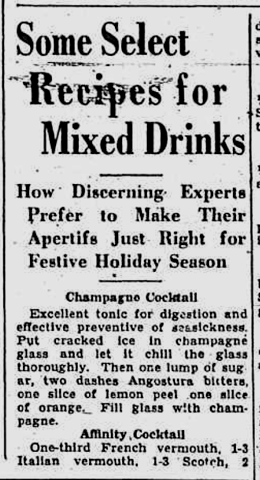
Dec. 20, 1934, Holiday Cocktails

Dec. 20 1934, Holiday Drinks

Note: This is an encore post from 2013.

Dec. 20, 1934: In case you doubted me (but you wouldn’t, would you?), here’s a recipe for the Bronx Cocktail, from the Amsterdam Evening Recorder, courtesy of FultonHistory.com.

In case you plan to mix one up, a Bronx Cocktail is one part Italian vermouth, three parts brandy and a dash of orange bitters. Shake well!

Notice that there are also three variations of the Manhattan.

Continue reading

Posted in 1934, Food and Drink, Suicide | Tagged , | 2 Comments

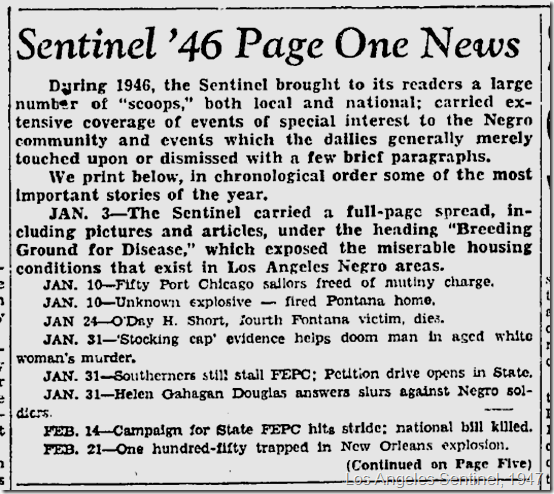
Black L.A. 1947: Cross Burnings and Jim Crow Trains in Los Angeles – The Biggest Stories of 1946

Los Angeles Sentinel, Jan. 9, 1947

Jan. 2, 1947, Los Angeles Sentinel

In its Jan. 2, 1947, issue, the Los Angeles Sentinel looked back at the major stories of 1946, a good introduction to the year ahead: Job discrimination, Jim Crow laws, segregated housing, police beatings and racial violence. We will be revisiting some of these stories as 2018 unfolds, but many of these subjects are far too complex for a simple blog.

For those who just tuned in, we’re going to reboot the concept of the 1947project (founded by Kim Cooper and Nathan Marsak) by going day by day through 1947 – but using the Los Angeles Sentinel, an African American weekly, rather than the very white and very conservative Los Angeles Times. We promise you an extremely different view of Los Angeles.

image

The historic Los Angeles Sentinel is available online from the Los Angeles Public Library. We encourage anyone with a library card to delve into the back issues and explore the history of black L.A.

image

Continue reading

Posted in 1946, 1947, African Americans, History, LAPD | Tagged , , , , , , , | Comments Off on Black L.A. 1947: Cross Burnings and Jim Crow Trains in Los Angeles – The Biggest Stories of 1946

L.A. Daily Mirror Retro Drinking Guide — The Brooklyn Cocktail

March 5, 1937, Brooklyn Cocktail

March 7, 1937, Brooklyn Cocktail

Note: This is an encore post from 2013.

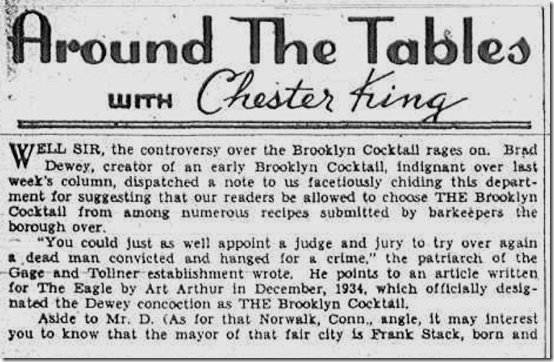
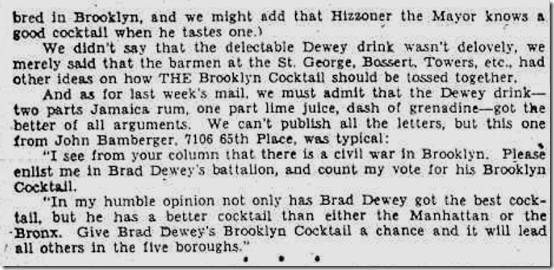
Yes, the Manhattan cocktail once had competition from drinks named for the other boroughs. Here’s a recipe for the Brooklyn Cocktail, from the Brooklyn Daily Eagle, March 7, 1937. The Brooklyn Cocktail as made by Brad Dewey consisted of

Two parts Jamaica rum
One part lime juice
Dash of grenadine

We won’t be toasting the new year with the Brooklyn Cocktail (we’re working) but if someone is brave enough to try one, let us know how it is.

And in case you are wondering, research shows that there was also a Bronx Cocktail. Evidently it, too, has fallen out of favor.

Posted in 1937, Food and Drink | Tagged , | Comments Off on L.A. Daily Mirror Retro Drinking Guide — The Brooklyn Cocktail

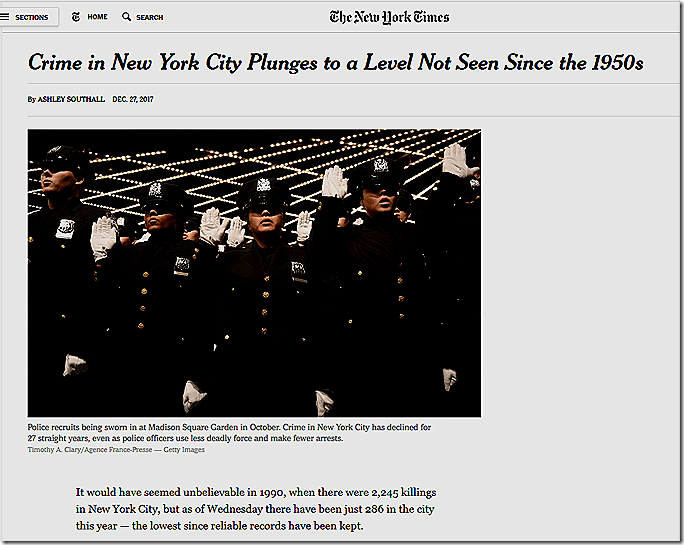
New York City’s Homicide Rate – And a Lesson in Using FBI Uniform Crime Reports

New York Times Crime Levels

New York Times Homicide Rate.

Actually, no. Ashley Southall of the New York Times has it wrong in saying that the current homicide rate of 286 is “the lowest since reliable records have been kept.”

We can say this because the FBI Uniform Crime Reports for the United States are online, via Archive.org. Granted, they aren’t easy to find. But they are there.

Continue reading

Posted in 1940, Another Good Story Ruined, Crime and Courts, Homicide | Tagged , , , , | Comments Off on New York City’s Homicide Rate – And a Lesson in Using FBI Uniform Crime Reports

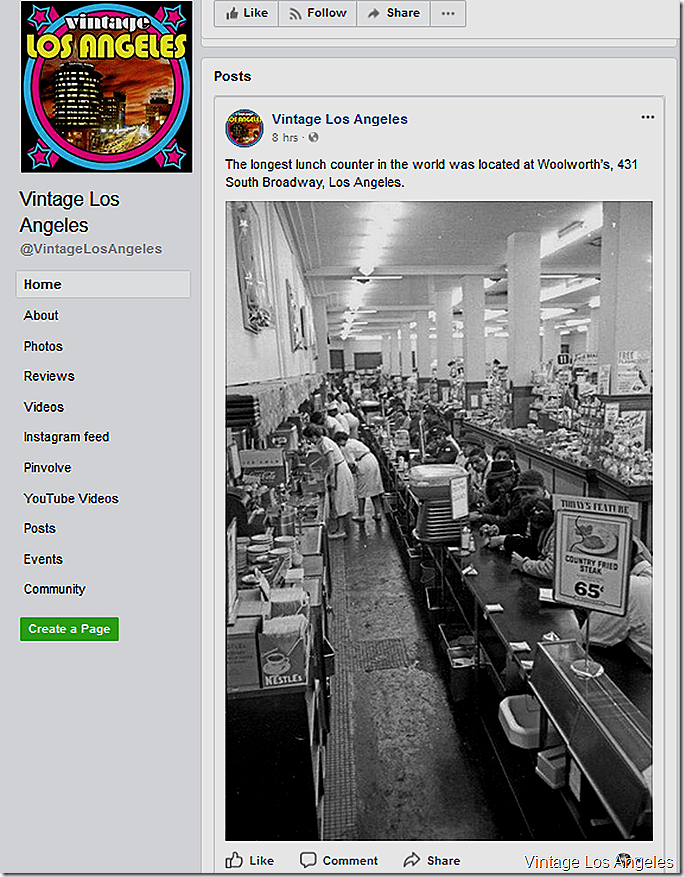
Another Good Story Ruined: Vintage Los Angeles and a Woolworth’s Lunch Counter

Vintage Los Angeles

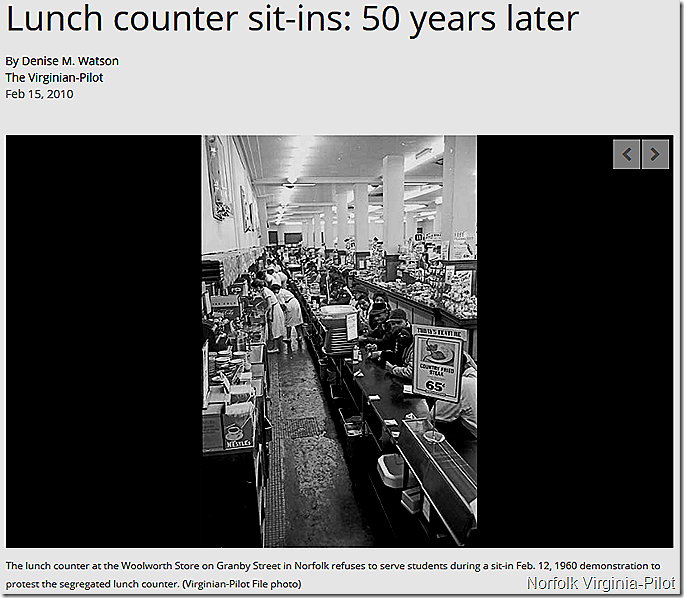
No. This is not a picture of the longest lunch counter in the world at the Woolworth’s in downtown Los Angeles.

image

This is a file photo published by the Norfolk Virginian-Pilot in 2010 on the 50th anniversary of lunch counter sit-ins. Notice all the black people at the lunch counter who aren’t being served.

Do your homework, folks. This is ridiculous.

Posted in 1960, Another Good Story Ruined, Philadelphia, Photography | Tagged , , | 2 Comments

L.A. Daily Mirror Retro Drinking Guide: The Harvey Wallbanger

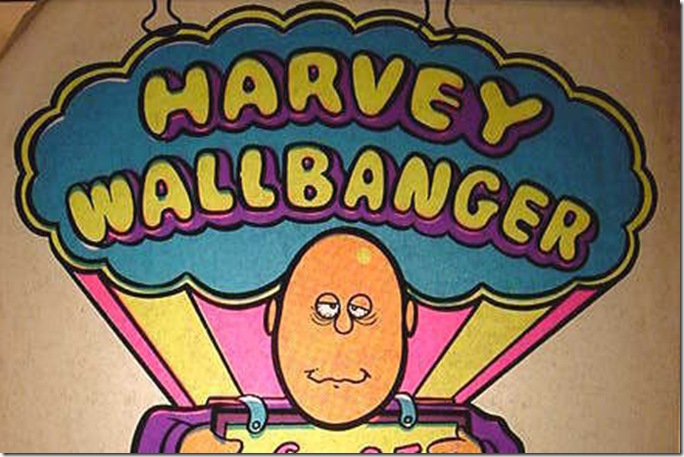
Harvey Wallbagner

A vintage 1972 iron-on transfer of Harvey Wallbanger himself, on EBay for $12.


Note: This is an encore post from 2013.

We have been looking at some historic drinks for this holiday season. To the millennials in the audience: This is what mom and dad used to drink (along with the Tequila Sunrise) when they went out in the 1970s.

Return with us now to the thrilling days of yesteryear:

1 ounce of vodka
4 ounces of orange juice
half an ounce of Galliano.

Poured over ice in a highball glass.

Cue Grand Funk Railroad’s “Gimme Shelter” or Carole King’s “It’s Too Late.”

Posted in 1971, Food and Drink, Music | Tagged , | 2 Comments

L.A. Daily Mirror Retro Drinking Guide: A Brief History of the Tom and Jerry

image

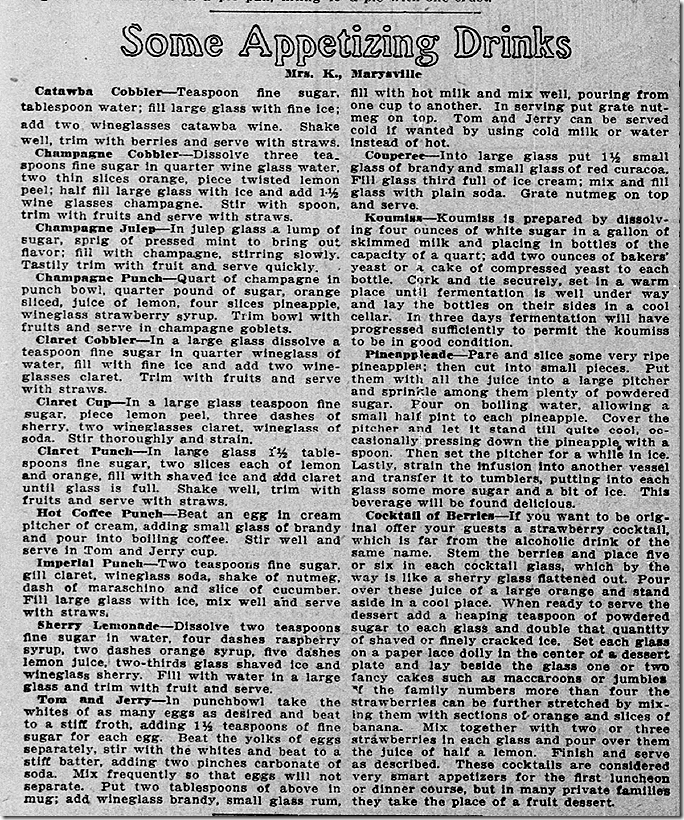
A recipe for the Tom and Jerry from the San Francisco Call, June 30, 1912.


Note: This is an encore post from 2013.

Over on Facebook, Christopher McPherson asked whether the Tom and Jerry was named for the MGM cartoon characters. I said I suspected the opposite was true, rather like Disney’s Chip ‘n’ Dale being named for Chippendale furniture.

All the old newspaper stories give credit for the drink to bartender Jerry Thomas, who according to one account was born in New Haven, Conn., in 1825 (or Watertown, N.Y., in 1830).

Continue reading

Posted in 1862, Books and Authors, Food and Drink | Tagged , , | Comments Off on L.A. Daily Mirror Retro Drinking Guide: A Brief History of the Tom and Jerry

Black Dahlia: A Two-Year Update and a Look Ahead

The second anniversary of my retirement from the Los Angeles Times coincided with lots of questions prompted by a Fox News piece on Piu Eatwell’s “Black Dahlia, Red Rose.” Even though I had blogged about the book repeatedly, people still wanted to know what I thought of it.

Executive summary: Eatwell’s purported killer, Leslie Dillon, was absolutely, positively in San Francisco when Elizabeth Short was killed, rendering all other questions irrelevant.

When folks ask me how my Black Dahlia book is going, I usually give a brief answer: “Very well, thanks” (which is true) rather than a long explanation, such as: “At the moment a certain archive in Los Angeles is closed until January, an unanticipated obstacle blocking the wheels of progress”  (which is also true).

Continue reading

Posted in 1907, 1947, African Americans, Black Dahlia, Books and Authors, History | Tagged , , , , | 4 Comments

Al Martinez, a Dying Boy and Some Peaches — A (Non) Christmas Story

Jim Romenesko

Note: This is an encore post from 2015.

Jim Romenesko, for those who aren’t in the news business, runs an essential blog that serves as a clearing house for information, gossip, bad headlines and assorted gaffes.

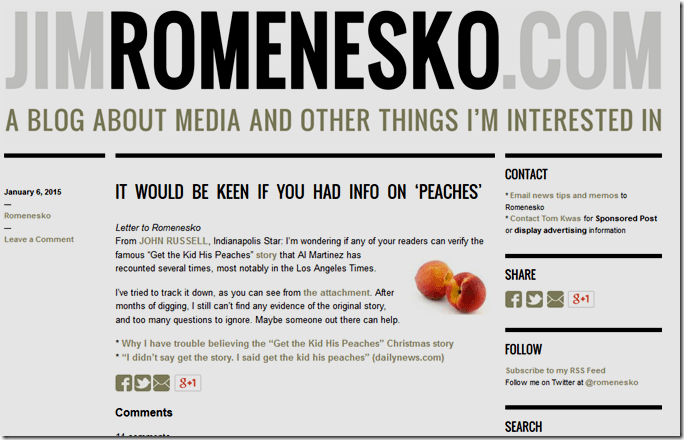
A Jan. 6 post dealt with former Times columnist Al Martinez, who died Monday, and the occasional columns Al wrote over the years about a dying boy who craved peaches.

John Russell of the Indianapolis Star wrote to Romenesko in hopes that some reader would verify Al’s story, saying: “After months of digging, I still can’t find any evidence of the original story, and too many questions to ignore.”

Russell elaborated on his skepticism in “Why I Have Trouble Believing the ‘Get the Kid His Peaches’ Christmas story,” noting that he had written to Al for help in finding the original.

We have some answers — and the story — with a not-so-gentle reminder for reporters: DON’T write from memory or bad things can happen. Use the clips. It’s what they are for.  Memory can compress time and erase crucial details, as we will see with Al’s story.

Continue reading

Posted in 1949, 1958, Books and Authors, Columnists | Tagged , , , | Comments Off on Al Martinez, a Dying Boy and Some Peaches — A (Non) Christmas Story

Movieland Mystery Photo (Updated + + + +)

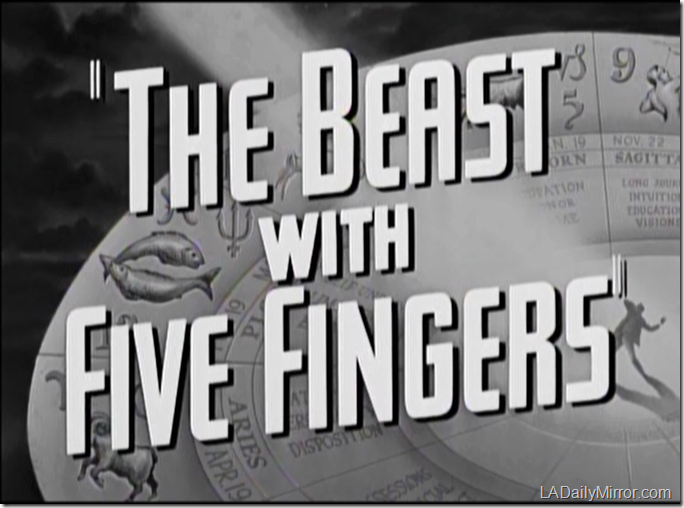
Dec. 30, 2017, Beast With Five Finger
This week’s mystery movie has been Warner Bros. 1946 heartwarming holiday classic “The Beast With Five Fingers,” with Robert Alda, Andrea King, Peter Lorre, Victor Francen, J. Carrol Naish, Charles Dingle, John Alvin, David Hoffman, Barbara Brown, Patricia White and William Edmunds. The screenplay was by Curt Siodmak from a story by William Fryer Harvey, photography by Wesley Anderson, art direction by Stanley Fleischer, special effects by William McGann and H. Koenekamp. The technical advisor was Dario Sabatello, wardrobe by Travilla, set decorations by Walter Tilford, makeup by Perc Westmore, orchestral arrangements by Hugo Friedhofer, musical direction by Leo F. Forbstein,  music by Max Steiner, produced by William Jacobs and directed by Robert Florey. (Paul Henreid took a suspension from Warners rather than make the picture, according to Film Bulletin, Dec. 10, 1945).

“The Beast With Five Fingers” is available on DVD from Warner Archive.

Continue reading

Posted in Film, Hollywood, Mystery Photo | Tagged , , | 36 Comments

Mary Mallory / Hollywood Heights: ‘White Christmas’ Soothes the Home Front in 1942

motionpictureher147unse_0603
Bing Crosby, Fred Astaire, Marjorie Reynolds and Virginia Dale in “Holiday Inn.”


Note: This is an encore post from 2015.

Recognized today as one of the top selling singles and pieces of sheet music of all time, Irving Berlin’s “White Christmas” was just one of eleven songs in the 1942 holiday classic, “Holiday Inn.” First put to paper by Berlin in 1940, the tune evolved over time before becoming the beloved hit sung by the dulcet tones of baritone Bing Crosby.

Jody Rosen, in his book, “White Christmas: The Story of an American Song,” reveals that on Monday, January 8, 1940, Berlin composed forty-eight bars which his secretary Helmy Kresa transcribed to manuscript paper, after the composer flew into the office claiming he had written his greatest song. Nearly fully formed as the song we know today, the most famous sixty-seven notes never changed from the first time they hit the page. These emotion-filled lyrics touched hearts during America’s first year in World War II, nostalgic for better and happier times.“Hollywood Celebrates the Holidays” by Karie Bible and Mary Mallory is now available at Amazon and at local bookstores.

Continue reading

Posted in 1942, Film, Hollywood, Hollywood Heights, Mary Mallory, Music | Tagged , , , , | Comments Off on Mary Mallory / Hollywood Heights: ‘White Christmas’ Soothes the Home Front in 1942