
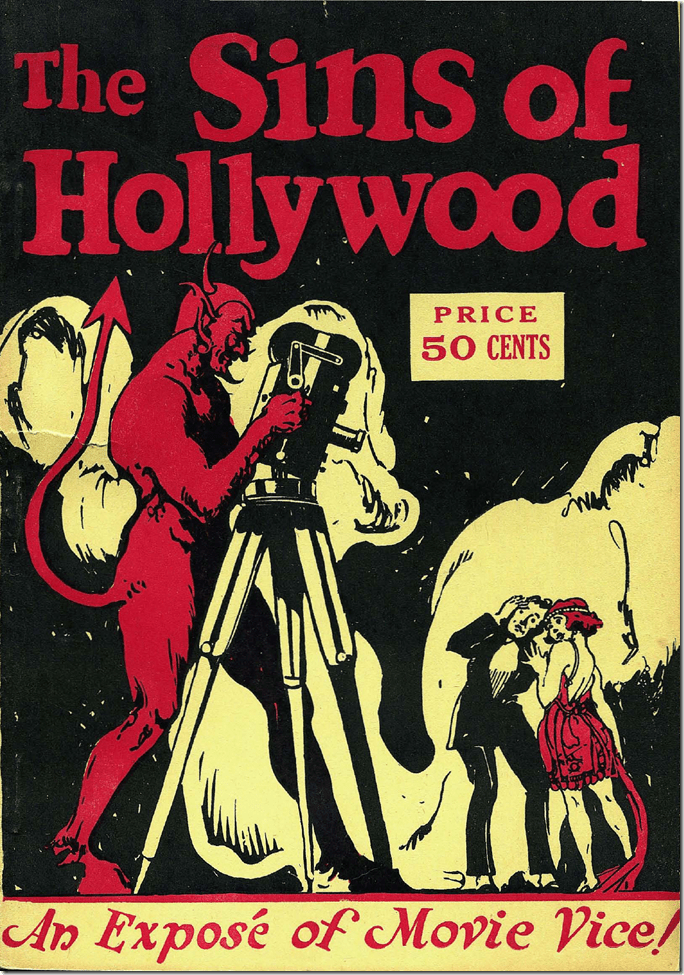
“The Sins of Hollywood,” via Archive.org.
Note: This is an encore post from 2015.
From its very beginnings, the motion picture industry has endured protests and censorship attacks from conservative members of the American public, those scandalized at seeing women given the right to be heroines, use of spirits or drugs depicted on screen, accurate depictions of romantic or sexual relationships, and dramatic depictions of violence. At the same time, many of the same people complaining about these visceral images on screen were eagerly partaking of scandal sheets and tabloid newspapers filled with muck, sensationalism, and gossip. These hypocritical individuals failed to realize that one form of entertainment was just as bad as the other, but they allowed journalism to partake of First Amendment rights, but not the entertainment industry.
As early as 1905 to 1907, many persons began calling for censorship of moving pictures, and by 1909, many cities and states possessed censor boards which approved or disapproved films for public exhibition. Though they would censor film product for its licentiousness, these same public officials felt no need to alter or disapprove of scandalous printed forms of entertainment. Conservative voices increasingly voiced their opposition to film depictions whenever scandal erupted in the motion picture industry.
Mary Mallory’s “Hollywoodland: Tales Lost and Found” is available for the Kindle.



 Note: This is an encore post from 2005 and









 Note: This is an encore post from 2005 and
  ladailymirror.com