
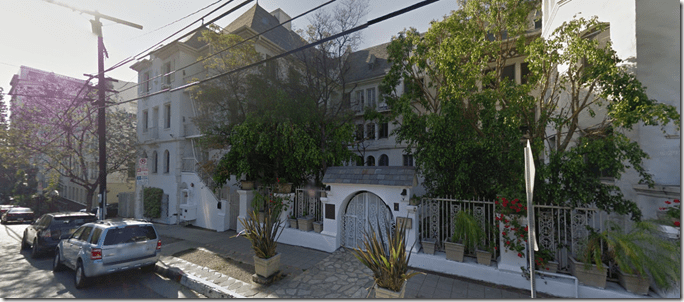
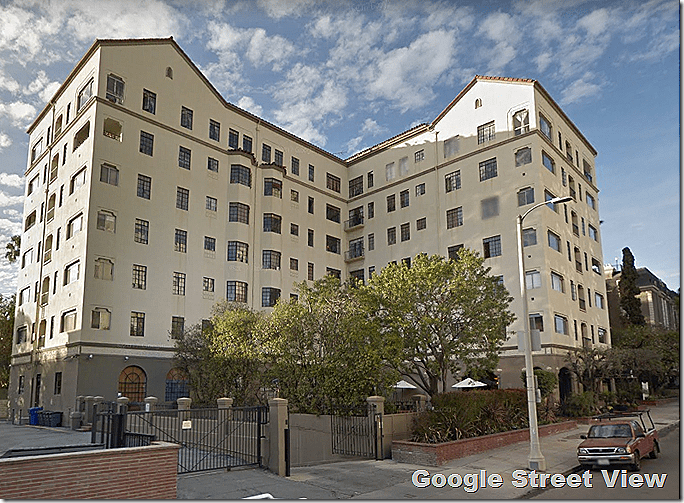
6626 Franklin Ave., via Google Street View.
Note: This is an encore post from 2015.
Hollywood, California, exploded in population during the late 1910s and early 1920s with the influx of moving picture companies arriving in town and people looking to work in the industry following suit. Originally a quiet, rural, farming community, Hollywood quickly grew more urbanized, with an increase in density.
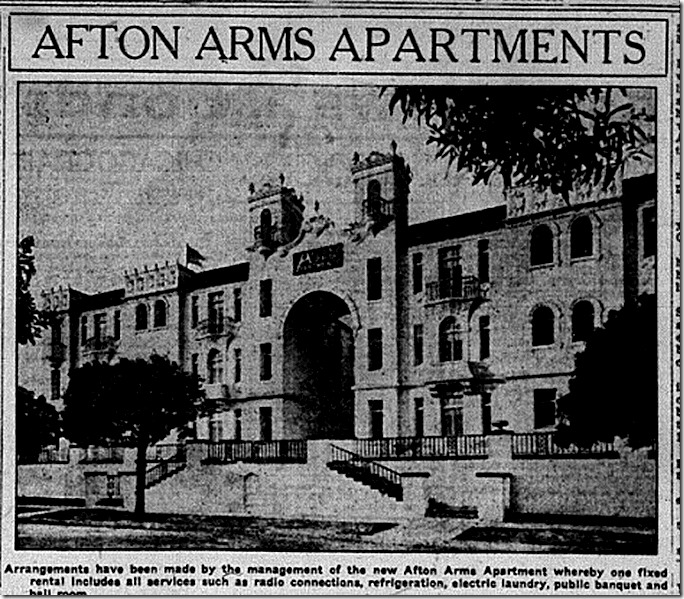
Many people did not own their own homes during this period, renting single-family residences as well as apartment units from others. Subdivisions in the foothills began opening to cater to the more affluent new residents. Bungalow court apartments opened, appealing to middle-class singles and couples looking for somewhat independent living. Apartment houses were rushed into construction, replacing the family boarding houses that had dominated the scene.
Mary Mallory’s “Hollywoodland: Tales Lost and Found” is available for the Kindle.








 ladailymirror.com