Twin Celebrations


Feb.13, 1907
Los Angeles

An enormous masked ball for the city’s elite was staged on Mardi Gras at Kramer’s Studio and Dancing Academy, 1500 S. Figueroa.

Kramer’s Hall, as it was informally known.

The Times, in a rare bylined article—by Katherine Thompson—gives
an exhaustive account of decorations and costumes. Rather than list all the women’s outfits, I’ll only comment on them: Spanish senoritas, flower girls, cowboys and a couple of ladies dressed as Chinese girls, which seems a peculiar choice given the attitude toward the Chinese in Los Angeles at the time.

One woman dressed as “My Lady Nicotine” her gown decorated with what The Times estimated, perhaps in exaggeration, as a thousand cigar bands. Several others were dressed as “Night.”

Costumes for the men included cowboys or vaqueros, a Spanish grandee, a French pastry cook and a cardinal.

The other celebration underway was the first anniversary of the Hotel Alexandria, which marked the occasion with a massive fireworks display.

“At 8 o’clock last night, several thousand dollars worth of fireworks were set off from the roof of the Alexandria,” The Times says. “One particularly attractive piece pictured the great lobby of the building. During the evening a Hungarian quartette furnished music.”

Lmharnisch.com
Lmharnisch.blogspot.com

E-mail: lmharnisch (AT) gmail.com

Posted in 1907, Black Dahlia, Books and Authors, City Hall, LAPD, Music, Streetcars | Comments Off on Twin Celebrations

In-Cred-I-Ble


A large (20×30) reproduction of Elizabeth Short’s mug shot has appeared on EBay at a starting price of $250, or $400 under “buy it now” in an auction by mermaidfx. The word “rare” is ridiculously common on EBay, surpassed only by “MIB” and “L@@K.” This is not a rare image, but is widely copied. And folks, the asking price is absurd.

Lmharnisch.com
Lmharnisch.blogspot.com

E-mail: lmharnisch (AT) gmail.com

Posted in 1947, Black Dahlia, Books and Authors, Cold Cases, Crime and Courts, Homicide, LAPD, Uncategorized | Tagged , , , | Comments Off on In-Cred-I-Ble

The Rising City

Feb. 12, 1907
Los Angeles

Imagine the surprise of Mrs. Robert Jackson, who was about to move into her new home on Vernon Avenue and discovered that the contractor had built it on someone else’s lot, next to the one that she owned. Fortunately, she was able to swap property with the owner, The Times notes. I suppose we should be thankful that builder didn’t go to medical school.

And here’s where the city is expanding: Vermont Avenue Square and Alhambra.

Lmharnisch.com
Lmharnisch.blogspot.com

E-mail: lmharnisch (AT) gmail.com

Posted in 1907, Black Dahlia, Books and Authors, Education, LAPD, Streetcars | Comments Off on The Rising City

Random Shots From Our 12-Bore

Feb. 11, 1907
Los Angeles

The Eastside gets a new Baptist Church and 2nd Street and St. Louis.

Like Tom and Huck

A large pond 7 feet deep at Normandie and San Marino left by the runoff of recent rainstorms proved too tempting to the boys of the Forrester tract and so they launched a raft to play.

The raft tipped, The Times says, sending 8-year-old Clarence Rhodes of 1004 S. Jasmine tumbling into the water. Hearing the boys’ cries for help, M. Allen rushed from his home at 922 Normandie, plunged into the water and rescued Clarence.

After nearly half an hour’s work, the boy was resuscitated, The Times says.

Abandoned Boy

“His mother dead and deserted by his father, Charlie McDaniel, 6 years of age, has been wandering about the city, picking up a living as best he could, and sleeping in dry goods boxes and nooks and corners,” The Times says. “The boy was found early yesterday morning by a patrolman and he is now in the Detention Home.

“In telling his pitiful story at the Central Station, the boy said that his mother died a few months ago and that his father had gone away with some woman. The police will make an effort to locate the father.”

Last Stop

Mrs. A.C. Newton of 2707 Central Ave. is not expected to live after fracturing her skull when she leaped from a speeding streetcar when it passed her stop.

“According to witnesses, Mrs. Newton asked to be allowed to leave the car at 29th Street. When she saw the coach was running past the street, she jumped. The car crew carried her into a house nearby,” The Times says.

“Several passengers on the car said that it was No. 419. They state that the conductor paid no attention to Mrs. Newton’s signals.”

Note: I was amazed to learn just how many people were injured in 1907 by jumping from streetcars that failed to stop. Without checking further, I would say someone was hurt about once a week.

Bonus fact: The local tourism industry is furious because the state Senate passed the bill banning horses with docked tails. Businesses note that wealthy visitors from the East often bring their teams to Los Angeles at great expense and if their fancy horses are prohibited, wealthy tourists will avoid the Southland in favor of Florida.

Lmharnisch.com
Lmharnisch.blogspot.com

E-mail: lmharnisch (AT) gmail.com

Posted in 1907, Black Dahlia, Books and Authors, LAPD, Streetcars, Transportation | Comments Off on Random Shots From Our 12-Bore

Architectural Ramblings


Feb. 10, 1907
Los Angeles

The Times features a hillside home “near the ostrich farm” in Pasadena. Presumably that was the Cawston farm in South Pasadena. (What, South Pasadena, again?) Unfortunately, many of the homes photographed for The Times in 1907 have been torn down in the city of Los Angeles, replaced by parking lots, warehouses, etc. Not so in suburban South Pasadena.

lmharnisch.com
lmharnisch.blogspot.com
E-mail: lmharnisch (AT) gmail.com

Posted in 1907, Architecture, Black Dahlia, Books and Authors, LAPD, Pasadena, Photography, Streetcars | Tagged | Comments Off on Architectural Ramblings

From the Pen of George M. Cohan

Feb. 9, 1907
Los Angeles

lmharnisch.com
lmharnisch.blogspot.com
E-mail: lmharnisch (AT) gmail.com

Posted in 1907, Black Dahlia, Books and Authors, LAPD, Streetcars | Comments Off on From the Pen of George M. Cohan

Blogging the Wolfe Book, Our Story So Far

Larry Harnisch (described by James Ellroy as a Dahlia scholar/Dahlia freak, take your pick) is blogging in real time as he reads Donald H. Wolfe’s “The Black Dahlia Files: The Mob, the Mogul and the Murder That Transfixed Los Angeles.”

Part 1, Blogging the Wolfe Book
Part 2, The Monster
Part 3, Extra! Extra!
Part 4, Sniff Test
Part 5, Weather Report
Part 6, The Boy on the Bicycle
Part 7, A “C” From the Health Inspector
Part 8, Neutral Milk Hotel
Part 9, A Moment of Silence, Please
Part 10, The Riddler

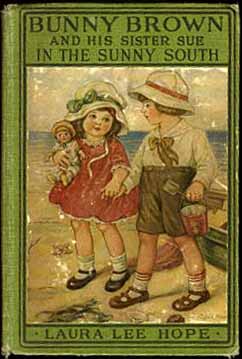
And this, not the Wolfe book, but something more enduring, an installment in the “Bunny Brown and His Sister Sue” series, one of my mother’s childhood favorites.
Part 11, The Thrill Is Gone
Part 12, I’m My Own Grandpaw
Part 13, The Subject Is Roses
Part 14, Teutonic Thoroughness
Part 15, Time for a Reality Check
Part 16, a Moment of Silence
Part 17, The Lookies
Part 18, Uncle Vern
Part 19, The Houyhnhnms
Part 20, The FBI Story
Above, another of my mother’s favorite childhood books.
Part 21, The Cloudy Crystal Ball
Part 22, The Funny Papers
Part 23, The Pinata
Part 24, He Walked by Night
Part 25, Loyalty
Part 26, Missing Man Formation
Part 27, Collecting Our Thoughts
Part 28, A Rain Check
Part 29, Wreck of the Old 97

Part 30, Tick, Tick, Tick

Part 31, Phoning It InMedium Image
Part 32, Foxy Grandpa
Part 33, Pied Type
Part 34, Limbo
Part 35, Paint by Numbers
Part 36, Bust of a Man
Part 37, Mystery Woman
Part 38, Slasher Flick
Part 39, Aiding and Abetting
Part 40, Who Was That Masked Man?
Part 41, The Whole Nine Yards
Part 42, The Face Is Familiar
Part 43, Our Far-Flung Correspondents
Part 44, Honored Guests


Large ImagePart 45, Nothing but Compost
Part 46, Snooze Alarm
Part 47, Wax On, Wax Off
Part 48, An Army of One
Part 49, Family Ties
Part 50, Trying to Make It Real Compared to What
Part 51, Slinging Hash
Part 52, The Numbers Game
Part 53, Imagine My Surprise
Part 54, Tell It to the Marines
Part 55, Evil Genius
Part 56, The Lady in Red
Part 57, Lines of History
Part 58, The Countdown Begins
Part 59, Pleas and Thank-Yous
Part 60, Deuteronomy 33:24
Part 61, Request Line I
Part 62, Request Line II
Part 63, Request Line III
Part 64, Request Line IV
Part 65, Request Line V
Part 66, Request Line VI
Part 67, A Mystery Solved
Part 68, Request Line VII
Part 69, Courtesy Card
Part 70, Request Line VIII
Part 71, Request Line IX
Part 72, How to Fake a Document
Part 73, The Old Spuriousity Shoppe
Part 74, Request Line X
Part 75, Request Line XI
Part 76, Request Line XII
Part 77, Request Line XIII
Part 78, Request Line XIV
Part 79 (I can’t believe it myself), Request Line XV
Part 80, Request Line XVI
Part 81, Request Line XVII
Part 82, L.A. Abortions in the 1940s
Part 83, Request Line XVIII
Part 84, Request Line XIX
Part 85, Request Line XX
Part 86, Request Line XXI
Part 87, Request Line XXII
Part 88, The Two-Minute Executive Summary


free page hit counter

Posted in 1947, Another Good Story Ruined, Black Dahlia, Books and Authors, Cold Cases, Crime and Courts, Donald Wolfe, Film, History, Hollywood, Homicide, LAPD, Uncategorized | Tagged , , , , , , , | 1 Comment

Peace Returns to Buena Vista Street

Feb. 8, 1907
Los Angeles

About 1903, Charles E. Donnatin, former Pacific Electric Railway superintendent, apparently said something about the young woman across the street at the Stewart home, Savoy Street and Buena Vista (now 1301 N. Broadway).

The woman’s mother was furious and soon a 5-gallon oil can appeared in the Stewart’s yard saying “C.E.D. has been” with the implication that Donnatin had been “canned” from his job.

Denials and increasingly angry words were exchanged between the Stewarts and the Donnatins, and more items appeared in the Stewarts’ yard. An awning across the porch was painted with an attack on Donnatin and pieces of old billboards were set up on the lawn. Two tall poles were planted in the yard and on the line strung between them the Stewarts hung a series of 5-gallon oil cans painted with slogans about Donnatin. The cans became an irresistible target for neighborhood boys armed with rocks and the entire yard was eventually filled with trash, The Times says.

The feud ended up in court in 1905 as Donnatin accused the Stewarts of disturbing the peace, but the case was dismissed and the lawn display remained.

And then, everything was gone. “As day dawned yesterday on a little cottage over on Buena Vista Street, life flickered from the body of aged Mrs. James Stewart and with the going out of her breath evidences of a neighborhood feud as suddenly disappeared,” The Times says.

Donnatin died in 1933 at the age of 84. He had come to Los Angeles as a master car builder for the Southern Pacific. He was founder and president of the Southern California Building and Loan Assn.

Lmharnisch.com
Lmharnisch.blogspot.com

E-mail: lmharnisch (AT) gmail.com

Posted in 1907, Black Dahlia, Books and Authors, Crime and Courts, LAPD, Streetcars | Comments Off on Peace Returns to Buena Vista Street

Court Briefs


Feb. 7, 1907
Los Angeles


A Child’s Testimony

Charles Babbitt is sentenced to 30 days in jail on charges of domestic violence after the testimony of his 6-year-old son. “Papa hit me with a whip and it cut my head,” the boy said. “Then he hit mama.” “The man blinked his eyes and said that he did it because he was drunk” The Times says.

Ross’ Widow Arrested

Mary Ross, whose husband was killed by Officer Hoover, is fined $50 after being arrested in a raid on a rooming house that was selling liquor without a license. Ross was among the women seized at the establishment of Mrs. Mary Cooper, 261½ S. Los Angeles St. William Ross, who fatally shot Officer C.A May, was buried in potter’s field, The Times says.

Fined for Blind Pig

Frank Stadler pleads guilty to running a blind pig called the Mechanics Club, 1466 Channing St., and is ordered to pay a $50 fine.

Chinese Lottery Case

E.S. Patton is sent to jail after failing to pay a $50 fine for selling Chinese lottery tickets. Patton is the first white man to be fined for such sales, The Times says.

A Familiar Face

Patrol officers recognized J.W. Mason, who had just gotten out of jail, and watched as he found “a drunken, well-dressed man and lured him into a doorway,” The Times says. He was given 20 days in jail for disorderly conduct.

Lmharnisch.com
Lmharnisch.blogspot.com

E-mail: lmharnisch (AT) gmail.com

Posted in 1907, Black Dahlia, Books and Authors, Crime and Courts, LAPD, Streetcars | Comments Off on Court Briefs

Incendiary Ramblings

Feb. 5, 2007
Los Angeles

Here’s an architectural drawing of the O.T. Johnson Building, which burned in yesterday’s fire.


Looking north on Broadway at 4th Street. The burned structures are at the right.

And here are some snaps of the damaged structures:


Lmharnisch.com
Lmharnisch.blogspot.com

E-mail: lmharnisch (AT) gmail.com

Posted in Architecture, Black Dahlia, Books and Authors, LAPD, Streetcars | Tagged | Comments Off on Incendiary Ramblings

Centennial Ramblings


Feb. 5, 2007
Sierra Madre

Because it’s celebrating its centennial this month, I paid a visit to Sierra Madre and while savoring a cinnamon dolce latte at the local Starbucks, watched the sun set on a historic Union 76 ball. A perfect fusion of two projects.

And here’s Sierra Madre’s Old North Church, with the artillery piece in the park across the street. Note the problem I encountered with lighting. Architectural photography is surely not my forte.

Now for the business at hand. I’ve often thought that with a century of lawmaking under its belt, the state Legislature might want to take the afternoon off. After all, with more than a century of making laws, what’s left to regulate?

The Times provides a tidy answer to my question:

· The Senate unanimously passes a ban on docking horses’ tails and prohibits anyone from bringing horses with docked tails into the state. Those who own horses with docked tails would have to register them with the local county officials.

· The Senate passes a bill authorizing the governor to declare “Bud and Arbor Day.”

· The Senate passes a bill setting dairy standards and a bill to keep the polls open from 6 a.m. to 6 p.m.

· A committee urges the Senate to pass Sen. Black’s tax exemption bill for all the buildings at Stanford as well as the bonds the university holds in trust.

· Sen. Wolfe introduces a bill making all robberies committed with a deadly weapon between sunset and sunrise punishable by death or life in prison.

· Assemblyman Grove L. Johnson introduces a “no seat, no fare” bill providing that railroad passengers who cannot find a seat need not pay. The bill would include streetcars.

· Assemblyman Johnson introduces a bill requiring firearms dealers to keep records of gun buyers’ names and addresses.

· The Assembly passes a bill by the late Assemblyman Burke making it illegal to spit on sidewalks or in trains, cars and other public conveyances.

· Sen. Sanford introduces a bill seeking to restrict corporate donations to political campaigns. I’m so glad the Senate wrapped that up 100 years ago so it can get on to more pressing matters.

Lmharnisch.com
Lmharnisch.blogspot.com

E-mail: lmharnisch (AT) gmail.com

Posted in Architecture, Black Dahlia, Books and Authors, Donald Wolfe, LAPD, Photography, Streetcars, Transportation | Tagged | Comments Off on Centennial Ramblings

Architectural Ramblings


Feb. 4, 2007
South Pasadena

The Times publishes three architectural drawings of “artistic bungalows” prepared by the firm of Wilson and Barnes. One is being built by W.E. Fox on Columbia near Sunset Boulevard, the second by Dr. T.H. Lowers on Main Street in Alhambra and the third by A.J. Padau on Marengo in South Pasadena “near the Monrovia car line.”

The Times says of Padau’s home: “This, perhaps, is the best located of the three houses, as from its windows can be seen the entire panorama of mountain and valley to the north and east. It is strictly modern in its design. A feature of the exterior is the broad span from corner to corner of the porch, affording an unobstructed view from the large living room in the front of the house. There are five rooms in the little structure. The cost was $2,500 ($51,308.93 USD 2005).”

Here’s the home I found at 1517 Marengo, which is similar to the design (note the front porch) but has many minor differences.

Ps. Jim Draeger of the Wisconsin Historical Society sends along a link to the patent for Ducker Portable Homes, which I wrote about here.

Lmharnisch.com
Lmharnisch.blogspot.com

E-mail: lmharnisch (AT) gmail.com

Posted in Architecture, Black Dahlia, Books and Authors, LAPD, Pasadena, Streetcars | Tagged | Comments Off on Architectural Ramblings

Officer C.A. May, End of Watch

Feb. 3, 1907
Los Angeles

About 1 a.m. on a dark corner at East Adams and South San Pedro, the hard, shabby life of William Ross ended when he said, “What in hell are you fellows up to?,” drew a pistol and shot plainclothes Officer C.A. May.

May and his partner, J.M. Hoover, were walking east on Adams when they encountered Ross, described as a “rather roughly dressed man.” Earlier in the evening, Hoover and May, who were working plainclothes as part of a crackdown on burglaries in the area, investigated an incident at 223 E. Jefferson Blvd., where L.C. Kelker had reported that two men were on his front porch.

The officers warned the two men to leave, but did not arrest them as there appeared to be no criminal intent, The Times says. One of the men started into the house, threatening to get a gun and “do” the officers, but May and Hoover left without taking any action.

Later that evening, May and Hoover encountered Ross and suspected he might have been one of the men they encountered outside Kelker’s home. May threw back his coat to reveal his badge and said: “We want to know who you are and what you are doing here at this time of night.”

Ross said: “What in hell are you fellows up to? My name is Ross and I live just around the corner.” Then he stepped back, drew a pistol and shot May in the shoulder or the chest.

He fired at Hoover, who ducked and shot Ross in the forehead.

Police found some papers on Ross’ body, a little money and newspaper clippings from the Herald, one about a suicide attempt by Mrs. Mary Ross of 383 or 583 Central Ave. over domestic problems and a legal notice of Mrs. Mary Ross suing William Ross for divorce.

May was taken to Clara Barton Hospital, where he initially showed progress, although doctors were unable to locate the bullet.

Investigators eventually found Ross’ room at the Good Samaritan Mission, a homeless shelter at Ord Street and San Fernando near the Plaza, but there were no stolen items or any other evidence that he had been committing burglaries. Police also learned that he had been employed at one time at Pacific Carriage Works, 122 S. San Pedro.

May was sent home to 2139½ S. Los Angeles St. to recover, but the wound became infected and he returned to the hospital. Doctors were unable to locate the bullet and May died Feb. 28, 1907, with his wife and two brothers at his side.

The Times says he “expressed remorse that it had been necessary for the officers to shoot the man, but he said it was a case of kill or be killed.”

As a National Guard member and a veteran who had served in the Philippines during the Spanish-American War, May was given military honors in a funeral at Pierce Bros. Mortuary at Flower and 8th Street. A funeral procession consisting of police officers and National Guard troops escorted his casket to 1st Street and Spring, where they boarded streetcars for the interment at Evergreen Cemetery.

Lmharnisch.com
Lmharnisch.blogspot.com

E-mail: lmharnisch (AT) gmail.com

Posted in 1907, Black Dahlia, Books and Authors, LAPD, Streetcars, Transportation | Comments Off on Officer C.A. May, End of Watch

A Trip to the Zoo


Feb. 2, 1907
Los Angeles

Conditions at Chutes Park are so bad that the Society for the Prevention of Cruelty to Animals is making a second inspection to see whether operator J.B. Lehigh has made any improvements before his Feb. 20 trial on charges of abuse and neglect.

Chutes is nothing more than a mud-filled stockyards of suffering animals, The Times says. “The ‘park’ is a long puddle of filth, reeking with slime and mud. In the pen where three little does are confined, one of them so emaciated that it is literally hidebound, a thick green scum has formed over the stagnant pool of slime that occupies a good share of the particular part of the ‘park’ where these poor little animals are shut up.”

In answer to the question of what became of the birds, an attendant replied: “Dead.”

“They used to keep ’em in cages over by the entrance, but a few weeks ago they moved ’em all down [illegible] with the cockatoos and parrots and you can guess what happened. [Those?] great big birds just killed all the [illegible] off—that’s where the birds have gone to.”

“A patient zebra paced up and down the narrow path at one edge of his cage, which was the only dry spot in the pen, and a big, beautiful elk beat his horns helplessly against the bars of his small quarters. His coat was matted with filth and the mud was a foot deep in his pen,” The Times says.

Lehigh was found not guilty animal cruelty after witnesses testified that elk like to wallow in mud. “At times, it is in a manner necessary to their comfort,” The Times says. “Elk, said one old-timer whose beard hung to his waist, like to wallow and it does them good.”

Lmharnisch.com
Lmharnisch.blogspot.com

E-mail: lmharnisch (AT) gmail.com

Posted in 1907, Black Dahlia, Books and Authors, LAPD, Streetcars | Comments Off on A Trip to the Zoo

Strange Fruit

Feb. 1, 1907
Los Angeles

I was all set to write about Leroyxez, “The Human Pincushion,” being nailed to a cross promptly at 4 p.m. at Chutes Park, and then a story about lynching in the U.S. caught my eye.

Year

Number of

Lynchings

1901

135

1902

36

1903

104

1904

87

1905

65

1906

73

Of the 73 victims for 1906, all but four were African American men, the exceptions being an African American woman and three white men, according to the wire story from the Washington Post.

State

Number of Lynchings

Mississippi

13 (down from 20 in 1905)

Georgia

9

Louisiana

9

Florida

6

Texas

6

Alabama

5

North Carolina

5

South Carolina

5

Arkansas

4

Kentucky

3

Missouri

3

Tennessee

2

Indian Territory

1

Maryland

1

Colorado

1

Triple lynchings were conducted in Georgia, North Carolina and Missouri. The alleged crimes including stealing a silver dollar and stealing a calf (both in Louisiana), carrying a loaded pistol, petty robbery, improper proposals, miscegenation, criminal assault, assault and murder, attempted murder, murder and robbery, double murder, quadruple murder and quintuple murder. One victim was lynched for allegedly attacking three white women in one afternoon, the story says.

In the case of R.T. Rogers, one of three whites lynched in 1906, the mob chartered a train from Monroe, La., to Tallulah. His case had been in the courts for two years and eight months on charges that he killed a business rival.

J.V. Johnson, a white man, was lynched in North Carolina while awaiting a new trial after the jury deadlocked on whether he was guilty of killing his brother.

The third white man, Lawrence Leberg, “a tramp,” was hanged from a telephone pole in Las Animas, Colo., for allegedly killing a farmer who had befriended him.

“One victim was shot and the corpse burned; two were shot while they cowered in their cells, the mobs firing from outside the prisons; four were hanged and burned; two hanged and shot; 21 shot in the open; and 42 hanged,” The Times says, leaving us to wonder about the final victim.

There is no further information on the woman who was lynched.

Lmharnisch.com
Lmharnisch.blogspot.com

E-mail: lmharnisch (AT) gmail.com

Posted in 1907, African Americans, Black Dahlia, Books and Authors, Crime and Courts, Homicide, LAPD, Streetcars | Comments Off on Strange Fruit

On the Frontiers of Medicine

Jan. 31, 1907
Los Angeles

Showing once again that Los Angeles is out of touch with Sacramento, local health officials are fighting an education bill that would lift mandatory smallpox vaccinations for schoolchildren.

Vaccinations were opposed for several reasons in the Legislature. Assemblyman Sackett objected to placing the burden of enforcement on schools. Assemblyman Percival, a Christian Scientist, apparently objected to the measure on religious grounds. Other opponents said the only reason health officials supported the shots is to protect their jobs.

“People do not realize what the repeal of the compulsory vaccination law would mean,” says health officer Dr. Powers. “If that law were not in force here we should need five health officers in place of one.”

“Those who question the efficacy of vaccination would do well to look over the records of the local health office and compare the amount of contagious disease 15 years ago with what exists today,” Powers says. “Our population is five times as great as it was then but there has been no increase in smallpox. To repeal the compulsory vaccination law means to invite a scourge of smallpox to come north from below the Mexican border and sweep the state.”

The Times notes that Powers and his aides are watching trains and hotels for visitors from Chicago, which has been suffering epidemics of diphtheria and scarlet fever. The anti-vaccination bill was defeated in February 1907.

Read more about smallpox in Los Angeles here.

Lmharnisch.com
Lmharnisch.blogspot.com

E-mail: lmharnisch (AT) gmail.com

Posted in 1907, Black Dahlia, Books and Authors, Education, LAPD, Religion, Streetcars | Comments Off on On the Frontiers of Medicine

Stuck Fast


Jan. 30, 1907
Los Angeles

Recent rains have left the city’s streets in terrible shape, as The Times shows in a photo taken at 1st Street and Spring.

This wagon, pulled by a strong team, plunged up to its hubs in one of the potholes and the horses were unable to free it. “Under the whip and vociferous admonitions of their driver, they were helpless to pull it out from the stinking muck in which, hub deep, it stood,” The Times says.

The driver abandoned the wagon, The Times says, posing an obstacle to all other traffic.

“Street conditions in Los Angeles never were so bad as they are today under our new-fangled, high-salaried and pompous Board of Public Works. When we had a street superintendent it was sometimes possible to ‘get a move on.’ ”

lmharnisch.com
lmharnisch.blogspot.com

E-mail: lmharnisch (AT) gmail.com

Posted in 1907, Black Dahlia, Books and Authors, LAPD, Streetcars | Comments Off on Stuck Fast

An Apostle of the Past


Jan. 28, 1907
Los Angeles

William Jennings Bryan stepped from the Owl train to be greeted by a long-waiting crowd.

“In appearance, Mr. Bryan has changed but little since he was last in Los Angeles,” The Times says. “In his manner, also, there has been little, if any, change, and he greeted his friends with the same fervor and showed the same remarkable talent for remembering names.”

From the Arcade Station, Bryan and his wife were transported by auto to the home of Nathan Cole on Pasadena Avenue. They took the Mt. Lowe railway and in the evening, he addressed a capacity audience at Simpson Auditorium in a benefit for the Lark Ellen Home for Boys.

At 47, Bryan was no longer the fiery orator of his youth, The Times says. Instead, he was a gentle idealist who “talked of the thousand little things that had found his favor on five continents, and a packed audience listened with almost breathless attention.”

“They liked the esthetic idealism of this older Bryan,” The Times says of the audience. “All along the many curving rows of seats, there was a leaning forward, as if to catch some word that had been lost, and a whispering sigh of regret.”

“In soft, sweet periods, reminiscent of ‘Gray’s Elegy,’ he lauded the age of belief, the age of dreams. Touchingly, he quoted from John Boyle O’Reilly, ‘For the dreamer lives forever, but the toiler dies in a day.’ ”

“William Jennings Bryan, making a simple discourse of so pretentious a subject as ‘The Old World and Its Ways’ showed himself still, as in the promulgation of strong beliefs that lie near his heart, the apostle of the past.”

The next day, there was a trip to Santa Catalina Island for the Bryans and 100 guests, followed by banquet hosted by local Democrats. Before leaving for Salt Lake City, he addressed the students of Polytechnic High School and attended a reception at the Chamber of Commerce.

Eighteen years later, Bryan and Clarence Darrow met in Dayton, Tenn., for the Scopes Monkey Trial. He died two days after the trial’s conclusion.

Lmharnisch.com
Lmharnisch.blogspot.com

E-mail: lmharnisch (AT) gmail.com

Posted in 1907, Black Dahlia, Books and Authors, Education, LAPD, Pasadena, Streetcars | Comments Off on An Apostle of the Past

A Most Remarkable Man


Jan 28, 1907
Los Angeles

“If my career seems strange to you, it seems stranger and more incredible to me,” Gen. Homer Lea once said. And indeed it was, for Lea’s life was the tale of a poor and badly handicapped boy’s adventures as a leader in an exotic foreign land.

His 1912 obituary in The Times begins: “His great work finished, the pitiful, wasted little body of the American boy who overthrew the tattered old Chinese empire lies silent in his home in Ocean Park. Gen. Homer Lea died yesterday.

“Thus ends one of the most extraordinary careers of modern times. Of a physique that would seem to have made a military life impossible, Homer Lea will pass into recollection and annals of men as one of the greatest—if not the greatest—military geniuses American has ever produced.”

A Jan. 28, 1907, article in The Times notes that despite the physical strain of taking part in the recent city elections, Lea has written several articles on the Chinese Exclusion Act for various magazines and adds that his first novel, “The Vermillion Pencil,” a critical work about Christian missionaries in China, is about to be published.

Who was Homer Lea? It’s a little difficult to tell.

“So much rot and twaddle has been written about him that I want to set down the simple facts as I know them and as he told them to me,” Carr said in Lea’s obituary.

Lea’s disabilities kept him from taking part in athletics, but he had a keen mind, Carr says, and took part in the debating societies at Los Angeles High School. Upon graduating in the Class of 1897, Lea went to Stanford with the intention of becoming a lawyer.

“He told me, one day long afterward, that he came to see in the course of his studies in Stanford that all the great careers of the world have been carved out with swords,” Carr said. “He decided that somehow and somewhere he would carve out such a career for himself. The obstacles did not daunt him as they would have another man. Nature had set him a very early lesson in the way of overcoming terrible handicaps.”

First, Carr says, he remembered reading about turmoil among the rulers of the Chinese empire. The next thing he knew, Lea was a prominent guest at Chinese banquets in San Francisco. “Then he slipped away and went to China,” Carr says.

There were many adventures. But with the empress, whom Lea opposed, securely on the throne, he fled to the United States. Carr says: “We all remember how he reappeared in Los Angeles after the Boxer rebellion and became the ‘man of mystery’ of this continent. He carried a little military ‘swagger stick’ which was beautifully engraved with a dragon and with an inscription denoting its presentation to ‘Lieutenant Gen. Lea’ by some Chinese viceroy.”

Lea spent the next six or seven years in study. “Every day he was to be seen out on the lawns of Westlake Park on an Indian rug, poring over works of strategy,” Carr says. “None of us knew what he was doing and to tell the honest truth, few believed in him. It was too incredible; to see the boy who sat next to you at school as the lieutenant-general in an Oriental army is altogether too violent an assault upon human probabilities to be taken at one dose.”

The skepticism was soon dispelled, however. An imperial prince arrived in Los Angeles and “reported for duty to Gen. Lea like a district messenger boy.” Carr says, “Later, when Kang Yu Wei, the former prime minister of China, came to Los Angeles, it was the same.”

“About this time, one of the most remarkable events ever seen on the Pacific Coast took place in Los Angeles Chinatown. Nearly all the young Chinamen cut off their cherished queues and formed themselves into an infantry company. It was drilled every night behind an enclosure in the Chinese quarter,” Carr says.

Lea and Kang soon left for a trip around the world, meeting with President Teddy Roosevelt, and then went to Europe.

Lea returned to Los Angeles and began writing “The Valor of Ignorance,” intending to “show that war with Japan is certain to happen some day and that the United States is utterly unprepared for such a conflict,” Carr says.

Carr reminisces about a breakfast he had at the Lankershim Hotel with Lea a year before the military leader’s death. Their third companion turned out to be Sun Yat Sen.

Lea left for China shortly after that, only to return with a fatal illness.

“In the course of newspaper life one gets to know many men of many manners,” Carr says, “but I have never known a more lovable, kindly, simple-hearted gentleman than Homer Lea.”

Lmharnisch.com
Lmharnisch.blogspot.com

E-mail lmharnisch (AT) gmail.com

Posted in 1907, 1912, Black Dahlia, Books and Authors, Education, LAPD, Obituaries, Religion, Streetcars | Comments Off on A Most Remarkable Man

Why Doesn’t L.A. Do Something About Traffic?

Jan. 27, 1907
Los Angeles

One thing you can say about Angelenos: We love to talk about traffic. The only thing we love more is to commission studies and draft plans to deal with the problem, and then ignore them.

“With the wonderful growth of Los Angeles as a great city has come to it many problems to be solved. The Owens River and the system of storm drains underway are the solutions of two important ones,” The Times says.

A Traffic Jam in 1907

“But now the city is face to face with another important problem, that of the congestion of its streets in the business section, especially by the electric car traffic, which at certain times of the day causes blockades, loss of time to thousands, loss of business to merchants and discomfort to the public.”

Now this is painful reading:

“This problem of transportation will grow in importance every year during which it is neglected. Swift as has been the extension and shifting of lines of the great electric railway system in and about Los Angeles, the city has grown with still greater rapidity.”

The elevated train proposed for Los Angeles and never built.

The Times says an experimental elevated line was underway from the Pacific Electric Building south on Tennessee with the idea of eventually linking to the beach cities.

“To ride on such a railway, above the smells and dust of the streets, will some day be a delight to the citizens of Los Angeles, if ideas now if the mind of the great railroad builder are carried out.”

Sixty years ago, we again failed to address the problem of transportation, from the blog’s archives for September 1947:

Someday an inquisitive person studying the history of transportation and urban planning will tell the world exactly what became of Los Angeles’ 1947 blueprint for dealing with transit problems. In the meantime, we’ll have to settle for the knowledge that at least they made a valiant effort. They certainly knew what was coming—without much argument, you could call them futurists.

A committee sponsored by the California Chamber of Commerce spent 19 months studying transportation issues and warned that someday Los Angeles would have a population of 5 million (the 2000 population of Los Angeles County was 9,519,338, with 3,694,820 for the city of L.A.).

“High-speed rail transit arteries plus a system of downtown subways alone can save Los Angeles from disintegration into a hodge-podge of unconnected municipalities,” The Times said in quoting the project’s advocates.

“Crux of this preliminary proposal lies in the immediate revamping of express highway projects (today we call them freeways) to include ‘center strip’ tracks capable of whisking trains at 35 to 50 mph.

“These cars, pouring millions of commuters daily into metropolitan Los Angeles, would unload at special downtown stations whence passengers would be shuttled to local destinations by subways tentatively scheduled under Broadway and Spring Street.

“The master plan envisions center strip tracks on the Hollywood, Santa Monica, Olympic, Inglewood, Harbor and East Bypass Freeways.”

The Times notes: “Eventually the master plan would integrate all forms of mass transportation, including operation of rubber-tired vehicles on certain expressways not immediately requiring trains.”

A quick search through Proquest isn’t helpful in determining the project’s fate. William Jeffers, the former Union Pacific railroad president who was to be a consultant on the project, is quoted in 1948 calling for approval of a rapid transit district.

Of course there was a competing proposal. The 1948 Babcock plan, named for consulting engineer Henry A. Babcock, who envisioned a 650-mile subway system at a cost of $1,100,000,000 ($10,410,604,566.50 USD 2005). While there were arguments between the two factions, in the end, neither plan was adopted, as any Los Angeles driver knows.

The original story reveals some obvious clues as to why: The Inglewood, Olympic and East Bypass Freeways aren’t familiar names these days. One could paper the dining room with Times maps of various freeway routes that were never built. (In simple terms, the Santa Monica Freeway was originally envisioned much farther north. To the south, the Olympic Freeway was to go from the Harbor Freeway to Venice and the Inglewood Freeway was to go from the Harbor Freeway to Sepulveda).

And there are other stories in the same issue that offer more hints: A huge petition drive led by Ted Meltzer, publisher of the South Side Journal, against building the Harbor Freeway between Broadway and Figueroa. “Homeowners in an area bounded by 23rd Street and Imperial Boulevard claim that several thousand homes in the built-up area would be destroyed and ask that the project be either abandoned or postponed,” The Times said. And an adjoining story reports on a seven-month investigation of graft and conspiracy in acquiring property for the Hollywood Freeway.

But it is gratifying when wondering what became of the 1947 plan to remember that the new Gold Line tracks run between lanes of the Foothill Freeway. Some things just take time.

Bonus factoid: The Harbor Freeway was realigned to spare the Auto Club headquarters on South Figueroa and USC’s Fraternity Row.

Lmharnisch.com
Lmharnisch.blogspot.com

E-mail: lmharnisch (AT) gmail.com

Posted in 1907, 1947, Black Dahlia, Books and Authors, Downtown, Freeways, Hollywood, LAPD, Streetcars | Comments Off on Why Doesn’t L.A. Do Something About Traffic?