
Oct. 12, 1957

October 11, 1957
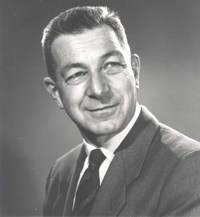 I was out with a group of deep thinkers the other night and they got to discussing the pressures of present-day living.
They deplored particularly the fact that hardly anyone has time any more to do the things he wants or to see his friends as often as he’d like.
They brought out the stress of holding a job and the strain of driving great distances in traffic and the nerve-racking assaults on what little privacy they have. Continue reading
October 11, 1957
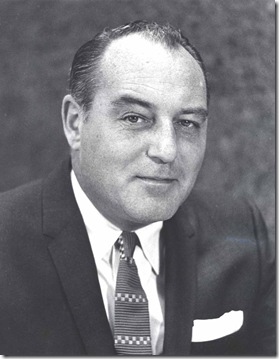 It’s long been said that the funniest clowns are the saddest, and the saddest are the funniest.
So I guess there’s a pretty good chance that it’s true.
Yesterday, a very funny clown came to my office. It wasn’t the first time he’d come. But it was the first time in quite a while.
His real name is Bert Whitson.
But all his friends in Pershing Square refer to him as “Popeye.”
He was smiling.
“Been riding my bike all over town looking for you,” he told me. Continue reading
OK, the other mystery photos have been "who" questions. This is a "where" question. And just to make it fun, be precise as to the location.
And of course, everyone in L.A. will recognize the source of the quote, right?

Oct. 10, 1957

He quickly thrust it into his pocket, then, as if his curiosity
were too great, took it out, admired its sparkle and displayed it to
Mary.
It looked like a valuable ring, and Mary was about to
suggest that he advertise it in the Lost and Found, but he rambled on
about never having found anything in his life and being alone in the
world, his wife having died, he said, a year ago.
Suddenly, he insisted she try it on, and when it was on her finger he broke the spell by saying:
"You can have it for two bucks, lady."
Mary handed it back, glared at him, got up and walked away.
Just
then another woman sat down and the next time Mary looked, the old guy
was admiring the worthless piece of glass on her finger.
But, admits Mary, it certainly had a beautiful setting.
FALL-OUT–No, Virginia, we’re not changing the words to "How High Their Moon" or "It’s Only a Man-Made Moon."
Quick-on-the-draw
note: A letter mysteriously delivered to my desk had inscribed on the
envelope, "By Satellite"–with a professional-type sketch of the
Russian moon hurtling through space emitting its beep-beep-beep…
 A
man watching the World Series over TV in a Vine Street bar marveled at
the unusual shot from behind the pitcher’s mound showing the batter,
catcher and umpire–taken with a Zoomar lens from center.
"Gosh," he said, "I wonder where they take that from?"
"Didn’t you know?" said bartender George Fedor. "From the new satellite!"
G.B. inquires plaintively, "May we also soon expect spherical drive-in stands with pseudo-antenna selling satellite burgers?"
MOZART’S "Haffner Serenade" will be performed at USC’s Bovard Auditorium tomorrow night, opening the Music Guild season, and William Steinberg, who will conduct the chamber orchestra, believes he has the explanation for some of its puzzling un-Mozartlike passages.
Critics have long wondered why there are no flutes in the first movement, no oboes in the second and hardly any tympani at all.
Steinberg’s
research disclosed that Mozart wrote the piece for the wedding of the
daughter of Sigmund Haffner, Salzburg burgomaster, in 1776. Well, the
musicians at the clambake also served as waiters and they had to take
off when the cook called out "Hot food!" As for the tympanist, he was
the headwaiter.
OK, SO the Dodgers are coming. Now let’s have a moment of agonizing reappraisal.
In
luring them here, some of our best people made a sickening spectacle of
themselves, indulging in reckless, hysterical, fishwife conduct and
thereby holding up Los Angeles to nationwide ridicule.
More than
the Brooklyn Dodgers, the third-largest city needs a little dignity or
at least less hypocrisy and demagoguery. Perhaps it is too much to
expect.
LOOSE ENDS–The
new $1 bills are in circulation. They’re the same as the old ones
except they have the name of Robert R. Anderson as secretary of the
Treasury instead of G.M. Humphrey and "In God We Trust" above the big
"One" on the other side…
Jan Herd can’t help wondering if the exhaust fumes from the additional
trucks needed to pick up combustible rubbish will contribute as much to
smog as was eliminated by the ban on incinerators…
A brochure for Friendly House, 538 S. Harvard Blvd., which rehabilitates women alcoholics, is titled, "One for the road–back"…
A Rand McNally ad in Time states, "any day now the earth will launch
its first man-made satellite…" Oops, trapped by an advance deadline.
Oh for the life of a court beat reporter in 1957: Confidential magazine, an appeal by convicted killer Caryl Chessman and the murder trial of L. Ewing Scott,
not to mention the daily grind of the court calendar. There are so many
wonderful cases, but alas, only one Larry Harnisch, and I worry that I
won’t be able to do justice to all the details. (The Confidential
magazine case, if you were wondering, resulted in a hung jury and
promises of a retrial).
The Scott case is particularly
significant because of its unusual challenge: The prosecution had to
persuade a jury that the defendant was guilty even though police were
never able to find the (alleged) victim’s body. I was fortunate to be
given access to the district attorney’s files on the Scott case and
they are massive, but far too extensive for the purposes of a blog.
So for today, let me introduce a few of the main characters as jury selection begins.

Ray Graham / Los Angeles Times
For the prosecution, Deputy Dist. Atty. J. Miller Leavy, shown in 1953 during the trial of Barbara Graham.

Howard W. Maxwell / Los Angeles Times
And the defendant, Leonard Ewing Scott, caught off-guard by Times photographer Howard W.
Maxwell with a miniature camera, joking with reporters in his jail cell,
April 26, 1956.

And Scott in his 1956 mug shot.
A typical example of retouching from The Times photo archives:

Steve Fontanini / Los Angeles Times, Dec. 28, 1973
From left, J. Miller Leavy of the Los Angeles County district attorney’s office, with Dist. Atty. Joseph Busch and Joseph Carr, on Leavy’s last day after 41 years as a prosecutor. Leavy was the prosecutor in the Caryl Chessman, Barbara Graham and L. Ewing Scott cases, among many others.
Oct. 10, 1957
A typical example of infographics in the Stone Age:

Now here’s a hed bust for you. Lou Burdette? Ouch! At least the story has it right. (Typo box score for The Times, 1881-1986: Lou Burdette 164; Lew Burdette 626).


Oct. 9, 1957

People can be pretty wiseacre sometimes.
Especially yesterday.
All
I was trying to do was conduct a "pulse of the public" poll on a very
timely subject: Major League Baseball’s arrival in Los Angeles.
Inasmuch
as the arrival of a major league team affects every man, woman and
child in this city, it was obviously my duty to the public to get
public reaction to the move so I could tell the public how the public
feels about it.
(This is a very important service performed by
any newspaper worth its ink. It is known in journalistic circles as the
"reaction story," and takes a back seat to nothing–with the possible
exception of complete race results, the daily weather forecast and the
obituary column).
But somehow, yesterday, I found the public extremely uncooperative.
The first two people I called weren’t even at home. That’s how much they gave a damn.
And on my third try, I got an embittered old lady.
"Madam,"
I stated, "I’m conducting a poll for the Mirror-News. What is your
personal reaction to the announcement by Walter O’Malley that the
Brooklyn Dodgers are coming to Los Angeles."
I could hear her clearing her throat. I picked up my pencil.
"You’re with the Mirror-News?" she questioned.
"That’s correct, ma’am."
"So
why don’t you do something about the smog," she snapped. "Your friends
over in City Hall tell me I can’t burn a few little scraps of paper in
my incinerator, and yet you let cars and trucks and buses run all over
the place.
"That’s what’s causing it. Cars! Not incinerators!"
"Please madam," I interrupted. "I’m talking about the Dodgers…"
"Well,
I’m not," she cracked back. "Get rid of the cars and you get rid of the
accidents, too. It’ll be safe for pedestrians to cross the street again.
"Like it was when I was a girl."
 She snorted indignantly and hung up.
I dialed again. It was a man who answered this time.
"You happy about the Dodgers coming here?" I asked.
"I’m glad you called, Mr. Coates," he told me. "I was going to call you."
"Oh?"
"I wanted to ask you how come they got that satellite up there before we did?"
"Well, frankly, I don’t…"
"Like you to conduct an investigation on this."
I promised him I would and said goodbye.
But I don’t discourage easily. I dialed another number.
"This is Johnny," responded a young voice.
"Johnny, this is the Mirror-News," I said. "We’re taking a poll on the Dodgers."
"Dodgers?" he pierced.
"That’s right."
His
laugh cut into my ear. "Baseball! When are you guys going to grow up?
Why don’t you tackle something serious like juvenile delinquency. Take
a poll on that?"
"But Johnny…" I interrupted.
He cut me short again.
"It’s a crying shame," he screamed, "the way this younger generation is running around nowadays.
"It wasn’t like that when I was a kid," he finished. "Two years ago."
I may not be an Elmo Roper, but at least I’m persistent.
Because, undaunted, I continued my survey on the Dodgers. And here is what I learned:
Three percent of the people believe L. Ewing Scott should be acquitted.
Three percent said they’d never let Confidential magazine into their homes, but they’d read it in somebody else’s house.
Seventeen percent were watching an old Western movie on TV.
And 87% voice objections to smog, delinquency, Russian moons, traffic tie-ups, and/or public opinion polls.
After adding it all up, I found I had surveyed 110% of the people, which is impossible.
I’m sorry I started the whole thing.
Another shot from "Act of Violence," showing downtown Los Angeles.


Oct. 9, 1957
Ventura, Calif.
 Renzee Louis Alameda, 36, was the quietest man on the block. The 6-foot-2, 190-pound ex-Marine, a USC graduate, was unmarried and had lived alone at 2412 Ridgeley Drive for the last 10 years. He spent his days as a substitute music teacher with the Los Angeles Unified School District and his nights at home playing the piano by the hour.
He was a member of the Screen Actors Guild, The Times said, and had appeared at the Pasadena Playhouse and in films as Richard Azano.
On the evening of Oct. 8, 1957, Alameda noticed that his landlady had placed trash cans at the curb. Realizing that this was a signal that the Communists were coming, he fled to Santa Barbara, The Times said.
At 7:40 p.m., California Highway Patrolman Robert E. Reed, 36, pulled over a car on the southbound 101 near Point Mugu because the driver refused to dim his lights.
As Reed began writing a ticket, Alameda made a U-turn and sped north on the highway at 90 mph with Reed in pursuit before crashing into barricades on a section of freeway that was under construction. Alameda jumped from the car and began running, but was caught when he twisted his ankle, The Times said.
Reed, Highway Patrolman Dale Fletcher and another officer transported Alameda to Ventura General Hospital for treatment of his injured ankle. A fight broke out when hospital staff tried to put Alameda in the psychiatric ward because he grabbed a bottle of disinfectant from a surgical tray and drank it.
As Reed, Fletcher and two orderlies struggled to restrain him, Alameda grabbed Reed's revolver and shot him in the chest, killing him almost instantly.
Alameda's only explanation: "I couldn't stand the idea of being locked up."
The Times noted that "Alameda admitted homosexual activities in Los Angeles, of being a peeping Tom and other abnormal activities," as if this explained his behavior. The next day, Alameda broke a light fixture in the Ventura City Jail and tried to slash his throat with a piece of glass.
On Oct. 23, 1957, a court ruled that Alameda was insane and committed him to Atascadero State Hospital. He died in San Luis Obispo County on July 28, 1960, at the age of 39. His behavior was never explained.
Reed was survived by a wife, Marilyn, and daughters Janet, 9, and Christy, 4. The Times said he was the first officer killed on duty in Ventura County. Robert Eugene Reed, who would have been 37 on Oct. 16, 1957, was buried at Ivy Lawn Cemetery.
Oct. 8, 1957
City Hall gets a Dodgers cap. And UFOs.

Also note yet another discarded proposal to ease traffic: elevated bus lanes on freeways.

Here’s The Times Building as seen in "Act of Violence," 1948


Larry Harnisch / Los Angeles Times, Oct. 6, 2007
Trees and buildings prevented me from precisely re-creating this
shot. The camera was north of where I was standing when I took this
photo from the top of the parking structure south of Disney Hall at 1st
Street and Grand. Recall that Bunker Hill was lowered during urban
renewal.

Oct. 8, 1957
Los Angeles 
How can such smart crooks be so dumb? The short answer is: They just were.
In the last few months, half a dozen seasoned pros had been involved in
systematically burglarizing the homes of wealthy individuals on the
Westside and in the Hollywood Hills. The thieves usually took jewels,
furs and bonds.
At many of the crime scenes, police found a half-empty fifth of whiskey
left by the burglars. Detectives recalled that this was the trademark
of Gerald B. Santley, who was supposedly serving a Florida jail term
for a $20,000 jewel theft. Further investigation with Florida
authorities revealed that Santley had been paroled to Jacque Robert
May, an accountant living at 688 S. Mariposa Ave. Upon arriving in Los Angeles, Santley moved to 473 E. 55th St., Long Beach, and registered as an ex-convict.
Police placed the two men under surveillance and on Sept. 20, followed
them into the Hollywood Hills. Officers arrested the men and found
their car full of jewelry and furs. The men quickly confessed. May said
he selected wealthy victims through his work as an accountant. He drove
Santley to the victims’ homes after calling to make sure no one was
there. When Santley was through, he called May to come pick him up.
Unfortunately, The Times never followed up on the trial, so we don’t
know what happened. California death records show that Santley died
Dec. 3, 1971, in Orange County at the age of 49 and May died Nov. 11,
1995, in Los Angeles County at the age of 80.
But that is only part of the story, for the ring included a couple
of colorful characters. One of them was career card player William
Zevon and the other was a man with a long list of aliases named Vahan
Rejebian, who was being sought in the burglaries. (Above, Rejebian with one of his aliases).
Rejebian was part of another sophisticated burglary ring of half a
dozen people that operated in the 1930s on the Westside and in San
Marino. Like Santley and May, his ring compiled a list of wealthy
residents, including film stars Jean Harlow, Mae West and Eddie Cantor.

The Rejebian ring of the 1930s included a woman with almost as many
aliases, Frances/Francis Krug. If you aren’t familiar with her, you
will probably recognize the name of her onetime boyfriend: underworld
figure Paul "Paulie" Gibbons, who was shot to death on a Beverly Hills
street in 1946.
By 1949, Krug and Rejebian had moved their burglary operation to Miami
Beach, where Rejebian, nicknamed "the California Phantom," was shot by
police while burglarizing the home of newspaper executive Charles
McAdam.
As I noted earlier, The Times never pursued the Santley story, so we
don’t know what became of Rejebian, nor can I find anything on Krug.
The Social Security Death Index lists 14 women with that name.


So far, I have been bombarded with the location of the "Waltzing Mice"
installation and the origin of the quote (Raymond Chandler). But nobody
has said a word about the artist. Our old standby Google merely reveals
that "Waltzing Mice" was created by Alexis Smith, who also planned three other pieces of public art at the park.
Proquest, however, comes to the rescue with a Dec. 10, 1985, Times story by Jane Greenstein.
According to Greenstein, Smith created "Waltzing Mice" for the
MacArthur Park Public Arts Program and hoped to renew interest in the
neon signs surrounding the park. "Waltzing Mice," which is at the
southwest end of the lake, points toward the Westlake Theatre sign,
although landscaping makes it difficult to see the sign from all parts
of the park.
Smith also planned:
- A granite marker to be embedded in grass that showed two boxers
and the Chandler phrase: "Mine was the better punch but didn’t win the
wrist watch."
- A plaque for a park bench with the outline of a general and the words: "He had a jaw like a park bench."
- A bronze suitcase that read: "She sat in front of her princess dresser trying to paint the suitcases out from under her eyes."
And what was Smith’s motive? All four artworks were intended to
"commemorate losers instead of winners, an emotional tone rather than
an event," Smith said.
"Waltzing Mice" was a description of a homeless person, Smith said.
"Better Punch" "is a boxing image that also relates to things you give
the old college try to–and you lose."
Smith added: "The suitcase quote has an old-lady-trying-to-look-young
kind of feel to it. Also, I think the suitcase is a metaphor for the
itinerant peoples of the world, whether they be immigrants or bums or
whatever. All those quotes have a double meaning, and, hopefully, the
symbols can be understood by people even if they don’t speak English.
"All these things are intended to be appropriate metaphors of the
unconventional situation of the park. If at some point the park should
suddenly become very cleaned up and pristine, since they also allude to
historic Los Angeles, they could also go back to being that. I hope
they have enough metaphoric flexibility to mean all things to all
people."
Just to make this a little more fun, what are the sources of these
other Chandler quotes? And to be honest, I didn’t know about the other
three artworks when I was at MacArthur Park so I don’t have photos of them. A Google search shows that
"Better Punch" is somewhere in the park, but there’s nothing about the
"Park Bench" plaque or the suitcase. Smith told Greenstein she hoped
people would try to steal it. Looks like I made need to make another trip.
And by the way, after I was done poking around the park, I had a No. 44 at Langer’s and it was fantastic. That’s pastrami, sauerkraut and cheese on rye–but you knew that, right?


